Author: Sheila Morris

  • Body Ink – Revisiting the Obama Presidency


    THE TATTOO

          I  got a tattoo two years ago in November, 2009.     I think it’s beautiful. It’s an elaborate cursive “T” in the standard bluish-green tattoo ink used by first-time tattoo getters. It originally stood for Teresa, my life partner of the past ten years.

    Now, I notice all tattoos with greater interest and find a wealth of visible body art on display. Most of what I see is far more creative and in much brighter colors than my three-inch alphabet letter on the inside of my left wrist. However, other people’s ink creations don’t put a damper on my enthusiasm for my own ink.

    The young man who performed the artistry tried to hide his surprise when I walked into his business and announced I wanted a tattoo. I told him I mulled it over for fifty years and thought that was an adequate amount of time to consider anything you truly wanted to do. He was very kind during the painful process, and I was grateful for the xanax I took as a precautionary measure.

    Thanks to my friend Robert for mentioning the tattoo tip to Teresa who went with me and congratulated me for my somewhat mellowed bravery. She couldn’t watch and said she had no interest in getting one to match mine. I was fine with that, but I’m glad I have this outward symbolic marking. I don’t intend to make another statement with ink and needles any time soon. Whatever possessed me to get a tattoo after dreaming of getting one for so many years?

    The  year 2009 began with no dramatic foreshadowing to indicate the earth was about to rotate on a different axis.  A new President took office in January in these Estados Unidos, and his campaign message of hope revitalized a people whose lives lacked faith in their leaders and themselves.  The air we breathed was filled with a sense of expectancy, lofty idealism, and expanded news coverage on an hourly basis of our First Family’s settling in at the White House.

    I, like slightly more than half of the voting population, beamed with pride in the goodwill we received from other countries around the world that shared our optimism for a new direction of peace and prosperity beaming from a fresh colorful face so clearly symbolic of our national melting pot.  Peace, prosperity. As opposed to wars and recession with their inherent problems of joblessness and free-floating anxiety. A new day dawned, and I basked in the warm glow of loosening the shackles of despair that caused me to cringe in horror for the past eight years of the prior regime.  The Bushes were gone—long live the Obamas.

    Unfortunately, the financial markets didn’t share my optimism and took a precipitous nose dive, reaching their lowest point since 1997 in March of 2009. In October of that year, unemployment rates surged to their highest levels since 1982, and in the same month, the Norwegian Nobel Committee announced its decision to award the Nobel Peace Prize to President Barack Obama for his “extraordinary efforts to strengthen international diplomacy and cooperation between peoples.”  While many viewed this as premature praise for an unworthy recipient, I smiled and said nothing.  The Bushes were gone—long live the Obamas.

    The stock market rebounded, and financial services firms prepared their typical gazillion-dollar bonuses for the end of the year as many Americans coped with everyday problems of finding food, shelter, clothing, and health care for their families. Oops—did I mention health care? Our fearless leaders shouldered the burden of developing comprehensive reform of the healthcare system, which is the priciest in the world and offers so little for so much to so few.  I prescribe spending an afternoon in a hospital emergency waiting area and observing the uninsured first-hand.

    Finally, after much ballyhoo in the halls of Congress and an embarrassment of ignorance displayed daily on national news, a reform bill passed and was signed into law by the President.  We needed a real fix, and I’m not talking about illegal drugs, but we acquiesced for a generic version to accommodate the opposition in the halls of Congress…

    It is now the summer of 2011 and I still hope for peace and prosperity, although I confess I find little difference in the Obamas. The symbolism of his presidency and potential for delivering on his message of hope appear to be lost in endless press conferences that lack substance. I fear his leadership abilities are suspect. Perhaps, though,  the system is beyond Thunder Dome today and too corrupt for any leaders to make substantive change. Our people continue two wars in places I will never know, and each Sunday I see the names of American soldiers who died on foreign soil during the previous week.

    I long for peace and offer this prayer to the Great Spirit who weeps for us. May the Nobel Peace President discover the courage within himself to stand and deliver on our hope for a world without senseless destruction of men and women and children in every corner of the earth.  May all those people in the unemployment lines find work so that they can provide for themselves and their families.  May we become a nation that cares for our own and welcomes all people who sacrifice as they choose to discover our American dream, regardless of the disappointments they encounter.  May we have the courage to let go and move on in our lives when they spin out of control.  May we somehow set the world on a better axis.

    My tattoo reminds me of what is important in my life.  Teresa brings fun and passion to the adventure of everyday living. She is the salsa for my meat and potatoes, and I adore her. The “T” now represents more than a name for me—it’s a permanent reminder of Thanksgiving for a full life.  Who knows?  I may even get another one this year.

  • Of Faith and Hope


    PRIESTHOOD OF THE BELIEVER


    “Now faith is the substance of things hoped for, the evidence of things not seen.”

    —Hebrews, Chapter XI, Verse 1


                Whenever I speak on social justice issues, or, more likely now, do readings from my books, someone invariably asks me about my religious beliefs.  Some people opt for a subtle approach and others want to make sure I clearly understand their perspective.  Last year I participated in a panel discussion on memoir at a book festival in South Carolina, and the moderator called attention to the three authors’ different backgrounds that influenced their work, including a remark about my life as a lesbian activist.  Following our discussion, the audience was invited to ask questions.

                We took turns responding to typical inquiries regarding memoir as a genre, difficulties in the publishing world these days, and whether our books provided cathartic experiences for unresolved issues in our lives.  It was a lively interchange, and I enjoyed the questions and listening to the answers of the other panelists while I added my own opinions.  As time for our session was about to run out, the moderator asked for one final question for any author.  I saw a hand raised in the back of the auditorium, and a microphone was passed to a man who stood up and reached for it.

                I sensed this was my question before he said anything.  He was a tall man with vanishing silver hair and nicely dressed in dark pants, white shirt and a tie that was an indistinguishable color to me from my seat onstage.  He did, indeed, direct his remarks to me.

                “Miss Morris, I was wondering how you reconcile your life with what the Bible says about homosexuality.  I know that God loves you, but He hates what you do.  Why don’t you change?”

                I was prepared for the question since it was a familiar one to me, but I paused to assess the restlessness of the audience before I spoke. Yep, everyone was ready to move on.

                “The few Bible passages that refer to homosexuality are typically taken out of context and require deeper discussions than we have time for here,” I said.         “Change is a word that implies choosing.  My life has involved many choices, but my being a lesbian is not one of them.  I’m not sure that anyone really knows how God feels about my life—including me.”

                You get the picture.  For those of you who ask these questions, and I think you know who you are, I want you to know that I appreciate your concerns.  I usually answer with as much candor and humor as time allows and direct the conversations to other topics.

                In real life, when time is not an excuse and levity and brevity beg the deeper questions, my journey of faith has no glib explanations.  I am surrounded by the ghosts of generations of family members who relied on their convictions about God during the difficulties they faced throughout their lives.  One of my eighty-three-year-old mother’s favorite sayings to this day is, “God is on His throne.  No matter what comes, we know that God is on His throne.”  This phrase comforts her in the confines of the Memory Care Unit where she lives and assures her that everyday problems are temporary and serve some greater purpose.  It also relieves her of any personal responsibility for outcomes that aren’t suitable.  It’s an expression she’s used frequently in her life when someone contradicts her opinions and she wants to end discussion.  After all, what else is there to say when she declares that an omnipresent and omnipotent Deity reigns over us?  In some deep inner place, my mother’s faith sustains her.

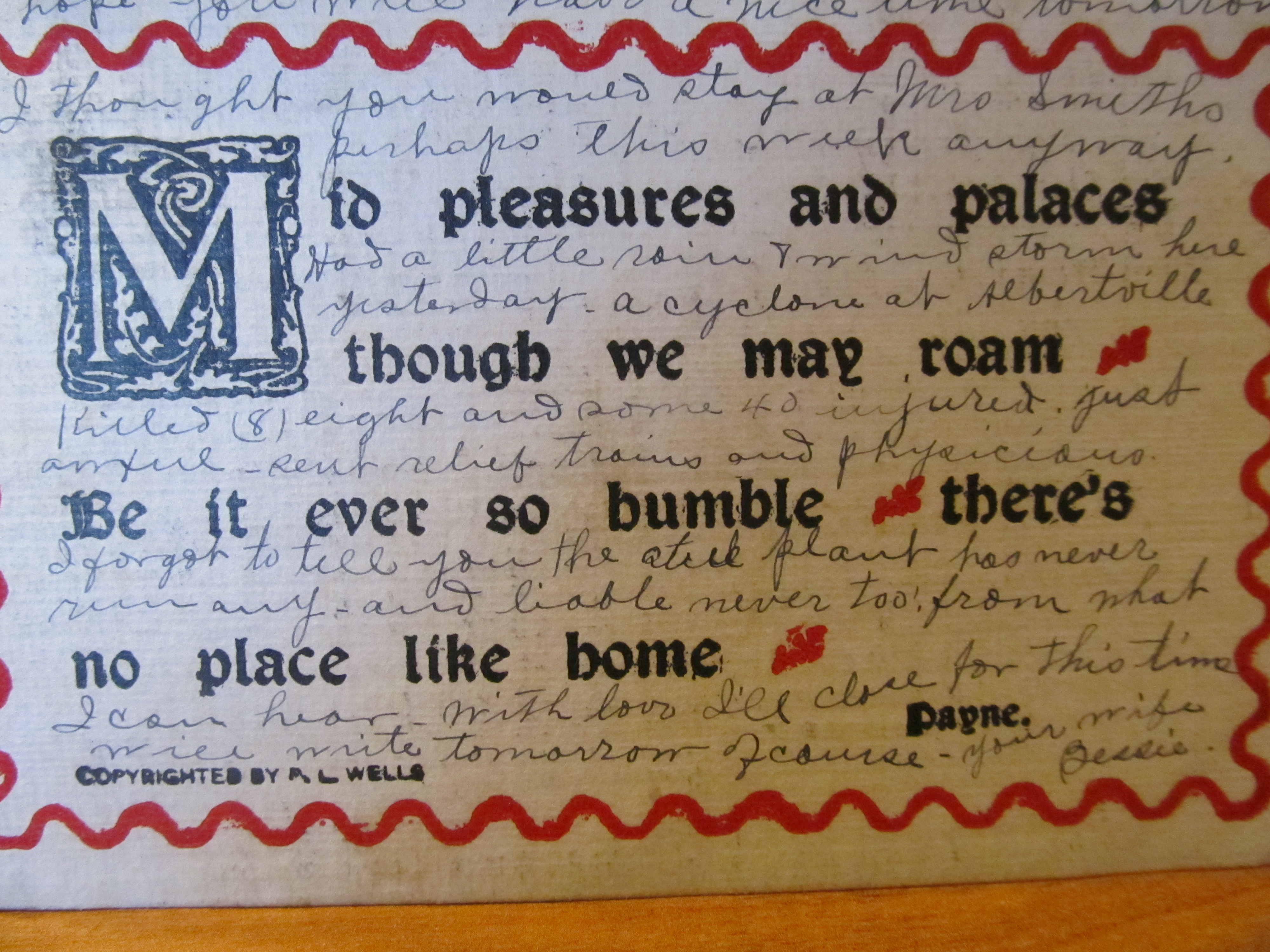
                Certainly this core belief system came partially from her mother, who lived a life of constant struggle as a single mother in the Great Depression.  Left with four children when her husband died unexpectedly, my grandmother waged wars against poverty and, ultimately, herself when she fought the more difficult battles of loneliness and depression.  A letter to her sister in 1954 following the death of their father illustrates her convictions that surely passed to my mother: “I know Papa has gone to heaven, and that is where I want to meet him.  The Old Devil gets a hold of me sometime.  I slap him off—and pray harder for the Lord to help me be a better Christian.  I realize more that I need the Lord every day, and I want to love the Lord more and try to serve Him better.  He alone can take away these heartaches of mine.  I want to have more faith in Him.  I have been so burdened, and I want to be happy.  Serving God and living for Him is the only plan.”

                My grandmother’s belief that faith was the only solution to the multitude of problems she faced and that there were higher levels of faith beyond her grasp was reinforced by the teachings of the little Southern Baptist church she attended every Sunday.  The sweat and, often, tears of pleading preachers for more trust and more commitment stirred their listeners’ emotions and created an environment of permanent unworthiness, or as Paul writes in the New Testament, “For all have sinned, and come short of the glory of God” (Romans, Chapter III, Verse 23).  My grandmother’s efforts to “have more faith” included a daily ritual of reading Bible passages using the rudimentary skills she acquired during a schooling that was limited to a third-grade-level education.  I can still see the outline of her sagging body framed in light through the thin partition separating the kitchen from the enclosed porch that served as our bedroom while she sat at a small table and I lay in the darkness wishing she wouldn’t get up so early.  But, there she would be, struggling to read godly guidance in the ungodly hours before dawn so she could be dressed and ready to walk to work by 7:30 a.m. six days a week.

                Shockingly, my grandmother on my daddy’s side glossed over the deeper issues of faith in favor of a focus on hope.  You may remember the famous quote from the Bible in the thirteenth chapter of I Corinthians: “In a word, there are three things that last forever, faith, hope, and love; but the greatest of them is love.”  For this paternal grandmother, the greatest “thing” that lasted forever was hope.  She wasn’t concerned with the intricacies of faith nor did she exhibit excessive “love” toward others outside of her immediate family, but she attended the same Southern Baptist church faithfully every Sunday.  Her hope was for humor, however.  Her belief was that in every Sunday church service she could find something or someone—or, preferably, both—that she could use to entertain her family at the dinner table later.     

               The preacher was irreverently skewered on a regular basis.  “Brother Latham is such a handsome man, but his sermons bore me to tears.  Same old talk about sin every Sunday.  Everybody knows he’s against it by now.  He needs to come up with a new position or a new topic.  And, did you see those poor little children of his?  They look just like their mother, bless their hearts.  God didn’t answer any prayers there, if you ask me.”  The pious friends who seemed to take church so seriously were open season for my grandmother as well.  “Did you see old lady Shead?  Her face was twisted in such a tight knot it looked just like all that hair she has wadded up on her head.  She must have fifty hairpins holding it together.  She looked like God gave her some secret bad news this week, or maybe He put a burr up her butt.”  And she was off and running as my grandfather and I laughed hysterically at her assessment of our churchgoing experience.  No one, and nothing, was sacred at that table.  She was a woman in charge of her home and family and most of the conversations that took place within both.  I worshipped her.

                And so, this was the faith of my mothers.  The church was the teacher, the Bible the textbook, and the interpretations ranged from the holy to the inadvertently profane.  I listened and watched these women for as long as they lived and, throughout my childhood, absorbed their diverse values that blended with the Sunday School teachings and preaching of the Southern Baptist churches my family attended.  I learned to sift the messages and keep the ones that appeared to lessen my likelihood of going to hell when I died.

                Since I knew from the age of five or six that I had what the Bible lovingly called “unnatural affections,” I also understood the threat of eternal damnation that could be my fate, unless God wrought a miracle and transformed me from my evil thoughts and desires.  During my teen years I felt particularly wicked as I lusted after the girls in church and my favorite female high school teachers.  In 1963, when I was seventeen and felt the flames of hell licking around me, I read a small pamphlet called a Statement of the Baptist Faith and Message.  I thought I had discovered my saving grace, a distinctive Baptist teaching called “the priesthood of the believer.”  While this doctrine produced volumes of theological intrigue, my simplistic interpretation at that point in my life was that no one stood between God and me.  What a relief.  No need for confessions to a priest or, necessarily, to trust the ravings of Baptist preachers.  I was redeemed.  It was a doctrine that kept me tied to the church and allowed me to censor its bad tidings for more than forty years. 

               It carried me to a Southern Baptist Seminary where I, rather ironically, had my first lesbian relationship when I was twenty-three years old, a seven-year relationship mired in our guilt and my infidelity.  It carried me to a small Southern Baptist church where I had a lesbian affair with a married woman who was the Youth Director and another one with the preacher’s wife.  God and I didn’t consider this to be adultery.

                To say that my faith odyssey took a zigzag somewhere during the past fifty years is an understatement.  With a genealogy of six generations of Southern Baptists and a family tree that includes a great-great-great-grandfather who was a minister during the Civil War in a rural North Carolina Baptist church, it’s no surprise that I surrendered wholeheartedly to the faith of my forefathers.  I served as a minister of music and youth for five years in two Southern Baptist churches in South Carolina in the 1970s.  Even after leaving the ministry, I continued my membership in the church and its music programs for more than twenty years.  As the Southern Baptist denomination abandoned the doctrine that supported direct communication between the believer and Creator in favor of a collective acquiescence to a pervasive ultra-conservative leadership that led to the restructuring of its institutions of higher learning in the 1970s and ’80s, I stayed.  When the boundaries between church and state blurred and the denomination tookright-wing political bent, I stayed.  When the sermons of the ministers in the churches became a royal proclamation of morality as they and their leaders deemed it in the 1980s and ’90s, I knew my favorite doctrine was in trouble, but I stayed.  Yet, eventually, that faith turned to heretical unorthodoxy—a seismic shift in my core belief system.  Why?

                My work as a paid staff person exposed me to the inner power struggles of church leaders and the budget requirements of doing “something great for God,” as one minister explained to me in the midst of a burgeoning capital campaign.  I overlooked the hypocrisy of rancorous Wednesday night business meetings with the harmonious Sunday worship services.  After all, the music was what God and I had in common.  I didn’t forgive the preachers for their tirades against homosexuals, but I ignored them because God and I knew better.  The “priesthood of the believer” was such a comfort—until it wasn’t.  I was forever changed by a personnel matter, a blip on the radar screen of Important Events.  When the church pianist, a close personal friend, was fired for being gay, I ran out of excuses for God and me.  If God didn’t want my friend, I was sure He didn’t want me, and the feeling was mutual.  I was done.  

               Charting that journey on a blackboard entails an array of colored chalk that begins with white for the innocence of childish trust to green for the color of money in the church to red for the anger of betrayal by believers to gray for the edges of doubt and disbelief in the Deity of my mother.  “God” and “throne” are words that summon visions of clouds and enormous golden chairs from a Cleopatra movie in the ’60s—not a bad image, but not a convincing one, either.  My maternal grandmother’s duel with the Devil also evokes strong feelings for me, but they are feelings of sadness for her inability to achieve that higher level of trust she desperately wanted.  She never could be quite good enough, and I can’t believe in a Deity that inspires fear and irrational guilt.  As for my dad’s mother, her irreverence was an early confirmation for me of my introduction to the doctrine of “the priesthood of the believer” and gave me permission to begin to overcome feelings of shame when I faced the puzzles of sexual identity that were my life.  My grandmother definitely had a unique relationship with her God.  Her words and sense of humor helped free me from the somber sermons of damnation in my youth and encouraged me to think for myself.  I wonder if she knew.

                All paths lead somewhere, and mine returns to where the journey began.  My faith is in the rising and setting of the sun each day—with hope that I’ll live to see them, and with love for the laughter that makes each day worth living.

  • Readings


    READINGS


                Dame Daphne du Maurier, the English author and playwright, decries our infatuation with literary public readings by writers, noting that “writers should be read, but neither seen nor heard.”

                She makes a good point, although I have to admit I love to read my own words aloud.  Maybe it’s because I often read audibly as I write.  Ergo, it makes sense I like to read to other people.  Often my motives are mixed with shameless promotion of my books.  In theory, people will buy more books if the author appears in public to read and sign them.  If you invite me, I will come.

                I was so taken with the sound of my own voice  I made an audio version of my first book, Deep in the Heart—A Memoir of Love and Longing.  My thanks to the three people who actually bought that CD, wherever you are.  Who knew everything in the world is now downloaded from some mysterious cyber-place and that no one buys audio books except the technologically illiterate?  Evidently, I missed that memo.

                I almost missed another one.

                Recently, I was invited to a book club that chose my second book, Not Quite the Same, as their book of the month.  It was the eleventh anniversary celebration for the club.  This diverse group of ten women met monthly for eleven years to discuss a different book chosen by the hostess.  Since I am not a person who likes to belong to groups or attend meetings, I found this record remarkable.  But, if you invite me, I will come.

                That night I had center stage in the intimate living room where the women gathered in the early evening.  The voices buzzed and hummed in the festive atmosphere as food and drinks loosened their day’s tensions.  A few of the younger women sat on the floor, but no one seemed to mind.  This was an informal group with good chemistry and healthy appetites.  The hostess made sure everyone’s wine or iced tea glass was filled.  The highlight of the meal was a fresh coconut cake baked by one of the members, but that was saved for later.  No one objected, and, as the last empty plate was removed, everyone settled in for their monthly literary fix.    

                I had prepared some thoughts on writers and writing, so I began with those.  Not too original and less than inspirational, but the women responded warmly.

              “What makes writers really write?” asked one.  “I’ve often thought I could write a book, but when it comes down to actually doing it, I don’t have the discipline.  I think I have stories to tell from my teaching experiences.  I really do.  Of course, I have some others that should never be told.”  The other women laughed.  “What should I do?”

             “That’s a great question, and I’d like to give you a simple answer.  I’m afraid I don’t have one, though.  I believe all of us have stories to tell and that storytelling is a primal need.  I’ve seen stones in New Mexico that are hundreds of thousands of years old, and you know what’s on them?  Stories someone wanted to tell.  They’re told in drawings on the rock faces, but they were someone’s disciplined efforts to communicate, and I felt I was there with the storyteller.  I never sat down to write a book.  I wanted to save my stories and the people and places in them.  They became a book because I couldn’t quit writing.  Now, it’s like not being able to turn off a spigot.  When that happens to you, discipline will be the least of your worries.”

             I was the first author to be invited to a club meeting—ever.  It was a fun night, and the highlight was reading my own words.  What could be better?   I had selected three different short sections from my book and read them to the group.  Their rapt attention and total engagement in the process pleased me and indicated my reading was a success.

               But, the evening didn’t end there.  Each woman, in turn, was asked to give her reflections on my book.  Naturally, with the author sitting in the same living room, they were beyond gracious.  No one cast a stone.

                What I found most incredible that night, however, was listening to my words read by readers.  Several women read sentences, paragraphs, or whole pages of their favorite words.  I never fully understood the power of writing until I heard other people read what I wrote.  My stories were safe.  They would be remembered and told by these women and others like them.  Although I thought the night revolved around me, I was wrong.  They inspired me.  These women treasured words and ideas that created bonds among them.  My words were now a little part of their wealth of knowledge that lived beyond the pages.  I was elated.

                Dame Daphne was in the vicinity, but she missed a key concept.  Allow me to modify her quote: “Readers should read, and writers should listen.”

                Last week I visited my mother who is in a Memory Care Unit in a facility in Houston, Texas.  She is eighty-three years old and has lived there for two years.  She is a short, thin woman with severe scoliosis.  Her curved spine makes walking difficult, but she shuffles along with the customary purpose and determination that characterized her entire life.  Her silver hair looks much the same as it has for the last thirty years, missing only the rigidity it once had as a result of weekly trips to the beauty parlor and massive amounts of hairspray.

                Her skin is extraordinarily free of wrinkles and typically covered with makeup.  She wears the identical mismatched colors she wore on my last visit.  Black blouse and blue pants.  This is atypical for the prim, little woman for whom image was so important throughout her life and is indicative of the effect of her dementia.

                My mother is a stubborn woman who wanted to control everyone and everything in her life because she grew up in a home ruled by poverty and loss and had no control over anything.  Her father died when she was nine years old.  He left a family of four children and assorted business debts to a wife with no education past the third grade.  Life wasn’t easy for the little girl and her three older brothers who were raised by a single mom in a rural east Texas town during the Great Depression.

                My mom survived, married her childhood sweetheart, and had a daughter.  The great passions of her life, which she shared with my father, were religion and education and me, possibly in that order.  She played the piano in Southern Baptist churches for over sixty years.  She taught elementary grades in Texas public schools for twenty-five years.  The heart of the tragedies in her adult life made a complete circle and returned to losses similar to the ones she experienced in her childhood: her mother who fought and lost a battle with depression, two husbands who waged unsuccessful wars against cancer, an invalid brother who progressively demanded more care until his death, and a daughter whose sexual orientation defied the laws of her church.  Alas, no grandchildren.

                My sense is that my mother prefers the order of her life now to the chaos that confronted her when dementia began to overpower her.  She knew she was losing control of everything, and she did not go gently into that good night.  Today, she seems more content.  At least, that’s my observation during my infrequent visits.

                “My daughter lives a thousand miles from me,” she always announces to anyone who will listen.  “She can’t stay long.  She’s got to get back to work.”

                We struggle to find things to talk about when I visit, and that isn’t merely a consequence of her condition.  We’ve had a difficult relationship.  Our happiest moments now are often the times we spend taking naps.  She has a bed with a faded navy blue and white striped bedspread, a dark blue corduroy recliner at the foot of her bed, and one small wooden chair next to her desk.  I sleep in the recliner, and she closes her eyes while she stretches out on the bed.

                The room is quiet with occasional noises from other residents and staff in the hallway outside her door.  They don’t disturb us.  She has no interest in the television I thought was so important for her to take when I moved her into this place.  I notice it is unplugged.  Again.

                “Lightning may strike,” she says when I ask her why she refuses to watch the TV in her room.  “Besides, I like to watch the shows with the others on the big TV.  Sometimes we watch Wheel of Fortune, and sometimes we watch a movie.”

                I give up and close my eyes.

                “I love this book,” my mother says, startling me awake with her words.  I open my eyes to see her sitting across from me.  She’s in the small wooden chair with the straight back.  I can’t believe she’s holding the copy of my book, Deep in the Heart, which I gave her two years ago.  I never saw the book since then in any of my visits, and I assumed she either threw it away or lost it.  I was also stunned to see how worn it was.  The only other book she had that I’d seen in that condition was The Holy Bible.

                “I know all of the people in this book,” she continues.  “And so many of the stories, too.”

                “Yes, you do,” I agree.  “The book is about our family.”

                And, then, for the second time in as many weeks, I hear another reader say my words.  My mother reads to me as she rarely did when I was a child.  She was always too busy with the tasks of studying when she went to college, preparing for classes when she taught school, cooking, cleaning, ironing, practicing her music for Sunday and choir practice—she couldn’t sit still unless my dad insisted that she stop to catch her breath.

                But, today, she reads to me.  She laughs at the right moments and makes sure to read “with expression,” as the teacher in her remembers.  Occasionally, she turns a page and already knows what the next words are.  I’m amazed and moved.  I have to fight the tears that could spoil the moment for us.  I think of the costs of dishonesty on my part, and denial on hers.  The sense of loss is overwhelming.

                The words connect us as she reads.  For the first time in a very long while, we’re at ease with each other.  Just the two of us in the little room with words that renew a connection severed by a distance not measured in miles.  She chooses stories that are not about her or her daughter’s differences.  That’s her prerogative, because she’s the reader.

                She reads from a place deep within her that has refused to surrender these memories.  When she tires, she closes the book and sits back in the chair.

                “We’ll read some more later,” she says.

                I lean closer to her.

                “Yes, we will. It makes me so happy to know you like the book.  It took me two years to write these stories, but I’m glad you enjoy them so much.”

                “Two years,” she repeats.  “You have a wonderful vocabulary.”

                The coconut cake we had for dessert at the book club meeting was deliciously sweet and well worth the wait.  But, the moment with my mother was sweeter, perhaps because the wait had seemed like forever.  Invite me, and I will come, and I will read.  But, I’ll want you to read to me, too.


  • Canterbury Road


    CANTERBURY ROAD


                My first impression of the house at 2501 Canterbury Road was of a Tara set from the movie Gone With the Wind.  The four very tall, thin, and grayish-white wooden columns on the front of the two-story brick façade reached from the bottom of the narrow front porch to the equally dingy triangular portico beneath the roof.  Dark green English ivy crept across the brick in irregular patterns that almost covered the front, but not quite.  Lighter strands of the plant made their way to the columns and clung to them for dear life.  The house sat back from the street, and several ancient oak and pine trees vied for my attention in the front yard, but I confess I barely noticed them.  All I saw were those columns.  I halfway expected to see Scarlett O’Hara  swoop down the steps, grab the black wrought iron railing with one hand and, placing the other hand across her forehead, proclaim that the South would rise again.

                Dear God, I thought, may I please not ever have to live in this house.

                God must, indeed, have a wonderful sense of divine comedy because my partner Teresa and I moved into the house on Canterbury Road one year after she bought it as an investment property.  She’s a residential real estate agent and thought it had potential.  I was sixty-three years old and cranky about change.  Circumstances, situations, timing—the vicissitudes of life, as my Daddy used to say—conspired against me and aligned the planets of my universe in a perfect storm that compelled me to Canterbury.  The move went as well as moves can go, and I attributed this to our successful downsizing a mere eight months earlier when we relocated to a little house on Woodrow Street in downtown Columbia from a larger home in suburban Spring Valley.  I didn’t realize how much I’d miss the privacy of our large lot in suburbia, but I’d gradually come to accept the proximity of the neighbors on Woodrow Street.  Our four dogs weren’t so flexible, however, and made life miserable for the unsuspecting neighbors who dared to venture into their own back yards.  Thank goodness we hadn’t bothered to unpack all of those boxes.  Procrastination has its own rewards.

                Unfortunately, the house was not as prepared to receive our family as we were to move in.  Teresa’s twenty-four-year-old son and an assortment of his friends had lived in it for the past year, and, while the columns on the front porch still stood, they did seem to breathe a sigh of relief when the boys left.  Or maybe that was us.  Regardless, we began an interior renovation to restore and renew our new home.  In addition to the steady stream of workers on a daily basis, specialty deliveries required schedules and arrangements (i.e., making sure our four dogs didn’t escape or imperil anyone’s safety).  Several security lapses occurred during the process, and Red, our Welsh terrier-turned-Houdini, managed to break free twice.  Both times he was apprehended and returned unharmed.  On one of his adventures, he was spotted riding by our house in a flashy convertible with the top down.  He apparently considered it an upwardly mobile moment because he pretended not to recognize us and our frantic gestures to flag down the driver, who appeared relieved to find Red’s owners.

                The one room in the house that was completely finished was my office, thanks to an understanding spouse who knew my need for peace, space, and family pictures.  I found comfort in the pictures of my mother and father when they were young and innocent in a time before I was born.  And the picture of me as a child standing behind my mother’s grandparents, with my mother and her mother beside me, reminded me of our connection from generation to generation.  The eyes of my great-grandparents asked me to honor their strength and respect their vulnerability.  My grandmother’s smile in that picture evoked memories of her as the center of warmth for me in my childhood home.  My mother was a mystery to me in the picture, as she has been in life.  I recently heard a character in the movie Up in the Air say, “Pictures are for people who have no memory.”  That startled me, waking me from my usual movie-watching trance.  For me, pictures preserve people and places and points in time, and I want them in my line of sight for as long as I have the vision to see them.  Maybe the movie character just needed better memories.

                So, in the midst of screaming saws, pounding hammers, new paint smells, barking dogs, people coming and going—I settled into my oasis on the second floor.  In my opinion, it’s the best room in the house on Canterbury Road, and it is both teacher and muse for me.  The crisp white trim stands out from the cool gray walls, and the colors soothe and calm me when I hear the turbulence beyond my sanctuary.  The size is perfect for my desk and all-important computer work area.  But, it is the windows that give the room life and character.  From my desk I have two large windows on my right and another one of equal size behind me and to my left.  I don’t have Edith Wharton’s view of her lovely gardens at The Mount or Herman Melville’s vision of the humpbacked Berkshires, which he eyed from his tiny writing desk while he penned Moby Dick, but what I see from my windows is remarkable.

                I moved to Columbia, South Carolina, in the early 1970s.  Columbia is the state capital, and with a population of more than 125,000, it is the largest city in a Carolina state that no one remembers unless it achieves notoriety through an embarrassing public scandal.  When that happens, as it frequently does, the rest of the world miraculously makes the distinction between North and South Carolina.  Otherwise, the only Carolina that has any memorable features is our sister to the north.  Now, after considering the “lesser” Carolina my permanent residence for more than thirty-five years, I’ve simply learned to smile and nod or shake my head and shrug when someone in my travels asks me questions like, “Where is it that you live?  Some place in North Carolina?” or, more recently, “Don’t you live in a town in South Carolina?  Isn’t your governor the one that ran off to Argentina and said he was hiking the Appalachian Trail?  And, then, didn’t he come home to his wife and announce on national television that his one true love was the woman in Argentina?  Isn’t that where you’re from?”

                The heritage of this city is, well, complicated.  Formed in the late eighteenth century as a substantial settlement in colonial America, Columbia is a city that survived the devastation of the Civil War to become number twenty-two on CNNMoney.com’s top twenty-five places to retire in the United States in 2009.  I have friends who are historians, and I trust them to weave the threads of the past into a tapestry that differentiates truth from fiction far better than I can.  My history lessons come from the windows of the house on Canterbury Road and are vignettes that raise troubling issues for me.

                Actually, our house sits on a corner lot, which means we live on two streets.  We face Canterbury, and when I look out the windows to my right, I see similar two-story, older brick homes built on lots like ours, replete with immaculate grassy lawns, beautiful oak trees, driveways for parking newer models of European or Japanese sports utility vehicles, and labrador retrievers who are never pleased to see anyone on our narrow street.  We are one of the houses that form the boundary for our neighborhood association, Forest Hills, which was created in 1925 and named by its developer for a New York City suburb.  We have our own motto prominently displayed on a plaque in a yard near ours: Forest Hills – Historic Homes – Treasured Trees.  Our association is active, and committees represent almost three hundred homes to coordinate Christmas outdoor decorations, community picnics, and historical preservation.

                Our Canterbury neighbors could not be nicer to Teresa and me.  The couple across the street are my age and have an empty nest except for two handsome golden retrievers that behave as well as they look.  The young couple next door has an adorable baby girl who is learning to talk and calls all four of our dogs Daisy—the name of her sweet golden retriever.  If any of them are disappointed in having a lesbian couple move into the house that resembles Tara, they hide it well.  Regardless, during our first Christmas season, we participated in the association’s annual Lights of Christmas, and our outdoor spruce tree with white lights looked just like everyone else’s.

                When I peer through the window to my left, the contrast is a tale not only of two cities but of two worlds.  The intersecting street is Manning Avenue, which is the dividing line for the Lyon Street Community, an area of slightly more than a quarter mile and a population of 1,654 people, according to data published in 2008 by Columbia City-data.com.  But what I see from this window are two small, white, wooden houses with aging roofs and tiny, neat front yards.  Cars parked in these driveways are American sedans—older models soon to be considered “vintage.”  Both houses have front porches, and in the summer, I often see people gathered on those porches to visit.

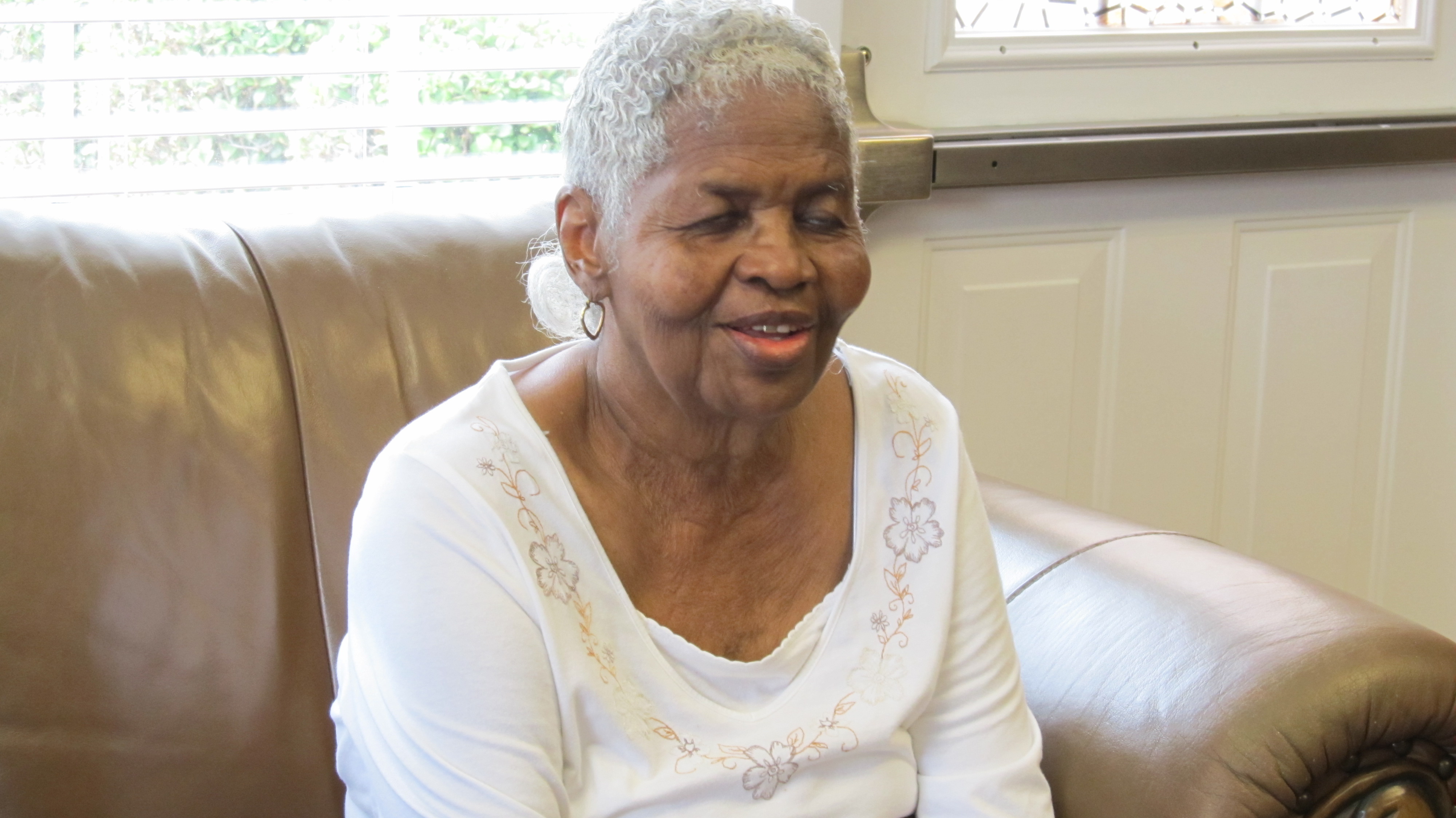
               Occasionally, I talk with Dorothy, the ninety-something-year-old African American woman who lives in the first house on the left.  Dorothy’s age and failing senses have no impact on her warm-hearted spirit and concern for the neighborhood.  Whenever we talk, she never fails to greet me with a hug and tell me how happy she is to see me.  She confides her worries about the people who live behind her and their lack of interest in taking care of their home.  She doesn’t understand people who have no pride in what they own, she says.  Dorothy walks with difficulty, but feels with ease.

               Less frequently I chat with Mr. Scott, an older African American man who lives in the house next door to Dorothy’s.  Mr. Scott is a very handsome tall man who lost patience with us when we moved in because we didn’t remove our construction trash in a timely manner.  We admitted our guilt, apologized profusely, and he kindly forgave us.  He has an adult son who lives with him.  They are less likely to begin a conversation with either Teresa or me, but they are equally friendly when we see them.  They even brought us a lovely poinsettia for Christmas.

                It’s our first winter in the house, and I can’t remember a colder time in Columbia than the last couple of months.  So much for the warm and sunny South.  The scene from my second floor office has changed with the weather.  Workers came and taped large sheets of plastic across every window in Dorothy’s house several weeks ago.  At first, I wondered what happened.  Then, it dawned on me that she must be too cold in her home.  When I connected the dots, I walked over to see her.  She wasn’t there, and her car was gone, too.  One light inside the little house stayed on day and night, keeping a vigil of hope for her return.  Teresa and I waited for her, too, and were happy to see her come back recently.  She had, indeed, stayed with family who had a warmer house.

                The median household income for the Lyon Street Community in 2008 according to Columbia City-data.com was $9,542, which means that 41.6% of my neighbors live below the national poverty line.  The crime index is nearly twice the national average.  When my insomnia isn’t deterred by prescription medications, I hear gunshots from time to time behind our house.  Police sirens and blue lights at odd times during the day and night heighten my awareness of trouble in the lives of people in my community.  Education levels, unemployment, households with single parents—by almost any measurement, the world of the Lyon Street Community is vastly different from Forest Hills.  They are as different as black and white.

                However, to make sure the uninitiated driver on Manning Avenue understands that difference, the City of Columbia placed a sign on our street corner that prohibits a left turn from Manning to Canterbury.  No left turn.  It’s the law.  Brick walls further separate Forest Hills and the Lyon Street Community.  The walls are seven feet tall, and the color of the brick used in the walls matches each Forest Hills house along Manning Avenue perfectly.  Our wall color is the same red brick as our house.  It is conceivable that we would never see the daily lives of our Manning neighbors, except for my office window.

                I remember the words of a hymn from my childhood’s faith: Open my eyes that I may see—glimpses of truth Thou hast for me…  That’s what I see from these windows every day—glimpses of truth.  I understand it isn’t the whole truth, but it is my history lesson from a house I now call home.  Scarlett O’Hara doesn’t live here, and our home isn’t Tara, but it is a teacher whose lessons define the American people, and I am a student who struggles to make sense of the complexities.  Manning Avenue.  Canterbury Road.  It’s the same location and the same house.  It faces different directions on a complicated compass.