Daddy, please tell Mama I can’t possibly try out for the high school choir this year, I pleaded. I’ve got to spend extra time in the gym so Coach Knipling can scout me for the varsity basketball team next year when I’m a sophmore. The three of us sat at the kitchen table in our rental house in Brazoria, Texas (pop. 1,291) in the fall of 1960 – I was fourteen years old, the only child of schoolteacher parents, and the discussion had turned into a rare argument.
Well, Selma, Sheila’s got a point, Daddy said. She’s not as tall as the other girls so the coach needs to see her shoot. Her set shot is as good as anybody’s, and she drives the paint well, too. I think she can make the varsity team next year if she puts in extra gym time.
Set shot, hook shot, free shot, dribble, dribble, dribble, Mama said with exasperation. All I ever hear in this house is some kind of ball talk. Softball, basketball, volleyball – and now you’re taking her to play golf with you after school. What’s so great about balls? Round balls to put in hoops, over nets, in holes or in leather gloves. They’re games, for heaven’s sake! I’m talking about culture, music, things that will last her a lifetime. Does anyone sitting at this table seriously believe that a five foot, two inches tall fourteen year old teenage girl will ever have a chance to play sports designed for giants when she gets out of high school?
She paused to look at Daddy and me. Daddy picked up the newspaper on the table and looked away. I stood up from the table and stared back defiantly at her.
Mama, you don’t understand. There are no freshmen in the West Columbia high school choir. It’s just for upperclassmen. Besides, there are only a couple of kids from Brazoria that have ever made the a cappella choir. They say we can’t read music right. I’ll be the only one from here, and I’m not going.
I looked at Daddy for help, but he was not getting into an argument with my mother when she got on a wild hair. Well, she said. I don’t know who they are who know so much about choral music, but I do know you won’t be the only one from Brazoria to try out tomorrow. I called Joyce Burke last night and she said Karen will go with you. You’ll have a nice friend from the church to audition with you. Plus, the high school has a new choir director this year who just graduated from Hardin Simmons University in Abilene. They have an excellent music program there. You girls can sing, and she won’t care if you’re from Brazoria, Texas or Kalamazoo, Michigan because you’re both altos. There’s always a shortage of altos.
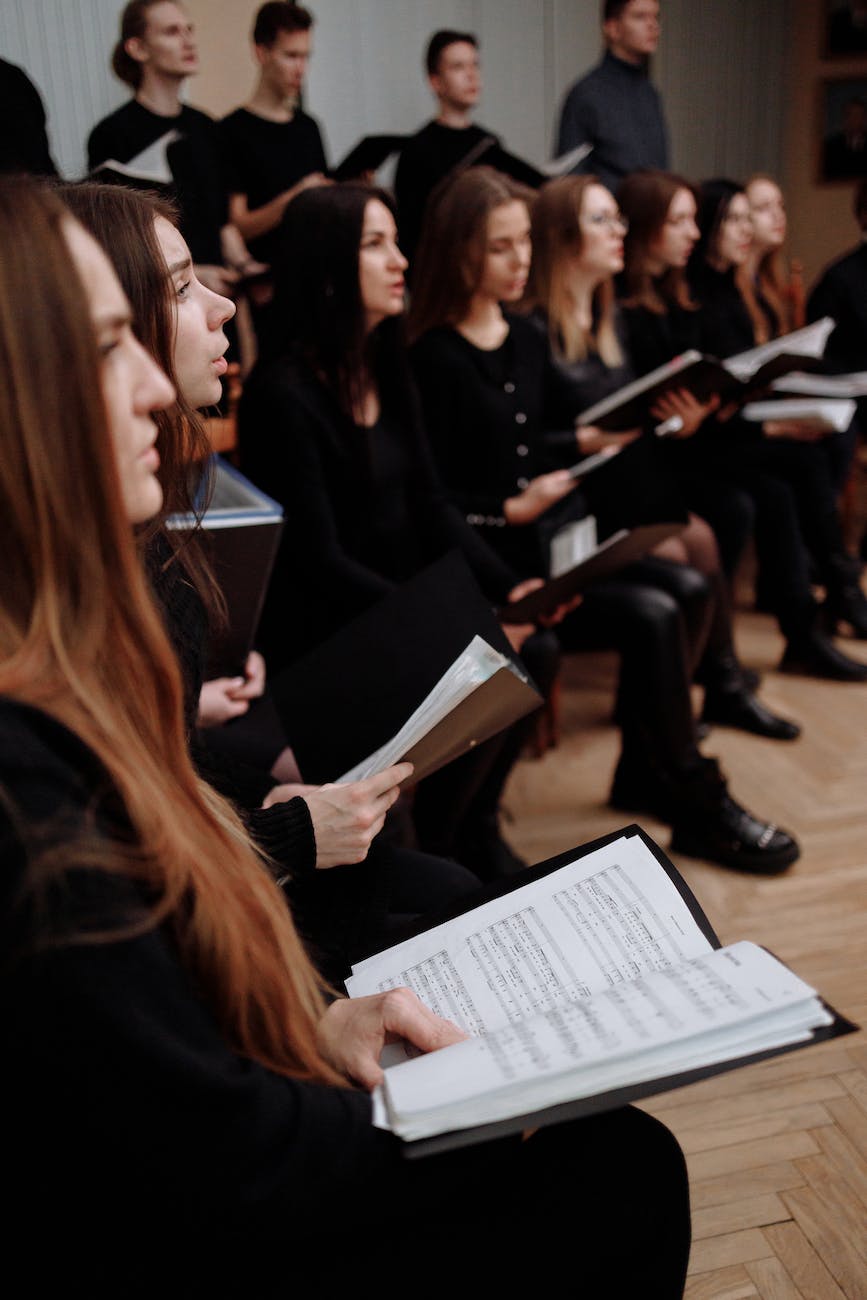
Tryouts for the choir were held in the high school auditorium. Karen and I waited with the older students who seemed to know each other because they were talking, laughing, not as stressed as we were while we stood together in the lobby waiting for our names to be called. I felt sick, out of place, afraid of the humiliation I was about to endure to appease my mother. Finally, my name was called, and I opened the door to enter the large room filled with rows of empty chairs. A woman sat at the piano onstage and seemed to be absent-mindedly striking the keys before she looked up and called my name.
Sheila? she asked. Come up here with me and let’s listen to you sing.
Why me Lord, I thought as I walked down the center aisle to the steps leading up to the stage. What have I ever done to deserve this?
As I walked up the steps I took a good look at the woman who sat on the piano bench. Oh, my gosh, I thought. It’s Jackie Kennedy. Of course it wasn’t really Jackie Kennedy, but she looked just like her. Her hair was the same color – not as long though. Her face was shaped the same, and she wore a dress that looked like something Mrs. Kennedy could wear, but not as stylish. Other than that, they were twins. Unbelievable. The woman was drop dead gorgeous and so young, too. She smiled as she motioned me to stand next to the piano.
She studied me carefully. So, have you been singing a long time? she asked as she gazed intently at me.
I felt like she was looking straight through me. Yes, ma’am, I replied. I’ve been singing solos in the Baptist Church since I was five.
Good. Can you sing Amazing Grace for me? I’ll play the piano for you.
Yes, ma’am. How many verses?
The first and last will do fine, she said and began to play, but something was wrong. I couldn’t find my singing voice.
Ma’am, can you play the song in a lower key? I can’t sing that high. Mama plays the piano for me and sometimes has to transpose the keys lower for me when I can’t sing like they’re written.
The teacher smiled, nodded, and began to play in a key I could manage. I sang the two verses.
Very good, she said when I finished. Tell me do you know how to read music? Can you sight read the parts as you sing?
I know what the notes are because I’ve been playing the piano since I was five, too but I’ve never tried to sing anything without knowing the tune.
How good are you at math? she asked. The question surprised me.
Ok, I guess. What does that have to do with singing?
Music is mathematical. It’s all about notes and numbers and the relationships between them. I have a feeling you can learn, she said, and flashed a smile that lit up the stage.
She picked up a pen. What grade are you in? she asked as she wrote.
Ninth, ma’am.
Would you like to sing in the a cappella choir this year? I need tenors, and I don’t have many boys trying out. I think you could learn to sing tenor just fine.
I’d love to sing tenor for you, I answered while I thought yes, yes, yes I desperately want to sing in the a cappella choir or any other musical group you plan to direct if you will look my way and smile while we practice.
Karen Burke and I were the only female tenors in the high school a cappella choir that year. Singing in the tenor section wasn’t exactly what Mama had in mind for me, but she was pleased when I told her the news. Maybe next year she’ll move you over to the altos with the rest of the girls, she told me.
The director’s name was Gloria Pittman, and she must have been in her early twenties since we were her first teaching position out of college. I loved her almost as much as I loved Coach Knipling but for different reasons. (Coach Knipling rarely smiled at me – much harder when you had a whistle in your mouth most of the time.) Miss Pittman had legs that went on forever – I dubbed her Piano Legs Pittman – and she taught us much more about music than how to blend our voices in choral sounds. She brought her own record player and records from her apartment to introduce us to the classics. She turned the volume up so we could hear her favorites like Mendelssohn, Schubert, Bach, Beethoven – we had to be able to distinguish Beethoven’s 3rd Symphony from his 5th, and much more. I began to close my eyes like she did when she heard the classics, tears streaming down her face from joy or sorrow…I never knew why except that she was intense, passionate about the music. She was a pioneer for our class in our “cultural development”and made an indelible impression on my young mind.
Unfortunately, that year was her first and last as our music teacher. She had a special group of eight singers from the choir that performed as a select ensemble. They met on weekends and after school in the afternoons – sometimes they practiced in Miss Pittman’s apartment, and rumors were they smoked more than the cigarettes she was seen smoking with the drama teacher, Mrs. Juanita Roberts, in the teachers’ lounge at school. Everyone knew Mrs. Roberts was a radical liberal.
Mama wasn’t sorry to see her go and was much happier when the band director, Raymond Bethke, also directed the choir. He moved me and Karen Burke to the alto section. He was a good band director. Enough said.
My mother was also right about me and athletics: there was no demand for short basketball or volleyball players when I graduated from high school – even softball players needed to be bigger, faster. Choruses, choirs and chorales, on the other hand, stood the test of time for me. Both a cappella and those with orchestras, symphonies, pianos, organs as accompaniment. I auditioned many times during my lifetime, and what I learned from Miss Pittman opened doors for me with opportunities I might have missed like singing in the Southwestern Singers, the touring choir at the Southwestern Baptist Theological Seminary in Fort Worth, Texas ten years later.
There was always a shortage of altos.





 I'll Call It Like I See It