Category: ageism

  • The Reality of Memory Care: A Daughter’s Perspective

    The Reality of Memory Care: A Daughter’s Perspective


    Fourteen years ago the first post I published here in the month of December began with a nursery rhyme that had a darker theme than the usual holiday cards season’s greetings I sent to friends and family throughout the month. Spoiler alert, no deck the halls.

    HUMPTY DUMPTY

    Humpty Dumpty sat on a wall.

    Humpty Dumpty had a great fall,

    And all the King’s horses and all the King’s men

    Couldn’t put Humpty together again.

    —— Old English Nursery Rhyme

                I noticed the red dried blood and purple bruising on the top of her left hand as she sat with both hands folded in the large brown leather recliner that was her assigned seat in the den and wondered what in the world had happened.   This semi-conscious frail woman with wispy uncombed snow white hair slouched down in a chair that swallowed her…with her feet up in their usual elevated position.  Her green sweat suit pants and bright flowered cotton blouse she wore today didn’t belong to her, but they were clean and looked comfortable enough.  She sat on a white pad to prevent accidents to the leather chair.  She was dozing when I came through the door and didn’t stir when I bent to kiss her unwrinkled forehead.   She looked up at me and smiled and then closed her eyes again.   My mother wasn’t interested in talking today.

                Her caregiver Kathy sat across from me on the well-worn sofa and noticed my glance at Mom’s hands.   Kathy was a tall woman and big-boned as we used to say when describing a woman her size.  She had just stepped out of the shower when I arrived for my visit and her hair was wet and pulled back from her not unattractive face.   She had a great smile and genuineness I liked.  

                “Has your mother always been a scratcher or is this something new?” she asked.   “Most of the time when we struggle to get her to take a shower she scratches Norma or me.   I’ve got a new one right here.”   She pointed to a fresh scratch on her hand.   “Yesterday Selma thought she was scratching me but instead she scratched herself so hard on her own hand she made it bleed and then pulled off the band aid I put on it.  It looks worse than it is, though.”

                The idea of my mother being a “scratcher” was like a foreign movie without subtitles.  Difficult to comprehend, yet I knew it was true.  I’d heard a nurse say the same thing in her hospital room a few weeks ago to the young aide who was to give Mom a bath in her bed.  “Be careful, she’s a scratcher,” the nurse said.   I had almost fainted.  My mother, the prim and proper little woman who taught second grade in a public school for twenty-five years and played the piano in Southern Baptist churches for more than fifty years, was a scratcher.   It’s a world gone mad.

                “No, it’s not new,” I said.   “I’m not sure how long she’s been doing it, but I know it happened at least once during her hospital stay several weeks ago.  I’m so sorry she does it to you, but I can tell you it’s completely out of character for her.”

                “Oh, no, don’t worry.  I totally understand.  We’ve seen most everything with our Alzheimer folks,” Kathy said.

                I had entrusted the care of my mother six weeks ago to the two sisters, Kathy and Norma, who lived in the country twenty-two miles from our home in Montgomery, Texas.   Their brick house was an unassuming ranch style with a beautiful swimming pool screened and covered like the ones I had seen in Florida.  This made sense when I found they grew up in the Melbourne area.  The sisters came highly recommended to me by a friend whose father lived with them for seven years before he died last year.   My friend said her family had chosen them from several options and never regretted the choice.

                Mom lived in a Memory Care Unit for the past four years in a large assisted-living residential community in southwest Houston.   The setting was relatively plush and her unit housed twenty patients.   The cost rose every year she was there and was now almost $6,000 a month for her care for moderate to severe dementia and the related deterioration of her physical capacities.  Incontinence and lack of ability to walk without a walker were major changes in her condition in recent years.   Her world was sustained by her routine and the familiar surroundings of her private small apartment that defined it.   Locked entrances and exits set her boundaries and she adjusted to this world with an acceptance bordering on relief from the necessity of trying to preserve an identity she had long forgotten.   When I visited her in the Memory Care Unit, I typically found her in good spirits and checking her watch to see what she was supposed to do next.   Was it time for a meal?  Should she be in the dining room?   Did she need to go to the living room for a movie or exercise class or Wheel of Fortune or Bingo?   Were they going out for ice cream?   Someone had a plan, and my mother loved a plan.

                God bless long-term care insurance and the benefits it provided that covered the last four years of my mother’s stay in Houston.   Unfortunately, her benefit period ended this fall and economic realities made change unavoidable.   Her move to the house in the country was an answer for one problem but generated a host of others.   On the day I drove her to her new home, the conversation was dramatic foreshadowing of the days to come.

                “Mom, don’t you think it’s beautiful to be in the country like this?” I asked her as we rode along in my pickup truck.

                “Yes, it’s beautiful all right, but I wouldn’t want to live out here,” she replied.

                Indeed, she did not go gently into that good night, as the poet Dylan Thomas described.   When we arrived at her new home, she had forgotten the hamburger and fries I’d bribed her with at lunch to improve her mood.   She reluctantly sat down in the den with her two new compatriots, Anne and Virginia.   Anne had mild to moderate dementia and was in her early eighties, I would learn later.   She was an attractive frail woman with pulmonary issues and needed frequent breathing treatments.   Virginia was eighty-nine and proud of it and was in a better mental and physical state than either Mom or Anne.   She forgot words but generally followed conversation threads and understood contexts.  She was the only one of the three women who didn’t need a walker.    I liked the two women immediately and hoped Mom would, too.

                “I don’t understand why I have to be here, and I don’t think it’s right for you to bring me  without telling me we were coming to stay,” Mom said to me when we sat down on the sofa in the den.   Anne and Virginia each sat in large recliners facing the sofa and listened to our conversation.    Lack of privacy was a new challenge in the intimate den, I thought.

                “Well, they did the same thing to me,” Anne said to Mom.   “My daughter Beverly and her husband just brought me in here one day and left.”

                “Me, too,” Virginia chimed in.   “But I like it now and I’m glad you’re moving in.   You can have the other big chair.   I hope we don’t get anybody else because we only have three big chairs.”

                And so began the next chapter in my mother’s battle with the devils of her own mind and body.   Within ten days, as we began the process of changing to local doctors and pharmacies for her medications, she developed a severe urinary tract infection, which is not uncommon for women of her age and physical state.   But she required treatment in the community hospital for a week and after I brought her home from that stay, she hasn’t been the same.   She says little and doesn’t eat solid food.   The sisters feed her a liquid diet through a contraption that looks like an oversized eye dropper to me.   She’s had company in the hospital and in her new home – visits from nephews, cousins, other family members and even a visit from her former pastor.   She greets everyone with a smile and says a practiced thank you for coming.  The level of recognition appears to be distant with no connection to the present. 

                Her main question for me in the hospital as she lay attached to tubes of all sorts day after day was, “How long are you going to be in the hospital?  I didn’t know you were sick.”   I told her I didn’t know how long but I was glad she was there with me.    

                Did she have the uti before she moved?   Probably.   Would she have been so sick if she hadn’t moved?  Maybe not.  The mind and body work strangely in tandem, I’ve observed, and my mother is seemingly lost without her old planned life in the Memory Care Unit.   Hopefully, time will allow her to find a new routine that will offer her the comfort of consistency.   Her world is like the world of Humpty Dumpty, however.   All the King’s horses and all the King’s men won’t be able to put Humpty together again as he once was.  The fall has been too great.

    **********************

    On a lighter note, Pretty and I had our granddaughters Ella (6) and Molly (seven weeks shy of 4) for a weekend sleepover. The little girls have busy lives now, and I hadn’t seen them for more than a week, which was unusual; Molly sat down at the table where she found her new colors to begin work on the blank paper in front of her. She looked up at me as I hovered to help her get started and asked, Naynay, are you still old?

    Hilarious! All the king’s horses and all the king’s men can’t make Naynay young again.

  • Timeless Bonds: Els, Carl, and The Value of Friendship

    Timeless Bonds: Els, Carl, and The Value of Friendship


    sharing fun with our dear friend Saskia’s mother, Els, yesterday

    Els and her husband, Carl, are our Dutch friends from The Netherlands and have been on an extended rare visit to see her daughter and grandson, Finn, the youngest grandchild (but who will unbelievably be 15 this month!). Carl, Pretty, and Saskia graciously allowed Els and me to exchange family news, personal health issues, the deliciousness of American tomatoes, and generally enjoy each other’s company for a couple of hours as Els and I both near eighty years of age in 2026.

    Our shared friendship across the Pond through the years is a reminder that love has no boundaries, there are no obstacles too difficult for kindness and respect to overcome, and that Time waits for no one. Thanks to Saskia for the special photo of her mother and me.

    We talked about the possibility of this being our last visit, but we pledged to hope together it is not.

    Safe travels, Els and Carl. Until we meet again.

  • easter, comes the resurrection

    easter, comes the resurrection


    Fifteen years ago this Easter my mother was in a secured memory care unit of the Atria Westchase assisted living complex in Houston, Texas. Pretty and I had recently bought a second home in Montgomery, Texas, so I could be closer to Mom as her dementia progressed; she lost that battle two years later, but on that Easter Sunday in 2010 I arrived in time for a chapel service before lunch with my mom.  After lunch, well, here’s what happened…

    The traditional Easter egg hunt came to us mid-afternoon through the children of the staff members. The day was beautiful, and the fenced courtyard area was the perfect setting for a party. Those in our lunch group pushed their walkers or were wheeled outside into the bright sunlight, those who could sat in the Adirondack chairs under the portico. I met three other daughters who were visiting their mothers that day which made me thankful I was there with my mother, too.

    The Hispanic women who were the caregivers for the memory care unit brought their children to enjoy the search for the pastel colored plastic eggs filled with candy in the tranquil setting of the facility’s outdoors. Eggs were hidden everywhere, including on and around the residents.  Jim, a tall sad unshaven man who never spoke and struggled to move, opened the chocolate egg Rosa placed in his shirt pocket; he ate the candy before the kids arrived. No one tried to stop him including my mother who in days of yore would have surely reprimanded him in her best elementary school teacher voice.

    The small group of children burst into the courtyard with an exuberance all youngsters bring to filling an Easter basket. Ages ranged from four to twelve, with one six-month-old baby girl held by her mother. They were dressed in their Sunday best. Little boys wore ties with their jackets, little girls wore pretty spring dresses. It could’ve been a movie set, I thought, because they were strikingly beautiful children. They flew around grabbing eggs with gusto as their baskets filled quickly. They were noisy, laughing, talking – incredibly alive.

    It was the resurrection. For a few brief minutes, the stones were rolled away from the minds buried deep in the tombs of the bodies that kept them hidden. The children raced around the residents searching for treasures, exclaiming with delight when one was discovered. One little boy overlooked a blue egg under a wheel chair, and my mother tapped his shoulder to point it out to him. He was elated and flashed a brilliant smile at her. She responded with a look of pure delight. The smiles and the murmurings of the elderly were clear signs of their obvious joy that proclaimed the reality of Easter in their minds in those moments.  Hallelujah. We were all risen.

    Memories were made and lost that afternoon. The children who ran to find eggs among the old people in the place where their mothers worked were unlikely to forget this day.  Years from now some will tell the stories of the Easter Egg Hunt with the Ancient Ones.  The stories will be as different as their own journeys will take them.  For my mother and her friends, no stories will be told because they won’t remember. My mother doesn’t know I was there for her on Easter this year which is not unexpected.  But I remember I was, and it is enough for both of us.

    I was born on another Easter Sunday morning in April, 1946, and that makes the year 2010 my sixty-fourth Easter. I recollect a few of the earliest Easters from my childhood: sacred religious days for my Southern Baptist family that rarely missed a worship service on any Sunday of the year but never at Christmas or Easter. I also remember having a hard time finding eggs in the church hunts. My baskets never runneth over. But to be honest, in recent years Easter Sundays had been difficult to distinguish from any other day of the week.

    When I moved away from my family in Texas in my early twenties to explore my sexual identity, I didn’t know I’d be gone for forty years. I also had no way of knowing one of the costs of my freedom from family togetherness was my absence from family rituals.  Distance, travel time, money, job obligations, girlfriends—these were the obstacles I had to overcome for visits home. Or maybe they were just excuses. I usually made the trip home at Christmas and less frequently one more time in the summer. But never for Easter.

    This Easter was special for me because it was a day with no excuses necessary. I shared a Sunday sundae with my mother for lunch today at a table neither of us could have envisioned a few years before. Today was for the two of us, and if there were barriers between us that once seemed too impenetrable, they were now lost in the cobwebs of time.

    We were all risen, indeed.

    **************

     My divorce from the politics and religion of the Southern Baptist denomination took decades, but I am grateful for the biblical stories I learned in Sunday School about resurrection because I continued to believe in the power of hope I experienced even in the midst of personal despair on an Easter Sunday afternoon in Texas when the children came to play.

    (This post is an excerpt from my third book I’ll Call It like I See It)

  • Carl’s Seeing Eye Person

    Carl’s Seeing Eye Person


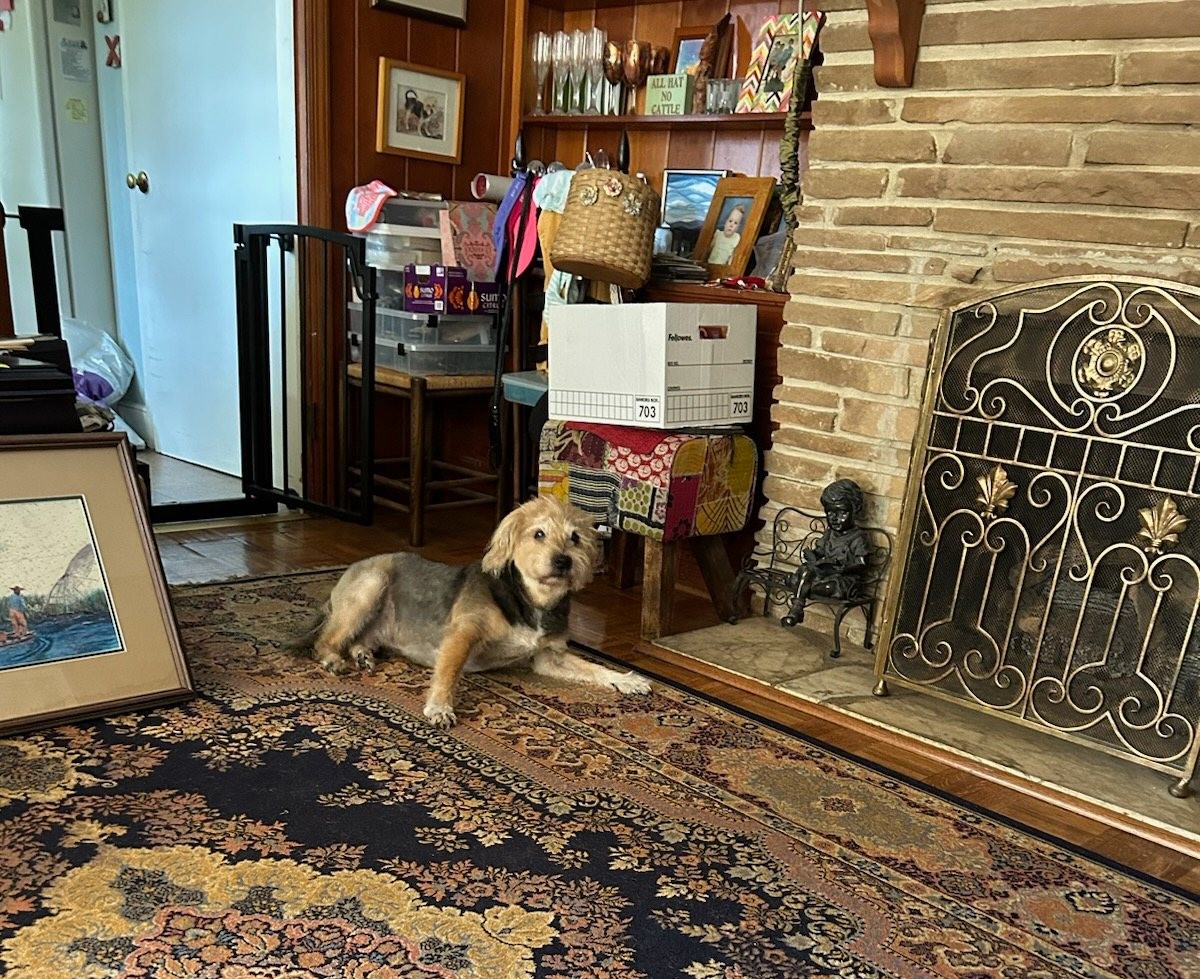
    our dog Carl in front of fireplace in den – January, 2023

    Carl in September, 2023

    Pretty brought Carl into our home in the summer of 2020. Well, she didn’t exactly bring him into our home – she left him outside in a crate on our carport late one night, and when I asked her the next morning if she heard a dog barking from the direction of our carport, she mentioned there could possibly be one in the area. Because we already had two dogs in our relatively small house, we had agreed to never get another one. So much for agreements. Our daughter-in-law Caroline had told Pretty, Sheila will never be able to resist a terrier; of course she was right.

    Carl came without a definite age – possibly ten years old, and I thought he would be a good companion for the other two aging dogs who co-existed without fuss or much bother. But he also came with a host of physical problems including severe infected ears from years of inability to bother by his owners. Despite months of meds, my determination to get this little guy’s ears free of pain, Carl also brought a spirit of spunk that would shake off my constant attention to his ears with ear drops and then race outside like a puppy to explore the backyard he loved. Our other dogs Spike and Charly were ho, hum about the yard so they were initially ho, hum about Carl…until Spike and Carl decided to become mortal enemies. We all managed to survive the crisis, but our lives were modified with baby gates for separation and compartmentalization to remove opportunities for confrontation. Charly the femme fatale was comfortable with either male but also understood the truce between the guys was tenuous.

    My daddy with the doctorate in education occasionally used the phrase “hard times done came upon us” when describing his battle with colon cancer that shortchanged his life at the age of 51 in 1976. Pretty and I felt that way about Carl’s battles with gradual hearing loss in 2023, gradual loss of sight in 2024 to accompany the two shaking arthritic back legs that resisted the magic shots Spike took monthly for his arthritis. Hard times done came upon Carl in the past two years.

    Carl this morning next to his bed in front of a barrier baby gate

    Carl has not lost his spunk, however, although that, too, has modified with age. When he attempts to fly down the brick pathway in the backyard now, his two front legs do most of the flying with the back two legs hopping along behind. He still prefers his backyard with its vast expanse to the confines of the inside rooms.

    I have become Carl’s Seeing Eye Person. I wasn’t certified by The Seeing Eye organization in Morristown, New Jersey (although I did visit Morristown once), but I was definitely trained for the job by a determined terrier who in the last year came to sit next to my recliner, stared me down with his cloudy eyes until I got up to walk outside with him. Patience is one of Carl’s virtues, but my lack of understanding the fear he must have had to live in a world without sound or slight sight surely annoyed him until now I know. Not only do I understand his limitations better but I try to anticipate his fears of the darkness so that he can find his favorite places to pee and poop.

    Carl this morning staring toward the pool

    (we have no luck in growing either plants or tennis balls)

    *******************

    Pretty and I often talk about our Hospice Care for three very old dogs which have given up on learning new tricks, but I will always be grateful for the lessons I’ve learned about aging from each one. I wish for Carl’s bravery in the face of overwhelming obstacles, his joy in running free outdoors, his will to never give up on life even when life doesn’t go the way he planned. Thanks, Carl. I needed that lesson particularly in recent days when hard times done came upon all of us.

  • I’ve seen your swing, I know your swing

    I’ve seen your swing, I know your swing


    TRUMP: Well, I took two tests, cognitive tests. I aced them, both of them, as you know. We made it public. He took none. I’d like to see him take one, just one, a real easy one. Like go through the first five questions, he couldn’t do it. But I took two cognitive tests. I took physical exams every year. And, you know, we knock on wood, wherever we may have wood, that I’m in very good health. I just won two club championships, not even senior, two (sic) regular club championships. To do that, you have to be quite smart and you have to be able to hit the ball a long way. And I do it. He doesn’t do it. He can’t hit a ball 50 yards. He challenged me to a golf match…

    …BIDEN: Well, anyway, that’s – anyway, just take a look at what he says he is and take a look at what he is.

    Look, I’d be happy to have a driving contest with him. I got my handicap, which, when I was vice president, down to a 6.

    And by the way, I told you before I’m happy to play golf if you carry your own bag. Think you can do it?

    TRUMP: That’s the biggest lie that he’s a 6 handicap, of all.

    BIDEN: I was 8 handicap.

    TRUMP: Yeah.

    BIDEN: Eight, but I have – you know how many…

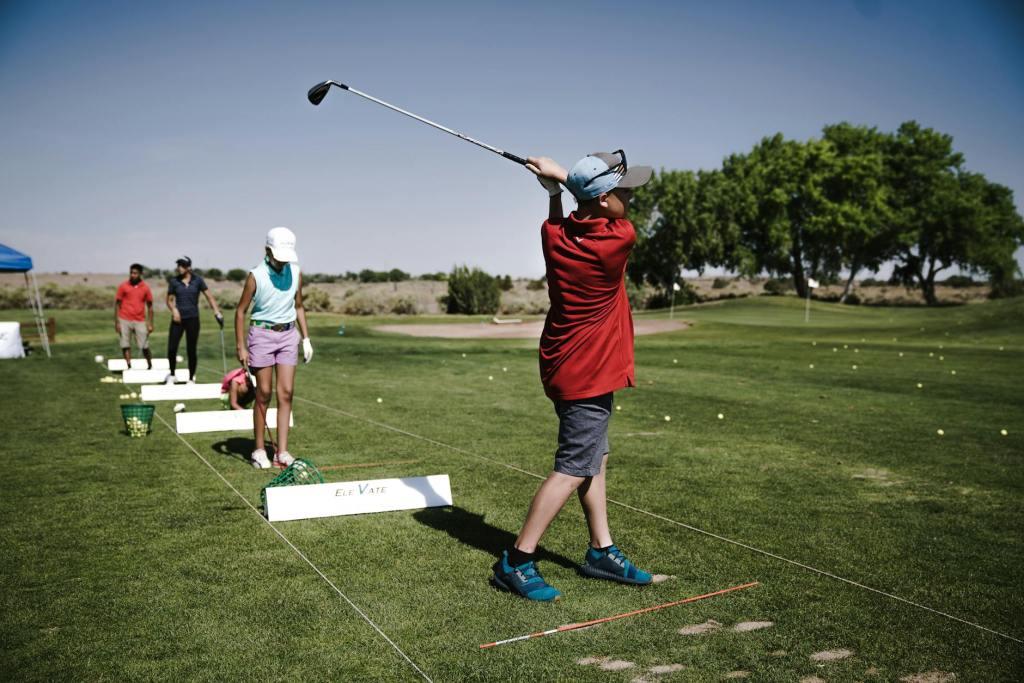
    TRUMP: I’ve seen your swing, I know your swing.

    *****************

    Me:

    Number One – My favorite parts of the great American presidential debate last night were the two commercial breaks when I exhaled.

    Number Two – I am 78 years old, the same age as Trump, and I know I could never win one, much less two club championships playing golf in a tournament not designated “senior” events unless I owned the club and/or sponsored the championship.

    Number Three – uh, I’m not playing if you won’t stipulate…uh, that I have a 6 or maybe 8 handicap, that you have to walk carrying your own clubs while I ride in a golf cart; that I have unlimited Mulligans, and I get to hit from the forward tees. I’ve seen your swing, I know your swing.

    ****************

    One barely septuagenarian candidate has a loud voice full of bravado, but the truth ain’t in him. That sounds like a recipe for disaster. The other barely octagenarian candidate has a powerful record but lacks the ability to communicate effectively anymore. What’s a voter to do? Tick, tick, tick. The clock is ticking toward November.

    Shame on both campaigns for this glaring public display of why many Americans preferred to watch Netflix or refused to watch anything at all like Pretty who went to bed as soon as the Las Vegas Aces won their game with the Chicago Sky at nine o’clock our time. Charly gave me a look and followed Pretty to bed. Carl and I were the last ones standing for the torture that was the political debate, but then Carl is totally deaf and partially blind. I have no excuse.