Category: ageism

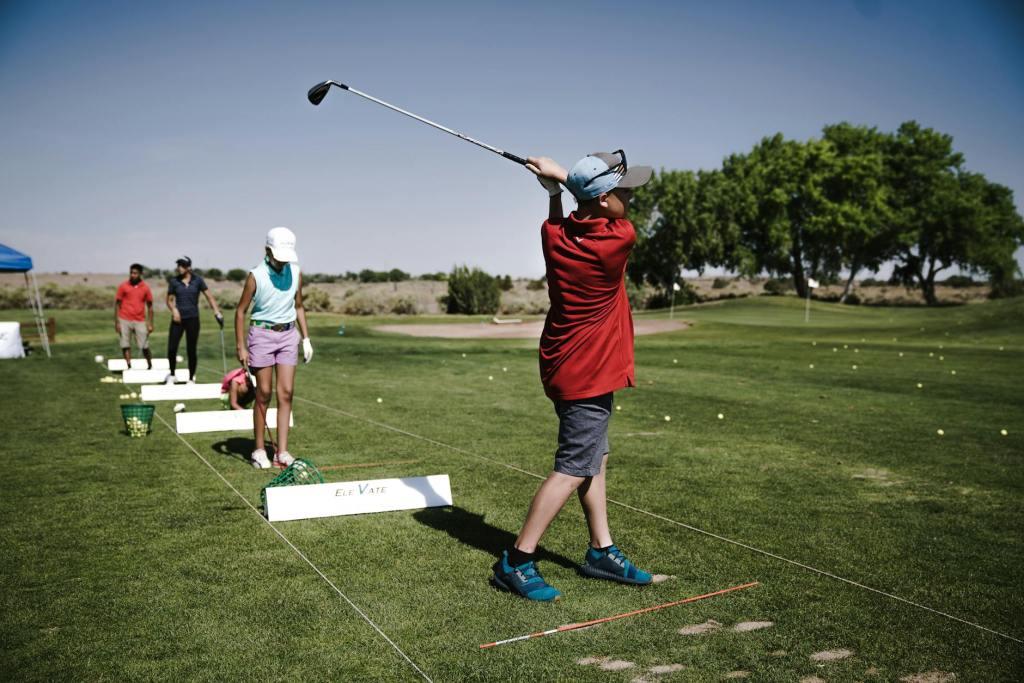
  • I’ve seen your swing, I know your swing

    I’ve seen your swing, I know your swing


    TRUMP: Well, I took two tests, cognitive tests. I aced them, both of them, as you know. We made it public. He took none. I’d like to see him take one, just one, a real easy one. Like go through the first five questions, he couldn’t do it. But I took two cognitive tests. I took physical exams every year. And, you know, we knock on wood, wherever we may have wood, that I’m in very good health. I just won two club championships, not even senior, two (sic) regular club championships. To do that, you have to be quite smart and you have to be able to hit the ball a long way. And I do it. He doesn’t do it. He can’t hit a ball 50 yards. He challenged me to a golf match…

    …BIDEN: Well, anyway, that’s – anyway, just take a look at what he says he is and take a look at what he is.

    Look, I’d be happy to have a driving contest with him. I got my handicap, which, when I was vice president, down to a 6.

    And by the way, I told you before I’m happy to play golf if you carry your own bag. Think you can do it?

    TRUMP: That’s the biggest lie that he’s a 6 handicap, of all.

    BIDEN: I was 8 handicap.

    TRUMP: Yeah.

    BIDEN: Eight, but I have – you know how many…

    TRUMP: I’ve seen your swing, I know your swing.

    *****************

    Me:

    Number One – My favorite parts of the great American presidential debate last night were the two commercial breaks when I exhaled.

    Number Two – I am 78 years old, the same age as Trump, and I know I could never win one, much less two club championships playing golf in a tournament not designated “senior” events unless I owned the club and/or sponsored the championship.

    Number Three – uh, I’m not playing if you won’t stipulate…uh, that I have a 6 or maybe 8 handicap, that you have to walk carrying your own clubs while I ride in a golf cart; that I have unlimited Mulligans, and I get to hit from the forward tees. I’ve seen your swing, I know your swing.

    ****************

    One barely septuagenarian candidate has a loud voice full of bravado, but the truth ain’t in him. That sounds like a recipe for disaster. The other barely octagenarian candidate has a powerful record but lacks the ability to communicate effectively anymore. What’s a voter to do? Tick, tick, tick. The clock is ticking toward November.

    Shame on both campaigns for this glaring public display of why many Americans preferred to watch Netflix or refused to watch anything at all like Pretty who went to bed as soon as the Las Vegas Aces won their game with the Chicago Sky at nine o’clock our time. Charly gave me a look and followed Pretty to bed. Carl and I were the last ones standing for the torture that was the political debate, but then Carl is totally deaf and partially blind. I have no excuse.

  • National Organization for Women: Lost in Translation


    On June 30, 1966, the National Organization for Women was founded by activists who wanted to end sex discrimination. Who could argue with that lofty goal?

    Oh, well. Just about everyone. Many men felt threatened in those early days by a national organization formed to remove barriers of discrimination they liked and needed. Women of color often felt excluded because they weren’t represented in the movement. Queer women felt equally left out. Voter suppression wasn’t a major talking point. Intersectional feminism, what exactly was that? Misunderstood, misconstrued, lost in translation – the challenges of the early days of the National Organization for Women.

    In an effort to better explain its mission, Article II of the bylaws adopted by the NOW membership in 2020 states the following:

    NOW’s purpose is to take action through intersectional grassroots activism to promote feminist ideals, lead societal change, eliminate discrimination, and achieve and protect the equal rights of all women and girls in all aspects of social, political, and economic life.

    NOW’s 2024 Action Plan aims to “win a feminist vistory in the 2024 elections, defeat estremist attacks and restore women’s rights” through grassroots campaigns.

    I was able to kill Roe v. Wade

    love ya, ladies

    Donnie

  • The Great Depression Friendship Quilt


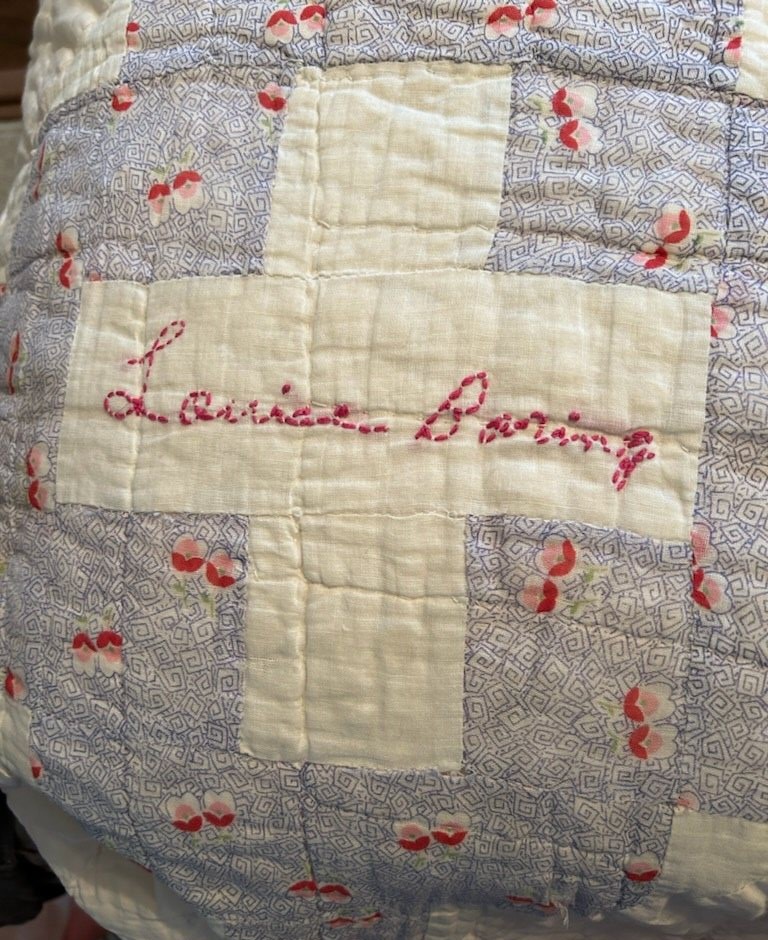
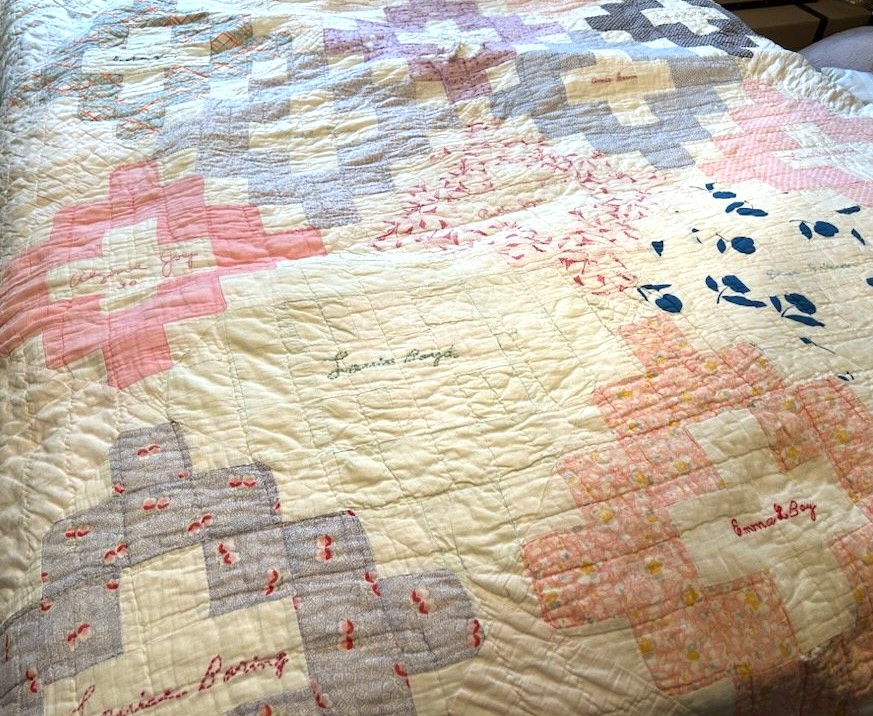
    Since I neither quilt nor sew, why would the friendship quilt above have special significance to me? Because the signature in this particular block was made by my maternal grandmother Louise Boring (1898-1972) as part of a friendship quilt given to my paternal grandmother Betha Morris (1903-1983) by a group of her friends during the Great Depression before Louise and Betha became in-laws in 1945 when Louise’s daughter Selma eloped with Betha’s son Glenn. My grandmother Betha Morris a/k/a Ma to me kept the quilt forever, and I miraculously ended up with it.

    Quilts were popular during the Great Depression of the 1930s because they were usually made from leftovers of scraps from other sewing. The “friendship quilt” was unique in its composition because it was composed of signed blocks of the same pattern, often followed by an inscription.

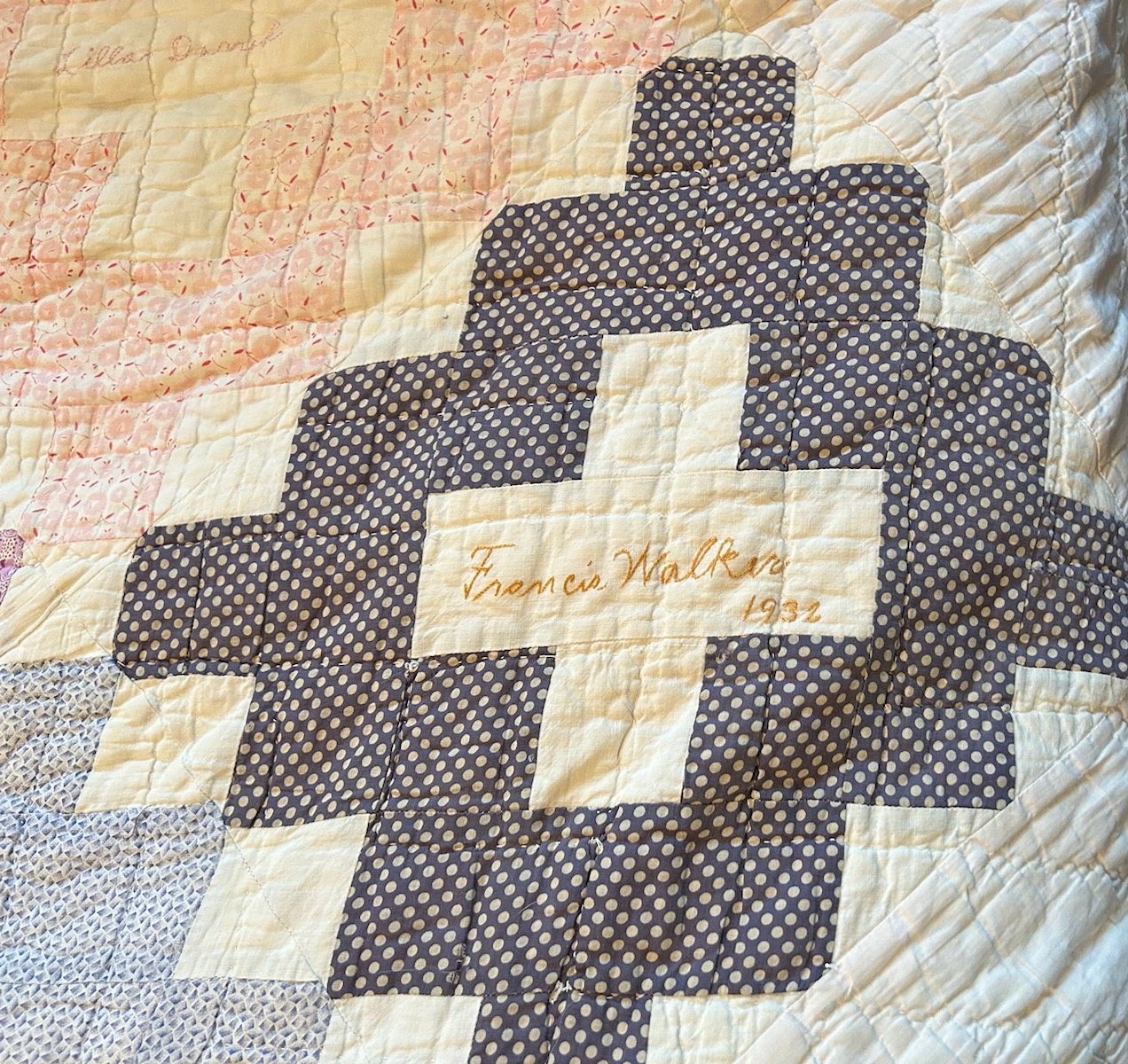
    Note that Lucile Whitfield’s date shown was 1930 while the only other date (1932) belonged to Francis Walker. I’m assuming those are the only dates to indicate when the quilt was begun and when it was finished.

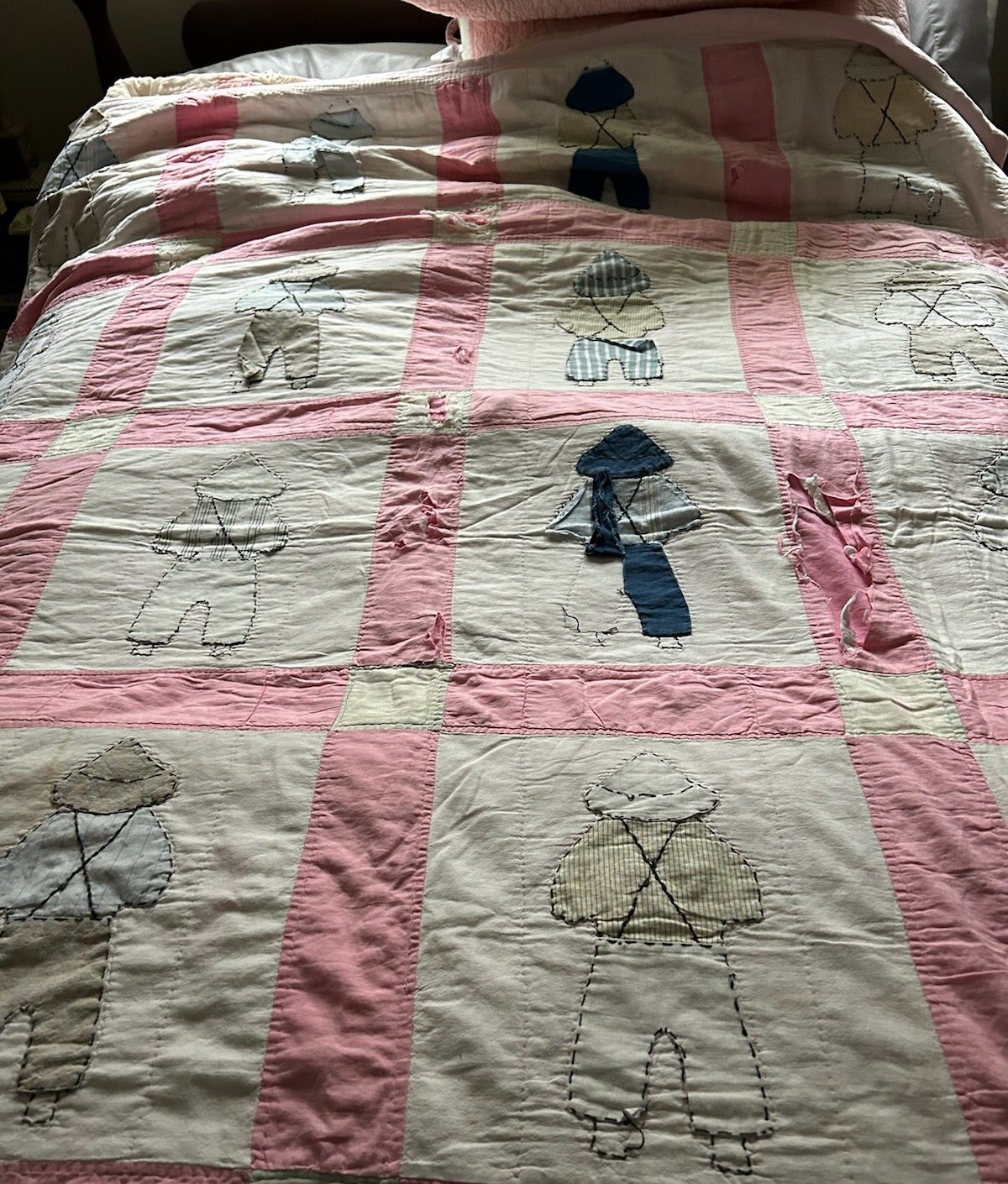
    I remember asking my grandmother Ma about the names on the quilt when she took it down from the top (and only) shelf in the tiny closet in her spare bedroom where I often slept as a child. That room felt like a refrigerator in the winter time, and I begged Ma for more covers. She would get her friendship quilt and one more I still have.

    Somehow in my travels, moves, relocations, embarrassing exits that took me from my little hometown of Richards, Texas, with its familiar names on the friendship quilt to far away places I didn’t know existed seven decades ago, I managed to hang on to these two quilts that have come to rest in a closet at our home on Cardinal Drive in South Carolina.

    Due to circumstances beyond our control regarding Pretty’s health, I was banished to sleep in our “guest room” on my paternal grandparents’ bed, another treasure, which required reinstating these two quilts which seventy years ago kept me warm. Although the quilts now show wear and tear, they still kept me warm on a cold night this week. As I fell asleep under the weight of the quilts, I thought about my grandmothers and their connection to The Great Depression of the 1930s they survived to become major influences in my history – two women whose love and devotion became my North Star that led me home.

  • hail, hail – the gang’s all here – what the heck do we care now?

    hail, hail – the gang’s all here – what the heck do we care now?


    Sometimes a song won’t let go of you for reasons known only to the universe and your memories. I published this piece in March, 2018; but the song (first published in 1917) has been playing in my head again so I thought this post was worthy of a second look. What the heck do I care now – let me explain.

    Christmas memories seem strange on Good Friday, but then the mind often ignores time or at least is able to reconstruct its meandering corridors to bring buried secrets to the surface of consciousness.

    One of my favorite Christmas gifts when I was a child growing up in Richards, Texas in rural Grimes County was not one I received but one  I gave to my maternal grandmother Louise whose name I shortened to Dude when I was unable to pronounce Louise. Louise became “Dude-ese,” then simply Dude.

    I was two years old when my dad, mother and I moved into my grandmother’s small Sears Roebuck designed house in Richards in 1948. We lived in that little house with her for eleven Christmases, and each Christmas she gave me two new pairs of underwear she bought from the general store where she clerked six days a week from 8 in the morning until 6 in the evening with an hour for lunch. Two new pairs of underwear wrapped in last year’s red paper she carefully saved, used again and again, tied with a gold string and a tiny tag signed in her scrawling handwriting Lots of love, Dude.

    The Christmas before we moved away from Richards I bought Dude a present at Mr. McAfee’s drug store from money I saved from my allowance. I had never bought her a gift before and was so excited about my purchase: a door chime that played Hail, Hail – the Gang’s All Here. I hadn’t told anyone about my gift, so imagine the look on Dude’s face when she opened it. Just what she needed, she said, and had me believing it.

    Dude had been 50 years old when we moved in with her and was 61 when we moved away to a town 70 miles from Richards leaving her with a disabled adult son, no transportation since she never learned to drive, and very little income. My family came back to visit her every two weeks; whenever the front door opened we were welcomed with the chimes playing hail, hail – the gang’s all here, what the heck do we care? On those weekends her gang was there.

    I was totally unaware of what loneliness combined with the loss of laughter and love must have been for her the other days and nights of her life at that time because I was, after all, a self-absorbed teenager whose only experience with loneliness was self-imposed and transitory. I was never at a loss for laughter.

    By the time I graduated from high school, my grandmother’s life had the beginnings of her roller coaster battle with depression that would plague her for the rest of her days – a war really – on battlegrounds she fought in doctors’ offices and hospitals,  fought sometimes with medicines, sometimes without medicines, sometimes with electroshock therapy.

    My visits to see her became less frequent when I went away to college, and I remember being surprised on one of those visits to discover the door chimes no longer played when I opened the front door. Surprised, but totally unaware of the significance. Her gang was no longer there.

    This morning I was taking a shower and for some reason the shower song du jour was Hail, Hail, the Gang’s All Here which brought the Christmas memories of my grandmother’s door chime pouring over me like the hot water that rinsed my hair. Dude was the first woman to love me unconditionally with all her heart. I hope wherever she is today her gang is there, too because I want her to be surrounded with the love she gave each of us in the little Sears Roebuck home in Richards.

    Dude (1898 -1972)

    ********************

    Slava Ukraini. For the children.


  • the mystery of the unknown children

    the mystery of the unknown children


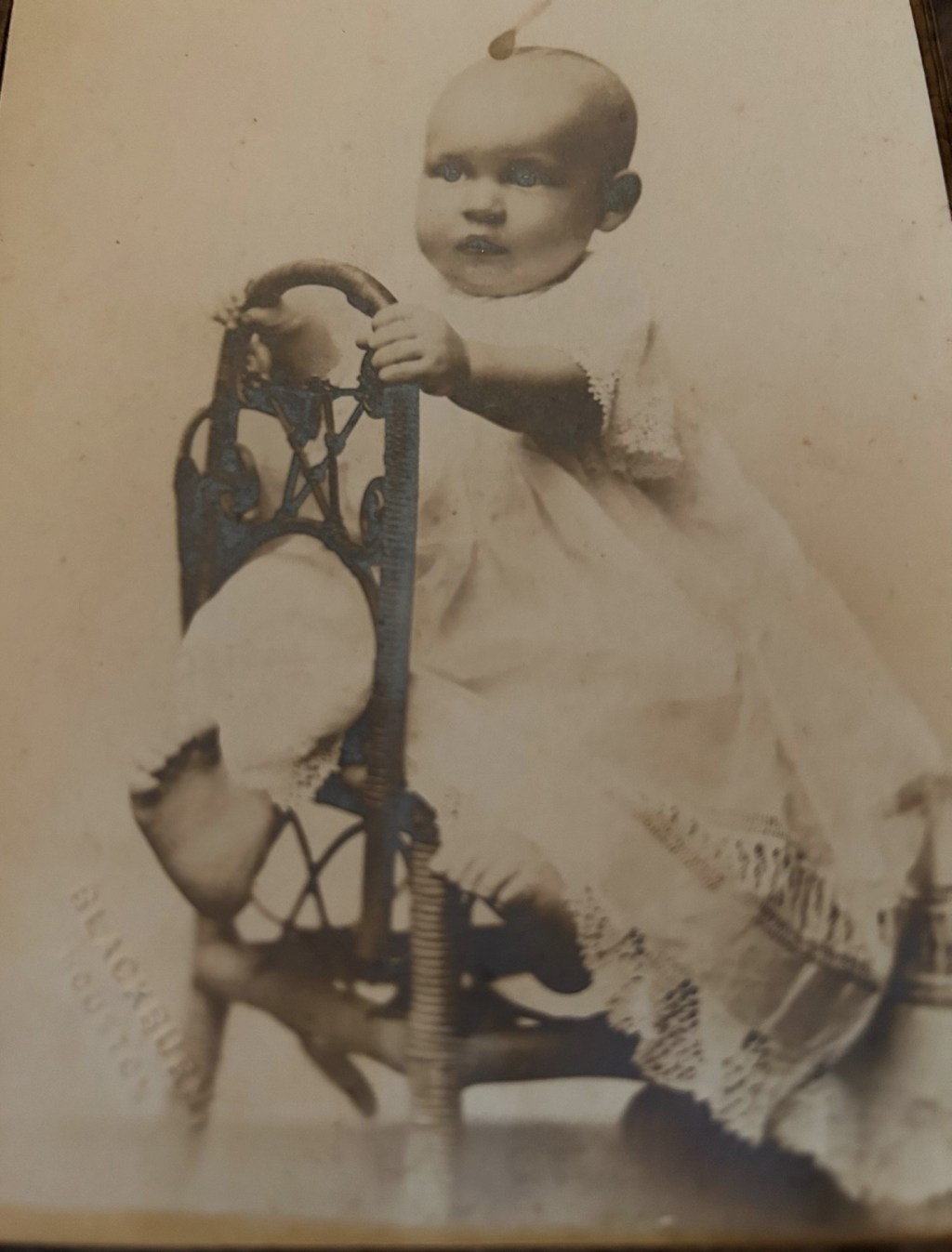
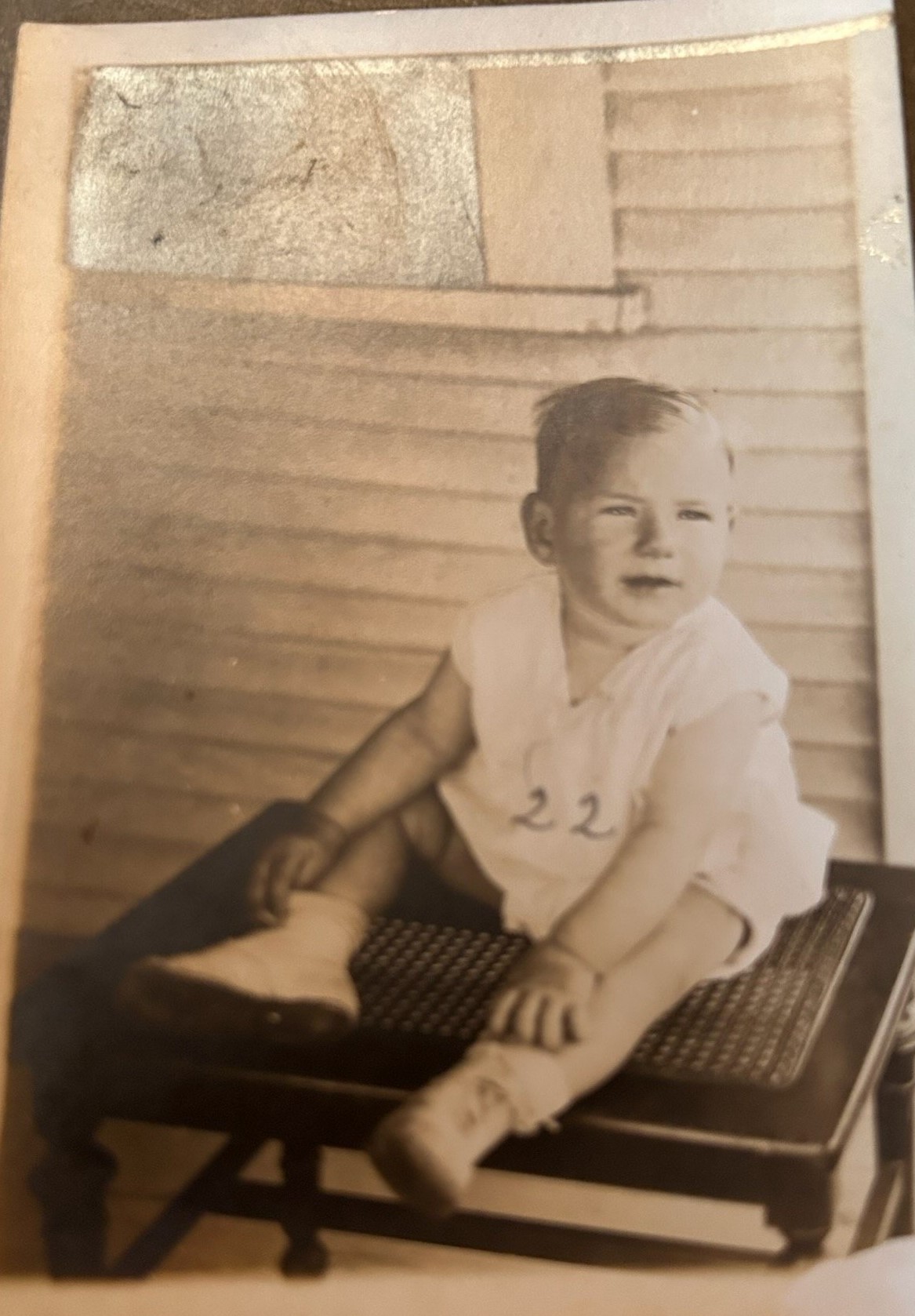
    The children in these photos had significance to my mother who lost interest in her family history somewhere along the road to losing her memories. Pretty and I found these pictures among hundreds of them dumped haphazardly in boxes in my mom’s garage when we were cleaning out her house to move her from her home in Rosenberg to a memory care facility in Houston in 2007. I could identify most of the people in her large collection, but I am clueless on these children whose photos had no names anywhere. I love these photos for the times and places they represent, but what wouldn’t I give to know who they were and what their relationship was to my mom.

    who is this little girl framed by flowers?

    she had five identical pictures of this little boy

    but no name on any of them

    this little girl seemed happy with being photographed

    these two little girls didn’t look happy at all

    Blackburn Photography took this formal portait –

    still in photography business in Houston today

    The moral of this story (if there is one): ask questions today of the ancient ones in your family if you want to avoid unsolved mysteries in your future. Starting the new year is a good time to begin. My Uncle Marion might have said “discover more in 2024.” I say go for it.

    *****************

    Slava Ukraini. For the children.