
Category: ageism

  • the sundowners starring someone you love (part 1)

    the sundowners starring someone you love (part 1)


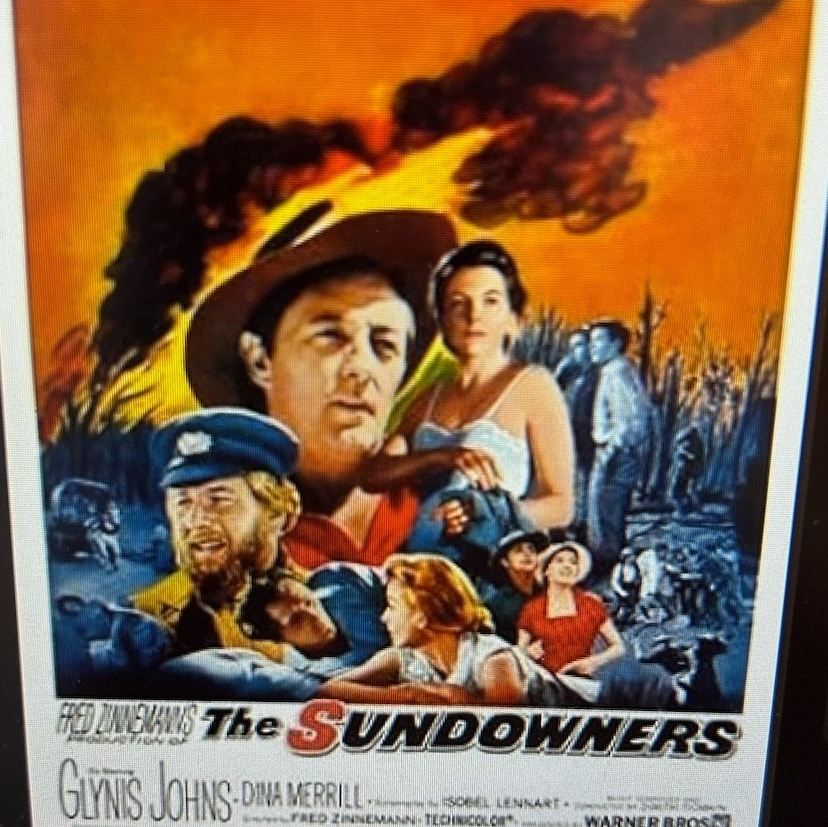
    Turner Classic Movie fans and/or folks who are old enough to remember the year JFK was elected President might think of The Sundowners as a 1960 movie starring Robert Mitchum and Deborah Kerr.

    Those folks would be right about the movie, but for many others the sundowners are not actors in a movie – they are people characterized by real life problems. The Mayo Clinic offers the following definition of the word.

    The term “sundowning” refers to a state of confusion occurring in the late afternoon and lasting into the night. Sundowning can cause different behaviors, such as confusion, anxiety, aggression or ignoring directions. Sundowning can also lead to pacing or wandering. Sundowning isn’t a disease. It’s a group of symptoms that occur at a specific time of the day. These symptoms may affect people with Alzheimer’s disease and other types of dementia. The exact cause of this behavior is unknown.

    My first personal experience with sundowning was with my mother who began strange behavior before I attributed her late afternoon anxiety to a specific cause. Full disclosure I lived a thousand miles away from her Richmond, Texas home in South Carolina in the 1990s, visited twice a year, out of touch with her daily life. We maintained our long distance fragile mother-daughter relationship via weekly telephone calls once upon a time before cell phones. When my mom was in her early 70s, I went home to help her make arrangements for her brother Toby’s funeral in 1997. While I was there for a few days, I noticed she went through her house closing shutters every afternoon before supper. She also became very agitated until her best friend Willie Flora (who spent every night with her) arrived at suppertime. I dismissed this as having to do with a death of someone close to her.

    Years passed, a new century brought changes to both my mother and me, but on my Texas visits I saw my mother’s early evening behaviors grew stranger. Her anxiety levels manifested paranoid issues I could no longer explain away. Sundowning was one of the first indications of the demon called dementia that robbed my aging mother of not only her memories but also her physical well-being.

    When Pretty and I began to notice changes in Carl’s behavior in late afternoons this year, we talked about the sundowning syndrome.

    Stay tuned for sundowning in dogs – it’s not just a human problem.

  • Dump Old Joe Movement? Not Me

    Dump Old Joe Movement? Not Me


    I flirted with the Dump Old Joe Movement for a hot minute, why?

    because Joe is old, white and old.

    Would I prefer young, not quite so white, and young?

    Probably, but I think Joe’s doing a good job so why punish him

    for two things he can’t control: his age and the color of his skin.

    I am, however, a card carrying member of the Anybody But Trump Movement, why?

    because Trump is old, white, and has been indicted on 91 criminal charges.

    I never even glanced at the Kick Kamala to the Curb Movement, why?

    Because Kamala is much younger at 58, a female person of color, outspoken champion of women’s rights to control our own bodies, brilliant, fights injustices and…

    because people of color will determine the outcome of the 2024 election.

    ***************************

    Slava Ukraini. For the adults in the room.

  • Hillary, Nancy, Ruth – Ruth?

    Hillary, Nancy, Ruth – Ruth?


    Nancy said know your why – what motivates you – what matters to you – what you believe – the why. Hillary said get the naysayers and the whiners and the snipers to go to the back of the room… this country can still do good stuff with Joe Biden. Ruth said educators have to be at the forefront of fighting the country’s impulses to become ignorant again. Three amazing women on TV this morning before 9 o’clock, and it’s September – six months after Women’s History Month in March. Such a wonderful surprise for me when, yes I admit it, I am languishing without tennis at the US Open. I needed a swift kick in the butt to energize me for 2024, to shake me out of my whining and naysaying, to remind me of my personal “why.”

    Nancy Pelosi is a household name and, depending on the household, revered as an American politician who led fierce opposition to a Republican president when she was Speaker of the House of Representatives the second time, just as fiercely led support for President Joe Biden that produced the most sweeping legislation the country has seen since the LBJ administration. Speaker Emerita Nancy Pelosi was born in 1940 to a family with Italian heritage and a commitment to public service.

    Hillary Clinton is also a household name and, again depending on the household, celebrated as the first woman to be nominated by a major political party for the office of President of the United States in 2016, an election she lost to her opponent. Clinton was born in 1947, influenced during her college years by the Vietnam War and the American Civil Rights movement, was a fomer first Lady of the United States, former US Senator, former Secretary of State. This year she will be a professor and fellow in global affairs at Columbia University.

    Dr. Ruth Simmons, on the other hand, is not a household name, but she is an American educator who became the first Black president of an Ivy League college, Brown University, in addition to serving as presidents of two other colleges: Smith College and Prairie View A&M University. She did her undergraduate work on scholarship at HBCU Dillard University in New Orleans, earned a master’s and Ph.D from Harvard. She was born the youngest of 12 children in Grapeland, Texas to a sharecropper’s family in 1945 when the message to people of color was you are not smart enough to ever become anyone. Her memoir Up Home: One Girl’s Journey was published last week by Random House and is already a New York Times Bestseller.

    Ok. Now I’m wide awake, feeling guilty for my fears for the future when I’ve heard three women who are in my cohort by age only (I was born in 1946), three women who refuse to give up on a flawed America too often characterized by our differences in world view rather than the similarities of our hopes and dreams for our children, three women who continue to look forward to change rather than fear it. May Sarton writes in her Journal At Seventy if someone asked me what are the greatest human qualities, I would have to answer courage, courage and imagination. If Sarton could have lived to hear these three extraordinary women this morning, I think she would agree with me that they all possess the greatest human qualities. They are women of courage, imagination and I would add perseverance.

    To paraphrase Nancy today, I am an optimist. But I have a lot of worries.

    ****************************

    Slava Ukraini. For the children.

  • Pretty scolds me

    Pretty scolds me


    As we turned into the driveway this morning from running errands that included taking Carl to the vet over the river and to the city for evaluation and annual shots by 9 a.m., then driving completely in the opposite direction from the vet to my eye doctor to pick up a pair of eyeglasses being repaired but breaking the heavy traffic with a quick stop at the Rush’s drive thru for our daily fix of iced tea. When I saw the large Ukrainian flag we fly at the edge of our carport, I said oh my goodness. Those poor Ukrainian people are having such a horrible life; I see the images every day of their losses. I continuously worry so much about the children.

    When Pretty came to a stop at the carport, she turned to me and said you are so negative. You always see the worst in everything anymore.

    To which I replied, maybe because I am getting old.

    May Sarton (1912 – 1995) was a Belgian-American novelist, poet, and memoirist who wrote in her journal At Seventy published in 1984: “What I want to convey is that, in spite of the baffling state of the world around us – war in the Falklands and in the Middle East, poverty, recession, racism at home – it is still possible for one human being, with imagination and will, to move mountains. The danger is that we become so overwhelmed by the negative that we cannot act.”

    What I want to convey to Pretty is that, in spite of the baffling state of the world around us – war in Ukraine and in the Middle East, poverty, inflation, racism at home, a former president of the United States surrendering today for defying the laws set forth by our founders in the Constitution – it is still possible for one human being, with imagination and will, to move mountains. The danger is that we become so overwhelmed by the negative that we cannot act.

    I believe that in the past six years I have become more overwhelmed by the negative than I realized so from this day forward I promise to project positivity for the sake of my family, friends, and followers.

    Hm. I hope I haven’t chosen a bad day to make that pledge. TV news off.

    ***********

    P.S. The eyeglasses weren’t ready – the woman told me she had been on vacation so the lens had arrived but they hadn’t been placed in a frame. They will call me. But not to end on a negative note, the woman at the Rush’s drive-thru was the friendliest person ever. Seriously, the…friendliest…person…ever.

  • yesterday when I was young

    yesterday when I was young


    This morning I woke with Roy Clark’s version of “Yesterday When I Was Young” playing in a loop in my head, I think possibly because Pretty and I volunteered to help at a memorial tennis tournament yesterday for a good friend’s daughter whose song would be Today When I Was Young, when I was brave, when I was fierce, I died too soon in 2022 at the age of 36. As the song played over and over in my head, I began to wonder about the singer and songwriter.

    Roy Clark, the singer whose version I remember best, was born in 1933 in Meherrin, Virginia and died on November 15, 2018 in Tulsa, Oklahoma six weeks following the songwriter Charles Aznavour’s death in the south of France. Clark was the son of a laborer on the railroad and in the sawmills of Virginia while Aznavour was born in Paris in 1924 to parents who had escaped the Armenian genocide. I was struck by the random coincidence of their deaths, the musical connection between two giants in their respective professions.

    Two men from widely disparate origins and musical backgrounds, yet their music met in 1969 when Clark recorded “Yesterday When I Was Young” that was written and sung by Aznavour as “Hier Encore” (yesterday again) in 1964. Doreen St. Felix wrote a tribute to Aznavour in The New Yorker on October 23, 2018 while the Ken Burns Country Music Documentary that premiered in 2019 on PBS included excerpts from Clark’s biography.

    “On October 1st, Charles Aznavour, the world’s last and greatest troubadour, was found dead in the bath at his home in the small village of Mouriès, in southern France. He was ninety-four. Aznavour’s career spanned nearly eighty years, at least a thousand songs, three hundred albums, dozens of tours, and many, many films. His music, animated by an earthy interest in what addles and excites the common man, had a revolutionizing impact on French pop, extending its lifetime well past its mid-century golden age, and its influence well beyond the borders of Aznavour’s nation. Logically, his death should not have been a shock. Age must do its ravishing, even to those who have acquired the sheen of the immortal.” (Doreen St. Felix)

    “…The following year [1963], Roy Clark had his first hit – Bill Anderson’s “The Tips of My Fingers” – and in 1969, his song “Yesterday When I Was Young” became a hit on both the pop and country music charts. In the decades that followed, he would place more than 50 songs on the country charts, including nine Top 10s. It was also in 1969 that Roy received a call from Jim Halsey about hosting a new television show, based loosely on the hit variety show Laugh In, but swapping out youth culture for country music, rural one-liners, and blackout comedy. At its peak, Hee Haw reached 30 million viewers weekly and Clark became an ambassador for country music…” (Ken Burns)

    Yesterday, when I was young the taste of life was sweet like rain upon my tongue. I teased at life as if it were a foolish game the way an evening breeze would tease a candle flame. The thousand dreams I dreamed, the splendid things I planned, I always built to last on weak and shifting sand. I lived by night and shunned the naked light of day and only now I see how the years have run away. Yesterday, when I was young there were so many songs that waited to be sung. So many wild pleasures that lay in store for me and so much pain my dazzled eyes refused to see. I ran so fast that time and youth at last ran out. I never stopped to think what life was all about and every conversation that I can recall concerns itself with me and nothing else at all.

    Unlike the lyrics in this song, I do stop to think what life was all about, a personal luxury at the statistical life expectancy age for women in the United States of 77.28 years which is my age today. I can identify with these lyrics, with its universal themes of how the years run away, the wild pleasures mixed in with the dazzling pain, teasing at life, dreams that won’t ever be realized – all compressed into memory makers. But I had a reminder yesterday that my age is a gift, unmerited favor, grace that should be celebrated every day.

    *************

    Each of you is a part of my gift of life – I am thankful for you. Rest in peace, KK.