Category: death

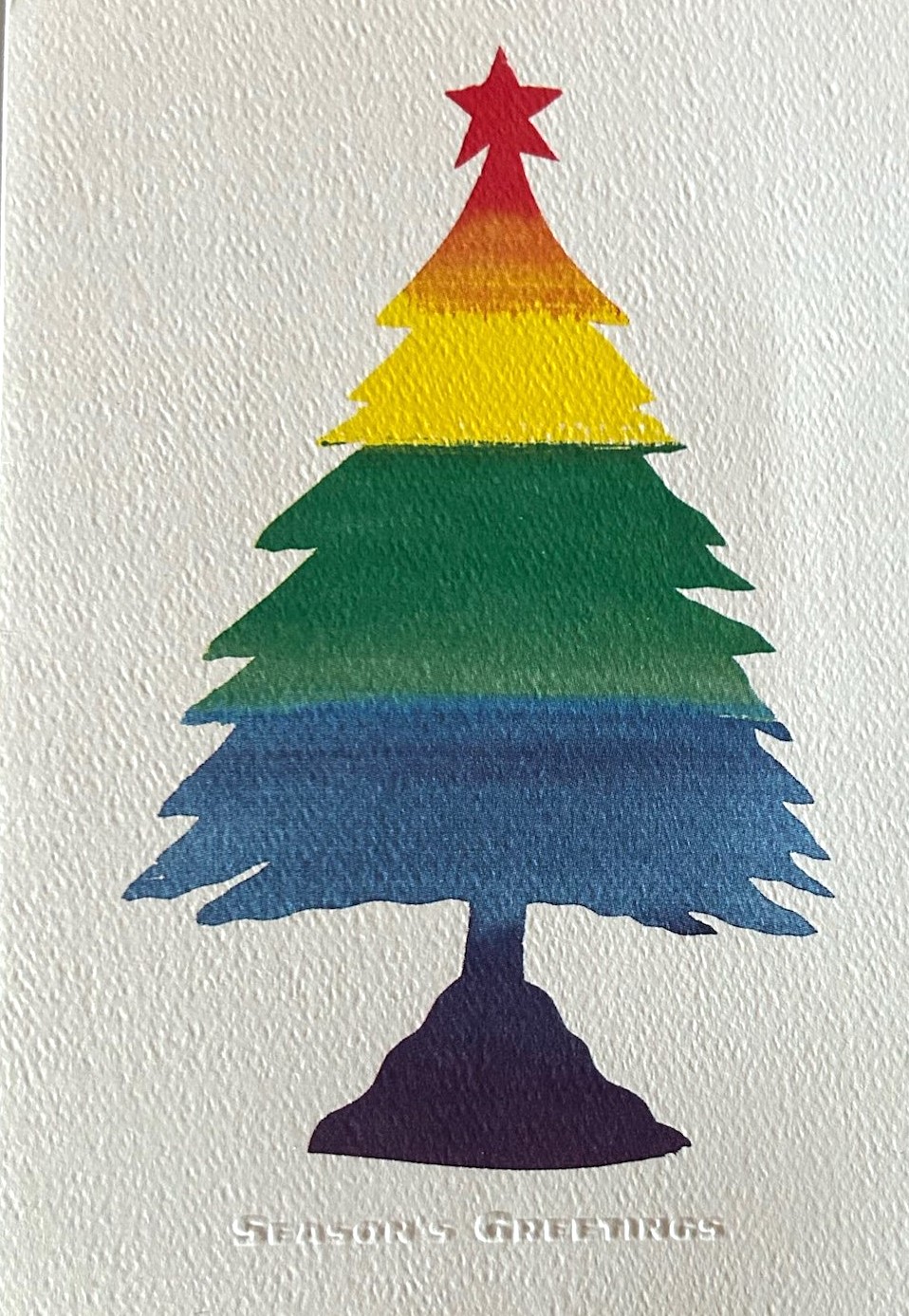
  • Season’s Greetings – no, not THAT season

    Season’s Greetings – no, not THAT season


    Oh gosh, the old gray mare ain’t what she used to be. She thinks it’s December – not June, right? Sad.

    Not to worry or despair, o ye cyberspace friends and followers. Blame Pretty for this one because yesterday she found a large decorative storage box full of Christmas cards we hadn’t looked through in twenty years. That’s right. Twenty years. As I waded through the memories, I found two rainbow greeting cards sent by two gay men named Chuck with different last names in different years, both of whom are now deceased.

    That struck me as more than a random coincidence as we begin to celebrate Pride during the month of June, 2024.

    So in memory of two friends who are no longer with me, Chuck Heath and Chuck Bowen, I wish you all a Happy Pride! Celebrate the season wherever you are.

  • some goodbyes are more painful than others

    some goodbyes are more painful than others


    From 1977 to 1991, the North Carolina Tar Heels aired on WBT AM which was a 50,000-watts radio station in Charlotte, North Carolina. Charlotte was 90 miles north of Columbia, South Carolina so reception for the Tar Heels basketball and football games was scratchy in the best of times. In 1982 the Tar Heels won their second of six NCAA men’s basketball championships, and somewhere around that time two men who were introduced at lunch by a mutual friend because he knew they shared a common interest in all things Tar Heels – these two men in their thirties decided they would drive to the outer edges of the army base at Fort Jackson which was ten miles outside of Columbia to get better reception to sit in their car and listen to whatever games North Carolina had on the air.

    Their passion for the Tar Heels resulted in a friendship between Dick Hubbard and Fred Roper that lasted for the next four decades, past the little WBT radio station broadcasts to the luxury of Big Screen TVs that went from black-and-white to color on ESPN and Fox networks to streaming whenever and wherever they wanted to watch. Together. Occasionally an outsider was invited to share the fun, but mostly it was Dick and Fred.

    All good times come to an end, and last week Dick called me to say he had lost his best male friend. Fred had been ill for a number of years, and his husband Jon had found him unresponsive at home that morning. The EMS responders were unable to resuscitate him.

    We live in an age where friendships are often seasonal, random, difficult to maintain. People change, move on, move away, lose interest, stop working on friendships; but in a world where platonic friendships may not be celebrated with the same fanfare we offer our married friends’ anniversaries, I’d like to say congratulations to Dick for being a loyal, devoted friend to Fred in sickness and in health.

    Rest in peace, Fred. You will be missed by many of us, and your Tar Heels owe you another title. Maybe next year, but it won’t be the same without you.

    ;

  • an other-worldly woman of substance


    Photo by eberhard grossgasteiger on Pexels.com

    The reality is that you will grieve forever. You will not “get over” the loss of a loved one; you will learn to live with it. You will heal and you will rebuild yourself around the loss you have suffered. You will be whole again, but you will never be the same. Nor should you be the same. Nor would you want to. — Elisabeth Kubler-Ross (1926-2004)

    Kubler-Ross devoted most of her adult life to death and dying. She was a pioneer in hospice care, palliative care, and a leading researcher in the lives of the terminally ill. “One of her greatest wishes was to build a hospice for abandoned infants and children infected with HIV to give them a lasting home where they could live until their death. Kübler-Ross attempted to set this up in the late 1980s in Virginia, but local residents feared the possibility of infection and blocked the necessary re-zoning. In October 1994, she lost her house and many possessions, including photos, journals, and notes, to an arson fire that is suspected to have been set by opponents of her AIDS work.” (Wikipedia)

    In her lifetime Kubler-Ross wrote over twenty books on death and dying, was in the National Women’s Hall of Fame, was one of Time magazine’s Top Thinkers of the Twentieth Century, Woman of the Year in 1977, and became a leader as an advocate for spiritual guides and the afterlife despite scandals from her association with a charlatan medium in the late 1970s.

    When I enrolled my mother in hospice care in 2011, I didn’t realize the connection the excellent end of life care she received through the program had been co-founded by a woman who believed in treating the dying with dignity. The team of caregivers we had for the last few months of Mom’s life were compassionate, capable, and centered on her needs. I was also amazed by their assistance throughout the first year of my grieving process following her death.

    As I approach the twelfth anniversary of my mother’s death, I want to honor Elisabeth Kubler-Ross during Women’s History Month, one of the women who had the courage to explore her passion for peace, to protest injustice, to pursue theories considered to be too controversial in an unknown frontier. Elisabeth gave us permission to grieve for losses too painful to deny.

    Yes, the reality is that we will grieve our losses forever, but it’s also true we will be whole again. Never the same, but whole again. That’s cause for celebration.

    ******************

    For all those who grieve.

  • the Orangeburg Massacre: yet another people’s struggle against oppression

    the Orangeburg Massacre: yet another people’s struggle against oppression


    In 2006, Cleveland Sellers’ twenty-two year old son Bakari was elected to the South Carolina Legislature, making him the youngest African American elected official in the country. Speaking with emotion at a SC State memorial service to honor those lost in the Orangeburg massacre, Bakari Sellers said, “We join here today in our own memorial to remember three dead and 27 injured in yet another massacre that marked yet another people’s struggle against oppression. These men who died here were not martyrs to a dream but soldiers to a cause.”

    The Orangeburg Massacre occurred on the night of February 8, 1968, when a civil rights protest at South Carolina State University (SC State) turned deadly after South Carolina highway patrolmen opened fire on about 200 unarmed black student protestors. Three young men were shot and killed, and 28 people were wounded. The event became known as the Orangeburg Massacre and is one of the most violent episodes of the civil rights movement, yet it remains one of the least recognized.

    The above excerpts from HISTORY.com editors on February 07, 2022, related to an event known in South Carolina history as the Orangeburg Massacre which took place on February 08, 1968. I remembered the year, but I didn’t remember the Orangeburg Massacre when I moved to South Carolina in 1974.

    I was in my first year of a “real” job in February, 1968, working for one of the Big 8 CPA firms when the Orangeburg Massacre occurred. While I sat in my cubicle on the 17th. floor of the Bank of the Southwest building in Houston, Texas, I didn’t realize history was being made by students my age at historically black South Carolina State University in the small town of Orangeburg, South Carolina, more than a thousand miles from where I sat.

    Imagine being a black student at SC State, going to a bowling alley with friends on February 05, 1968, only to be turned away by owner Harry Floyd who claimed his All-Star Bowling Triangle bowling alley was exempt from the Civil Rights Act of 1964 since his bowling alley was private property. Whites Only, the sign said.

    Students from SC State and nearby Claflin University began nonviolent protests that lasted for two nights, but on the third night their nonviolence took an extremely violent turn when South Carolina highway patrolmen opened fire on about two hundred unarmed black student protestors. Three young black men were killed with another twenty-eight protestors wounded.

    The three students who were shot and killed by the police were: Freshman Sammy Hammond was shot in the back; 17-year-old high school student Delano Middleton, whose mother worked at SC State was shot seven times; and 18-year-old Henry Smith was shot three times. (History.com)

    Among the wounded that night was a young civil rights activist named Cleveland Sellers, Jr., who was born in neighboring Denmark, South Carolina, a town with a population under 2,000 when he was born in 1944; he had returned to his home state in 1967 to pursue a teaching career following years of activism in the Civil Rights Movement which put him on the government’s radar as a militant. On the night of the Orangeburg Massacre Cleve Sellers was shot in the arm, taken into custody at a local hospital and charged with inciting a riot on the campus. Two years later in September, 1970, a South Carolina judge allowed the state to convict him of rioting at the bowling alley. Sellers was sentenced to one year of hard labor but released after seven months. He was the only protestor prosecuted – nine police officers were charged with shooting at the protestors…all were acquitted.

    Harry K. Floyd, Sr., owned and operated the All-Star Triangle Bowling Alley until his death in 2002 at which time his son Harry K. Floyd, Jr., took over. The Floyd family closed the bowling alley in 2007 due to “financial difficulties” according to wikipedia. The site remains on the National Register of Historic Places and has supposedly been bought by a nonprofit in 2020 with the goal of turning it into a memorial for the Civil Rights Movement in Orangeburg called the National Center for Justice.

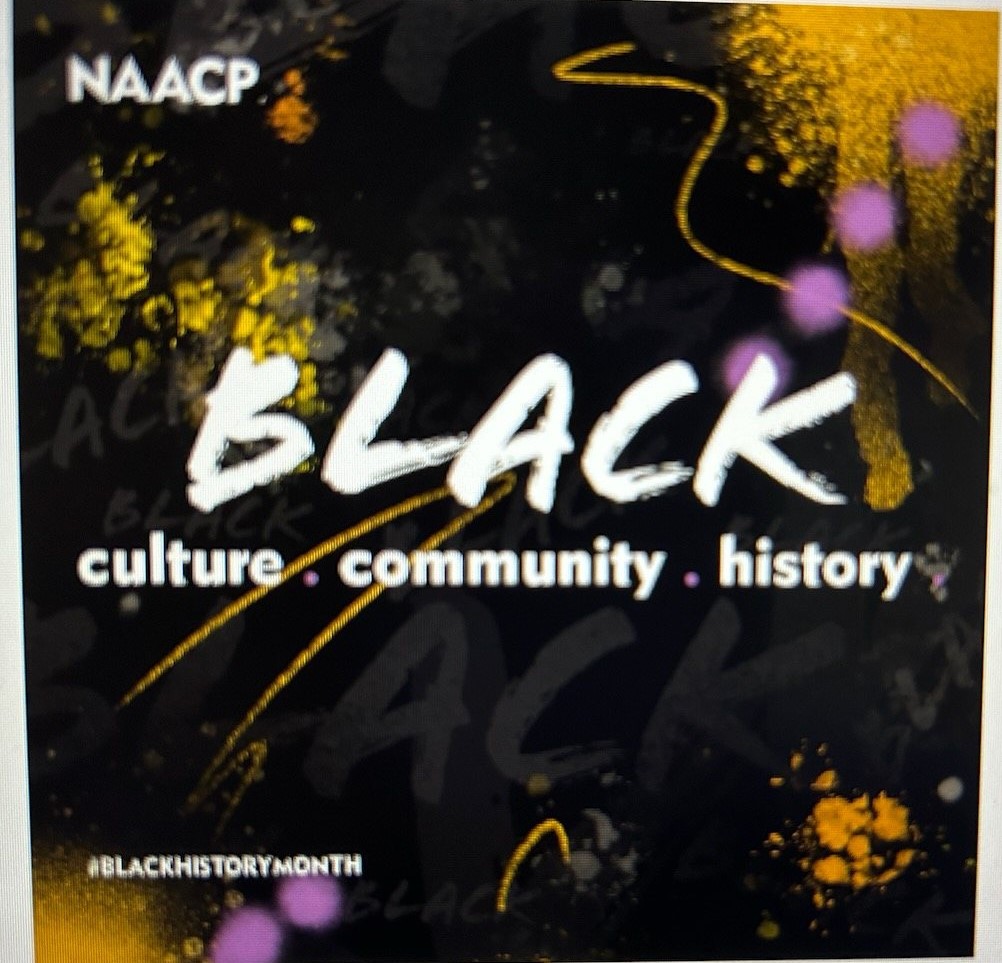
    February 08, 2024, marked fifty-six years since the Orangeburg Massacre, and I felt Black History month was an opportunity to remember, to honor the personal sacrifices made by ordinary citizens who refused to yield to discrimination based on their race. Cleveland Sellers, Jr., went on to serve his native South Carolina by becoming the director of the African American Studies Program at the University of South Carolina, by becoming the 8th. president of Voorhees College in Denmark, and by raising his youngest of three children, Bakari, to follow in his footsteps as an activist who honored the Orangeburg Massacre.

  • say it ain’t so, Rafa

    say it ain’t so, Rafa


    Rafael Nadal announced yesterday he will become the tennis ambassador to Saudi Arabia in an effort to promote the visibility of tennis in the kingdom which will open a Rafa Nadal Academy there for the purpose of developing young talent in the country.

    “Everywhere you look in Saudi Arabia, you can see growth and progress and I’m excited to be part of that,” Nadal wrote in a statement. “I continue to play tennis as I love the game. But beyond playing I want to help the sport grow far and wide across the world and in Saudi there is real potential.” (Josh Fiallo, The Daily Beast, January 16, 2024)

    Okay, cyberspace friends. Hopefully your jaw found a soft landing on that news. My jaw felt like the ground hit by the ball dropped in Times Square in New York City at midnight on New Year’s Eve. I felt gobsmacked, somehow personally betrayed by a close friend. Obviously Rafa and I aren’t close personally, but I have loved him throughout his career since he began playing professional tennis in 2001 as a sleeveless young fourteen year old boy with more guts than glory back then. It was the same year Pretty and I got together, and we will have our twenty-third anniversary next month.

    My feelings for Rafa were that he was not only one of the greatest tennis players of all time but also a humble, good guy who had respect for the game of tennis and everyone who played it. Say it ain’t so, Rafa. Where in the world did you look in Saudi Arabia to see “growth and progress everywhere?” Did you look at their treatment of homosexuals, for example?

    The Wahabbi interpretation of Sharia law in Saudi Arabia maintains that acts of homosexuality should be disciplined in the same way as adultery – with death by stoning. Homosexuality or nonconformant gender expression can also be punished by corporal punishment, flogging, imprisonment or forced ‘conversion’ therapy. In 2019, the Saudi Arabian government orchestrated a mass-execution of 37 men who were accused of espionage or terrorism, five of whom were also convicted of same-sex intercourse after one was tortured into confessing. (Fair Planet May 27, 2023)

    Rafa, the following tidbit from the Human Dignity Trust hits closer to home for me – did you see it?

    In April (2020) a Yemeni blogger living in Saudi Arabia was arrested for advocating for equality for LGBT people. In July he was sentenced to ten months’ imprisonment and a fine, followed by deportation, under ‘public indecency’ laws. While in detention he was subjected to solitary confinement, beatings, and torture.

    While the Saudi Tourism Authority has apparently updated its website according to CNN Travel in May, 2023 to say gay travelers are welcome in the kingdom in an effort to attract more overall revenue from international tourists, no governmental assurances have been made to make LGBTQ+ individuals feel safe.

    And Rafa, did you read this post on the status of women in Saudi Arabia by Tracey Shelton in January, 2023 on abc.net.au?

    Rei na Wehbi, MENA regional campaigner for Amnesty International, said while Saudi Arabia is “rebranding its image” as a progressive state, the underlying reality is very different. “‘Positive’ changes have mostly been social reforms and are very far from genuine human rights reforms in Saudi Arabia,” she said.

    “They are meant to deflect attention from the continued brutal crackdown on activists and human rights defenders and other flagrant human rights violations.”

    She said most human rights defenders, independent journalists, writers and activists have been arbitrarily detained. In 2019, just as the kingdom announced that women could drive, the women who had campaigned tirelessly and publicly for precisely this right were arrested and locked away. More recently, Salma al-Shehab, a PhD student and activist who posted support for women’s rights activists on Twitter, was re-sentenced to 27 years in prison in January, 2023.

    Money talks, right, Rafa? But will you sell your soul for twenty pieces of silver…or twenty gazillion? Will you sacrifice your personal integrity for an alliance with a country recognized around the globe as a repeated offender of human rights – not to mention terrorist organizations connected to the events of 9-11 in New York City? I cringe at the thought.

    I am a seventy-seven year old woman who has loved you like a family member for more than two decades, but you have broken my heart over your alliance with a country that in my opinion is aligned with evil.

    Say it ain’t so, Rafa.

    ****************

    And don’t even get me started on the Women’s Tennis Association going to Saudi Arabia for its season-ending finale this year. OMG. What are they thinking?