Rosalynn Carter was an American activist and writer who served as First Lady of the United States from 1977 – 1981 during the presidency of her husband Jimmy Carter, the 39th. President of the United States. She was born August 18, 1927 in Plains, Georgia and died November 19, 2023 in Plains, Georgia.
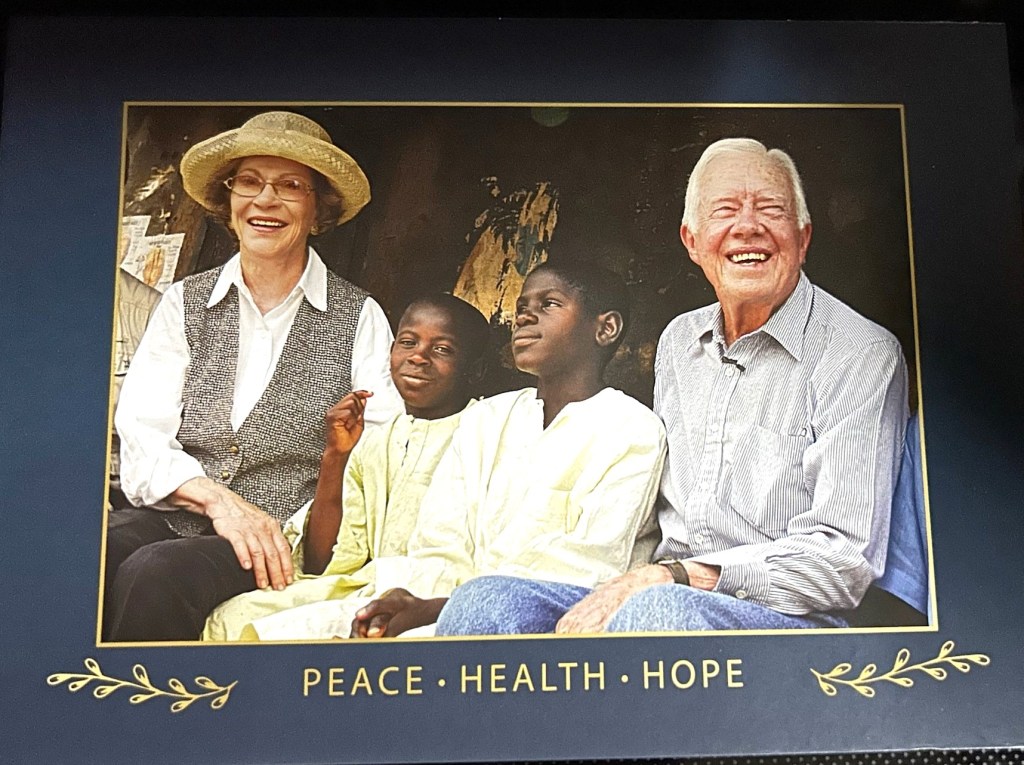
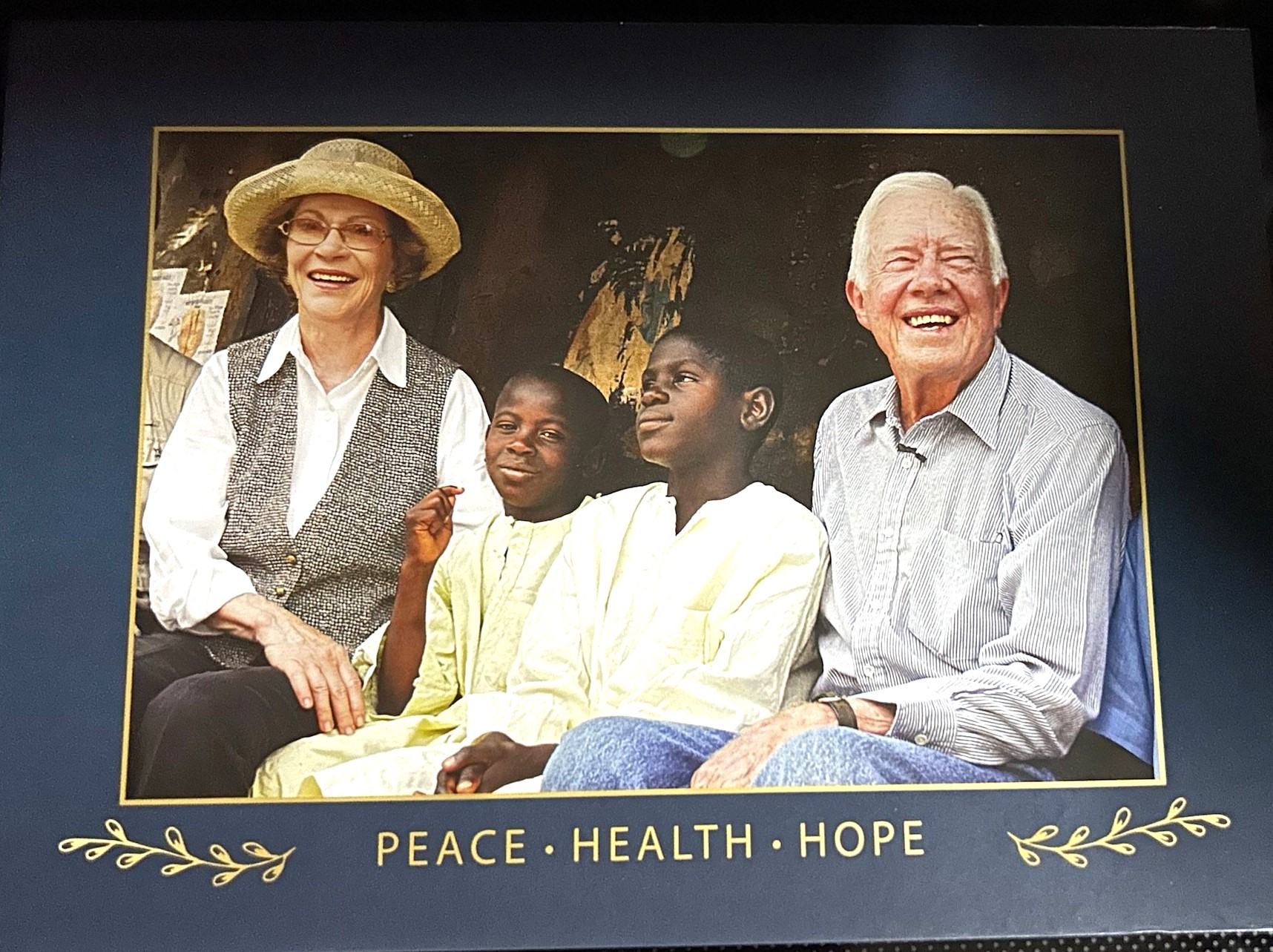
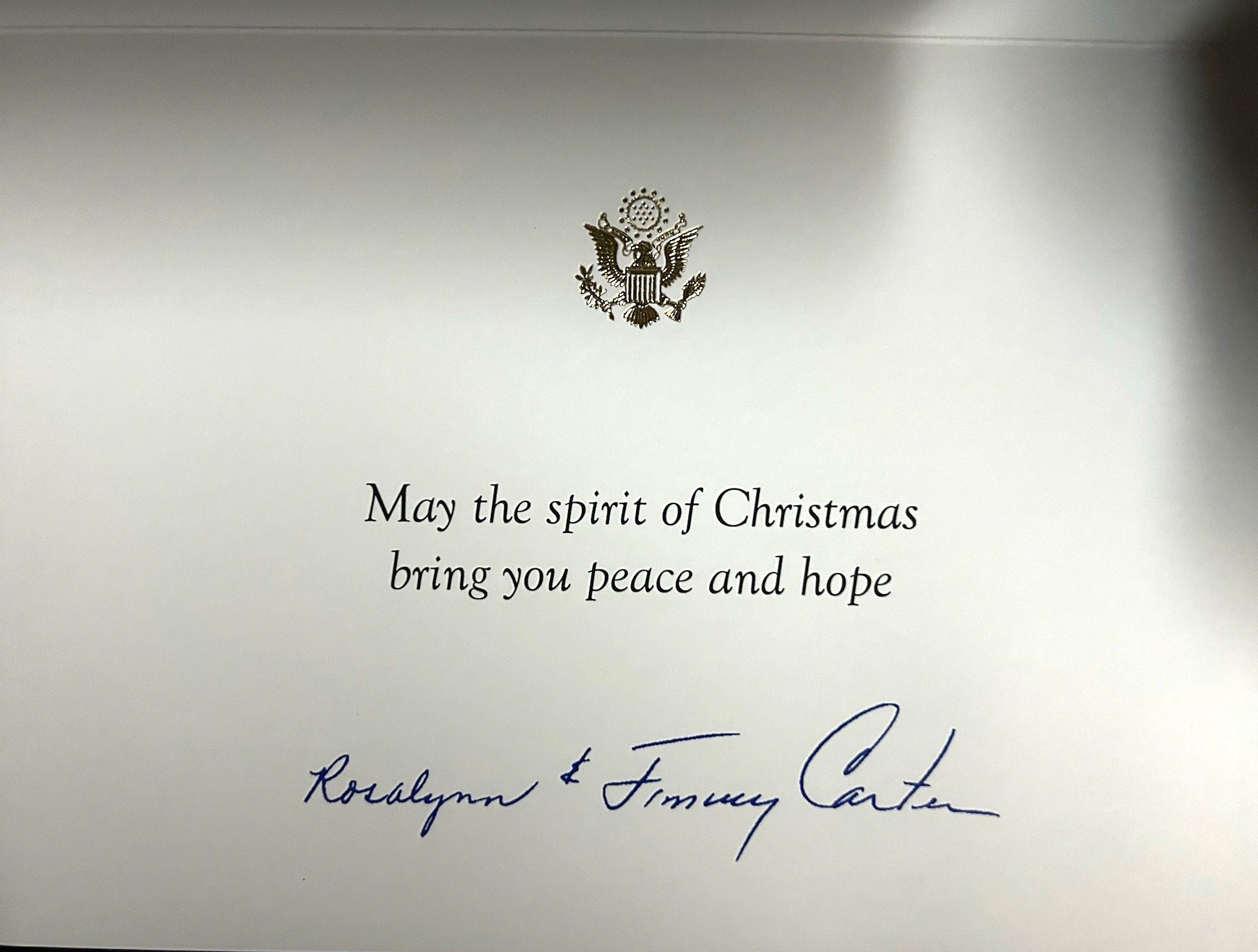
Christmas card from the Carters in 2019
Rosalynn’s name always first on their Christmas card signatures
Emily Burack compiled tributes from five First Ladies of the United States for Town and Country Magazine in an article published November 20, 2023. The following quotes are excerpts from two of them.
“First Lady Rosalynn Carter walked her own path, inspiring a nation and the world along the way. Throughout her incredible life as First Lady of Georgia and the First Lady of the United States, Rosalynn did so much to address many of society’s greatest needs. She was a champion for equal rights and opportunities for women and girls; an advocate for mental health and wellness for every person; and a supporter of the often unseen and uncompensated caregivers of our children, aging loved ones, and people with disabilities…Above all, the deep love shared between Jimmy and Rosalynn Carter is the definition of partnership, and their humble leadership is the definition of patriotism. She lived her life by her faith…” (joint statement by Dr. Jill Biden and President Joe Biden)
“Today, Barack and I join the world in celebrating the remarkable legacy of a First Lady, philanthropist, and advocate who dedicated her life to lifting up others. Her life is a reminder that no matter who we are, our legacies are best measured not in awards or accolades, but in the lives we touch. We send our thoughts and prayers to Jimmy and the entire Carter family during this difficult time.” (Michelle Obama)
**********************
Turning to face my fear, I meet the warrior who lives within, wrote Jennifer Welwood. Our nation has lost a warrior woman whose courage and commitment to service will inspire future generations of Americans. Teresa and I are proud to be a part of her legacy. We will miss the calm wisdom, the awesome strength of Rosalynn Carter. May she rest in the peace she labored to give the world.
Five years ago in August of 2018 I published this article I found when I determined to look for inspiration among more than 900 past posts over a dozen years of blogging. More specifically I looked for anything I’d written about “casualties” because it’s a common term the media glibly tosses around in reports about loss of human life in war, natural disasters, mass shootings, epidemics – which seem to multiply with each news cycle. This morning the focus was on the Israel – Hamas War that has already resulted in staggering numbers of death with estimates of more than 1,400 Israelis and more than 10,000 Gaza citizens. What I found when I listened today was how easy it is to be swept up in the totals and to forget that each casualty also represents one person: one man or one woman or one child. A butterfly reminded me on a hot summer day that the cost of individual grief is immeasurable.
One week ago today I was doing my pool exercises when I saw something so very extraordinary I took a calculated risk to retrieve my cell phone from the buggy it rests in without disturbing the amazing sight.
butterfly on caterpillar body – gently folding and unfolding wings
as it moved its legs across the still corpse
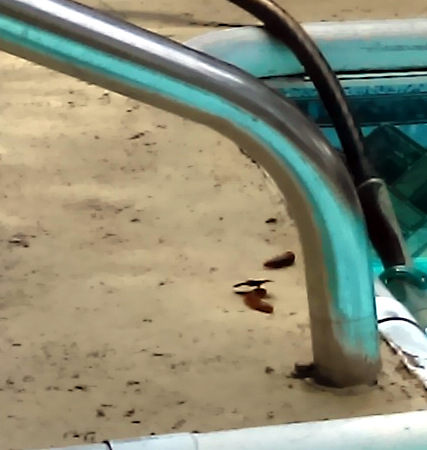
The carcasses of two recently deceased caterpillars lay next to the steps where I entered the pool every day. I scarcely paid any attention to them when I moved down the steps and into the water. After all, the bodies of caterpillars that were casualties of the chlorine were common and a dime a dozen, weren’t they.
I also paid very little attention to the small dark colored butterfly that flew around me in wide circles for about 15 minutes until it came to rest on one of the caterpillar bodies lying on the cement next to the pool steps.
I was so startled at the sight that I stopped my pacing to watch as the butterfly established a kind of rhythm – opening and closing its wings while it moved its legs back and forth across the dead caterpillar. I felt like I was an intruder in a private ritual of grief reserved for these tiny creatures that made our human tears a poor substitute. And then I began to think the butterfly didn’t fly away from me because it sensed my shared sorrow.
Today, exactly one week later, I was on the last leg of my routine early morning walk around the pool when I saw this remarkable sight.
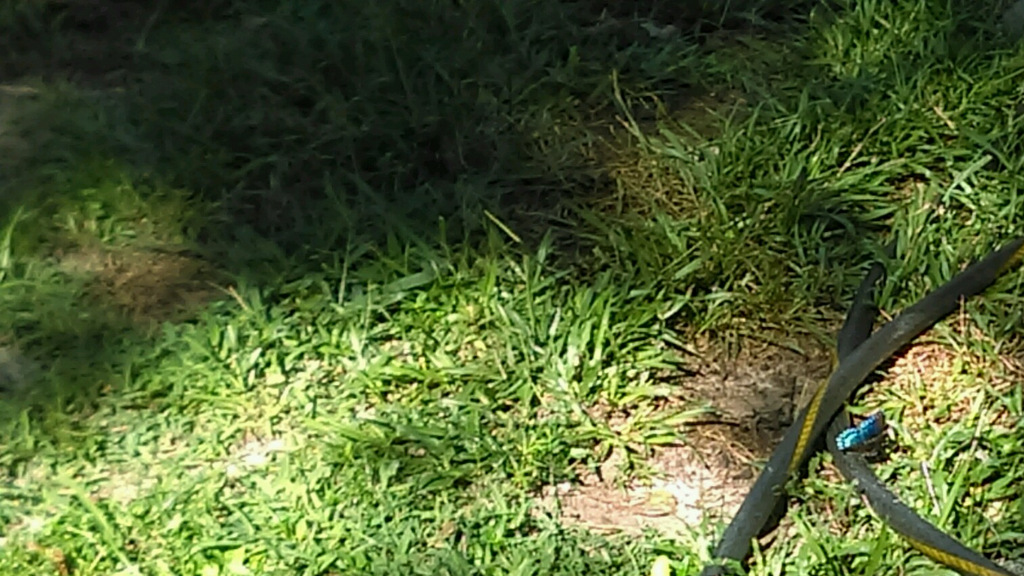
a beautiful large blue black butterfly landed right in front of me
This gorgeous creature flew next to the pool steps, landed, and began to open and close its wings just as the one had last week. I sat down in my buggy seat to better observe what I believe was…what?…the same butterfly from last week…another butterfly…what does that matter really…
What I learned was a powerful lesson about the importance of all creatures great and small, the individuality of grief, the exquisite beauty in hope embraced by a spirit willing to take flight following great loss.
“During the many years the Scotts and Nebletts [original landowners] farmed the Richards townsite, two communities grew up on either side of the future village. Longstreet, one of the toughest communities in Texas came into being two miles east, and the peaceful community of Fairview (or Dolph) rose about three miles west. Longstreet had two saloons, several stores, a race track, two gins, two sawmills and some bad characters who from time to time faced each other at high noon with six shooters blazing.” Richards, Texas: 1907 – 1987
“Richards is on Farm roads 1486 and 149 and the Burlington-Rock Island line in east central Grimes County. It was founded in 1907, when the residents of several communities in the vicinity of Lake Creek moved to a newly constructed line of the Trinity and Brazos Valley Railway where it crossed the road between Fairview (or Dolph) and Longstreet. The area had been settled by Anglo-American immigrants in the early 1830s, but no community was established until the coming of the railroad. Residents of Fairview and Longstreet led the migration to Richards; some employed log rollers to shift homes and businesses intact to the new townsite. Richards was named by railway officials for W. E. Richards, prominent South Texas banker and organizer of the Valley Route and Townsite Loan Company.” — Texas State Historical Association, general entry by Charles Christopher Jackson
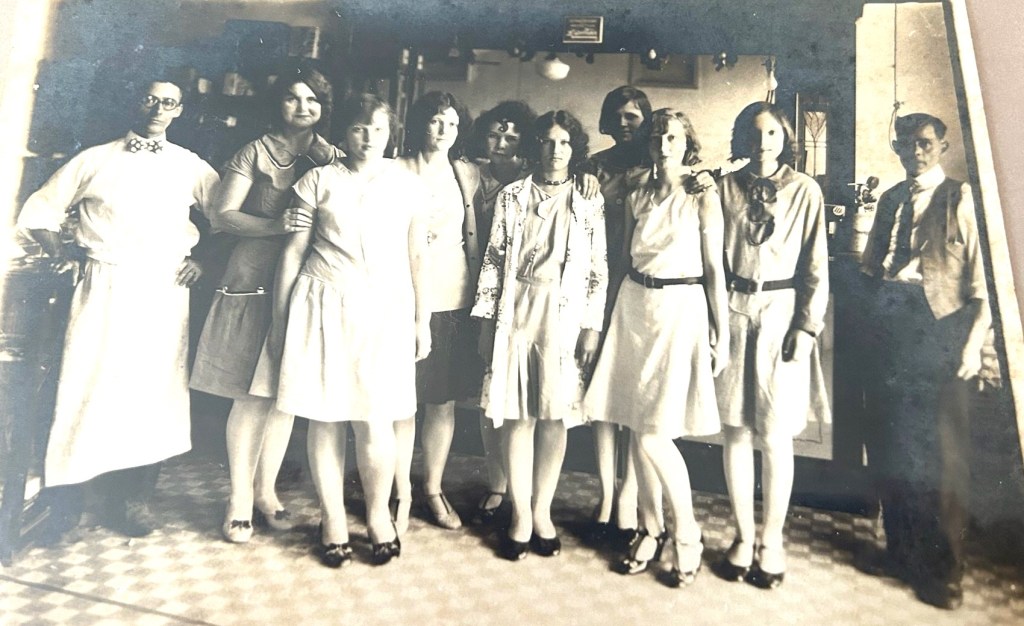
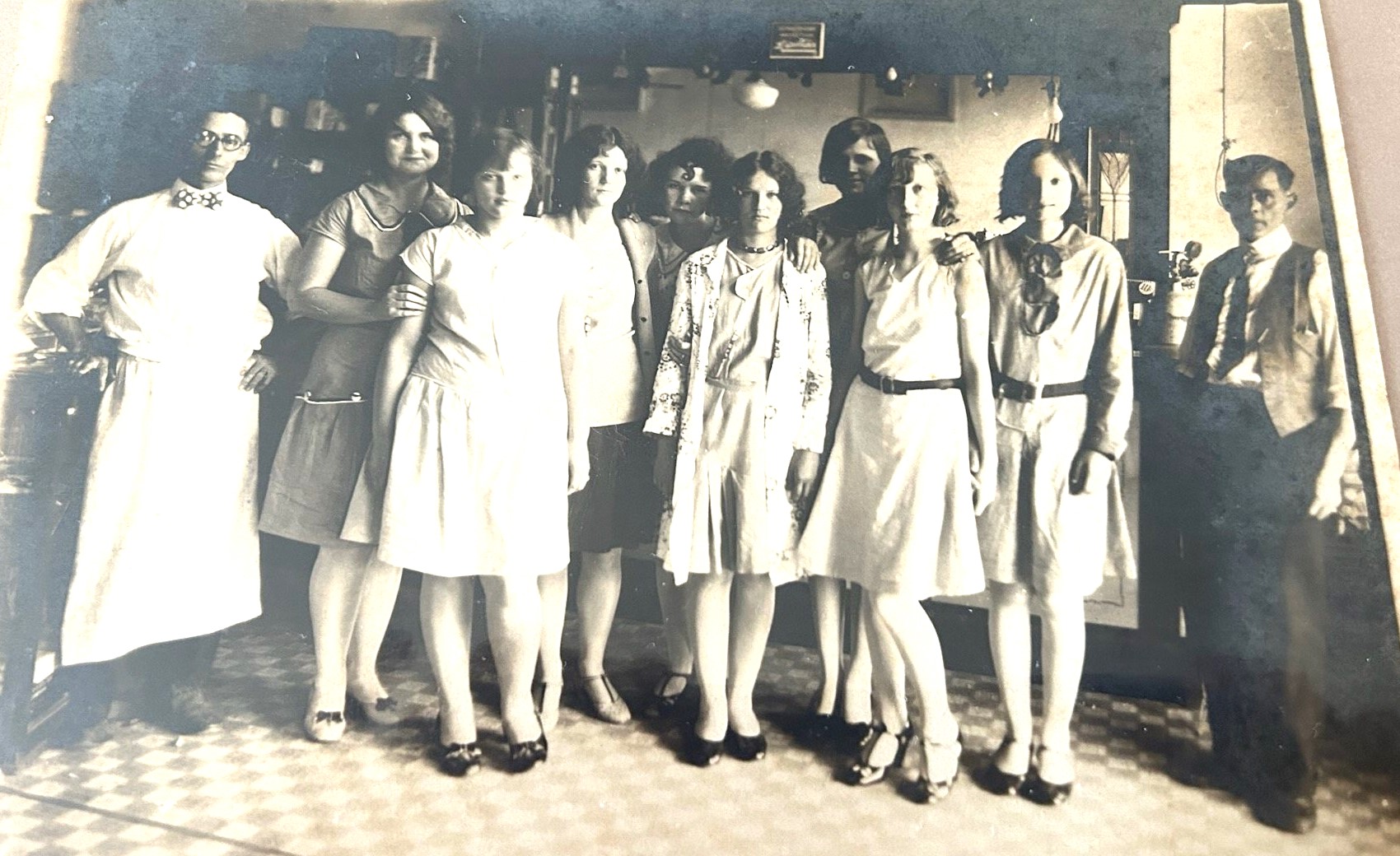
James Marion Boring, Sr. (r) and brother Tommy Boring (l)
proprietors of the Boring Cafewith
patrons in the small town of Richards, Texascirca 1930s
Hazel Ward Wells, Clara McCune, Esther Davis Wilcox
Marie Witt, Fannie Kate McCune, ?, Catherine Joyce Keisler,?
My mother Selma Louise Boring Morris (1927-2012) remembered working as a child in one of my grandfather J.M. Boring’s several business ventures turned “ad-ventures” in the tiny town of Richards, Texas where she grew up but had more memories of picking up the mail at the railroad depot to deliver to the town post office than she did helping to wash dishes at the Boring Cafe, or at least that’s how she told her story. Her three older brothers and mother worked with their father and uncle at the cafe, one of eighteen businesses in Richards in 1936 when the town had a population of approximately five hundred counting chickens and dogs according to my paternal grandfather Barber George Morris whose Main Street shop with its one barber chair was a gathering place for local town news a/k/a gossip.
No more gunfights at high noon thankfully because Richards was the town I called home from the time I was born in 1946 until I was thirteen years old. When I attended public school there, I had no fear of gun violence, no concern about safety except for the possibility of Russian attacks using atomic bombs which could be survived by hiding under our small wooden desks. The two-story red brick school building constructed in 1912 was the same one my parents had attended. They both had a brief hiatus from Richards when my mom went off to Baylor in Waco after she graduated from Richards High School, and my dad volunteered to serve in the Army Air Corps during WWII following his graduation two years before hers.
I never knew my grandfather Boring who died in 1938, but I love this picture of him and his brother at the cafe they owned while a little town in Texas struggled to find its way to prosperity during the Great Depression of the 1930s, an impossible task for many who were left behind when the trains began to travel in another direction. My grandfather Barber Morris was one of a handful of Richards businesses to succeed for the next sixty years as the town was unable to experience the growth of its neighbors on farm roads 1486 and 149 that profited from Houston’s breathtaking population explosion toward the end of the twentieth century.
**********************
America’s fascination with guns is a story that never ends. Pretty and I are deeply saddened by yet another massacre of innocent people this week in Lewiston, Maine by a gunman using a semi-automatic weapon. Our hearts go out to the families who have been affected by the traumatic losses they’ve experienced this week, the tragic events they will live with for the rest of their lives. We are also keenly aware of the dark days in Israel and Gaza, the ongoing daily deadly warfare in Ukraine. These are dangerous times that remind us of how fragile life is, how precious each breath we take. For all those who suffer in places we know and those unknown to us, we ask for comfort to the bereaved, compassion for the caregivers. Amen.
my grandmother Louise (second from top left) with her Schlinke family
outside their Rosenberg home in 1917
matriarch Selma Buls Schlinkeseated, pregnant with last baby Mary Ellen
Louise and Mr. Boring with theirfirst child, JamesMarion Boring, Jr.
Widowed in 1938 at forty years of age with four children to support, debts to pay, the Great Depression in full swing, a third grade education, living in rural Grimes County, Texas where opportunities for employment were limited – my maternal grandmother Louise waged a private war against poverty, loneliness and depression for many of her remaining years. In 1948 my mother, father and I moved in with my grandmother to share expenses and me; we lived with her for eleven years until I was thirteen years old. I believe selfishly those were the happiest years of her life because they were some of the happiest years of mine, and when we moved 125 miles south to Brazoria, the old enemies she had fought for most of her life reappeared to haunt her home. She didn’t have a car and wouldn’t know how to drive one if she did.
my grandmother Louise Schlinke Boring (r) with her immediate family
mother of four, grandmother of six atSchlinke family reunion in Houstoncirca 1962
As Fate would have it, or when the vicissitudes of life played tricks on us according to my daddy, no matter where you ride to, that’s where you are. My mama and daddy moved to Rosenberg, Texas as soon as I started college at the University of Texas in the summer of 1964. My grandmother Louise had been in and out of mental hospitals for years when she moved to Rosenberg to live with my parents in 1971 following my mother’s exasperation with her mother who she felt could be fine if she just had “somthing to do.” My grandmother died in a hospital in Rosenberg in April, 1972 – she had come full circle to the place where she had been born. Since I had used my savings to make the plane trip from Seattle to Houston at Christmas for the holidays the previous December, I didn’t have the money to fly home for her funeral which was on my twenty-sixth birthday. I was heartbroken for the loss and for not being there when she needed me.
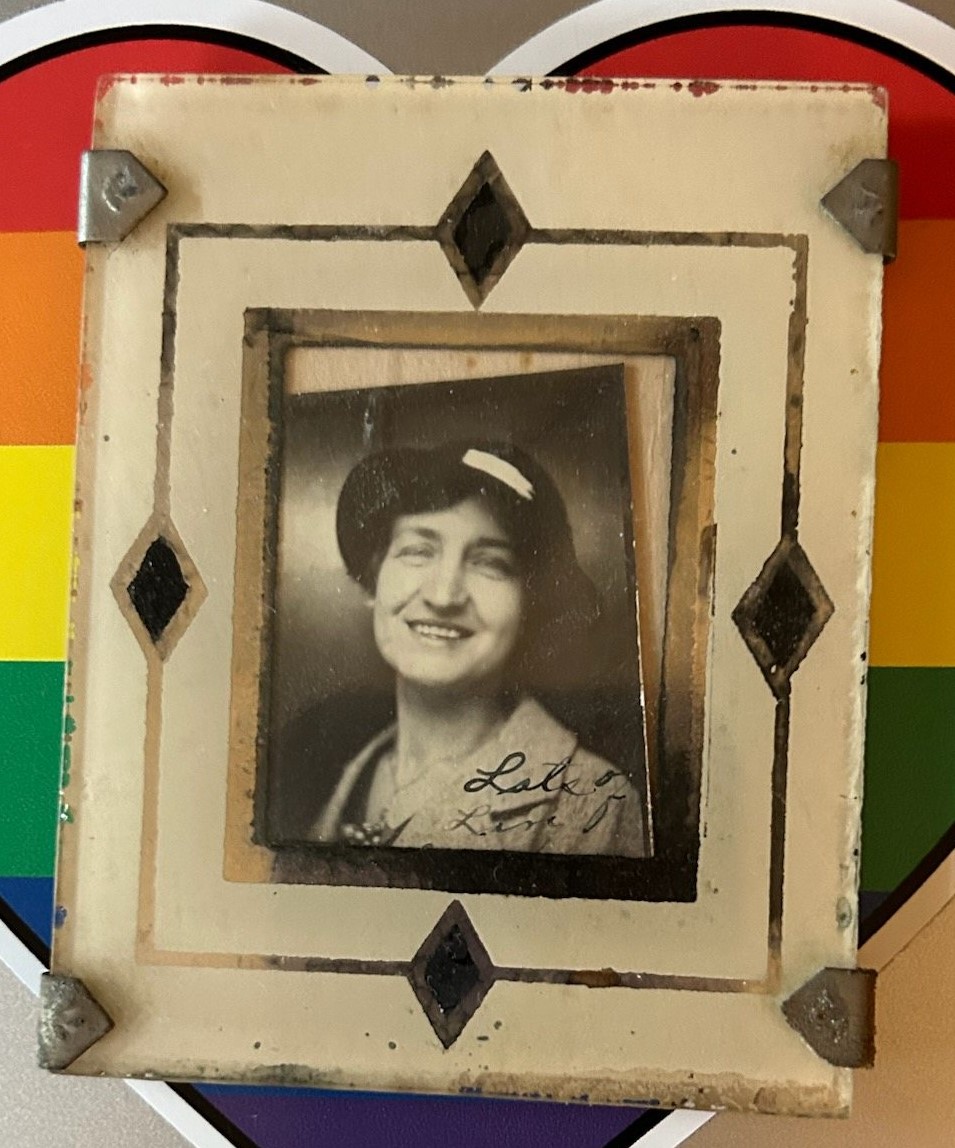
Lots of love, Mother
This coming Friday, October 20th. is my grandmother’s birthday, and I remember her for the unconditional love she gave me for as long as she lived. She was kind, compassionate, caring and a strong woman who refused to allow the old devil to defeat her faith. I honor her every time I tell my granddaughters how much I love them.
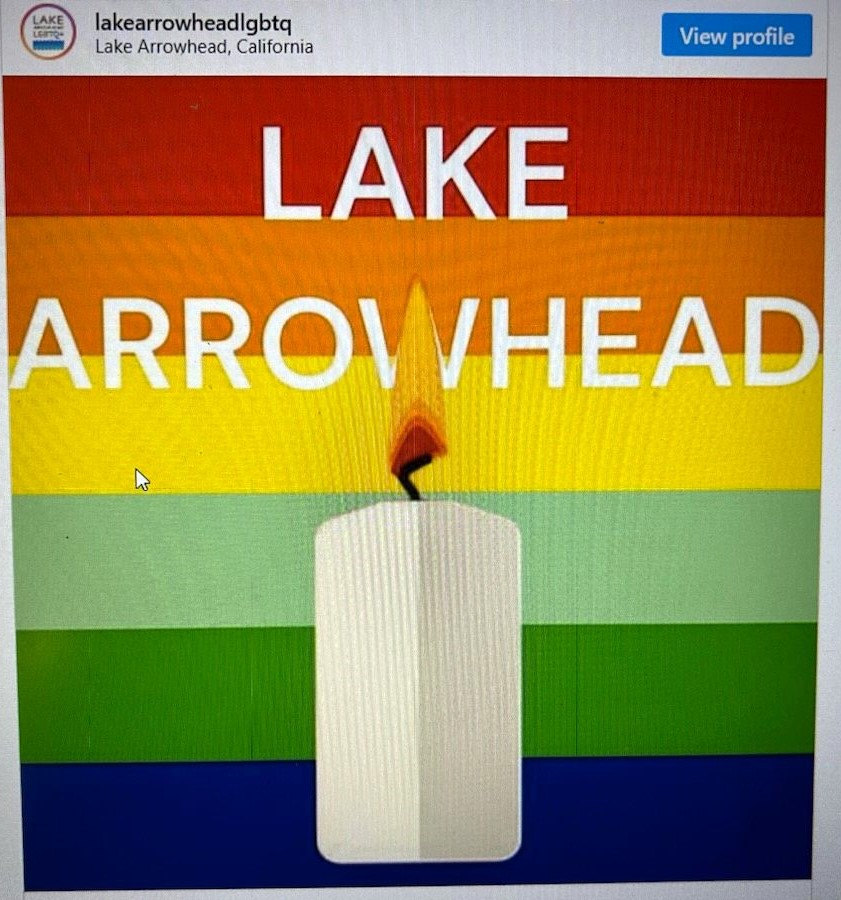
Hate had no place in her heart or in her store when sixty-six- year-old Lauri Carleton was shot and killed at her place of business on Friday, August 18th., 2023 for her refusal to take down a gay Pride flag she flew outside her store in Lake Arrowhead, California every day. She will be celebrated by her family and friends as a brave ally of the LGBTQ+ community who gave her life in the outrageous act of believing love is love.
Rest in peace, Lauri, but know that the community you died for will never rest in peace as long as forces rage against equal justice for all.







 I'll Call It Like I See It
You must be logged in to post a comment.