
Category: death

  • yesterday when I was young

    yesterday when I was young


    This morning I woke with Roy Clark’s version of “Yesterday When I Was Young” playing in a loop in my head, I think possibly because Pretty and I volunteered to help at a memorial tennis tournament yesterday for a good friend’s daughter whose song would be Today When I Was Young, when I was brave, when I was fierce, I died too soon in 2022 at the age of 36. As the song played over and over in my head, I began to wonder about the singer and songwriter.

    Roy Clark, the singer whose version I remember best, was born in 1933 in Meherrin, Virginia and died on November 15, 2018 in Tulsa, Oklahoma six weeks following the songwriter Charles Aznavour’s death in the south of France. Clark was the son of a laborer on the railroad and in the sawmills of Virginia while Aznavour was born in Paris in 1924 to parents who had escaped the Armenian genocide. I was struck by the random coincidence of their deaths, the musical connection between two giants in their respective professions.

    Two men from widely disparate origins and musical backgrounds, yet their music met in 1969 when Clark recorded “Yesterday When I Was Young” that was written and sung by Aznavour as “Hier Encore” (yesterday again) in 1964. Doreen St. Felix wrote a tribute to Aznavour in The New Yorker on October 23, 2018 while the Ken Burns Country Music Documentary that premiered in 2019 on PBS included excerpts from Clark’s biography.

    “On October 1st, Charles Aznavour, the world’s last and greatest troubadour, was found dead in the bath at his home in the small village of Mouriès, in southern France. He was ninety-four. Aznavour’s career spanned nearly eighty years, at least a thousand songs, three hundred albums, dozens of tours, and many, many films. His music, animated by an earthy interest in what addles and excites the common man, had a revolutionizing impact on French pop, extending its lifetime well past its mid-century golden age, and its influence well beyond the borders of Aznavour’s nation. Logically, his death should not have been a shock. Age must do its ravishing, even to those who have acquired the sheen of the immortal.” (Doreen St. Felix)

    “…The following year [1963], Roy Clark had his first hit – Bill Anderson’s “The Tips of My Fingers” – and in 1969, his song “Yesterday When I Was Young” became a hit on both the pop and country music charts. In the decades that followed, he would place more than 50 songs on the country charts, including nine Top 10s. It was also in 1969 that Roy received a call from Jim Halsey about hosting a new television show, based loosely on the hit variety show Laugh In, but swapping out youth culture for country music, rural one-liners, and blackout comedy. At its peak, Hee Haw reached 30 million viewers weekly and Clark became an ambassador for country music…” (Ken Burns)

    Yesterday, when I was young the taste of life was sweet like rain upon my tongue. I teased at life as if it were a foolish game the way an evening breeze would tease a candle flame. The thousand dreams I dreamed, the splendid things I planned, I always built to last on weak and shifting sand. I lived by night and shunned the naked light of day and only now I see how the years have run away. Yesterday, when I was young there were so many songs that waited to be sung. So many wild pleasures that lay in store for me and so much pain my dazzled eyes refused to see. I ran so fast that time and youth at last ran out. I never stopped to think what life was all about and every conversation that I can recall concerns itself with me and nothing else at all.

    Unlike the lyrics in this song, I do stop to think what life was all about, a personal luxury at the statistical life expectancy age for women in the United States of 77.28 years which is my age today. I can identify with these lyrics, with its universal themes of how the years run away, the wild pleasures mixed in with the dazzling pain, teasing at life, dreams that won’t ever be realized – all compressed into memory makers. But I had a reminder yesterday that my age is a gift, unmerited favor, grace that should be celebrated every day.

    *************

    Each of you is a part of my gift of life – I am thankful for you. Rest in peace, KK.

  • something old, something new – something special

    something old, something new – something special


    I no doubt deserved my enemies, but I doubt I deserved my friends. –Walt Whitman. This is a story about a friendship that lasted more than sixty years. My Aunt Lucille passed away ten years ago on March 21, 2013 – eight days after I  originally posted this piece about her and her friend Jan. 

    Yesterday I visited with my favorite Aunt Lucille who lives in Beaumont which is ninety-nine miles east of Montgomery on Texas Highway 105. I always look forward to my visits with her. Lucy refuses to give up her independent living apartment in a retirement community that offers assisted living and other higher levels of care for which she would qualify. Instead, she keeps her mind active with crossword puzzles and other word games in the daily newspaper. Her knowledge of current events acquired through the TV and conversations is as good as it gets. She pushes herself out of bed, showers, dresses and puts on makeup every day.

    My aunt Lucy will be ninety-three years old in May and has a list of ailments plus a personal pharmacy to treat them. A recent setback makes movement even more difficult for her, but she makes a determined effort to rejoin her friends at their reserved dinner table downstairs almost every evening. It’s a long walk from her apartment on the third floor to the lobby of the next building for meals. Trust me.

    Yesterday she told me one of her friends was coming by this afternoon for a visit. I recognized the name because she had talked about Jan for as long as I could remember so I decided to crash the party. She told me Jan was recovering from a stroke and her caregiver would be bringing her by. When Jan arrived promptly at two o’clock, Lucy got up from the sofa in the living room and pushed her walker toward Jan’s. When they met in the middle of the room, they both smiled and hugged each other with genuine joy on their faces. After introductions all round, we sat down to talk.

    Lucy and Jan met in 1953 when they both lived with their husbands in an apartment complex in Beaumont. They first talked when they were outdoors hanging clothes on the clothesline behind their apartment building. Both women were new to Beaumont – Jan’s daughter was born in the spring before Lucy’s was born in October that year. They were new mothers who quickly became new friends. Their husbands luckily liked each other, too which meant the couples got together often. Lucy’s husband Jay died in 1979 while Jan and her husband Otis shared a sixty-fifth wedding anniversary before his recent death.

    What struck me as I listened to them talk about their families, about what was going on in their lives now was how remarkable it must be to have a friendship that stretches across sixty years of change and challenges. Their bond survived everything life threw at them. Hot and cold seasons came and went for six decades, but their loyalty to each other never got too hot to go up in flames or too cold to freeze and wither away.

    In a separate happening this week I was reminded of friendships I’ve lost in the past years along with the pain that accompanies losing them. We are a mobile society; our moving parts rarely stay in the same place for very long. We change our homes, our jobs and the people in our lives that go with them. Sometimes we just change the people in our lives. For Lucy and Jan, however, the new became old over sixty years – but always remained special. Their story of friendship is a remarkable one I continue to salute today.

    *************************

    Ten years after her death, I still miss my Aunt Lucille. Thankfully her daughter Melissa and I continue to maintain a family connection I cherish.

  • in case you missed it on CBS News Sunday Morning

    in case you missed it on CBS News Sunday Morning


    Voting records on gun control legislation in Congress

    Here’s how our South Carolina Congressmen have voted on loosening gun restrictions: Republican Senators Lindsey Graham and Tim Scott have consistently supported laws loosening gun restrictions (or against a measure adding restrictions) for as long as they have been in the Senate (Graham since 2002, Scott since 2013).

    The only person in Congress from South Carolina who consistently supports laws to tighten gun restrictions is D-SC Jim Clyburn, a lone voice crying in the wilderness of lives lost to gun violence in this country.

    The stats above are year-to-date numbers as of July 22, 2023 – which means we are on pace for nearly 50,000 gun-related deaths this year.

    This is madness. This is insanity. No gun toting gun owner needs AR15-style rifles. Nobody. Period. We need to start somewhere. Ban the damn things.

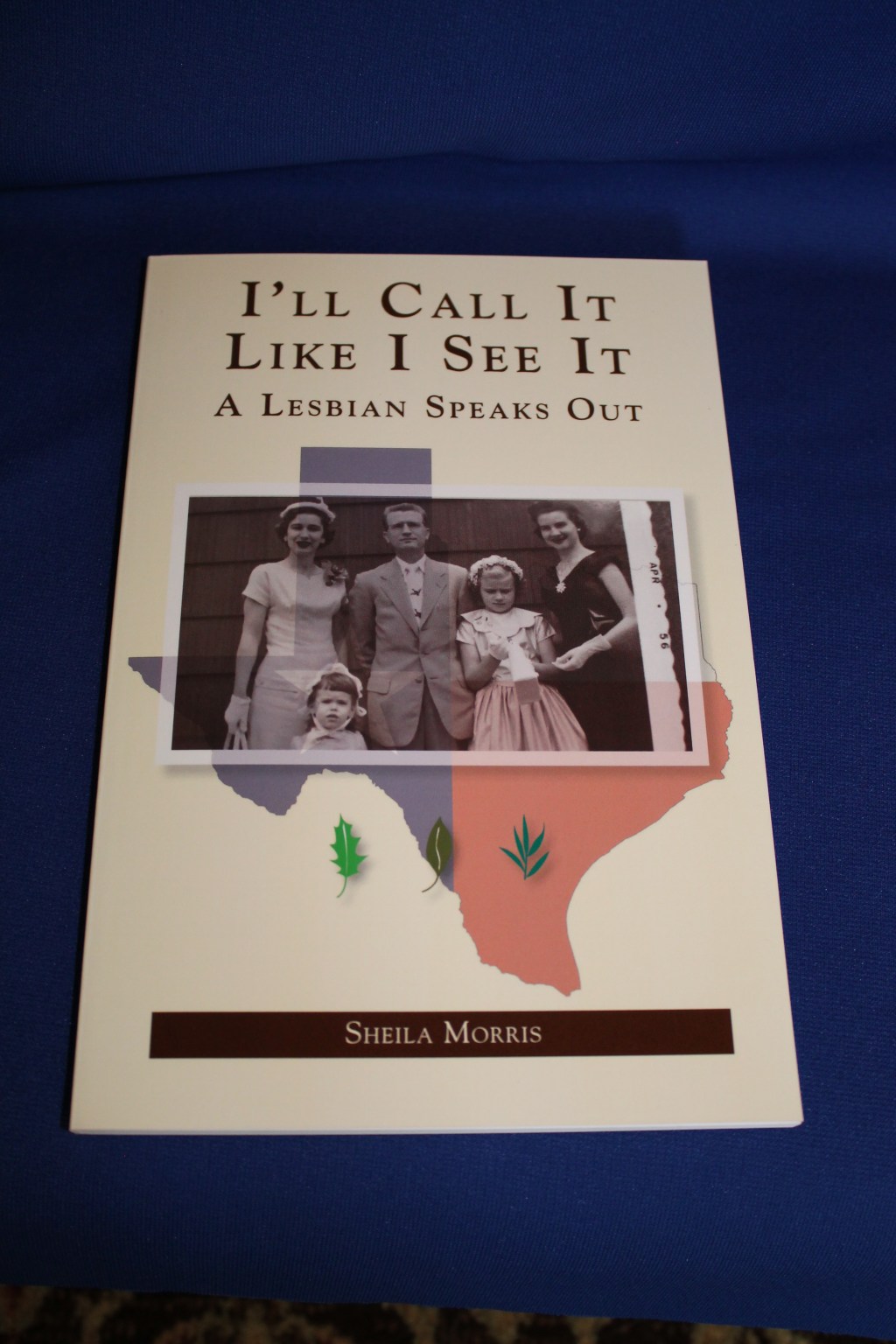
  • Two Women on Faith and Hope (from I’ll Call It Like I See It)

    Two Women on Faith and Hope (from I’ll Call It Like I See It)


    “I know Papa has gone to heaven, and that is where I want to meet him. The Old Devil gets a hold of me sometime. I slap him off—and pray harder for the Lord to help me be a better Christian. I realize more that I need the Lord every day, and I want to love the Lord more and try to serve Him better. He alone can take away these heartaches of mine. I want to have more faith in Him. I have been so burdened, and I want to be happy. Serving God and living for Him is the only plan.” (excerpt from a letter written by my fifty-six-year-old maternal grandmother to a sister following the death of their father in 1954)

    My maternal grandmother’s belief that faith was the sole solution to the multitude of problems she faced throughout her life beginning with her husband’s accidental death that left her penniless with four children to raise during the Great Depression, a belief she expressed in the above letter to her sister, reflected her daily approach to “have more faith” that included a ritual of reading Bible passages while she sat at our small kitchen table and I lay in the darkness watching her from the next room, wishing she wouldn’t get up so early. But there she would be, struggling with her third-grade reading level to look for godly guidance in the ungodly hours before dawn. I want to be happy, she said, and God was her only plan.

    Shockingly, my paternal grandmother glossed over the deeper issues of faith in favor of a focus on hope. The Bible says there are three things that last forever: faith, hope, and love; but the greatest of them is love. This grandmother wasn’t concerned with the intricacies of faith nor did she overtly exhibit love toward others outside her immediate family, but she attended the same Southern Baptist church faithfully every Sunday. Her hope was for humor, however. Her belief was that in every Sunday church service she could find something or someone or, preferably both, she could use to entertain her family at the dinner table later. The poor preacher was irreverently skewered on a regular basis; no one was sacred at that table. She was a woman in charge of her home, family and most of the conversations that took place within both.

    This was the faith of my grandmothers. The church was the teacher for one, the Bible the textbook for both, and the interpretations ranged from the holy to the inadvertently profane. I listened and watched these women for as long as they lived and throughout my childhood absorbed their diverse values that blended with the Sunday School teachings and preaching of the Southern Baptist churches my family attended. I learned to sift the messages and keep the ones that appeared to lessen my likelihood of going to hell in an afterlife.

    My maternal grandmother’s duel with the Devil evokes strong feelings for me, but they are feelings of sadness for her inability to achieve that higher level of trust she desperately wanted, the trust that would bring her happiness. Her faith never could be quite good enough, and I refuse to believe in a god that inspires fear and irrational guilt. As for my dad’s mother, her irreverence gave me permission to begin to overcome feelings of shame when I faced the puzzles of sexual identity that were my life. My life has involved many choices, but my being lesbian was not one of them. My paternal grandmother had a unique relationship with her God, but her words and sense of humor helped free me from the somber sermons of damnation in my youth and encouraged me to think for myself. I wonder if she knew.

    *********************

    Now faith is the substance of things hoped for, the evidence of things not seen.” (Hebrews XI, 1)


  • then sings my soul – the end (from Not Quite the Same)

    then sings my soul – the end (from Not Quite the Same)


    Two roads diverged in a tumultuous roller coastal relationship between Janie and me for seven years from 1969 – 1976, from singing in the choirs of a Southern Baptist seminary in Fort Worth, Texas to singing duets in the Pacific Northwest to the music we made together working in our leadership roles in Columbia, South Carolina where Janie worked for the Women’s Missionary Union of the South Carolina Baptist Convention and sang in choirs I directed in two different Southern Baptist Churches in the area for four years. From the west coast to the east coast and Texas in between, we tried to find a place where our guilt over our sins of “unnatural affection” could be absolved. No matter where we rode to, we always found ourselves there; and Janie didn’t like what she found. She needed to find a place of forgiveness for the life we shared, redemption from the guilty feelings that plagued her. We lived, sang, laughed, cried, and loved not only each other but also our families. But after seven years of agony and ecstasy, we each took a different road.

    As I approached thirty years of age, I began to look outside our relationship again for comfort and acceptance. I knew I was on a mission to preserve who I was, the same mission I had been on since my college days at The University of Texas in Austin. My days of searching for absolution, for forgiveness for being who I was, who I had always been, had to be over or I would be lost to a place where the flames of hell licking around me might never be extinguished. I resigned as the music and youth director of the State Street Baptist Church in Cayce in the Bicentennial Year of 1976, the year my fifty-one-year-old father died from cancer.

    My life with Janie ended messily, and I will regret forever my role in that painful separation for which there were no excuses to be made, no pardon to be found. To quote a country and western song, Hey, won’t you play another somebody done somebody wrong song? I did her wrong, much more than just lyrics to a song. Janie went back to seminary when our relationship finally shattered, this time in Louisville, Kentucky to another Southern Baptist institution where she graduated with a master’s degree in religious education and church music.

    We maintained our friendship over time and distance through infrequent phone calls, rare letters, brief visits when she came back to see friends here in South Carolina. In 1982, Janie realized a lifelong dream of serving God as a foreign missionary and was appointed by the Southern Baptist Mission Board to Zambia in Africa. She would go to the ends of the earth to find that place where her faith became visible to herself. On December 3rd, 1982, Janie wrote me a letter that gave insight to her life there. In her typically forthright manner, she described the struggles and contradictions that plagued her in those early months, the same ones that continued to haunt her for the next twenty years. She carried her songs and her faith across continents and over time to find her way home. Africa is my home, she once told me. My heart and soul are with the people there.

         “I’m so thankful for such a clear sense of calling. It’s all that has kept me here, at first. I really love Lusaka (Zambia), and I’m feeling very at home, most of the time. I’ve been homesick some, and I’ve been afraid. Armed robbery is a real problem. I have bars on my windows and doors, a dog, a night guard, and a wall around my house! At first, all those things just scared me more! But I’m feeling comfortable now…

    The music here is wonderful, Sheila. They sing 3-part harmony, with drums and shakers as their only accompaniment. No music – they couldn’t read it if they had it. You’ll love it when you hear it. I’ll send you a tape sometime...”

    **********************

    Janie’s birthday was June 4th., a day I remember every year to celebrate a remarkable woman whose music was the cornerstone of her faith in herself and all those she loved. I owe Janie for many good musical memories, but the greatest gift she gave me was bringing me to Columbia where I have remained for fifty years. I hope somewhere she’s singing in a touring choir with someone she loves.

     album we made when we came to Columbia – probably 1974 

    (I was 28, Janie was 27) 

    ******************

    Thank you to those who have followed this series. Please stay tuned.