
Category: family life

  • A Cappella (from Deep in the Heart)

    A Cappella (from Deep in the Heart)


    Daddy, please tell Mama I can’t possibly try out for the high school choir this year, I pleaded. I’ve got to spend extra time in the gym so Coach Knipling can scout me for the varsity basketball team next year when I’m a sophmore. The three of us sat at the kitchen table in our rental house in Brazoria, Texas (pop. 1,291) in the fall of 1960 – I was fourteen years old, the only child of schoolteacher parents, and the discussion had turned into a rare argument.

    Well, Selma, Sheila’s got a point, Daddy said. She’s not as tall as the other girls so the coach needs to see her shoot. Her set shot is as good as anybody’s, and she drives the paint well, too. I think she can make the varsity team next year if she puts in extra gym time.

    Set shot, hook shot, free shot, dribble, dribble, dribble, Mama said with exasperation. All I ever hear in this house is some kind of ball talk. Softball, basketball, volleyball – and now you’re taking her to play golf with you after school. What’s so great about balls? Round balls to put in hoops, over nets, in holes or in leather gloves. They’re games, for heaven’s sake! I’m talking about culture, music, things that will last her a lifetime. Does anyone sitting at this table seriously believe that a five foot, two inches tall fourteen year old teenage girl will ever have a chance to play sports designed for giants when she gets out of high school?

    She paused to look at Daddy and me. Daddy picked up the newspaper on the table and looked away. I stood up from the table and stared back defiantly at her.

    Mama, you don’t understand. There are no freshmen in the West Columbia high school choir. It’s just for upperclassmen. Besides, there are only a couple of kids from Brazoria that have ever made the a cappella choir. They say we can’t read music right. I’ll be the only one from here, and I’m not going.

    I looked at Daddy for help, but he was not getting into an argument with my mother when she got on a wild hair. Well, she said. I don’t know who they are who know so much about choral music, but I do know you won’t be the only one from Brazoria to try out tomorrow. I called Joyce Burke last night and she said Karen will go with you. You’ll have a nice friend from the church to audition with you. Plus, the high school has a new choir director this year who just graduated from Hardin Simmons University in Abilene. They have an excellent music program there. You girls can sing, and she won’t care if you’re from Brazoria, Texas or Kalamazoo, Michigan because you’re both altos. There’s always a shortage of altos.

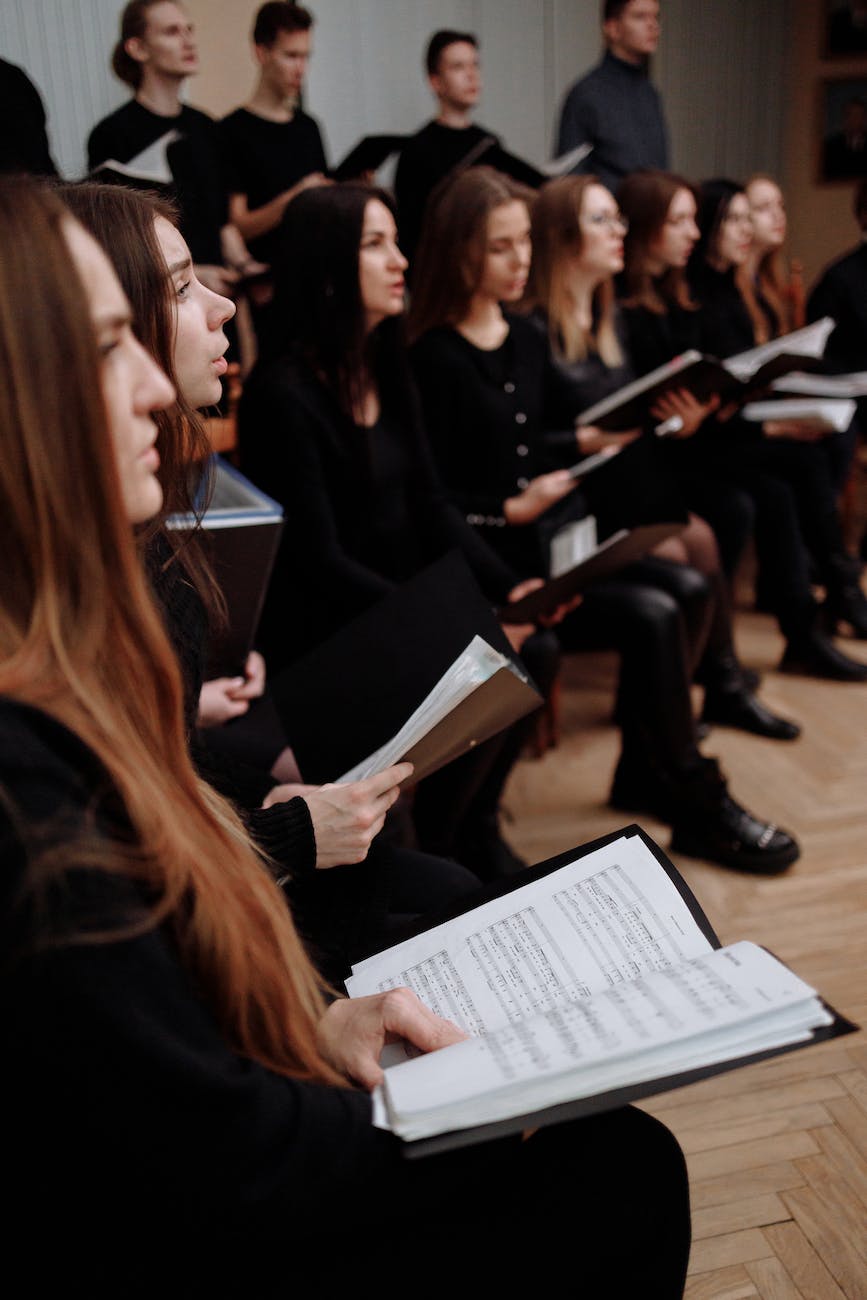
    Tryouts for the choir were held in the high school auditorium. Karen and I waited with the older students who seemed to know each other because they were talking, laughing, not as stressed as we were while we stood together in the lobby waiting for our names to be called. I felt sick, out of place, afraid of the humiliation I was about to endure to appease my mother. Finally, my name was called, and I opened the door to enter the large room filled with rows of empty chairs. A woman sat at the piano onstage and seemed to be absent-mindedly striking the keys before she looked up and called my name.

    Sheila? she asked. Come up here with me and let’s listen to you sing.

    Why me Lord, I thought as I walked down the center aisle to the steps leading up to the stage. What have I ever done to deserve this?

    As I walked up the steps I took a good look at the woman who sat on the piano bench. Oh, my gosh, I thought. It’s Jackie Kennedy. Of course it wasn’t really Jackie Kennedy, but she looked just like her. Her hair was the same color – not as long though. Her face was shaped the same, and she wore a dress that looked like something Mrs. Kennedy could wear, but not as stylish. Other than that, they were twins. Unbelievable. The woman was drop dead gorgeous and so young, too. She smiled as she motioned me to stand next to the piano.

    She studied me carefully. So, have you been singing a long time? she asked as she gazed intently at me.

    I felt like she was looking straight through me. Yes, ma’am, I replied. I’ve been singing solos in the Baptist Church since I was five.

    Good. Can you sing Amazing Grace for me? I’ll play the piano for you.

    Yes, ma’am. How many verses?

    The first and last will do fine, she said and began to play, but something was wrong. I couldn’t find my singing voice.

    Ma’am, can you play the song in a lower key? I can’t sing that high. Mama plays the piano for me and sometimes has to transpose the keys lower for me when I can’t sing like they’re written.

    The teacher smiled, nodded, and began to play in a key I could manage. I sang the two verses.

    Very good, she said when I finished. Tell me do you know how to read music? Can you sight read the parts as you sing?

    I know what the notes are because I’ve been playing the piano since I was five, too but I’ve never tried to sing anything without knowing the tune.

    How good are you at math? she asked. The question surprised me.

    Ok, I guess. What does that have to do with singing?

    Music is mathematical. It’s all about notes and numbers and the relationships between them. I have a feeling you can learn, she said, and flashed a smile that lit up the stage.

    She picked up a pen. What grade are you in? she asked as she wrote.

    Ninth, ma’am.

    Would you like to sing in the a cappella choir this year? I need tenors, and I don’t have many boys trying out. I think you could learn to sing tenor just fine.

    I’d love to sing tenor for you, I answered while I thought yes, yes, yes I desperately want to sing in the a cappella choir or any other musical group you plan to direct if you will look my way and smile while we practice.

    Karen Burke and I were the only female tenors in the high school a cappella choir that year. Singing in the tenor section wasn’t exactly what Mama had in mind for me, but she was pleased when I told her the news. Maybe next year she’ll move you over to the altos with the rest of the girls, she told me.

    The director’s name was Gloria Pittman, and she must have been in her early twenties since we were her first teaching position out of college. I loved her almost as much as I loved Coach Knipling but for different reasons. (Coach Knipling rarely smiled at me – much harder when you had a whistle in your mouth most of the time.) Miss Pittman had legs that went on forever – I dubbed her Piano Legs Pittman – and she taught us much more about music than how to blend our voices in choral sounds. She brought her own record player and records from her apartment to introduce us to the classics. She turned the volume up so we could hear her favorites like Mendelssohn, Schubert, Bach, Beethoven – we had to be able to distinguish Beethoven’s 3rd Symphony from his 5th, and much more. I began to close my eyes like she did when she heard the classics, tears streaming down her face from joy or sorrow…I never knew why except that she was intense, passionate about the music. She was a pioneer for our class in our “cultural development”and made an indelible impression on my young mind.

    Unfortunately, that year was her first and last as our music teacher. She had a special group of eight singers from the choir that performed as a select ensemble. They met on weekends and after school in the afternoons – sometimes they practiced in Miss Pittman’s apartment, and rumors were they smoked more than the cigarettes she was seen smoking with the drama teacher, Mrs. Juanita Roberts, in the teachers’ lounge at school. Everyone knew Mrs. Roberts was a radical liberal.

    Mama wasn’t sorry to see her go and was much happier when the band director, Raymond Bethke, also directed the choir. He moved me and Karen Burke to the alto section. He was a good band director. Enough said.

    My mother was also right about me and athletics: there was no demand for short basketball or volleyball players when I graduated from high school – even softball players needed to be bigger, faster. Choruses, choirs and chorales, on the other hand, stood the test of time for me. Both a cappella and those with orchestras, symphonies, pianos, organs as accompaniment. I auditioned many times during my lifetime, and what I learned from Miss Pittman opened doors for me with opportunities I might have missed like singing in the Southwestern Singers, the touring choir at the Southwestern Baptist Theological Seminary in Fort Worth, Texas ten years later.

    There was always a shortage of altos.

  • Sleepless in Seattle – Part 3 (from Not Quite the Same)

    Sleepless in Seattle – Part 3 (from Not Quite the Same)


    When Adrian and I arrived in Seattle at the end of September, 1968 we rented a cheap motel room for a week in a sketchy part of the city south of the downtown area. The Buick Skylark seemed as relieved as Adrian and I were to be stationary for a few days. My Exxon credit card was in flames, but I couldn’t call my family for any financial help – unless I needed money to come home. That was the deal I made with my dad. Both Adrian and I needed desperately to find jobs; we combed the newspaper help wanted ads but apparently no one wanted our help.

    Then I had an inspiration. The motel had a telephone directory with tons of yellow pages. I decided to call every CPA firm in the area in alphabetical order to try to get an interview with someone, anyone. When I got down to the “s‘s” and called Simonson & Moore, I spoke with a woman named Becky who was their office manager. Unbelievably and with whatever good karma swirled around me, Becky said she was from San Angelo, Texas and added her bosses liked Texas people. That turned out to be true; Chuck Simonson and Tim Moore interviewed me, had me meet with Becky, and hired me on my first interview with this local two-partner CPA firm in Bellevue, a suburb east of Seattle across Lake Washington. What I learned from this process was that Chuck and Tim not only liked Texas people but especially liked Texas people who had experience working for one of the largest CPA firms in Houston, even if I had only been with that firm for a year. Plus, Becky needed extra help in the upcoming tax season, and here I was having passed three of four parts of the CPA exam with confidence I would pass the fourth part in November. I had landed a trifecta and more importantly, landed a job.

    Adrian and I rented a furnished two-bedroom apartment in a large complex in Bellevue not far from my new office. The cost was twice what I paid in Houston, but we planned to share the expenses. She continued to look for a job for several weeks but her degree in sociology wasn’t as marketable as mine in accounting. Finally, she accepted a position as a topless go-go dancer in a neighborhood bar near our apartment. I was taken aback by this turn of events on several levels but kept my opinions where they belonged.  She worked long hours at night and came home in the early morning. I woke up when she came in and had trouble going back to sleep. Often, I got up early to get dressed for work, and I would meet a strange man coming out of her bedroom – a man who raced me to the bathroom.

    Somehow, Adrian wasn’t the lesbian I hoped she would be, but we continued to share expenses and (to me) a disappointing platonic friendship.

    On weekends we returned to my Buick Skylark to explore our new surroundings. We drove up the narrow winding roads to see the glorious Mount Rainier, rode ferries in Seattle across Puget Sound to visit the Olympic Peninsula, discovered new grocery stores, gas stations, watched as the green leaves on the non-evergreen trees gradually turned gold, red and brown while the massive evergreens remained evergreens. I began to develop a new social life with Becky and her husband Karl who couldn’t have been kinder to me. Becky invited me to go to church with her at the Mercer Island Baptist Church, a Southern Baptist church with expatriate southern members from Texas, Louisiana, and Mississippi. I found kindred spirits in the church who were the lesbians Adrian wasn’t… with a few complications Adrian didn’t have like being married to the pastor. The lines between right and wrong weren’t as clear when you stepped off the sidelines into the grey areas between black and white.

    On the Wednesday afternoon before our first Thanksgiving in Washington, Adrian came to see me at my office to tell me she was moving to California with one of the men she met at the bar where she worked. She was packed and on her way out of town. Seattle wasn’t the place for her. She’d send me her part of the rent for the month. She’d had a great time with me, but she was restless and needed to move on. I stared at her and tried to process what she was saying. I had no prior clue she was thinking of leaving. I didn’t have an emotional attachment any longer, but I did have this sinking feeling of financial abandonment. I stuttered and stammered goodbye. She waved to me from the parking lot as I watched from my office window while she drove away with her new boyfriend. I never saw or heard from her again.

    Thanksgiving Day Becky and her husband Karl invited me to eat with them. I was grateful for the company and the turkey with the trimmings Karl made. The conversation turned to our families we missed in Texas. When I got back to my apartment, I called my family collect – my dad accepted the call as he had promised. I was a long way from home and my grandmothers’ cooking. I could smell the aroma of my favorite pineapple fried pies while I watched football on my tiny RCA portable color TV by myself in the living room of my now too expensive apartment. I was in real trouble without Adrian’s financial support and had to figure out a new plan to live on my own by the end of the next month. The reality of where I was, what I was doing, being truly alone now struck me that first Thanksgiving in Seattle; but by Christmas I was living in an inexpensive one bedroom garage apartment on one of Seattle’s seven hills with a view of Lake Union and the Space Needle plus a commute every day across beautiful Lake Washington to my job with my new friends at Simonson and Moore in Bellevue.

    Hormones continued to rage inside the relatively safe comfort zone of the Mercer Island Baptist Church, a familiar refuge whose language and music I knew well. Let the church be the church, let the people rejoice. Hallelujah.

    My grandmother gave my dad the money to fly me home for Christmas. Life was good.

    ***************************

    To be continued. Please stay tuned.


  • Sheila Gets a Shave (from Deep in the Heart)

    Sheila Gets a Shave (from Deep in the Heart)


    “George, here comes Sheila for her shave,” said Old Man Tom Grissom, who was already in his favorite spot in the barbershop by the time I got there.

    Ma, my grandmother who had been married to Barber George Morris for over forty years, said Tom Grissom ought to pay rent for all the time he spent sitting on that bench in the shop. Pa, my grandfather the barber, just laughed like he always did. He’d be charging rent to a lot of old men if he ever got started on that. The barbershop was a thriving business on Main Street in Richards, Texas. Main Street was the only paved street in Richards (Pop. 440), and Pa was the sole barber in the area. People drove from all over Grimes County to his out-of-the-way shop with one barber’s chair that was bought in the 1930s when he first opened. Waiting patrons and gossipy old men sat on two wooden benches.

    Past the benches was a shoeshine stand that Pa used when somebody wanted shiny boots. Along the wall behind the barber’s chair were a long mirror and two shelves that held the glass display boxes. One of the boxes housed gleaming scissors, combs, and brushes for haircuts. The other held shaving mugs, razors, and Old Spice bottles for the shaves. Everything was spotless.

    Pa was happy to see me. “Hey, sugar. You here for your shave?” he asked.

    “I sure am, Barber Morris,” I replied in my most grownup customer voice. It was the summer after my second grade in school, and I loved to come to the barbershop. Sometimes I brought my play knife and sat on the porch outside the shop and whittled with the old men who lolled there for hours just talking and whittling. Other times, I had business with my grandfather.

    Like today. Pa got out the little booster seat and put it in the barber’s chair so I could climb up on it. I was too small to sit in the chair without it.

    “How about a haircut with your shave? That pretty blonde hair is getting too long for this summer heat,” he said.

    “No, thanks, Pa. Mama always tells me when to get my hair cut,” I said. “Just a shave today.”

     Old Man Tom Grissom nodded at this. “I sure wouldn’t be cutting that blonde hair without Selma knowing,” he said. “She’s mighty particular about things.”

    “I appreciate your advice, Tom,” Pa said with a trace of annoyance. “But Sheila Rae and I are just having a conversation for fun. Nothing serious.”

    Pa listened as Tom Grissom talked and talked and talked some more about delivering the mail that morning. Being the Richards rural-route carrier was hazardous, to hear him tell it: cows in the road to drive around, barking dogs chasing armadillos right in front of him. This was hard work, and then you had the heat! Why, he couldn’t keep his khaki uniform dry from all that sweat. Yes, sir, this was no job for the faint-hearted. And on and on.

    Meanwhile, Pa had placed the thin white sheet over me and leaned the chair back just far enough to start to work. He lathered up the shaving cream in his mug with the brush and dabbed it on my face. I loved the smell of the shaving cream. He let that soak while he took the razor strop attached to the chair and swished it up and down slowly and methodically to get it just right. It didn’t matter to me that he was using the side without the blade. It made the same swishing noise.

    Then he took the bladeless side of the razor and gave me the best shave ever. He was very careful to get every part of my face. He even pinched my nose so that he got the part between my mouth and nose just so. Pa was an artist with his razor and scissors. He put a warm wet white cotton laundered towel over my face and rubbed off the last of the shaving cream. It felt so clean. Finally, he took the Old Spice After-Shave and gave it a good shake, rubbed it on his hands, and then on my face and neck. Nothing beats the aroma of Old Spice.

    Old Man Tom Grissom said, “Well, that ought to do you for a week or so, won’t it?”

    “Yes,” I said. “Probably so. We’ll see.”

    Pa gave me the worn yellow hand mirror that he gave to all his customers to inspect his handiwork. I studied my face thoughtfully.

    “Well, how does it look to you?” he asked with a smile. “Time to pay up. That’ll be two bits for the shave. That’s with the favorite granddaughter discount.”

    “Very good, Barber Morris. Much obliged.” I reached into my jeans pocket and brought out some play money coins and handed them to Pa.

    Just about that time, Ma drove up and got out of her car. “George, what’s Sheila Rae doing in that chair?” she bristled.

    Old Man Tom Grissom said, “Betha, Sheila Rae’s here for her shave.” Ma gave him a withering look and said, “Is your name George? Don’t you have any mail to deliver, or would that require removing yourself from that bench you warm every day?”

    I got down from the barber’s chair and ran over to Ma and tried to reassure her that everything was all right. Ma looked at Pa and said this was just what she had been telling him the other night about encouraging me in all this foolishness.

    “She shouldn’t be spending her summer hanging around this shop,” she said, looking accusingly at Pa, who said nothing.

    “Ma, can I have a nickel to go get an ice cream cone at the drug store? Getting a shave makes me hungry.” Ma never said no to me, so I got my nickel and left. I walked across the street to Mr. McAfee’s drugstore and got my Blue Bell vanilla cone and headed home.

    I saw Ma and Pa still in animated conversation at the shop.

    Old Man Tom Grissom had gone home.

    **********************

    Deep in the Heart: A Memoir of Love and Longing was published in 2007 when I was 61 years old. Much has changed in the past 16 years, but I continue to smile when I read this story of the little girl growing up in the 1950s in the tiny town of Richards, Texas. I can see her now walking the block on a red dirt road from the house where she lived to Main Street, not in any hurry but not dawdling like she did some time, on her way to town. Summertime meant no school, looking for things to do during the day for the only child whose few playmates might not be around, so her mother let her go to town to be entertained by her grandparents. Her mother’s mother worked in the general store as a clerk, so Sheila Rae could stop there for a hug and maybe a nickel for a candy bar unless her grandmother had customers in the store, or she could walk past the general store and the post office to the next small building that housed the barbershop owned by her grandfather on her daddy’s side. Someone once said to my father, “Glenn, you have such a happy child. She’s always smiling,” to which my daddy replied, “Why shouldn’t she be happy? Nobody ever tells her no.” When I wrote this book in 2007, I’m sure I didn’t fully understand what he meant by that remark. Now that my wife and I have two granddaughters, I totally get it.

  • find your happy place

    find your happy place


    From our first trip together to Cancun, Mexico in 2001…

    …to a recent outing 22 years later with our granddaughters at a local Mexican restaurant…

    …Pretty and I have considered Mexican food to be nectar of the gods

    Viva! Viva!

    Find your happy place – and stick with it.

  • memory makers over Memorial Day

    memory makers over Memorial Day


    (l – r) Molly, Ella and Caleb

    Our granddaughters sixteen-month-old Molly with three-year-old big sister Ella plus their ten-month-old first cousin Caleb had a room with a view in our Memorial Day weekend place in the mountains of the South Carolina upstate. This is their story.

    Caleb, come with me, said Molly

    then Ella said Caleb, don’t go with Molly – she’s a drama queen

    so Caleb stayed with Ella, and Molly sat by herself

    I’ve got my baby and my guard dog Carl, Molly said

    Carl and I can hang out with Naynay

    **********************

    I went for a walk with my Aunt Darlene, said Ella…

    I petted a baby goat at the Farmer’s Market…

    I had s’mores around a big campfire while Molly and Nana talked

    Mama and Daddy were all smiles when we went to dinner

    *************************

    and then every night Naynay and I were so tired we went fast asleep

    while Nana read her book

    The End

    ***********************

    Slava Ukraini. For the children.