I no longer have to imagine a world without John Lewis as I did when I originally published this piece in July, 2020 – because I have now lived in that world in real time for almost three years. I miss him.
********************
I cannot imagine a world without John Lewis. I knew him first as a Civil Rights activist in the 1960s when I was in college, but I’ve known him longest as a congressman from our neighboring state of Georgia who for the past 33 years fought for social justice issues in the US House of Representatives. When John Lewis spoke, I listened. On July 17, 2020 his voice spoke for a final time as he drew his last breath, but his words will live on for me and countless others across the planet he loved.
Two of my favorite quotes from Congressman Lewis:
“We may not have chosen the time, but the time has chosen us.”
“If you see something that is not right, not fair, not just, you have a moral obligation to do something about it.”
Then, this quote from a 2003 Op Ed by Congressman Lewis in the Boston Globe was particularly meaningful for me: “I’ve heard the reasons for opposing civil marriages for same-sex couples. Cut through the distractions and they stink of the same fear, hatred and intolerance I have known in racism and bigotry.”
From being beaten by police on Bloody Sunday at the Edmund Pettus Bridge in Selma, Alabama in 1965 to observing the creation of a Black Lives Matter Plaza in Washington, D. C. near the White House in June of this year, John Lewis was a presence and driving force for good for more than 50 years. I truly cannot imagine a world without him.
“You must be able and prepared to give until you cannot give any more. We must use our time and our space on this little planet that we call Earth to make a lasting contribution, to leave it a little better than we found it, and now that need is greater than ever before.” (quote provided by Jonathan Capehart in The Washington Post on June 10, 2020)
One of my father’s favorite biblical sayings was “a good name is rather to be chosen than great riches.” (Proverbs 22:1) The name of Congressman John Robert Lewis who died yesterday at the age of 80 will be written in our American history as a good name, perhaps even an “exceptional” one according to remarks by former President Barack Obama as he remembered Lewis today.
I cannot imagine a world without the compassionate leadership of John Lewis, an American patriot. Your journey is over, John – your job was well done. Rest in peace.
************************
John’s job was, indeed, well done. What about ours? Will we leave this little planet we call Earth a little bit better than we found it? That is the challenge we face daily. Onward.
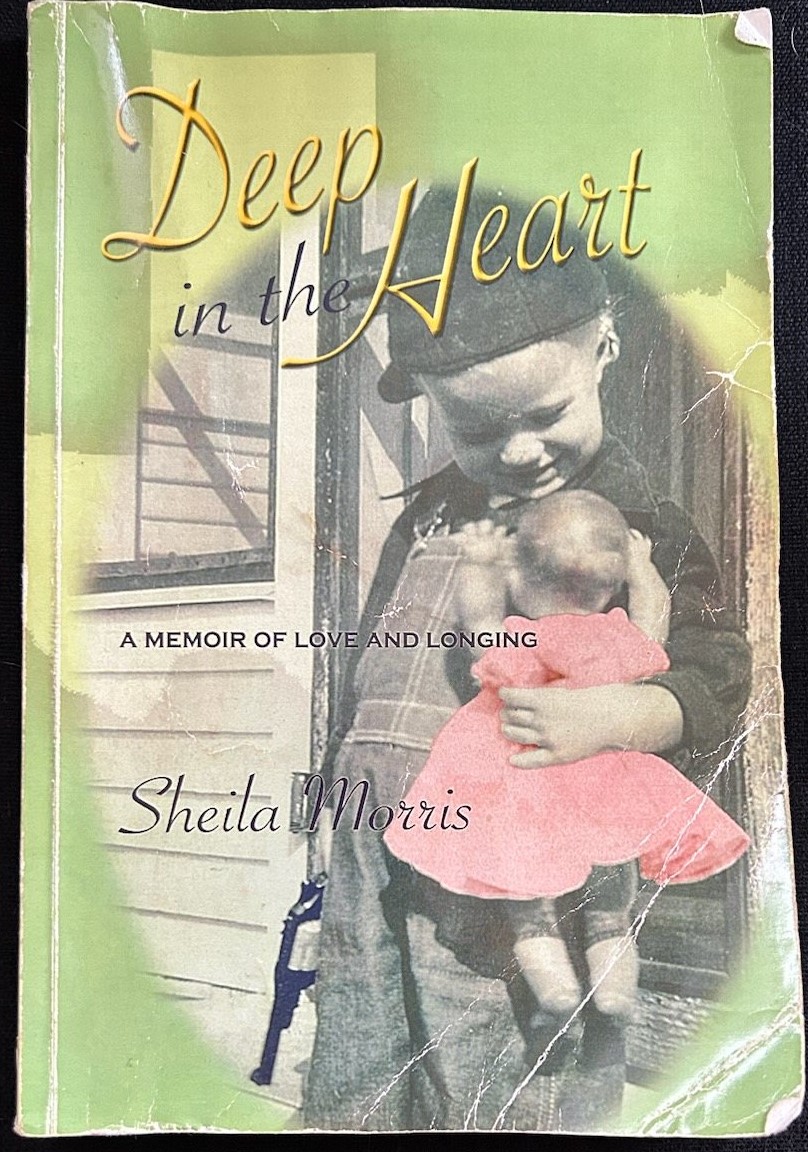
Groundbreaking research is currently being conducted in the medical field on treatment programs including new medicines for dementia and Alzheimer’s disease. In 2011 when I wrote this piece and published it for the first time, Pretty and I had become caregivers for my mother for the previous three years with the goals of keeping her safe and comfortable. We were told her dementia would get progressively worse with no hope for improvement. We saw that prognosis slowly come true. Last week Pretty’s ongoing work on bringing order to the very old boxes in her warehouse revealed a small black box containing my mother’s notebook prepared by the funeral home that took care of her final remains and resting place in 2012. Inside the notebook was her copy of my first book Deep in the Heart: A Memoir of Love and Longing that I gave her in 2007.
****************
August 08, 2011
Last week I visited my mother who is in a Memory Care Unit in a facility in Houston, Texas. She is eighty-three years old and has lived there for two years. She is a short, thin woman with severe scoliosis. Her curved spine makes walking difficult, but she shuffles along with the customary purpose and determination that characterized her entire life. Her silver hair looks much the same as it has for the last thirty years, missing only the rigidity it once had as a result of weekly trips to the beauty parlor and massive amounts of hairspray.
Her skin is extraordinarily free of wrinkles and typically covered with makeup. She wears the identical mismatched colors she wore on my last visit. Black blouse and blue pants. This is atypical for the prim, little woman for whom image was so important throughout her life and is indicative of the effect of her dementia.
My mother is a stubborn woman who wanted to control everyone and everything in her life because she grew up in a home ruled by poverty and loss and had no control over anything. Her father died when she was eleven years old. He left a family of four children and assorted business debts to a wife with no education past the third grade. Life wasn’t easy for the little girl and her three older brothers who were raised by a single mom in a rural east Texas town during the Great Depression.
My mom survived, married her childhood sweetheart, and had a daughter. The great passions of her life, which she shared with my father, were religion and education and me, possibly in that order. She played the piano in Southern Baptist churches for over sixty years. She taught elementary grades in three different Texas public schools for twenty-five years. The heart of the tragedies in her adult life made a complete circle and returned to losses similar to the ones she experienced in her childhood: her mother who fought and lost a battle with depression, two husbands who waged unsuccessful wars against cancer, an invalid brother who progressively demanded more care until his death, and a daughter whose sexual orientation defied the laws of her church. Alas, no grandchildren.
My sense is that my mother prefers the order of her life now to the chaos that confronted her when dementia began to overpower her. She knew she was losing control of everything, and she did not go gently into that good night. Today, she seems more content. At least, that’s my observation during my infrequent visits.
“My daughter lives a thousand miles from me,” she always announces to anyone who will listen. “She can’t stay long. She’s got to get back to work.”
We struggle to find things to talk about when I visit, and that isn’t merely a consequence of her condition. We’ve had a difficult relationship. Our happiest moments now are often the times we spend taking naps. She has a bed with a faded navy blue and white striped bedspread, a dark blue corduroy recliner at the foot of her bed, and one small wooden chair next to her desk. I sleep in the recliner, and she closes her eyes while she stretches out on the bed.
The room is quiet with occasional noises from other residents and staff in the hallway outside her door. They don’t disturb us. She has no interest in the television I thought was so important for her to take when I moved her into this place. I notice it is unplugged. Again.
“Lightning may strike,” she says when I ask her why she refuses to watch the TV in her room. “Besides, I like to watch the shows with the others on the big TV. Sometimes we watch Wheel of Fortune, and sometimes we watch a movie.”
I give up and close my eyes.
“I love this book,” my mother says, startling me awake with her words. I open my eyes to see her sitting across from me. She’s in the small wooden chair with the straight back. I can’t believe she’s holding the copy of my book, Deep in the Heart, which I gave her two years ago. I never saw the book since then in any of my visits, and I assumed she either threw it away or lost it. I was also stunned to see how worn it was. The only other book she had that I’d seen in that condition was The Holy Bible.
“I know all the people in this book,” she continues. “And many of the stories, too.”
“Yes, you do,” I agree. “The book is about our family.”
And, then, for the second time in as many weeks, I hear another reader say my words. My mother reads to me as she rarely did when I was a child. She was always too busy with the tasks of studying when she went to college, preparing for classes when she taught school, cooking, cleaning, ironing, practicing her music for Sunday and choir practice—she couldn’t sit still unless my dad insisted that she stop to catch her breath.
But, today, she reads to me. She laughs at the right moments and makes sure to read “with expression,” as the teacher in her remembers. Occasionally, she turns a page and already knows what the next words are. I’m amazed and moved. I have to fight the tears that could spoil the moment for us. I think of the costs of dishonesty on my part, and denial on hers for sixty-five years. The sense of loss is overwhelming.
The words connect us as she reads. For the first time in a very long while, we’re at ease with each other. Just the two of us in the little room with words that renew a connection severed by a distance not measured in miles. She chooses stories that are not about her or her daughter’s differences. That’s her prerogative, because she’s the reader.
She reads from a place deep within her that has refused to surrender these memories. When she tires, she closes the book and sits back in the chair.
“We’ll read some more later,” she says.
I lean closer to her.
“Yes, we will. It makes me so happy to know you like the book. It took me two years to write these stories, but I’m glad you enjoy them so much.”
“Two years,” she repeats. “You have a wonderful vocabulary.”
On August 01, 1966 twenty-five-year-old Charles Whitman drove from his house on Jewell Street in Austin, Texas to the University of Texas campus where he arrived between 11:25 a.m. and 11:30 a.m.. He drove directly to the Tower that was the focal point of the campus, a building completed in 1937 that was Austin’s tallest building at 913 feet with twenty-eight floors and a public observation deck on the top floor. Whitman entered the Tower between 11:30 a.m. and 11:35 a.m.; he wore overalls that gave him the appearance of a workman with dolly and equipment (in reality a footlocker filled with guns and ammunition) which allowed him to take an elevator to the twenty-seventh floor where he exited the elevator to drag the dolly up three half flights of stairs and a short narrow hallway to a landing that led to the observation deck. The first person he shot and murdered in the building was the receptionist who would normally have had the day off.
Ninety-six minutes later, following a meticulously planned attack that resulted in the deaths of fifteen people and thirty-one others injured, Charles Whitman was dead, shot and killed at the top of the Tower by two city of Austin policemen on the same deck his reign of terror had been carried out.
“It took Charles Whitman an hour and a half to turn the symbol of a premier university into a monument to madness and terror. With deadly efficiency he introduced America to public mass murder, and in the process forever changed our notions of safety in open spaces. Arguably, he introduced America to domestic terrorism, but it was terrorism without a cause.” (A Sniper in the Tower, Gary Lavergne, 1997)
This past weekend three funerals were held for the latest victims of another horrific attack at a university, this one at Michigan State University on February 13th. I had followed the coverage of those students whose lives were lost, whose families’ dreams for their children were destroyed by random violence at a place that should have been safe. On the very next day, Valentine’s Day, here in South Carolina at a grocery story fifteen minutes from our home two women had an exchange of hateful words that resulted in one of the women shooting the other woman, killing her in front of her two year old child and infant.
So I already was troubled by these unrelated tragedies when Pretty casually handed me a paperback copy of A Sniper in the Tower, the Charles Whitman Murders. She found the book on one of her treasure hunts and gave it to me because she knew I had been a student at the University of Texas when the Tower killings took place. Normally when Pretty hands me a book I scan the contents but don’t follow through with actually reading, but the memory of the Tower massacre is as shocking today as it was when I first heard of what happened during summer school at UT. I had a job in Rosenberg, Texas and was living with my parents when Whitman rode the elevator to annihilate as many people as he could. I read every word of this 300+ pages account by Gary Lavergne that explored not only the lives of Charlie Whitman and his family but also the situations of the victims that led them to the Tower area on that fateful day. I was mesmerizd by these stories and finished the book in two days.
In August, 1977 author Harry Crewes wrote an article in Esquire about his visit to the University of Texas where his host gave an unsolicited tour of the Tower massacre site. “What I know is that all over the surface of the earth where humankind exists men and women are resisting climbing the Tower. All of us have a Tower to climb. Some are worse than others, but to deny that you have your Tower to climb and that you must resist it or succumb to the temptation to do it, to deny that is done at the peril of your heart and mind.”
When I returned to UT for the fall semester following the Tower shootings, I saw visible reminders of the events of that day. Nearly sixty years later today I remember seeing bullet holes left in buildings where I attended classes, heard first hand accounts from summer school friends that made me shiver as I felt their fear, and for a while dreaded the Tower chimes on the quarter hour that I had loved when I first enrolled in summer school after graduating from high school in 1964. My last year of classes at UT was always overshadowed by the Tower that had been my beacon of orange light like a lighthouse when I drove my old Nash Rambler over a particular hill on Highway 71 on the way back to school from Rosenberg, the Tower lit orange by a football team victory on the Saturday before.
Lavergne closes his introduction with these haunting words:
“Periodic attempts to understand what happened and why are worthy; since 1 August 1966 there have been other Charles Whitmans, and there will certainly be more. Potential mass-murderers live among us; some of them are nice young men who climb their towers. It is no longer enough to look upon the University of Texas Tower and sigh, ‘This is where the bodies began to fall,’ because the story is larger than that. It is a story of how a nation discovered mass murder, and that nation’s vulnerability to the destructive power of a determined individual.”
In the beginning was the Tower, and sadly, the Tower lives on.
“Unfortunately, this is a situation where tempers flared, and someone let anger get the best of them,” Irmo Police Chief Robert Dale said. “One rash decision has impacted the lives of two families and countless others who witnessed this tragic event,” Dale stated. “Senseless is the only word I can think of to describe what happened today.” (Lexington Chronicle, February 14, 2023)
One woman was killed yesterday by another woman she did not know in the parking lot of a local grocery store fifteen minutes from our home. Random act of violence, right? Who hasn’t gotten angry over another vehicle sliding into a parking spot we were waiting for? Or maybe a new shiny SUV was taking up two parking spaces near the door to the store – that’s an entitled elite being entitled and elite, for God’s sake. Makes me mad just to think about it. My blood boils. Hateful words hurled at the other woman over the parking space or whatever the important issue was at 4 o’clock in the afternoon on Valentine’s Day when someone needed candy or cookies. The shouting between the two women intensified, grew louder. Cell phones taking a video…
If I had a gun, I’d shoot that bitch.
Oh, look. I do have a gun. Take this. Trigger pulled. Boom. End of discussion.
*****************
The killer in the tragedy yesterday was a twenty-three year old woman who turned herself in to the police and has now been charged with murder. The victim was twenty-six years old, did not know her killer, but what happened was known. The casual encounter of the two women led to an “altercation” in the parking lot – an altercation that then escalated to a gun being fired and a life taken. Really, two lives were taken while traumatized witnesses who will also never be the same watched in horror and disbelief.
Just another Valentine’s Day massacre of someone in America following a mass murder the night before on the campus of Michigan State University where three students were killed and five more seriously wounded by a man who then killed himself which brought the count to four known dead. Anyone who has access to news knows “gun violence is a fixture in American life.” (BBC)
The population of the United States is currently estimated at 336 million by Worldometer with the number of guns in the US close to 400 million. I can’t wrap my brain around this insanity. The inmates are running the asylum – and they are heavily armed. I can, however, wrap my brain around two young women going to a grocery store on Valentine’s Day with only one surviving to drive away.
Did the woman with the gun carry it in plain sight of the woman she shot or was it concealed in her purse, her handbag? Did the woman with the gun have a Concealed Weapon Permit for it? That’s for the prosecution and defense to discover in the coming days. However the shooter obtained the gun, however she carried her gun, whether legally or illegally, another woman is dead because she was shot by that gun.
Molly Ivins was a syndicated columnist with Creators Syndicate, Inc. and on March 13, 1993 published a column called Taking a Stab at our Infatuation with Guns. Thirty years later her words sadly continue to be relevant.
In truth, there is no rational argument for guns in this society. This is no longer a frontier nation in which people hunt their own food. It is a crowded, overwhelmingly urban country in which letting people have access to guns is a continuing disaster. Those who want guns – whether for target shooting, hunting or potting rattlesnakes (get a hoe) – should be subject to the same restrictions placed on gun owners in England – a nation in which liberty has survived nicely without an armed populace.
The argument that “guns don’t kill people” is patent nonsense. Anyone who has ever worked in a cop shop knows how many family arguments end in murder because there was a gun in the house. Did the gun kill someone? No. But if there had been no gun, no one would have died. At least not without a good footrace first. Guns do kill...letting the noisy minority in the National Rifle Association force us to allow this carnage to continue is just plain insane.Ban the damn things. Ban them all.
You want protection? Get a dog.
***********************
Blessed are those who mourn, for they shall be comforted. Hopefully.
“Her legacy will be cherished by her five daughters, two sons, twenty-one grandchildren, twenty-four great-grandchildren, three nieces and a host of great-nieces, nephews, relatives and friends,” was part of the commentary on the life of a Black woman whose celebration of life took place on April 21, 2012 in the city of Simonton, Texas, which is located within the Houston metropolitan area.
Willie Flora wasn’t a famous public figure like Maya Angelou, not a political icon of the Civil Rights movement like Rosa Parks, not a household name like Shirley Chisholm – and yet her influence has been felt in the lives of ordinary people who were touched by her generosity of spirit, her keen sense of humor, and her loving care for those who needed help in any form. She has earned her place in Black History Month to many. Her niece Verna wrote a moving tribute to her Aunt Ninnie for the Celebration Program in 2012.
Aunt Ninnie was called many names, Skin, Cat Momma, Girlie, Aunt, Cousin, Sister, Road dog, Mother, but most of all she was called Mom. She was the type of person that, whatever you needed, no matter what it was, you had it. Now I guess you are wondering, “Why Road dog?” You see, my Auntie was my best friend. I remember when I was staying in Houston, I would call my Auntie every day and ask her what she was doing, and she would say,”Sitting on the side of the bed waiting on the next thing smoking.” We didn’t talk very much; we just enjoyed each other’s company. Man! We all loved her cooking! We couldn’t wait til Sunday, because that’s when we all met after church, and what a time we had! Auntie had something that everyone liked, because she wanted to make everyone happy. That’s the kind of person she was. Our loved one was no stranger to anyone. She was always there with a helping hand. I could go on and on about Mrs. Willie Flora. So Auntie, I’m waiting on the next thing smoking. See you on the other side. Rest in Peace, Love, Verna
Willie was in my life from the summer I graduated from college in 1967 until her passing in 2012. As Verna said in her tribute above, she was always there with a helping hand to everyone including me and my entire family.
I loved Willie Flora. I miss her to this day and am waiting with her and Verna on the next thing smoking. See you on the other side, Willie. Rest in Peace, Love, Sheila Rae









 I'll Call It Like I See It
You must be logged in to post a comment.