Category: Lesbian Literary

  • In Memoriam: Dianne Barrett


    RECORD THE PAST, INSPIRE THE FUTURE

    Two lesbians who believed in the power of oral history through the preservation of our stories, Dianne Barrett and her wife Marge Elfering, had a vision for a project which became the B-E Collection. In June, 2022 I participated in the first of three interviews with her for that project. I learned yesterday of Dianne’s passing on December 17, 2023 and wanted to celebrate her life well lived with a piece I originally published in the summer of 2022 following that first interview.

    I recently had the privilege of being interviewed by Dianne Barrett who is a co-founder of the B-E Collection. As a personal historian who identifies as lesbian I am, of course, drawn to projects that celebrate oral histories of lesbians and our lives. This is the Mission Statement of the B-E Collection:

    My spouse, Margaret Elfering, and myself, in conjunction with archives such as the June L. Mazer Lesbian Archives and the Gerth Archives and Special Collection at California State University Dominguez Hills, will contribute an ongoing series of interviews of lesbians and their careers.  The collection will be known as the B-E Collection: Lesbians and Their Careers.

    The “B-E” of the collection is a shorthand for our last names (Barrett – Elfering).  However, there is a second meaning to our collection’s name:   the verb “be” is also defined as “to exist” or “to occur or take place”.  Our collection is a means of bearing witness to the stories of lesbians of different generations, from different walks of life.

    The mission of this collection is to dignify the accomplishments, pride, and effort lesbians put forth in their careers on their journey in life.  We make oral histories to document our existence then and now.  Many of us had the “don’t talk – say nothing – you are wrong” experience.  Now we are talking.

    We would appreciate a referral of lesbians who might be interested in participating in our project.  We would be more than delighted to speak with anyone who you think would be interested in participating in the B-E Collection.

    Your support is always a gift.

    https://www.b-ecollection.org

    ********************

    Dianne Barrett (December 13, 1941 – December 17, 2023)

    Rest in peace, Dianne, but we will remain restless as a result of your inspiration.

    Onward.

  • the truth tellers

    the truth tellers


    At a press conference following her loss in the finals at Wimbledon in 2019, Serena Williams was questioned about why she lost. Although she tried to say her opponent played a brilliant match, the members of the press wouldn’t let it go. They asked her if she thought her lack of match play during the year had hurt her, whether her role as a mother took too much time away from her tennis, and finally someone said they wondered if she spent too much time supporting equal rights or other political issues. Serena’s quick response to that question was “The day I stop supporting equality is the day I die.”

    I can identify with her answer because I believe my actions to support equality and social justice are two of the dominant forces of my life, but alas, I lack the tennis skills that give Serena Williams a universally recognized platform. Writing has been my platform for supporting equal rights during the past seventeen years; it has been the curtain call for the third act of my life – my love affair with words: collecting, rearranging, caressing them to make sense of an ever-changing world. Flannery O’Connor said I write because I don’t know what I think until I read what I write. I get that because I can start with a feeling, but sometimes my thoughts trail along behind my words that come from a mysterious place yet to be revealed.

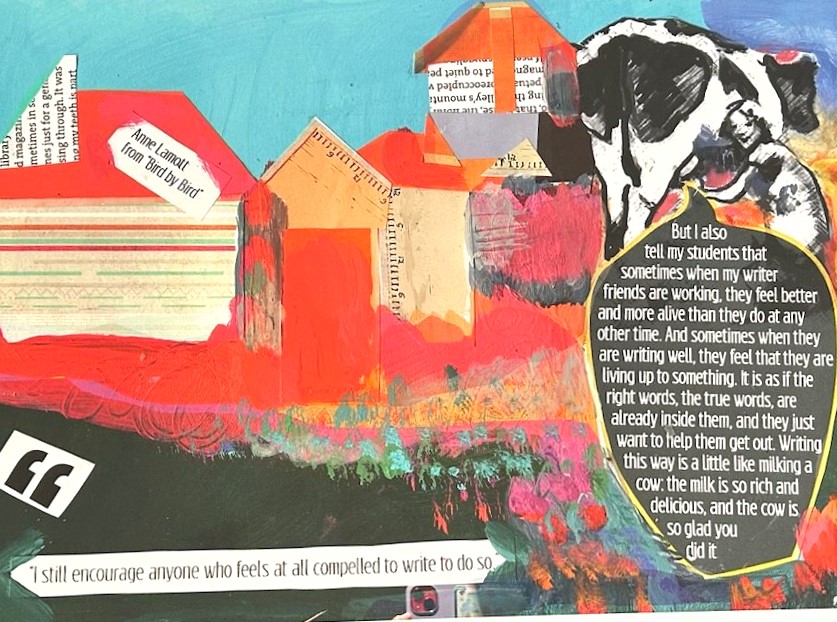
    This poster given to me by my friend Linda many years ago hangs in my office today with words from author Anne Lamott to writers about why they write. “It is as if the right words, the true words, are already inside of them, and they just want to help them get out.” The true words I release, however, are not necessarily everyone’s truth. I have learned over the years that truth is not an absolute for every person but rather a fluid concept capable of manipulating minds at odds with what I believe truth to be. For example, remember Kelly Anne Conway’s remarkable explanation of “alternative facts.” Those two words took America on a roller coast ride of a reality show called Believe It or Not DC Style for the past eight years, and unbelievably created a deep wedge that pit family members, friends, co-workers, even institutions against each other with no sign of relief in next year’s political environment.

    Truth telling may be a lost art, truth tellers may bend with the winds, but fundamental values of equality and social justice must not be either lost or warped. As Serena said, the day I stop supporting equality is the day I die.

    And I ain’t ready to go yet. Onward.

    ********************

    For the children.

  • what have you done today to make you feel proud?

    what have you done today to make you feel proud?


    writer Dottie Ashley did groundbreaking reporting

    in The State newspaper on December 10, 1989

    Four years later co-founders Freddie Mullis, Dan Burch, Jeff Plachta and I returned home from the March on Washington in April of 1993 with a vision shared by many members of the queer community that South Carolina deserved a seat at the table with our brothers and sisters on the west and east coasts who were motivated to make a collective economic impact that would effect positive changes for justice, inclusion, and prosperity for everyone. We were ready to organize, and the Guild was formed to focus on these economic issues, to work alongside the already functioning Gay and Lesbian Pride Movement, to create a safe space to gather socially outside the bars – a revolutionary concept in South Carolina at the time.

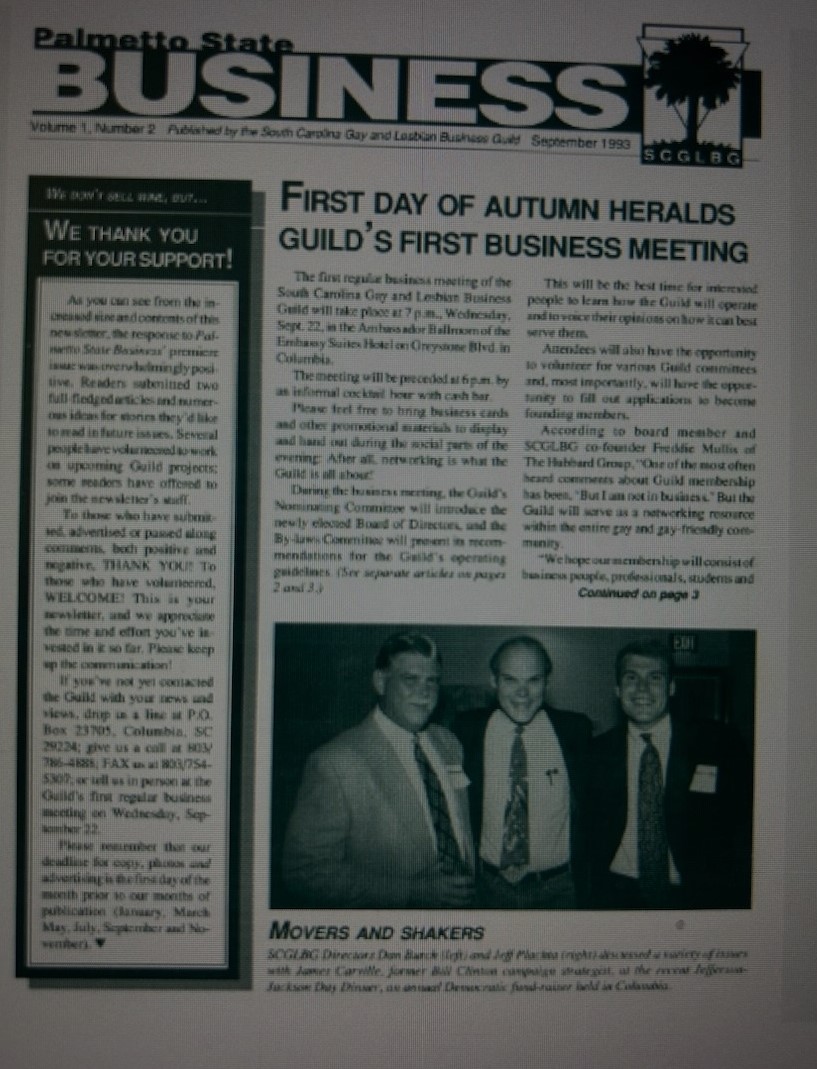
    First business meeting of the Guild in September, 1993

    The first Palmetto State Business newsletter published by the Guild featured a photo of co-founders Dan Burch (l) and Jeff Plachta (r) with James Carville at the annual Jefferson-Jackson Day Dinner in Columbia.

    Guild members marching in Pride Parade in Columbia

    Growing yellow with age in a folder in my office was this typed note from a 40 year old woman in Florence, South Carolina who wrote to us in the first year we began our meetings:

    I became aware of your organization via your Internet website…I would very much like to join your organization and look forward to meeting other members from the various businesses and professions represented in your organization. Would you please send me information as well as an application for membership so that I may join the Business Guild? I think it is wonderful that the Gay/Lesbian community of S. C. has a Business Guild. Thank you…

    British soul singer Heather Small’s lyrical question what have you done today to make you feel “Proud” is one we must answer for ourselves not only in the queer community but also as a country. I feel proud of the Guild that touched the lives of so many people during its nearly thirty year history. The torch was passed to a new generation of Americans according to President John Kennedy in the early 1960s, but our generation probably wasn’t what he hoped we would be. With our last breaths, however, we have the opportunity to make ourselves feel proud again.

    Onward.

  • one lesbian’s journey for a simple matter of justice (part 1)

    one lesbian’s journey for a simple matter of justice (part 1)


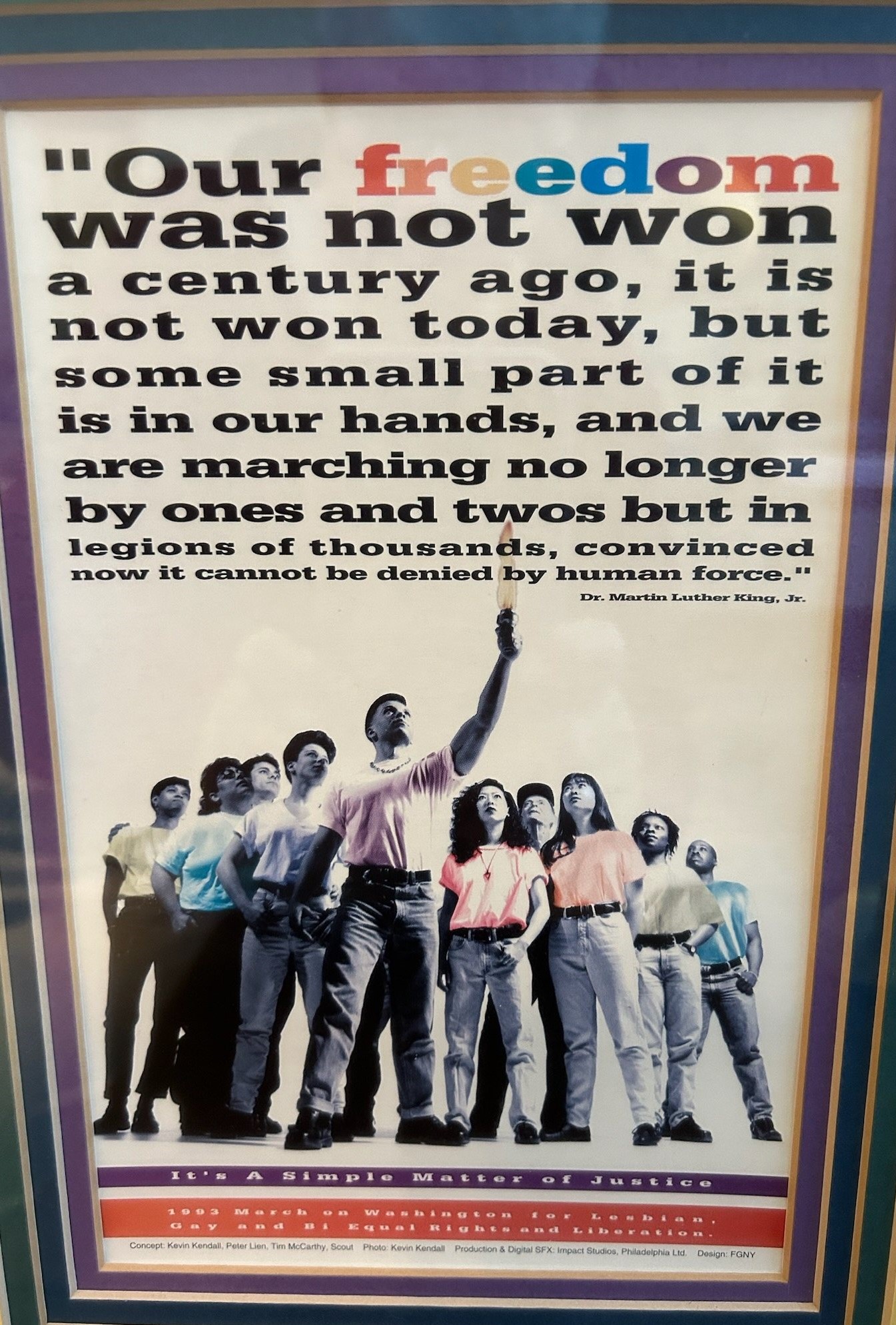
    30 years later we remain people you know and like

    thanks to Pretty for taking these pictures

    (we were there with different partners and friends – she saved pictures)

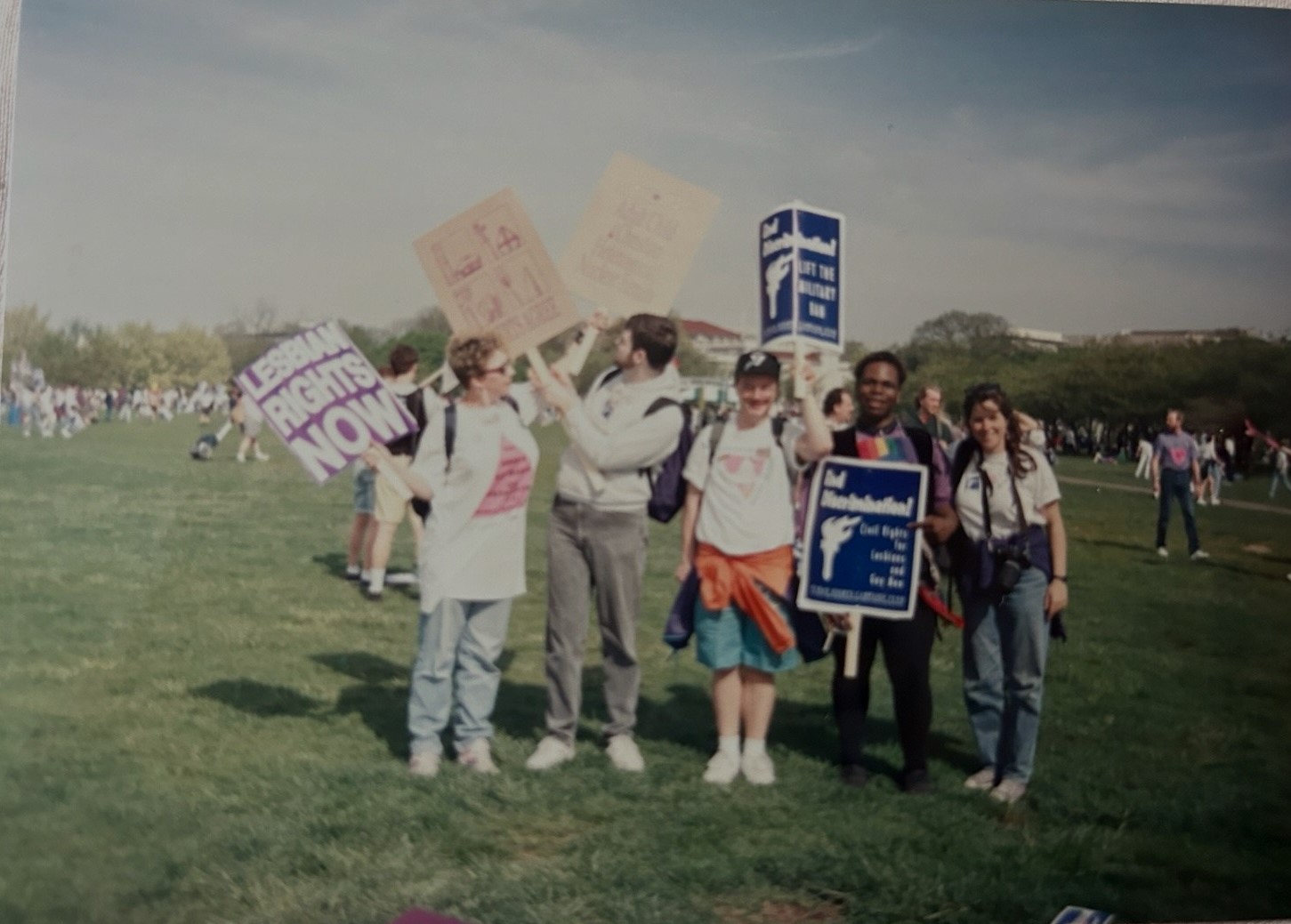
    When I left Columbia, South Carolina in April of 1993 to drive to Washington, D. C. with my partner and two gay friends to participate in a weekend known as the 1993 March for Gay, Lesbian and Bi Equal Rights, I had no idea my life would be changed forever by the events I took part in. Change was in the air – I could feel a seismic shift from my personal shame and fear to a collective sense of pride as I walked with the South Carolina delegation in the middle of this mass of humanity that championed a cause I had needed since I was a child growing up in the piney woods of rural southeast Texas, thinking I was the only one with feelings I dared not express. At forty seven years of age I felt a sense of belonging, a feeling that this wave of a million people marching for a simple matter of justice had finally brought me home.

    the Names Project AIDS Memorial Quilt on display that weekend

    next to the Washington Monument

    Onward.

  • schoolteachers in the house

    schoolteachers in the house


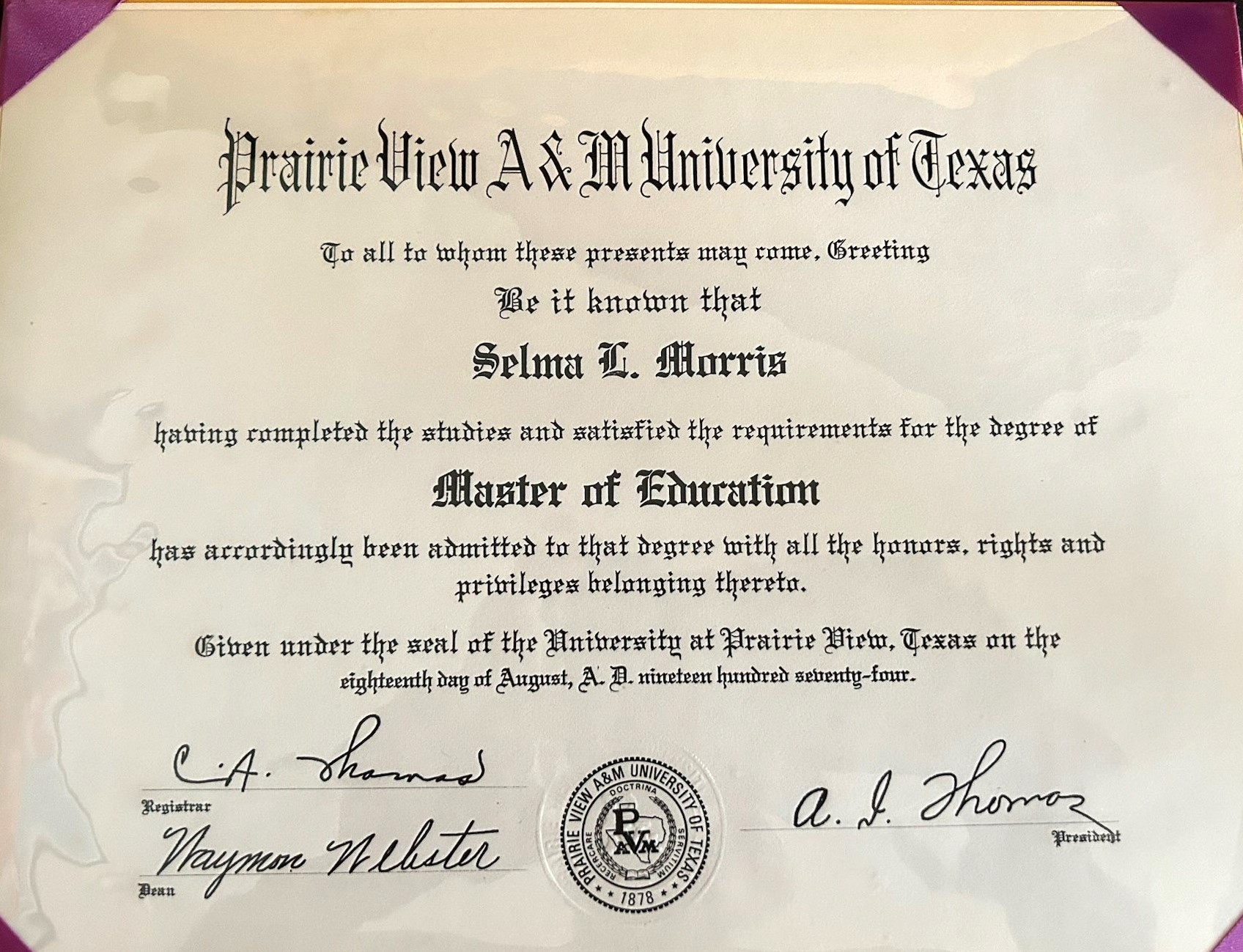
    my mother has a graduate degree from an HBCU

    courtesy of Texas taxpayers to support motivated public school teachers

    Both my parents were Texas schoolteachers in what I consider to be transitional times in the mid twentieth century when teachers in public schools were respected members of their communities, paid less than other professions but valued for their contributions to the greater good. As their daughter I often attended the schools where they were employed, but only once was I ever a student in one of their classes. That was my mother’s music class when I was in the seventh grade in our home town of Richards, and I was totally humiliated by her teaching techniques and interaction with me and my friends. My first year as a teenager and my mom’s first teaching position didn’t mix well. Dinnertime at our house was colder than the sweet iced tea.

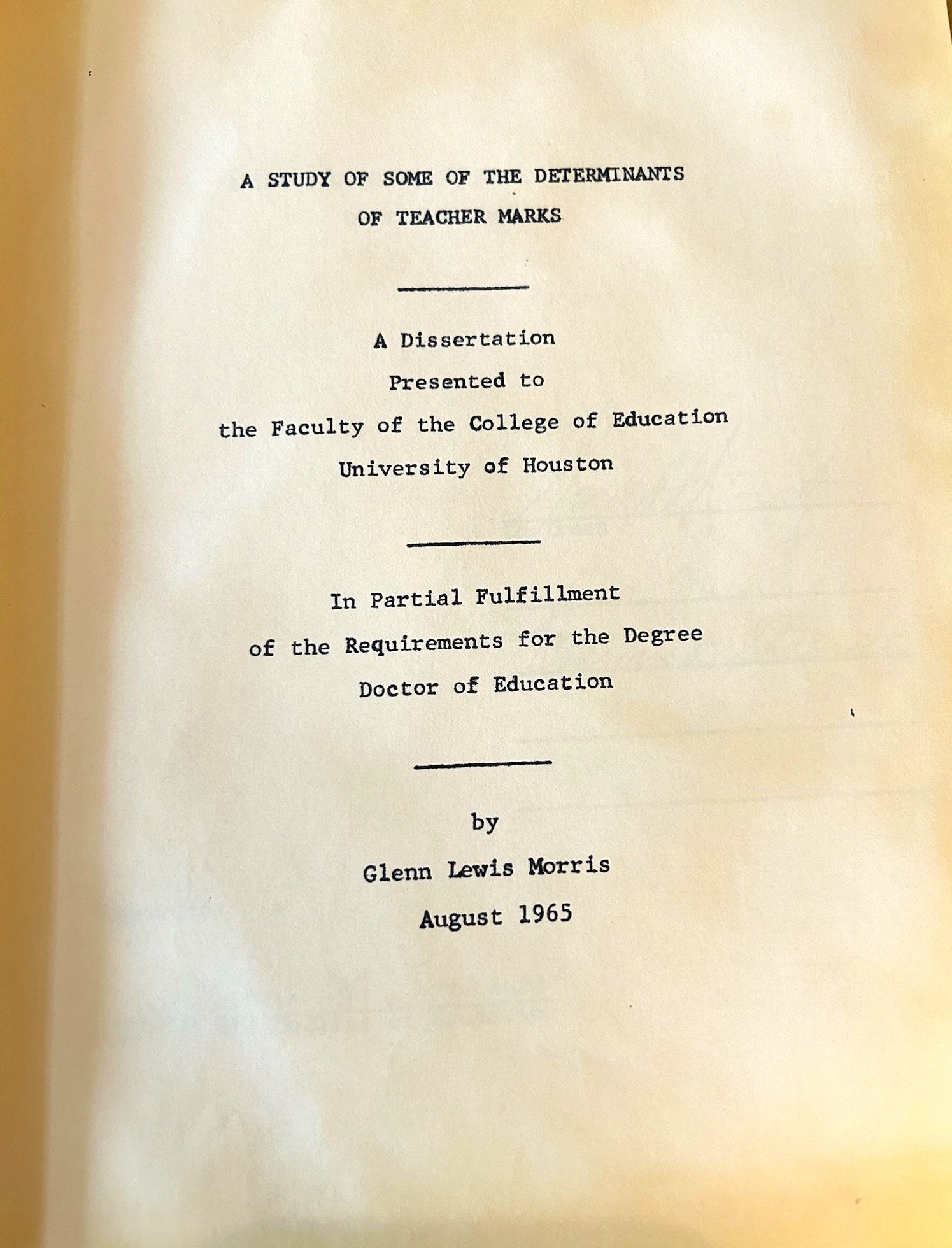
    Both my parents worked on different college degrees for as long as I was in school. My mom and dad did their undergraduate work at Sam Houston State Teachers College (now Sam Houston State University) in Huntsville; Dad also completed his master’s degree there. Mom commuted the twenty-five miles from Richards to Huntsville for classes when I started the third grade – Dad did the same commute when he finished his undergraduate degree at Sam, then master’s. When I was in college at the University of Texas in Austin, Dad finally got his doctorate at the University of Houston after five years of commuting to the campus from Brazoria and three years commuting from Rosenberg, Texas. The GI bill he earned in WWII allowed him to pursue his dreams of higher education, and the Texas taxpayers helped with his costs, too.

    does this topic seem boring to you?

    As the person who typed each excruciating word on an old Royal manual typewriter, I can testify it was less than an entertaining read. Learning the appropriate format for footnotes, credits, blah blah blah wasn’t fun, either. I must have used hundreds of bottles of white out that summer I devoted to my dad’s dissertation and while my dad thanked his advisor profusely in the acknowledgements, be aware I didn’t have any gratitude for the man responsible for the many rewrites he made to the manuscript that required typing the same material over and over again. And then over again.

    Two teachers in the house made education a must for the daughter who vowed to choose any career over teaching but never say never. I taught at a community college here in South Carolina for five years from 1982-87 and was grateful to the taxpayers of the state for paying for my master’s degree at the University of South Carolina. Apples for the teacher don’t roll far from the tree.

    *****************************

    Slava Ukraini. For the children.