Category: Lesbian Literary

  • Hillary, Nancy, Ruth – Ruth?

    Hillary, Nancy, Ruth – Ruth?


    Nancy said know your why – what motivates you – what matters to you – what you believe – the why. Hillary said get the naysayers and the whiners and the snipers to go to the back of the room… this country can still do good stuff with Joe Biden. Ruth said educators have to be at the forefront of fighting the country’s impulses to become ignorant again. Three amazing women on TV this morning before 9 o’clock, and it’s September – six months after Women’s History Month in March. Such a wonderful surprise for me when, yes I admit it, I am languishing without tennis at the US Open. I needed a swift kick in the butt to energize me for 2024, to shake me out of my whining and naysaying, to remind me of my personal “why.”

    Nancy Pelosi is a household name and, depending on the household, revered as an American politician who led fierce opposition to a Republican president when she was Speaker of the House of Representatives the second time, just as fiercely led support for President Joe Biden that produced the most sweeping legislation the country has seen since the LBJ administration. Speaker Emerita Nancy Pelosi was born in 1940 to a family with Italian heritage and a commitment to public service.

    Hillary Clinton is also a household name and, again depending on the household, celebrated as the first woman to be nominated by a major political party for the office of President of the United States in 2016, an election she lost to her opponent. Clinton was born in 1947, influenced during her college years by the Vietnam War and the American Civil Rights movement, was a fomer first Lady of the United States, former US Senator, former Secretary of State. This year she will be a professor and fellow in global affairs at Columbia University.

    Dr. Ruth Simmons, on the other hand, is not a household name, but she is an American educator who became the first Black president of an Ivy League college, Brown University, in addition to serving as presidents of two other colleges: Smith College and Prairie View A&M University. She did her undergraduate work on scholarship at HBCU Dillard University in New Orleans, earned a master’s and Ph.D from Harvard. She was born the youngest of 12 children in Grapeland, Texas to a sharecropper’s family in 1945 when the message to people of color was you are not smart enough to ever become anyone. Her memoir Up Home: One Girl’s Journey was published last week by Random House and is already a New York Times Bestseller.

    Ok. Now I’m wide awake, feeling guilty for my fears for the future when I’ve heard three women who are in my cohort by age only (I was born in 1946), three women who refuse to give up on a flawed America too often characterized by our differences in world view rather than the similarities of our hopes and dreams for our children, three women who continue to look forward to change rather than fear it. May Sarton writes in her Journal At Seventy if someone asked me what are the greatest human qualities, I would have to answer courage, courage and imagination. If Sarton could have lived to hear these three extraordinary women this morning, I think she would agree with me that they all possess the greatest human qualities. They are women of courage, imagination and I would add perseverance.

    To paraphrase Nancy today, I am an optimist. But I have a lot of worries.

    ****************************

    Slava Ukraini. For the children.

  • when the name of the game is life

    when the name of the game is life


    Whether the surface is a hard one or made of red clay or manicured green grass, the goal is the same: to win, to beat someone. To play better, smarter and mentally tougher than the opponent. To be more physical and aggressive. To charge the net when an opening appears. To cover the baseline when the shots go deep against you. The court is a battlefield and the scales of justice are often tipped by net cords and fractions of inches along white lines. The game is tennis, but the game of life is similar.

    How often must we summon courage to charge the net when an opening appears – when the scales of justice have tipped too far in the direction of injustice, when we stand behind the baseline for protection from the deep shots fired against us by people whose purpose is to disrupt our rhythm, to create confusion in our understanding of what matters most. Yes, the game is life, but the game of tennis is similar.

    For men who play singles, the winner is usually required to win two of three sets. In Grand Slam events, however, the rules change to three of five sets to determine the champion. If each man wins two sets, a fifth set is played. The fifth set is often the scene of one man’s surrender and loss to another man’s courage and inner strength. The first four sets are evenly played, but the last one is too much for the body or mind or will or all of the above for one of the guys and the desire to win or to not lose drives his opponent to victory. When the game is life, time controls how many sets we play. For some, the opportunities to play five sets never happen because winners and losers are determined at the end of three or four sets or earlier when players are forced to retire because of illness or injury.

    I love fifth sets in tennis. I particularly like them when they are close and long, and I’m not even paying for my seat in front of the television set. Nope, I’m watching for free, but I have the deluxe box seats and have seen my share of Grand Slams in Melbourne, Paris, London and New York City. From my ABCs of Agassi to Becker to Connors to later Golden Era Greats Federer and Nadal I admire the passion and persistence of the five-set winners. There is a moment of high drama called match point when the difference between winning and losing in the fifth set can be measured in split-second choices and breaks in concentration. Match points can be saved and the game can go on for hours, but in the end, a match point is lost and the winner takes center court with a victorious smile and wave to the crowd.

    Whenever I watch a five-set tennis match, I am reminded that match points in tennis have an advantage over those we have in real life. Jannik Sinner and Alexander Zverev understood the importance of the fifth set and its match point last night at the US Open in New York City. Their embrace at the net following the match showed their separate reactions to winning and losing match point, but we as individuals may never know when we miss the chance to win –  or lose what we value most. Moving through the game of life we often struggle to identify those inflection points that will profoundly define our fifth set’s legacy, but maybe, just maybe, we will recognize one more opportunity to charge the net with courage, to leave the safety of the baseline to protect what we must not lose.

  • the secret life v. the happy homosexual

    the secret life v. the happy homosexual


     KA: Can you give me an example of what you mean by secret life? What was the public persona versus…was it what you were feeling inside, or what you were doing?

    SM: Okay. No. It was… I was a high achiever. I wanted to succeed in everything, and I’m not sure what was the motivation for that. My parents really didn’t pressure me into that, but being the only child of school teachers…maybe there was some, I don’t know. But regardless, I wanted to be at the top of my class. I wanted to be…if I did athletics, I wanted to be the best. I mean, I was very motivated, and I always felt that that person who was doing all that, if anybody knew that deep down, that I liked little girls and that I wasn’t really interested in boys, and pretended to be…

    You know I dated in high school, college. I’ve dated guys. That was ridiculous. But it was important to keep the secret life, the secret. Yeah. I mean, it impacted everything. I started reading about—when I was a child obviously I couldn’t really understand the totality of my feelings about girls, but then when I got to where I could read and went to high school and all, then I started reading stuff about being a homosexual. What does that mean, really, being a lesbian?

    KA: What kind of stuff did you find?

    SM: Well I found the kind of stuff that I mentioned, that it was illegal, that it was an illness, that it was…you were somehow wrong. Not just from an ethical, moral standpoint, but you were just wrong in general. There was something off. You just weren’t quite there. And so, contrast that with the overachiever over here who was busy, busy, busy making top grades and all that, with the fear that over here, “Oh my god. They’re going to find out and then they’re going to want to do something horrible.” And that was the literature. I mean that was the literature of the ‘50s. And even the ‘60s, was that this was an illness, a sickness, a sin. I mean, it was awful. That was how you were. That was you.

    KA: Was there anything positive? Did you ever find anything that was positive?

    SM: Well, the seminal event that changed my life, I will tell you this. There was—of course what would I study when I went to the University of Texas in 1964? Abnormal psychology, because that was what I was really interested in. It wasn’t a major. I majored in accounting because the successful person had to make a lot of money, okay? But the secret person over here had an elective in abnormal psychology.

    I mean, you have to know that back then—I don’t know what they do now—but back then at the University of Texas, the lecture halls, there were 500 students in a class. I mean, we’d sit in these huge auditoriums. There were more students in my classes than lived in my entire town of Richards. You know what I mean?

    I mean, counting dogs and chickens, and everybody. So I had this professor in that abnormal psychology class, and he had a different lecture every time, obviously. But one day he said, “Well, today we’re going to talk about homosexuality.” Well I thought, “Finally, I mean this is why I took this class, and now he’s going to get to it.” And so, his name was Dr. Holmes, and he was a young guy. I remember he had a crew cut, and nice-looking guy. But anyway. He was walking around, and he was talking to us, and he said, “One thing I do, other than teach, is I’m a counselor. I’m a psychologist. I have patients. Clients.” And so he said, “I have a question for the class today. What do I say to the happy homosexual?” That changed my life. Because the idea that there could be a happy homosexual was contrary to everything that I had ever felt, ever thought, ever read.

    And there’s a man standing up there saying, “Homosexuals can be happy.” So it changed my vision and my life because then I could see the potential. It opened up a whole new…it still didn’t change me from being a secret. I wasn’t going to tell anybody I was a homosexual yet. I was still very closeted. But it changed the horizon, I guess, that I had for my life. Yeah. So that was the positive thing that turned my life in a different direction.

    ****************

    On June 21, 2021 I was interviewed by Katherine Allen (KA) for the LGBTQ Columbia History Initiative, led by Historic Columbia that was documenting “the often unseen and untold stories of this diverse community through a comprehensive resource of oral histories, archival collections and historic site interpretation.” The entire interview can be found here:
    https://digital.library.sc.edu/exhibits/LGBTQ-Columbia/interviews/sheila-morris/

    Sheila Morris was born in Navasota, Texas in 1946, and grew up in the small town of Richards. Her parents were educators. Interview includes discussion of Sheila’s childhood, how religion and psychology impacted her perspectives on homosexuality as she grew up, her experiences at the University of Texas, discrimination she encountered as a woman in the accounting profession, her life in Seattle, Washington, and her move to Columbia in the early 1970s. Morris reflected on her relationships with closeted and out women, shared memories of the gay bars in Columbia in the 1970s and 1980s, and discussed her role in cofounding the South Carolina Gay and Lesbian Business Guild in the early 1990s. Morris was also a member of a number of other organizations in Columbia including Palmetto AIDS Life Support Services, the National Organization for Women, Women on Boards and Commissions, and Planned Parenthood. During the interview, Morris read excerpts from her memoir Deep in the Heart and discussed the publication of Southern Perspectives on the Queer Movement: Committed to Home, a collection of essays.

  • say her name Laura Ann “Lauri” Carleton

    say her name Laura Ann “Lauri” Carleton


    Laura Ann “Lauri” Carleton

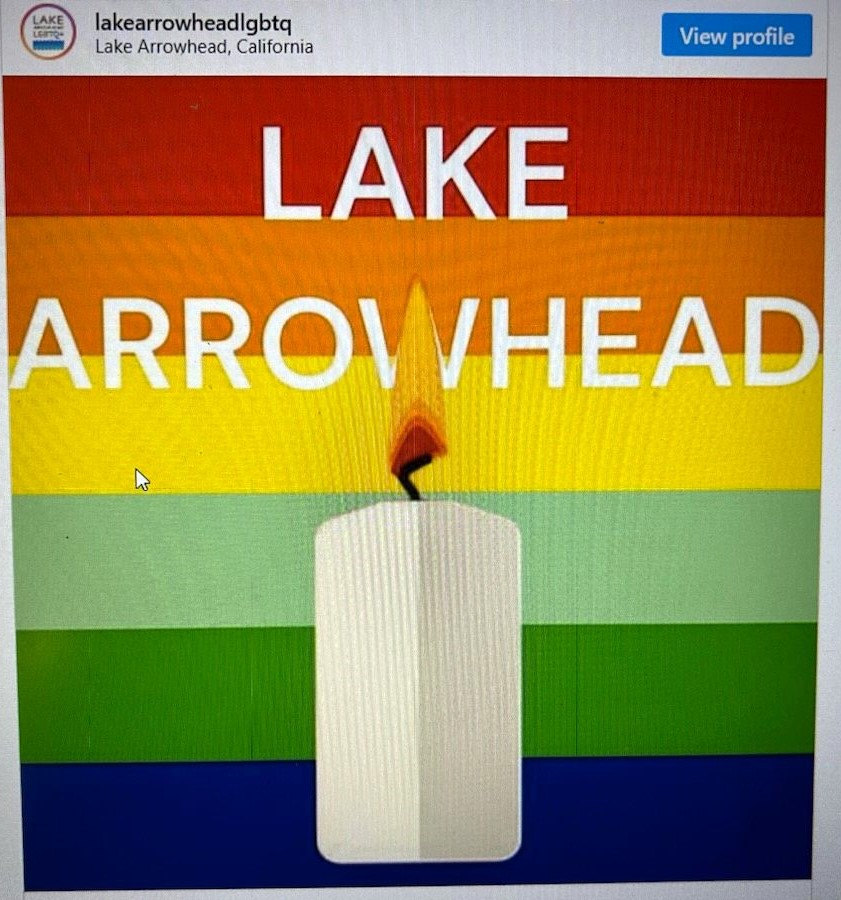
    Hate had no place in her heart or in her store when sixty-six- year-old Lauri Carleton was shot and killed at her place of business on Friday, August 18th., 2023 for her refusal to take down a gay Pride flag she flew outside her store in Lake Arrowhead, California every day. She will be celebrated by her family and friends as a brave ally of the LGBTQ+ community who gave her life in the outrageous act of believing love is love.

    Rest in peace, Lauri, but know that the community you died for will never rest in peace as long as forces rage against equal justice for all.

    Say her name: Laura Ann “Lauri” Carleton.

  • the power of the written word

    the power of the written word


    I never fully understood the power of writing until I heard other people read what I wrote.  My stories were safe.  They would be remembered and told by these women and others like them.  Although I thought the night revolved around me, I was wrong.  They inspired me. These women treasured words and ideas that created bonds among them.  My words were now a little part of their wealth of knowledge that lived beyond the pages. I was elated and honored to be the first author invited to attend their book club meeting, the eleventh anniversary of the diverse group of ten members. The club had chosen my second book Not Quite the Same as their book of the month in August, 2011. The night was not only great fun but also inspirational.

    Dame Daphne du Maurier, the English author and playwright, decries our infatuation with literary public readings by writers, noting that “writers should be read, but neither seen nor heard.” She makes a good point, although I have to admit I love to read my own words aloud.  Maybe it’s because I often read audibly as I write. Therefore it makes sense I like to read to other people. I was so taken with the sound of my own voice I made an audio version of my first book, Deep in the Heart:A Memoir of Love and Longing. My thanks to the three people who actually bought that CD, wherever you are. 

    I believe all of us have stories to tell, that storytelling is a primal need. I’ve seen stones in New Mexico that are hundreds of thousands of years old, and you know what’s on them?  Narratives of tales someone wanted to tell. They’re told in drawings on the rock faces, but they were someone’s disciplined efforts to communicate, and I felt I was there with the storyteller when I stood next to their work. I never sat down to write a book. I wanted to save my stories of the people and places in them. They became a book because I couldn’t quit writing.  Now, it’s like not being able to turn off a faucet.

    *********************** 

    Flannery O’Connor, the noted Southern Gothic writer, answered the question for me of why I write: I write because I don’t know what I think until I read what I write.

    Tell it, Sister Girl.