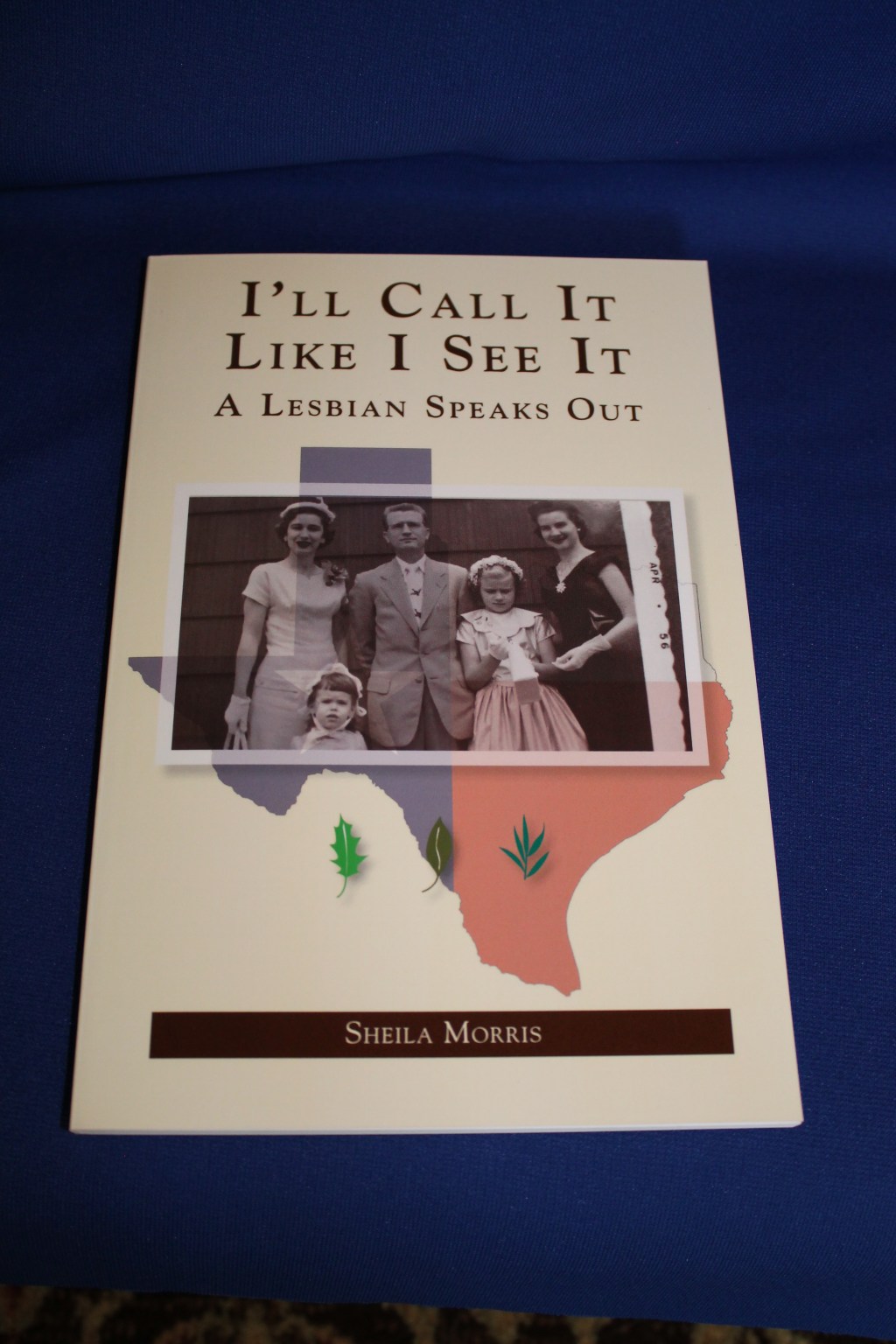
Category: Lesbian Literary

  • why can’t you write fiction?

    why can’t you write fiction?


    Usually whenever I do a reading from one of my nonfiction books, someone raises a hand during the q & a to ask, “Yes, but why don’t you write fiction?” or “Have you ever thought about writing fiction?”  My response is fiction is too hard for me to write.  Nonfiction is no piece of cake for me, but at least it begins with the truth as I know it which makes it grounded in something and somehow that is important for a Taurus. I like to have a starting point – it creates less anxiety for me in writing.

    Fiction is like flailing around in emptiness and space where I am responsible for creating something out of nothing, and that makes me incredibly anxious before I even begin to sit down at the computer to write. So many hurdles for me to overcome in writing fiction.

    The first problem I have is character names. I can’t think up good names for my characters and it’s not for lack of a reservoir to draw from. I collect names like I collect sayings – I have literally folders of names that I’ve saved through the years, but when it comes to putting them in a story, I can’t find the right ones. None of the names belong  with my plot, which is my second problem. What are these nameless characters going to do? And how can I possibly keep them doing it for more than a chapter?

    The short story has been my salvation, although not a soul realized my redemption except  me. I have submitted a number of short stories for various literary contests, anthology collections, and magazines over the past fifteen years. One of them, Honky Tonk Cowboy, was published in the storyteller magazine in 2013. If you are brave, saddle up and read.

    ************************

    Honky Tonk Cowboy

    Jeff Haynie, Jr. sat on a bar stool at Hammy Smoak’s Barbecue with his head tilted up as he drained the last drop of beer from his second Lone Star longneck of the night.  God, he hated beer, he thought, but of course he had to drink it – and it had to be Lone Star if he was a cowboy coming into a saloon after a trying day working cattle and rescuing damsels in distress, which he wasn’t.  Nope.  Jeff Junior’s day job was working a computer lassoing deposits and withdrawals while he rode a stationary chair behind a counter as a teller for the Third Coast Community Bank in Crabbs Prairie, Texas. He dreamed of being a cowboy, but the only damsels he rescued were the ones who needed to cover their overdrafts and they weren’t grateful when he charged their accounts $35 per bad check.  He was as far from realizing his dream as the Third Coast Community Bank was from the Gulf of Mexico.  Old Man Tarkington, the founder and sole shareholder of the bank, had been in the Coast Guard when he was Young Man Tarkington and loved the idea of his bank overlooking the sea. Never mind that it sat on dry land at the corner of Main and Liberty in a small town deep in the piney woods of southeast Texas. Water, water, nowhere.

    I’ll have another one, Hammy, Jeff Junior said to the bartender who also owned the beer joint which he loved.  It was a classic Texas honky tonk, and Jeff Junior was content to pass the time with Hammy and any other regular customers on a Wednesday night after work. Coming right up, Hammy said as he reached into the cooler and brought out an ice cold Lone Star that he opened and sat down on the bar in front of Jeff.  He studied his customer. What’s on your mind tonight, Junior? Somebody’s drawers come up short? he laughed at his own joke. I’ll bet Drusilla McCune’s drawers would come up short for a nice looking young fellow like you. Yeah, you ought to take her to the rodeo over in Houston this weekend. Let her ride bareback on your bucking bronco on the way home.

    Jeff Junior smiled at the thought of his persnickety co-worker Dru going with him to a rodeo and took another sip of his beer. Dru wasn’t really rodeo material. She was more dinner and a movie with a glass of wine. They worked well together and he liked her, but she wasn’t a damsel in distress. She confided to him one day in the break room she was interested in moving up to the next rung of her career ladder.  Where the next rung was, or for that matter, where the career ladder would be at the Third Coast Community Bank in Crabbs Prairie Jeff didn’t know, but Dru had a plan.

    Jeff Junior, on the other hand, didn’t have a plan and as his daddy Jeff Senior was happy to remind him, didn’t know the value of a dollar but sure knew how to spend one.  Dear old Dad, always the captain of Team Jeff.  Team Jeff Senior, that is. He took another swig of the nasty brew.

    Hey, Junior.  How you like my newest addition? Hammy asked and nodded his head toward the rear of the tavern.  Jeff followed his gaze and saw an old jukebox crammed into the corner. The place was already a haven for everything Hammy’s wife Vera Pearl wanted out of her house, and who could blame her for throwing out Hammy’s antiques?  His prized used license plate collection was the first to leave the house when he opened the tavern. He owned so many dingy license plates he was able to cover all four interior walls of the restaurant with them. Vera Pearl was also thrilled when the deer heads and cattle horns left their house. The mounted deer heads and longhorns from cattle of the same name that framed the big screen TV suspended from the exposed pine beams above the bar were examples of a decorating scheme gone southwest. Think John Wayne western meets ESPN sports highlights. Paradise Found for Hammy Smoak.

    Very nice, Jeff said without interest. He was listening to the country legends radio station playing music in the background as it always did through the best speakers money could buy according to the man who bought them and the other man who sold them to him.  Mamas don’t let your babies grow up to be cowboys wailed Willie Nelson and Waylon Jennings. For sure his mother and father agreed with that song and insisted he give up his teenage passion for rodeoing as soon as he finished high school. That youthful phase was gone, his father had said.  It was time to take responsibility and prepare for an occupation that offered financial security. His parents strongly recommended he attend Sam Houston University and get a business degree. How strong was that recommendation? If Jeff wanted their support, he’d enroll at Sam Houston and stay there until he graduated. Jeff got the picture. Four years later he had his degree and an interview with Old Man Tarkington who was a family friend and seemed mildly impressed with Jeff’s shiny new parchment. Three years after that conversation he sat next to the beautiful focused  Drusilla McCune every day from 8:30 to 6:00 with a half hour for lunch.  Not exactly what he’d envisioned, but he was only twenty-seven years old and who could predict the future?

    Why don’t you go take a look at it? Hammy asked Jeff.  Let me know your honest opinion about whether it adds to the décor. I got it for a song. He paused. Get it? Got a jukebox for a song? Hammy chuckled at his own joke.

    Take a look at what? Jeff shook himself out of his reverie. My new jukebox, please. I want to know what you think, so get off your ass and kindly walk over to that jukebox and tell me how much my personal banker thinks I should’ve paid for it, Hammy answered.

    All right.  Geez, Jeff said and slid his tall lanky frame off the stool to walk over to take a peek at Hammy’s new antique.  When he reached the jukebox, Jeff leaned in to look at the names of the songs but could barely read the titles that were yellowed with age.  The big Wurlitzer had dings and dirt from years of playing favorites for patrons in honky tonks like Hammy’s place. The chrome was tarnished and the record stack tilted.  He casually punched in B17 on the play buttons that resembled piano keys with letters and numbers.  Please, mister please, don’t play B17 he heard Olivia Newton John begging across the speakers in the bar.  Or was that the bar speakers?  He turned around and listened. Hey Hammy, does this thing play? he called across the room.

    How the hell would I know? Hammy replied. I never plugged it in.  For_ Sale_ As_ Is was what the ad said.  I thought it would look good in here. That corner has always needed something, don’t you think?

    I wouldn’t know, Jeff said. Mind if I plug it in? That’s fine, said Hammy.  Let’s see if the old girl can spin a tune. Jeff had to kneel on the floor to search for the cord which he found behind the jukebox and pulled across the floor to the nearest wall socket.  He plugged it in, and when contact was made, he watched in wonder as a sudden burst of fireworks exploded from the jukebox and dozens of brightly colored lights in the shape of stars swirled around him as he stood up.  The jukebox was also glowing with alternating colors of an incandescent red mixed with shimmering silver and dazzling blue.  The lights shaped like stars got closer to Jeff and threatened to envelop him, but he wasn’t afraid.   Brother jukebox, sister wine, mother freedom, father time.  He heard the lyrics of his favorite Mark Chesnutt song blaring above the hullabaloo that now overpowered him.  Father time was his new team captain.

    The smell of horse shit and tack reached Jeff’s nostrils and his eyes opened wide.  Sweet Jesus, he said as he surveyed the scene. He stood in the middle of a large barn with one, two, three, four, five, six horses tethered in individually assigned stalls. He stared at them in disbelief and then looked down at himself.  He was wearing a pair of brown working cowboy boots, and he noticed he was two steps away from a pile of horse manure in the dirt.  He had on a pair of blue jeans that fit him well and his red- and- black- checked flannel shirt was tucked in his jeans.  A wide beige leather belt that had a dull silver buckle the size of his fist was uncomfortable.  He felt a weight on his head, and reached to touch the brim of a hat. He took it off and stared at the black Stetson he wore. Wow, Jeff thought.  Where was he and how did he get here?  The last thing he remembered was plugging in the jukebox at Hammy Smoak’s Barbecue.

    Hey, Jeff, a gruff voice called from the tack room. We ain’t the ones on vacation at this ranch. Shovel that shit out of here and get those horses saddled.  We got city folk in an hour paying a ton of money to pretend they’re cowboys for the week so let’s keep our eyes on the prize. Mr. Tarkington has a zero tolerance for being late.  Comprende?

    The man who was obviously his boss walked out of the tack room and into Jeff’s view. Hammy, Jeff exclaimed. Hammy Smoak!  Boy am I glad to see you!  He rushed to meet the older man walking toward him. Hammy who? the man asked and frowned.  Have you got shit for brains?  You’re not one of them druggies, are you?  I’m Davis Giles, you fool.  I’m the one who made the mistake of hiring your sorry washed up bronco riding ass.  But if you don’t get this barn cleaned and these horses saddled in the next hour, you’re fired.  Get it?  As in adios, amigo.

    Yes sir, Jeff said. I’ve got it. But I don’t really get it, he thought. He saw a shovel leaning against the wall in front of him so he walked over to pick it up and started shoveling as fast as he could.  Damn.  When he’d pictured himself as a cowboy, this wasn’t part of the dream. The horses cooperated with him and within the hour Jeff had five ready to go and was finishing the sixth when he heard the first guest coming into the barn.  He peered around the horses to check it out.  A woman wearing cowboy boots and dressed in blue jeans and a white cotton shirt strode into the barn.  Oh my God, Jeff thought.  I must be somewhere over the rainbow in the Land of Oz.  The woman he saw walking toward the horses was Dru.  Drusilla McCune from the Third Coast Community Bank!  Seriously?

    Dru, Dru, Jeff shouted excitedly and walked behind the horses to catch up with her. How did you get here?  You’ve got to tell me everything. I’m really confused and I can’t believe that you’re here with me.  I mean, I’m… and his voice trailed off as Dru stared.

    Excuse me, sir, she said.  I’m afraid you have me mixed up with someone else.  I don’t know you.  This is my first visit to the Tarkington Ranch and my name is Sharon Lockhart. I’m the President of the Third Coast Community Bank and I’ve brought a group of my associates here for a leadership retreat. I wanted to get to the barn a few minutes early to preview the space. I hope you’ll pardon me while I take a look at the horses. Some of my guys are a little nervous about riding. I just love the smell of horses with leather saddles in a barn like this one.  Don’t you?  Of course you must or you wouldn’t be a cowboy. She laughed.

    Jeff nodded and looked at her in amazement as she turned to pet the nearest horse.  Okay.  That did it.  I don’t know what’s happening here, but I have to find the answers or I’ll be as crazy as the lyrics of a Patsy Kline song, he thought.  And that’s when he saw it. Sitting in a dark corner in the back of the barn behind a bale of hay was what appeared to be an old jukebox. He mumbled an apology to Ms. Lockhart and walked away to see if he had found the Wizard.

    When he reached the jukebox he touched it to make sure it was really there. It looked the same as the one in the honky tonk.  It was hard to see in the dark, but he fumbled behind the machine to find a cord.  Thank God, he said when he found it and pulled it around to plug into the only socket nearby.  The socket was torn away from the wall with frayed wires and covered with cobwebs. This had disaster written all over it.  He remembered an old Joe Diffie tune, prop me up beside the jukebox when I die. He knelt on the floor to plug the cord into the socket.

    Let’s see if the old girl can spin a tune, he said. Nothing happened. No bright star lights. No loud explosions. The jukebox was silent.  Jeff stood and then heard the familiar strains of Mark Chesnutt.  Brother jukebox, sister wine, mother freedom, father time. He opened his eyes to the welcome sight of Hammy Smoak’s Barbecue. He was beyond relieved, but exhausted, too.

    I said I guess she’ll be ornamental and not useful, Hammy called to Jeff from behind the bar.  Jeff nodded and walked across the room. No, the jukebox doesn’t play any tunes, but it definitely adds a new dimension to your place. He took a debit card from his pocket and handed it to Hammy. I’m done for tonight. Total the tab and I’ll be on my way.

    You don’t want another beer? Hammy asked. No, I’ve had my last Lone Star, Jeff answered. Next time I’ll have a different drink. Hammy chuckled and said, I don’t blame you.  I never thought you really liked it anyway. Here’s your receipt. Have a good evening, and I’ll see you this weekend.

    Maybe not, Jeff said. I’m asking Dru to go to dinner and a movie with me.

    **********************

    Please stay tuned.

  • You Bet Your Life (from Deep in the Heart)

    You Bet Your Life (from Deep in the Heart)


    So that’s the antenna? I asked Daddy as we stared at the man on our roof. That’s it, Sheila Rae. Looks like something from outer space, doesn’t it? Rex, our lemon-spotted pointer puppy, was running circles around the house and barking at the men who were installing the antenna. The fellow on the ground holding the ladder glanced nervously between Rex and the man above.

    Hurry up, Perry. I can’t hold this thing forever, Homer Bookman called to his brother. We’ve got to install another one before dark. And it’s all the way to Shiro. So get a move on.

    Hey, Homer, Daddy said. What are all those wires hanging down from that contraption? Are you sure this thing’s gonna work?

    You bet, Glenn, Homer said as he helped Perry climb down. Can’t say I really know what the wires are for. They somehow grab the pictures and sound out of the air, and then they go to the box with the little screen. Bingo! You’ve got yourself a genuine television set complete with all the bells and whistles. Yes sir, you’ve bought the airwaves of the future. When people gather round to watch a program, they’ll say Glenn Morris is more than a school man. He’s a man who marches to a different drummer and is a forward thinker. He gives his family the very best that money can buy. In this year of our Lord 1953 the Morris family leads the good people of Richards, Texas to experience the unknown. Don’t forget to say you made this important purchase at Bookman’s Appliances, he added.

    Well, let’s give it a try, Perry said.

    You’re certainly a salesman, Homer. No doubt about it, Daddy said, laughing. Daddy led me and Homer and Perry Bookman inside the house to our living room where the new brown box with the tiny screen sat. It was almost as tall as I was and had several knobs. Homer gave Daddy and me a lesson on their uses. We were definitely impressed.

    Go ahead and turn it on, Homer instructed. It won’t bite. Daddy bent down and turned the first knob. We all stared expectantly. Magically, the small screen came to life with an unusual stationary design in the center: a black and white triangle in a circle with some black lines down the side.

    That’s the test pattern, Perry offered. It’s what you see when there’s nothing on a channel. It’s pretty great, isn’t it? We all nodded as we gazed intently at the miracle before us. Television. Like radio with a picture. Like having a movie in your own home. We were surely blessed to have this wonder in our midst. Everyone beamed with happiness.

    Well, Glenn, just sign here and it’s all yours, Homer said. Daddy signed the paper and shook their hands. I had no inkling at the time that my world was about to expand. The box with the screen would entertain, inform and inspire my own imagination. The only child had a new best friend.

    *************

    Dude, you better hurry up. It’s almost time for Groucho Marx, I called to my grandmother from the living room. I was in my favorite spot, sitting on the floor directly in front of the television. It was Thursday night and the quiz show “You Bet Your Life” was about to begin. Dude came in and took her customary place on the sofa in the back of the room. She had her Pond’s cleansing cream that she used every night to remove her makeup while we watched our shows.

    Groucho! Dude and I shouted in unison with the TV audience as George Fenneman, the show’s announcer, began his introduction with “Now, here he is. The one, the only ________!” From our living room, we helped the audience fill in the blank. Groucho himself was nattily attired in a suit with a bow tie and professorial eyeglasses. The smoke from his omnipresent cigar filled the screen as he gave us the rules of the show. Maximum winning potential of $10,000, which was small potatoes for quiz shows even in the 1950s. Say the secret word and get another $100. The papier-mache duck dropped down to reveal tonight’s secret word: Turkey.

    That’s a good one, Dude said. Groucha will have fun with that. She called Groucho “Groucha,” and I tried for a long time to correct her, but finally gave up. We loved the secret word jokes he played on his contestants. Tonight’s contender was going to become one of my favorites. She was a beautiful woman named Sylvia from Los Angeles. Groucho loved the attractive women and spent a longer time getting to know them than he did the men. Tonight’s interview revealed Sylvia had a husband named Jerry who worked nights for the utility company. You’d be amazed what you can do when your husband works nights, Sylvia said. She smiled at Groucho in a suggestive manner. You might be amazed, he quipped, but I wouldn’t. The audience roared with laughter, and so did Dude and me. Sylvia didn’t win or say the secret word, but she did give Groucho her phone number.

    I wanted to be Groucho. Not handsome like George Fenneman, but so funny even the married women flirted shamelessly with him. I saw myself with the cigar and moustache. Not at all a bad look.

    ****************

    Saturday mornings meant westerns for Daddy and me. The Lone Ranger rides again. The Cisco Kid and Pancho, the lovable sidekick, who made Cisco shake with laughter. Cisco seemed to be overly preoccupied with the angle of his sombrero, but he was crazy about Pancho. The Range Rider. The Adventures of Kit Carson. Sky King and his niece, Penny. What was that airplane about anyway? And why did Penny go everywhere with her uncle? Gene Autry the singing cowboy.

    And of course our personal favorite Roy Rogers, King of the Cowboys. We loved Roy and Trigger, his golden palomino steed. We tolerated Dale Evans, Queen of the West, and her main ride Buttermilk because Roy obviously thought so highly of her. We wished for a dog like Bullet, his German Shepherd, who could have been a big help herding cows at our farm. We laughed at the antics of Pat Brady and his jeep Nellybelle, who were always in trouble, and at Gabby Hayes with his original bear look. We knew all the songs of the Sons of the Pioneers and loudly sang along with them in the theater of our own living room. I was Roy Rogers. I rescued damsels in distress. I thwarted cattle rustlers.

    I captured bank robbers. I sang “Don’t Fence Me In” and meant it. I warbled“A Gay Ranchero” before gay was anything other than happy. When Roy and Dale were guest stars at the Houston Fat Stock Show and Rodeo, Daddy took me to see them in person. I wasn’t a fan of rodeos, but I endured the bronco riding, calf roping, barrel racing and unfunny rodeo clowns to see Roy and Dale. Then, in the darkness of the gigantic Houston coliseum, Daddy helped me make my way down the stairs from our seats to climb onto the arena railings as the spotlights searched the blackness for their entrance.

    What a spectacle it was! Roy and Dale rode Trigger and Buttermilk into the center of the ring to the music of “The Yellow Rose of Texas” blaring across the Coliseum. Their outfits were dazzling. Diamond-studded. Large silver belt buckles gleamed as the lights reflected off them. They wore matching cowboy hats with amber beads and white leather fringe against black cotton shirts. Lots of fringe. Leather black-and-white cowboy boots with flowers down the side that glowed in their stirrups as they rode. It was breathtaking pageantry to this eight-year-old Roy Rogers wannabe. They sang and talked and roped and sang some more, and the grand finale was their signature “Happy Trails to You” as they rode around the arena railing, shaking hands with each tiny cowpoke who had made the trek from their seats to hang on through the show and wait for their personal touch. I was mesmerized. I saw myself riding Trigger around the country and wearing that glittering cowboy outfit. I could make the hat and boots work, too. Not at all a bad look. Little cowgirls everywhere would love me.

    ****************

    “Say, kids, what time is it?” It’s Howdy Doody time!

    Television after school evolved from Buffalo Bob and the Howdy Doody gang that admonished us to be good little boys and girls while we drank lots of chocolate Ovaltine, to Dick Clark and “American Bandstand” which encouraged us to “rock around the clock.” Somewhere in between, we became Mouseketeers with our very own roll call and special head gear. The Hardy Boys and Spin and Marty were my teenage heroes, and I fell hopelessly in love with Annette Funicello. I could hardly pronounce her last name, but what did it matter? She was Eye-talian and so exotic. She was perky, too – in all the right places. If I could find out where she lived, I thought, I would fly there in one of those Sky King airplanes. I would take Penny, too. Then if Annette declared her love for Tommy Kirk or Frankie Avalon was undying, I’d still have the effervescent Penny. Delicious. I ordered the Mickey Mouse ears from the Mickey Mouse Club, since that was the look Annette obviously liked. Not at all a bad look. Say goodbye to Tommy and Frankie, Annette.

    Penny of Sky King

    *********************

    Turn off that TV, Daddy finally said one afternoon in early autumn. Let’s go outside to play basketball. I put the goal up for you so we could spend some time working on your game. Guess what? One of the biggest mistakes I ever made was buying that television all those years ago. Things haven’t been the same since. He was right on target. My emotional attachment to television did stand the test of time. The first one I purchased for myself was a small color portable in 1967 when I got my first adult job in Houston after graduating from college. It was one of a very few possessions I took with me the following year when I drove to Seattle, Washington to get as far away from the piney woods of east Texas as I geographically could without crossing a major body of water, like an ocean. I wanted to see if I could live my own life without fear of running into one of my Houston relatives wherever I went. I was twenty-two years old.

    In an unfortunate turn of events, I had to trade my beloved color portable RCA television for a month’s rent while there. I had spent the rent money on a marathon telephone conversation with a girlfriend from college who was in Hawaii training for the Peace Corps. I tried all night long to get her to abandon serving her country and come live with me. She declined. The telephone company contacted me at work the next day, told me I had exceeded my credit with them, and payment was due immediately. My landlady had coveted my color TV, and I learned a great life lesson in economics: the law of supply and demand plus lust equals no TV.

    The loss of the television was as devastating as the loss of the girl.

  • Two Women on Faith and Hope (from I’ll Call It Like I See It)

    Two Women on Faith and Hope (from I’ll Call It Like I See It)


    “I know Papa has gone to heaven, and that is where I want to meet him. The Old Devil gets a hold of me sometime. I slap him off—and pray harder for the Lord to help me be a better Christian. I realize more that I need the Lord every day, and I want to love the Lord more and try to serve Him better. He alone can take away these heartaches of mine. I want to have more faith in Him. I have been so burdened, and I want to be happy. Serving God and living for Him is the only plan.” (excerpt from a letter written by my fifty-six-year-old maternal grandmother to a sister following the death of their father in 1954)

    My maternal grandmother’s belief that faith was the sole solution to the multitude of problems she faced throughout her life beginning with her husband’s accidental death that left her penniless with four children to raise during the Great Depression, a belief she expressed in the above letter to her sister, reflected her daily approach to “have more faith” that included a ritual of reading Bible passages while she sat at our small kitchen table and I lay in the darkness watching her from the next room, wishing she wouldn’t get up so early. But there she would be, struggling with her third-grade reading level to look for godly guidance in the ungodly hours before dawn. I want to be happy, she said, and God was her only plan.

    Shockingly, my paternal grandmother glossed over the deeper issues of faith in favor of a focus on hope. The Bible says there are three things that last forever: faith, hope, and love; but the greatest of them is love. This grandmother wasn’t concerned with the intricacies of faith nor did she overtly exhibit love toward others outside her immediate family, but she attended the same Southern Baptist church faithfully every Sunday. Her hope was for humor, however. Her belief was that in every Sunday church service she could find something or someone or, preferably both, she could use to entertain her family at the dinner table later. The poor preacher was irreverently skewered on a regular basis; no one was sacred at that table. She was a woman in charge of her home, family and most of the conversations that took place within both.

    This was the faith of my grandmothers. The church was the teacher for one, the Bible the textbook for both, and the interpretations ranged from the holy to the inadvertently profane. I listened and watched these women for as long as they lived and throughout my childhood absorbed their diverse values that blended with the Sunday School teachings and preaching of the Southern Baptist churches my family attended. I learned to sift the messages and keep the ones that appeared to lessen my likelihood of going to hell in an afterlife.

    My maternal grandmother’s duel with the Devil evokes strong feelings for me, but they are feelings of sadness for her inability to achieve that higher level of trust she desperately wanted, the trust that would bring her happiness. Her faith never could be quite good enough, and I refuse to believe in a god that inspires fear and irrational guilt. As for my dad’s mother, her irreverence gave me permission to begin to overcome feelings of shame when I faced the puzzles of sexual identity that were my life. My life has involved many choices, but my being lesbian was not one of them. My paternal grandmother had a unique relationship with her God, but her words and sense of humor helped free me from the somber sermons of damnation in my youth and encouraged me to think for myself. I wonder if she knew.

    *********************

    Now faith is the substance of things hoped for, the evidence of things not seen.” (Hebrews XI, 1)


  • Payday Someday – Part 2 (from Deep in the Heart)

    Payday Someday – Part 2 (from Deep in the Heart)


    Sunday School at the First Baptist Church of Richards was boring, as usual. But the Sunbeams class was interrupted by a surprise visit from the revival preacher himself. Our teacher, Miss Mary Foster, was obviously thrilled to have him single out our class for a personal visit. He was a short stocky man with a round face, black wavy hair, big smile for Miss Mary Foster as he stepped briskly into our room without knocking.

    Good morning, Miss Mary and children, he said. My name is Brother Hector Rodriquez and I am preaching your revival this week. I’m very happy to be bringing God’s Word to you. I came by to tell you that you must be very good in the services, listen carefully during my sermons because I’ve heard some of you are not saved yet. When he said that, he paused and looked intently at each of us as though he knew which ones were lost. His dark brown eyes smoldered, and his bronze skin seemed to radiate heat. I thought he looked like he was about to explode. His whole expression was disturbing and unsettling, but no one in the room moved. We had been struck by human lightning.

    I’m going to tell you about your sins and what you must do to keep from going to hell, he went on. I’m sure no one wants to go to hell, do they? Eight small heads in the tiny room shook back and forth because we had been taught about hell in Sunday School plus I had heard the word mentioned by my Uncle Toby at home when his walking canes got tangled. Brother Hector seemed satisfied that we would be excellent candidates for his persuasive powers. Very good, he said. I must leave you now to prepare myself to receive the Holy Spirit in time for my sermon. He turned away from us and left the room. I was relieved to see him go and silently promised to be nicer to Miss Mary Foster in the future. Give me boring Sunday School lessons over the intensity of revival preachers any day. I began to feel a sense of foreboding in my bones.

    The quartet from West Sandy was singing Just a Little Talk with Jesus with great conviction, and Charlie Taliaferro was playing the piano so fast for their accompaniment people said later they thought they saw smoke rising from the keys on the church piano. The church was packed with visitors from the Methodist Church that had canceled their services to come hear our revival preaching. I sat between my paternal grandparents Ma and Pa on their usual pew toward the middle of the small sanctuary as the special music ended and the deacons got up to collect the offering for the revival preacher. I surveyed the sanctuary to locate my family. Dude was sitting with Uncle Toby a couple of pews back. Uncle Marion had finished one of his cigarettes in the parking lot behind the church, slid in late like Mama predicted in the kitchen at our house that morning, and was in the very last row. Mama and Daddy were sitting in the front pew so they could get up when it was time for the invitation hymn that Daddy would lead after the preaching because Daddy had the loudest male voice in the church and Mama would play the organ with no pipes because that’s what she always did.

    Oh, and there was Miss Inez Wood and her son Warren in their usual spot halfway back. Miss Lonie Fulghum and Miss Edna Kelly were in their favorite pew under one of the six four-paddle black ceiling fans in the church. They claimed to have no tolerance for hot air which must have been another reason Mama thought they were odd. Scattered around the church were the Methodist visitors who didn’t know where they were supposed to sit since the Baptists were so particular about their favorite places.

    Brother Hector Rodriguez was about to take center stage in the pulpit. He looked very pumped up, almost like a prize fighter getting ready to spring from his corner of the ring. Evidently he expected this contest to be a fierce struggle. He was about to wrestle the devil, and the stakes couldn’t be higher. All of our souls were resting heavily on his shoulders. He took off his coat and placed it on the pulpit chair. He loosened his tie; I saw his starched white shirt already had sweat stains under the arms.

    Brothers and sisters, he began in a somber tone. The Holy Spirit has placed a message in my heart for you today. I call it Payday Someday. All of you are lost like sheep without a shepherd wandering in the wilderness of your own sins. If you don’t repent, I can promise you will have a day of reckoning with the Lord Almighty who is the great check-casher in the sky. He listed many of the sins he knew would be our downfall and reminded us of Adam and Eve’s Payday experience when they were banished from the Garden of Eden. He droned on and on with rhythmic intensity and increasing volume. He was definitely on a roll. I checked to see if Miss Inez Wood was awake and was disappointed to see that she was. No help for relief there.

    The preacher moved on to higher ground. One of the sins that was most horrific to him was the sin of unnatural affection. My radar zoomed in at this, and I tuned back in to listen as he raved about men lying with men and women lying with women, or something like that. A vague feeling of unease and guilt began to spread through my seven-year-old brain. I glanced to see if anyone had changed their expressions. Did anybody know I was the person he was talking about. How had he figured out from Miss Mary’s Sunday School class all I could think about was that little Methodist girl Tinabeth?

    Something in his dark eyes had exposed my innermost longings. Now he knew my secret life. God help me if he told Mama. I was panicky, and I needed desperately to formulate a plan. Brother Hector warmed to his subject. This was a sin of the first magnitude that would result in the deepest pits of hell. (Excuse me, which level of hell was that?) He was sorry to be the one to tell us, but some of us were doomed. Payday Someday was today. Now. This very minute. He was shouting at us – his eyes were on fire. He was waving the Bible in his hands while his whole body shook. Sweat flowed down his face. He slammed his Bible on the pulpit lectern and closed it with a resounding thud. He shut his eyes and began to pray for our souls.

    After the prayer, he nodded to Daddy who stood and walked up the three short steps to the podium to lead the invitation hymn Just as I Am; Mama took her place at the organ without pipes to play softly for background music. Brother Hector Rodriguez made his pleas for us to renounce our transgressions and turn to the Lamb of God who made us all new creatures and forgave our sins. At his instruction, we all bowed our heads and closed our eyes as we sang the familiar words. Verse after verse. I could feel the tension and discomfort growing as the music slowed for the last verse. The Methodists were the most nervous since they had shorter songs in their hymnals. Clearly my grandmother had been right about the revival preacher. No one was leaving until a soul was saved.

    Finally, one of the boys in my Sunday School class walked down the aisle to say he was saved. It was seven-year-old Mike Jones, the brown son of our regular pastor whose wife was a Filipino woman he met in Hawaii during the war. Mike was crying and visibly shaken, but we all breathed a collective sigh of relief as the service came to a successful conclusion with the addition of a new name written down in glory. Hallelujah. Can I get an Amen?

    I avoided getting in the crush of people lining up to shake hands with Brother Rodriguez after the service. Everyone wanted to congratulate him on a wonderful beginning to the revival. As I eased my way through the crowd and out of the church, I was already feeling the first twinges of the stomach ache that would most assuredly prevent my coming back for the evening service. I knew I had to convince Dude to tell Mama I was too sick to go.

    ********************

    The writing instructor at Midlands Technical College asked her students in the fall of 2006 to write about a vivid memory we had from our childhoods – Payday Someday was the result of that assignment for me and inspired my first book Deep in the Heart: A Memoir of Love and Longing published in 2007, dedicated to Teresa, the little girl who said yes.

  • Payday Someday – Part 1 (from Deep in the Heart)

    Payday Someday – Part 1 (from Deep in the Heart)


    The first thought I had when I woke up was it must be Sunday because I could smell the fresh apple pie baking. My grandmother on my mother’s side, Dude, worked six days a week as a clerk at the general store in Richards from 7:30 to 6:00 with a half hour for lunch. On Sunday morning, she baked. The fragrance from the kitchen was deliciously sweet. My grandmother’s name was Louise, but I hadn’t been able to pronounce that when I was little, so I had called her Dude-ese, and then shortened it to Dude. It stuck.

    Daddy was already up, too. I could hear them talking in the kitchen. Dude called him her favorite son-in-law and used to say she thought he was coming around all those years to her house to play ball with her three boys… until the day he and Mama eloped.

    For as long as I could remember. Daddy and Mama and I had lived with her in her small white frame house with the pond in the back yard and the pink crape myrtles growing in the yard. She called it her country place, but it was on one of the several dirt streets that made up downtown Richards. She didn’t have a car, she couldn’t drive one if she did, so she walked the one block rain or shine to the general store every day of her life. Daddy adored Dude.

    Where’s the revival preacher from? Dude asked Daddy as she sipped her morning coffee.

    Bedias, I think, Daddy said. They say he’ll be able to keep Miss Inez Wood awake.

    That’ll take some strong preaching, Dude said. He’ll have to keep the volume cranked up the whole time or she’ll snore right through it.

    Charlie Taliaferro has gotten up a men’s quartet for the special music this morning, Daddy added. Somebody said they were from West Sandy and did a lot of singing at the conventions on Sunday afternoons over there at Union Grove Baptist. That should be a good start to get the preacher going.

    Daddy led the singing, and Mama played the organ during the regular services at the Richards Baptist Church. But the revival music had to be exceptionally good, since the preacher was from out of town. Revivals were major happenings when you lived in a town the size of Richards, Texas. Although the official town sign said Pop. 440, my granddaddy said that included dogs and chickens. Richards was bordered by the Sam Houston National Forest and buried deep in the piney woods of east Texas. Any stranger passing through town was usually lost.

    My Uncle Marion was waking up now. When he was here, he slept in a twin bed at a right angle to the small double bed that Dude and I shared in our tiny room that was separated from the kitchen by an accordion plastic door. You really couldn’t call it a bedroom, except that it did hold two beds. It was mostly windows dividing the beds from the rest of the back porch.There was barely enough room for the dresser that held my grandmother’s Pond’s Cold Cream and makeup.

    Uncle Marion was a fortune hunter in the true sense of the word. He went around the Texas countryside with metal detectors, looking for gold that had been deposited by Santa Ana or somebody. Between expeditions, he worked construction just long enough to collect unemployment so that he could come back home and look for gold. He was my favorite uncle. He knew the names of all the stars we could see from our windows at night.

    Might as well roll out, he said, yawning. He looked to see if I was awake. Revival talk’s heating up and there’s no rest for the wicked, he added with a smile.

    Okay, I said, climbing out of bed. Plus, Dude’s apple pie was calling my name.

    Look what the dog drug in that the cat wouldn’t have, Daddy said as Uncle Marion pushed back the plastic accordion door. I didn’t know you were here.

    Yeah, I got in late. We didn’t get paid until dark, and then it took a while to get here. Everybody was asleep when I got in last night, Uncle Marion said. He wasn’t fully alert yet and began trying to find his wire rimmed eyeglasses.

    Morning, sweetheart, Daddy said to me. How’s my best girl?

    Good, I said and looked at Dude. Can I have some pie?

    She smiled as she cut me a piece and then put a little dab of butter on top. As it melted, she sprinkled extra sugar over it. She put it on the table in front of me and gave me a hug. Just for you at breakfast, she said as my Uncle Marion gave me a sideways look letting me know how lucky I was.

    I’m fixing bacon and eggs and toast for the rest of you. No one’s going hungry. We’ll all need our strength for church today. They say this preacher really has the Spirit and won’t quit until somebody’s saved, Dude said as she gave my Uncle Marion a glance.

    The Lord works in mysterious ways, Daddy said. And some ways take longer than others.

    We all laughed at that. I thought Daddy was so funny. Just then, Mama came in and said hey to everyone. Mama wasn’t a morning person, she liked to say. Looking at her eldest brother she asked, Out of work again?

    Hey Sis, he said, ignoring her question. You look like you could use a cup of coffee.

    He got up and poured her a cup. She was about to sit down when Dude told her to go wake Uncle Toby for breakfast. He was always the last to get up. Maybe it was because it was such a struggle for him. He had been born with cerebral palsy. He had been able to walk pretty well when he was younger and had even worked for a few years on an assembly line for a big oil company in Houston, living there with Dude’s brother’s family. Last year a doctor had convinced him and Dude that he could be cured with an operation, but it had gone all wrong. So now he was back home in Richards living with us. Dude and Mama waited on him hand and foot. Every day he sat for hours listening to his radio on the Back to the Bible Broadcast. He worked crossword puzzles while he listened. Maybe the revival preacher could explain the connection between God and those puzzles. Maybe not.

    Good morning, Sweet Papa T.B. la Tobe, said Daddy as Toby made his ponderous way into the kitchen. Daddy loved to tease him with his childhood nicknames.

    Morning, all of you good neighbors, said Uncle Toby. Brother Marion, when did you get in?

    He got in late, and he’s out of work again, I said. I had finished my pie.

    That’s right, Uncle Marion said. Made it just in time for the start of the revival. Think I’ll head downtown to the drug store and see if it’s open before church. Toby, I’ll be back in time to get dressed and drive you and Mother to church.

    He stood up and took his dishes to the sink. You’ll be late for Sunday School, Mama told him. I don’t see why you always have to go to the drug store before church.

    Mama, you know he goes to get cigarettes and never makes it back in time to go to Sunday School, I said, stating the obvious.

    You don’t have a dog in this fight, Sheila Rae, Daddy said. Leave it alone.

    Yes, I know all about your Uncle Marion, Mama said with a shake of her head.

    He gave me a quick wink as he walked out whistling. And I saw that, she said to his back.

    The rest of the time before church everyone was taking turns in the tiny bathroom beside the kitchen that was so small you had to make a decision about what you needed to do before you went in because you couldn’t turn around once you were in there, but I didn’t want to complain because I hated to go to the two-holer outhouse next to the garage. We shared that with a wasp’s nest, and none of the wasps liked us. When everyone finished getting dressed in Sunday clothes, Mama decided Uncle Toby would ride to church with us because he didn’t want to miss Sunday School. Mama said he shouldn’t have to wait for a brother who was more interested in smoking cigarettes than learning scriptures.

    Daddy helped Toby get in the back seat of our ’52 Chevy. I sat between Daddy and Mama in the front. We drove up the hill to pick up Miss Edna Kelly and her sister, Miss Lonie Fulghum. We picked them up every Sunday. Daddy helped them get situated in the back seat with Toby.

    Thank you, Glenn, Miss Lonie said. You’re such a gentleman. Good morning everybody, and a happy revival Sunday to you all.

    Miss Lonie was always cheerful and smiling like that. Everybody at the church liked her. Miss Edna was just the opposite. Never said much and frowned a lot. They didn’t look anything alike, either. They had moved to Richards a long time ago, and nobody knew anything about their people. They said they were from Alabama and that Miss Edna’s husband had died in the war. That’s why they had different last names.

    Mama said it was odd.

    The car conversation was all about the excitement of the revival as we drove the short distance to the church.

    *******************

    Please stay tuned for the rest of the story.