Category: Life

  • The Reality of Memory Care: A Daughter’s Perspective

    The Reality of Memory Care: A Daughter’s Perspective


    Fourteen years ago the first post I published here in the month of December began with a nursery rhyme that had a darker theme than the usual holiday cards season’s greetings I sent to friends and family throughout the month. Spoiler alert, no deck the halls.

    HUMPTY DUMPTY

    Humpty Dumpty sat on a wall.

    Humpty Dumpty had a great fall,

    And all the King’s horses and all the King’s men

    Couldn’t put Humpty together again.

    —— Old English Nursery Rhyme

                I noticed the red dried blood and purple bruising on the top of her left hand as she sat with both hands folded in the large brown leather recliner that was her assigned seat in the den and wondered what in the world had happened.   This semi-conscious frail woman with wispy uncombed snow white hair slouched down in a chair that swallowed her…with her feet up in their usual elevated position.  Her green sweat suit pants and bright flowered cotton blouse she wore today didn’t belong to her, but they were clean and looked comfortable enough.  She sat on a white pad to prevent accidents to the leather chair.  She was dozing when I came through the door and didn’t stir when I bent to kiss her unwrinkled forehead.   She looked up at me and smiled and then closed her eyes again.   My mother wasn’t interested in talking today.

                Her caregiver Kathy sat across from me on the well-worn sofa and noticed my glance at Mom’s hands.   Kathy was a tall woman and big-boned as we used to say when describing a woman her size.  She had just stepped out of the shower when I arrived for my visit and her hair was wet and pulled back from her not unattractive face.   She had a great smile and genuineness I liked.  

                “Has your mother always been a scratcher or is this something new?” she asked.   “Most of the time when we struggle to get her to take a shower she scratches Norma or me.   I’ve got a new one right here.”   She pointed to a fresh scratch on her hand.   “Yesterday Selma thought she was scratching me but instead she scratched herself so hard on her own hand she made it bleed and then pulled off the band aid I put on it.  It looks worse than it is, though.”

                The idea of my mother being a “scratcher” was like a foreign movie without subtitles.  Difficult to comprehend, yet I knew it was true.  I’d heard a nurse say the same thing in her hospital room a few weeks ago to the young aide who was to give Mom a bath in her bed.  “Be careful, she’s a scratcher,” the nurse said.   I had almost fainted.  My mother, the prim and proper little woman who taught second grade in a public school for twenty-five years and played the piano in Southern Baptist churches for more than fifty years, was a scratcher.   It’s a world gone mad.

                “No, it’s not new,” I said.   “I’m not sure how long she’s been doing it, but I know it happened at least once during her hospital stay several weeks ago.  I’m so sorry she does it to you, but I can tell you it’s completely out of character for her.”

                “Oh, no, don’t worry.  I totally understand.  We’ve seen most everything with our Alzheimer folks,” Kathy said.

                I had entrusted the care of my mother six weeks ago to the two sisters, Kathy and Norma, who lived in the country twenty-two miles from our home in Montgomery, Texas.   Their brick house was an unassuming ranch style with a beautiful swimming pool screened and covered like the ones I had seen in Florida.  This made sense when I found they grew up in the Melbourne area.  The sisters came highly recommended to me by a friend whose father lived with them for seven years before he died last year.   My friend said her family had chosen them from several options and never regretted the choice.

                Mom lived in a Memory Care Unit for the past four years in a large assisted-living residential community in southwest Houston.   The setting was relatively plush and her unit housed twenty patients.   The cost rose every year she was there and was now almost $6,000 a month for her care for moderate to severe dementia and the related deterioration of her physical capacities.  Incontinence and lack of ability to walk without a walker were major changes in her condition in recent years.   Her world was sustained by her routine and the familiar surroundings of her private small apartment that defined it.   Locked entrances and exits set her boundaries and she adjusted to this world with an acceptance bordering on relief from the necessity of trying to preserve an identity she had long forgotten.   When I visited her in the Memory Care Unit, I typically found her in good spirits and checking her watch to see what she was supposed to do next.   Was it time for a meal?  Should she be in the dining room?   Did she need to go to the living room for a movie or exercise class or Wheel of Fortune or Bingo?   Were they going out for ice cream?   Someone had a plan, and my mother loved a plan.

                God bless long-term care insurance and the benefits it provided that covered the last four years of my mother’s stay in Houston.   Unfortunately, her benefit period ended this fall and economic realities made change unavoidable.   Her move to the house in the country was an answer for one problem but generated a host of others.   On the day I drove her to her new home, the conversation was dramatic foreshadowing of the days to come.

                “Mom, don’t you think it’s beautiful to be in the country like this?” I asked her as we rode along in my pickup truck.

                “Yes, it’s beautiful all right, but I wouldn’t want to live out here,” she replied.

                Indeed, she did not go gently into that good night, as the poet Dylan Thomas described.   When we arrived at her new home, she had forgotten the hamburger and fries I’d bribed her with at lunch to improve her mood.   She reluctantly sat down in the den with her two new compatriots, Anne and Virginia.   Anne had mild to moderate dementia and was in her early eighties, I would learn later.   She was an attractive frail woman with pulmonary issues and needed frequent breathing treatments.   Virginia was eighty-nine and proud of it and was in a better mental and physical state than either Mom or Anne.   She forgot words but generally followed conversation threads and understood contexts.  She was the only one of the three women who didn’t need a walker.    I liked the two women immediately and hoped Mom would, too.

                “I don’t understand why I have to be here, and I don’t think it’s right for you to bring me  without telling me we were coming to stay,” Mom said to me when we sat down on the sofa in the den.   Anne and Virginia each sat in large recliners facing the sofa and listened to our conversation.    Lack of privacy was a new challenge in the intimate den, I thought.

                “Well, they did the same thing to me,” Anne said to Mom.   “My daughter Beverly and her husband just brought me in here one day and left.”

                “Me, too,” Virginia chimed in.   “But I like it now and I’m glad you’re moving in.   You can have the other big chair.   I hope we don’t get anybody else because we only have three big chairs.”

                And so began the next chapter in my mother’s battle with the devils of her own mind and body.   Within ten days, as we began the process of changing to local doctors and pharmacies for her medications, she developed a severe urinary tract infection, which is not uncommon for women of her age and physical state.   But she required treatment in the community hospital for a week and after I brought her home from that stay, she hasn’t been the same.   She says little and doesn’t eat solid food.   The sisters feed her a liquid diet through a contraption that looks like an oversized eye dropper to me.   She’s had company in the hospital and in her new home – visits from nephews, cousins, other family members and even a visit from her former pastor.   She greets everyone with a smile and says a practiced thank you for coming.  The level of recognition appears to be distant with no connection to the present. 

                Her main question for me in the hospital as she lay attached to tubes of all sorts day after day was, “How long are you going to be in the hospital?  I didn’t know you were sick.”   I told her I didn’t know how long but I was glad she was there with me.    

                Did she have the uti before she moved?   Probably.   Would she have been so sick if she hadn’t moved?  Maybe not.  The mind and body work strangely in tandem, I’ve observed, and my mother is seemingly lost without her old planned life in the Memory Care Unit.   Hopefully, time will allow her to find a new routine that will offer her the comfort of consistency.   Her world is like the world of Humpty Dumpty, however.   All the King’s horses and all the King’s men won’t be able to put Humpty together again as he once was.  The fall has been too great.

    **********************

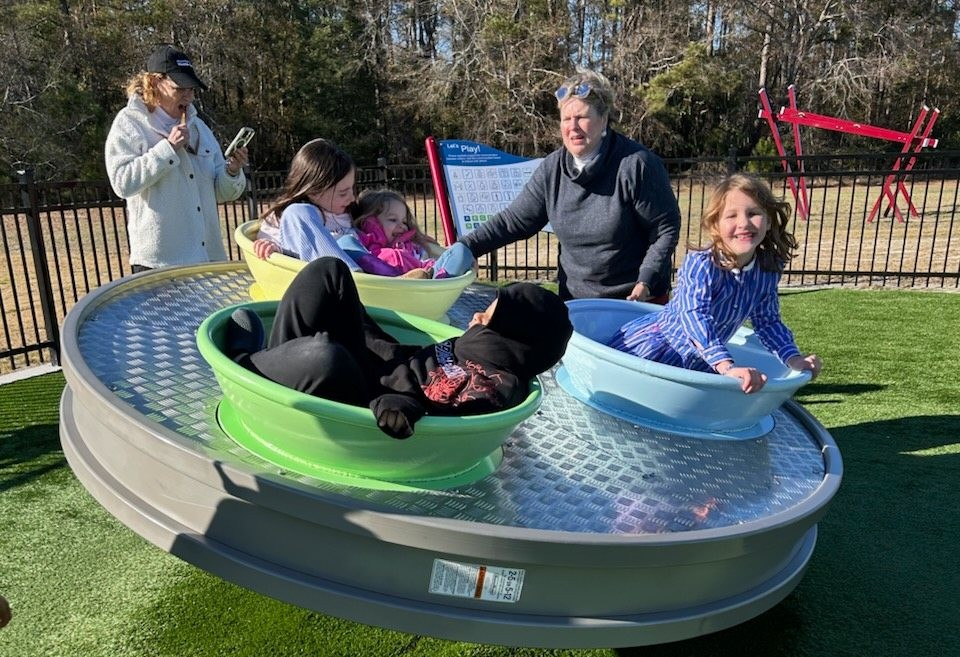
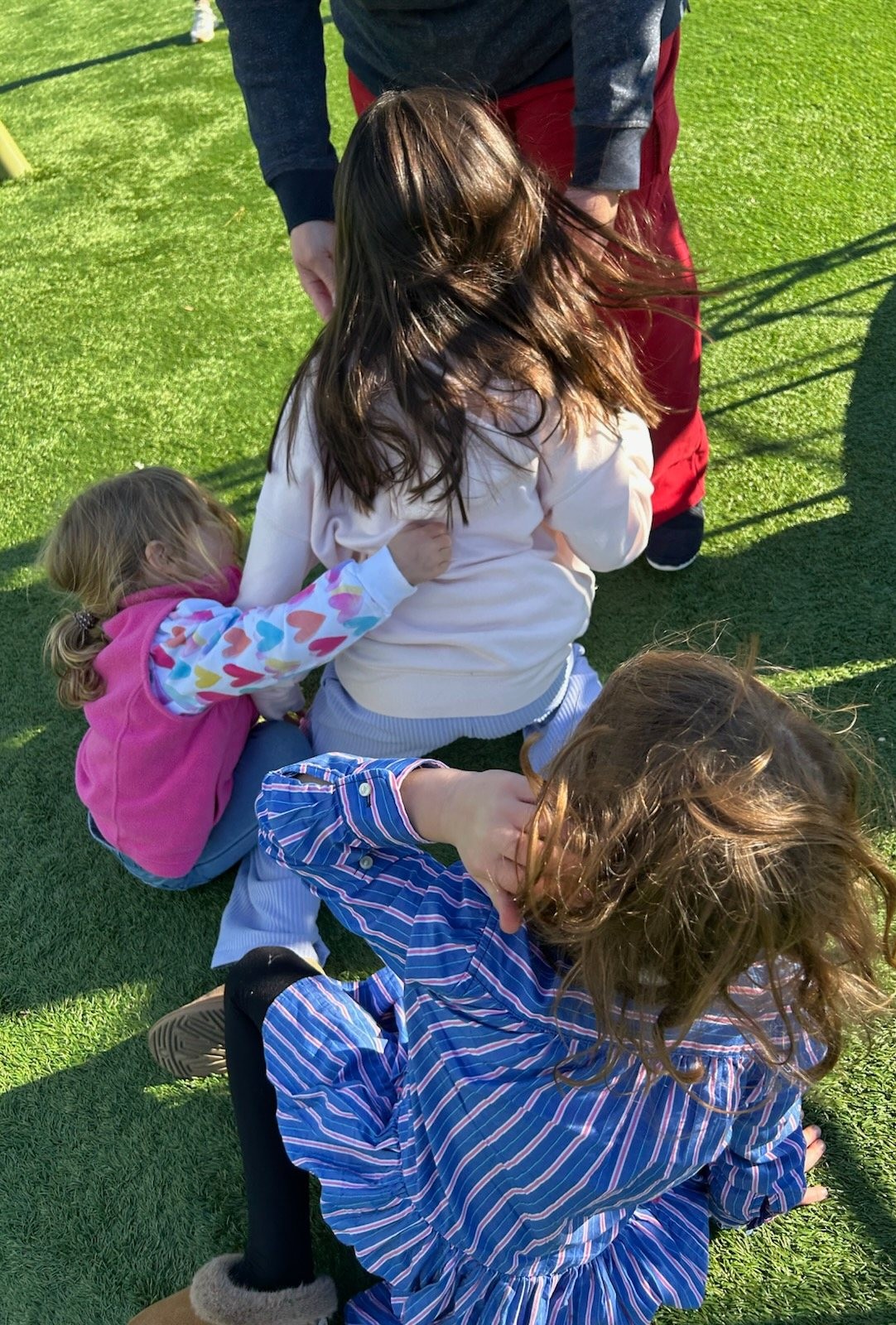
    On a lighter note, Pretty and I had our granddaughters Ella (6) and Molly (seven weeks shy of 4) for a weekend sleepover. The little girls have busy lives now, and I hadn’t seen them for more than a week, which was unusual; Molly sat down at the table where she found her new colors to begin work on the blank paper in front of her. She looked up at me as I hovered to help her get started and asked, Naynay, are you still old?

    Hilarious! All the king’s horses and all the king’s men can’t make Naynay young again.

  • The Impact of Dreams: Connecting with Loved Ones

    The Impact of Dreams: Connecting with Loved Ones


    Detours with Daddy is the title of the third section of my third book I’ll Call It Like I See It  because it’s a mixture of facts and fantasy about my dad who was my best friend and favorite person in the world while I was growing up.   My earlier memoirs Deep in the Heart – A Memoir of Love and Longing and Not Quite the Same describe my adoration of my daddy who died when I was thirty years old.   His impact on my life was incalculable and I often wonder what he would have thought about my adult life as a lesbian activist.

    DADDY DREAMS

                When I woke up, the dream was still in my consciousness, and I had a strange sensation of crossing a threshold through time into another world.  I tried to remember…

    I see the car stop in front of a small building that looks vaguely familiar.  My grandmother, my aunt, and I get out of the car.  We’re not in a hurry as we climb the steps that lead to the door.  I notice that my grandmother and my aunt are very young and beautiful.  My grandmother’s hair is short and wavy and dark.  She looks like she just left the beauty parlor.  My aunt’s body shows no sign of the osteoporosis that plagued her in later years.  Her back is straight, and her walk strong and sure.  The two of them laugh and talk together, and I want to say something, but they ignore me.

    The little building has no windows and no sign.  I know that I belong inside, and I’m anxious to open the door.  My grandmother turns an ancient glass knob, and my aunt and I follow her into the room.

    The room is dimly lit with a single bulb attached to the ceiling.  My eyes struggle to make an adjustment that allows me to gaze at my surroundings.  At that moment the brightness changes like a dimmer switch has been turned up a notch.  I can see clearly.

    “We thought you’d never get here,” my dad says.  “You must’ve taken the long way.  You didn’t run out of gas, did you?”  He laughs and winks at me.  “I told you when you first started driving to always check the gasoline gauge, didn’t I?  Remember that?  You wouldn’t get far without gas, and you always had somewhere to go.”

    My father wears his World War II army air corps uniform with the wings on his collar and insignia on the sleeve.  The knot on his tie is perfectly tied.  He is handsome, and I am happy to see him.  His blonde hair has a military cut, and he, too, looks incredibly youthful.  He sits on a wooden bench in the room.  He looks comfortable and very much at ease.

    “Which way did you come?” he asks.

    “I came…” I start to answer.  “I’m not sure.  I had to pick up your mother and sister, so I left early.  I didn’t want to be late, and they wouldn’t tell me exactly where we were going.  Now here we are.  I’ve missed talking to you so much.”

    “We talk all the time,” he says and smiles.  “It’s a different kind of language, but it’s as real as the King’s English.”  He beckons me to sit next to him on the bench.

    “I’m so glad you have on your uniform,” I say as I sit down.  “I love that uniform.  When I found it in the cedar chest, I thought I could wear it, but it was too big.  Daddy, why didn’t you ever talk about the war?”

    “What’s there to say about war?”  He fingers one of the wings on his collar.  He has the prettiest hands, I think.  “What do you want to hear?”  He looks directly at me.

    “I don’t know, but I want you to tell me something.  Anything, I guess.  I saw the pictures, so I know it was real.”

    “Of course, you saw the pictures and played with the uniform.  That makes it real.  And now you’ve found the letters that I wrote to your mother and the other family members, haven’t you?  Isn’t that enough?”

    “Yes, I found the letters; and no, I don’t think it’s enough.”

    My father opens a box on the bench beside him and removes a piece of paper.  He closes his eyes and begins to recite from memory.

    December 28, 1944

    Dearest Darling,

                 I’ve often wondered if you couldn’t guess just how much I miss you at different times.  You know, sometimes you are the only thing that makes me want to be back there.  I could go on forever telling you that I see you everywhere I go, etc., but you’d enjoy that too much.  In not so long a time I’ll be back with you.  It already seems like ages to me.  Do you ever sort of forget about me, unconsciously, I mean, just forget?  That is one of the most horrible things I can think of.  Well, enough of that.

                Tonight some of the guys wanted me to play on the Field team, but I had a rather hard day so, for once, I refused a basketball game.

                Well, Baby, I must go to sleep, for I am very tired, but not too tired to say goodnight to the one I love.

    Yours forever,

    My dad opens his eyes and returns the paper to the box. He looks at me again.

    “That was the war,” he says.  “The day I wrote that letter I flew my first bombing mission over Germany.  I was nineteen years old and the navigator for my crew.  I was responsible for locating a town that we could blow up, and then for finding our way back to England.  Before that day I had been in training with my buddies.  We waited for orders that would allow us to prove our manhood.  We bragged to each other about what we would do.

    “When we touched the runway coming in from that mission, though, I felt sick, and it wasn’t from the altitude or lack of oxygen.  The smell of gun powder made my eyes burn.  The sounds of machine guns reverberated in my ears.  But, it was the sight of smoke and fire and devastation and death that made me write to your mother that night.  And fear.  Not the fear of dying, but the fear of being forgotten.”

    A dog runs past me and jumps into my father’s lap.  I don’t recognize the dog.

    “Dad, is this your dog?”

    “If it is, make sure it stays outside,” my grandmother says from behind me.  I stand and move away from the bench to see my grandmother sitting at her sewing machine.  She looks up from the contraption’s hammering needle and frowns at me.

    “How many times do I have to tell you that dogs belong out of doors?” she asks.  I have no reply because I can’t count that high.

    “Why do you live so far away?” she continues.  “You never come to see us.  Your grandfather isn’t well, and he wants to know if you’re going to be here for Father’s Day.  I told him you wouldn’t.  Then, I wondered why you wouldn’t.  Well, Miss Busybody who has so many questions for her daddy, I’m requesting an answer from you.”

    “I didn’t know he’s sick,” I say.

    “Who?  Who’s sick?” she responds with irritation.

    “You said my grandfather’s sick,” I remind her.  She shakes her head and pushes the pedal of the sewing machine.  The yammering noises resume.

    “I have a good job,” I say to her back.

    “You had a good job less than two hours away from us.  Now it takes days to visit you, if we can even find your house.  Are you telling me there are no good jobs any closer than a thousand miles from here?”  The machine whirrs faster.

    “You never come to see me,” I say.  “None of my family ever comes to my house for Thanksgiving or Christmas or my birthday, either.  It’s not fair for me to be the only one who travels every holiday.  One night I had to spend the entire night in an airport by myself.  I slept on a sofa in the security guard’s office, for heaven’s sake.”

    The sewing machine stops.  My grandmother stands up and faces me.

    “I didn’t move.  You moved.  You moved a long time ago, and a thousand miles away.  I’m young and stubborn.  You’re old and obstinate.  You get that from your mother’s side of the family.”  She laughs at her own joke.  I laugh with her because I’m glad that she loves me enough to miss me.

    “Thank God you can drive me home today.  Tell your aunt I’m ready to go,” she says.  She gestures toward the machine.  “That material was too flimsy and couldn’t hold the thread.  I’m leaving it for the next fool who’s willing to pay a ridiculous amount of money for thin fabric.”

    “Oh, Mama,” my aunt says.  “You’re such a mess.  Let’s not worry or fuss about something as silly as material.  You’ll get too upset over nothing.  I’m sure we can stop along the way and find you a different kind.”

    We walk to the door in front of us.  My aunt turns the ancient glass knob, and we cross through the portal together.

    The car is gone.

    **********************

    I published this piece here in February, 2012, two months before my mother’s death. I recall I was staying at our home on Worsham Street in Montgomery, Texas; my father, his mother, and sister were not strangers to my dreams. My father died in 1976, my grandmother in 1983, and my Aunt Lucille in 2013. I am thankful for them, would love to visit them – even on a zoom call.

  • Test Your Knowledge: Female Icons of the 80s

    Test Your Knowledge: Female Icons of the 80s


    I am all over the place with this piece because I’ve gone down one too many rabbit holes doing my research on two of my favorite female musicians. Honestly, y’all, is there anything sacred – anything at all unavailable to a persistent person if you keep searching into people’s pasts?

    Pop Quiz on Three Musical Ladies from the 80s

    1. One of these women was born in Arkansas but called Houston, Texas, her home. Was it: a. Cynthia Clawson b. me c. K.T. Oslin
    2. Two of these women graduated from Milby High School in Houston, Texas. Were they: a. Cynthia Clawson and me b. K.T. Oslin and me c. Cynthia Clawson and K.T. Oslin
    3. One of these women attended Lon Morris College in Jacksonville, Texas. Was it: a. K.T. Oslin b. Cynthia Clawson c. me
    4. Other notables from Lon Morris College include the following: a. Margo Martindale b. Tommy Tune c. Johnny Horton d. All of the above
    5. One of these women had a father who coached football at Louisiana College in Pineville, Louisiana. He died in Lufkin, Texas, at the age of 39 when this little girl was 5: a. me b. Cynthia Clawson c. K.T. Oslin
    6. One of these women had a mother who taught her how to sing and play the piano. She also taught her music class at elementary school in the seventh grade: a. K.T. Oslin b. me c. Cynthia Clawson
    7. Who signed her first major recording contract at 45 years of age? a. Cynthia Clawson b. K.T. Oslin c. me
    8. Which woman and/or women never married? a. me b. K.T. Oslin c. Cynthia Clawson
    9. Who died from Covid-19 with an underlying condition of Parkinson’s and heart disease in December, 2020, at the age of 78? a. K. T. Oslin b. Cynthia Clawson c. me
    10. Whose daddy was a Baptist preacher? a. mine b. Cynthia Clawson’s c. K.T. Oslin’s

    *************************

    Answers

    1. K. T. Oslin was born in Crossett, Arkansas, on May 15, 1942, but moved to Texas with her brother and mother who had family there. She went to high school in Houston, graduated from Milby High in 1960, took music from Mrs. Claire Patterson who herself had graduated Milby in 1949.
    2. Cynthia Clawson was born on October 11, 1948, in Austin, Texas, and also graduated from Milby High in Houston, studying music from the same teacher, Mrs. Claire Patterson. Cynthia finished high school in 1966. (I didn’t go to Milby High in Houston – Columbia High in West Columbia, Texas – born in Navasota, Texas on April 21, 1946, high school diploma in 1964, really shouldn’t be mentioned in the same breath with the other two women)
    3. K.T. Oslin studied drama/theater at Lon Morris College, a two-year Methodist college in Texas near the oil fields of Kilgore. She also formed a folk music trio with David Jones and singer-songwriter Guy Clark while she was at Lon Morris. The three sang in a variety of venues around Texas during her college years.
    4. All of the above.
    5. c. K.T. Oslin. Her father played football in high school and then coached at Louisiana College for two years before resigning to return to his home town of Crossett, Arkansas, to work in the paper industry.
    6. b. That would be me. My mother insisted I practice the piano for 30 minutes every day after school from the time I was in the first grade. When I was in the seventh grade, she took me for private lessons to Sam Houston College in Huntsville once a week. I studied music in high school, sang tenor in the choir and then graduate work to become a minister of music at Southwestern Baptist Theological Seminary from 1969-1971. Unfortunately, my voice teacher advised me to return to my original career path with my CPA certificate and undergraduate business degree from UT in Austin. There was no place for me in Southern Baptist Churches, she said.(Meanwhile, Cynthia Clawson graduated from another Baptist College, Howard Payne University, in 1970 and won the Arthur Godfrey Talent Show on TV her senior year of college. She was off and running on her impressive musical career.)
    7. K.T. Oslin signed her first major contract in 1986 at 45 years of age. In April, 1987, RCA produced a song Oslin had penned herself, 80s Ladies, which became a major hit. The song won the Grammy Award for Best Female Country Vocal Performance and Song of the Year at the Country Music Association Awards. Oslin became the first female to win Song of the Year recognition.
    8. Cynthia Clawson married Ragan Courtney in 1973. They had collaborated on the religious musical Celebrate Life in the early 1970s when she recorded the songs that became the inspiration for renewed interest in gospel music for youth choirs across the country. In Addition to her Grammy Award in 1981 for Best Gospel Performance, she has received numerous other accolades in the genre. In 1985, Clawson’s rendition of the hymn Softly and Tenderly became part of the soundtrack of the Academy Award winning movie A Trip to Bountiful. I married Pretty as soon as I legally could in 2016 after living with her for fifteen years. K.T. Oslin never married.
    9. On December 21, 2020, K.T. Oslin died from Covid-19 with underlying causes of Parkinson’s and heart disease. She was living in an assisted-living facility in Nashville, Tennessee, where she had lived when her Parkinson’s dictated the move. She was buried in Woodlawn Memorial Park next to another country music legend, Tammy Wynette.
    10. Cynthia Clawson’s dad was a Baptist preacher known as “Brother Tom” Clawson. He died November 3, 2015, at the age of 91 from natural causes in his home in Conroe, Texas.

    80s Ladies by K.T. Oslin

    We were three little girls from school
    One was pretty, one was smart
    And one was a borderline fool
    Well, she’s still good lookin’
    That woman hadn’t slipped a bit
    The smart one used her head
    She made her fortune
    And me, I cross the border every chance I get

    We were the girls of the 50’s
    Stoned rock and rollers in the 60’s
    And more than our names got changed
    As the 70’s slipped on by
    Now we’re 80’s ladies
    There ain’t been much these ladies ain’t tried

    We’ve been educated
    We got liberated

    And had complicating matters with men
    Oh, we’ve said “I do”
    And we’ve signed “I don’t”
    And we’ve sworn we’d never do that again
    Oh, we burned our bras
    And we burned our dinners
    And we burned our candles at both ends
    And we’ve had some children
    Who look just like the way we did back then

    Oh, but we’re all grown up now
    All grown up
    But none of us could tell you quite how

    We were the girls of the 50’s
    Stoned rock and rollers in the 60’s
    Honey, more than our names got changed
    As the 70’s slipped on by
    Now we’re 80’s ladies
    There ain’t been much these ladies ain’t tried

    80s Ladies is one of my favorite songs, written by one of my favorite singer-songwriters, and I wanted to say I am thankful for her music that spoke powerfully to me in the years leading me to the 1990s revolution beginning with the 1993 March on Washington that was my personal introduction to activism in my queer community. Cynthia Clawson carried me musically through my gospel music experiences in the 1970s. I listen to both of these women faithfully on my playlist as long as Alexa lets me.

    I encourage you to look up old YouTube videos, or try to catch an interview like the one I’m including below. K.T. had quadruple bypass surgery in 1995. King asked her about it when he interviewed her in 1996.

    Larry King Interview on CNN with K.T. Oslin

    No, I was really close to it. I just started feeling terrible. I mean, when you hindsight and look back, you can see your steady decline of energy over a period of years. But last summer was the thing. I’d get out there and try to mow this little lawn that’s about the size of this table. And I’d get about half way through it, and oh my chest would be hurting. And I’d go, girlfriend, you are just really out of shape. And it got worse, and worse. And finally the third time I mowed the lawn in the summer, I just got about two feet done, and I said that’s it. There is something really wrong.

    And I had the classic chest pain running down the arm. And I thought, oh, it’s your heart, don’t think about it. I just didn’t want to think about that. And so we tested it, and yes I had sky-high blood pressure, sky-high cholesterol. I was just falling apart. And so, tested me, we did the angiogram. And they said, they got very quiet. Everybody was chatting, love your album, love your song, love everything. And then the pictures came up on the screen, and they all got quiet. And I thought, oh my God. They said, well we’re going to do the operation. I said, when? They said, tomorrow. So, bam, you make out wills, you’re crying, weeping.

    ********************

    RIP, K.T. I hope you’re singing with the angels.

  • Thank You, Annie: Celebrating Animal Couriers

    Thank You, Annie: Celebrating Animal Couriers


    “We must find time to stop and thank the people who make a difference in our lives.” – John F. Kennedy

    Annie Alexander and her blog Animal Couriers first subscribed to me here in September, 2016, after many years of friendship with my first WordPress efforts through the eyes of a little feisty Welsh Terrier: The Red Man. Red’s Rants and Raves ended in 2016 when Red passed on to his reward following five years of cultivating a devoted group of followers including Annie and her Animal Couriers.

    Annie’s support in our blogging community has made a difference in my writings and in my life – I’m long overdue in saying a proper thank you to her.

    Please follow her adventures traveling across Europe and around the world with her happy passengers!

    http://www.animalcouriers.com/on-the-road-with-animalcouriers/

  • Timeless Bonds: Els, Carl, and The Value of Friendship

    Timeless Bonds: Els, Carl, and The Value of Friendship


    sharing fun with our dear friend Saskia’s mother, Els, yesterday

    Els and her husband, Carl, are our Dutch friends from The Netherlands and have been on an extended rare visit to see her daughter and grandson, Finn, the youngest grandchild (but who will unbelievably be 15 this month!). Carl, Pretty, and Saskia graciously allowed Els and me to exchange family news, personal health issues, the deliciousness of American tomatoes, and generally enjoy each other’s company for a couple of hours as Els and I both near eighty years of age in 2026.

    Our shared friendship across the Pond through the years is a reminder that love has no boundaries, there are no obstacles too difficult for kindness and respect to overcome, and that Time waits for no one. Thanks to Saskia for the special photo of her mother and me.

    We talked about the possibility of this being our last visit, but we pledged to hope together it is not.

    Safe travels, Els and Carl. Until we meet again.