Category: Personal

  • if it weren’t for second chances, we’d all be alone

    if it weren’t for second chances, we’d all be alone


    Our lecture for today, o cyberspace class, is the epistemology of the second chance. (Sometimes I just throw in a big word to see if anybody’s paying attention.)  Frankly, I don’t remember  much about epistemology from my scholarly life except I heard it used in my undergraduate philosophy classes and my graduate studies in theology.

    To refresh my memory, I looked up the definition and found the word epistemology involves knowledge and the justification of knowledge; but then the dictionary wandered off into a question of what is knowledge, how can it be justified and I immediately remembered why I dropped out of seminary. Way too much digression and grey areas for a 23-year-old CPA who dealt in absolute numbers before answering a “call” to the ministry that was surely a wrong number.

    During the forty years I wandered in the wilderness of numbers I grew accustomed to vague responses and  half-truths. I tried to blend in with a landscape camouflaged by degrees of knowledge that were justified with competing strident voices blasting away at each other from polarized positions of territorial absolutes.

    Yep, nothing like trying to convince people you own a piece of knowledge when they don’t agree with you. You can’t justify it to them no matter how hard you try and how loud you get because they own a piece of knowledge, too, which happens to be totally different from yours. That’s how it all goes downhill and the histrionics aren’t far behind. If only knowledge depended on the wisdom of golfers, epistemology would include the concept of Mulligans.  Mulligans are second chances.

    If someone hits a shot with a driver off the tee on the first hole and the little white golf ball vanishes mysteriously in deep woods closer to the fairway for the third hole than it is to the first hole, the golfer can say Mulligan and have a second chance to locate her own fairway again. She may hit a beautiful shot for her Mulligan or she may not, but the important thing is to have a new opportunity.

    In our personal lives second chances are sometimes painfully obvious and at other times so subtle we may miss them. As an old numbers person, I couldn’t resist creating a list of five lessons for successful second chances.

    Lesson Number One: Be open, available, alert to identify second chances; don’t think you won’t ever need one. You will.

    Lesson Number Two:  When you get a second chance, try not to think of it as an opportunity to repeat mistakes. Mistakes are hard to take back so don’t blow your Mulligan.

    Lesson Number Three: Be sure to tell your friends about your second chance. It may give them hope and inspire them to offer one or accept one. Honestly, can there be too many second chances going around?

    Lesson Number Four:  Your second chance may be your last chance.   Really?  100%.

    Lesson Number Five: Never be afraid to take a second chance when you have one. As Franklin Roosevelt famously said when the Hounds of the Baskervilles were closing in around him, we have nothing to fear but fear itself.

    Finally o cyberspace class, the lecture concludes with a little bit of knowledge mixed with a bunch of justification that adds up to the epistemology of the second chance as seen from the eyes of a 66-year-old who has had her own share of second chances; and has at various times in her life blown them, needed a third or fourth chance, and had some of them bring incredible happiness.

    Be generous to those you love and even to those whose knowledge is different from yours. Ouch. Is that really necessary?  Absolutely.

    *************

    This piece is one I originally published in September, 2012 following the death of my mother which had been a long time coming but given me a wonderful second chance for a more honest relationship with her in the final two years of her life – it was a second chance I embraced. Another second chance was on the horizon, but I had broken all of my own rules which made me oblivious to a second chance that came perilously close to being disastrous. I was reminded of this time in my life recently when I heard Gregory Alan Isakof’s song Second Chances that included the lyrics which became the new title for this post.

  • Molly’s Big Birthday Weekend

    Molly’s Big Birthday Weekend


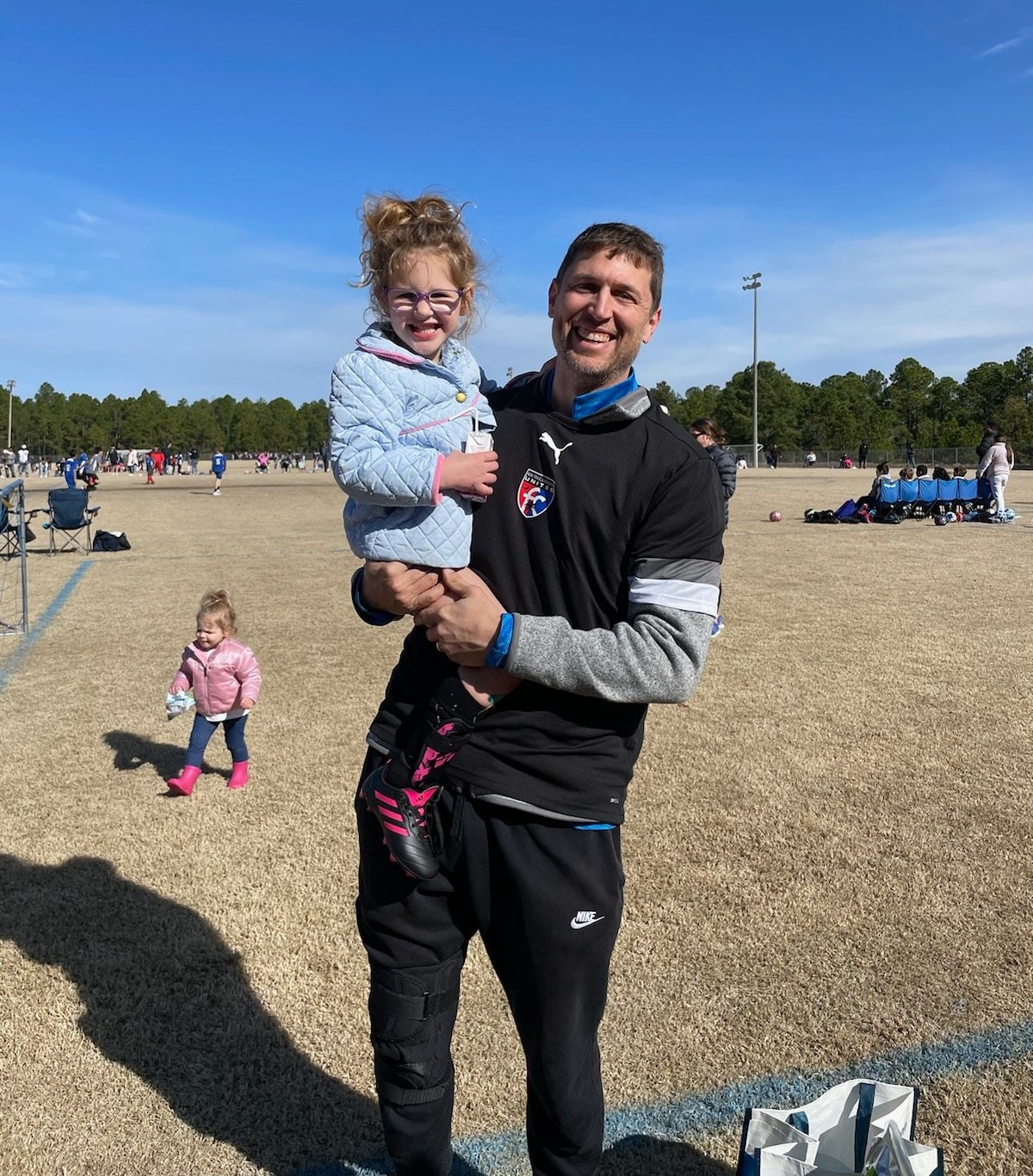
    Her family and friends celebrated Molly’s January 26th. second birthday with vigor, an occasion she seemed content to embrace while managing to control her focus. The festivities began Friday afternoon after school on the playground when her Nana (Pretty) and Naynay (me) came to pick her up – her great Aunt Darlene and Dawne had driven down from the upstate to get the weekend started. They took great pictures!

    Molly going full speed ahead with Ella close beside her

    Molly all smiles when Ella is near

    Ella and her best buddy Thomas made it to the top,

    sharing a moment

    Molly takes a playground break –

    turning two years old wears me out

    Birthday dinner at Mexican restaurant – where else?

    left hand? right hand? both work fine to eat Mexican food by myself

    Ella and Naynay study chips, salsa and queso – they’re wasting time

    The Party

    Ella and Molly tackle the Bounce House in the back yard

    I think my school friends found my toy box

    oh well, they make me say sharing is caringbut she has my doll

    my teacher Miss Stefanie came to my party – she brought her son Cole

    my mom Caroline and dad Drew love me to the moon and back

    Mama and her friends worked so hard for my birthday party

    I had the best time

    my Nana and Naynay love me, too –

    they let me do whatever I want to do

    BIRTHDAY CAKE!

    Happy Birthday to me!

    ******************

    Molly was oblivious to another birthday gift she received when a woman named E. Jean Carroll received an $83.3 million dollar settlement on Molly’s birthday against a former president of the United States for his years of bullying her in public. Carroll’s stand was a ray of hope that will help Molly and all little girls have the courage to be brave when they are confronted with behavior designed to make them feel lesser than. Thank you for that gift, Ms. Carroll.

  • the times they are a-changin’

    the times they are a-changin’


    Queen Elizabeth II wasn’t feeling jubilant for her Silver Jubilee in the trailer for Season 3 of the Netflix series The Crown as she rode in the parade inside the royal golden carriage pulled by six white horses. Rather, the fifty-one year old Defender of the Faith was portrayed briefly as a middle-aged woman sitting alone in a coach, focused more on her failures than hope for the future as the ominous percussion of Fort Nowhere grew louder when the lyrics to the music began: Come gather ’round people wherever you roam, for the times they are a’changing...The enormity of the changes that would take place before the Queen’s death during her Platinum Jubilee year in 2022, forty-five years following the Silver Jubilee in 1977, made Bob Dylan’s classic song from 1964 more prophecy than poetry.

    Meanwhile, on another popular Netflix series a Canadian woman in her twenties who was sometimes known as the Miracle Girl from Hudson, Alberta because of her unique relationship with horses was suddenly forced to confront unimaginable loss by tragic circumstances that left Amy the Miracle Girl with similar feelings of hopelessness and dread of the future in Heartlands 14th. season as Queen Elizabeth II had faced in the third season of The Crown. Episode 7 (Courage) of that season ended with Fort Nowhere again framing the background music while Amy began her lengthy journey from despair to hope: Come gather ’round people wherever you roam and admit that the waters around you have grown. And accept it that soon you’ll be drenched to the bone if your time to you is worth saving. And you better start swimming or you’ll sink like a stone, for the times they are a-changing…As the present now will later be past, the order is rapidly fading. And the first one now will later be last, for the times they are a-changing.

    Now you may be thinking I watch too much Netflix when I can connect random dots from Queen Elizabeth II to a Miracle Girl from Alberta, Canada; but it is the music of Bob Dylan through the voices of Fort Nowhere, a person (group?) I didn’t know, that inspired me to reconsider the lyrics to the times, they are a-changing. When I did look at Dylan’s words, I found a powerful personal message which is, after all, the secret to his musical legacy.

    Come writers and critics
    Who prophesize with your pen
    And keep your eyes wide
    The chance won’t come again
    And don’t speak too soon
    For the wheel’s still in spin
    And there’s no tellin’ who
    That it’s namin’

    For the loser now
    Will be later to win
    For the times they are a-changin’

    The older I get, the faster the wheel spins.

    *******************

    Slava Ukraini. For the Ukrainian tennis players in the 2024 Australian Open.

  • the Civil War, old tapes, social media and crazy liberals

    the Civil War, old tapes, social media and crazy liberals


    As the race toward the 2024 election begins to heat up with Iowa caucuses in the rear view mirror, the New Hampshire primary next Tuesday,  I look more frequently at the map of the red states and blue states that make up our United States to wonder anew at Abraham Lincoln’s commitment to keep the country united as one. I understand the problem better for sure. I always wondered how brother fought brother on different sides during the Civil War. They were family first after all, right? Not so fast, my friend. A post I published in the summer of 2017 is a reminder of how messy families can be – particularly when we get together in cyberspace.

    My grandmother invented social media via the telephone party line we had in our little town as surely as Al Gore invented the internet. She relished listening in on other people’s conversations and delighted to repeat juicy gossip at her kitchen table… but please dear God, don’t ever mess with her family.

    This week I did something I almost never do. I responded on social media to a post made by a first cousin twice removed who has a world view that I have long ago accepted as different from mine. Most of the time I hide his offensive posts from my timeline and move on.

    I can’t bring myself to “un-friend” him because I truly love the little boy I remember visiting us in Richards so often with his grandmother who was my grandmother’s sister. But this week he posted that liberals must have a “mental illness” to think the way we do, and that struck a nerve for me.

    You see, I grew up during a time when being a homosexual was considered to be a mental illness. Think about how you would feel if you grew up believing that you had a secret mental illness and, if exposed, you could be institutionalized. Lock her up. Throw away the key. I heard an old tape begin to  play in my mind.

    Somehow our thread on Facebook took an unpleasant turn, as I already knew it would and we got into a discussion regarding a prevailing Muslim  belief in some places that gays should be killed. Unfortunately, one of my cousin’s friends chimed in with the following comment: “We knew someone many years ago that would probably want to buy a plane today, load them (gays and lesbians) up and drop them off over there (wherever Muslims live). I sure miss him.”

    Wow. I was transported to a conversation I had in the early 1990s with a client who sat in my office and said, “If it were up to me, I’d take all those queers and put them behind barbed wire in Kansas and tell them to stay there.” I didn’t respond then. The old tape was playing louder now.

    One of my mother’s most infamous quotes for me was that she wished all those gays would go back in the closet where they belonged. She would be happy to slam the door shut. The old tape was so loud now I could barely hear myself think.

    Luckily, I didn’t accept the old tapes as I don’t accept my cousin or his friend’s thinking about who I am today. I’ve spent my entire adult life working for equal treatment and fairness – my liberal social justice beliefs. In 1974 the American Psychiatric Association declassified homosexuality as a mental disorder. I was 28 years old. In 2017 at the age of 71, I am personally declassifying liberalism as a mental illness.

    I resolve to limit my social media interaction with my first cousin twice removed to Happy Birthday wishes. No need going up that blind alley again.

    I feel better already.

    *******************

    P.S. Sadly I have “un-friended” my cousin twice removed in the intervening years since 2017 because I had to get out of his kitchen. I couldn’t take the heat.

  • say it plain, say it loud

    say it plain, say it loud


    Benjamin Mays was the child of former slaves,. He was born on an isolated cotton farm near Ninety Six, South Carolina in 1894. His parents were sharecroppers. The darkest years of Jim Crow segregation were just descending on the South; humiliation, mob violence and lynching by whites were common threats for African Americans. Mays learned at an early age the searing lessons of racial inferiority. He had a vivid memory of being stopped with his father by a group of armed, white men on horseback. “I remember starting to cry,” Mays wrote. “They cursed my father, drew their guns and made him salute, made him take off his hat and bow down to them several times. Then they rode away. I was not yet five years old, but I have never forgotten them.”2 (American RadioWorks: A Century of Great African American Speeches)

    In 1940 following a fascinating journey from this inauspicious beginning Mays became the President of Morehouse College, a respected black school for men in Atlanta; Martin Luther King, Jr. was a Morehouse graduate in 1948 and considered Mays to be his “spiritual mentor and intellectual father.” On April 9, 1968 five days following the assassination of King, Mays delivered his eulogy in an open-air memorial service on the Morehouse campus where a crowd estimated at over 150,000 people attended.

    As we celebrate the actual birthday of Martin Luther King, Jr. (January 15, 1929) with a federal holiday in the United States in 2024, the words of the Mays eulogy still speak plain and loud.

    God called the grandson of a slave on his father’s side, and the grandson of a man born during the Civil War on his mother’s side, and said to him, ‘Martin Luther, speak to America about war and peace. Speak to America about social justice and racial discrimination. Speak to America about its obligation to the war. And speak to America about nonviolence.

    Let it be thoroughly understood that our deceased brother did not embrace nonviolence out of fear or cowardice. Moral courage was one of his noblest virtues. As Mahatma Gandhi challenged the British Empire without a sword and won, Martin Luther King Jr. challenged the interracial injustice of his country without a gun. And he had faith to believe that he would win the battle for social justice. I make bold to assert that it took more courage for Martin Luther to practice nonviolence than it took his assassin to fire the fatal shot. The assassin is a coward. He committed his dastardly deed and fled. When Martin Luther disobeyed an unjust law, he accepted the consequences of his actions. He never ran away and he never begged for mercy. He returned to the Birmingham jail to serve his time...

    Morehouse will never be the same, because Martin Luther came by here. And the nation and the world will be indebted to him for centuries to come… 

     I close by saying to you what Martin Luther King Jr. believed. If physical death was the price he had to pay to rid America of prejudice and injustice, nothing could be more redemptive. And, to paraphrase the words of the immortal John Fitzgerald Kennedy, permit me to say that Martin Luther King Jr.’s unfinished work on earth must truly be our own.”

    Say it plain; say it loud. America remains indebted to Martin Luther King, Jr. on what would have been his 95th. birthday in a new century, and his unfinished work on earth must truly be our own. We have much to do.

    Onward.