former President Jimmy Carter is 99 years old today
my Texas sister Leora has an age number, but hers is unlisted
our granddaughter Ella is four years old today
Each person I celebrate today with faith and hope that the next generations will have the opportunities to continue their journeys toward destinations of personal joy, public service, and commitment to equal justice for all.
Picture this scene. Pretty was working in her large warehouse full of antique empire treasures for the final hour of what had already been a trying day when a couple appeared in the doorway and asked her if they could look around for a few minutes. She said sure but she had to leave to pick up her dog from the vet by 6 o’clock. When they walked past her, Pretty noticed the middle aged man wore a red maga cap. She was surprised and thought about asking them to leave, she told me later. Instead, she decided to try to have a reasonable conversation with people who had different political positions.
What she learned was the couple traveled to every rally – they had gone to one in Summerville, South Carolina last week and were on their way to Iowa for a rally there. When she asked what attracted them to the ex-president, the man responded with the usual make America great slogan. When pressed further, he went on to tell a story about Mr. Trump’s being the son of the late WWII General George Patton who had been told by the Illuminati to give this son to the Trump family that would make him a billionaire who would become president of the United States and make America great again. He showed Pretty a picture of Patton and Trump with a comment about the obvious family resemblance.
At this point Pretty realized a sensible conversation was out of the question so she told the couple she really needed to close the warehouse to pick up her dog. On the way out, the man turned to Pretty and said my name is Joe, and this is my friend Nancy; this won’t be the last time you hear our names.
****************
I give Pretty credit for trying to reach across the political spectrum, but I’m sure the Illuminati must be disappointed in her refusal to play along with the conspiracy theories of the other side. As for me, I’ve got nothing except a fear for the future of the republic.
courtesy of Texas taxpayers to support motivated public school teachers
Both my parents were Texas schoolteachers in what I consider to be transitional times in the mid twentieth century when teachers in public schools were respected members of their communities, paid less than other professions but valued for their contributions to the greater good. As their daughter I often attended the schools where they were employed, but only once was I ever a student in one of their classes. That was my mother’s music class when I was in the seventh grade in our home town of Richards, and I was totally humiliated by her teaching techniques and interaction with me and my friends. My first year as a teenager and my mom’s first teaching position didn’t mix well. Dinnertime at our house was colder than the sweet iced tea.
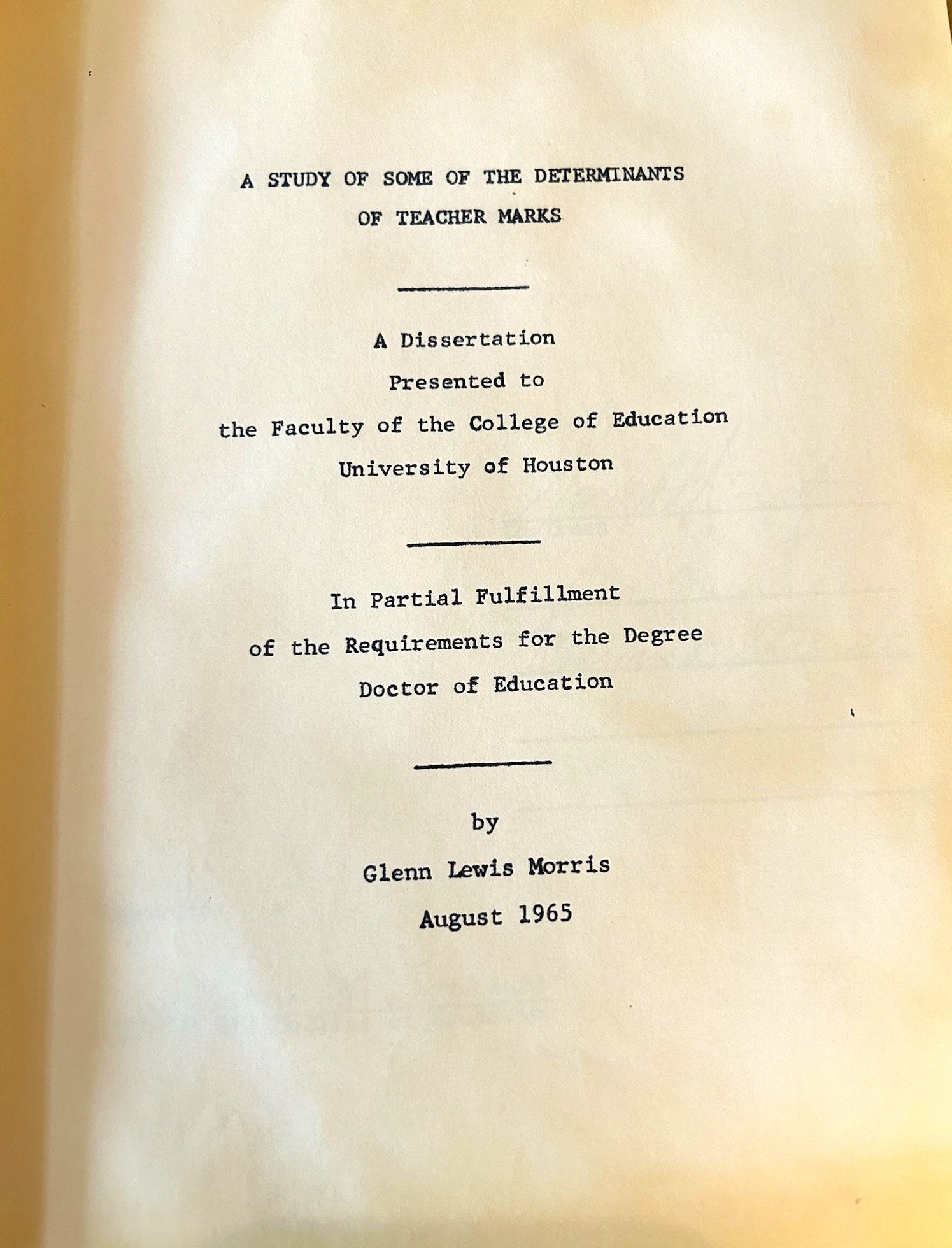
Both my parents worked on different college degrees for as long as I was in school. My mom and dad did their undergraduate work at Sam Houston State Teachers College (now Sam Houston State University) in Huntsville; Dad also completed his master’s degree there. Mom commuted the twenty-five miles from Richards to Huntsville for classes when I started the third grade – Dad did the same commute when he finished his undergraduate degree at Sam, then master’s. When I was in college at the University of Texas in Austin, Dad finally got his doctorate at the University of Houston after five years of commuting to the campus from Brazoria and three years commuting from Rosenberg, Texas. The GI bill he earned in WWII allowed him to pursue his dreams of higher education, and the Texas taxpayers helped with his costs, too.
does this topic seem boring toyou?
As the person who typed each excruciating word on an old Royal manual typewriter, I can testify it was less than an entertaining read. Learning the appropriate format for footnotes, credits, blah blah blah wasn’t fun, either. I must have used hundreds of bottles of white out that summer I devoted to my dad’s dissertation and while my dad thanked his advisor profusely in the acknowledgements, be aware I didn’t have any gratitude for the man responsible for the many rewrites he made to the manuscript that required typing the same material over and over again. And then over again.
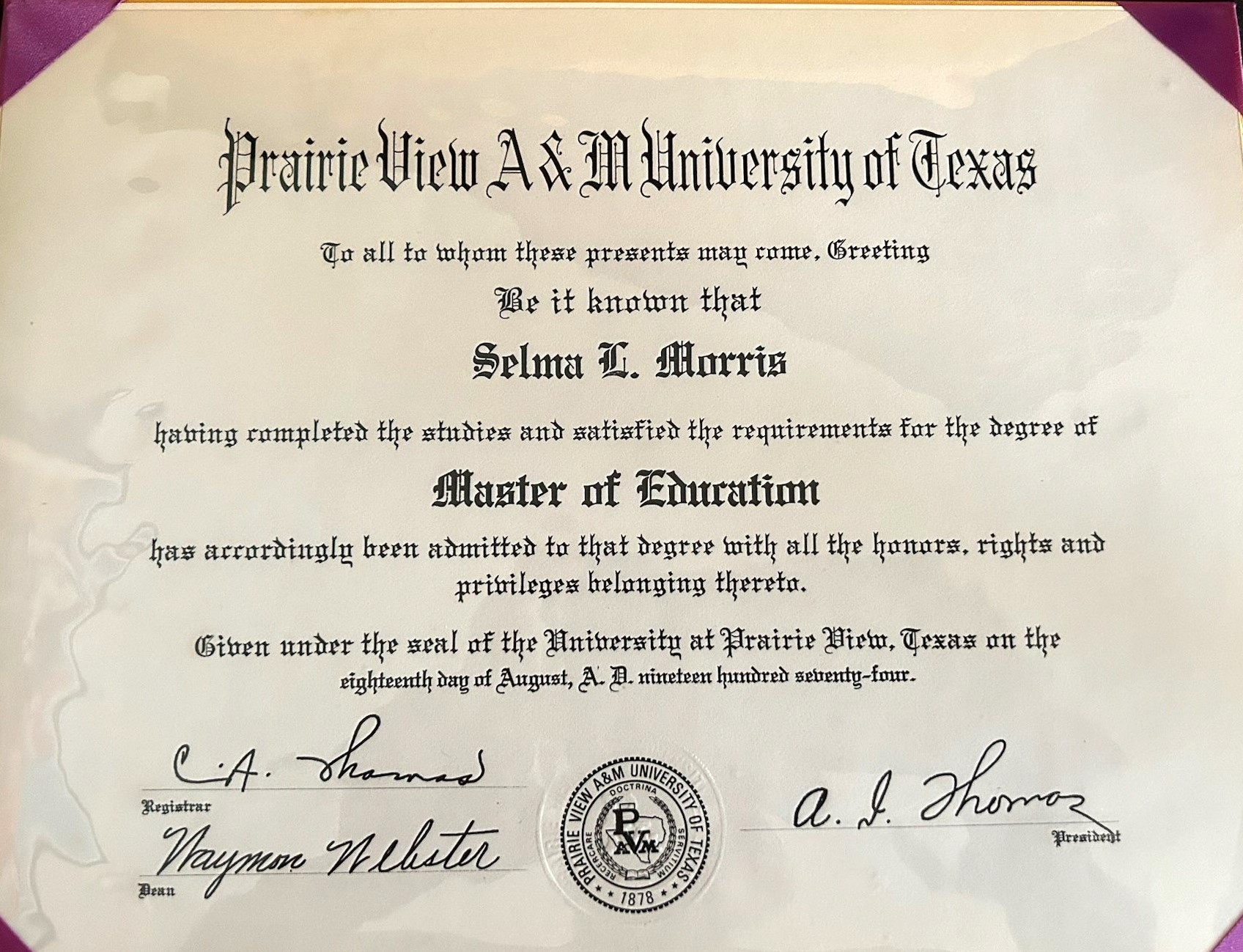
Two teachers in the house made education a must for the daughter who vowed to choose any career over teaching but never say never. I taught at a community college here in South Carolina for five years from 1982-87 and was grateful to the taxpayers of the state for paying for my master’s degree at the University of South Carolina. Apples for the teacher don’t roll far from the tree.
I want to come inside this morning before the dogs are awake
I’m sorry for your allergies, but I know you have zyrtec
please let me in
Our friend Erin tells us this is a male cat that’s been neutered – I refuse to give him a name other than Cat because he deserves a forever home to welcome him indoors which is where he evidently believes he belongs. He is affectionate, playful, and has grown bigger during the relentlessly hot South Carolina summer months. Full disclosure he has a knot on his neck that should be removed. Pretty and I will gladly pay for the surgery but can’t provide care he would need afterwards.
This Cat needs to be rescued from our carport – and from us.
Anyone interested please contact me at smortex@aol.com.
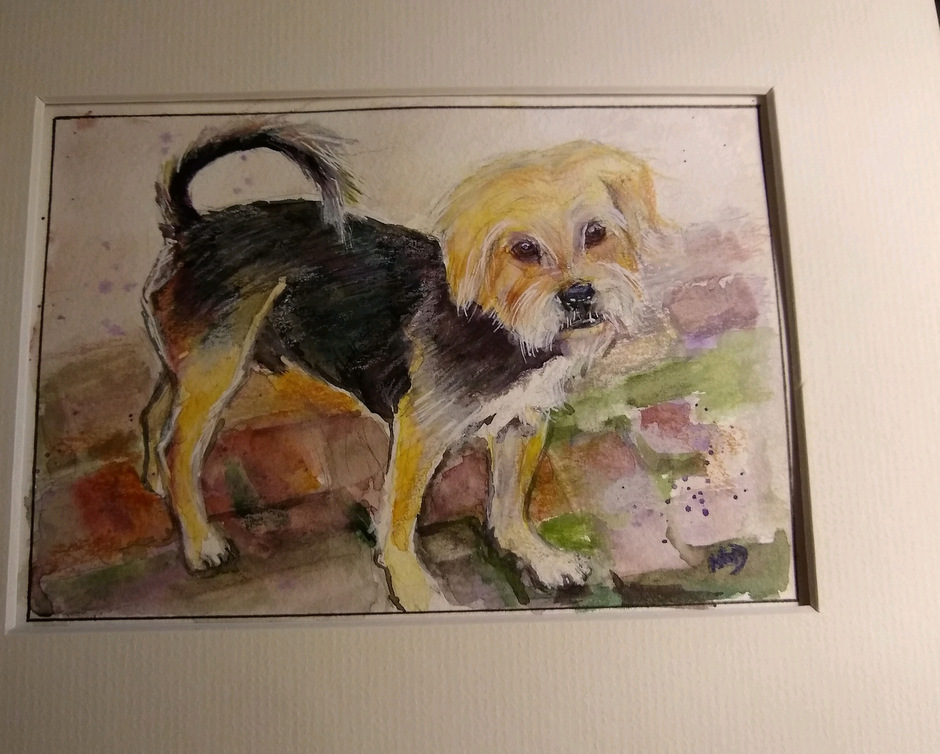
Earlier this year our fifteen year old terrier Carl began strange behavior in the late afternoon that didn’t concern Pretty and me at first, behavior we could ignore but gradually attracted our attention when it became more pronounced as time passed. Between 4 and 5 o’clock every afternoon now Carl paces back and forth between the den and kitchen like a tiger in a zoo, becomes agitated like monkeys can be in a cage at the zoo. Anxious, disoriented, restless for four hours of the day, yet content and clingy with us otherwise. Because of our experience with my mother’s dementia in her later years, Pretty and I were better equipped to recognize similar patterns of changes in Carl.
We were still unsure about a diagnosis of his doggie dementia (Cognitive Dysfunction Syndrome or CDS) issues until a conversation with our vet last month confirmed what we also suspected was his total inability to hear anything or anyone. The deafness seemed to happen suddenly this summer, but it could have taken place over a long period of time, Dr. Wales told us. When I asked about other issues Carl had that seemed to happen late in the afternoon and early evening, she explained sundowning in animals occurs similarly to humans.
At our house we have three rescued dogs that live inside ranging in ages from 10 to 15 years. While our best guesses about their ages may be slightly off, Pretty and I laugh about running an assisted living home for elderly dogs. Their activities of daily living (ADL) include eating, sleeping, guarding our home against unwanted doorbell ringers, protecting our mailbox from the mail carriers unlucky enough to be assigned to our address, and occasional short walks. Carl’s hearing loss this summer has been an obvious physical change but not totally unexpected since he had serious ear infections when he came to us in 2020. The behavioral changes, however, have definitely been gradual with increasing intensity, and some research explores a significant incidence of deafness in dementia.
We keep a watchful eye on Carl to monitor his quality of life, but so far he manages to keep up with his ADL; his favorites continue to be eating and sleeping which, if I am honest, are probably mine, too. Dr. Wales told us CDS could not be cured and would worsen as he got older. She did prescribe gabapentin which we tried for two weeks but didn’t appear to help – now I am searching for other options from Dr. Google. These past two days I gave Carl Melatonin gummies in small doses, but he wasn’t happy with the taste and/or texture of the gummies – so peanut butter was the answer for us. Again, limited improvement in his conditions so far, but we’ll keep trying. If anyone in cyberspace has recommendations they have successfully used for Sundowner Syndrome in dogs, please share!
Carl interpreted by Wayside Artist Ann D’onofrio
****************************
P.S. Note to my friends at Animal Couriers in Europe: older cats may also have CDS – Web MD has great info on feline symptoms and treatment. As with everything else I’ve learned about cats, feline behavioral changes can be disguised more easily by cats than by dogs. Hm…makes me wonder.





 I'll Call It Like I See It
You must be logged in to post a comment.