Category: racism

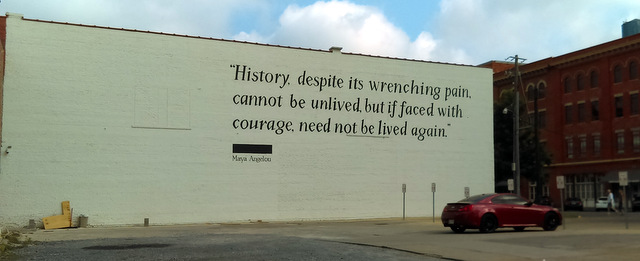
  • the murder of George Floyd in america – anger, fear, hatred, uprising


    Videos of the killing of a 46-year-old black man in Minneapolis, Minnesota on May 25th. by four policemen responding to a call concerning a fake $20 bill allegedly passed at a nearby corner grocery store have spread as fast as Covid-19 in nursing homes and have been viewed more than once by hundreds of millions of people around the world.

    No video viewer is likely to forget the final nine minutes of George Floyd’s life in which he repeatedly begged for breath from policeman Derek Chauvin who sat nonchalantly with his knee on Mr. Floyd’s neck while two other policemen, Thomas Lane and Alexander Kueng, held him down on the ground to further impede his breathing. Ton Thau, the fourth policeman, walked around the scene but also ignored Mr. Floyd’s cries for help.

    The Minneapolis Police Department fired the four policemen this week. Yet, while local, state and federal agencies investigate the murder, no arrests have been made as of this morning. Black people and their allies are outraged by a failure of the justice system to press criminal charges against these four policemen, another failure in both a long and short list of police brutality against people of color – particularly black males – with no end in sight.

    I am angry, but my anger is unlike the anger of our black citizens who must couple their anger with fear for their lives. As commentator Joy Reid said this morning, “Every black person in America now considers themselves to be hunted.”

    As for the uprisings in the Minneapolis-St. Paul area this week, I rely on the words of Nobel Peace Prize winner Dr. Martin Luther King, Jr. who said a riot is the language of the unheard. Point taken. We must do better.

    Finally, heed these words from Dr. King that hit home to me today as clearly as the daily death number updates from the Covid-19 pandemic:

    Injustice anywhere is a threat to justice everywhere. We are caught in an inescapable network of mutuality, tied in a single garment of destiny.  Whatever affects one directly, affects all indirectly.

    We must do better.

    Stay safe, stay sane and stay tuned.


  • how did Stella really get her groove back?


    Getting our collective “grooves” back across the world will be far more complicated, doubtless a much lengthier process than Stella’s in the 1998 film shown above. But hey, we have to start somewhere. Originally published here in February, 2013, I’m dedicating this re-run to the groove seekers during Covid-19. 

    I was talking to Leora (who is one of my favorite soul sisters) tonight when she said something that crackled across the phone and smacked me upside the head with a satellite wave whack. It’s time for me to get my groove back, she said; and I understood immediately what she meant because I knew that was my problem, too. I’d lost my groove. Somewhere in the midst of the vicissitudes of life, as my daddy used to say, I’d buried my groove as surely as I’d buried the ashes of my mother in the little Fairview cemetery in Grimes County ten months ago.

    I hadn’t heard the reference to “getting your groove back” since I watched the movie How Stella Got Her Groove Back years ago, but I remembered the essentials. Apparently a young sexy shirtless Taye Diggs was the spark plug for a middle-aged Angela Bassett’s recovery of her misplaced spontaneity, the optimism for her life. As I recall, Stella (Ms. Bassett) located her groove in less than two hours of screen time to happily rejoin the human race she had forsaken. Sigh. Now, that’s what I’m talking about. Fixer-upper for lost groove. Quick, fun, and easy.

    Let’s not kid ourselves. I’m fairly confident a shirtless man won’t be the impetus for getting an old lesbian’s groove back.  I can also say with certainty the process will take longer than two hours. Regardless, I do recollect Stella’s outlook became brighter – she seemed more hopeful for her future at the end of the film.

    I’m beginning to feel a small crack in the tortoise shell of grief that has covered me during the last year. Death and dying are two separate but equal tragedies that exact a price on those who watch and wait. The tragedies remind me of my own mortality which brings questions of legacy and the life I chose to live. For those of us who tend to be contemplative about the meaning of life on a regular basis, facing our own mortality is a daunting undertaking. Undertaking. Hah. Get it?

    The grieving doesn’t end, but the images I carry from the tragedies dim and dwindle away leaving me with a knowledge of the importance of this moment in this day in this time because I am not promised another breath. I’m thinking that’s my first step toward getting my groove back.

    *******************************

    Stay safe, get groovy and stay tuned.

  • a man of letters – prejudice by any other name is still prejudice


    Two years ago in the summer of 2018 I published posts containing letters written by my father to family members from his teenage years in the early 1940s to his death in 1976.  I called the series “a man of letters” – it became one of my favorites published here. I included letters from other members of my family in the series. On this Memorial Day I remember with shame and sadness this exchange between my grandmother and her two sons who would be swept up in WWII in the European theater. 

    While the war took center stage in everyone’s mind in 1942 and my dad noticed that his hunting and fishing buddies in Richards, Texas had a younger sister, apparently hormones were also raging in my dad’s brother Ray who would have been almost twenty years old in April of 1942 when he received a surprise letter in the mail from his mother. It was dated April 27th.

    “Dear Ray, Your daddy and I were tickled with your surprise visit this past weekend. You always have to work, and it was a treat for us to have you home for a whole weekend. I am pleased to see that your appetite is still good. I’ve never seen anyone love chicken and dumplings the way you do!

    Now, son, I need to have a serious talk with you about Geneva Walkoviak. I know that you had two dates with her while you were home. We can’t have you getting too serious about Geneva. And, I’m sure you know why. Even though she is pretty and seems sweet enough, the facts are that she is Polish and Catholic and those are two things that don’t mix in our family. You may not be able to appreciate the problems with that, but take my word for it. You stay with your own kind. Now, let’s leave it at that. I know you wouldn’t want to let us down.

    Try to make it home for your daddy’s birthday this summer.  All our love, Mama and Daddy”

    Polish. Catholic. Prejudice takes twists and turns through the years, decades, centuries. The names change, but the sentiments do not. Polish people in Richards at that time had a distinct accent – they were often first and second generation immigrants who farmed the contrary Texas land. The children rode a small yellow school bus to the red brick schoolhouse in town carrying the hopes and dreams of their families in tiny brown paper lunch bags. The men and boys got their haircuts at my grandfather’s barbershop. Their money, as is always the case in prejudice, was evidently neither Polish nor Catholic.

    Today bigotry is often based on what language is spoken, skin color, or country of origin. Hispanic refugees and others seeking asylum in this country are subjected to inhumane treatment that is unacceptable to all of us who respect the values our nation was founded on: everyone is entitled to life, liberty and the pursuit of happiness. We do not separate children from their mothers and then put them in prison camps. We’ve done that before to African-American slaves whose families were ripped apart and scattered to the four winds. That is not who we think we are. That is not who we are, is it?

    Catholics – Jews – Muslims. The religion roller coaster ride continues with death-defying speed and mind-boggling ticket prices.

    What a tangled web we weave in a small rural southeast Texas community consumed by the thought of a war in 1942, and yet my grandmother decided to set aside time to write a letter to my uncle which sadly exhibited the same kinds of prejudice that created anti-Semitism in Germany which was the impetus for the war in the first place, where a name like Walkoviak and a pretty Catholic girl named Geneva could become the target of pointed prejudice.

    I am ashamed and saddened by this letter. I do not find it surprising, however, because I remember my grandmother as a wonderful strong funny woman – but flawed. She would have been 39 years old when she wrote that revealing letter to her son. I’m not sure her positions changed during the next forty-five years of her life. She agonized over voting for the Democratic candidate John Kennedy in 1960 because of his Catholicism, for example; but I do recall she relented in later years when her grandson, one of Ray’s sons, married a Catholic girl.

    My dad, on the other hand, must have been blissfully unaware of the family drama because three months after his mother’s letter to his brother, he wrote to his parents following a visit  for his father’s birthday on July 29th. His father turned 44 on that birthday. This letter is dated August 1, 1942.

    “Dear Mama and Daddy, It was good to be home for Daddy’s birthday this week. I’m back at work today, and the grocery store is still standing. And, I’m still stocking shelves. Talk about boring. At least, it gives me money for school and to help Lucy and Terrell with the bills. It’s hard to believe I’ve been in Beaumont for a whole year. The War is the big topic on campus and off. Doesn’t look like we’re doing very good against the bad guys. Daddy, you better go up to Washington and see Mr. Roosevelt. I think he needs some good advice for a change. You could get things going in the right direction.

    I didn’t see much of Ray while we were home. He spends a lot of time with Geneva Walkoviak. She’s the only one he likes to spend money on. Of course, I guess you didn’t see much of me, either. Selma and I went to see the same movie three times. I’m beginning to like her more than her brothers.

    Probably won’t be home again until Christmas. The classes are a little harder this year. But, you’ll see that my grades are hanging in there really good. I want you to be proud of me. Your son, Glenn Morris”

    Obviously my uncle Ray rejected his mother’s ultimatum and continued to date the pretty Polish girl who happened to be Catholic. That made me smile.

    Throughout 1942 the impact of the war came closer and closer to home as more  young men enlisted – teenage boys were leaving their farms, day jobs, and classrooms to join the armed forces. They would soon cross oceans by sea and air to defend their country from the Axis powers.

    Stay tuned

    Ray and his mama

    my Uncle Ray 

    my grandfather George, my daddy Glenn and my grandmother Betha

    My Aunt Lucy

    Stay safe, stay sane and stay tuned.


  • Ella James, today is your NanaT’s birthday, and you are her greatest gift…


    Once upon a time your NanaT visited a faraway place called Greece, and she loved that place very much. One night she was going out to eat the yummy Greek food with your NanaSlo and their friends because the yummy Greek food was one of her favorite attractions while she visited the faraway place.

    On their walk to get  the yummy Greek food, a little white dog appeared on the steps in front of your NanaT.  The little white dog was very dirty with curly fur that had not been combed for a long, long time.

    Your NanaT stopped to sit on a large stone next to the steps. And can you guess what she did next?

    She petted the little white dog for a long time, gave it one of her best smiles and then followed the little dog home to make sure it wasn’t lost.

    The End

    This story has a moral for you, Ella James. Your NanaT has always believed in rescuing both people and animals in distress. As you grow older, you will most assuredly see her strength and determination to make your world a better place in action. You are a very lucky little girl. Imagine the love your NanaT will give you, her special granddaughter, if she made a place in her heart for a little white dog in a faraway place.

    Happy Birthday, Pretty – thank you for rescuing me twenty years ago – you’re simply the best.

    Pretty’s Greatest Gift

    Stay safe, stay sane and stay tuned.


  • is this our fifth set – match point?


    The year was 2001 (much more than a space odyssey) – the setting was centre court at Wimbledon – the round of 16 for the men included a 19-year-old newcomer named Roger Federer playing the 29-year-old four time defending Wimbledon champion, an American named Pete Sampras. Since I have been in tennis withdrawal for the past two months without my favorite clay court season in the spring, I tuned in to the Tennis Channel this afternoon and stumbled on to one of their Tennis Classics which happened to be this passing of the guard match on the green grass of the hallowed grounds of the All England Club in London. Federer, whose career over the past twenty years has earned him the title Greatest of All Time by some, beat Sampras in five sets that afternoon but lost in the quarter finals that year. The match deserved inclusion in the Tennis Channel Classics – wow. 

    *************************************

    Whether the surface is a hard concrete one,  one made of red clay or manicured green grass, the goal is the same: to win. To beat someone. To play better, smarter and mentally tougher than the opponent. To be more physical and aggressive. To charge the net when an opening appears. To cover the baseline when the shots go deep against you. The court is a battlefield where the scales of justice are often tipped by net cords and fractions of inches along white lines. The game is tennis.

    For men who play singles, the winner is usually required to win two of three sets.  In Grand Slam (French Open, Wimbledon, US Open, Australian Open) events, however, the rules change to  the best three of five sets to determine the champion.  If each man wins two sets, a fifth set is played.  The fifth set is often the scene of one man’s surrender and loss to another man’s courage and inner strength.  The first four sets are evenly played, but the last one is too much for the body, mind, will or all of the above for one of the guys and the desire to win or to not lose drives his opponent to victory.

    I love fifth sets. I particularly like them when they are close and long, and I’m not even paying for my seat in front of the television set. Nope, I’m watching for free, but I have the Deluxe Box seats and have seen my share of Grand Slams in Melbourne, Paris, London and New York City.  From my ABCs of Agassi to Becker to Connors to my current personal favorites of Federer and Nadal I admire the passion and persistence of the five-set winners.

    There is a moment of high drama called Match Point when the difference between winning and losing in the fifth set can be measured by split-second choices and breaks in concentration. Match points can be saved which means the game can go on for hours, but in the end a match point is lost; the winner often falls to the ground on center court with a victorious smile, joyous tears and wave to the crowd.

    As I watched the five-set match today at Wimbledon, the thought occurred to me that match points in tennis have an advantage over those we have in real life. The fourth round opponents I saw today knew the importance of the fifth set and its match point in that moment, but the rest of us may never know when we miss the chance to win –  or lose what we value most.

    Roger Federer through the years

    *************************************

    We live in dangerous days facing an opponent in Covid-19 that doesn’t play by the rules as we know them. Please stay safe, stay sane and stay tuned.