Category: The Way Life Is

  • notes of two native daughters, a native granddaughter, and a native daughter-in-law (2)


    This quotation from Maya Angelou is written on the walls of what is now The Legacy Museum: From Enslavement to Mass Incarceration located on the site of a former warehouse where slaves were kept in prison while awaiting their fate in Montgomery, Alabama before the Civil War and the emancipation proclamation. Pretty, our tour guide, had made reservations for us to visit this museum at 9:30 last Saturday morning so our group of four was up and about very early on a gorgeous warm day. Our motel was right around the corner from the museum so we all walked over – still laughing and teasing each other about the winning and losing from the card games the night before.

    The museum itself is open to the public by reservation, but it is not staffed by tour guides. Everyone is allowed to wander at their own pace to read the explanations of the artifacts, documents and jars of dirt collected at verified lynching sites across the country from 1882 to the present. The number of sites is still undetermined but from 1882 – 1968, nearly 5,000 African Americans were reportedly lynched in states across this country. Congressman John Lewis who wrote the foreword for the book Without Sanctuary calls these lynchings the  “hangings, burnings, castrations and torture of an American holocaust…what is it in the human psyche that would drive a person to commit such acts of violence against their fellow citizens?”

    Our group split up as we meandered around through the various amazing exhibits. Pretty and I wandered in one direction, Leora and Carmen went off on their own journey through time as we all saw the intimate lives of American slaves come alive through the magic of hologram technology that portrayed the heartache of families savagely separated from each other, the pleas of the children looking for their mother. Interesting fact:  approximately 12 million people were kidnapped over the three centuries of slave trade to America, according to The Legacy Museum. 12 million living, breathing individuals. I felt overwhelmed by the atrocities with each turn Pretty and I made on our visit.

    Overwhelmed, ashamed, guilty, angry – those are the emotions that swirled around in my mind with each personal account of my legacy as a white person in America. The pictures that showed cheering crowds of us – sometimes in the thousands – while an African American man was hanged, shot, burned…pieces of his body sold as souvenirs…post card pictures made…popcorn sold. I dreaded looking at the people watching the horrific acts in a party mood with as much fear that I would recognize someone in the crowds as the fear I felt for forcing myself to look at the actual horrific acts perpetrated by the mob violence. I couldn’t even begin to imagine how Leora and Carmen felt.

    The museum connects the legacy of slavery with subsequent decades of racial terrorism and lynching. Visitors see the link between codified racial hierarchy enforced by elected official and law enforcement with both the past and the present. Contemporary issues surrounding mass incarceration are explored with interactive exhibits and examination of important issues surrounding conditions of confinement, police violence, and the administration of criminal justice.”  (Legacy Museum – Equal Justice Initiative)

    Interesting fact: One in three black male babies born today is expected to go to jail or prison in his lifetime.  One in three. The United States has the highest rate of incarceration in the world. In 1979 when Richard Nixon declared the war on drugs, roughly 320,000 people were in prison in our country. Now, the current total incarcerated is 2.1 million people with a higher percentage of people of color.

    As Pretty and I were getting ready to leave the museum, Pretty wheeled me to a very large interactive map of the USA. By merely clicking on an individual state, the number of lynched persons discovered to date in that state was highlighted. I foolishly couldn’t resist my native state of Texas. The total number was 338. The interactive map also showed the details by county: the name of the person and the date of the lynching. I made the mistake of going to my home county, Grimes, and saw the names and dates of 10 black men lynched there. Right in my home county. Where were my grandparents on those days, or did I really want to know?

    Shortly thereafter, Pretty and I left the museum. Leora and Carmen were not far behind us. We were all truly lost in our own thoughts and the walk back to the hotel was very quiet.

    As usual, Pretty saved the day by encouraging us to finish packing for checkout, finish the leftover food in our room, and call for our car. We were headed for what turned out to be redemption for us all at the Dexter Avenue King Memorial Baptist Church and a woman named Wanda who helped us shift our focus from evil to good. Hallelujah!


  • notes of two native daughters, a granddaughter and a daughter-in-law

    notes of two native daughters, a granddaughter and a daughter-in-law


    The unremarkable tourist riverboat we were on had two main decks with different musicians and singers blaring away on each one, smiling cocktail waitresses bringing drinks with exotic names and a view of the Alabama river that was spectacular as we glided along for almost two hours on the second day of our Civil Rights self-guided tour. Willie’s daughter Leora and I opted for a booth on the lower deck while Pretty and Willie’s granddaughter Carmen climbed the steps to the upper level. We took the late afternoon cruise – we all needed a little rest and relaxation to try to add a little levity to a day filled with a roller coaster of emotions in Montgomery, Alabama.

    Leora and I ordered drinks and loudly sang along with the partygoers on the lower deck. We cut up, as we like to say in the south. Pretty and Carmen stayed away from the liquor drinks (and us!), which may explain how they could climb the steps, but they said later the music upstairs was equally fine. I’m thinking they cut up, too, but probably a little more restrained.

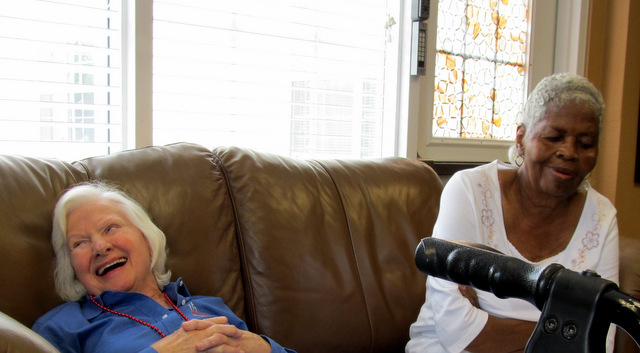
    Pretty, Leora, Camen and me

    This past week Pretty and I had an extraordinary opportunity to make a pilgrimage with the daughter and granddaughter of Willie Meta Flora whose 45-year relationship with my mother was featured in my Mother’s Day post on the photo finish (May 11th). It is now six years since my mother Selma and their mother/grandmother Willie have been gone. We have visited them twice in their Texas home during that time period but keep in touch with them – guess where? – on social media and texting.

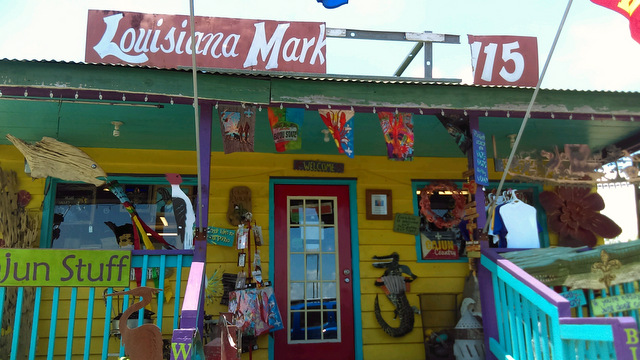
    We had arranged to meet them at our favorite restaurant in Breaux Bridge, Louisiana. Chickin’ on the Bayou’s fried shrimp baskets are to die for, and Pretty always visits the little shop next door.

    We really weren’t planning a stop in New Orleans this trip, but an inadvertent travel tip from one of Pretty’s “connections” sent us right into the middle of Bourbon Street that first afternoon. Carmen and I sampled beignets in a little bakery where we stopped, and I was delighted with the French pastries. Carmen, on the other hand, said she preferred the Texas version. Following this detour, Pretty drove us across the Lake Ponchartrain Causeway at sunset toward our stop for the night in Biloxi, Mississippi. The sunset was breathtaking as the majestic yellow ball disappeared into the water.

    The stop in Biloxi was quite the adventure since only one room with two double beds was available at the motel…not exactly what any of us had pictured, but oh well, we were exhausted and the slumber party ended almost as quickly as it began. Turn out the lights, the party’s over.

    The next day we packed the car and headed toward Alabama.

    new Alabama Welcome Center has amazing sculptures

    The heart of our civil rights tour began in Selma, Alabama that afternoon.

    the Edmund Pettus Bridge where Selma march began

    The highlight of the day for all of us was our visit to the Edmund Pettus Bridge where the first Selma march to Montgomery began on what is now known as Bloody Sunday,  March 7, 1965. The name is attached to that day because of the brutality of the Alabama state troopers and local police in beating the marchers with billy clubs and using tear gas to disperse the crowd. More than fifty out of approximately 600 people assembled were hospitalized after that first attempt to march to Montgomery from Selma.

    Two days later the leaders organized another attempt to cross the bridge and again were forced to retreat. Finally, a third attempt was begun on March 21st., and with the protection of federal troops, the marchers successfully completed the 54-mile walk to the state capitol in Montgomery on March 25, 1965. Let me repeat that: the march was 54 miles from Selma to Montgomery.

    Why subject yourself to the hostility, hatred, brutality and pure misery of walking 54 miles along the Jefferson Davis Highway? Congressman John Lewis, one of those hospitalized on Bloody Sunday, had this to say in his book Across That Bridge:

    During the Civil Rights Movement, our struggle was not about politics. It was about seeing a philosophy made manifest in our society that recognized the inextricable connection we have to each other. These ideals represent what is eternally real and they are still true today, though they have receded from the forefront of American imagination…

    But we must accept one central truth as participants in a democracy: Freedom is not a state, it is an act. It is not some enchanted garden perched high on a distant plateau where we can finally sit down and rest. Freedom is the continuous action we all must take, and each generation must do its part to create an even more fair, more just society. The work of love, peace, and justice will always be necessary, until their realism and their imperative takes hold of our imagination, crowds out any dream of hatred or revenge, and fills up our  existence with their power.”

    memorial honoring Congressman Lewis far left

    our little group reads about Selma March at Edmund Pettus Bridge

    And then we rode in an air-conditioned car the 54 miles to Montgomery, checked into our nicely cooled motel rooms and broke the solemnity of the day with an evening of cards and leftover ribs from Hancock’s Barbecue, the little family-owned place in Selma with ribs as good as those she had in Texas, Leora said with surprise.

    Thank goodness for that night of rest and laughter. The next day in Montgomery was a difficult one.

    Stay tuned.


  • the photo finish


    I wrote the following story in February, 2012; it was first published in my third book, I’ll Call It Like I See It, and was reprinted with my permission in an anthology entitled Mothers and Other Creatures. I think of these two women, both of whom I loved dearly, especially at Mother’s Day but truly every day…

    The Photo Finish

    In 1965 when I was a freshman in college my parents bought their first home ever in Rosenberg, Texas, after almost twenty years of marriage. My dad was the assistant superintendent of the local school district and my mother taught second grade in one of the elementary schools in the district. Since I wasn’t living with them, I’m not sure how the decision was made to hire someone to help with cleaning the bigger new house, but when I was home for spring break, my mom introduced me to Viola, who was hired for that purpose. When I returned to stay the summer with my folks, Viola was gone.

    I never knew what happened to Viola but was so self- absorbed I didn’t really care. Early in the summer Mom informed me we would have a new woman who was coming to work for us and encouraged me to keep the stereo at a lower volume on the lady’s first visit. I was in a Diana Ross and the Supremes phase and preferred the speakers to vibrate as I sang along but I obligingly lowered the level for our potential new household addition.

    I needn’t have bothered. Willie Meta Flora stepped into our house and lives and rocked all of us for more than forty-five years. She became my mother’s truest friend and supported her through the deaths of her mother, brother and two husbands. She nursed my grandmother and my dad and uncle during their respective battles with mental illness, colon cancer and cerebral palsy. She watched over and protected and loved and cared for my family as she did her own, which included five daughters and two sons and an absentee husband. In many ways, we became her second family and she chose to keep us.

    Willie and my mom shared a compulsion for honesty and directness that somehow worked to keep them close through the good times and the hard times in both of their lives. They were stubborn strong women and butted heads occasionally, but most of all, they laughed together. Willie’s sense of humor and quick wit kept Mom on her toes and at the top of her game in their talks. They also shared a deep love for the same man, my dad. In her own way, Willie loved my dad as much as Mom did, and my father loved her and loved being with her right back. His death broke both their hearts.

    Although Willie kept her own apartment, she and Mom basically lived together in the years following the death of Mom’s second husband. Mom planned her days around the time near dusk when Willie would be there to spend the night with her. Willie became her lifeline to maintaining her independence, and the two of them grew older and crankier as time passed. Willie and I talked on the phone frequently, and she began to tell me she was worried about Mom’s safety and getting lost when she drove around town in her old brown Buick LeSabre. I dismissed her fears and ignored the signs of dementia until Mom’s 80th birthday when it became apparent she had major problems in everyday living.

    Not long afterwards, I was forced to make a decision about my mother’s long term care needs and opted to move her to a Memory Care Unit in a facility in Houston which was a thousand miles from my home in South Carolina. Why not move her closer to me? A good question with a complicated answer that included my trying to keep her available to Willie and her family who could drive Willie to see Mom. If my mother could choose between visiting with me or seeing Willie, there was no contest. I would always come in second.

    Mom will be 85 next month and struggles with the ongoing physical and mental battles associated with Alzheimer’s in her ultimate race towards death. This past fall I moved her again to a different residence that is still in Texas but much closer to my second home which is also now in Texas. Alas, she’s two hours farther from Willie, and Willie has only been able to visit her once since her move.

    Willie will be 81 next month. She and Mom have the same birthday month, and now they have the same dementia. We don’t talk on the phone now because she can’t form words I can understand. When I visited her yesterday, she didn’t recognize me and was uncomfortable with getting up out of her bed, just as Mom is sometimes when I go to see her. Willie’s five daughters and three of her granddaughters are coping with the same problems I’ve faced with Mom–trying to keep her comfortable in a safe environment.

    When I consider the strength of these two women and their determination to rise above their inauspicious beginnings in an era when women weren’t valued for their strong wills, I feel a sense of admiration and respect and gratitude for the examples they’ve been for me and for Willie’s daughters, too. We are the children of our mothers and we reflect their strengths and weaknesses in black and white. Theirs was a mysterious bond that we may never fully understand, but the similarity of their physical and mental conditions in these last days is surreal and takes irony to a new dimension. Leora, one of Willie’s daughters, told me recently she thought Mom and Willie just might end their race toward death in a tie. I think it will be a photo finish.

    Willie M. Flora died Saturday April 14, 2012. Selma L. Meadows died Wednesday April 25, 2012.

    It was a photo finish.

    Warmest wishes to all of our friends in cyberspace from Pretty and me for a wonderful weekend. If possible, spend time with your mother. If impossible, cherish your memories.

    Until next time…


  • just shy of perfection to me


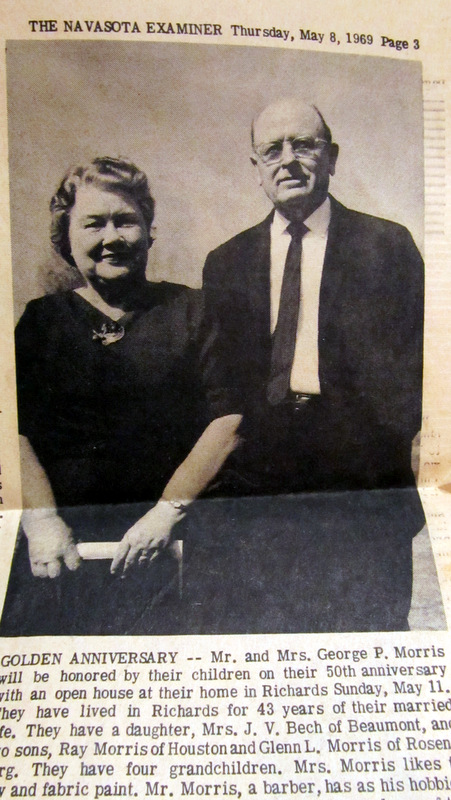
    My paternal grandparents celebrated their 50th. wedding anniversary in May, 1969, which means they were married in 1919 when my grandfather was 21 and my grandmother was just shy of 16…

    newspaper clipping from Navasota Examiner in May, 1969

    (Grimes County, Texas newspaper)

    They shared a 60th anniversary ten years later, but my grandmother died in May, 1983 which put them a year shy of their 65th.

    Today in 2018 they would be a year shy of their 100th. wedding anniversary. Imagine.

    One of the great regrets of my life is that I was living in Seattle, Washington when they celebrated that golden wedding anniversary. I missed a special family celebration to honor two people who loved me unconditionally and exerted such a powerful influence on me in my early years.

    That influence lives on in my memories, my daily life and, hopefully, my character reflects their best qualities. They were a remarkable combination – just shy of perfection to me.

    Stay tuned.