Category: The Way Life Should Be

  • this is how Pretty rolls

    this is how Pretty rolls


    Every three months for many years I have sent a small check from our joint account to the Animal Rescue Mission in Columbia. Pretty understands I have a macro overview of the world’s problems.

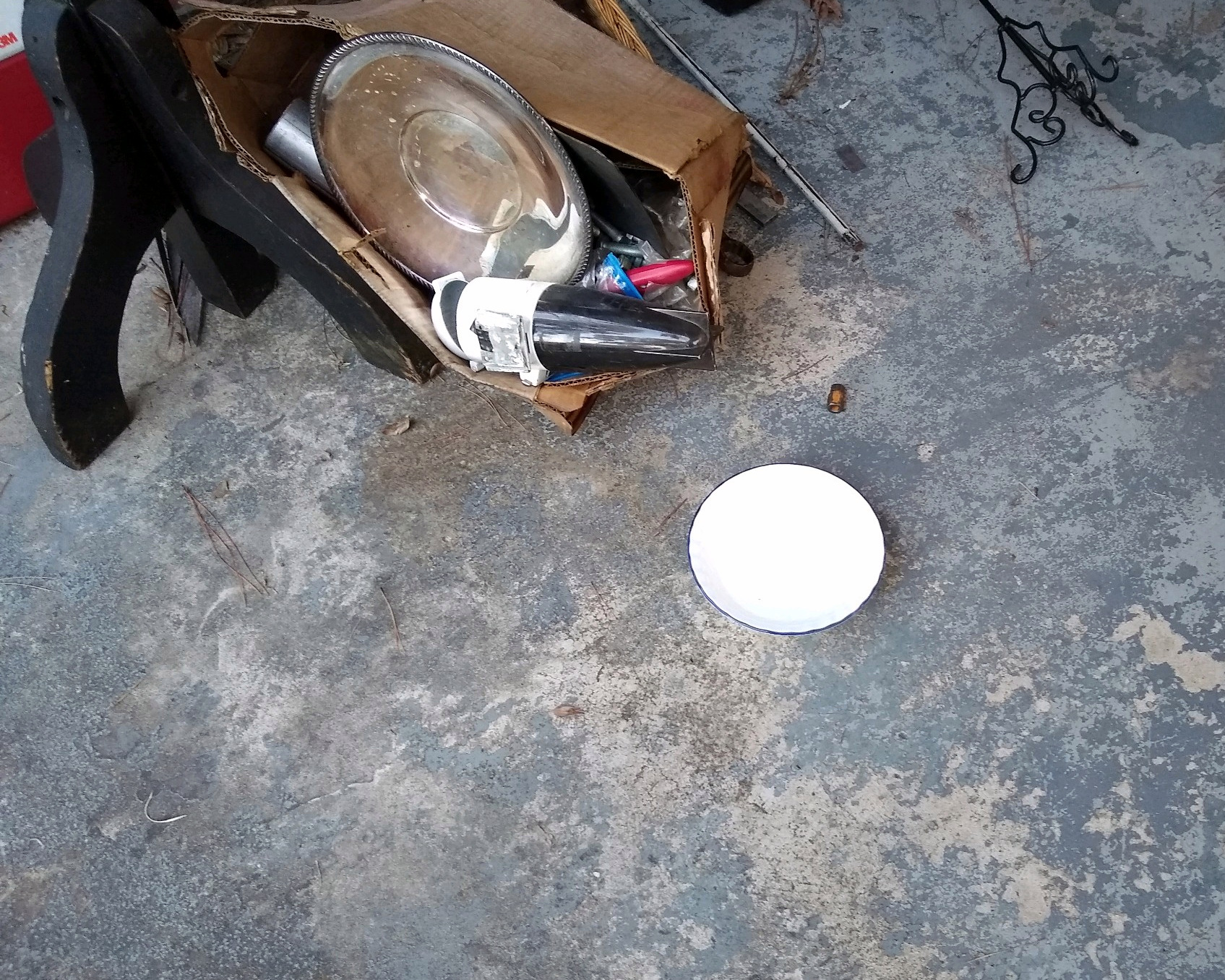
    Pretty, on the other hand, puts this water bowl in the carport for a small cat who sleeps under our truck at night. She handles micro issues to rescue any animal she sees in need.

    P. S. Before you ask, we had a small mysterious fire in our carport this week from spontaneous combustion of South Carolina heat with flammable substance of undetermined origin. Remains and ashes directly above water bowl.

    Stay safe, stay sane, please get vaccinated and please stay tuned.

  • call for the Captain ashore, let me go home

    call for the Captain ashore, let me go home


    In 2017 a study was done to determine what the first thoughts were when people woke up in the morning. According to Brooke Nelson in thehealthy.com, research found that “most Americans think first of money and work when they wake up – 56% of men and 48% of women, respectively.” Since I have very little of either, I am not surprised that my first thoughts almost every morning are lyrics to songs. Different songs every day.

    During today’s 40-minute morning walk I began to sing (in my head) the song I woke up to a half hour before I started walking: the first verse and chorus of The Wreck of the John B as I remembered from The Kingston Trio recording in 1958. When Pretty reads this, she will be stunned that I remembered a verse and chorus of any song but I find I am more apt to remember words to songs in my childhood than any newer ones. Old age reminder. But why this song today?

    So hoist up the John B’s sail
    See how the main sail sets
    Call for the Captain ashore
    Let me go home, let me go home
    I want to go home,
    Well I feel so broke up
    I want to go home
    .

    A Category 4 hurricane named Ida crashing against the Louisiana coast from the Gulf of Mexico, the remains of 13 American soldiers killed this past week in Afghanistan returned to the United States today, an undetermined number of Afghan refugees airlifted out of Kabul since last Sunday, and a pandemic that rises like a Phoenix to threaten every home – these are the current crises swirling in my brain. I believe I hear the voices of those who need a Captain ashore to help them when the homes they once knew are lost in an irreversible wreck.

    The disasters in my life have usually been of my own making through broken relationships, wrong choices, cloudy thinking, faulty judgment. Home for me has been shaped by geography and redefined by time, but regardless of life’s experiences I also needed a Captain ashore that always came in the form of the persons who gave me safe harbors.

    My hope as I go to sleep tonight is the song I woke up with this morning. Hoist up the John B.’s sails, see how the main sail sets, call for the Captain ashore, let me go home – may we all find Captains on new shores to lead us safely home.

    *********************

    Stay safe, stay sane, please get vaccinated and please stay tuned.

  • a time to lose too much

    a time to lose too much


    Yesterday in Kabul thirteen American soldiers were killed along with at least 72 Afghan civilians as a massive airlift continued nonstop to meet the August 31st. deadline for leaving Afghanistan. According to a Reuters News report filed this morning more than 105,000 people were evacuated in the past 12 days while a group known as ISIS-K claimed responsibility for the carnage at the airport. Military leaders and other national security experts say the attacks were not totally unexpected since others had been thwarted in recent days. President Biden expressed his sorrow for the loved ones of all those killed in remarks at a press conference yesterday afternoon but warned again that the rescue mission in Afghanistan continues to be a dangerous one.

    “There is a time for everything, and a season for every activity under heaven: a time to be born and a time to die, a time to plant and a time to uproot, a time to kill and a time to heal, a time to tear down and a time to build, a time to weep and a time to laugh, a time to mourn and a time to dance, a time to scatter stones and a time to gather them, a time to embrace and a time to refrain, a time to search and a time to give up, a time to keep and a time to throw away, a time to tear and a time to mend, a time to be silent and a time to speak, a time to love and a time to hate, a time for war and a time for peace.”— Ecclesiastes 3:1-8Holy Bible,(KJV)

    Yesterday was a time to lose…too much.

  • Tina and Elvis

    Tina and Elvis


    My first major league concert was to see Brenda Lee perform in Houston when I was in the seventh grade in 1959. My daddy and mama took me to see her because I loved her songs and her singing when I was thirteen years old living in a small rural town in Grimes County near the Sam Houston National Forest deep in the Piney Woods of southeast Texas. I was raised on gospel music concerts in singing conventions at Bays Chapel Baptist Church on Sunday afternoons following dinner on the grounds. Good quartet singing with different relatives participating, good piano playing by the greatest gospel piano player of all time Charlie Taliaferro.

    I can’t imagine either one of my parents spending money to buy the tickets – much less driving me nearly 80 miles from Richards to Houston for the Brenda Lee concert unless they had planned a side trip to the Bargain Gusher to look for clothes for work. What I remember most about my first concert experience was the large number of strings hanging from Brenda’s petticoats. We must have had binoculars; she must have been without a wardrobe person that night.

    Through the years my memories of musical concert experiences include Neil Diamond, Elton John, Diana Ross, Dolly and Kenny, Dolly by herself, the Judds (twice), Cher, K.T. Oslin, Bette Midler, Patti LaBelle, Cynthia Clawson (in church – does that count?), Willie Nelson (twice), Nancy Griffith, Alison Kraus, Melissa Etheridge, the Indigo Girls and the infamous Prince concert for my 65th. birthday. Infamous because Prince was one of Pretty’s favorites – we had great tickets, but I listened from the steps of an exit at the Colonial Life Arena – the decibels were intended for younger ears than mine.

    What I think about today, however, are the two performers I had the opportunity to see but passed on for whatever lame reason I had at the time: Elvis and Tina Turner. For the life of me I find these two blanks on my concert cards the most troubling since Elvis’s Golden Records released in 1958 was the first lp album I ever owned. My maternal grandmother’s sister, my Aunt Dessie from Houston, gave the album to me because she knew I had a portable turn table in a small square blue box that would play it. She was right – I played that album over and over again. Thank goodness the turn table was sturdy.

    Elvis was the young man with sideburns who promised to spend his whole life through loving you which I interpreted as loving me, but he was then drafted into the Army during the Korean War. I couldn’t believe the government was that cruel when Elvis sang they shouldn’t be. Yes, Elvis, the man whose musical career I followed throughout his life from sex symbol to husky size. He made sixteen personal appearances in Houston between 1954 and 1976, but I saw Brenda Lee.

    Elvis also sang one concert at the Carolina Coliseum here in Columbia on February 18, 1977…six months before he died. I remember thinking I ought to go since I lived within 15 minutes of the coliseum – but opted to wait for a later time that was not to be. As for Tina Turner – what was happening in my life that would prevent my attending her concerts at that same Carolina Coliseum in 1985 or 1987 or 1993? Pretty told me she saw Tina with her sister Darlene at the 1985 concert – in her BS (before Sheila) years. That’s Pretty for you – naturally she wouldn’t want to miss Tina’s hits like What’s Love Got to Do With It?, Private Dancer, Nutbush City Limits, We Don’t Need Another Hero, and my all-time favorite of favorites Proud Mary. Clearly I missed the Tina personal appearance boat, but wait. All was not lost.

    Thanks to the 21st. century miracles of You Tube videos I’ve had the best seat in the house at Tina Turner’s concerts in Barcelona, London, Amsterdam, Rio – I’ve joined tens of thousands of fans at some of the largest venues in the world. I’ve drooled as I watched Tina perform Proud Mary with Beyonce at the Grammy Awards – and shed a tear during a special performance of Simply the Best on the intimate set of the Oprah Winfrey Show for Oprah’s 50th. birthday celebration where she and Tina embraced after they danced together. Oh yeah, I’ve seen Tina in concerts, in interviews, in a documentary of her life – the good news is I can watch her whenever I want to, as often as I like and not have to worry about the person in front of me being too tall.

    Pretty indulges my Tina time with a smile of understanding, even encouragement. She still owes me for Prince.

    As for the old Elvis You Tube experience, count Pretty out.

    ****************

    This post was originally published in August of last year – what prompted the reblog? Oh gosh, coincidentally going to see the recently released Elvis movie in the same week I randomly scrolled You Tube and landed on the Amsterdam Tina concert. What are the odds?

  • The Ides of August – Excerpts from an Essay by Sarah Chayes

    The Ides of August – Excerpts from an Essay by Sarah Chayes


    I know far less about the US departure from Afghanistan than many people do; but I am curious, interested in learning. Last week I posted a column on Afghanistan written by Molly Ivins in October, 2001 as America began what would become our 20 years war that is either winding down or ramping up again in recent days according to your perspective. Today I offer an essay by Sarah Chayes that was written one week ago and revised as events unfold. Fresh, up to the hour perspective from an American writer who is an adoptive Kandahari and a former senior official to the U.S. government. The following are excerpts from her essay The Ides of August. I encourage anyone seeking an informed perspective of the current actions in Afghanistan to take the time to read her entire text at sarahchayes.org/post/the-ides-of-august.

    “I’ve been silent for a while. I’ve been silent about Afghanistan for longer. But too many things are going unsaid.

    I won’t try to evoke the emotions, somehow both swirling and yet leaden: the grief, the anger, the sense of futility. Instead, as so often before, I will use my mind to shield my heart. And in the process, perhaps help you make some sense of what has happened.

    For those of you who don’t know me, here is my background — the perspective from which I write tonight.

    I covered the fall of the Taliban for NPR, making my way into their former capital, Kandahar, in December 2001, a few days after the collapse of their regime. Descending the last great hill into the desert city, I saw a dusty ghost town. Pickup trucks with rocket-launchers strapped to the struts patrolled the streets. People pulled on my militia friends’ sleeves, telling them where to find a Taliban weapons cache, or a last hold-out. But most remained indoors.

    It was Ramadan. A few days later, at the holiday ending the month-long fast, the pent-up joy erupted. Kites took to the air. Horsemen on gorgeous, caparisoned chargers tore across a dusty common in sprint after sprint, with a festive audience cheering them on. This was Kandahar, the Taliban heartland. There was no panicked rush for the airport.

    I reported for a month or so, then passed off to Steve Inskeep, now Morning Edition host. Within another couple of months, I was back, not as a reporter this time, but to try actually to do something. I stayed for a decade. I ran two non-profits in Kandahar, living in an ordinary house and speaking Pashtu, and eventually went to work for two commanders of the international troops, and then the chairman of the Joint Chiefs of Staff. (You can read about that time, and its lessons, in my first two books, The Punishment of Virtue and Thieves of State.)

    From that standpoint — speaking as an American, as an adoptive Kandahari, and as a former senior U.S. government official — here are the key factors I see in today’s climax of a two-decade long fiasco:

    Afghan government corruption, and the U.S. role enabling and reinforcing it. The last speaker of the Afghan parliament, Rahman Rahmani, I recently learned, is a multimillionaire, thanks to monopoly contracts to provide fuel and security to U.S. forces at their main base, Bagram. Is this the type of government people are likely to risk their lives to defend?

    **********

    Americans like to think of ourselves as having valiantly tried to bring democracy to Afghanistan. Afghans, so the narrative goes, just weren’t ready for it, or didn’t care enough about democracy to bother defending it. Or we’ll repeat the cliche that Afghans have always rejected foreign intervention; we’re just the latest in a long line.

    I was there. Afghans did not reject us. They looked to us as exemplars of democracy and the rule of law. They thought that’s what we stood for.

    And what did we stand for? What flourished on our watch? Cronyism, rampant corruption, a Ponzi scheme disguised as a banking system, designed by U.S. finance specialists during the very years that other U.S. finance specialists were incubating the crash of 2008. A government system where billionaires get to write the rules.

    Is that American democracy?

    *******************

    Pakistan. The involvement of that country’s government — in particular its top military brass — in its neighbor’s affairs is the second factor that would determine the fate of the U.S. mission.

    You may have heard that the Taliban first emerged in the early 1990s, in Kandahar. That is incorrect. I conducted dozens of conversations and interviews over the course of years, both with actors in the drama and ordinary people who watched events unfold in Kandahar and in Quetta, Pakistan. All of them said the Taliban first emerged in Pakistan.

    The Taliban were a strategic project of the Pakistani military intelligence agency, the ISI. It even conducted market surveys in the villages around Kandahar, to test the label and the messaging. “Taliban” worked well. The image evoked was of the young students who apprenticed themselves to village religious leaders. They were known as sober, studious, and gentle. These Taliban, according to the ISI messaging, had no interest in government. They just wanted to get the militiamen who infested the city to stop extorting people at every turn in the road.

    Both label and message were lies.

    Within a few years, Usama bin Laden found his home with the Taliban, in their de facto capital, Kandahar, hardly an hour’s drive from Quetta. Then he organized the 9/11 attacks. Then he fled to Pakistan, where we finally found him, living in a safe house in Abbottabad, practically on the grounds of the Pakistani military academy. Even knowing what I knew, I was shocked. I never expected the ISI to be that brazen.

    **********************

    Hamid Karzai. During my conversations in the early 2000s about the Pakistani government’s role in the Taliban’s initial rise, I learned this breathtaking fact: Hamid Karzai, the U.S. choice to pilot Afghanistan after we ousted their regime, was in fact the go-between who negotiated those very Taliban’s initial entry into Afghanistan in 1994.

    I spent months probing the stories. I spoke to servants in the Karzai household. I spoke to a former Mujahideen commander, Mullah Naqib, who admitted to being persuaded by the label and the message Karzai was peddling. The old commander also admitted he was at his wits’ end at the misbehavior of his own men. I spoke with his chief lieutenant, who disagreed with his tribal elder and commander, and took his own men off to neighboring Helmand Province to keep fighting. I heard that Karzai’s own father broke with him over his support for this ISI project. Members of Karzai’s household and Quetta neighbors told me about Karzai’s frequent meetings with armed Taliban at his house there, in the months leading up to their seizure of power.

    And lo. Karzai abruptly emerges from this vortex, at the head of a “coordinating committee” that will negotiate the Taliban’s return to power? Again?

    ***************

    Self-Delusion. How many times did you read stories about the Afghan security forces’ steady progress? How often, over the past two decades, did you hear some U.S. official proclaim that the Taliban’s eye-catching attacks in urban settings were signs of their “desperation” and their “inability to control territory?” How many heart-warming accounts did you hear about all the good we were doing, especially for women and girls?

    Who were we deluding? Ourselves?

    What else are we deluding ourselves about?

    One final point. I hold U.S. civilian leadership, across four administrations, largely responsible for today’s outcome. Military commanders certainly participated in the self-delusion. I can and did find fault with generals I worked for or observed. But the U.S. military is subject to civilian control. And the two primary problems identified above — corruption and Pakistan — are civilian issues. They are not problems men and women in uniform can solve. But faced with calls to do so, no top civilian decision-maker was willing to take either of these problems on. The political risk, for them, was too high.

    Today, as many of those officials enjoy their retirement, who is suffering the cost?”

    ******************

    Stay safe, stay sane, please get vaccinated and please stay tuned.