Category: The Way Life Was

  • Fanny J. Crosby – American poet, lyricist, abolitionist, mission worker (1820- 1915): Saved by Grace

    Fanny J. Crosby – American poet, lyricist, abolitionist, mission worker (1820- 1915): Saved by Grace


    Some day the silver cord will break,
    And I no more as now shall sing;
    But oh, the joy when I shall wake
    Within the palace of the King!

    (Refrain) And I shall see Him face to face,
    And tell the story—-Saved by grace;
    And I shall see Him face to face,
    And tell the story—-Saved by grace.

    The lyricist who wrote these words to what became one of the most recognized sacred songs ever, Fanny J. Crosby, was a leading writer of gospel hymn texts from the mid-19th. century through the early 20th. century. In addition to the thousands of  hymns that she has written (about eight thousand poems in all), many of which have not been set to music, she has published four volumes of verses. (Hymnology Archive) Saved by Grace was never intended to be published as a song by Crosby.

    Fanny Crosby’s Life Story, by Herself (1903)

    “It eventually came to public notice by accident. It was during a conference that Fanny attended at Northfield, Massachusetts. During the meeting, the great evangelist, Dwight Moody, asked if Fanny would give a personal testimony to the audience. Not wanting to draw attention to herself, she almost declined, but finally got up to speak. Mrs. Crosby shared, ‘There is one hymn I have written which has never been published. I call it my soul’s poem. Sometimes when I am troubled, I repeat it to myself, for it brings comfort to my heart.’ She then closed her remarks by reciting the words which had never been heard before in public, ‘Saved By Grace’.” (Hymn History: Saved by Grace, May 18, 2022; Micah Hendry)

    Did I mention Fanny Crosby was blind from birth? I thought not, but many times throughout her life she said her lack of sight brought her joy and contributed to her ability to write poems, lyrics, two autobiographies. “If perfect earthly sight were offered me tomorrow I would not accept it. I might not have sung hymns to the praise of God if I had been distracted by the beautiful and interesting things about me.” (Wikipedia)

    When I selected songs from The Baptist Hymnal for worship services in the two churches I served when I came to South Carolina in the early 1970s, many of the songs I chose were written by Fanny J. Crosby. I remember wondering about this woman whose words I sang every Sunday, but those were the times pre-Google and endless rabbit holes. Curiosity didn’t kill this cat who was too lazy to follow up with my own research.

    My sacred music memories have dimmed in the fifty years since I served as a minister of music in those two Southern Baptist congregations. Church music was my silver cord that connected me to that spark of divinity within myself, but that cord was shattered by the mendacity of church leaders whose voices drowned out our shared humanity.

    Today I salute a woman whose words offered hope for a better hereafter while encouraging help for the here and now through her rescue mission actions, a woman whose life reflected overcoming overwhelming obstacles from the time she was born until her death at age 94.

    And I shall see Him face to face,
    And tell the story—-Saved by grace.

    ****************************

    Fun fact from a rabbit hole: Bing Crosby was one of her relatives that shared her musical talents. Who knew?

  • yesterday when I was young – yeah, but now that I’m old, what’s next?

    yesterday when I was young – yeah, but now that I’m old, what’s next?


    Yesterday, when I was young the taste of life was sweet like rain upon my tongue. I teased at life as if it were a foolish game the way an evening breeze would tease a candle flame. The thousand dreams I dreamed, the splendid things I planned, I always built to last on weak and shifting sand. I lived by night and shunned the naked light of day and only now I see how the years have run away. Yesterday, when I was young there were so many songs that waited to be sung. So many wild pleasures that lay in store for me and so much pain my dazzled eyes refused to see. I ran so fast that time and youth at last ran out. I never stopped to think what life was all about and every conversation that I can recall concerns itself with me and nothing else at all. Yesterday the moon was blue, and every crazy day brought something new to do. And I used my magic age as if it were a wand, I never saw the waste and emptiness beyond. The game of love I played with arrogance and pride, and every flame I lit, so quickly, quickly died The friends I made all seemed somehow to drift away, and only I am left on stage to end the play.Yesterday, when I was young there were so many songs that waited to be sung. So many wild pleasures that lay in store for me, and so much pain my dazzled eyes refused to see. There are so many songs in me that won’t be sung ’cause I feel the bitter taste of tears upon my tongue. And the time has come for me to pay for yesterday when I was young

    (Source: Musixmatch Songwriters: Herbert Kretzmer / Charles Aznavour)

    Unlike the lyrics in this song, I do stop to think what life was all about, a personal luxury as the general life expectancy age for women in the United States is 79 years which will be my age in five weeks. I can identify with these reflections, with their universal themes of how the years run away, the wild pleasures mixed in with the dazzling pain, teasing at life, dreams that won’t ever be realized – all compressed into memory makers. Every day I am reminded that my age is a gift, unmerited favor, grace that should be celebrated.

    The closer I get to a birthday, the more I care about life expectancy and the extra rabbit holes I go down with my Googling. There are more rabbit holes in a Google search than there are Jackrabbits in West Texas. The good news is if I can last just five more weeks until my 79th. birthday on April 21st., my average life expectancy is 9.5 years or I will live until I am 88.5 years old. Sigh. Apparently I need to be extra careful, though. Try not to fall, avoid fatty foods, tell Pretty how much I love her every night, and mostly be a kinder person to my family and friends.

    Fun fact in one rabbit hole: short people outlive tall ones. Good grief. Finally, a benefit of my body type.

  • International Women’s Day March 8th. – Celebrate, Motivate!

    International Women’s Day March 8th. – Celebrate, Motivate!


    — California Teachers Association

    “For ALL Women and Girls: Rights. Equality. Empowerment.”

    This year’s theme calls for action that can unlock equal rights, power and opportunities for all and a feminist future where no one is left behind.

    —United Nations

    ***********************

    Like many twenty-eight-year-olds I wasn’t interested in finding a personal physician because I hadn’t been really sick after surviving the usual childhood illnesses during the 1950s and 60s. Unlike most young adults in the 1970s, I lived in a city that was a thousand miles from my roots and I needed to see a doctor. A friend at my new job recommended Dr. J. Frank Martin, Sr.; I liked him immediately, but I loved his wife who was the center of warmth for their family practice which has been my medical home for fifty years. Dr. J. Frank Martin, Jr. continued the tradition of his parents following his father’s retirement.

    This past week Sarah Kay Cox Martin died in her home in Hopkins, South Carolina, at the age of 93. I will always remember her kindness, her smile, her sensitivity to a young woman from Texas who found a family practice where family was more than a word. So many memories…

    Rest in peace, Mrs. Martin.

  • three years of the war in Ukraine and our long term memory loss

    three years of the war in Ukraine and our long term memory loss


    Three years ago today, February 24, 2022, Russia without provocation invaded Ukraine. I know it – you know it. On March 16, 2022, Ukrainian President Volodymyr Zelenskyy addressed a joint session of the United States Congress to ask for America’s help, and I published this piece on that day.

    In listening to an emotional virtual appeal by Ukraine’s President Zelenskyy to the Congress of the United States this morning, I felt the despair of this leader who had watched his beautiful country together with many numbers of its men, women and children obliterated by an evil neighbor for reasons known only to that neighboring country’s president and his supporters.

    If President Zelenskyy could sing, and I don’t know whether he can, he could have closed with some of the words and music of “I Look to You,” singing along with the American gospel group Selah from their album Hope of the Broken World:

    “As I lay me down, heaven hear me now. Winter storms have come and darkened my sun. After all that I’ve been through, who on earth can I turn to? I look to you, I look to you. After all my strength is gone, in you I can be strong. I look to you.
    And when melodies are gone, in you I hear a song. I look to you.

    I don’t know if I’m gonna make it. Nothing to do but lift my head. My levees are broken, my walls have come crumbling down on me. The rain is falling, defeat is calling, I need you to set me free. Take me far away from the battle – I need you to shine on me.”

    The people of Ukraine are looking to us and our Allies around the globe for help to stop not only the physical crumbling walls but also the assault on our vision of freedom and our democratic way of life. Make no mistake, as President Zelenskyy has consistently reminded us, the destruction of Ukraine is but the beginning of a world war against securing the blessings of individual liberty for all people and for their posterity.

    I have a dream, Zelenskyy said to the Congress today, but I also have a need to reclaim the skies over Ukraine, to stop the senseless bombing of my citizens and our homes. The Ukrainian President is looking to us.

    Yes. We see you, we hear you, we feel your pain. We will respond with gratitude for your fight against a common enemy to serve a greater good.

    Photo by Katie Godowski on Pexels.com

    **************************

    We Americans suffer from long term memory loss – the lessons we painfully absorbed about world wars, global conflicts, political corruption, identifying our enemies, supporting our friends – all 20th. century instructional tools we have conveniently forgotten in this 21st. century have now come home to roost in a new administration that seeks to say No to the needs of our Allies and Yes to the demands of our enemies. Shame on our leaders, shame on us for electing them.

    Photo by Eugenia Sol on Pexels.com

    Slava Ukraini. For the children.

  • T-Gate or Tea Party – what’s next?

    T-Gate or Tea Party – what’s next?


    “It’s well-documented that transgender people, especially transgender women of color, were leaders at Stonewall and in the movement for LGBTQ+ equality. Removing the T from a government website certainly doesn’t change that.

    I’m in my 40s, and the Stonewall Inn was designated as a National Monument less than a decade ago. For most of my life as a transgender man, the government has not marked our history or celebrated our achievements. LGBTQ+ people were fighting for justice long before Stonewall, and we’ll keep fighting long after.

    The government does not determine our value or worth. LGBTQ+ people know who we are, and no presidential administration can take that away.” – Jace Woodrum, Executive Director of ACLU of South Carolina

    On Thursday, February 13th., the National Parks Administration removed all references to transgender persons from the Stonewall Inn National Monument website in response to an executive order signed by President Trump on his first day in office, an EO designed to be anti-transgender across the entire federal government in its scope. ABC News reported the following saga of what I have dubbed “T-Gate.”

    What used to be listed as LGBTQ+, has been changed to LGB.

    “Before the 1960s, almost everything about living openly as a lesbian, gay, bisexual (LGB) person was illegal. The Stonewall Uprising on June 28, 1969, is a milestone in the quest for LGB civil rights and provided momentum for a movement,” the website now says.

    The Stonewall Inn in New York City’s Greenwich Village became a national monument in 2016 under former President Barack Obama, creating the country’s first national park site dedicated to LGBTQ+ history.

    ***********************

    Full disclosure I had lived in Seattle, Washington, for a year in that summer of 1969. I was twenty-three years old, single with no prospects, no lesbian dating sites, singing in a Southern Baptist church choir with typical homophobic rhetoric coming from the pulpit. But I still loved the music and made a major life decision to return the 3,000 miles to my native Texas to enroll in the Southwestern Baptist Theological Seminary in Fort Worth in the fall of 1969. God does work in mysterious ways, I am here to testify. My first long term lesbian relationship began in the seminary with another woman who shared more than our love of music. Twenty years later I learned about the uprising at the Stonewall Inn and understood my debt to the brave transgender women who risked their lives to spark a movement for equality.

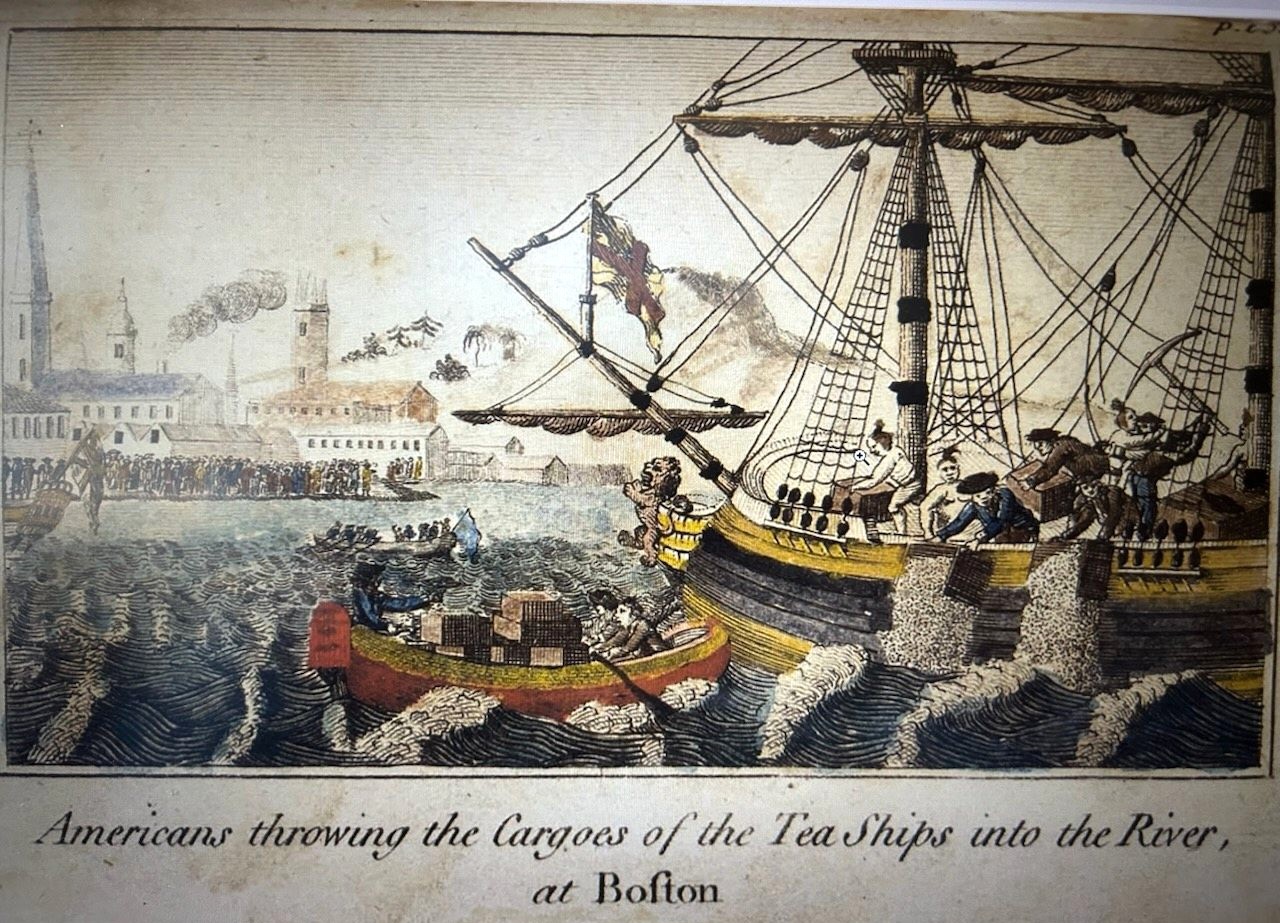
    What if, I wonder, the new president decides to ban all historical sites that refer in any way to a “T.” Hmm. For example, think about the Old South Meeting House in Boston, Massachusetts, the site of the Tea Party in 1773 which sparked the first revolution against oppression in America. Colonists disguised as Indigenous Americans boarded three ships in the harbor and dumped 342 chests of tea into the river. Should we take the “Tea Party” off the historical sites since the colonists were really a rowdy group of immigrants who thought they shouldn’t be ruled by a King?

    National Archives