storytelling for truth lovers

  • Happy Birthday, Finn!

    Happy Birthday, Finn!


     Sunday November 29th. is the tenth birthday of our good friend Finn who visits us frequently in the summers because he loves chess games on the porch, Texas hold ’em high stakes games, trivia with Alexa, racing cars on my iPad while we watch tennis on TV, our barking dogs, me, his Auntie T (also known here as Pretty) and our swimming pool. Probably in reverse order.


    chess requires deep concentration

    Pretty and I have known Finn since the day he was born – his parents Dave and Saskia were close friends for several years before his birth. In Pretty’s previous life as a realtor she helped them find their home when they moved to Columbia to teach at the University of South Carolina. 

    (more…)

  • the essence of giving thanks


    “The oak trees were alive with color in the midst of the evergreens. Bright red and yellow leaves catching the sunlight as Daddy and I walked through the brush on this Thanksgiving morning. The smell of the pines was fresh and all around us. We didn’t speak, but this was when I felt most connected to my father. Nature was a bond that united us, the gift that he gave me, and not just in those East Texas woods. He envisioned the whole earth as my territory and set me on a path to discovery. In 1956, this was remarkable for a girl’s father…

    I loved our farm place that sat on the Grimes/Montgomery County line. It was 105 acres of rolling pasture and dense timber land three miles out from the small town where we lived. The land was at the edge of the Sam Houston National Forest which marked the beginning of the East Texas piney woods. We had a medium sized pond in those woods – we called it a tank – that was the main source of water for our few Hereford cattle we raised there…

    To this day, Thanksgiving remains my favorite holiday. It seems less commercial than the others and struggles to hold its own before the onslaught of merchandising that we call Christmas. The dinners in the fancy restaurants and hotels and cafeterias never measure up to the feasts my grandmothers served their families.

    Perhaps, though, it is the love and closeness of those family ties that leave the sights and sounds that last a lifetime.”


    This excerpt from the chapter Thanksgiving in the Piney Woods is from my first book Deep in the Heart: A Memoir of Love and Longing. Those of you who follow me will recognize this as the traditional introduction to my annual holiday piece.

     Morris family on my grandparents’ front steps 

    (I am seated on the bottom row in my flannel shirt and corduroy pants, unsmiling, at my mother’s request for some strange reason. My dad is the man with the suit and tie on the right. The date is circa 1956.)

    One by one my family dwindled, as all families do, so that only four of the five children in this picture remain. I won’t see any of my first cousins during the holiday season on either side of my family this year nor will I see my sisters Leora, Carmen and Lorna –  they are all scattered around Texas while my home is with Pretty in South Carolina.

    We will have a strange Thanksgiving due to the Covid pandemic that has returned to our nation with a second wave more vicious than the first devastating attack. More than 250,000 Americans have died in 2020 – unimaginable, and the numbers increase daily as empty chairs at the holiday dinner tables remind families of lives and love lost.

    Americans face another insidious attack from a president who refuses to allow the peaceful transition of power following an election he lost by nearly six million votes. Stoking flames of division and mistrust, this would-be king and his subjects flail away at the basic fabric of our democracy while the coronavirus destroys our fellow citizens. Nero fiddles while Rome burns.

    We are advised by our medical experts to avoid all travel, be wary of sharing the air with anyone other than immediate folks we live with, only very small gatherings. If we sacrifice now, we should be here for next year’s Thanksgiving, the medicine men tell us.  Wear masks, wash hands, keep safe distances, no hugging or other touching. Why is this difficult? Because those are not the norm for us.

    This Thanksgiving is an unusual one for sure. but I still believe in the love and closeness of family ties no geographical nor physical distance can sever, family bonds that usher in the sights and sounds which last a lifetime. I am thankful for those memories of my Texas family but oh, how grateful I am for the family Pretty and I have shared for the past twenty years.

    Pretty Too, Pretty Also and Baby Ella

    Number One Son, Pretty and Baby Ella

    Pretty and our granddaughter Ella James

    (birthday number one for our girl)

    Pretty and I wish all our friends in cyberspace that love and closeness on this special day for giving thanks – plus in this year we add our wishes for your  safety and sanity in these extraordinary times. We are thankful for you.

    Stay tuned.

  • beware the ides of ancestry


    His appearance wasn’t what attracted the seventeen-year old girl to the older itinerant preacher in his mid-twenties, but the powerful sermons he delivered in the Methodist church she attended in her home town of Greensboro, Georgia made him seem like one of the Old Testament prophets she had studied in Sunday School. Harriet Howard thought Jesse Boring was anything but what his last name suggested. Since her father had recently “gotten religion” the young man was a frequent guest in their home whenever he came to their church to deliver the gospel.

    Harriet Eveline (or possibly Emmaline) Howard was born October 02, 1816 in Greensboro, Georgia, a small town incorporated in 1787 – a town located halfway between Atlanta 70 miles west and Augusta 70 miles east.

    Harriet’s father Nicholas Howard spent most of his career as an unsuccessful businessman, local politician and, after a religious conversion in later life to the beliefs of the Methodist Episcopal Church, became the manager of the residence hall at the Collingsworth Institute for teenage boys in Columbus, Georgia before his death in 1849.

    Harriet’s mother Judith Campbell was also from Georgia and married Nicholas in August of 1812. They had 11 children in 20 years – Harriet was the eldest of the six girls – Judith died near the end of the Civil War in 1865 at 72 years of age leaving Harriet as the only one of her children to survive her.

    The Reverend Jesse wasn’t an unattractive man in Harriet’s eyes, but the stories he told of his travels of riding horseback throughout the Georgia Conference that spanned several hundred miles were spellbinding to the teenage girl who had never left Greene County. He began as a Circuit Rider on the Chattahoochee Circuit when he was 18 years old; his tales of riding through the mountains in uncharted territory made her feel he was the bravest, most exciting man she knew.

    Romance caught fire between the two of them, and with the blessings of both families they were married in 1833 when she was 17 and he was 26. Whither thou goest, I will go, Harriet vowed to Jesse. It was a promise she kept for 47 years in their marriage that produced ten children.

    In 1834 Jesse and Harriet lived in Augusta, Georgia;  from 1835 – 1837 in Columbus, Georgia where he preached revival meetings and was promoted to supervisor of the LaGrange Methodist Church conference. In 1841 Jesse was transferred to the Alabama conference where he served for six years in Mobile districts and on the Tuskegee Circuit. During the Alabama years four of the couple’s ten children were born in Mobile including a son named John Keener Boring who was born in 1843.

    Jesse and Harriet returned to Columbus, Georgia in 1847 for two more years until Bishop Robert Paine chose Jesse to establish Southern Methodist churches in California. The family sailed March 1, 1850 from New Orleans to Panama, crossed 37 miles by land on mules through dense forests from Panama to the Pacific Ocean, caught another sailing ship to San Francisco – arriving in the summer of 1850. During the trip Harriet was pregnant with their fourth child, a son named Isaac who was born in San Francisco.

    From 1850 – 1855 Reverend Jesse Boring established churches in San Jose, Stockton and San Francisco; organized the Pacific Conference, and edited the Methodist Church publication known as the Christian Observer. Harriet had another child in 1853 in San Francisco, a daughter named Jesse after her father.

    In 1854 the  family left California to make the long arduous trip across land and sea again to return to the Georgia conference so that Jesse could pursue his new dream of studying medicine at the Atlanta Medical College where he later became the first president of the school.

    In 1858, after finishing Medical College, Dr. Jesse Boring transferred his family to San Antonio, Texas where he presided at the first session of the Old Rio Grande Methodist Conference held in Goliad in November, 1859. He and Harriet packed all their furniture, clothing, household possessions and seven children to travel from Atlanta to Mobile where they boarded a sailing ship that carried them to  Galveston, Texas.

    In the fall of 1858 the family reached Galveston, sailed by Buffalo Bayou to Houston where they disembarked and then moved westward in an old four horse stagecoach. Part of the time Jesse and his older children walked and carried a fence rail on their shoulders to pry the wagon wheels out of the mud. When they reached Eagle Lake near the Colorado River, the wagon couldn’t go any farther. They rode the horses from Eagle Lake to San Antonio.

    Dr. Boring built a home for his family in San Antonio, but it was not paid for. He lost it during the Civil War in which he served the Confederate Army as a medical doctor and preacher from 1860 – 1864. Harriet and the children saw a sheriff auction the home and all of their furnishings. After the war, Jesse also bought a home for his family in Galveston where he preached and practiced medicine. However, it was lost in a defective title deed. Another home in Galveston was destroyed by a hurricane in 1866.

    In 1868 Dr. Boring was very much a broken man in spirit and in health so he and Harriet returned home to Georgia where he served the Atlanta District of the Methodist Church for a number of years as their presiding elder. During his tenure Dr. Boring regained his fervor and was instrumental in founding a home for Confederate orphans. The Methodist Children’s Home in Decatur, Georgia was the result of his persistence in securing funding for its opening in December of 1869.

    (Their son, twenty-five-year-old John Keener Boring, remained in Texas to farm and raise his own family. John married Emma Fennell after the Civil War – their farm was 20 miles east of Luling near Nashes Creek. Emma came from a very wealthy family, but she married a very poor man who gave her seven children, bought the family a large farm and then subsequently lost it due to a problem with the deed. My grandfather, James Marion Boring, was one of their seven children.)

    Two years ago through random hints on Ancestry I discovered my 2X great-grandmother, Harriet Eveline Howard Boring, was buried in Magnolia Cemetery in Augusta, Georgia which was 71 miles west of our home in South Carolina. At the time of this remarkable discovery I was in the process of having two knees replaced. A trip to Georgia was impossible, but I saved the information for a later day.

    Three weeks ago the later day arrived, and Pretty drove me to look for the resting place of my 2X great-grandmother. I was so excited! Pretty loves a cemetery adventure as much as I do, but she cautioned on the drive over there that if I said 2X great-grandmother one more time she couldn’t be responsible for her actions. I had gotten on her last nerve.

    Magnolia Cemetery in Augusta, Georgia (since 1818)

    Large number of lovely Greek markers

    Pretty walks in plot owned by Dr. Jesse Boring

    Ten headstones of women marked boundary

    According to the cemetery records this large plot belonged to Dr. Jesse Boring, but the area has a name painted in black letters “Women’s Home” on the lower cement boundary which seems to make sense with only ten women’s headstones in a single line indicating the top boundary. Since Dr. Boring was involved in the Methodist Children’s Home in Decatur, it’s no stretch to think that he gave this plot to a Women’s Home in Augusta to honor the memory of his wife Harriet who died in their Augusta home on January 20, 1879.

    Sadly for me, there is no mention of Harriet in the cemetery plot. Pretty tried to comfort me with her guesses of what happened to the headstone or other marker in the 141 years since my 2X great-grandmother’s death. My favorite idea of hers was that a tree fell on the marker, knocked it down and time gradually covered her resting place with the beautiful grass and autumn leaves that we did find. I liked it.

    Jesse Boring, who married again following Harriet’s death, died in 1890 and is now buried on the grounds of the Methodist Children’s Home in Decatur. His epitaph reads in part “He who turns a child to God changes the course of history.”

    I found these stories in a family history compiled by my mother’s first cousin Hugh Boring and his wife Esther in 1991. My mother had little interest in her family’s history so I’m sure she gave the book to me as soon as Hugh sent it to her. I resurrected it from my extensive collections of materials I’ve saved through the years in my genealogy research on both sides of my family. I embellished the stories for sure because I could. I felt compelled to share them here because I am a storyteller from Texas and these are my people.

    Unfortunately, I found out slavery was intertwined in many of  our family’s lives and Dr. Jesse Boring was an ardent secessionist in the Civil War days. I did wonder about Harriet’s thoughts on the issue, although I assume she followed Jesse’s beliefs as surely as she followed him around the country.

    I close with an actual obituary dated January 22, 1879 in Atlanta, Georgia.

    Death of Mrs. Boring.

    Yesterday’s Chronicle-Constitutionalist.

    Mrs. Boring, wife of Rev. Jesse Boring, the pastor of St. John’s Methodist Episcopal church, died last evening at the parsonage, age sixty-three years. Forty-five years ago Mrs. Boring commenced her married life in this parsonage, and after nearly half a century of wandering with her husband in his ministry as an itinerant Methodist preacher, she came back, as the result showed, to die. Mrs. Boring was an estimable woman. Carrying out the words of Ruth—“Where thou goest, I shall go”— she was by her husband’s side wherever he was sent. She undertook with him the long and dangerous journey to California soon after the acquisition of that section by the United States when he went out and established the first Methodist church on the Pacific frontier, crossing the isthmus on mule back and undergoing cheerfully all the privations of the journey. Her life was an eventful and beautiful one, and her husband, children and friends remember her with reverence and enduring affection.

    I think I would have liked my 2X great-grandmother Harriet whose full name was never identified in her obituary. I remember her today with reverence and enduring affection. Her story is a welcome diversion from the emotional toll of a raging pandemic and a raging political roller coaster.

    Onward.

    *************************

    Stay safe, stay sane and please stay tuned.

  • I’ll drink to them


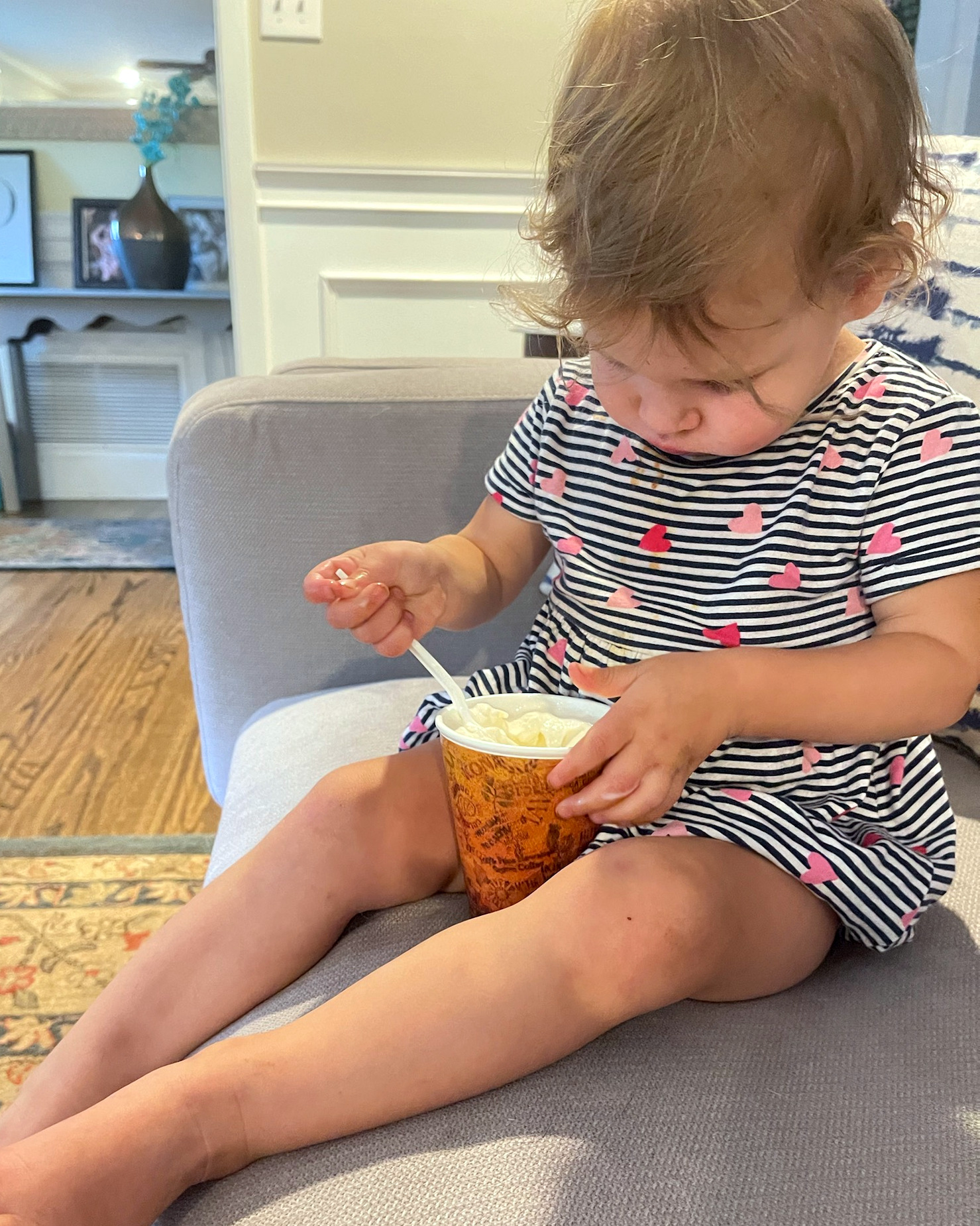
    Our granddaughter Ella James toasts 

    President-Elect Joe Biden

    and Vice President-Elect Kamala Harris today

    while Pretty scrolls Twitter for election updates

    (and Alexa shuffles music by The Chicks)

    *******************************

    Stay safe, stay sane, and please stay tuned. Happiness is not only allowed but also encouraged.

  • Matt Chisling, A Gay Man for All Seasons


    Matt Chisling

    (January 02, 1929 – November 03, 2020)

    Yesterday afternoon in the middle of election angst I received a call from our friend Garner who told me another friend of ours, Matt Chisling, had passed. Although the call was not unexpected, it was ironic Matt died on election day because at 91 years of age he never lost either his enthusiasm for democracy or his passion for the Democratic Party.

    Pretty and I met Matt in the early 1990s at the beginning of his LGBTQ activist life following his retirement from a marketing career with Casual Corner that spanned decades. Matt was in his sixties at the time, but his energy and devotion to the queer community in South Carolina was an inspiration to all.

    Matt was one of 21 individuals whose stories appeared in Southern Perspectives on the Queer Movement: Committed to Home published by the University of South Carolina Press in 2017. As a tribute to Matt’s service in our community, I am including blurbs from his piece in the book.

    “I was brought up in Birmingham, Alabama, a city where yes, there was a gay bar; but in order to go down there, I would put on a raincoat and a big-brimmed hat and hide my eyes under the hat. You covered yourself up because you never knew who was watching – whether there was a plainclothesman in a car outside taking pictures or something. You didn’t know, but Ben and I used to go. There was good music and good drinks, and they were cheap in those days. Down the road a piece there was a city called Atlanta which developed far faster and much greater than Birmingham. Once that got developed, I could always go to Atlanta to a bar with Ben, especially if it was a bar that had a musical event or dancers, as we might say. We would go.”

    Matt was a graduate of the University of Alabama with a degree in political science and journalism. After college he entered the US military where he served in the Korean War from 1951 – 1953 as part of the army that exchanged artillery fire on the 38th. Parallel. “I was not an enthusiast of military life,” he recalled.

    Matt and Ben’s story was not unusual for gay men in the mid-twentieth century. They never lived together but continued their loving relationship from their late teens until Ben died from cancer when he was sixty-two years old, two years after Matt retired from Casual Corner.

    “My activism in the gay community started after I retired because I had the time and was interested in the social aspect of the organizations at first. A lot of the organizing in South Carolina started with basically sociability…I don’t think the groups had some grand idea of developing a fighting army to take on the discrimination in the world. I think they got started as purely a social place to go and talk to people of your own thinking. At least, it was for me, and then I wanted more.”

    Two grassroots organizations were happy to offer Matt “more” than he probably had in mind. He served on the board of directors for the AIDS Benefit Foundation for many years and successfully chaired their Annual Dining with Friends fundraiser during his board tenure. He also became active as the chair of the membership committee for the South Carolina Gay and Lesbian Business Guild for more than 15 years.

    “In those grassroots organizations, you have to find a niche where you can do some good. There were two things I was fairly decent at: one was raising memberships, the other was raising money. For nonprofit organizations like that, those are the two things they cherish.”

    Memberships and money were certainly movers of the movement, but nonprofit organizations also cherished the volunteers who worked tirelessly to find the people and resources to keep them viable, vibrant. Matt Chisling was one such volunteer. Pretty and I both admired his dedication and long-term commitment to causes that changed the course of history for LGBTQ people in the state of South Carolina from the AIDS pandemic in the 1980s to marriage equality in 2014.

    Matt loved his mother,  his partner Ben, his friends – both gay and straight – his community.  Pretty and I loved Matt. We will miss this Jewish man who had fun at Christmas bringing gifts he wrapped in gorgeous paper with lovely big bows. We will miss our talks with him on the latest movies and his opinions on well, just about everything.

    “This business of growing old, sitting around your condominium, even thought it’s a nice place to sit around, gets…I can’t do that…I enjoy being with people. I have to have something that fills my day, that fills my time, and that fills my mind.”

    We enjoyed being with you, too, Matt. Rest in peace.

    **********************

    Stay safe, stay sane and please stay tuned.