storytelling for truth lovers

  • Valor Above and Beyond the Call of Duty


    The Medal of Honor is the highest military honor awarded for “personal acts of valor above and beyond the call of duty.” It is awarded by the President of the United States in the name of the US Congress and so it is often known as the Congressional Medal of Honor.  The Navy began the award in 1861 during the American Civil War with the Army following suit a year later. Since the establishment of the award, more than 3,500 have been presented – 1,523 to honorees of the Civil War.

    One Medal of Honor recipient is a woman. One. Out of more than 2.2 million women veterans since the creation of the Medal of Honor, the solo female recipient is Dr. Mary Edwards Walker, a physician from New York,  who volunteered for and served in the Union Army as an Army Surgeon during many battles of the Civil War from the First Battle of Bull Run in 1862  to the Battle of Atlanta in 1864.

    Dr. Walker was captured by Confederate forces in April of 1864 after crossing enemy lines to treat wounded civilians in areas her fellow male surgeons refused to go. She was arrested as a spy and sent as a prisoner of war to a Confederate prison in Richmond, Virginia.  When she was released in a prisoner exchange in August, 1864, she suffered from partial muscle atrophy that disabled her for the rest of her life. At the end of the War in 1865, President Andrew Johnson presented her with the newly created Medal of Honor.

    Dr. Walker became a writer and lecturer following her service in the Army.  She wrote two books that discussed women’s rights including their right to dress as they chose, a cause she embraced personally as she was frequently arrested for wearing men’s clothing. She had grown up working on her family’s farm and had little use for the skirts and corsets women wore routinely in the late nineteenth century.

    In 1871 she registered to vote along with many other women who believed they  had the right to vote already guaranteed in the Constitution. This was the prevailing strategy for suffragettes initially in this country. Later on in the Suffragette Movement, the strategy changed to push for a Constitutional Amendment which would irrevocably provide women the right to vote. Dr. Walker didn’t embrace the new strategy and distanced herself from this new wave of feminists which was ultimately successful in helping to secure the passage of the Nineteenth Amendment that granted women the right to vote in 1918.

    In 1917 the Medal of Honor Board deleted 910 awards, including Dr. Walker’s, and the recipients were ordered to return their medals. Dr. Walker refused to return hers and continued to wear it every day as she had since the day she received it. She wore it until the day of her death on February 21, 1919 at the age of 87 – one year after the passage of the 19th. Amendment.

    On this Veteran’s Day in 2015, I salute Dr. Mary Edwards Walker, a soldier who showed personal acts of  valor above and beyond the call of duty in both her military service as a doctor during the Civil War which has been called one of the bloodiest wars in history and as a civilian who displayed the same courage in the battles for equal rights for women in the country she helped to unite.

    I also salute the more than 2 million women veterans who have served – and are serving in the US military today. The personal sacrifices you make – and have made- are acts of valor and deserve recognition above and beyond what you receive.  I find it shameful that only one of you has been awarded the Medal of Honor. Surely history will rectify this oversight at some point. Until then, you have my admiration, respect and gratitude.

    P.S. President Jimmy Carter restored the Medal of Honor to Dr. Mary Edwards Walker in 1977.


  • When the Gun Fires, When the Floods Come


    ‘Twas the night before a regular Sunday morning on an ordinary weekend in October of this odd-numbered year in a small southern state that has had a complex history from its beginnings in 1776 as one of the thirteen original colonies known as the United States of America . Since that time, the state of South Carolina has survived countless catastrophes including hurricanes and other natural disasters outside its control and unnatural ones like the infamous Sherman’s March in the Civil War which turned entire cities of the state into ashes and destroyed rural areas that were the foundation of an agrarian economy maintained by slave labor in the nineteenth century.  Some historians claim this devastation was a retaliation against the state for firing the first volleys at Fort Sumter that ignited the War Between the States.  A complex history, indeed.

    In June of 2015, a young white gunman from Columbia walked into a prayer meeting at the Mother Emanuel A.M.E Church in Charleston on a Wednesday night, was invited to participate in the small gathering, stayed for an hour and then shot and killed six women and three men who were having a Bible study and praying together. Following his capture a video he made earlier showed the racism that motivated this despicable act, a racism symbolized by the Confederate flag he revered. It was an opportunity for the darkness and sadness to overwhelm the people of Charleston and the rest of the state that shared the sorrow of the massacre. It was an opportunity for people of ill will to act out inappropriately with aggression and hostility.

    Instead, people of good will in this state and around the nation responded by offering comfort to those who mourned,  corporate prayers for the grieving and a groundswell of support for the removal of the Confederate flag that had flown on the grounds of the State Capitol for more than fifty years.  Twenty-four days after the Charleston shootings Governor Haley and members of the state legislature removed the flag to a museum where it belonged.

    On that ordinary Sunday morning two weeks ago my little dog Red and I walked downstairs from the upstairs bedroom around 5 o’clock for his ritual  morning constitutional. We expected Chelsea who guarded the downstairs at night to join us, and she got up from the sofa to go outside when we passed her in the living room. I opened the back door and flipped on the spotlight so that we all wouldn’t trip going down the steps. The three of us stood in the doorway and stared.

    A deluge of water was falling from the sky…I had never seen anything like it in my almost seventy years. My immediate thought was the words to an old tune from my childhood: “Didn’t it rain, children? Rain all night long – didn’t it rain?” From what I could see, our back yard was a tiny lake, and my dogs had no interest in swimming. I turned off the light, closed the door and went back to bed.

    That was the beginning of what I named the Flood of Fifteen. As the rains continued for days, lakes and rivers within our city overflowed and spilled into neighborhoods five minutes from our house, dams broke, roads vanished, nineteen people lost their lives and thousands of vehicles, homes and their contents were destroyed by raging waters that local meteorologists somehow determined were the worst this state had seen in a thousand years.

    Gigantic trees were uprooted because of the soil saturation around them, and they fell onto power lines that had already been buffeted and broken by the flood waters. Water mains broke – the water supply for entire counties threatened and basic necessities like food and shelter for our displaced neighbors and friends became the focus for survival. Candles and bottled water were the first items to flee from the shelves of any stores that could re-open in the first week after the rains stopped.

    When our electric services were restored, we watched the local news all day long, and the images were both mesmerizing and frightening. These weren’t pictures of hurricanes in far away places like Haiti. No, these houses were on Burwell Street or off South Beltline Boulevard  – they were people who lost everything they owned in a twenty-four hour time frame, and they lived right around the corner from us. Businesses we had patronized for years were gone, literally demolished. For the second time in four months it was an opportunity for the people of South Carolina to drown in the darkness of an overwhelming disaster.

    Instead, the candlelight of human connection flickered and then burst into flames as the waters receded, and once again people of good will prevailed. The bravery of our first responders and the leadership of our city, county and state governments quickly made a difference in beginning a recovery to some sense of normalcy. Churches, schools and other community groups pulled together to care for the displaced and disheartened as the sunshine returned, and we were not alone. Teams of volunteers from across the country left their homes to offer support to South Carolinians in need. Neighboring states helped tremendously while President Obama designated the state a disaster area, and FEMA teams were on the scene as soon as they could safely travel to us.

    Maya Angelou speaks to issues of resiliency in her own life in one of my favorite poems, and I am reminded of her words as I consider the events of  recent days.

    Just like moon and like suns, 

    with the certainty of tides,

    Just like hope springing high,

    Still I’ll rise…

    Leaving behind nights of terror and fear I rise, 

    Into a daybreak that’s wondrously clear, I rise.

    I believe we shall rise.


  • The Smiles Have It!


    From the Williams Sisters to the Italian Sisters, the US Open tennis tournament for 2015 was an unforgettable one. The tales of not one, but two, underdogs rising to the top of their game in a twenty-four hour period inspired prime time tennis-crazed New York City on one side of the Pond and the entire country of Italy on the other.  Italian Prime Minister Matteo Renzi, the youngest Italian PM ever, and his entourage, made a whirl-wind trip  to Flushing Meadows and the Billie Jean King Tennis Center on Saturday to watch the Women’s Championship match which was the first all-Italian Grand Slam final in the Open Era.  Awesome.

    002

    Prime Minister Renzi is lower front…

    and couldn’t be happier

    Roberta Vinci and Flavia Pennetta were long shots to win the Grand Slam title, and why wouldn’t they be? Vinci had lost in the first round of 23 of the 44 matches she’d played in the US Open before the 2015 tournament, and Pennetta had lost 48 times playing singles in the tournament prior to this year’s Open. They had been beaten a combined total of 92 times in their previous attempts, and neither had high hopes for stronger finishes this year.

    Yet, they showed up. They brought their finesse games to the hard courts that in recent years have belonged to the big power hitters who dominated the US Open as well as the other Grand Slams in Melbourne, Paris and London. They showed up.

    They came, they played, they conquered; and then they smiled with real joy in their moment of triumph.

    008

    Roberta Vinci (l) and Flavia Pennetta at the trophy presentation ceremony

    The two thirty-three-year-old women who played against each other in this final have known each other since they were nine years old. They started playing tennis together as children and later shared a home for four years when they began playing on the professional tour. They successfully played doubles together and with other partners for more than fifteen years, but neither was a singles star…until the 2015 US Open when Vinci defeated the number one American singles player Serena Williams and Pennetta dismissed the number two seed Simona Halep.

    Miraculously, they stood together with their trophies at the awards presentation ceremony following the championship match.

    011

    The ecstasy of victory

    In her trophy acceptance speech, Flavia Pennetta stunned the tennis world by announcing her retirement at the end of this year. She said she made the decision a month before the US Open and that she never dreamed she would win the tournament but was thrilled to be able to leave the professional arena with a Grand Slam title. A Cinderella ending to years of hard work and determination.

    When someone from the press asked her afterwards about why she was leaving, she replied, “The moon is going up and down, no?” It is, indeed, and Flavia will now have a view of it from somewhere other than a tennis court. We wish her well.

    006

     In the past fifteen years, many of the tennis champions have won more than one major title – Serena has twenty-one, Roger Federer has seventeen, for example – and while their happiness is apparent in every victory, there is something magical about a ceremony with a first-time champion who has loved the sport and persevered in following her dream all over the world from Italy to New York City and will go home carrying a Grand Slam trophy.

    Wrap this one up for the history books. It’s a memory-maker. Do you remember when…at the 2015 US Open…those Italians…

    The End.

  • Turn Out the Lights…


    …the party’s over.

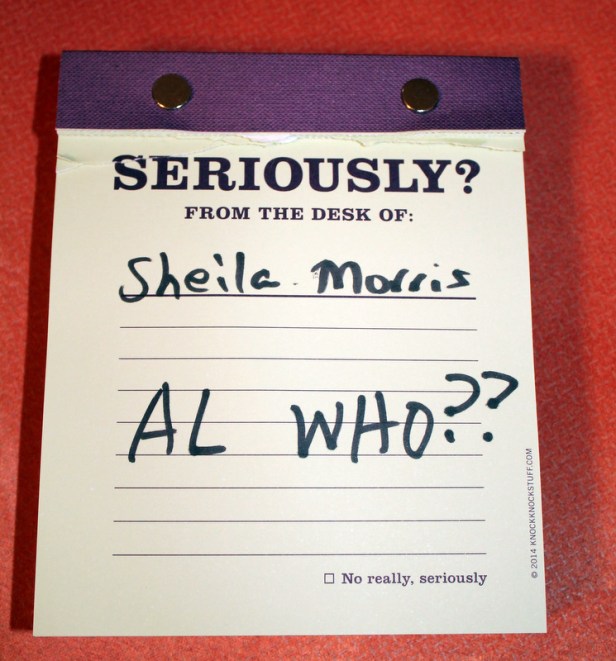
    Serena Williams’s search for the ultimate prize of the Calendar Grand Slam in 2015 ended Friday afternoon with high drama in the third set of her US Open semi-final match against Roberta Vinci on the courts of Arthur Ashe Stadium in Flushing Meadows, New York. Roberta Who??

    Exactly. Roberta Vinci, an unseeded player from Italy, was a very long shot to win. The odds makers had her at 200:1 or thereabouts – depending on your bookie. Now that’s an underdog.Think David and Goliath, the first recorded upset in a match that was crucial to a lot of folks in days of yore. In the biblical account David the little shepherd boy goes up against the great Philistine warrior giant Goliath and manages to take him down with a single  stone from a  slingshot. Score David 1, Goliath 0.

    In her press conference following the loss, Serena looked like a giant who had been slain by a barrage of unbelievable shots from an opponent comparable in rank to the little shepherd boy. Surely Goliath must have had a similar shocked expression on his face as he tried to figure out what hit him before he fell to the ground.

    The tennis world reeled from the results of both semi-finals in which the top two players lost, and the widely anticipated match-up between Serena and Simona in the final was not to be. The media scrambled to find a new story line, and the ticket-holders for the final were disappointed in the lost opportunity to watch an American sports icon make history in her country’s most prestigious tournament.

    The Serena Saga came to an unceremonious end with much doom and gloom in the atmosphere at the Arthur Ashe arena, but as the poet Kahlil Gibran wrote: The moving finger writes, and having writ, moves on.

    Tom Rinaldi’s interview with Roberta Vinci after her match with Serena introduced an Italian tennis player with a great smile and sense of humor to go along with her slingshot.  She was the beginning of a new story that captivated tennis fans and gave the world an unprecedented opportunity to witness a magical moment in sports in an American tennis final that belonged to Italy.

    It’s why they play the game.

    To be continued.

  • Both Have Prevailed


    004

    Venus Williams and her little sister Serena

    005

    For the past seventeen years the Williams sisters have carried the heavy burden of American tennis on their shoulders, and the load has never been an easy one. Their two-person dynasty has been controversial, but their attitudes about the sport they represent have matured as their games have become more powerful. Their popularity increased as they became more comfortable with their celebrity and confident in their games. They grew up in front of a nation and, eventually, the world.

    Never in their 27 professional matches have the theater and drama been more exciting than last night in the quarterfinals of the US Open under the lights in New York City.  Approximately 23,000 fans came to the Billie Jean King Tennis Center in Flushing Meadows to watch a match that was more than a game, and the Williams sisters delivered another thrilling exhibition of tennis at the highest level. As the ESPN commentators noted before the match, this was a big-time American sporting event with all the bells and whistles we love in our fascination with sports.

    Tom Rinaldi who has replaced Dick Enberg as the TV tennis philosopher who adds the stories to evoke our emotional attachment to an event, made these remarks prior to the match: “In an individual sport, their stories will always be linked…in our view of the Williams sisters, we see champions sharing a court, a desire to win, and a name. True, one will win –  but both have prevailed.”

    008

    Serena Williams is now two matches shy of her goals of a Calendar Grand Slam in 2015 and a total of 22 Slam titles to tie Steffi Graf’s record in the Open Era. Two matches…and counting.

    To be continued.