storytelling for truth lovers

  • The 37th. Time is the Charm


    The name Peng Shuai is not a household name in the USA, but she is the third-ranked Chinese professional female tennis player behind the more familiar Li Na and  Zhang Shuai.  More familiar to tennis addicts, that is.

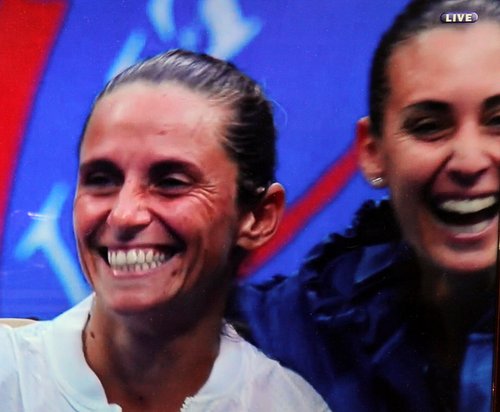
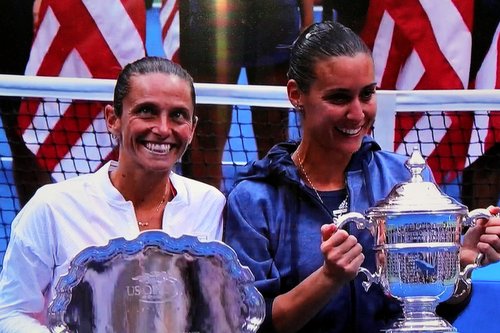
    This afternoon in New York City at the US Open, Peng played her 37th. match in Grand Slam events since turning pro in 2001 at the age of fifteen – and reached her first semi-final ever. Think about that.  Thirty-six entries and thirty-six times falling short of a goal over thirteen years.  Finally, on try number thirty-seven, she makes it to the semi-finals of one of the most prestigious tournaments on the Women’s Tennis Association tour.

    Her interview following the match with Tennis Channel commentator Tom Rinaldi was not nearly so entertaining as the ones with the number one Chinese player Li Na, but then she hasn’t had the same practice.  The most she could do was smile and wipe her face with a towel while she tried not to cry.  “Very excited,” she managed to say in English, when asked to describe her emotions.

    Very excited, indeed.  Peng is the daughter of a policeman and homemaker and the niece of an uncle who encouraged her to start playing tennis at the age of eight and she has played off and on for twenty years since.  When she was thirteen years old, she had heart surgery, and she has struggled with several health issues throughout her tennis career.

    “I love tennis, I love to play tennis,” she said in her post-game interview.

    I was happy for her because I love a good story about individuals who overcome adversity and realize their dreams after years of hard work.  Years of hitting a little yellow ball across a net.   Hours, days, weeks, months, years…and in those years believing within herself that she could win the big matches that place her name among the elite in her sport.  She has spunk.  I love spunk.

    In February of 2014, Peng Shuai reached a career high-ranking of number one in the world in doubles.  She is the first Chinese professional tennis player, male or female, to reach that standing.  Beyond impressive. Rankings are rankings in every sport and are often overrated, but Peng has had a tortuous climb from number 357 in the world in 2002 to number 39 in singles in 2014.

    She will face the winner of the Caroline Wozniacki/ Sara Errani match which will be played tonight under the lights in the Arthur Ashe arena.  They each have their own stories and are, I’m sure, equally excited and deserving of the opportunity to meet Peng in the semi-finals.  Exciting matches in store for the readers of Sports Illustrated.  I can’t wait…

    Peng Shuai may not make it to the finals of the Us Open this year, but I’d bet good money she’ll keep trying until she does.


  • Kids Say the Darndest Things


    Art Linkletter and Bill Cosby created lots of fun and entertainment for generations when they interviewed children on their television shows in the years before reality TV.  YouTube, which has live videos of everything that’s ever happened in the world including all TV shows, has an awesome collection of their Kids Say the Darndest Things moments.  Teresa and I are fortunate to have our own personal collection of kids’ sayings through our younger friends who have small children.

    The Snyder family in Columbia regularly makes us smile with their photos and anecdotes of their son’s comments. Soon-to-be  four years old Finn cracks us up when he phones his MamaDaddy and Auntie T and talks for ten minutes about something very important.  We know it’s important because he doesn’t pause to take a breath in those ten minutes, but we don’t know why… because we can’t understand a word he’s saying.  It’s the thought that counts.

    Out of the mouths of babes, as the saying goes, couldn’t be any truer. I had my own  mouths of babes moments last week on my trip to Worsham Street in Texas when I stayed in the Huss House where their three sons are all under the age of six.  Art Linkletter and Bill Cosby would be happy to have heard Oscar, the oldest, reel off his detailed strategy of my work day that he imagined for my first day in their home.  His elaborate plan involved chopping up dead trees in their back woods with a pick-ax and chain saw, making a four-people sofa out of the wood we cut, selling the sofa, putting the pennies and nickels we made in his piggy bank, and then sending the money to Teresa and me in South Carolina when the piggy bank was full.

    I felt he had a brilliant idea, but I questioned him about whether he thought his parents would give us permission to borrow their pick-ax and chain saw for the day’s work – at which point he whispered, “Miss Sheila, you and I can form a team and sneak off in the woods without telling anybody.”  Perfect solution.

    On the final day of my visit, we were all going to escape the intense Texas  hundred plus degrees heat late in the afternoon by going for a swim in their pool.  I had bought a new swim suit earlier in the summer and changed into it in the guest bathroom.  When I walked into the bedroom to put my clothes away, three-year-old Dwight was sitting on my bed waiting for me.

    He took one look at me in my flowery pink swim suit, covered his eyes with both hands, and flung himself backwards on the bed yelling No, No, No.  I was alarmed and asked him what was wrong.  He was rolling on the bed from side to side while he held both of his feet up in the air in his tiny hands.  Clothes on, clothes on, he said, in obvious distress.  Mystery solved.  Dwight was afraid of what he saw in the swim suit.

    Kids have two things going for them in their communication process before we adults filter their minds with years of instruction and layers of guilt: one is imagination and the other is honesty.  I totally admire both qualities, but I’ve got, like, a thousand follow-up questions.

    Until next time.


  • Turn! Turn! TURN!


    Pardon my jubilation, but yesterday was a momentous day for the citizens included in the United States Court of Appeals for the Fourth Circuit that encompasses Maryland, Virginia, West Virginia, North Carolina and South Carolina which has been my second home state for more than forty years.  A majority of two of the three judges on that court ruled in favor of same-sex marriages, and I could hear the echoes of the voices of Harvey Milk in San Francisco and the Stonewall Rebellion activists in New York City as they chanted and chorused  in celebration with their sisters and brothers in the South.

    For everything, turn, turn, turn…there is a season, turn, turn. turn…and a time for every purpose under heaven.  Thank you, Pete Seeger, and the book of Ecclesiastes, too.

    On Election Night in November, 2006 Teresa and I joined a few other pitiful looking people at a reception sponsored by the South Carolina Equality Coalition in a small meeting room at the Town House Motel on Gervais Street in Columbia.  When I say few, I do mean few; and when I say pitiful looking, I do mean the faces were long and the expressions grim.  I also remember the food was sparse and drinks were served from a cash bar.  We’re talking bare bones reception because the coffers were bare.

    The night was a disaster for the GLBTQ community in South Carolina.  Despite the efforts of the members of the fledgling SCEC organization formed four years earlier,  the tireless dedication of the supporters of the South Carolina Pride Movement and the Alliance for Full Acceptance and an outpouring of financial contributions from individuals and other groups around the entire state – despite four years of hard work by the leaders of this social justice movement – 78% of the voters of the state of South Carolina passed a constitutional amendment that day and declared “a marriage between one man and one woman is the only lawful domestic union that shall be valid or recognized in this state.”

    Dr. Martin Luther King, Jr. wrote “Our freedom was not won a century ago, it is not won today, but some small part of it is in our hands, and we are marching no longer by ones and twos but in legions of thousands, convinced now it cannot be denied by human force.”  That night in the Town House Motel I felt we were marching by ones and twos as I looked around the small room that emptied quickly.  I thought the battle for marriage equality would never be won in my lifetime.

    As those battles were fought and won in other states by popular votes, by state legislatures and by court decisions, I knew we were now marching by legions of thousands but still felt my home states of Texas and South Carolina would surely be the last ones standing against me.  The ruling yesterday proved I was wrong, and I have no words to express my joy.

    Circuit Judge Henry F. Floyd wrote in the ruling that “Civil marriage is one of the cornerstones of our way of life…and the choice of whom to marry is an intensely personal decision that alters the course of an individual’s life.  Denying same-sex couples this choice prohibits them from participating fully in our society, which is precisely the type of segregation the Fourteenth Amendment cannot countenance.”

    I know the movement has many heroes to thank for the cultural changes that fostered the political  victories of  the past thirty years.  From Will and Grace to Brokeback Mountain to The Indigo Girls to We Are Fam-i-ly to the countless other pioneers that made us laugh and cry and sing together – those who made it easier to recognize each other for who we are.  I am grateful for these national treasures that elevated our consciousness and for the local leaders who continued the outrageous acts and everyday rebellions that Gloria Steinem believed to be the key to grassroots organizing.

    Later this evening Teresa and I will go to the Capital Club which is a gay bar in downtown Columbia on Gervais Street.  It’s been in business for as long as I can remember.  The same, more mature, South Carolina Equality Coalition is hosting a spontaneous celebration because of the court’s ruling yesterday.  I’m not sure how many people will be able to come on short notice, but I fully expect the expressions on their faces to be exuberant.

    I know mine will be.


  • The M Dot


    3. Bertha Emiline Selma Buls (08/02/1873 – 01/01/1956)

    m. Charles C. (Karl) Schlinke (01/09/1870 – 03/14/1953)

    …..3.5 Bernice Louise Schlinke (10/20/1898 – 04/19/1972)

    m. James Marion Boring (03/06/1887 – 09/20/1938)

    …..3.5.4 Selma Louise Boring (03/25/1927 – 04/25/2012)

    m. Glenn Lewis Morris (10/06/1924 – 06/30/1976)

    ……3.5.4.1 Sheila Rae Morris (04/21/1946 –  )

    I have a distant cousin who is the great-granddaughter of my great-grandmother’s sister on my mama’s side.  This cousin is working on the genealogy of our family and in that process has completed much of my ancestry as well.  I like the presentation and the numerical configuration of the generations in the chart she sent me this past week.

    For example, my great-grandmother was the third child in her family and was sensibly assigned the number 3 to start her descendants.  She married my great-grandfather and they had twelve children of their own according to the information I received this week.  I also know from oral history that they raised two other children who belonged to  a relative that either died or was unable to care for them.  The eleventh birth child died when she was two years old so they raised 13 children during their married life.

    My grandmother was the fifth child of the Schlinke family and so our numbers all begin with 3.5.  She married my grandfather and they had four children.  My grandfather died at an early age as a result of a car wreck which hospitalized him and ultimately resulted in pneumonia and his death.

    On a totally unrelated topic, a childhood friend called me last night and in the course of our conversation, her husband called to her from another room and told her to ask me if I knew my grandfather Boring had invented the machine that made soft serve ice cream.  I admitted I had never heard this story.  Apparently the reason we aren’t wealthy today from the invention is that his best friend stole the patent.  I found this remarkable and would like to know whether there is any truth to it.  I do know my grandfather had quite the entrepreneurial spirit and had owned a root beer stand, movie theater, restaurant and ice cream delivery business.  A soft serve ice cream invention sounds possible.

    I digress.  My mama was the fourth child of their marriage and the only daughter.  Her number on the chart is 3.5.4 and she married my daddy and they produced me a/k/a 3.5.4.1.  So far, so good.

    I’ve looked at this chart for several days and have had a great memory trip of the Schlinke family reunions in Houston and at our home in Richards, Texas.  The Schlinke children were boisterous, fun-loving, and entertaining for me as a child.  They were my great aunts and uncles and wonderful to their children and grand-children whenever we were together.  Each 3.– and the numbers below them were unique yet a blend of their siblings and parents.

    But while I enjoyed looking at these past generations, I had a nagging suspicion that something was not quite right about this chart.  I studied it and studied it…and studied it some more and all of a sudden it hit me.  I had no M Dot.  I was 3.5.4.1 on the chart, and then that part of our line stopped dead in its tracks.  It was like the Rapture had come and I had been taken without leaving any sense of who my family was.  No M Dot.  There were certainly others who had no M Dot on the tree, and I don’t know if they had committed family relationships or not, but I know for sure I do.

    I have been a lukewarm advocate for marriage equality in the GLBTQ movement.  When I was working actively for social justice issues in the 1990s and early years of the 21st century, the idea of same-sex marriage in my lifetime seemed impossible.  I worked for domestic partner benefits in the workplace.  I worked for non-discrimination in housing in the City of Columbia.  I worked for the partners of HIV/AIDS patients to be able to visit together in our hospitals.  I worked to have domestic partners included as beneficiaries of life insurance contracts because they had an insurable interest in the owner of the contract.  But marriage equality was Beyond Thunder Dome to me.

    The year is now 2014 and 19 states and the District of Columbia recognize same-sex marriage.  Many of my friends in South Carolina have traveled to one of these states and taken vows in a marriage ceremony.  I’ve seen their pictures and read their stories on facebook, and they’ve told me about their experiences and the affirmation those legal marriages afford them. While I can rejoice with my friends, I never really yearned to join them.  Teresa and I wear the matching gold bands – we have the jewelry – as my friend Robyn told us, and that has been enough.

    Thanks to the vision and courage of our community leaders, federal laws are changing quickly and I now believe a real possibility exists for modifying the Social Security system to correct the inequities and discrimination of the past against same-sex spouses in survivor and retirement benefits.  Holy mackerel.  Possibly I need to get married for what is no longer pie-in-the-sky financial dreams.  I think I’ll wait to see if it really happens first.

    It was the M dot that jolted me out of my sense of complacency about marriage and marriage equality.  Nothing is more important to me than my family, the one I have today and the ones that have now become my ancestors. A hundred years from now when another descendant of my great- grandmother Selma Buls Schlinke is studying our family chart, I want them to know one of their relatives was a lesbian who lived and loved in a strange time when her sexual orientation was an issue but she had an M dot in spite of it.

       As we drifted off to sleep last night, I told Teresa I would like to marry her because I didn’t have an M dot on my family tree.  She asked me if I thought that was a good reason to get married so I knew I had phrased the proposal badly.  Okay, so I need a little refresher course.  Words are my business.  I will do better.

  • Faster Horses, Younger Women…


    I had a great visit over the telephone this afternoon with a friend that I don’t see often because we don’t live in the same town and lead very different lives.  For example, she’s a boat person in the summer and lives in Charleston which is surrounded by water and I’d just as soon not take a boat trip if I don’t have to and I live in Columbia which is surrounded by dry land.  But while we do lead separate lives, we have a bond that, luckily, doesn’t require high maintenance and enables us to pick up our conversations as if we saw each other all the time.  It’s enough for us.

    Linda and I have been together through more than I have time to write about in this life and most of our conversations involve people we both know or places we’ve been or things we’ve done and, more recently, our pills and doctor visits.  We share another common thread with both of our mothers having a long-term illness and our being the primary caretakers.  When my mother died in 2012, Linda came to Texas and was there for me.

    Occasionally we veer off the track and tend to “wax poetic” as my daddy used to say whenever he took off on one of his philosophical tangents about the meaning of life.  Today was one of the waxing poetic days as we talked about our Mortality – yes, that’s Mortality which would be a much longer conversation than about our Morality, both real and perceived.

    Afterwards I thought of a song Tom T. Hall wrote in 1975 about the cowboy and the poet.  Tom T. is a country music legend known as “The Storyteller” because his songs often tell stories.  Actually he writes his songs with his wife of forty-five years, Miss Dixie, and she probably inspires the stories he tells.  This particular song, Faster Horses,  is about a young poet who comes to visit an old-time cowboy to ask him about the mysteries of life.

    The old-time cowboy spits between his boots and waxes less than poetic, “Faster horses, younger women, older whiskey, more money.”

    Apparently the young poet is less than impressed and tells the cowboy he doesn’t care for either horses or younger women or whisky or money and the old man calls him a liar… and goes on to say, “It don’t do men no good to pray for peace and rain.  Peace and rain is just a way to say prosperity, and buffalo chips is all it means to me.”

    Baffling, to be sure, to be talking about buffalo chips when you are a Truth-Seeker, but there you have it.  The song ends with the young poet giving up on poetry and going back to “reality.”  It is a happy or unhappy ending – depending on your perspective.

    My perspective is I’ve always been an old-time cowboy at heart and I’ve come to the conclusion that I haven’t solved many of life’s mysteries in the past sixty-eight years which has put a damper on my enthusiasm for the probability of my solving any in the next fifteen years.  Buffalo chips aside, Tom T. and Miss Dixie may just be on to something with their belief in faster horses, younger women, older whiskey and more money.

    Today I can cheerfully say they’re as good an answer as any other ones I’ve heard, and I think Linda might agree with me.