“During the many years the Scotts and Nebletts [original landowners] farmed the Richards townsite, two communities grew up on either side of the future village. Longstreet, one of the toughest communities in Texas came into being two miles east, and the peaceful community of Fairview (or Dolph) rose about three miles west. Longstreet had two saloons, several stores, a race track, two gins, two sawmills and some bad characters who from time to time faced each other at high noon with six shooters blazing.” Richards, Texas: 1907 – 1987
“Richards is on Farm roads 1486 and 149 and the Burlington-Rock Island line in east central Grimes County. It was founded in 1907, when the residents of several communities in the vicinity of Lake Creek moved to a newly constructed line of the Trinity and Brazos Valley Railway where it crossed the road between Fairview (or Dolph) and Longstreet. The area had been settled by Anglo-American immigrants in the early 1830s, but no community was established until the coming of the railroad. Residents of Fairview and Longstreet led the migration to Richards; some employed log rollers to shift homes and businesses intact to the new townsite. Richards was named by railway officials for W. E. Richards, prominent South Texas banker and organizer of the Valley Route and Townsite Loan Company.” — Texas State Historical Association, general entry by Charles Christopher Jackson
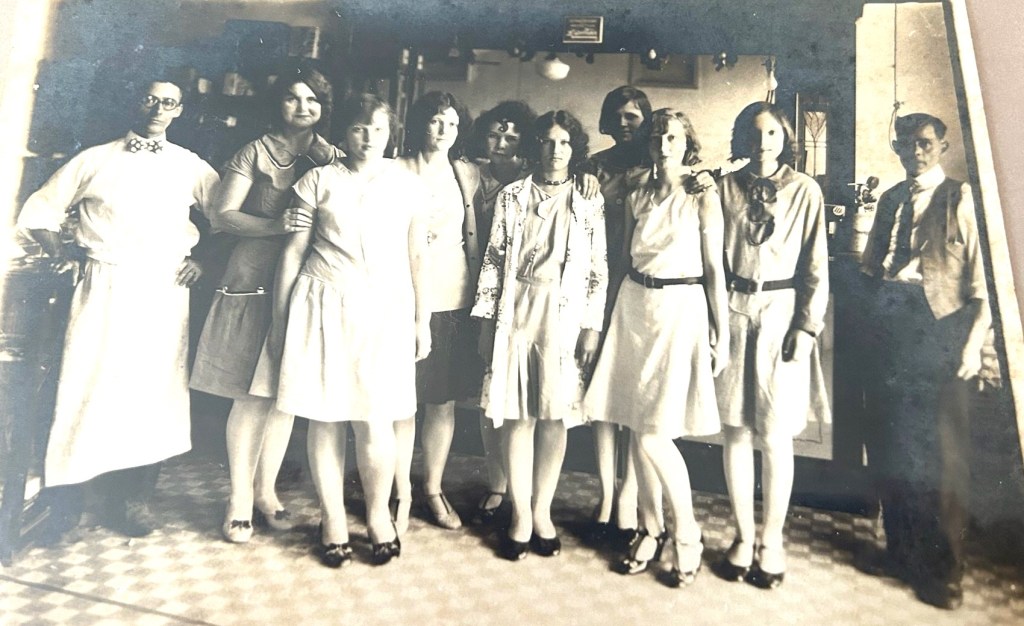
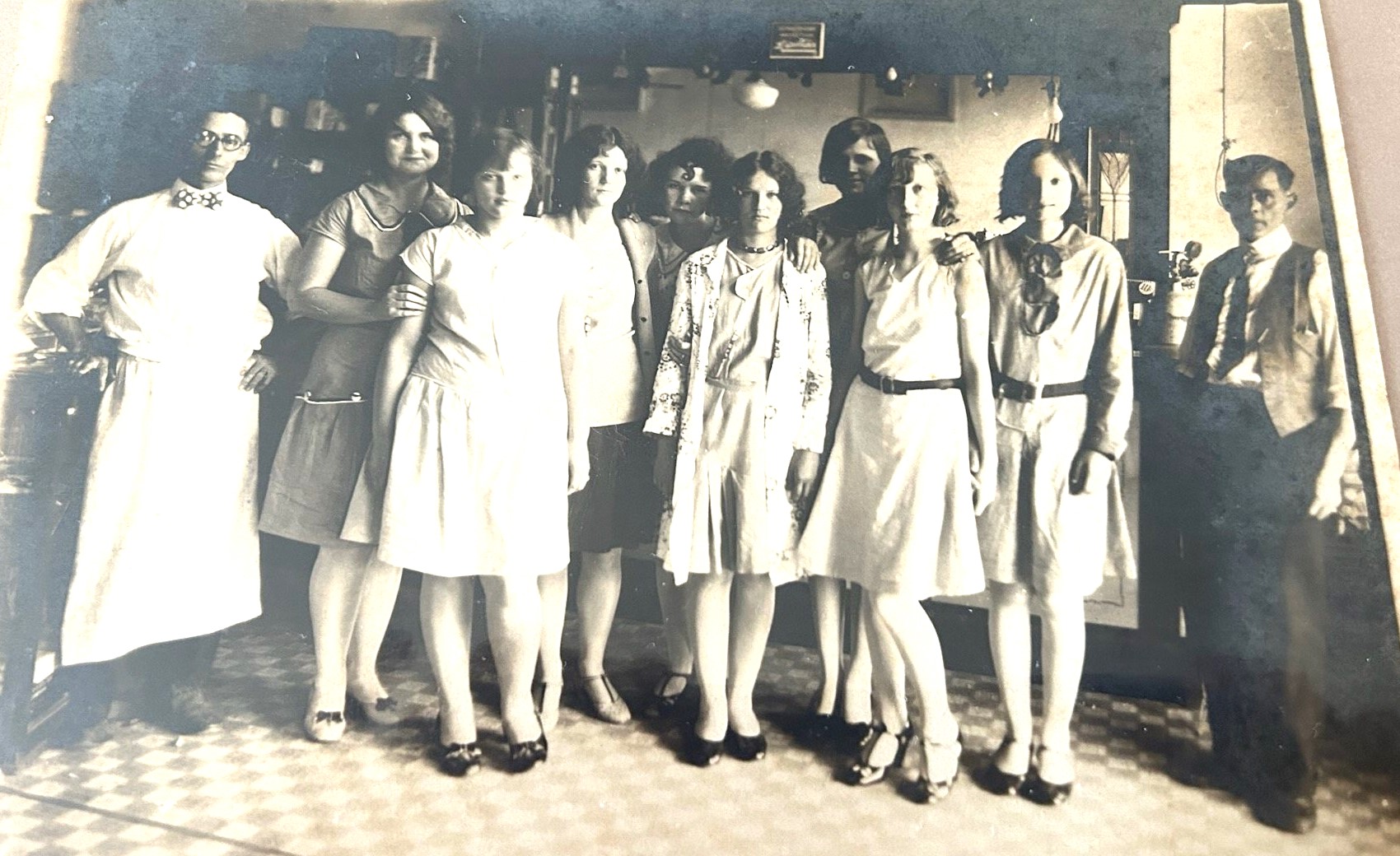
James Marion Boring, Sr. (r) and brother Tommy Boring (l)
proprietors of the Boring Cafewith
patrons in the small town of Richards, Texascirca 1930s
Hazel Ward Wells, Clara McCune, Esther Davis Wilcox
Marie Witt, Fannie Kate McCune, ?, Catherine Joyce Keisler,?
My mother Selma Louise Boring Morris (1927-2012) remembered working as a child in one of my grandfather J.M. Boring’s several business ventures turned “ad-ventures” in the tiny town of Richards, Texas where she grew up but had more memories of picking up the mail at the railroad depot to deliver to the town post office than she did helping to wash dishes at the Boring Cafe, or at least that’s how she told her story. Her three older brothers and mother worked with their father and uncle at the cafe, one of eighteen businesses in Richards in 1936 when the town had a population of approximately five hundred counting chickens and dogs according to my paternal grandfather Barber George Morris whose Main Street shop with its one barber chair was a gathering place for local town news a/k/a gossip.
No more gunfights at high noon thankfully because Richards was the town I called home from the time I was born in 1946 until I was thirteen years old. When I attended public school there, I had no fear of gun violence, no concern about safety except for the possibility of Russian attacks using atomic bombs which could be survived by hiding under our small wooden desks. The two-story red brick school building constructed in 1912 was the same one my parents had attended. They both had a brief hiatus from Richards when my mom went off to Baylor in Waco after she graduated from Richards High School, and my dad volunteered to serve in the Army Air Corps during WWII following his graduation two years before hers.
I never knew my grandfather Boring who died in 1938, but I love this picture of him and his brother at the cafe they owned while a little town in Texas struggled to find its way to prosperity during the Great Depression of the 1930s, an impossible task for many who were left behind when the trains began to travel in another direction. My grandfather Barber Morris was one of a handful of Richards businesses to succeed for the next sixty years as the town was unable to experience the growth of its neighbors on farm roads 1486 and 149 that profited from Houston’s breathtaking population explosion toward the end of the twentieth century.
**********************
America’s fascination with guns is a story that never ends. Pretty and I are deeply saddened by yet another massacre of innocent people this week in Lewiston, Maine by a gunman using a semi-automatic weapon. Our hearts go out to the families who have been affected by the traumatic losses they’ve experienced this week, the tragic events they will live with for the rest of their lives. We are also keenly aware of the dark days in Israel and Gaza, the ongoing daily deadly warfare in Ukraine. These are dangerous times that remind us of how fragile life is, how precious each breath we take. For all those who suffer in places we know and those unknown to us, we ask for comfort to the bereaved, compassion for the caregivers. Amen.
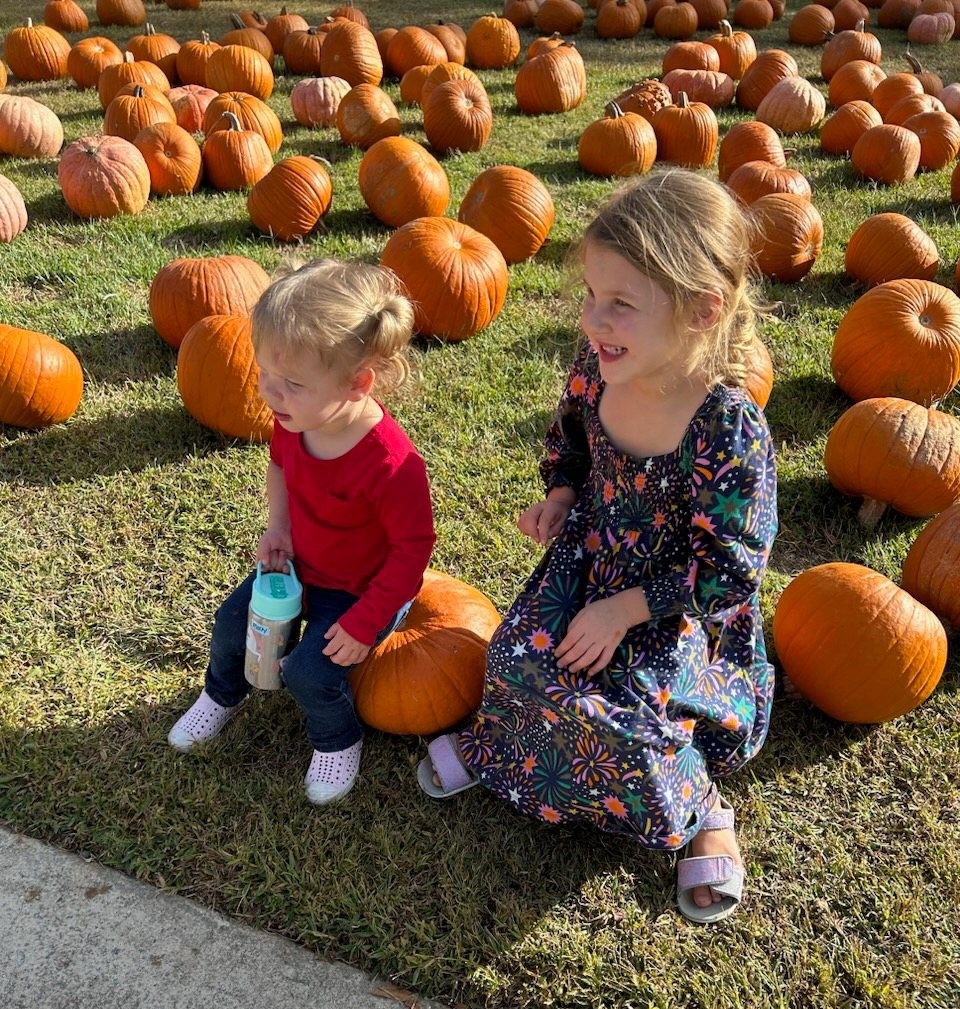
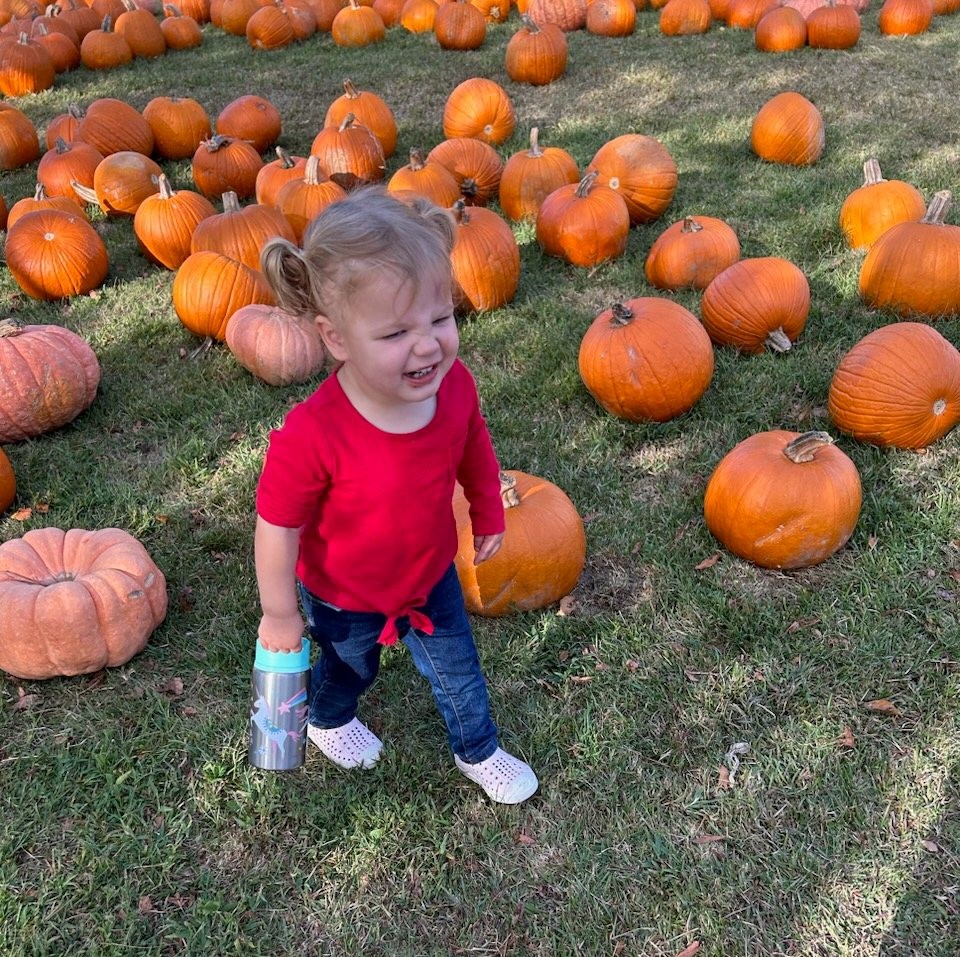
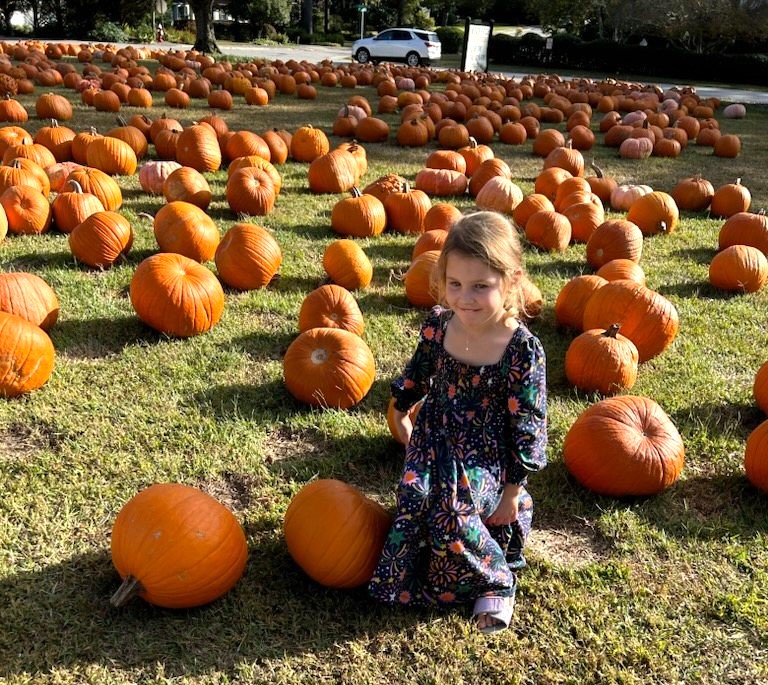
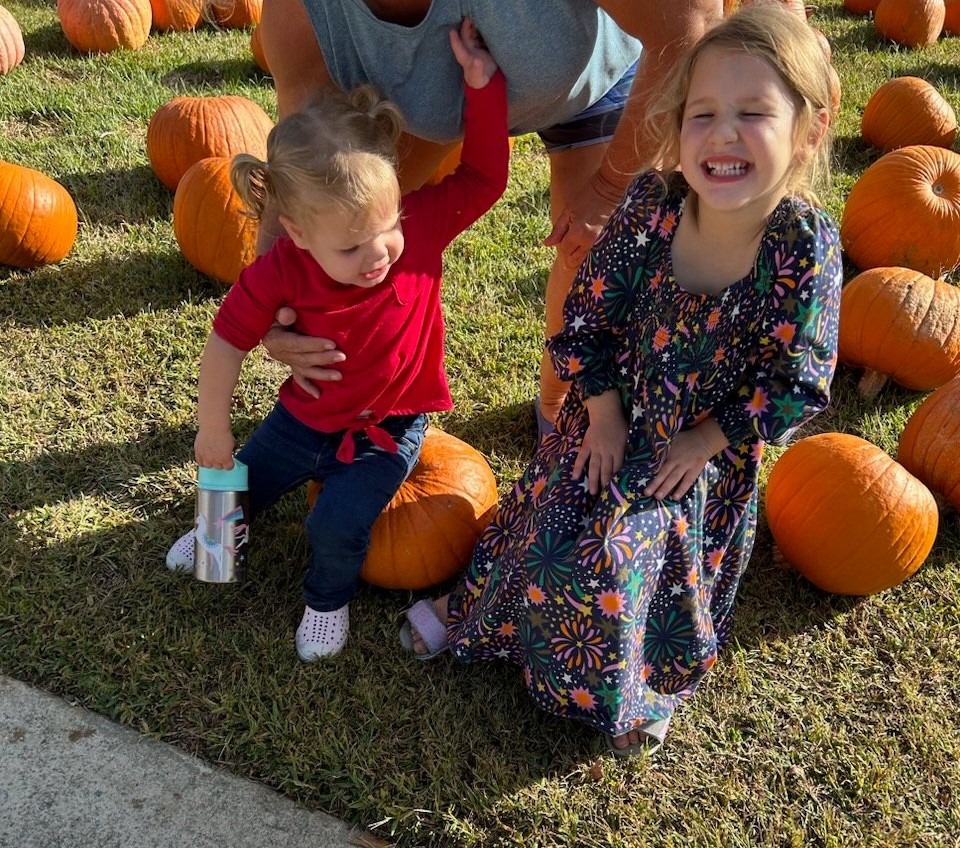
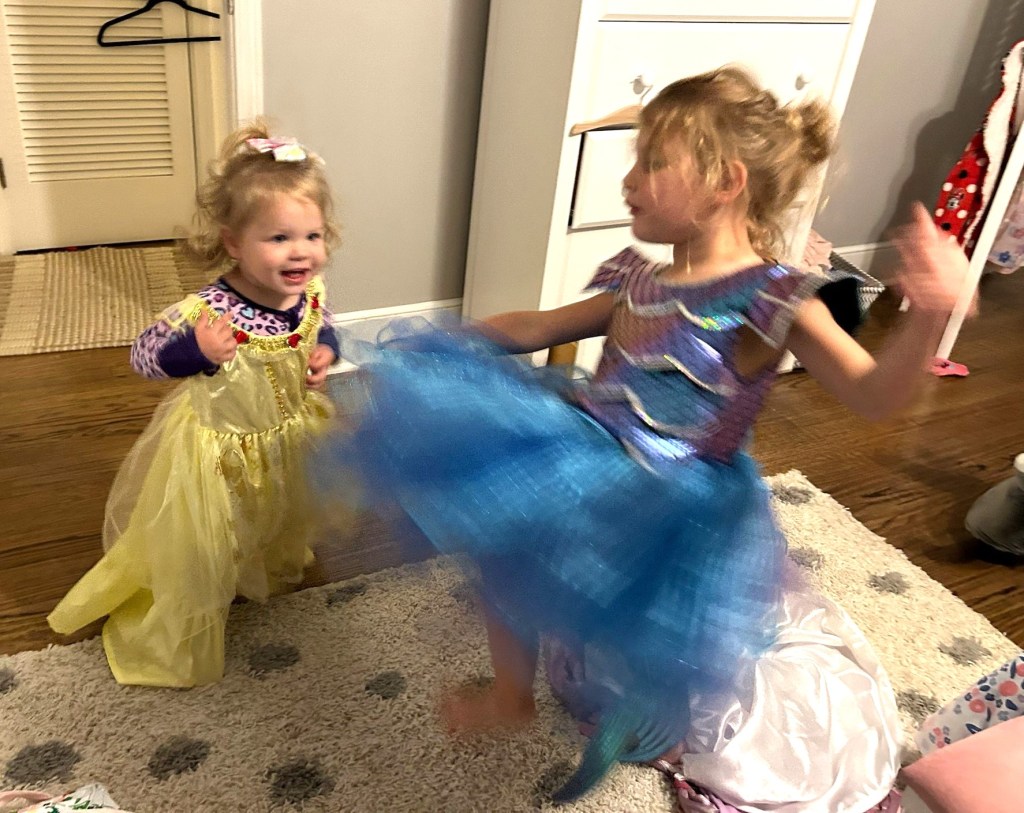
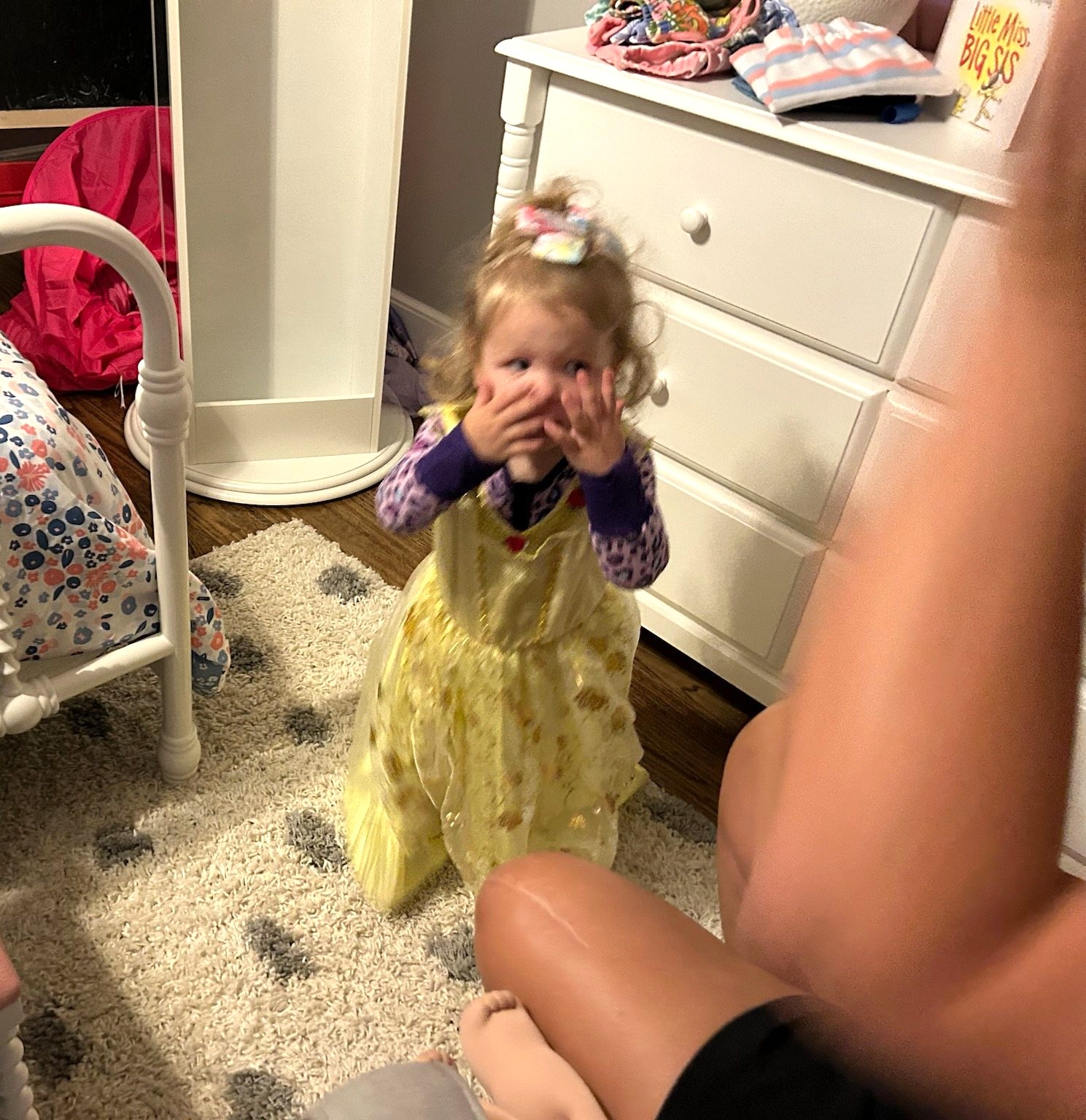
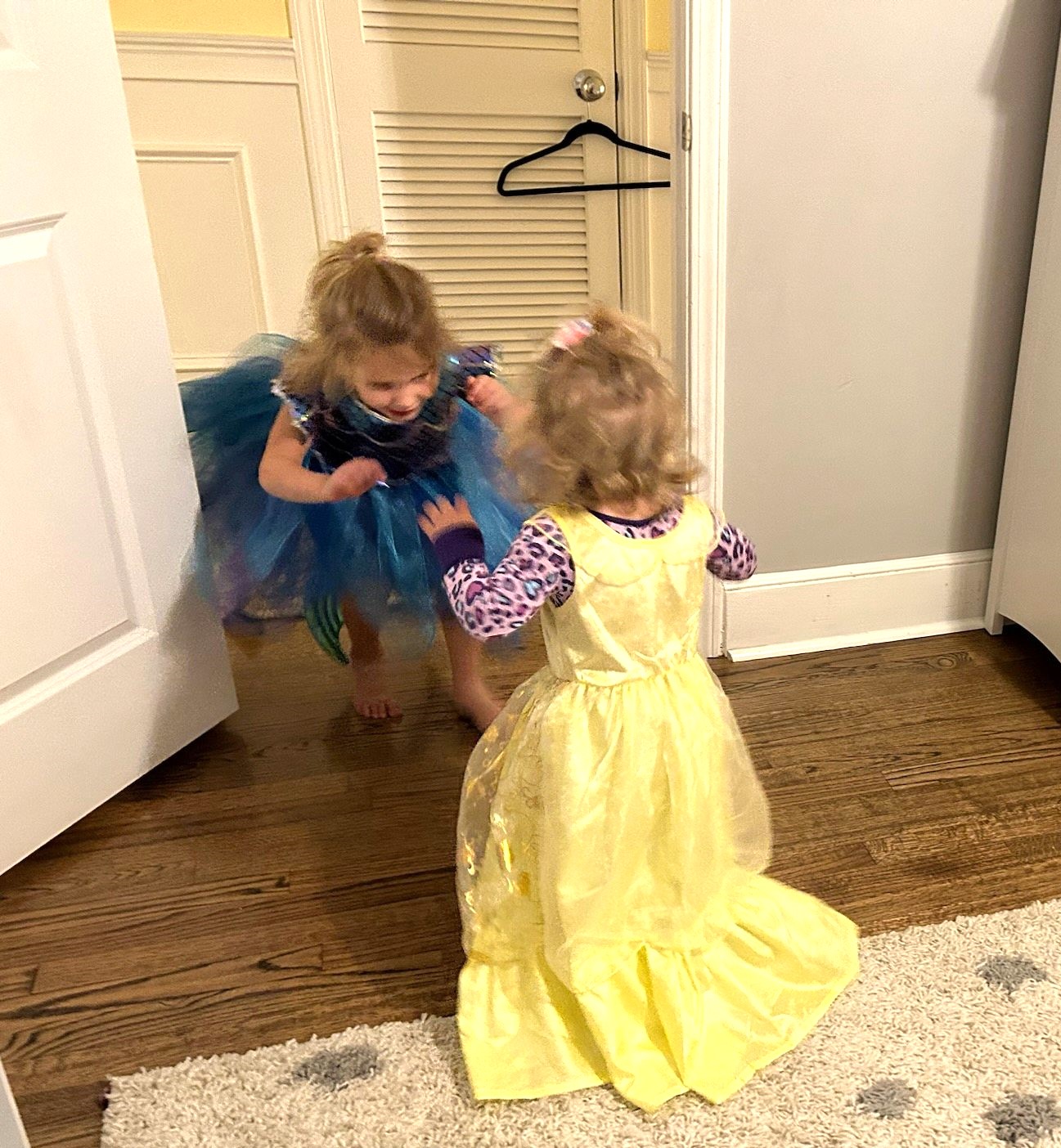
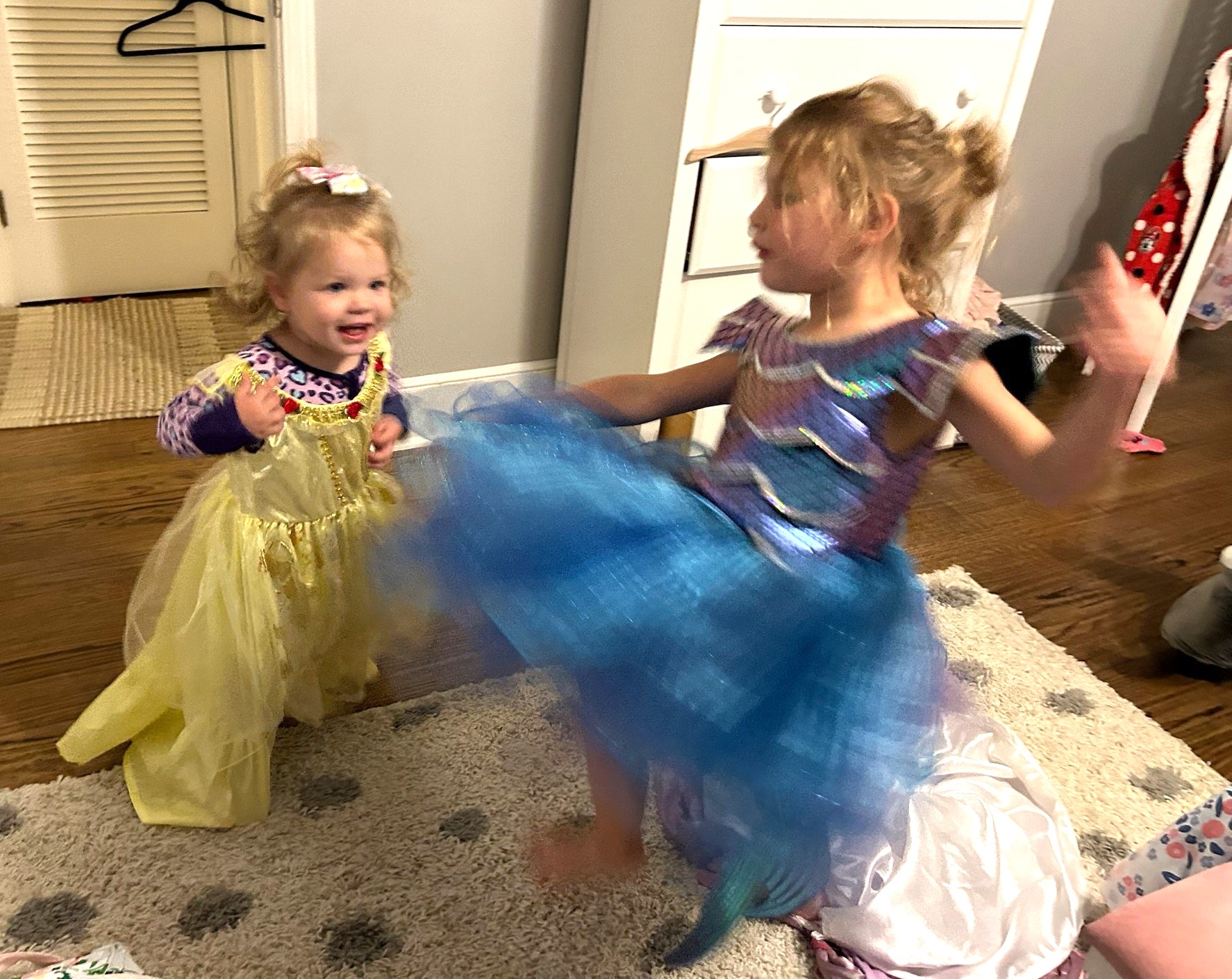
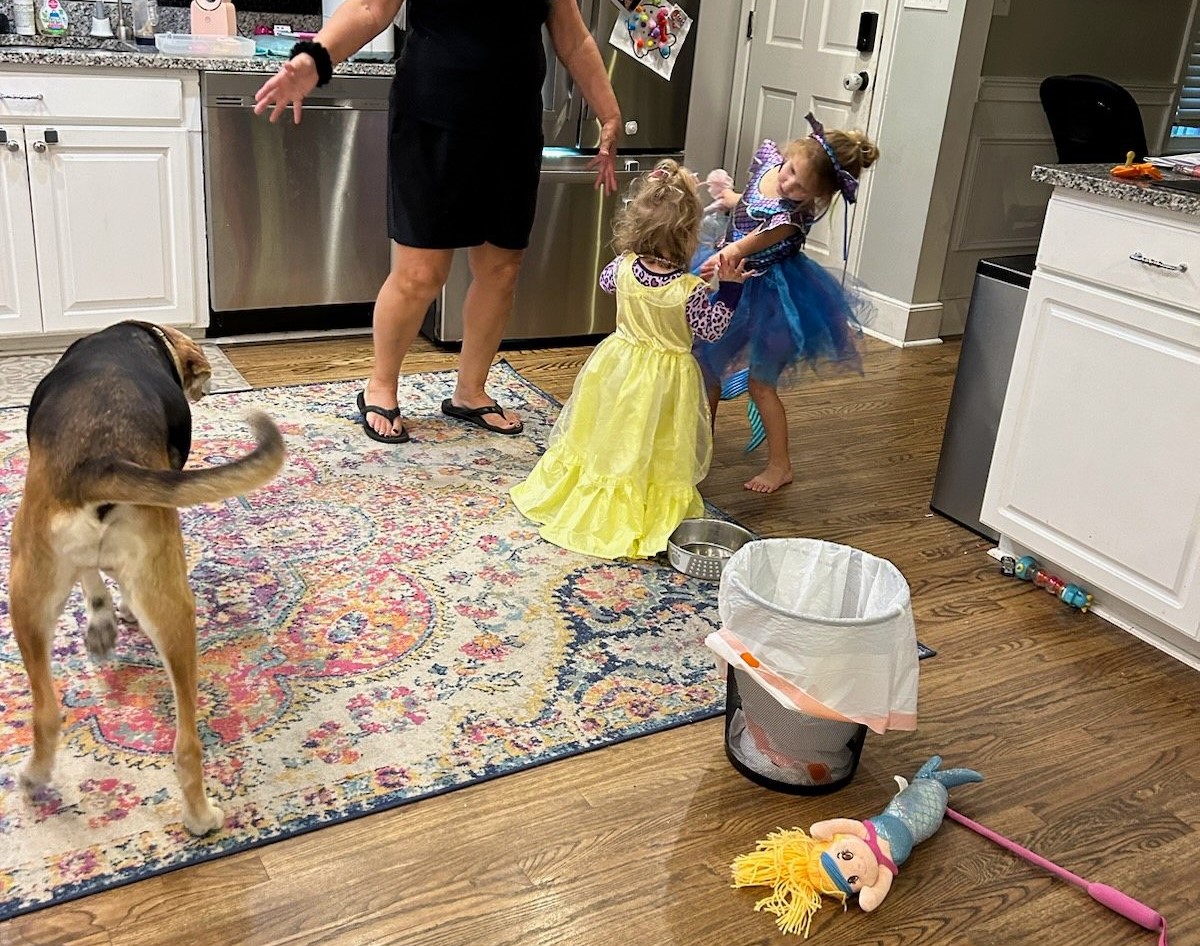
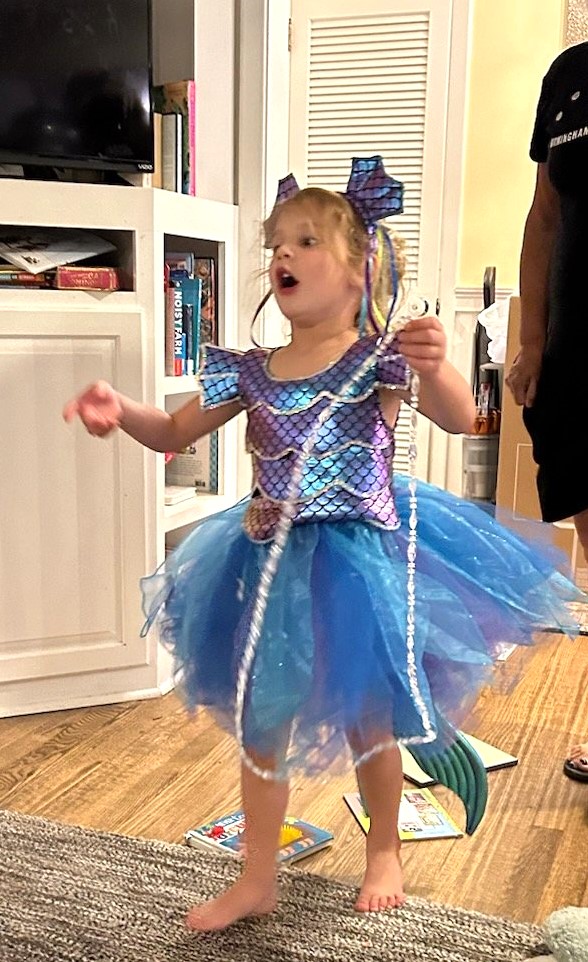
but the Mermaid says we can’t stop when we’re having so much fun!
Molly, Molly – come away with me to my Kingdom in the Sea
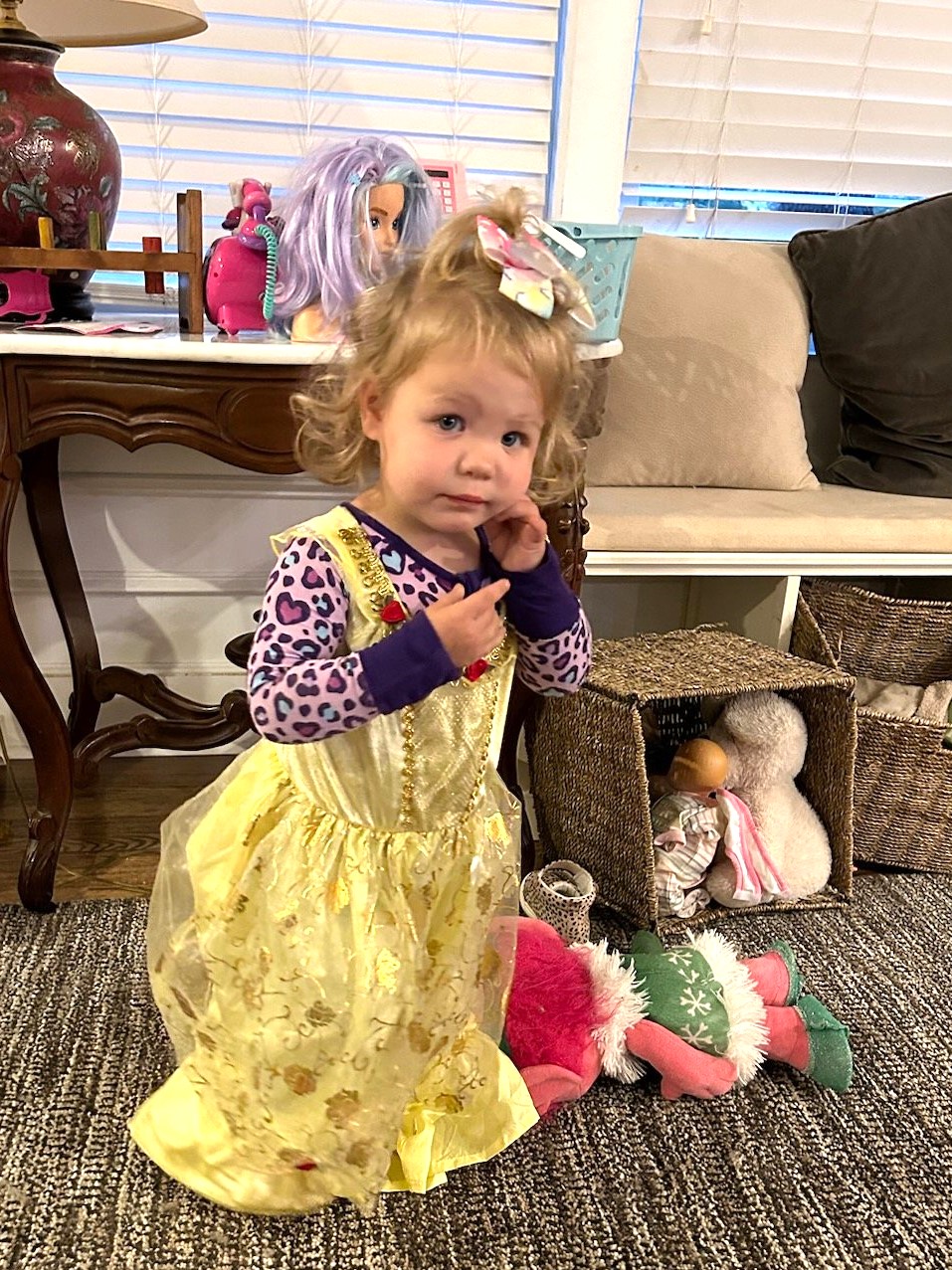
is she serious?
who knew being a Princess could be so tiring?
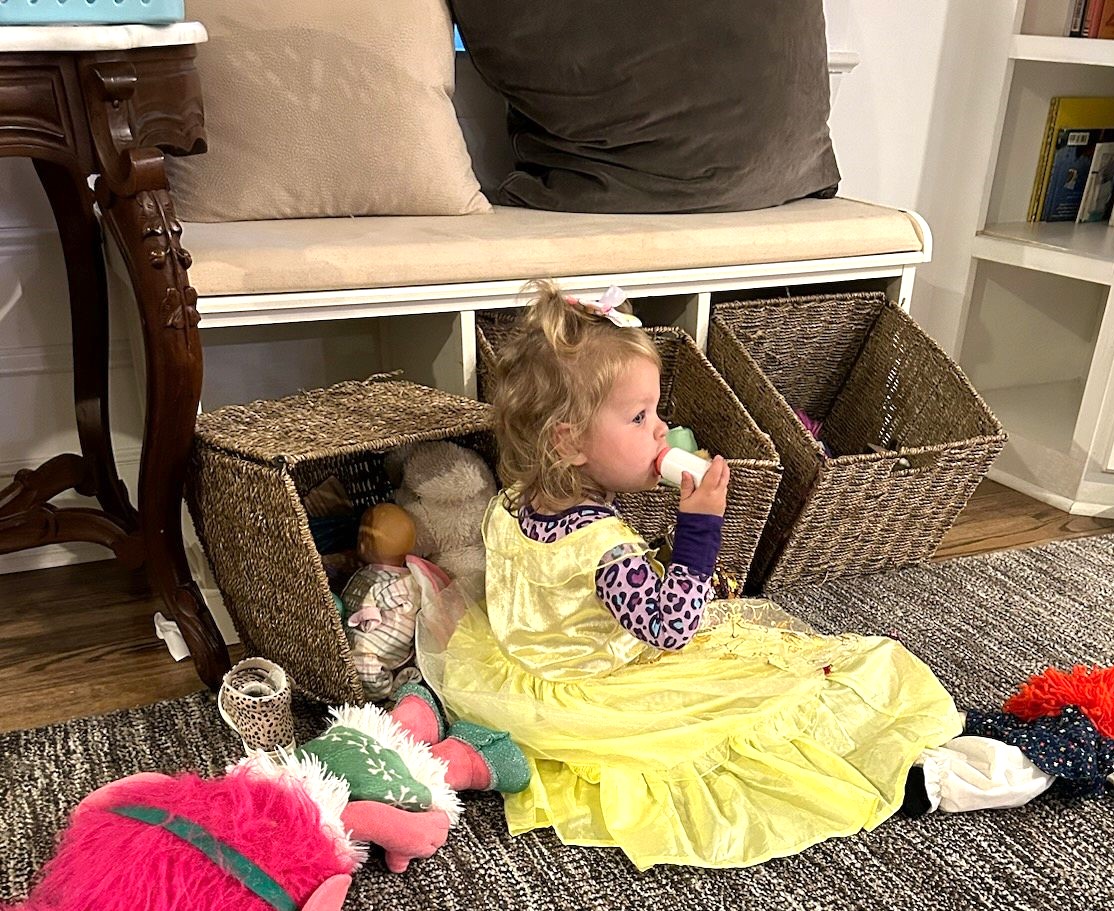
honestly, Nana – I think I’d be happier in a swing
***************
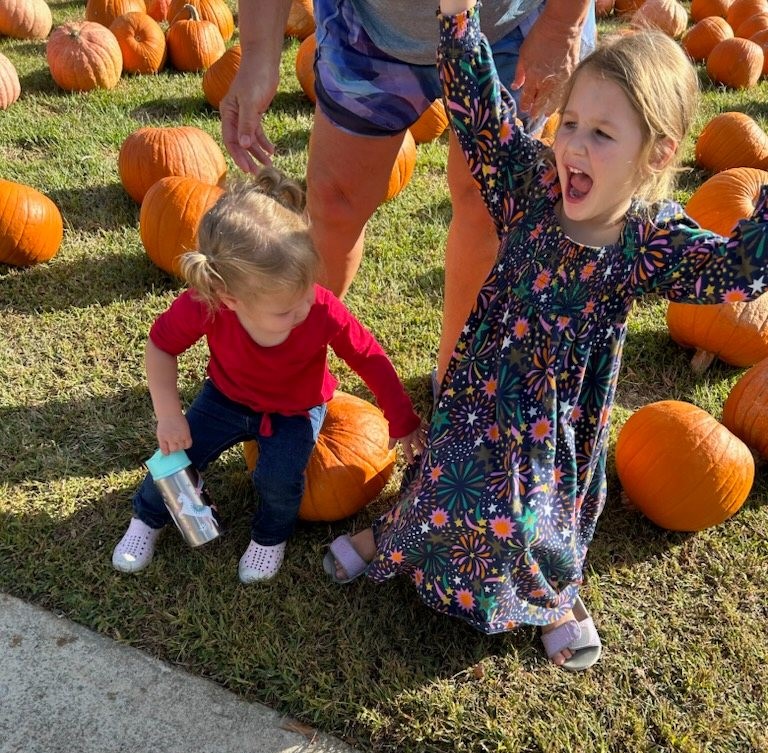
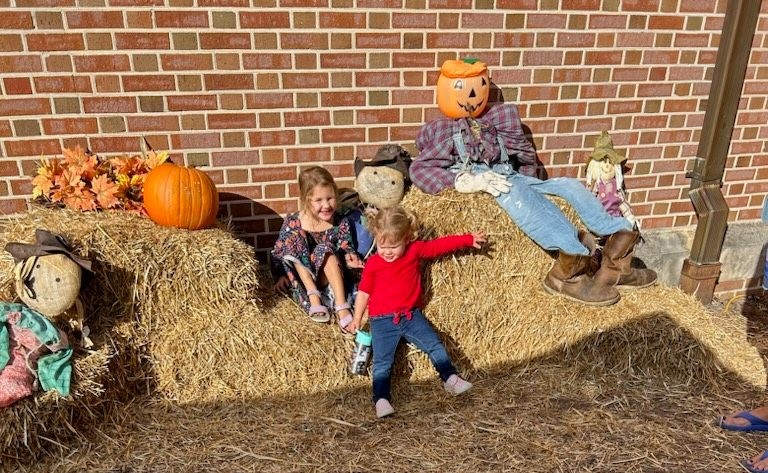
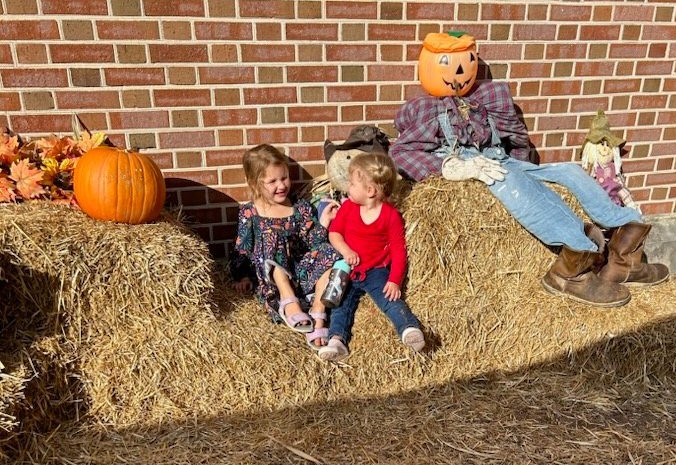
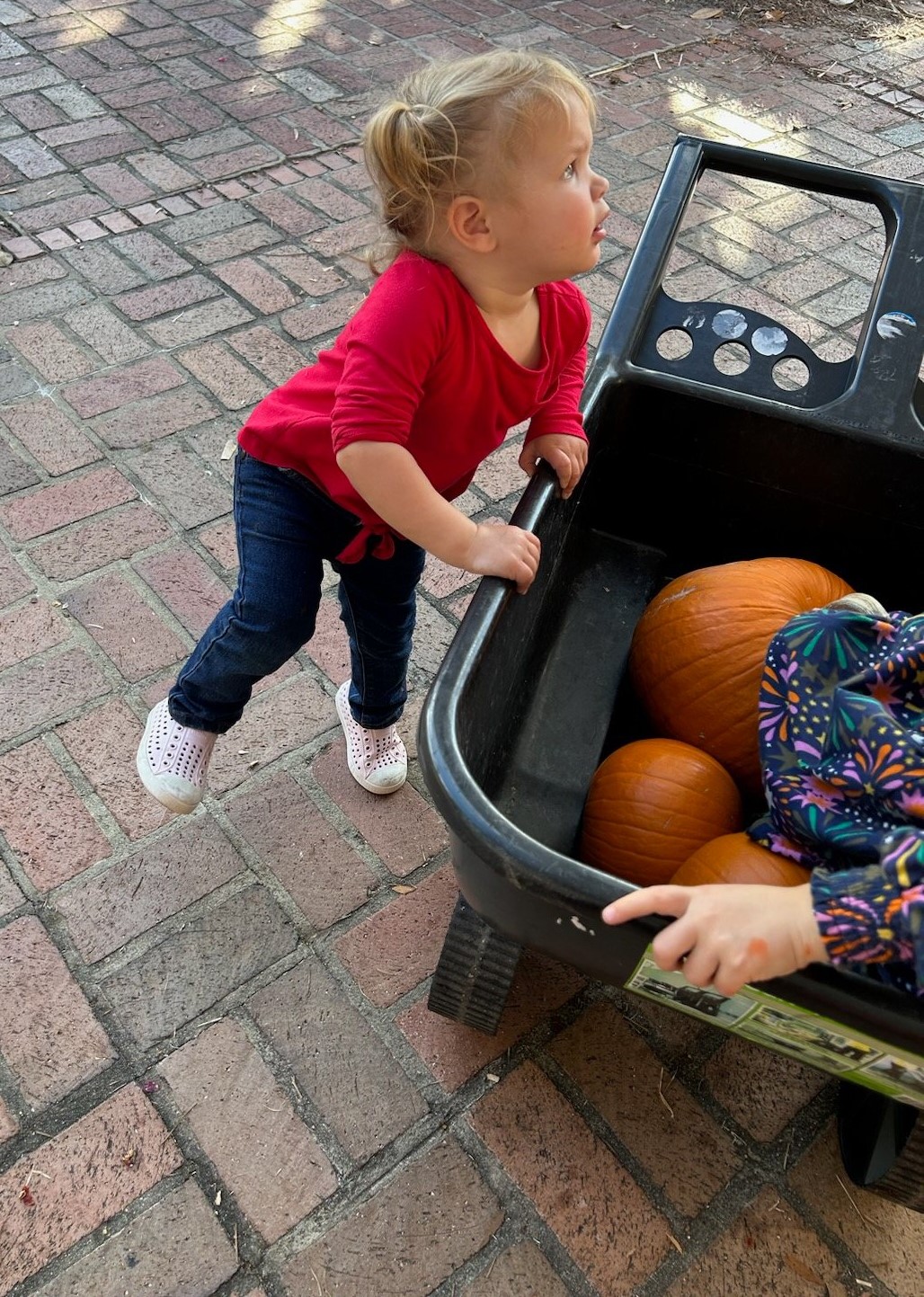
Yesterday afternoon Nana and Naynay had the great pleasure/treasure of watching 21-month-old Little Sis Molly playing with her four year old Big Sis Ella. The imagination of Ella the Mermaid combined with Molly’s adoration of her big sister bring great joy to their Nanas. In these perilous times at home and abroad, I hope they give you a tiny break with a smile on your face.
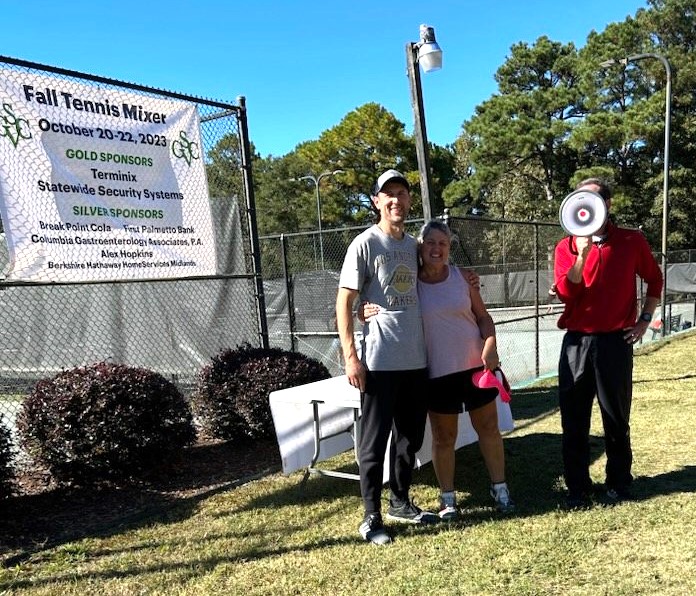
Pretty and #1 Son Drew all smiles as tournament director Brian
announces their Championshipin Mixed Doubles
The fourth year the Mother/Son duo of Pretty and Drew played in the 8.0 Mixed Doubles Fall Tennis Mixer at the Spring Valley Country Club saw them win their second championship under bright blue skies in ideal temperatures on clay courts in good condition.
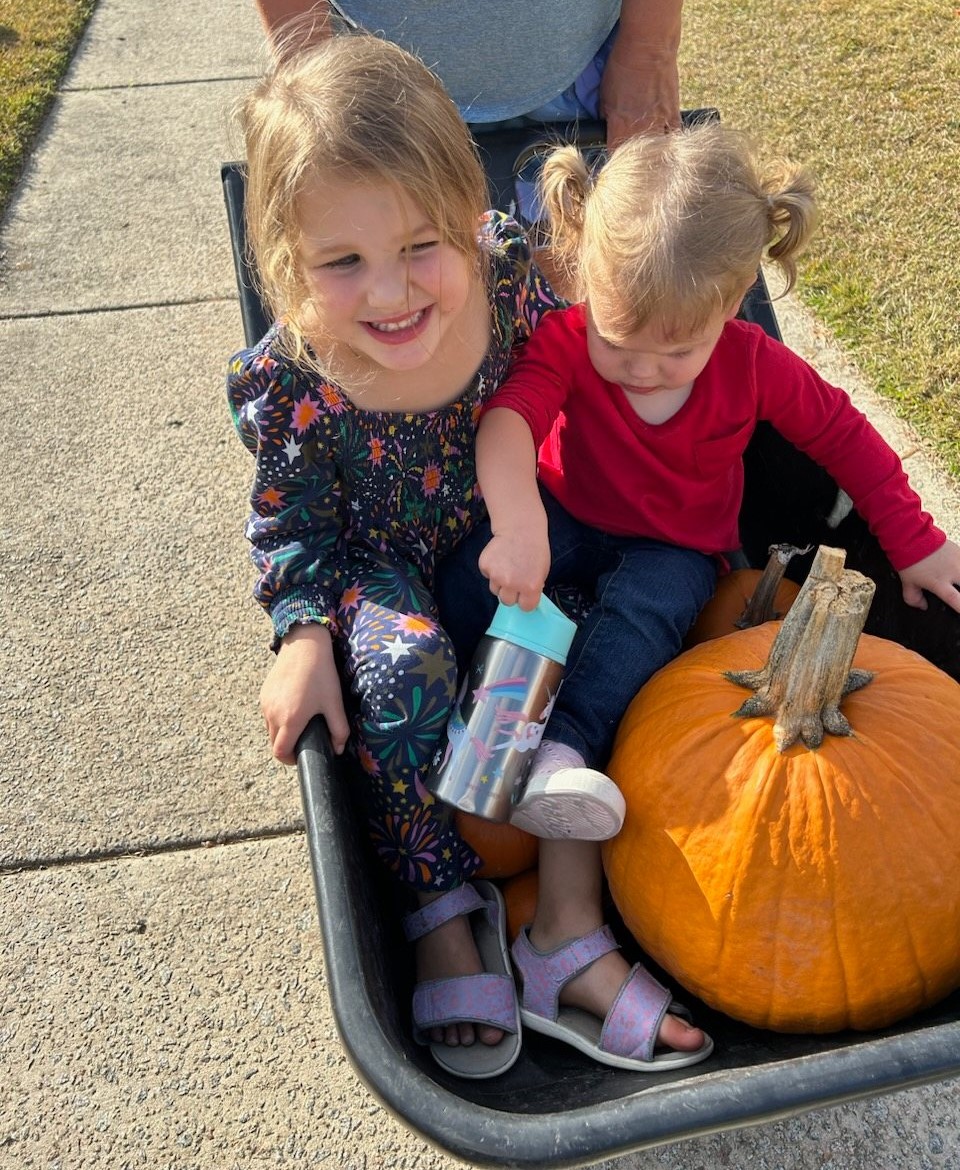
Pretty Too Caroline, granddaughters Ella and Molly, and I were their “box” supporters; as Pretty and Drew did warm-ups on the court for their match, the quiet murmur of the crowd was interrupted by four year old Ella who shouted in her best outside voice, Go Daddy, go Nana!
The Victory lunch after the match took place at a Chili’s restaurant with fajitas, chips and salsa the Champs choices for food, breaking down the weekend matches the Champs choices for conversation. A good time was had by all.
Congratulations to Drew and his mom on the 2023 Championship – your “box” is very proud of you!
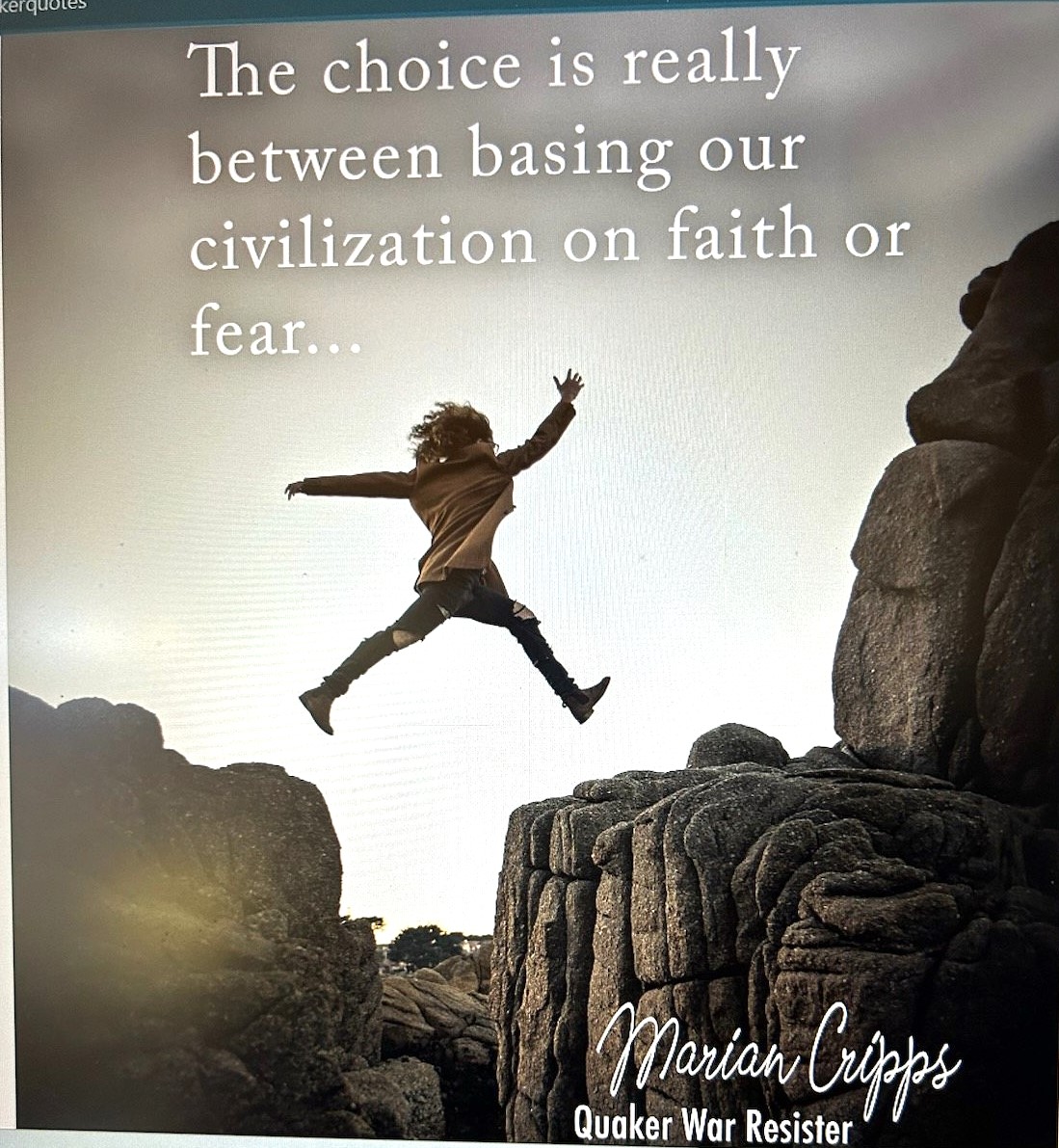
“While there are no set beliefs in Quakerism, you will often see a common group of goals, called testimonies: simplicity, peace, integrity, community, equality, and stewardship (SPICES).” When I read this on my Google search for information on Quakers, I said to myself Wow, this is what you’ve believed all your life, these are your core values, turns out you’re a Quaker. Oh, gosh. I was a Quaker for almost a hot minute before I looked at the division within the Friends on the issues of homosexuality and abortion. Sigh. Personal deal breakers for me. So much for community and equality, but count me in for simplicity and peace.
And while I’m thinking of peace, I must say I hesitate to write about people, places, or events that have the potential to (1) display my ignorance of the world outside my life with Pretty or (2) unintentionally do more harm than good to the universe or (3) some combination of these. However, the events in Israel over the past two weeks have evoked feelings of outrage eerily similar to the feelings of anger I experience daily with the updates on the continuing suffering of the people of Ukraine for the past twenty months. Whether for two weeks or two years, the clarion call for peace is difficult to ignore.
President Biden addressed the nation this week to reaffirm America’s commitments in Israel and Ukraine, but our assistance is now delayed by our own House divided in the legislative body that is responsible for appropriations – stymied in a quagmire of political posturing for power by people with no moral conscience while a world desperate for responsible leadership waits and hopes.
During the hot minute I thought I was a Quaker I read a famous quote by an even more famous Quaker named William Penn. Last night Pretty reminded me to refrain from my focus on situations beyond my control, and the Penn quote today hammered home Pretty’s philosophy of living in the moment.
“I expect to pass through this world but once. Any good therefore that I can do, or any kindness or abilities that I can show to any fellow creature, let me do it now. Let me not defer it or neglect it, for I shall not pass this way again.”
It seems to me the issue is not about labels, but the questions remain timely for the ages. Can we be kind, will we do good to our fellow human beings? If not today, when? If not us, who? Live in the moment for sure, leave the past failures with their guilt behind – focus on the present with its opporunities for outrageous acts of kindness, everyday rebellions for building communities where equality and inclusion are the foundations of peace.











 I'll Call It Like I See It
You must be logged in to post a comment.