Tag: black history month

  • Willie Flora: A Hidden Gem in Black History and Family Legacies

    Willie Flora: A Hidden Gem in Black History and Family Legacies


    On my 66th. birthday I sat in a pew behind the family at a celebration of life in the Jerusalem Starlight Encampment Building in Simonton, Texas. It was my only visit to the church, and I was there to say goodbye to a Black woman who had been my best friend, like a second mother to me, for the previous forty-five years.

    “Her legacy will be cherished by her five daughters, two sons, twenty-one grandchildren, twenty-four great-grandchildren, three nieces and a host of great-nieces, nephews, relatives and friends,” was part of the commentary on the life of a Black woman whose celebration of life took place on April 21, 2012, in the city of Simonton, Texas, which was located within the Houston metropolitan area.

    Willie Meta “Ninnie” Robbins Flora wasn’t a famous public figure like Maya Angelou, not a political icon of the Civil Rights movement like Rosa Parks, not a household name like Shirley Chisholm – and yet her influence has been felt in the lives of ordinary people who were touched by her generosity of spirit, her keen sense of humor, and her loving care for those who needed help in any form. She has earned her place in Black History Month to me and others. Her niece Verna wrote a moving tribute to her Aunt Ninnie for the Celebration Program in 2012.

    Aunt Ninnie was called many names, Skin, Cat Momma, Girlie, Aunt, Cousin, Sister, Road dog, Mother, but most of all she was called Mom. She was the type of person that, whatever you needed, no matter what it was, you had it. Now I guess you are wondering, “Why Road dog?” You see, my Auntie was my best friend. I remember when I was staying in Houston, I would call my Auntie every day and ask her what she was doing, and she would say,”Sitting on the side of the bed waiting on the next thing smoking.” We didn’t talk very much; we just enjoyed each other’s company. Man! We all loved her cooking! We couldn’t wait til Sunday, because that’s when we all met after church, and what a time we had! Auntie had something that everyone liked, because she wanted to make everyone happy. That’s the kind of person she was. Our loved one was no stranger to anyone. She was always there with a helping hand. I could go on and on about Mrs. Willie Flora. So Auntie, I’m waiting on the next thing smoking. See you on the other side. Rest in Peace, Love, Verna

    *******************

    Willie was in my life from the summer I graduated college in 1967 until her passing in 2012. As Verna said in her tribute above, she was always there with a helping hand to everyone – including me and my entire family.

    I loved Willie Flora. She was wise with wisdom born of pain, but she turned her pain into a quick wit that laughed at herself and everyone she knew. She had spunk, and I admired her for standing tall – refusing to be defined by a world that often saw only the color of her skin.

    I miss her to this day. I am waiting with her and Verna for the next thing smoking on the other side.

    Sheila Rae
  • Remembering Jesse Jackson’s Impact on LGBTQ+ Rights

    Remembering Jesse Jackson’s Impact on LGBTQ+ Rights


    Jesse Louis Burns was born October 8, 1941, in Greenville, South Carolina. His mother was 18-year-old Helen Burns (1923-2015), and his father was her 33-year-old neighbor Noah Louis Robinson who was married to someone else. One year after Jesse was born his mother married Charles Henry Jackson, who later adopted him. Jesse took his step-father’s last name but remained in contact with Robinson until his passing in 1997.

    An ordained Baptist minister, Jackson became involved with the Civil Rights Movement through Dr. Martin Luther King, Jr. in the Southern Christian Leadership Conference. He had participated in the 1965 march from Selma to Montgomery and won Dr. King’s confidence. That was the starting point for six decades of activism for equal justice and liberty for all.

    Rev. Jackson had two unsuccessful campaigns for the Democratic nomination for President of the United States in 1984 and 1988. He advanced the concept of a Rainbow Coalition that included the LGBT community in a speech to the Democratic Convention in 1984:

    “We must address their concerns and make room for them,” he said of a constellation of oppressed people. “The Rainbow includes lesbians and gays,” Jackson said to cheers. “No American citizen ought to be denied equal protection from the law.”

    Jackson followed up on that commitment in 1987, when he spoke at the second National March on Washington for Lesbian and Gay Rights, soon after announcing his second bid for president.

    “We gather today to say that we insist on equal protection under the law for every American, for workers’ rights, women’s rights, for the rights of religious freedom, the rights of individual privacy, for the rights of sexual preference. We come together for the rights of all American people,” Jackson declared.

    Jesse Jackson’s “Rainbow Coalition” was more than just another rhetorical flourish from the legendary orator. He gave real substance to the phrase by uniting black and brown people, the poor, and — an important, but less remembered part of his legacy — LGBTQ+ people.

    (Greg Owen, LGBTQ Nation, February 17, 2026)

    I was thirty-eight years old when I heard Jesse Jackson speak about his Rainbow Coalition that included lesbians like me. In that 1984 national campaign for the Democratic Nomination for President, Jackson carried five primaries and caucuses: Louisiana, Virginia, the District of Columbia, one of two separate contests in Mississippi, and…South Carolina. (Wikipedia) He was the first Black candidate to win any major party state primary or caucus. He had my vote in both campaigns.

    Whether the issues were health care during the AIDS crisis in the 1980s or marriage equality thirty years later, Rev. Jesse Jackson understood institutional wrongdoing and called it out.

    “Marriage is based on love and commitment — not sexual orientation. I support the right of any person to marry the person of their choosing,” Jackson declared at a rally outside the U.S. Court of Appeals for the Ninth Circuit in San Francisco in December, 2010.

    (Rev. Irene Monroe, Whosoever, February 19, 2026)

    ************************

    I leave you today while mourning the loss of another champion of equal justice, not a perfect man, but someone who lives on in those who labor for a harvest yet unseen. During Black History Month we acknowledge his passing, celebrate his service, and ask for the wings of angels to lift him to a better place. The harvest is plentiful, but the laborers are few. Jesse Jackson labored with love.

    Thank you, Rev. Jackson, for reminding me years ago that “I Am Somebody.” I will miss you.

    Jesse Louis Jackson (October 08, 1941 – February 17, 2026)

  • Congressman John Lewis (1940-2020)

    Congressman John Lewis (1940-2020)


    Congressman John Lewis, civil rights activist and politician, passed away on July 17, 2020, after a brief battle with Stage IV pancreatic cancer. He was eighty years old. The next day then United States Senator Kamala Harris (D-CA) issued the following statement:

    Congressman John Lewis was an American hero—a giant, whose shoulders upon many of us stand. Throughout his life, he showed unending courage, generosity, and love for our country.

    As the son of sharecroppers in Alabama, John Lewis’ courage and vision placed him at the forefront of the civil rights movement. As the youngest speaker at the 1963 March on Washington, John Lewis knew the importance of bringing people together for an America that lives up to its ideals of liberty and equality for all.

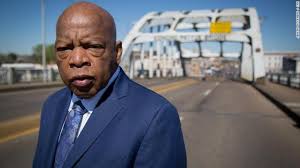
    It was an honor to once again join Congressman Lewis this year in Selma, Alabama in March for what would be his final walk across the Edmund Pettus Bridge, where just 55 years ago, Lewis was among those beaten by state troopers as they bravely marched from Selma to Montgomery for the right to vote. I was moved by his words: ‘On this bridge, some of us gave a little blood to help redeem the soul of America. Our country is a better country. We are a better people, but we have still a distance to travel to go before we get there.’

    We are grateful that John Lewis never lost sight of how great our country can be. He carried the baton of progress and justice to the very end. It now falls on us to pick it up and march on. We must never give up, never give in, and keep the faith.

    I will always cherish the quiet conversations we shared together when he inspired me to fight for the ideals of our beloved country. My prayers are with John Lewis’ family, loved ones, and the nation as we grieve this tremendous loss.

    No photo description available.

    For me, Black History Month would be incomplete without remembering the courage of John Lewis in the Civil Rights Movement on Bloody Sunday at the Edmund Pettus Bridge in Selma, Alabama. I have stood on that bridge, heard the voices of the oppressors and the oppressed as they sang from the pages of a distorted hymnal written in blood through the centuries.

    I still miss him. I miss her, too.

    ********************

    Never give up, never give in, and keep the faith.

  • the good name of John Lewis, American patriot

    the good name of John Lewis, American patriot


    I no longer have to imagine a world without John Lewis as I did when I originally published this piece in July, 2020 – because I have now lived in that world in real time for almost three years. I miss him.

    ********************

    I cannot imagine a world without John Lewis. I knew him first as a Civil Rights activist in the 1960s when I was in college, but I’ve known him longest as a congressman from our neighboring state of Georgia who for the past 33 years fought for social justice issues in the US House of Representatives. When John Lewis spoke, I listened. On July 17, 2020 his voice spoke for a final time as he drew his last breath, but his words will live on for me and countless others across the planet he loved.

    Two of my favorite quotes from Congressman Lewis:

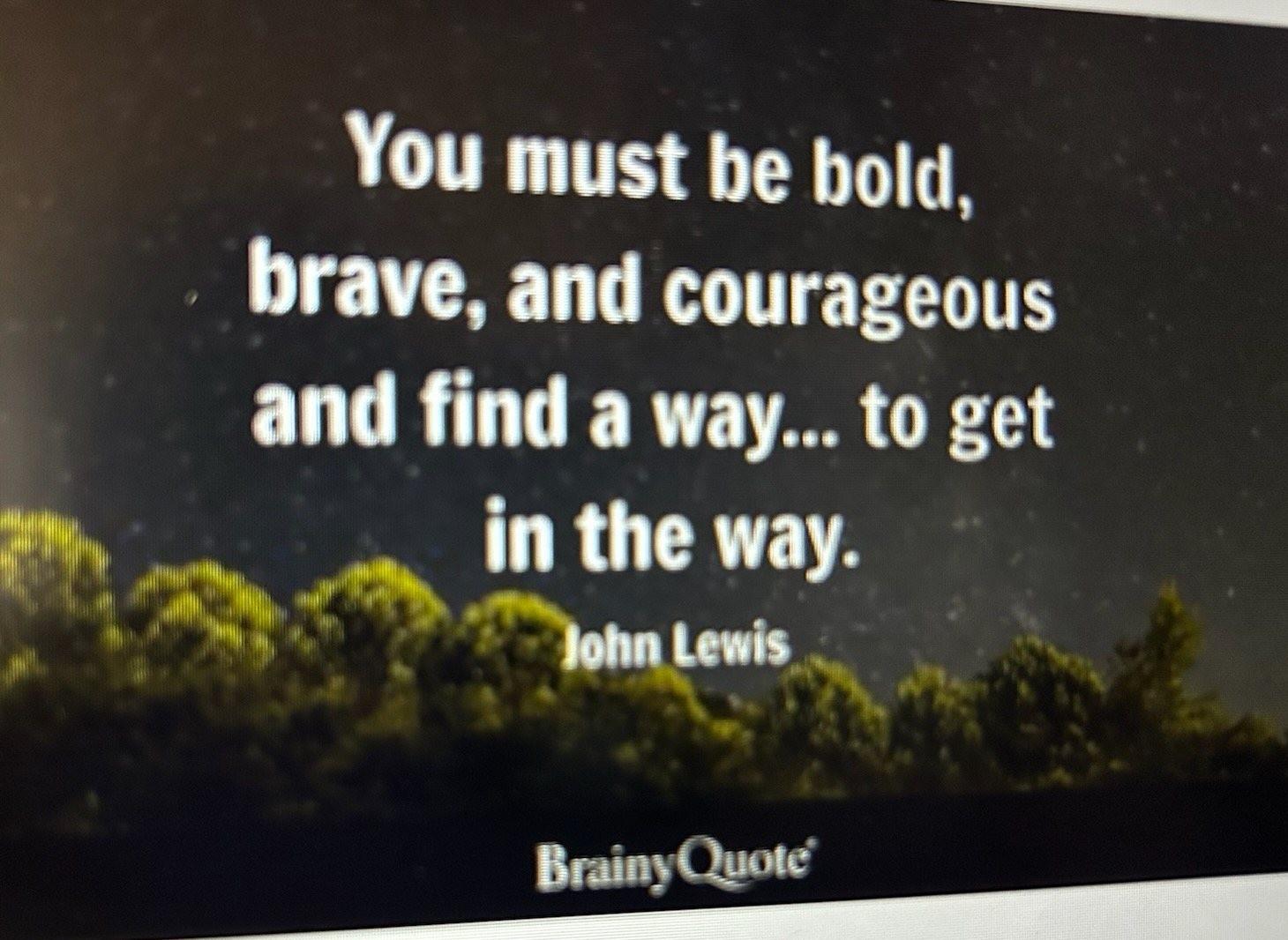
    “We may not have chosen the time, but the time has chosen us.”

    “If you see something that is not right, not fair, not just, you have a moral obligation to do something about it.”

    Then, this quote from a 2003 Op Ed by Congressman Lewis in the Boston Globe was particularly meaningful for me: “I’ve heard the reasons for opposing civil marriages for same-sex couples. Cut through the distractions and they stink of the same fear, hatred and intolerance I have known in racism and bigotry.” 

    From being beaten by police on Bloody Sunday at the Edmund Pettus Bridge in Selma, Alabama in 1965 to observing the creation of a Black Lives Matter Plaza in Washington, D. C.  near the White House in June of this year, John Lewis was a presence and driving force for good for more than 50 years. I truly cannot imagine a world without him.

    “You must be able and prepared to give until you cannot give any more. We must use our time and our space on this little planet that we call Earth to make a lasting contribution, to leave it a little better than we found it, and now that need is greater than ever before.” (quote provided by Jonathan Capehart in The Washington Post on June 10, 2020)

    One of my father’s favorite biblical sayings was “a good name is rather to be chosen than great riches.” (Proverbs 22:1)  The name of Congressman John Robert Lewis who died yesterday at the age of 80 will be written in our American history as a good name, perhaps even an “exceptional” one according to remarks by former President Barack Obama as he remembered Lewis today.

    I cannot imagine a world without the compassionate leadership of John Lewis, an American patriot. Your journey is over, John – your job was well done. Rest in peace.

    ************************

    John’s job was, indeed, well done. What about ours? Will we leave this little planet we call Earth a little bit better than we found it? That is the challenge we face daily.   Onward.

  • waiting on the next thing smoking

    waiting on the next thing smoking


    “Her legacy will be cherished by her five daughters, two sons, twenty-one grandchildren, twenty-four great-grandchildren, three nieces and a host of great-nieces, nephews, relatives and friends,” was part of the commentary on the life of a Black woman whose celebration of life took place on April 21, 2012 in the city of Simonton, Texas, which is located within the Houston metropolitan area.

    Willie Flora wasn’t a famous public figure like Maya Angelou, not a political icon of the Civil Rights movement like Rosa Parks, not a household name like Shirley Chisholm – and yet her influence has been felt in the lives of ordinary people who were touched by her generosity of spirit, her keen sense of humor, and her loving care for those who needed help in any form. She has earned her place in Black History Month to many. Her niece Verna wrote a moving tribute to her Aunt Ninnie for the Celebration Program in 2012.

    Aunt Ninnie was called many names, Skin, Cat Momma, Girlie, Aunt, Cousin, Sister, Road dog, Mother, but most of all she was called Mom. She was the type of person that, whatever you needed, no matter what it was, you had it. Now I guess you are wondering, “Why Road dog?” You see, my Auntie was my best friend. I remember when I was staying in Houston, I would call my Auntie every day and ask her what she was doing, and she would say,”Sitting on the side of the bed waiting on the next thing smoking.” We didn’t talk very much; we just enjoyed each other’s company. Man! We all loved her cooking! We couldn’t wait til Sunday, because that’s when we all met after church, and what a time we had! Auntie had something that everyone liked, because she wanted to make everyone happy. That’s the kind of person she was. Our loved one was no stranger to anyone. She was always there with a helping hand. I could go on and on about Mrs. Willie Flora. So Auntie, I’m waiting on the next thing smoking. See you on the other side. Rest in Peace, Love, Verna

    Willie was in my life from the summer I graduated from college in 1967 until her passing in 2012. As Verna said in her tribute above, she was always there with a helping hand to everyone including me and my entire family.

    I loved Willie Flora. I miss her to this day and am waiting with her and Verna on the next thing smoking. See you on the other side, Willie. Rest in Peace, Love, Sheila Rae

    ****************