Tag: black lives matter

  • cross over the bridge

    cross over the bridge


    In June, 2015 two separate events captured the attention of not only the United States but also countries on other continents. Yes, indeed. We were part of the good, the bad and the very ugly. I wrote this piece the day after the Supreme Court ruled same-sex marriage was the law of the land,  the day of the funeral for the Reverend Clementa Pinckney who was one of the Emanuel Nine in Charleston, South Carolina.

    *****************************

    Traveling to East Tennessee last week, Pretty and I listened to a collection of Patti Page hits. One of the songs she sang in this album which was recorded at Carnegie Hall in 1997 was Cross Over the Bridge – a song I hadn’t heard since 1954 when Patti originally recorded it –  but one I remembered singing while my mother played the yellow piano keys of the ancient upright piano in our living room in the tiny town of Richards in rural Grimes County, Texas. My mom bought sheet music like some people bought cigarettes back then…she was addicted to it. One of her favorites was Cross Over the Bridge so naturally eight-year-old me learned the lyrics as my mother sang and played which meant I was able to sing along with Patti in the car while Pretty and I rode through the gorgeous vistas of the Upstate of South Carolina toward the incredible views of the mountains in East Tennessee. Mine eyes did see the glory.

    Cross over the bridge, cross over the bridge…Change your reckless way of living, cross over the bridge…Leave your fickle past behind you, and true romance will find you, Brother, cross over the bridge.

    Admittedly this is a love song in the tradition of the 1950s favorite sentiments, but as I was trying to digest and cope with the overwhelming seesaws of emotion I felt yesterday, crossing bridges came to mind.

    Yesterday morning I woke up in a new world…truly a new world for me and my family. The Supreme Court of the United States lifted my status as a citizen. I was no longer “lesser than.” I was a person who mattered. By recognizing the fundamental right to marry for all same-sex couples in every state in the nation, SCOTUS recognized me as a person who was entitled to my own pursuit of happiness with life and liberty guaranteed as a bonus.

    Two years to the day after the favorable ruling in the Edie Windsor case that gave equal federal treatment to the same-sex marriages recognized in twelve states and the District of Columbia at the time, the Supremes crossed a bridge to leave a fickle past of outright discrimination behind all of us and yes, to allow true romance for whoever we love. We crossed a bridge to walk a path toward full equality for the entire LGBTQ community because of the efforts of people who worked at coming out to their parents, friends, co-workers – everyone in their daily lives – to reveal their authentic selves.

    It was a day of rejoicing for Pretty and me in our home; we were beside ourselves with an emotional high as the breaking news unfolded on the television before our eyes. To hear a Gay Men’s Chorus sing our national anthem outside the building in Washington, D.C. where history was being made brought chills and tears to our eyes. We savored the moment together.

    But the celebration was cut short by the next four hours of the television coverage of the funeral of the Reverend Clementa Pinckney, one of the Emanuel Nine slain in his church in Charleston, South Carolina the week before when he was leading a Bible Study group at the church. The celebration of his life was a long one for a man who had lived the relatively short life of only forty-one years. But this man’s life had counted for more than his years.

    He began preaching at the age of thirteen and was a pastor at eighteen years of age. The men and women who reflected on Reverend Pinckney’s life did so with exuberance and humor as they told their personal stories of interacting with him as friends, family and co-workers. The picture that emerged was that of a good man who loved his family, his church and his country with its flawed history of systemic racism. He was a man on a mission to make life better for those who felt they had no voice to speak about their basic needs of food and shelter, their educational opportunities, a flawed criminal justice system. He was a man who cared, he was passionate about making a difference.

    He was murdered by another kind of man who had a reckless way of living and a disregard for the sanctity of human life. He was murdered by a white man who was taught to hate the color black as a skin color in a society too often divided by colors, creeds and labels. We need to change our reckless way of living as a people.

    We need to open our eyes and our hearts to see glimpses of truth, as the old hymn admonishes. Open our eyes that I may see glimpses of truth thou hast for me. And may we not just see the truth, but may we speak and act as though the truth is important because it is. When our eyes are opened, for example, to the pain the Confederate Flag flying on the public state house grounds inflicts on a daily basis to many of our citizens, we must make every effort to take it down. We must speak up and act out. (the flag came down on July 10, 2015)

    President Obama spoke in his eulogy about the grace that each of us has from God, but that none of us earned. Regardless of our concept of God, we know grace is unmerited favor. We live in a country of contrasts and  sometimes conflicts, but for those of us to whom grace has been given, we are compelled to share this bounty with everyone we encounter – whether they agree or disagree with us in our political ideals. This is harder to practice than preach. Reverend Clementa Pinckney both preached and practiced grace  in his life as he crossed another kind of bridge – a bridge we will all cross at some point.

    The tragedy of his untimely crossing took Pretty and me on a roller coaster of emotions as we watched the funeral yesterday. From the euphoria of the Supreme Court ruling early in the morning to the depths of despair as we remembered the losses of the Emanuel Nine during the funeral of Reverend Pinckney to the stirring tribute filled with hope by President Barak Obama that raised our spirits once again to believe in the possibility of grace; we crossed over two bridges in one day that we will never forget. Patti Page had none of this in mind when she sang her love song in 1954, but I’d like to  think my mother would be happy to know her music inspired more than a little girl’s learning to carry a tune.

    **********************

    Nine years later we continue to cross over the bridges of systemic racism that divide us in this country. The murder of George Floyd in May of 2020 ignited marchers in the streets around the world to cross bridges for civil rights with similar passions to those of  John Lewis and the others who crossed the Edmund Pettus Bridge in Selma, Alabama in 1965. I believe the Black Lives Matter movement along with the passing of civil rights icons Congressmen John Lewis and Elijah Cummings were the beginning of the end for a Trump presidency that failed spectacularly to successfully combat an enemy known as Covid 19 in 2020 – an administration committed more to the stock market than  the welfare of its citizens, a presidency that encouraged politics of divisiveness over unity, a political party with ongoing threats to democratic cornerstones. The loss of nearly 300,000 American lives was, and continues to be, a bridge too far of failed leadership that resulted in the contentious removal of a one-term impeached president  by 81 million plus voters in the November election of 2020; 74 million people voted to re-elect him.

    ******************

    And yet here we are in 2024 with 77 million people voting to re-elect a president who has devoted much of his past four years avoiding paying settlements and/or serving prison sentences determined by judges and jurors in courts of law while 76 million people cast their votes for other candidates. The Democrats lost their way and in the process lost the confidence of the American people. It may just be a bridge too far to cross.

  • the good name of John Lewis, American patriot

    the good name of John Lewis, American patriot


    I no longer have to imagine a world without John Lewis as I did when I originally published this piece in July, 2020 – because I have now lived in that world in real time for almost three years. I miss him.

    ********************

    I cannot imagine a world without John Lewis. I knew him first as a Civil Rights activist in the 1960s when I was in college, but I’ve known him longest as a congressman from our neighboring state of Georgia who for the past 33 years fought for social justice issues in the US House of Representatives. When John Lewis spoke, I listened. On July 17, 2020 his voice spoke for a final time as he drew his last breath, but his words will live on for me and countless others across the planet he loved.

    Two of my favorite quotes from Congressman Lewis:

    “We may not have chosen the time, but the time has chosen us.”

    “If you see something that is not right, not fair, not just, you have a moral obligation to do something about it.”

    Then, this quote from a 2003 Op Ed by Congressman Lewis in the Boston Globe was particularly meaningful for me: “I’ve heard the reasons for opposing civil marriages for same-sex couples. Cut through the distractions and they stink of the same fear, hatred and intolerance I have known in racism and bigotry.” 

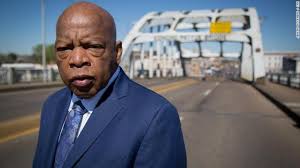
    From being beaten by police on Bloody Sunday at the Edmund Pettus Bridge in Selma, Alabama in 1965 to observing the creation of a Black Lives Matter Plaza in Washington, D. C.  near the White House in June of this year, John Lewis was a presence and driving force for good for more than 50 years. I truly cannot imagine a world without him.

    “You must be able and prepared to give until you cannot give any more. We must use our time and our space on this little planet that we call Earth to make a lasting contribution, to leave it a little better than we found it, and now that need is greater than ever before.” (quote provided by Jonathan Capehart in The Washington Post on June 10, 2020)

    One of my father’s favorite biblical sayings was “a good name is rather to be chosen than great riches.” (Proverbs 22:1)  The name of Congressman John Robert Lewis who died yesterday at the age of 80 will be written in our American history as a good name, perhaps even an “exceptional” one according to remarks by former President Barack Obama as he remembered Lewis today.

    I cannot imagine a world without the compassionate leadership of John Lewis, an American patriot. Your journey is over, John – your job was well done. Rest in peace.

    ************************

    John’s job was, indeed, well done. What about ours? Will we leave this little planet we call Earth a little bit better than we found it? That is the challenge we face daily.   Onward.

  • international day of the girl (or two girls!)

    international day of the girl (or two girls!)


    Pretty and I are fortunate to celebrate international day of the girl every week when we care for our granddaughter Ella who turned 2 years old on October 1st., but we were thrilled to find out earlier this year Pretty Too and Number One Son are expecting another little girl in January! Ella announced the news to everyone last week…

    May be an image of baby, sitting and indoor

    Pretty Too shared this picture of our quite grown up two year old who is more than poetry in motion – she is a force of nature – and language. Movement, words. Every new experience requires exploration and discovery. Frankly, my dears, her energy exhausts this grandmother who was 73 years old when she was born and two years older today, but Ella insists I keep up with each game we play in her imagination informed by the adventures of Deema and Sally on YouTube videos.

    The world Ella and her little sister Molly will inherit from Pretty and me will afford them opportunities to learn in an environment richer in technology with access to a wealth of answers to questions we didn’t know how to ask, but how will historians frame those answers. Who will narrate the journey of the Civil Rights movement of the 1960s, the Equal Rights Amendment failure in the 1970s and beyond, the Gay Nineties, Black Lives Matter, Love is Love, Time’s Up, a woman’s right to choose…will these historians represent the truth and consequences of denying climate change, the power of divisiveness and income inequality, the reality of hunger for the poor children not just in America but also around the world, the election of Joe Biden in 2020, the insurrection in the Capitol building on January 06, 2021. We must safeguard these truths and pass them on to our granddaughters.

    The message will be clear from us. Love who you are, love others as you do yourself. Learn to identify the difference between what is right and what is wrong. When you see something that is wrong, work to change it.

    When Ella began to love the music Pretty played for her on her cell phone, one of the first videos she saw was March, March from The Chicks. This is my message for the village that is entrusted with the care of all little girls everywhere.

    ********

    Stay safe, stay sane, get vaccinated and stay tuned.

  • Henry Louis Gates, Jr.: these are his stories, these are his songs

    Henry Louis Gates, Jr.: these are his stories, these are his songs


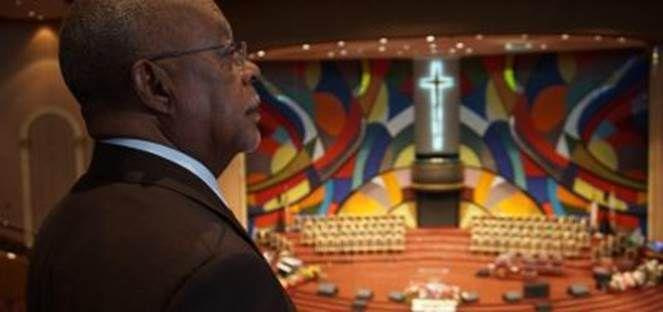
    “The church is the oldest, the most continuous and most important institution ever created by the African American people.” — Henry Louis Gates, Jr. told Jeffrey Brown of PBS in an interview about his new four hour two-part documentary The Black Church: This is Our Story, This is Our Song that premiered on PBS in February as a salute to Black History Month. Gates should know since he is the writer, host and executive producer of the film aimed at telling the amazing stories of the people who shaped not only religion but also politics and culture through more than 400 years of black American life in this country.

    Johnson & Johnson, one of the corporate sponsors of the documentary, introduced the PBS special with these words: “Not all black American stories are simple or easy to tell, but for many years Henry Louis Gates, Jr. has told them like no one else by rediscovering lost narratives, correcting historical misconceptions, resurrecting forgotten heroes. Johnson & Johnson has been with him through all these years and will still be along for this incredible journey.”

    From the primitive Praise House on St. Helena Island, one of the sea islands in Beaufort County on the lower coast of South Carolina, to the historic Mother Emanuel African Methodist Episcopal Church in Charleston that was the site of the massacre of nine members including pastor Clementa Pinckney in June, 2015, the black church in the United States has helped to define the journey of African Americans from enslavement to emancipation, from Jim Crow to public lynchings, from segregation to Civil Rights.

    Dr. Gates (PhD from Cambridge) is internationally recognized and respected as an author, literary critic, professor, public intellectual, documentary film producer, essayist and historian whose life-long passion for black history focuses on weaving the African American experience into the fabric of a multi-racial, multi-cultural community that delineates his hope for the country he calls home. He serves currently as the Alphonse Fletcher University Professor and Director of the Hutchins Center for African and African American Research at Harvard University.

    Sound stuffy? Not so much. One of my favorite scenes in the Black Church documentary (that I’ve now watched two times!) is the visit by Dr. Gates to the Ebenezer Baptist Church in Atlanta where Patrice Turner, a Director of Worship and Arts as well as an accomplished gospel pianist, sits at a piano in a large empty worship auditorium with only Dr. Gates standing next to the piano, clapping, singing, thoroughly enjoying two favorite spirituals “Ride On, King Jesus” no man can hinder thee and “Great Gettin’ Up Morning” fare ye well, fare ye well. Thank you, Jesus! he exclaimed when the music stopped.

    Clearly the documentary celebrates not only the enduring faith of Henry Louis Gates, Jr. but also acknowledges the shortcomings of the black church in its dealings through the years with sexism, homophobia and domestic violence. For example, one of the unresolved questions today is where is the black church in Black Lives Matter?

    We celebrate Black History Month in February every year, and this year I choose to honor a living historian whose stories inspire me and whose songs lift me up from the inharmonious existence of a Covid-19 universe. Thank you, Dr. Gates!

    *********************

    Stay safe, stay sane and please stay tuned.

  • cross over the bridge

    cross over the bridge


    In June, 2015 two separate events captured the attention of not only the United States but also countries on other continents. Yes, indeed. We were part of the good, the bad and the very ugly. I wrote this piece the day after the Supreme Court ruled same-sex marriage was the law of the land,  the day of the funeral for the Reverend Clementa Pinckney who was one of the Emanuel Nine in Charleston, South Carolina.

    *****************************

    Traveling to East Tennessee last week, Pretty and I listened to a collection of Patti Page hits. One of the songs she sang in this album which was recorded at Carnegie Hall in 1997 was Cross Over the Bridge – a song I hadn’t heard since 1954 when Patti originally recorded it –  but one I remembered singing while my mother played the yellow piano keys of the ancient upright piano in our living room in the tiny town of Richards in rural Grimes County, Texas. My mom bought sheet music like some people bought cigarettes back then…she was addicted to it. One of her favorites was Cross Over the Bridge so naturally eight-year-old me learned the lyrics as my mother sang and played which meant I was able to sing along with Patti in the car while Pretty and I rode through the gorgeous vistas of the Upstate of South Carolina toward the incredible views of the mountains in East Tennessee. Mine eyes did see the glory.

    Cross over the bridge, cross over the bridge…Change your reckless way of living, cross over the bridge…Leave your fickle past behind you, and true romance will find you, Brother, cross over the bridge.

    Admittedly this is a love song in the tradition of the 1950s favorite sentiments, but as I was trying to digest and cope with the overwhelming seesaws of emotion I felt yesterday, crossing bridges came to mind.

    Yesterday morning I woke up in a new world…truly a new world for me and my family. The Supreme Court of the United States lifted my status as a citizen. I was no longer “lesser than.” I was a person who mattered. By recognizing the fundamental right to marry for all same-sex couples in every state in the nation, SCOTUS recognized me as a person who was entitled to my own pursuit of happiness with life and liberty guaranteed as a bonus.

    Two years to the day after the favorable ruling in the Edie Windsor case that gave equal federal treatment to the same-sex marriages recognized in twelve states and the District of Columbia at the time, the Supremes crossed a bridge to leave a fickle past of outright discrimination behind all of us and yes, to allow true romance for whoever we love. We crossed a bridge to walk a path toward full equality for the entire LGBTQ community because of the efforts of people who worked at coming out to their parents, friends, co-workers – everyone in their daily lives – to reveal their authentic selves.

    It was a day of rejoicing for Pretty and me in our home; we were beside ourselves with an emotional high as the breaking news unfolded on the television before our eyes. To hear a Gay Men’s Chorus sing our national anthem outside the building in Washington, D.C. where history was being made brought chills and tears to our eyes. We savored the moment together.

    But the celebration was cut short by the next four hours of the television coverage of the funeral of the Reverend Clementa Pinckney, one of the Emanuel Nine slain in his church in Charleston, South Carolina the week before when he was leading a Bible Study group at the church. The celebration of his life was a long one for a man who had lived the relatively short life of only forty-one years. But this man’s life had counted for more than his years.

    He began preaching at the age of thirteen and was a pastor at eighteen years of age. The men and women who reflected on Reverend Pinckney’s life did so with exuberance and humor as they told their personal stories of interacting with him as friends, family and co-workers. The picture that emerged was that of a good man who loved his family, his church and his country with its flawed history of systemic racism. He was a man on a mission to make life better for those who felt they had no voice to speak about their basic needs of food and shelter, their educational opportunities, a flawed criminal justice system. He was a man who cared, he was passionate about making a difference.

    He was murdered by another kind of man who had a reckless way of living and a disregard for the sanctity of human life. He was murdered by a white man who was taught to hate the color black as a skin color in a society too often divided by colors, creeds and labels. We need to change our reckless way of living as a people.

    We need to open our eyes and our hearts to see glimpses of truth, as the old hymn admonishes. Open our eyes that I may see glimpses of truth thou hast for me. And may we not just see the truth, but may we speak and act as though the truth is important because it is. When our eyes are opened, for example, to the pain the Confederate Flag flying on the public state house grounds inflicts on a daily basis to many of our citizens, we must make every effort to take it down. We must speak up and act out. (the flag came down on July 10, 2015)

    President Obama spoke in his eulogy about the grace that each of us has from God, but that none of us earned. Regardless of our concept of God, we know grace is unmerited favor. We live in a country of contrasts and  sometimes conflicts, but for those of us to whom grace has been given, we are compelled to share this bounty with everyone we encounter – whether they agree or disagree with us in our political ideals. This is harder to practice than preach. Reverend Clementa Pinckney both preached and practiced grace  in his life as he crossed another kind of bridge – a bridge we will all cross at some point.

    The tragedy of his untimely crossing took Pretty and me on a roller coaster of emotions as we watched the funeral yesterday. From the euphoria of the Supreme Court ruling early in the morning to the depths of despair as we remembered the losses of the Emanuel Nine during the funeral of Reverend Pinckney to the stirring tribute filled with hope by President Barak Obama that raised our spirits once again to believe in the possibility of grace; we crossed over two bridges in one day that we will never forget. Patti Page had none of this in mind when she sang her love song in 1954, but I’d like to  think my mother would be happy to know her music inspired more than a little girl’s learning to carry a tune.

    **********************

    Five years later we continue to cross over the bridges of systemic racism that divide us in this country. The murder of George Floyd in May of 2020 ignited marchers in the streets around the world to cross bridges for civil rights with similar passions to those of  John Lewis and the others who crossed the Edmund Pettus Bridge in Selma, Alabama in 1965. I believe the Black Lives Matter movement along with the passing of civil rights icons Congressmen John Lewis and Elijah Cummings were the beginning of the end for a Trump presidency that failed spectacularly to successfully combat an enemy known as Covid 19 in 2020 – an administration committed more to the stock market than  the welfare of its citizens, a presidency that encouraged politics of divisiveness over unity, a political party with ongoing threats to democratic cornerstones. The loss of nearly 300,000 American lives was, and continues to be, a bridge too far of failed leadership that resulted in the contentious removal of a one-term impeached president  by 81 million plus voters in the November election; 74 million people voted to re-elect him. But that’s a topic for another day.

    Stay safe, stay sane and please stay tuned.