Tag: dr martin luther king jr

  • We Will Not Let Hate Win


    This week marks the one-year anniversary of the massacre of  49 members of the lgbtq community in Orlando at the Pulse night club.

    We all remember and will stand with the people of Orlando who refuse to allow this tragedy to disrupt their ongoing belief, expressed again this week in their mantra, We Will Not Let Hate Win.

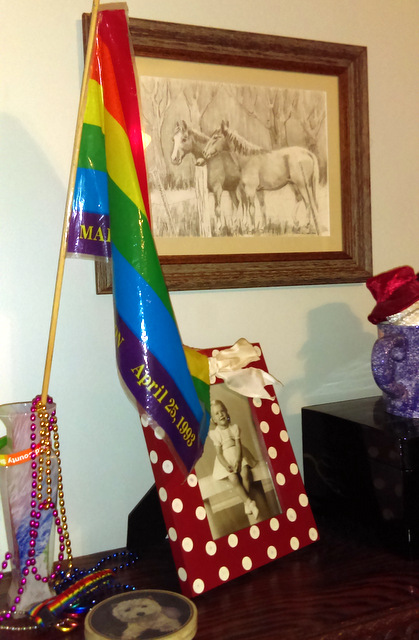
    The little girl in the picture looks up hopefully to the flag from the March on Washington in 1993. Forty years after that picture was taken, she carried a flag similar to this one preserved by Dick Hubbard who marched with Freddie Mullis and a large contingent of South Carolinians alongside her. It was a defining moment for all who stood tall for equality that weekend and returned home to begin the work of changing the political landscape of their state.

    There were no casualties during that protest, but there have been many since then… the Pulse shootings among the most notorious.

    I keep pictures of the little girl I was in my new office at Casita de Cardinal – originally because I thought they went well with  Pretty’s juvenile book collection she brought with her in the move. I asked for that bookcase to be placed in my direct vision on the wall across from my desk. The Hardy Boys and Nancy Drew were favorite sleuths of mine in my childhood so they create a wonderful atmosphere for my new work space.

    Now, however, I think the pictures are important on many levels. They are vivid reminders of a time and place where questioning, longings and determination to pursue the whole earth as my territory, as my daddy promised me, led me to become the woman who marched in Washington in 1993.

    Today during the anniversary week of the Orlando tragedy we understand we’ve come too far to turn back, as Dr. Martin Luther King, Jr.’s  famous quote became the poster for the 1993 march. For the survivors of the Pulse nightmare, the families of those we lost who continue to mourn, and for those who would limit our pursuit of happiness, his words of wisdom continue to be relevant in our ongoing adversities:

    “Our freedom was not won a century ago, it is not won today, but some small part of it is in our hands, and we are marching no longer by ones and twos but in legions of thousands, convinced now it cannot be denied by human force.”

    We will not let hate win.


  • The First Census – North Carolina – 1790


    Life with Pretty is always an adventure with few dull moments. For example, we just spent at least five minutes downstairs hollering at each other about whether I had used her gift certificate she gave me for Christmas for a free massage with our friend Meghan or not, and she must be right… because she must be right, which is a family trait on her daddy’s side.  All of this heated discussion started when I found a Subway gift card I had given her for Christmas in the envelope with the massage certificates. It was downhill from there.

    teresa-and-charly-1

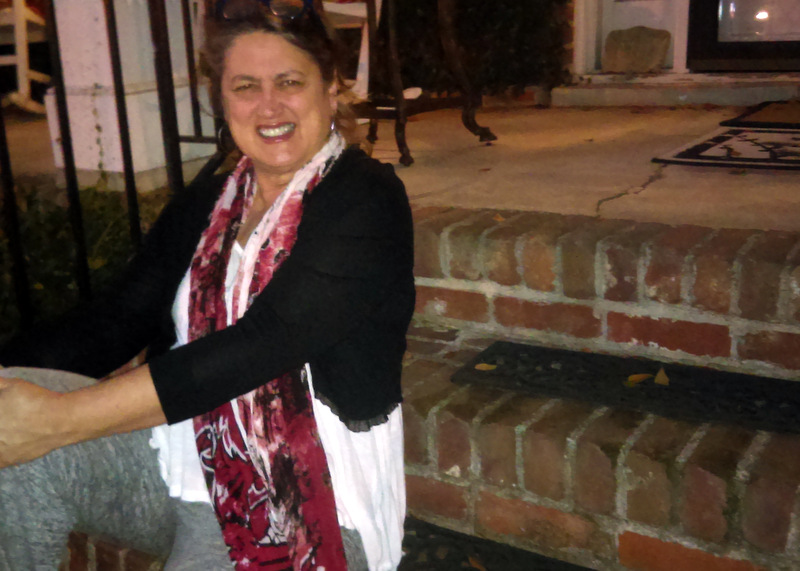
    Pretty on the steps of Casa de Canterbury

    One of the biggest bonuses of life with Pretty, however, is her fascination with books – any book, all books – which has resulted in the largest collection of books in Casa de Canterbury I’ve personally seen anywhere other than a public library or the Adams house in Quincy, Massachusetts where John and John Quincy kept their books in a separate building from their home.

    I find myself having access to unique books as a result of Pretty’s library, and last week she had a copy of the First Census – North Carolina lying on a stack of books in our living room. The Department of Commerce and Labor Bureau of the Census took the first census of the Heads of Families in the year 1790. Pretty’s copy of this North Carolina count was printed in 1908 by the Washington Printing Office. To put this in historical perspective, the Union consisted of 12 states when the First Census Act was passed on March 1, 1790 and signed by President George Washington, who was, as we recall, our first President.

    In that first census in North Carolina, there were five categories of people to be counted:

    (1) Free white males of 16 years and upward, including heads of families

    (2) Free white males under 16 years

    (3) Free white females, including heads of families

    (4) All other free persons

    (5) Slaves

    Now why would I have any interest in this very old census, you might ask? Good question. The answer is Ding, Ding, Ding! the daily double.

    I have relatives from both of my paternal grandparents who lived in North Carolina in 1790 when this census was taken, and I wondered if I might be able to locate any of them. I knew about my family’s early connections to the state through my Ancestry Family Tree which has now given me way too much information about my forefathers.

    For example, my fourth great-grandfather William Morris was born in King George County, Virginia in 1730 and died in 1802 in Anson County, North Carolina. I wondered if I could find him in the 1790 Census since he likely would have been living in North Carolina at that time. Totally made sense.

    And in fact, I did find not one, but two William Morrises living in the Fayette District of Anson County, North Carolina during the census-taking.

    The first William had 1 free white male of 16 years and upward, 1 free white male under 16 years, 2 free white females and 2 slaves. I really was thunderstruck by that. I’m not sure what I had thought about my 4th. great-grandfather, but I had never in my wildest dreams imagined he was a slave owner. Surely it was a mistake.

    The second William Morris had 2 free white males of 16 years and upward, 1 free white male under 16 years, 2 free white females…and 4 slaves. Oh my God, I thought, that’s even worse.

    The ancestors I assumed would hold some moral objection or righteous indignation at the concept of owning another human being were actually slave owners themselves. I felt ashamed and sick at heart. I didn’t like that DNA flowing through me. I wish I hadn’t found it out, but there it was printed in a book published by the government.

    Well, back then everybody in North Carolina owned slaves – it was part of the agrarian economy, right?

    Wrong. While many of the households had slaves, many did not. My people did.

    My friend Millie Miller warned me that if I went down the Ancestry trail I would find out things I might not want to know. She was right – that same being right trait runs in her family, too, by the way.

    Nothing can change the reality of my family’s participation in this dark blight on American history – I would give anything if I could change that.

    But February is Black History Month, and what I can do today is celebrate the victories that have occurred in the Civil Rights movement during my lifetime and recognize the vast chasms of inequality that are the remainders of generations of oppression yet to be overcome and do my part to be on the right side of history in this moment.

    As Dr. Martin Luther King, Jr. said, “Our freedom was not won a century ago, it is not won today; but some small part of it is in our hands, and we are marching no longer by ones and twos but in legions of thousands, convinced now it cannot be denied by human forces.”
  • I’ve Been to the Mountaintop


    If you are a cyberspace friend of Red’s Rants and Raves and/or The Old Woman Slow’s Photos, you know South Carolina Pride was this past weekend in the state capitol of Columbia.  I took 163 digital images over the weekend and posted my favorites on the blogs.  I am a believer in the old adage “A picture is worth a thousand words,” and these pictures are images of hope, faith, love and joy – and the occasional unsmiling prophecy pretenders.  I love the pictures, but I can’t resist the thousand words, give or take a few.

    When I look at these images, I hear the voices of America singing.  I hear the cries of Paul Revere on his midnight ride and the loud sounds of argument and heated debate as the Founding Fathers (yes, Virginia – there were no mothers present) drafted the Constitution of the United States with a Bill of Rights guaranteeing individual liberties.

    I hear the sounds of slaves who could not speak to their masters, and I hear the whispers of abolitionists who spirited those slaves away in the darkness.  I hear the cries of the wounded and dying Confederate and Union soldiers as the artillery fired around them on the fields at Vicksburg and Gettysburg, and I hear the cannon fired in Charleston Harbor at Fort Sumter.

    I hear the choruses of the suffragettes who held a convention in Seneca, New York, and marched and dared to dream that women had the right to vote –  which they hoped would lead to greater equality, and I hear the roll call of states that  refused to ratify an Equal Rights Amendment which attempted to level the playing field for “the weaker sex” in the 1970s.

    I hear the singing of the marchers in Selma and Birmingham in the 1960s as they walked to overcome their harsh treatment.  I hear the voices of angry rappers today in Fullerton, Missouri, over the endless struggles for fair treatment in a country where equality is, too often, lip-synced.

    I hear the voices of the drag queens at Stonewall in 1969 as they refuse to be treated inhumanely and stand firm against the oppression of the gay community.  I hear the sounds of pleas by children who are thrown out of their homes and into the streets when their family confronts their sexuality.  I hear the sounds of comfort and support from people who respond with love to these children in distress.

    This is what I hear when I look at the digital images of the Pride March, but what I feel is entirely different. When you grow up feeling you are somehow not right, that there is something wrong with who you are and that you will never be good enough, and when you spend a lifetime being denied basic dignities and respect and are continually marginalized by being a part of a sub culture, and when you march in your hometown for twenty-five years and in those earlier years the prophecy pretenders outnumber the people who march with you, then the South Carolina Pride March this past weekend was like a parade for the astronauts who walked on the moon – minus the confetti and streamers.

    I wish I had the gift of Dr. Martin Luther King, Jr. to describe my feelings as I rode on the Pioneers Float Saturday, but since I don’t, I’ll borrow his words:

    “Well, I don’t know what will happen now.  We’ve got some difficult days ahead.  But it doesn’t matter with me now.  Because I’ve been to the mountaintop.  And I don’t mind.  Like any man I would like to live a long life.  Longevity has its place.  But I’m not concerned about that now…God’s allowed me to go up to the mountain.  And I’ve looked over. And I’ve seen the promised land.  I may not get there with you.  But I want you to know today that we, as a people, will get to the promised land.  And I’m happy, today,  I’m not worried about anything.  I’m not fearing any man.”

    I’ve been to the mountaintop.