

“Pass Grandpa Schlinke the fried chicken, Sheila Rae,” my grandmother Dude said as I was about to take a drumstick from the platter in front of me. “You know he always gets the first piece.”
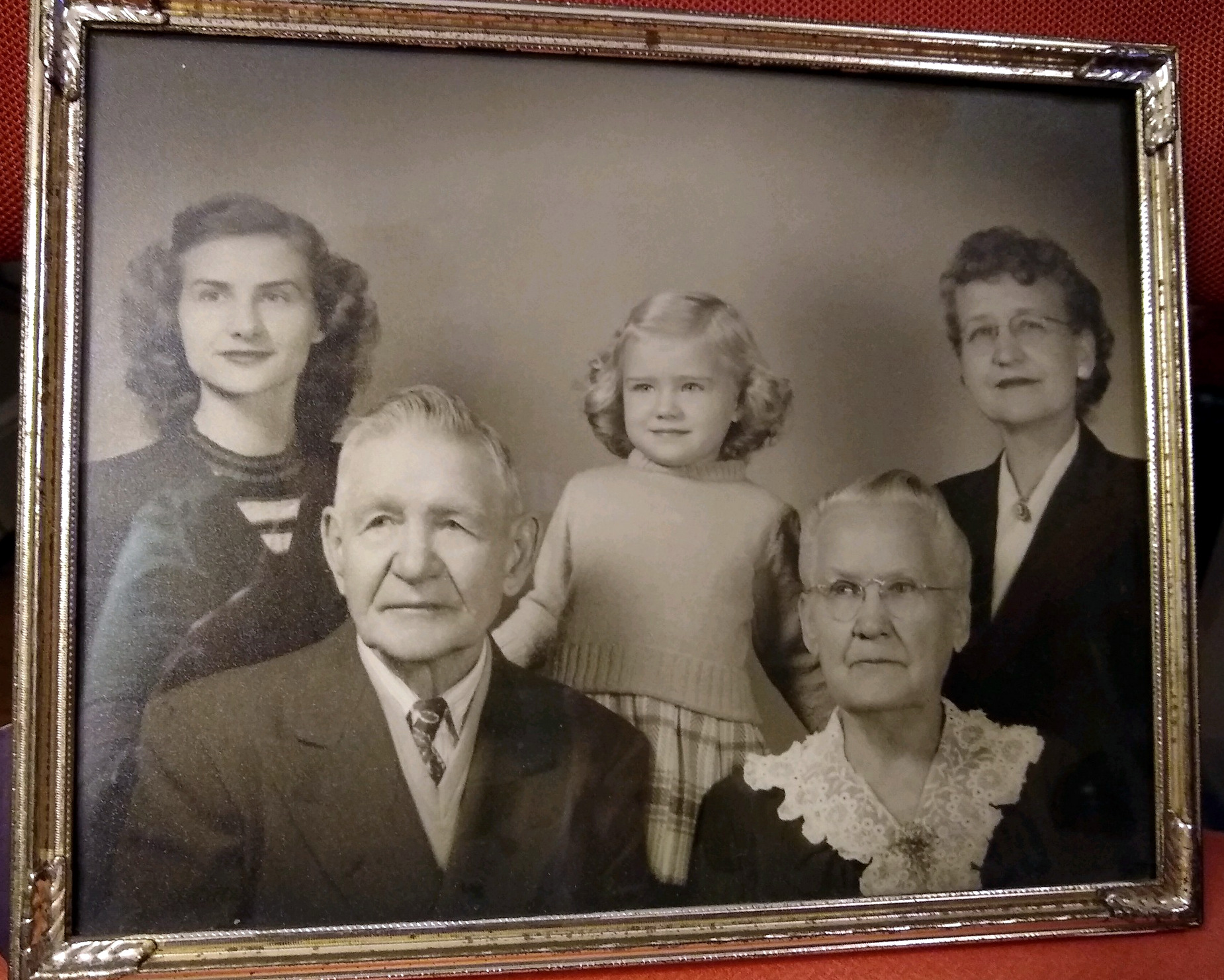
How could anyone forget, I thought. I picked up the platter and gave it to my great-grandfather, who sat like a king at the head of our dining room table. He looked imperious as he sat there in his starched white shirt and black trousers held up by dark suspenders. His face was inscrutable as he searched the platter for his favorite pieces. He found the two best ones with white meat, the breast and the pulley bone, and picked them up with his fingers.He placed them ceremoniously on his plate. With something of a grunt, he passed the meat to my Grandma Schlinke, who was seated on his right.
And so, the order was established. Every dish went first to Grandpa Schlinke, and then made its way from him to the rest of us. Uncle Toby, my mother’s brother who lived with us, sat next to Grandma Schlinke. Then came Daddy, who sat at the foot of the table at the opposite end from Grandpa. Mama sat next to him, and I sat in the middle between her and Dude, my mother’s mother. Dude had to be next to Grandpa so she could jump up to get him more sweet tea or homemade rolls. He had a healthy appetite.
Grandpa and Grandma Schlinke were my grandmother’s parents. They lived in Houston with my Uncle Otto, who was their youngest son. Once each summer they came to Richards which they considered way out in the country to stay with us for a few days. Everything changed when they visited. For one thing, we ate every meal in the dining room, which we rarely used. For another, I slept on a pallet on the floor because we really didn’t have enough beds for everyone. It was okay, but I was usually happy to see them leave.
They were mysterious to me. I first believed part of the enigma was they didn’t speak English well. They had spoken German until their thirteen children brought English home from the public schools. As I got to know them better, I decided they weren’t big talkers in any language.
Every morning after breakfast, Grandpa Schlinke would order me to bring him the newspaper, which he would take to a rocking chair on the front porch. There he would sit and read and rock. Always dressed in the same white shirt and black pants with suspenders. And bare feet. One of the few comments he directed toward me was to caution me about shoes. “Shoes are the tools of the devil,” he pronounced.
I tried very hard to like this crusty old man because he was Dude’s father. I loved her so much I knew I should love him, too. She was always thrilled to have her parents visit and wanted everything to be just right for them. I felt I should try to entertain him, since Daddy and Dude were at work, and Mama was gone to college in Huntsville, where she was working on her degree. Uncle Toby was forever listening to his “Back to the Bible” broadcast on the radio and working crossword puzzles. Grandma Schlinke constantly cleaned or cooked. She would sweep the kitchen several times a day. Who knew why?
At any rate, that left me to sit with Grandpa Schlinke on the front porch while he rocked. “What are you reading today, Grandpa?” I asked one morning. “The news of the day,” he replied. “Anything in particular?” I persisted. Being eight years old, and trying to play the genial hostess for this gruff ninety-something-year-old man was challenging.
He paused in his reading and stared into the space in front of him. His eyes were small for his big German face with a nose like Pinocchio. A slight breeze blew the few tufts of his white hair as he rocked. I tried to follow his gaze. The crape myrtles directly in the center of our vision were a brilliant hot pink and in full bloom. The grass was perfectly manicured and emerald, green. Across the dirt road was Anna and Tom Owen Smith’s neat white frame house that looked very much like ours. Nothing stirring there. Beyond their house we had in our sights the roof of the general store where Dude worked. I heard a bee humming in some verbenas near where we sat. There were no other sounds. It was going to be a long day for me with this old man.
“I was in jail once,” Grandpa Schlinke said from out of the blue. “The sheriff came to my house and arrested me and took me to the county jail.” He stared some more. My mind snapped to attention. This was a news flash. My first thought was, did Mama know? She wouldn’t have liked to think that her grandfather had ever been in jail. I knew that without a doubt. That was the wrong image of our family, for sure. Surely, Dude must have known. Maybe she had even been there when the sheriff came to take away her father. How old had she been? My mind was racing with a million questions. I had to be careful, though. This was a situation requiring great diplomacy to elicit valuable information. I walked on eggshells.
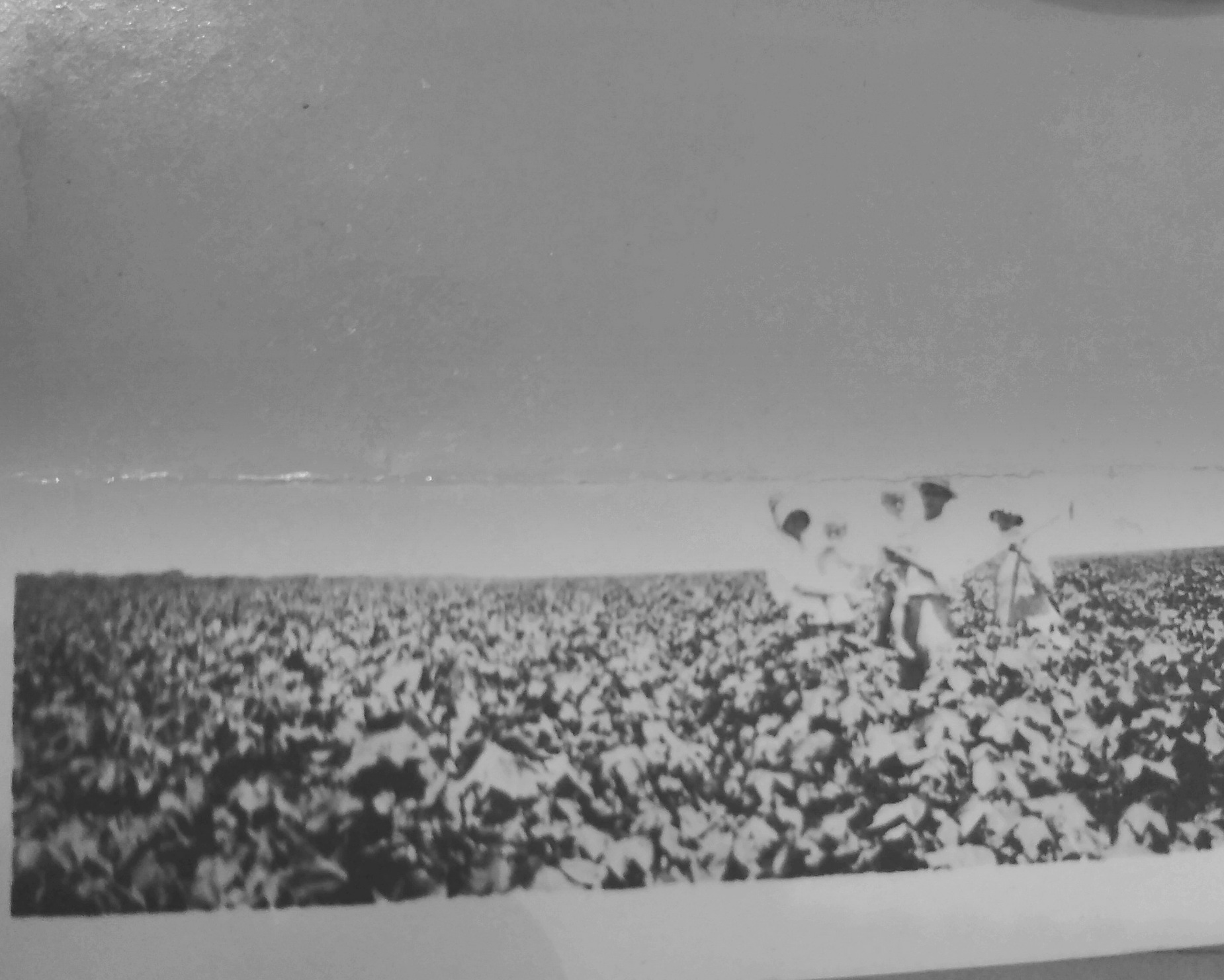
“What did you do?” I asked. I was trying to keep excitement out of my voice so that Grandpa would continue. He sat and looked upward to the blue sky, apparently for direction. “I had eleven living children of my own, and then my brother died. He left two more, Arnold and Amelia. I promised him I would take care of them for him. So now we had thirteen children on our farm. There was no money and the cotton crop was very poor.”
He stopped. I waited. No one got arrested for having thirteen children and a bad cotton crop, did they? Surely not. Grandpa turned in the rocker to look squarely at me. He looked right through me with those beady eyes and spoke again. “I had a neighbor named Neville Johnson who told me we could make a lot of money in a new business that wasn’t hard to learn. Neville had capital to get started. So, we made a partnership. Neville and me. Partners. Sealed with a handshake and our word.”
Grandpa paused, gazing again at the crape myrtles. Finally, he turned and looked down at me. He seemed to have reached a momentous decision. I held my breath. “We built a still and made moonshine whiskey in the back of my farm. We made good money for a few months. I was getting caught up on paying my bills. My children were eating regularly. Life was better.” His eyes grew moist. “One night Neville Johnson didn’t come to the still. Instead, the sheriff came that night and busted up everything we had. He arrested me and took me to jail. The deputies threatened me with guns and called me a kraut-head. The booming business was over.”
I nodded encouragement and waited expectantly for more of the story. Grandpa calmly picked up his paper and resumed reading. Apparently he was finished. A few questions would be left unanswered.
I asked Dude about this episode later, and she said she knew. Of course, everyone knew. He had come back from jail after a few months. Her brothers had planted the cotton while he was away. The moonshine money had kept them fed and clothed until the next cotton crop was sold. That was all you could say about it, she implied.
I never took up the matter again with Grandpa Schlinke, but somehow the story made him seem real to me. Maybe the reason he didn’t talk a lot was he was too busy with his memories of people who were no longer there. Like Neville Johnson.
*******************
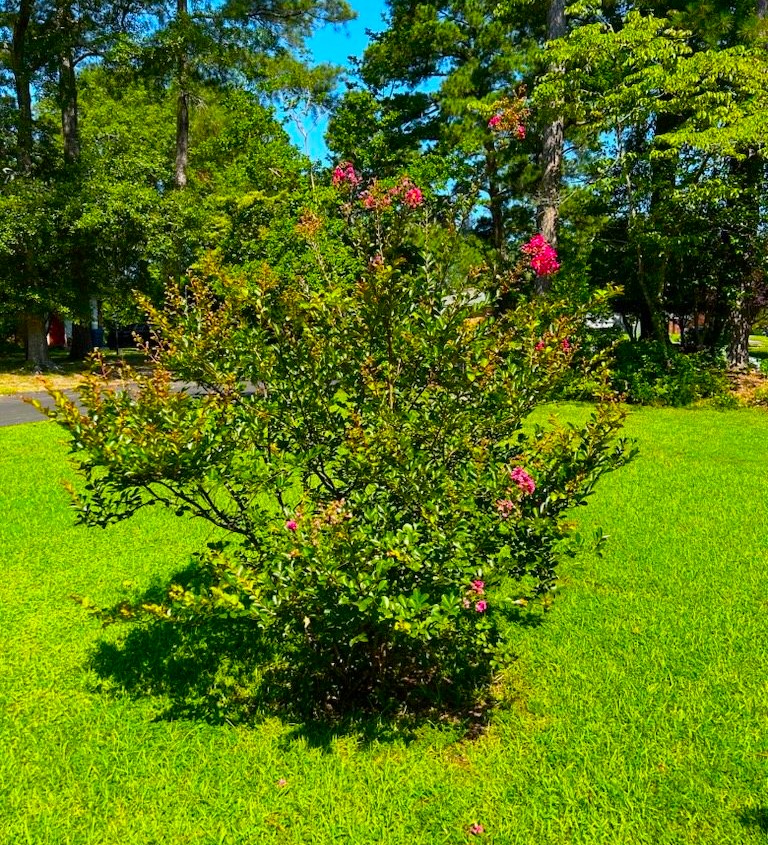
The blossoms of the crape myrtle tree in our front yard will soon be ablaze with the bright pink signature color I love most – perhaps because pink was the color of the ones in the yard at my grandmother’s house in Richards, Texas. Crape myrtles love the summer heat in South Carolina as they did the brutal Texas heat seven decades ago; today I was reminded of this story my great-grandfather shared with me when I was a child while we sat on a small front porch one summer looking at nothing but pink blossoms and his memories.



 I'll Call It Like I See It
You must be logged in to post a comment.