Tag: president franklin roosevelt

  • second chances anyone?


    Back in the days when I played more golf than I should have, I learned about mulligans.    Mulligans are a variation of  second chances. If you hit a shot with your driver off the tee on any one hole in a round and the little white golf ball vanishes mysteriously in deep woods closer to the fairway for another hole –  you know for sure you’ll never be able to find your little white ball, but you can say mulligan before you throw your driver in the direction of the same woods. Mulligan means you will have a second shot off that tee before you set off to try to find the driver you threw in the woods. You may hit a beautiful shot for your mulligan or you may not, but the important thing is you have a new opportunity.

    In our personal lives second chances are sometimes painfully obvious and at other times so subtle we may miss them. Lesson Number One: Be open, available, alert and don’t think you won’t ever need a second chance.  You will.  Lesson Number Two:  When you get a second chance, try not to think of it as an opportunity to repeat mistakes.  Mistakes are hard to take back so don’t blow the mulligan.

    Lesson Number Three:  Be sure to tell your friends about your second chance. It may give them hope and inspire them to offer one or accept one. Honestly, can there be too many second chances going around? Lesson Number Four:  Your second chance may be your last chance.   Really?   Really.

    Lesson Number Five: Never be afraid to take a second chance when you have one. As Franklin Roosevelt famously said when the Hounds of the Baskervilles were closing in around him, We have nothing to fear but fear itself.

    I am a survivor of second chances in my 74 years – I have at various times blown them, made mistakes, wished I had been a better person. I also have taken second chances that have brought me much joy and happiness. The point is I have had more than my share of opportunities to make choices.

    I have to believe in second chances not only for us as individuals but also for us as communities and as a country.  We have collectively failed to fulfill our promises of equal opportunity for all through our systemic racism toward people of color in their pursuit of good health care during the current Covid-19 pandemic and beyond, in their pursuit of a good public educational system, in their need of reliable shelter through affordable housing, in their need of a living wage – in their ongoing fear of police brutality. One of our second chances to do better comes in November when we have a say in our democracy through our  votes. We must do better – we must elect new leadership that gives us second chances to become a better people.

    Stay safe, stay sane and stay tuned.
     

  • a man of letters (2) – beyond Pearl Harbor


    When the Japanese attacked Pearl Harbor in Hawaii on Sunday December 7, 1941, America was shaken out of its apathy toward the war in Europe and the Pacific. The country was irrevocably changed. My grandmother, who routinely wrote letters to her family on Monday mornings, had this to say in one of those letters to her daughter, son-in-law and younger son who was living with his sister in Beaumont, Texas on Monday, December 8, 1941.

    “Dear Lucy, Terrell and Glenn,

    Well, we are in total shock this morning after the news yesterday! We can’t believe the Japanese bombed Pearl Harbor. How in the world could that even happen? So many killed and wounded. We just can’t begin to understand it.

    But, we all know now that Mr. Roosevelt will have to protect us and that we’ll be caught up in the thick of all this fighting. I’m worried sick for all my boys, including you, Terrell. Your daddy and I are grateful that we have a good Democrat in charge of the country in times like these.

    It really is old blue Monday today, the bluest of them all for me. I feel so helpless. But, I’ve got to get to stirring around.

    We love you,

    Mama and Daddy”

    A week later on December 15th my aunt Lucy wrote her parents:

    “Dear Daddy and Mama,

    We are all so upset here, too. It’s all any of us can talk about. Terrell and Glenn and I just wonder what’s going to happen next? We’re trying to keep going on with our everyday lives, but it’s hard to do when you’re this worried and upset about everything. Thank goodness for President Roosevelt. He keeps us believing that we can win against all odds.

    We can’t wait to get home for Christmas – especially this year. We’ll plan to drive up Christmas Eve after work and spend the night. Terrell has to work the day after Christmas, but we’ll stay as long as we can after lunch on Christmas Day.

    I love you both dearly,

    Lucy”

    My dad turned seventeen in October of 1941. He graduated from high school the previous May and worked in a grocery store to be able to attend Lamar College in Beaumont. The first exchange of letters I discovered between my mom and dad occurred early in 1942 following his Christmas visit home to Richards. Even the dark clouds of war couldn’t totally prevent raging teenage hormones. He wrote this letter on January 6, 1942.

    “Dear Selma,

    I am back in classes and taking a full load, as we college men say. I still have my Weingarten’s job, too. What would they do without me?

    I just wanted to say that I enjoyed seeing you and all of your brothers while I was at home for Christmas. Ray and Daddy and I had a fine quail hunt with Marion and Toby. Charlie must have been courting Sue Ellen. I didn’t see much of him.

    Speaking of courting, I was wondering if you knew who that girl was who I saw watching me walking home the night I took Betty Jo Lund to the movies? She looked a lot like you. Not nearly as cute as you, though.

    I guess you’re so happy being a junior this year that you don’t have time to write an old friend of your brothers. Just in case you do, I wrote my address at Lucy’s on the envelope.

    Cordially,

    Glenn Morris”

    I just love that “cordially, Glenn Morris.” My mom finally responded to the letter more than a month later. On February 12, 1942 she wrote…

    “Dear Glenn,

    I was glad to get your letter after Christmas. I am nervous about writing a college man, and that is why it’s taken me a while to write you back. Plus, everyone is so upset about the war. Mother is worried because Marion and Charlie are thinking about signing up for the Navy. Our cousin, C.H., is talking to them about it. He says they should come with him. He doesn’t have any brothers of his own. I know Mother won’t like it if they go.

    I think your sister, Lucy, is the prettiest girl I’ve ever seen in real life.

    Well, I’m sorry this isn’t a very good letter, but I don’t know what else to write.

    Sincerely,

    Selma

    P.S. I think you must be mistaken about the girl waiting up for you.”

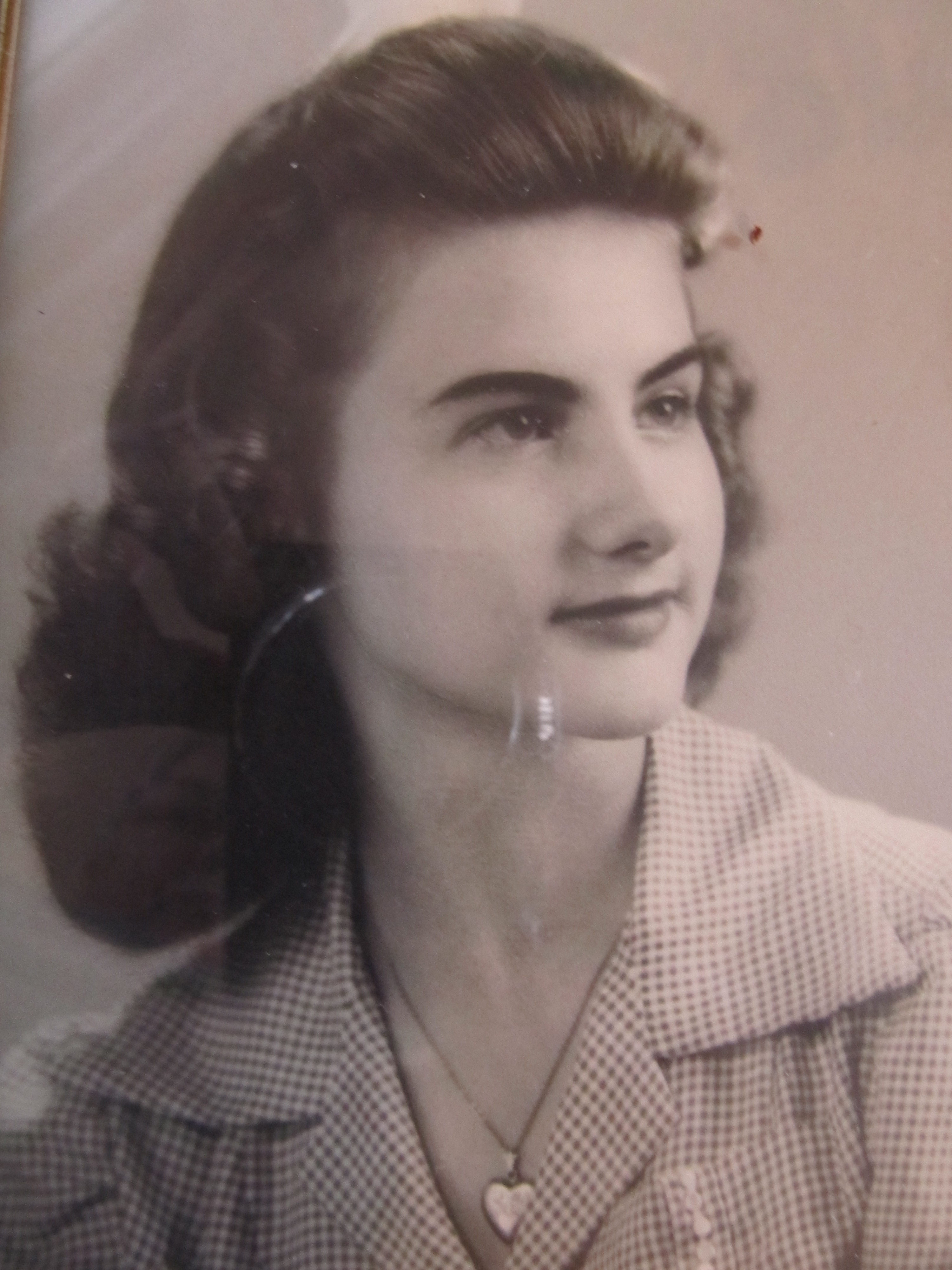
    Selma in high school

    In January, 1942 American troops were sent to Samoa to try to stop the Japanese advance in the Pacific, the first American forces landed in Europe in Northern Ireland, Hitler threatened the Jews with annihilation and blamed the failure of the German army in the Soviet Union on the weather. Twenty-six Allied countries signed a Declaration by United Nations on New Years’s Day in 1942 that became the foundation for the United Nations. Strangely, Japan declared war on the Netherlands on January 10, 1942.

    WWII cast long shadows of fear and uncertainty in the lives of families everywhere around the globe, including my own that was tucked away in a small town near the entrance to the Sam Houston National Forest. My family’s faith in Mr. Roosevelt was unwavering. As Lucy said, “he keeps us believing that we can win against all odds.”

    My grandmother’s  worries that “we’ll be caught up in the thick of all this fighting” proved to be true. Many of the boys in the little town of Richards would enlist in the armed forces including her own two sons and Selma’s brothers who  signed up in the Navy with their cousin C.H.

    Stay tuned.