“I know Papa has gone to heaven, and that is where I want to meet him. The Old Devil gets a hold of me sometime. I slap him off—and pray harder for the Lord to help me be a better Christian. I realize more that I need the Lord every day, and I want to love the Lord more and try to serve Him better. He alone can take away these heartaches of mine. I want to have more faith in Him. I have been so burdened, and I want to be happy. Serving God and living for Him is the only plan.” (excerpt from a letter written by my fifty-six-year-old maternal grandmother to a sister following the death of their father in 1954)
My maternal grandmother’s belief that faith was the sole solution to the multitude of problems she faced throughout her life beginning with her husband’s accidental death that left her penniless with four children to raise during the Great Depression, a belief she expressed in the above letter to her sister, reflected her daily approach to “have more faith” that included a ritual of reading Bible passages while she sat at our small kitchen table and I lay in the darkness watching her from the next room, wishing she wouldn’t get up so early. But there she would be, struggling with her third-grade reading level to look for godly guidance in the ungodly hours before dawn. I want to be happy, she said, and God was her only plan.
Shockingly, my paternal grandmother glossed over the deeper issues of faith in favor of a focus on hope. The Bible says there are three things that last forever: faith, hope, and love; but the greatest of them is love. This grandmother wasn’t concerned with the intricacies of faith nor did she overtly exhibit love toward others outside her immediate family, but she attended the same Southern Baptist church faithfully every Sunday. Her hope was for humor, however. Her belief was that in every Sunday church service she could find something or someone or, preferably both, she could use to entertain her family at the dinner table later. The poor preacher was irreverently skewered on a regular basis; no one was sacred at that table. She was a woman in charge of her home, family and most of the conversations that took place within both.
This was the faith of my grandmothers. The church was the teacher for one, the Bible the textbook for both, and the interpretations ranged from the holy to the inadvertently profane. I listened and watched these women for as long as they lived and throughout my childhood absorbed their diverse values that blended with the Sunday School teachings and preaching of the Southern Baptist churches my family attended. I learned to sift the messages and keep the ones that appeared to lessen my likelihood of going to hell in an afterlife.
My maternal grandmother’s duel with the Devil evokes strong feelings for me, but they are feelings of sadness for her inability to achieve that higher level of trust she desperately wanted, the trust that would bring her happiness. Her faith never could be quite good enough, and I refuse to believe in a god that inspires fear and irrational guilt. As for my dad’s mother, her irreverence gave me permission to begin to overcome feelings of shame when I faced the puzzles of sexual identity that were my life. My life has involved many choices, but my being lesbian was not one of them. My paternal grandmother had a unique relationship with her God, but her words and sense of humor helped free me from the somber sermons of damnation in my youth and encouraged me to think for myself. I wonder if she knew.
*********************
“Now faith is the substance of things hoped for, the evidence of things not seen.” (Hebrews XI, 1)

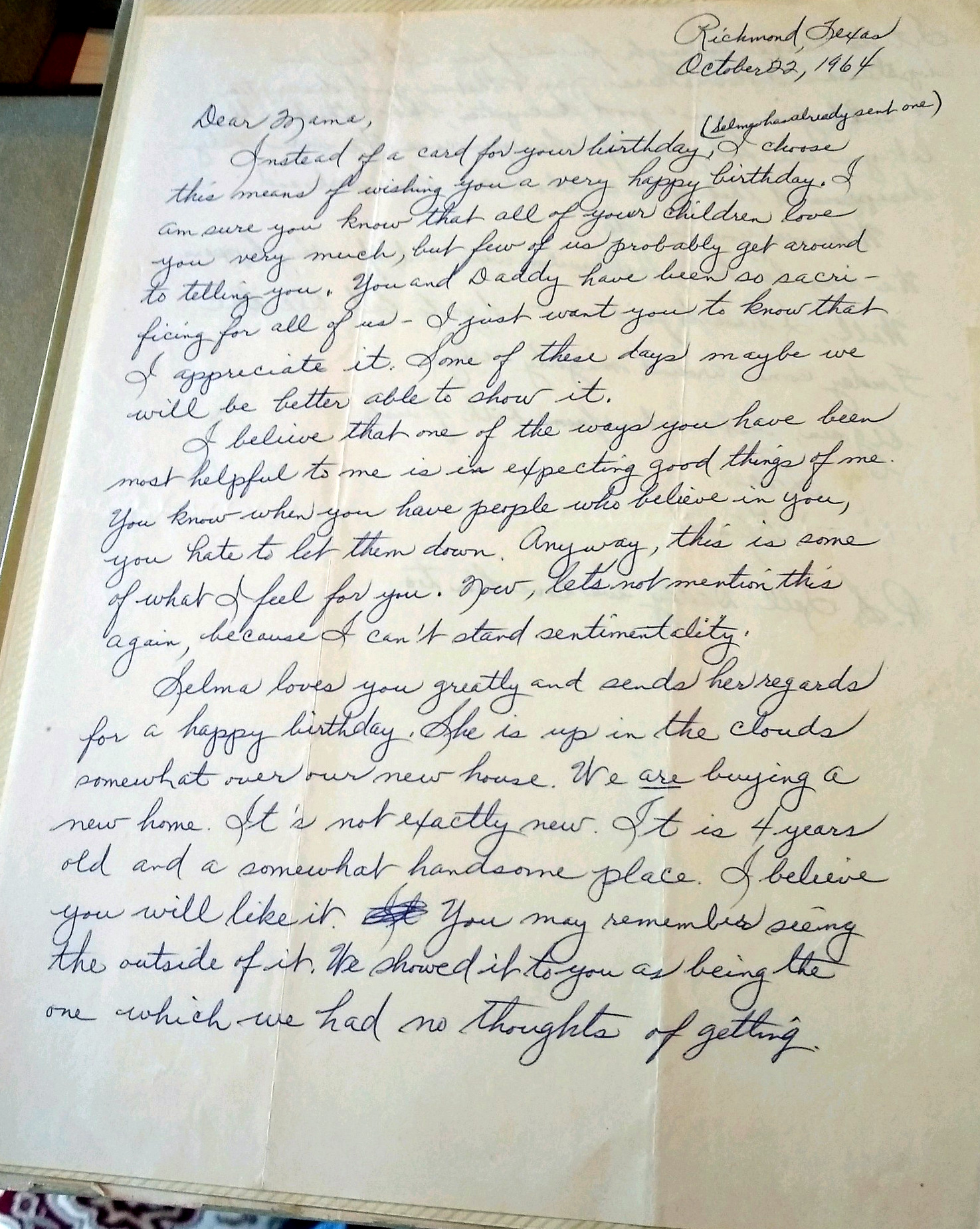


 I'll Call It Like I See It
You must be logged in to post a comment.