
Tag: us open tennis tournament

  • Both Have Prevailed


    004

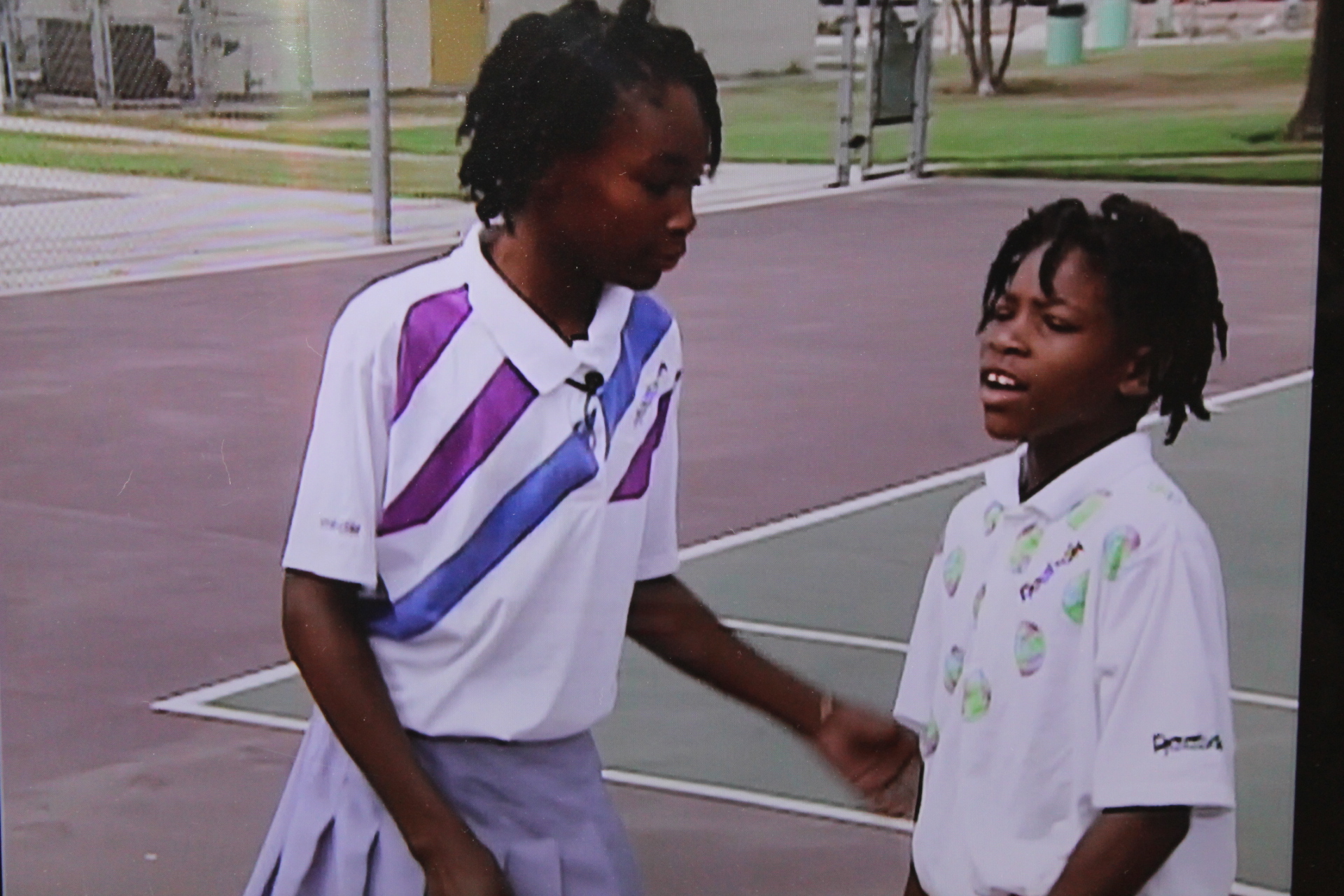
    Venus Williams and her little sister Serena
    005

    For the past seventeen years the Williams sisters have carried the heavy burden of American tennis on their shoulders, and the load has never been an easy one. Their two-person dynasty has been controversial, but their attitudes about the sport they represent have matured as their games have become more powerful. Their popularity increased as they became more comfortable with their celebrity and confident in their games. They grew up in front of a nation and, eventually, the world.

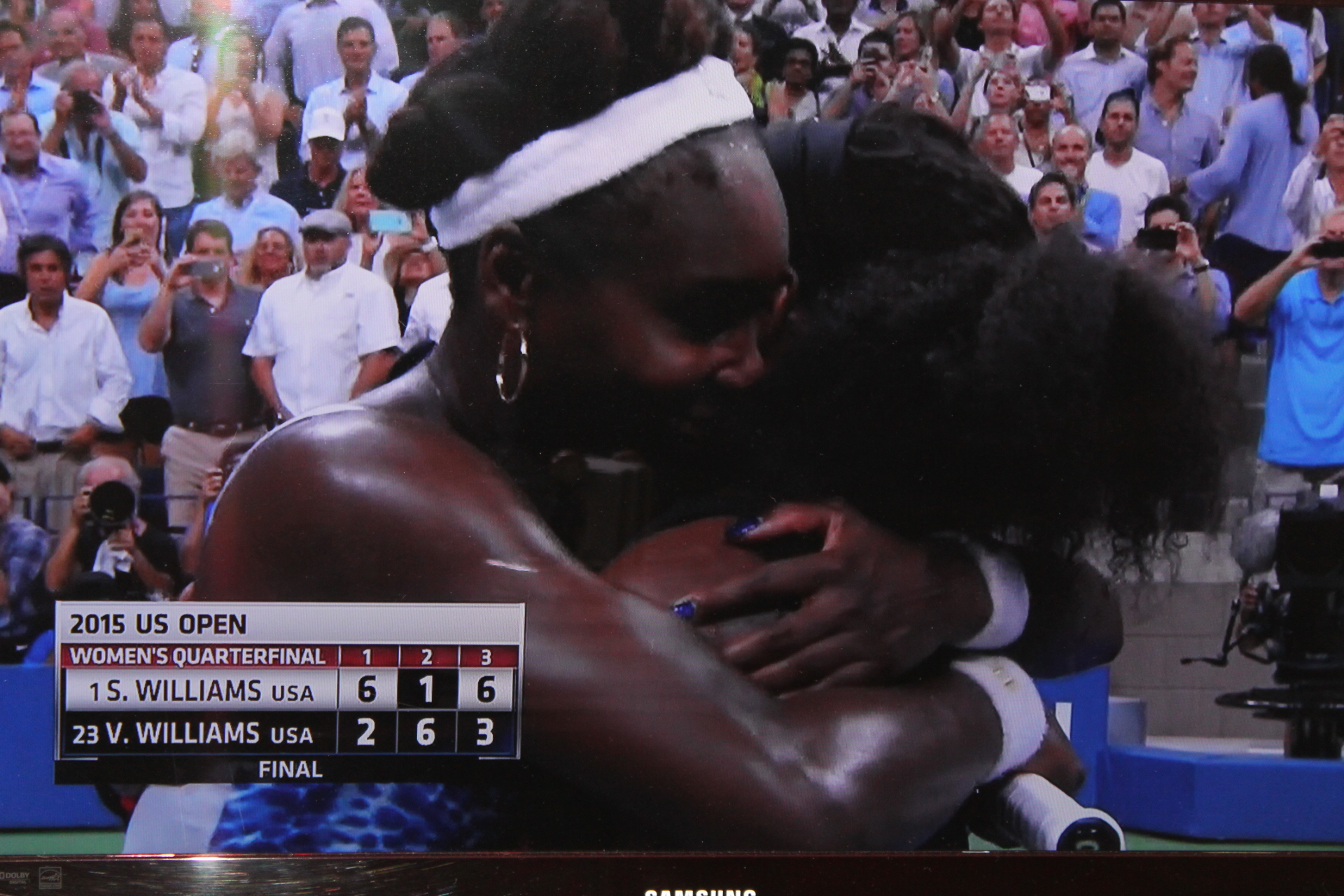
    Never in their 27 professional matches have the theater and drama been more exciting than last night in the quarterfinals of the US Open under the lights in New York City.  Approximately 23,000 fans came to the Billie Jean King Tennis Center in Flushing Meadows to watch a match that was more than a game, and the Williams sisters delivered another thrilling exhibition of tennis at the highest level. As the ESPN commentators noted before the match, this was a big-time American sporting event with all the bells and whistles we love in our fascination with sports.

    Tom Rinaldi who has replaced Dick Enberg as the TV tennis philosopher who adds the stories to evoke our emotional attachment to an event, made these remarks prior to the match: “In an individual sport, their stories will always be linked…in our view of the Williams sisters, we see champions sharing a court, a desire to win, and a name. True, one will win –  but both have prevailed.”
    008

    Serena Williams is now two matches shy of her goals of a Calendar Grand Slam in 2015 and a total of 22 Slam titles to tie Steffi Graf’s record in the Open Era. Two matches…and counting.

    To be continued.

  • Sister Act (2015)


    Lord help the mister who comes between  me and my sister,

    And Lord help the sister who comes between me and my  (slam).

    Actually, Irving Berlin’s lyrics in the 1954 romantic musical White Christmas ended that second line with “man” because Rosemary Clooney and Vera-Ellen played sisters in love with the same man, Bing Crosby. In my 2015 version the two sisters are in love with the same dream: winning major tennis tournaments like the US Open in New York City this week so I took poetic license and inserted “slam.” My apologies to you, Mr. Berlin.

    For Serena Williams the stakes couldn’t be higher since she is now three matches away from a Calendar Grand Slam, something which hasn’t been done since 1988.  She’s also chasing Steffi Graf’s record of winning 22 majors in the Open Era. She’s at 21 and counting, which already secures her place in tennis history but 22 would place her in the conversation of being the best ever.

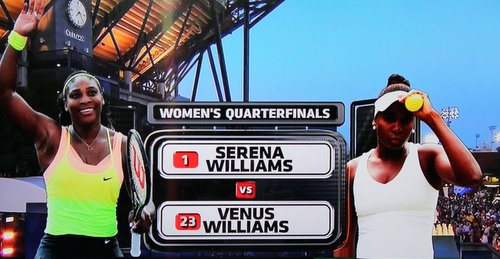
    The tennis gods have aligned the Open draws with their usual good sense of humor and placed a familiar obstacle in Serena’s quarterfinal match. She will face her older sister Venus for the 27th. time in their professional careers. Serena has won 15 of those matches and Venus has won 11. Venus has won seven Major titles herself and at the ripe old age of 35 appears to be playing up to her personal best tennis again in 2015.

    Both sisters have said the one thing they know for sure is that a Williams will be playing in the US Open semi-finals but neither claims to know for sure which sister it will be.

    How many times have these women taken to the practice courts in their lifetimes? How many tennis balls have they hit together as a team and separately as the solo act on those courts…they have won 13 Grand Slam titles in their doubles career together, too. Extra kudos to them for these wins.

    I have mixed emotions about this quarterfinal match. I wonder about the tension at the Williams family dinner table when everyone tries not to talk about their match or whether they kid each other about who has the better chance of winning. As an only child, I have no point of reference in winning or losing to a sister; but my sense is that Venus and Serena both want to win very badly whenever they step onto the court and this ultimately trumps any potential guilt one might have for standing in the way of the other.

    Lord help the sister who comes between me and my Slam.

    To be continued.

  • Dancing with Destiny


    In 1999 the paths of two of the most recognized women athletes in the world crossed twice in different stages of their tennis careers.  Steffi Graf was twenty-nine years old and was about to retire from a career she began in 1982, and Serena Williams was seventeen years old  at the very beginning of her career that continues to the present day.

    They played each other twice in 1999. Steffi Graf won their first meeting in Australia several months before she won her 22nd. major tournament at the French Open that year.  Graf had won a Golden Slam in 1988 when she won all four of the major tournaments plus an Olympic Gold Medal in the same calendar year. No tennis player has won a calendar year Grand Slam since 1988.

    The second time Graf and Serena Williams met in 1999 was in California at the Indian Wells tournament where Serena won in three sets.  Two months after that match Graf retired, and three months after that contest Serena won the US Open which was the first of her current total of 21 majors in her sport.

    Tonight, in just a few minutes, Serena Williams will begin her third round match in the 2015 US Open in New York City. She has won the Australian Open, the French Open and Wimbledon already this year. If she wins the US Open, she will have accomplished a calendar year Grand Slam and will be the first woman since Graf in 1988 to make that happen. Somewhat appropriately and coincidentally, it would be her 22nd. major title that would tie Graf’s record.

    Serena is truly dancing with destiny, as one of the TV commentators for the Open said earlier this week. She is thirty-three years old but not the oldest gladiator in the Williams family in  the Open this year.  That honor belongs to her thirty-five year-old sister Venus who moves on to the Round of 16 next week following her victory today over eighteen-year-old Belinda Bencic from Switzerland, who is one of only two players to defeat younger sister Serena this year. Don’t mess with my sister, girl.

    Win or lose at the Open this year, Serena Williams has already secured her place in history that allows her to be mentioned in the same breath with Steffi Graf, Martina Navratilova, Chris Evert and Billy Jean King. The Williams sisters have been the face of American tennis for the many years the male American players have wandered in a wilderness of mediocrity.  Whether you are fans of theirs or not, they have earned our respect for their longevity in a sport that is physically demanding and mentally challenging.

    To be continued.


  • The 37th. Time is the Charm


    The name Peng Shuai is not a household name in the USA, but she is the third-ranked Chinese professional female tennis player behind the more familiar Li Na and  Zhang Shuai.  More familiar to tennis addicts, that is.

    This afternoon in New York City at the US Open, Peng played her 37th. match in Grand Slam events since turning pro in 2001 at the age of fifteen – and reached her first semi-final ever. Think about that.  Thirty-six entries and thirty-six times falling short of a goal over thirteen years.  Finally, on try number thirty-seven, she makes it to the semi-finals of one of the most prestigious tournaments on the Women’s Tennis Association tour.

    Her interview following the match with Tennis Channel commentator Tom Rinaldi was not nearly so entertaining as the ones with the number one Chinese player Li Na, but then she hasn’t had the same practice.  The most she could do was smile and wipe her face with a towel while she tried not to cry.  “Very excited,” she managed to say in English, when asked to describe her emotions.

    Very excited, indeed.  Peng is the daughter of a policeman and homemaker and the niece of an uncle who encouraged her to start playing tennis at the age of eight and she has played off and on for twenty years since.  When she was thirteen years old, she had heart surgery, and she has struggled with several health issues throughout her tennis career.

    “I love tennis, I love to play tennis,” she said in her post-game interview.

    I was happy for her because I love a good story about individuals who overcome adversity and realize their dreams after years of hard work.  Years of hitting a little yellow ball across a net.   Hours, days, weeks, months, years…and in those years believing within herself that she could win the big matches that place her name among the elite in her sport.  She has spunk.  I love spunk.

    In February of 2014, Peng Shuai reached a career high-ranking of number one in the world in doubles.  She is the first Chinese professional tennis player, male or female, to reach that standing.  Beyond impressive. Rankings are rankings in every sport and are often overrated, but Peng has had a tortuous climb from number 357 in the world in 2002 to number 39 in singles in 2014.

    She will face the winner of the Caroline Wozniacki/ Sara Errani match which will be played tonight under the lights in the Arthur Ashe arena.  They each have their own stories and are, I’m sure, equally excited and deserving of the opportunity to meet Peng in the semi-finals.  Exciting matches in store for the readers of Sports Illustrated.  I can’t wait…

    Peng Shuai may not make it to the finals of the Us Open this year, but I’d bet good money she’ll keep trying until she does.


  • The Fifth Set – Match Point


    Whether the surface is a hard one or made of red clay or manicured green grass, the goal is the same: to win.  To beat someone.  To play better, smarter and mentally tougher than the opponent.  To be more physical and aggressive.  To charge the net when an opening appears.  To cover the baseline when the shots go deep against you.  The court is a battlefield and the scales of justice are often tipped by net cords and fractions of inches along white lines.  The game is tennis.

    For men who play singles, the winner is usually required to win two of three sets.  In Grand Slam events, however, the rules change to three of five sets to determine the champion.  If each man wins two sets, a fifth set is played.  The fifth set is often the scene of one man’s surrender and loss to another man’s courage and inner strength.  The first four sets are evenly played, but the last one is too much for the body or mind or will or all of the above for one of the guys and the desire to win or to not lose drives his opponent to victory.

    I love fifth sets.  I particularly like them when they are close and long, and I’m not even paying for my seat in front of the television set.  Nope, I’m watching for free, but I have the Deluxe Box seats and have seen my share of Grand Slams in Melbourne, Paris, London and New York City.  From my ABCs of Agassi to Becker to Connors to my current personal favorites of Federer and Nadal I admire the passion and persistence of the five-set winners.

    There is a moment of high drama called Match Point when the difference between winning and losing in the fifth set can be measured in split-second choices and breaks in concentration.  Match points can be saved and the game can go on for hours, but in the end, a Match Point is lost and the winner takes center court with a victorious smile and wave to the crowd.

    As I watched a five-set match today at the US Open, the thought occurred to me that Match Points in tennis have an advantage over those we have in real life.  The quarter finalists I saw today knew the importance of the fifth set and its Match Point, but we may never know when we miss the chance to win –  or lose what we value most.