Author: Sheila Morris

  • Benghazi – Revisiting the Obama Presidency


    Our lecture for today, O cyberspace class, is the epistemology of the second chance. (Sometimes I just throw in a big word to see if anybody’s paying attention.)  Frankly, I don’t remember  much about epistemology from my scholarly life except that I heard it used in my undergraduate philosophy classes and my graduate studies in theology.

    To refresh my memory, I looked up the definition and found the word epistemology involves knowledge and the justification of knowledge; but then the dictionary wandered off into a question of what is knowledge and how can it be justified and I immediately remembered why I dropped out of seminary. Way too much digression and iffiness and grey areas for a 23-year-old CPA who dealt in absolute numbers before answering a “call” to the ministry that was surely a wrong number.

    I gave up absolutes many years ago, however, about the same time the numbers became images on a computer screen and lacked any connection to reality. Who knew if 2 + 2 equaled 4 any more and who cared?

    So I’ve grown accustomed to vague responses and half-truths and tried to blend in with a landscape camouflaged by degrees of knowledge  that are justified with competing strident voices blasting away at each other from polarized positions of territorial absolutes. Wow. Now there’s a mouthful to chew on.

    Yep, nothing like trying to convince people you own a piece of knowledge when they don’t agree with you. You just can’t justify it to them no matter how hard you try and how loud you get. Because, see, they own a piece of knowledge, too, and it happens to be totally different from yours. And there’s the rub.

    A good example is the current turmoil over an Anti-Muslim film that was Made in the USA. The American President has denounced it, the American Secretary of State has apologized for the fact that it was filmed in California where they film every possible film you could ever think up without anybody checking to see if it’s inflammatory because that would require an Army of Film Checkers, but the justification of the knowledge of the situation is irrelevant to a Muslim world that owns a different enlightenment which doesn’t include the concept of second chances.

    That’s how it all goes downhill and the histrionics aren’t far behind.  I’m wondering how many Muslims are golfers?  If they were golfers, they would know about Mulligans.   Mulligans are second chances.

    If you hit a shot with your driver off the tee on the first hole and the little white golf ball vanishes mysteriously in deep woods closer to the fairway for the third hole than they are to the first hole and you know you’ll never be able to find it, you can say Mulligan and have a second chance to locate your own fairway again.

    You may hit a beautiful shot for your Mulligan or you may not, but the important thing is you have a new opportunity. The American government asked for a Mulligan from a partner who doesn’t play the game the same way it does. The game is over before it even starts.

    In our personal lives second chances are sometimes painfully obvious and at other times so subtle we may miss them.   Lesson Number One: Be open and available and alert and don’t think you won’t ever need one.  You will.

    Lesson Number Two:  When you get a second chance, try not to think of it as an opportunity to repeat mistakes.  Mistakes are hard to take back so don’t blow the Mulligan.

    Lesson Number Three:  Be sure to tell your friends about your second chance. It may give them hope and inspire them to offer one or accept one. Honestly, can there be too many second chances going around?

    Lesson Number Four:  Your second chance may be your last chance.   Really?   Really.

    Lesson Number Five: Never be afraid to take a second chance when you have one. As Franklin Roosevelt famously said when the Hounds of the Baskervilles were closing in around him, We have nothing to fear but fear itself.

    And so, O cyberspace class, the lecture concludes with a little bit of knowledge mixed with a bunch of justification that adds up to the epistemology of the second chance as seen from the eyes of a 66-year-old who has had her own share of second chances and has, at various times in her life, blown them, needed a third or fourth, and had some of them bring incredible joy and happiness.

    Be generous to those you love and even to those whose knowledge is different from yours. Ouch. Is that really necessary?  Absolutely.

  • A Different Type Home


    Worsham Street Looks The Same

    But Mama and Daddy Don’t Greet Me

    The old home town looks the same as I step down from the train, and there to greet me is my mama and my papa…it’s good to touch the green, green grass of home.

    When Claude “Curly” Putman, Jr. wrote these lyrics in 1965, he was a wannabe songwriter plugging songs for Tree Publishing company in Nashville, Tennessee, and he couldn’t have realized at the time the impact they would have on his life.  Country music legend Porter Waggoner recorded the song later that year and Curly Putman’s writing career ignited like a firecracker that kept popping out hit after hit from then on.  The words inspired more than four hundred artists to record them over the next fifty years in all of the world’s major languages.  Why?

       Because it’s a song about going home which is a universal longing whether it’s for a literal place or a metaphorical sense of wholeness – we want to go home.   We  want to be welcomed and embraced by those who love us most whether we are Prodigals who lost our way for a long time wandering in a wilderness of self absorption or whether we are Victors who fought the good fight over ourselves and won a precious trophy we need to share.   We want to go home.

    I grew up in a rural setting in a tiny town in southeast Texas in a county that measured wealth by the number of cows you owned or the number of acres you farmed.   My dad bought 105 acres in 1954 through the GI Bill from his WWII service in the Army Air Corps  and we never had more than twenty head of cattle except in the spring when the calves were born, but that was okay because the farm wasn’t our home.   My daddy and mama were schoolteachers in the 1950s and we lived in my maternal grandmother’s house with her and my mother’s two older brothers.  It was a small home and we were in very close quarters every day, but the closeness I remember  was the intimacy we shared as a family.

    When Curly Putman penned his Green, Green Grass of Home, I had left my home town and was a student at The University of Texas in Austin.   My freshman classes often had more students than the entire population of the little town where I was from.   My daddy taught me many lessons, but the ones he may have regretted teaching involved my becoming independent to a fault and understanding the whole earth was my territory.  I took him at his word and became a solitary sojourner from the Gulf of Mexico to the Pacific Ocean before finally settling in a city two hours from the Atlantic Ocean.  That was forty-five years ago and my definition of home expanded when I found lasting loving relationships as an adult in South Carolina.

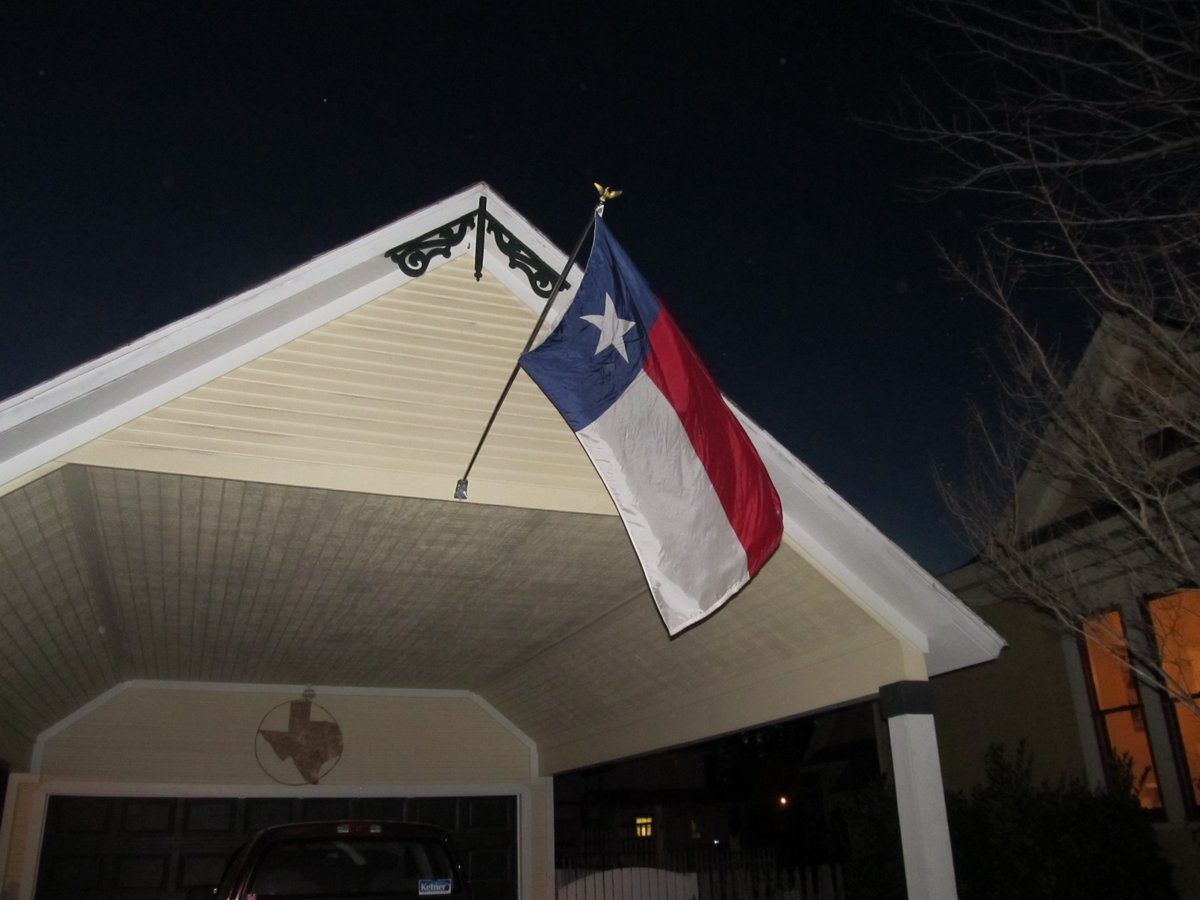
    Through the years I’ve made the trip to Texas  at least a hundred times to visit and two years ago my partner and I bought the Worsham Street house pictured above which is eighteen miles from the place that belonged to my grandmother, the place I once called home.   The principal characters in my family were gone except for my mother whose illness was the impetus for our purchasing the house in Texas.  My visits became more frequent and lasted longer as my mother’s  health declined.   In the process of reconnecting to the places and people I knew in my childhood over the past two years I heard my daddy’s voice reminding me “You can take the girl out of Texas but you can’t take Texas out of the girl.”

    Three days ago I once again traveled the thousand miles from South Carolina to Worsham Street.  I was surprised by my feelings as I crossed the Louisiana-Texas border going west toward the familiar Highway 59 that would take me south toward home.   For the first time ever, and I mean in nearly fifty years, I had the uneasy sensation I wasn’t really going to where I belonged.  At the end of this journey neither my mama nor my daddy would be there to greet me and I felt like the green grass might be growing in foreign soil.

    I talked to one of my neighbors who is also a good friend about the conflicting emotions I was experiencing in this first trip to Texas since my mother’s death in April.  I’d only been gone three months, but it felt much longer and the distance from my South Carolina family seemed too far.   She said something that made sense to me, “It’s a different type home now.”    It is a different type home, but the green grass still grows on Worsham Street, and I’m glad to be able to touch it once again.

  • Takin’ Any Comfort That I Can


    I’ve been too long in the wind, too long in the rain,

    Takin’ any comfort that I can.

    Lookin’ back and longin’ for the freedom of my chains

    and lying in your loving arms again.

    ——  Kris Kristofferson

    For the past few days I’ve been haunted by these lyrics and of course I couldn’t remember the third line exactly so I researched the words on the infallible source of all information: my computer.   It knows everything and I am always curious about HOW it knows everything but then I accept its wisdom and move on.  For example, I discovered that Kris Kristofferson wrote the song and recorded it with Rita Coolidge.  I wasn’t surprised really because Kris is a wonderful lyricist and sang with a number of women through the years.   I was totally surprised, though, at the list of artists who had recorded the Loving Arms ballad.   Olivia Newton-John.  Dobie Gray.  Glen Campbell.  Mr. Presley himself.  Kenny Rogers.   And more recently, the Dixie Chicks.  I was also stunned to learn that I can send the tune to my cell phone as a ringtone.   I’ll pass on that opportunity for now.

    I digress.  It’s common for the words of a country music song to occupy my mind for  several days.  I like country music.  I listen to country music when I’m driving around in my old Dodge Dakota pickup by myself.  When I’m in Texas, I typically leave the kitchen radio set to the country legends station in Houston and turn the radio on as soon as I get up in the morning– right before I pop the top of my first Diet Coke of the day.   I turn it off late in the evening and the little click the radio makes is my own version of Taps.

    I digress further.  I tried today to reflect on the words and why I had the song in my head in a kind of loop.   I’ve been too long in the wind, too long in the rain.   Over and over again I sing it.   Sometimes I even sing out loud, but mostly it’s inside.   Were those the lines that mattered?   Was that the secret code?   Nope.  No more suspense.  No more digression.   The key word is comfort.   Takin’ any comfort that I can.  I love the word Comfort.  You can have your words Solace and Console and Ease and Reassure if you want to.   Give me Comfort.   Seriously, give me comfort.  Give us all comfort.

    Blessed are those that mourn, for they shall be comforted.  I’m not too sure about this beatitude, but I’ll let it slide because I’d like to believe it.   All of us who mourn shall be comforted.  Our frontage road of grief will slowly merge into the passing lanes of optimism and hope if we are willing to pay the toll required to enter.  We pay a price for the passing lanes that make our travels easier as we watch our grief fade away in the rear-view mirror, IF we are fortunate enough to have the resources within ourselves to cover the costs.

    Obviously I have recently been on vacation in the northeastern part of the United States where I spent too much time and money on tollways.

    And now I know the third line of the song perfectly.  Lookin’ back and longin’ for the freedom of my chains.  What a great line it is, too, but that’s a subject for another story and I’ll let you ponder it on your own  while I say good night and take my comfort in two loving arms again.

    P.S. This was originally posted last August, and I find myself once again preoccupied with the need for comfort after the loss last week of my aunt who was one of the most important women in my life.  She was the last intimate connection to a generation in my family that represented the best of my childhood recollections and yet became a close friend in my adult years.  I was lucky – really lucky – to spend more time with her in the last year than I had been with her in the previous forty.  We had a good time together.  We laughed a lot.

    Mostly, though, I will miss her love of my writing.  She wanted to read every word I wrote and always said it was wonderful.  Each time one of my stories failed to win the money prize, she said it would happen next time.  She believed in me and my stories and loved me unconditionally.   It is difficult to say goodbye.  Instead, I will say good night to my favorite aunt from her favorite niece.

  • Sidetracked


    Yes,  I have totally gone off the tracks with my Songs of the Show Boat series.   I will get back to the songs because I enjoy the memories they evoke, but I researched a couple of blackface vaudevillians who were regulars on the radio show and I was uncomfortable about these two characters of Molasses and January and their connection to De Camptown Races by Stephen Foster.   The thing is I remembered “talent” shows in the small rural East Texas town where I grew up and recalled the popular blackface performers in the school auditorium and then I cringed and then I was horrified and then I gave up on trying to write about these two guys entirely.   Call me a coward.

    Never underestimate the heart of a champion is a phrase I heard this week from an NBC Olympic commentator, but for the rest of us mortals the struggle for courage is ongoing and asks us to stand up not once, not twice, not every four years – but each time we encounter prejudice and wrongdoing in any form for as long as we live.   The insidious nature of wrongs against each other requires our constant vigilance lest we give in to letting the voices of hate rant and rave around us without a word of protest.

    Faith, focus, finish.   These words are the training mantra for Manteo Mitchell from Cullowhee, North Carolina who broke his leg while running in the first leg of the men’s 4×400 meter relay preliminaries today in London.  He continued to run for the half a lap he had to finish after he felt the break.   I found this to be a remarkable effort regardless of how we define faith, but how do we sustain our focus and finish a race that lasts a lifetime instead of a lap?

    As you can see, I’ve watched too many Games of the XXX Olympiad for the last two weeks and the stories of the athletes inspire me and always remind me of the power of humans to overcome incredible adversity to go for the gold.   The theater for us won’t be as spectacular as the London games.   As a matter of fact, we may be at the grocery store or tailgating with friends before a football game this fall or maybe choosing a place to go for a chikin’ sandwich.  Regardless, it’s our chance to make a difference that is as game-changing as the gold medal is for the athletes who win in London this summer.   Game on.

  • Songs Of The Show Boat – Oh My Darling Clementine


    Oh my darling, oh my darling, oh my darling Clementine, you are lost and gone forever, dreadful sorry Clementine.”

    A radio favorite on the Maxwell House Show Boat in the 1930s, Oh My Darling Clementine is attributed to one Percy Montrose (1884) but this American western folk ballad had questionable origins and a variety of lyrics.  The Show Boat Four, a male quartet  plus piano, had a soloist sing each of the four verses they used in their arrangement with the quartet chiming in with harmony on the chorus.

    The Show Boat Four

    The male quartet complete with appropriate Maxwell House coffee cups included from left to right Randolph (Tubby) Weyant, Harold R. “Scrappy” Lambert, Leonard Stokes and Bob Moody.  At the piano is Kenneth Christie who also handled arrangements for the four.  According to Songs of the Show Boat – A Collection of Favorite Songs That Never Grow Old, Tubby Weyant was first tenor and began his career as a soloist in a New York church.   Scrappy Lambert was second tenor and started his musical professional efforts by organizing his own jazz orchestra while he was attending Rutgers University.   Leonard Stokes was the baritone in the group and worked his way through the University of Missouri as a singing instructor.  The bass, Bob Moody, graduated from “Pathe ‘shorts’ to concert appearances.”   Ken Christie got started by playing tuba in a high school band.   Blow, baby, blow.   The most popular of the four, Scrappy Lambert,  was a backup singer for many orchestras of the 1920s and 30s and was one of the most prolific vocalists of that time according to radio historian David Lobosco.

    In a cavern in a canyon, excavating for a mine, Dwelt a miner, forty-nin-er, and his daughter Clementine.

    I definitely knew the chorus of My Darling Clementine and could sing it without skipping a word or note even though I missed the Show Boat quartet’s radio rendition.  On the other hand,  verse one I’d need a little help from my friends to be sure of the lyrics, but I would have recognized them without a doubt.   Frankly, the other three verses of Clementine floored me.

          Light she was and like a fairy and her shoes were number nine,  herring boxes without topses, sandals were for Clementine.  (Verse 2)

    Drove she ducklings to the water, ev’ry morning just at nine, hit her head a-gainst a splinter, fell into the foaming brine.  (Verse 3)

    Ruby lips above the water. blowing bubbles soft and fine.  Alas for me, I was no swimmer, so I lost my Clementine.  (Verse 4)

    Somehow in my mind the chorus and verse one conjured up images of a loved one lost.   I could go with a father who lost his daughter, I think, but my instinct was to just sing the chorus and in my own romantic storytelling I pictured a sweetheart separated forever from her one true love.   You are lost and gone forever, dreadful sorry Clementine.   Think poor man’s version of the final scene in Casablanca.   Here’s looking at you, Clementine.

    At any rate, in the Show Boat song Clementine was not a dainty heroine.   She wore size nine sandals.  I put that in the category of too much information.  Also,  I don’t know how anyone could make sandals out of herring boxes, but then as the old saying goes Necessity is the mother of invention.  Score Clementine high on the creativity scale and also off the charts on kindness for hustling the little ducklings down to the water every morning.   And then deduct points for going too close to the water when she clearly can’t swim.   She hits her head against a splinter which must be the biggest splinter in the world because it knocks her into the water and we see in verse four that she drowns for lack of a lifeguard.   I have to say I never learned these verses.

    The good news is the legend of Clementine lived on.  Luckily, alternative lyrics were created and the mystique of her melody became the theme song in the sound track of John Ford’s 1946 classic western My Darling Clementine starring Linda Darnell in the title role.   No mention was made of her shoe size or any ducklings in the film.

    In the rock ‘n roll years of the 1950s and 60s Bobby Darin and Jan and Dean created their own Clementine tunes and more recently in the 2004 film Eternal Sunshine of the Spotless Mind, Kate Winslet’s name is Clementine and she isn’t happy about it.

    I have gone over the deep end and must come back so I will close with this alternative stanza I found among the ruins of countless verses never sung by The Show Boat Four (plus piano).

    Now you kids may learn the moral of this little tale of mine, Artificial respiration would have saved my Clementine.