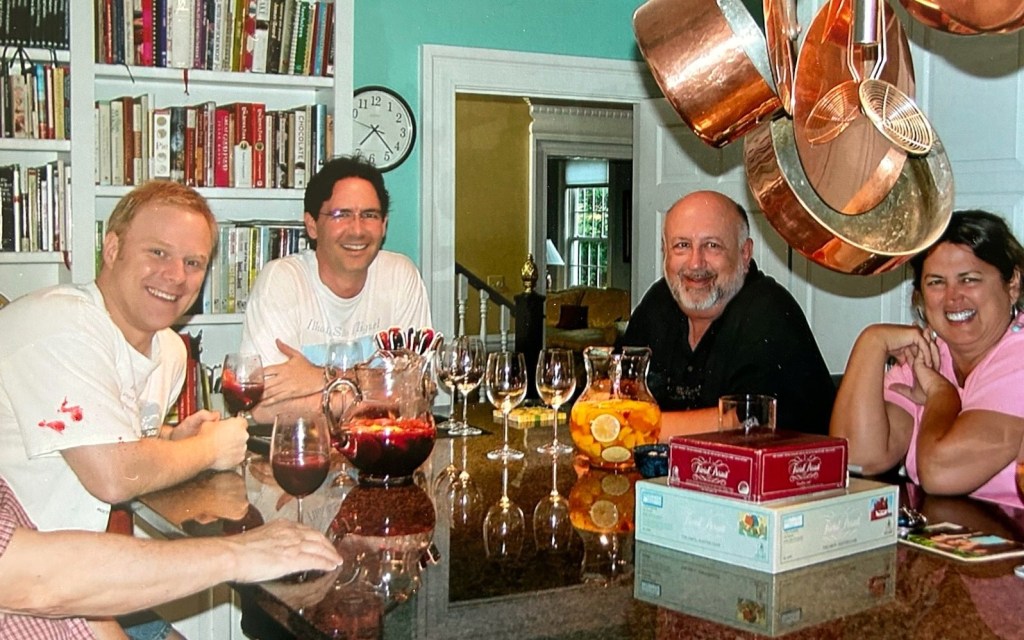
pitchers of Sangria helped everyone’s memoryon Game Nights
Playing variations of Trivial Pursuit on monthly Game Nights with friends was a favorite activity of Pretty’s and mine in the early years of our relationship at the turn of the 21st. century. Trivial Pursuit aficionados changed over the years we played except for our two friends Dick and Curtis who enjoyed the merriment as much as we did and never missed the opportunity to get together for fun and games. We reminisced about those times last night over dinner at their lovely “country” home off Backswamp Road in Hopkins, South Carolina. Curtis mentioned he and Dick celebrated their 33rd. Anniversary this year, and that sounded like such a long, long time rather than the hot minute it seemed to me.
Dick and Pretty worked together in the residential real estate business for seventeen of those years which added a new dimension to their friendship, but Curtis and Pretty became the real team for Game Nights. When Curtis and Pretty were on the same team, the rest of us were doomed. Dick and I were always left in their dust, usually rolling our eyes at each other when the teams were chosen because he and I were consistently picked last. Our favorite moments on those nights were the delicious dinners served by the hosts.
Last night wasn’t a Game Night, but we still laugh whenever we gather for the delicious dinners served by our hosts who have welcomed us into their home and lives for as long as they have been together; we celebrate them not only for the joy their friendship gives us but also for their contributions to the advancement of the LGBTQ+ community in South Carolina for more than three decades.
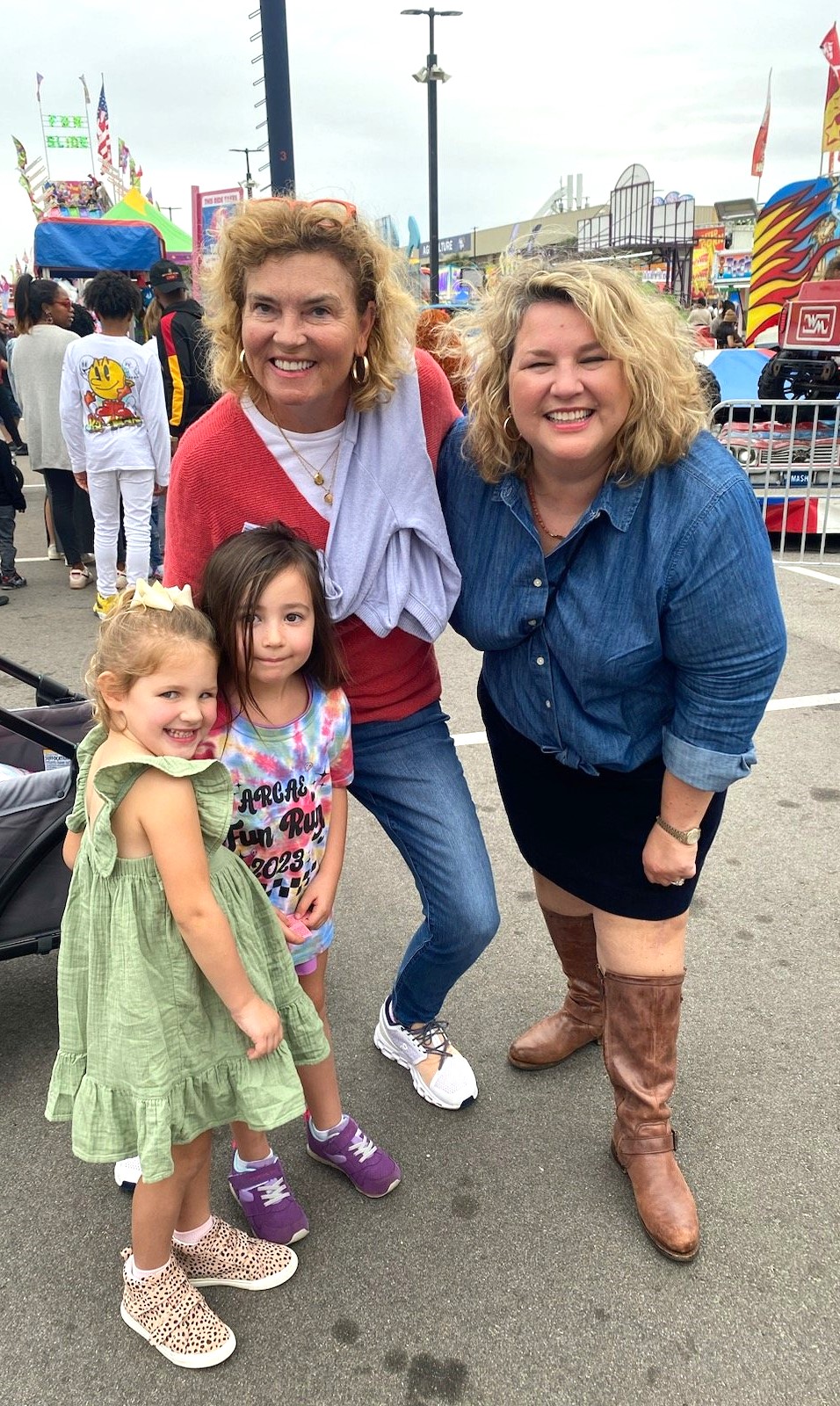
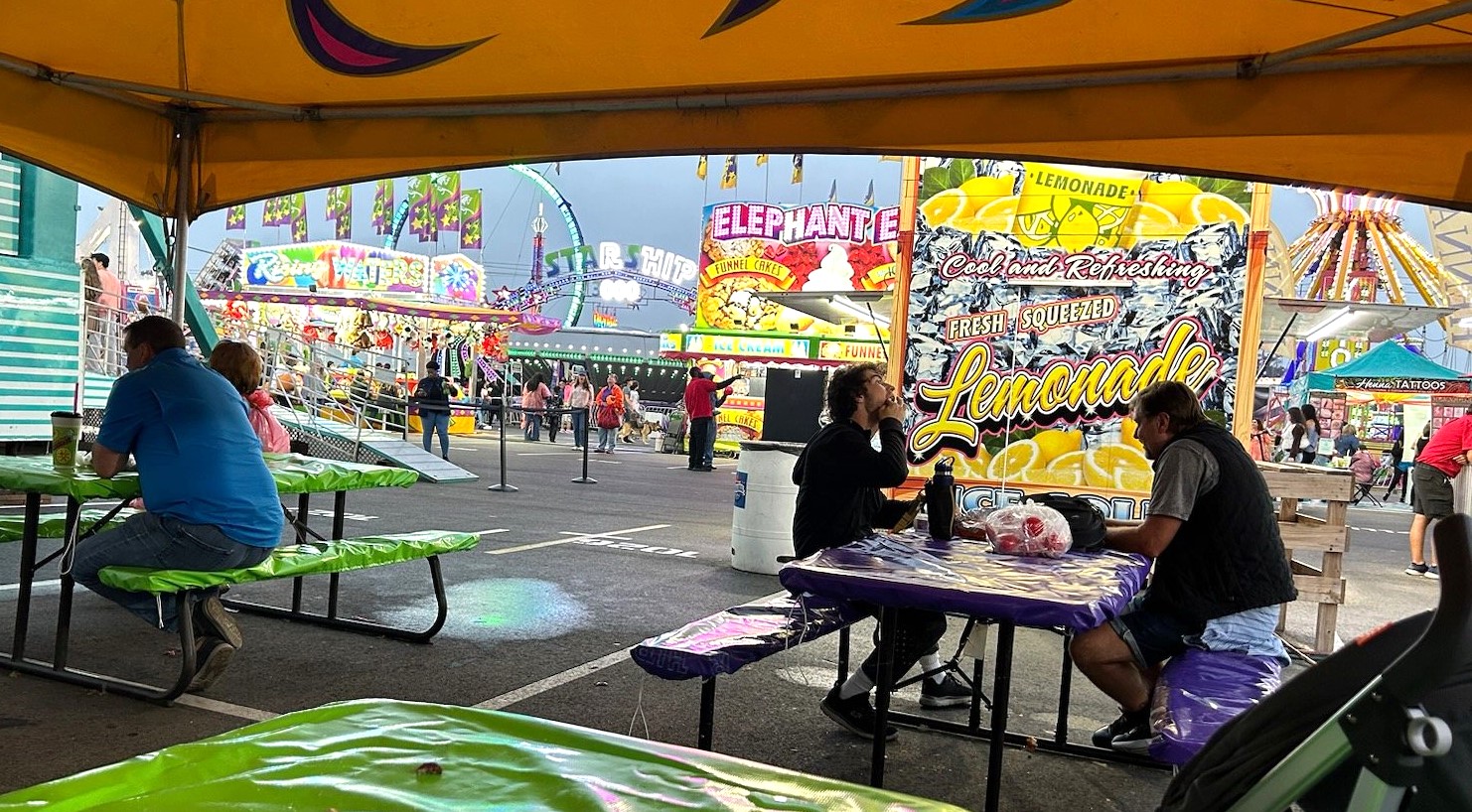
The South Carolina State Fair is in town thru October 22nd. and Friday night at the Fair with three granddaughters was a memory maker. Our core group pictured above: four year oldElla, six year old Collins, Kitty before face paint, and Kaka who has a long tradition of State Fair attendance. Ella adores Collins who is the granddaughter of our best friends Kitty and Kaka. Our group also included Nana Pretty, Pretty Too Caroline the mother of Ella and Molly who spent much of the evening being whirled around in a stroller on loan from Grant who works with Kaka. The stroller was a lifesaver!
Molly and me at the Fair
before getting in better moodwith bucket of Fiske Friesand corn dog
yeah, it’s a corn dog on a stick
and this is how it all went wrong
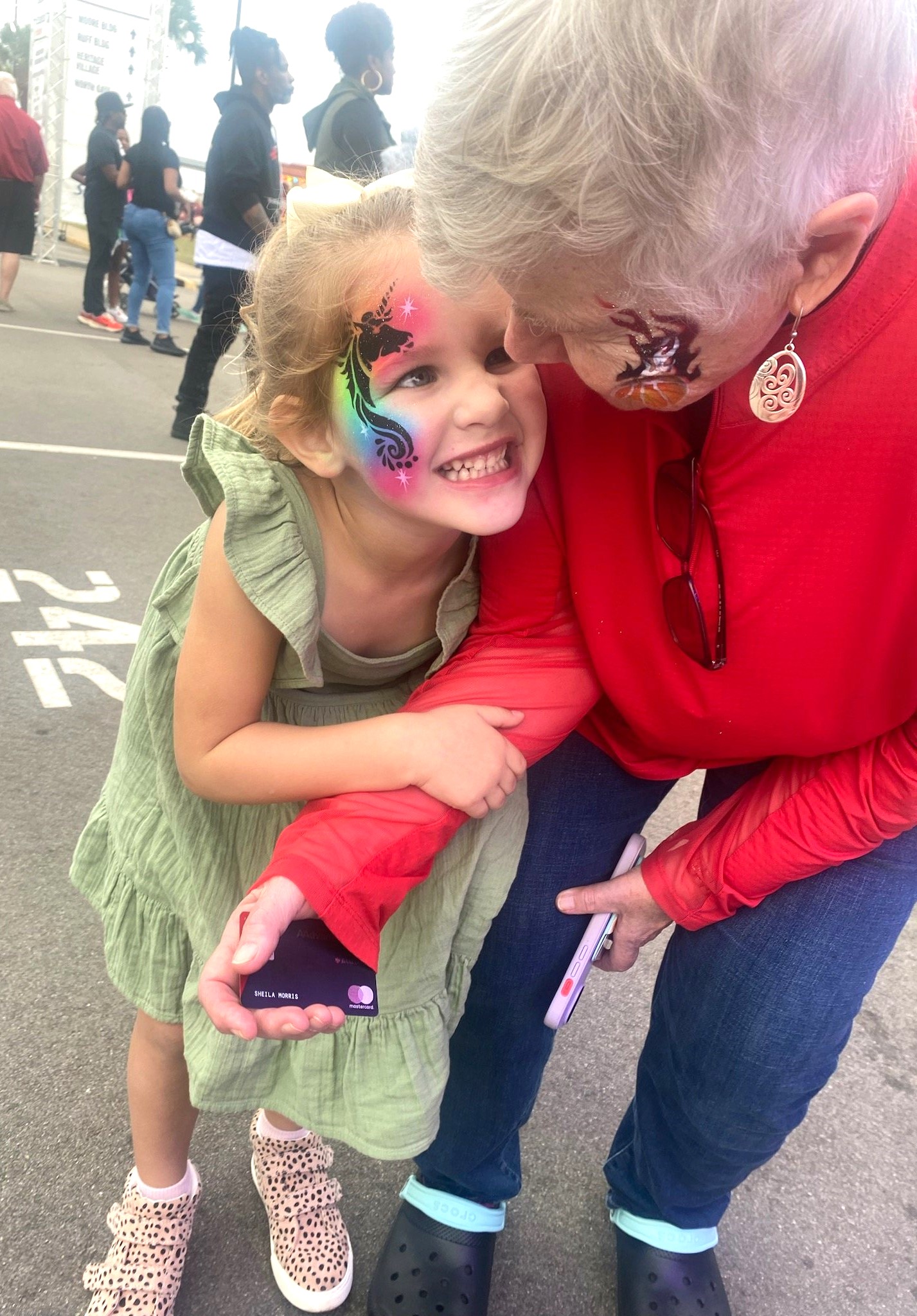
face painting not for the faint of heart – who is this Joker?
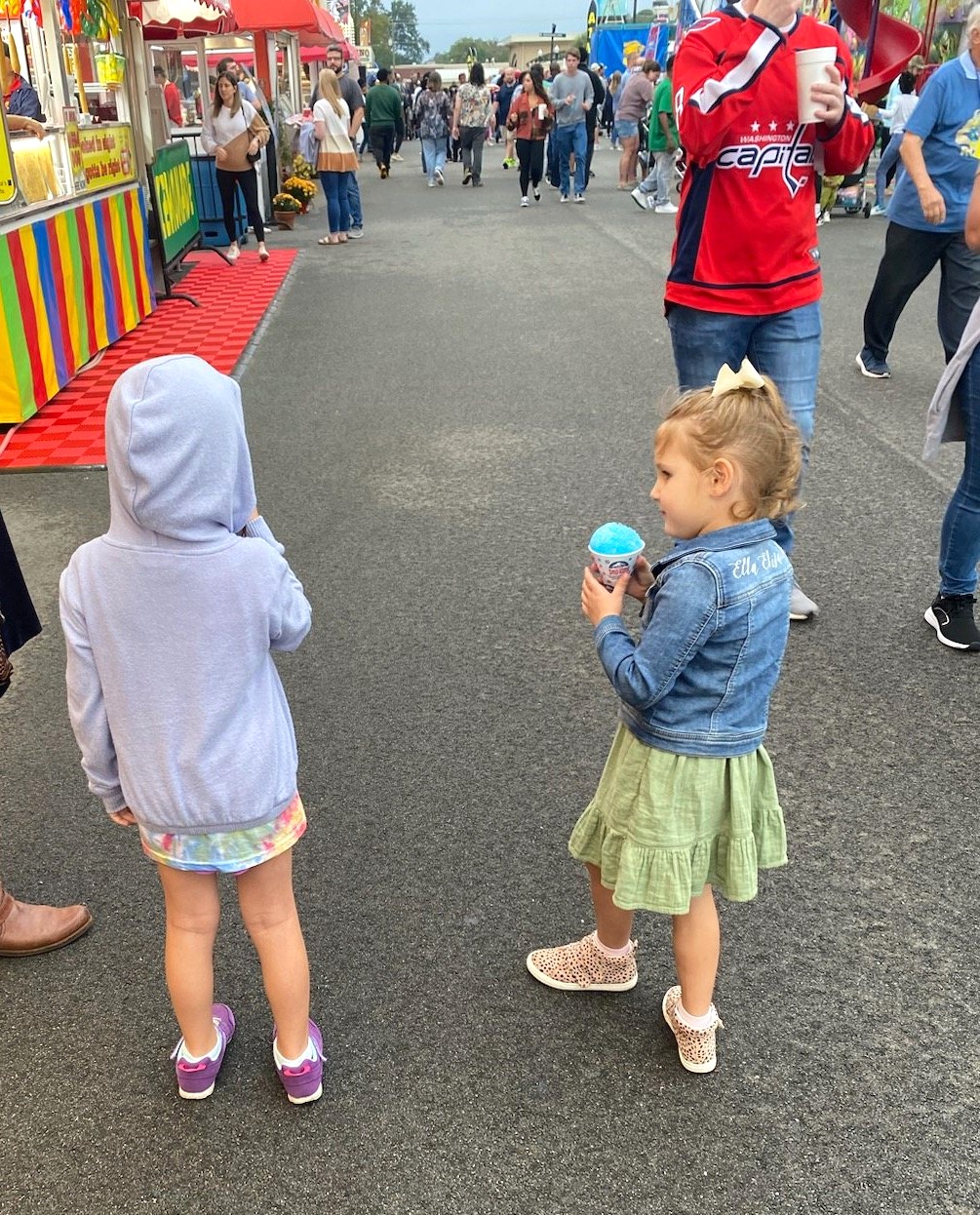
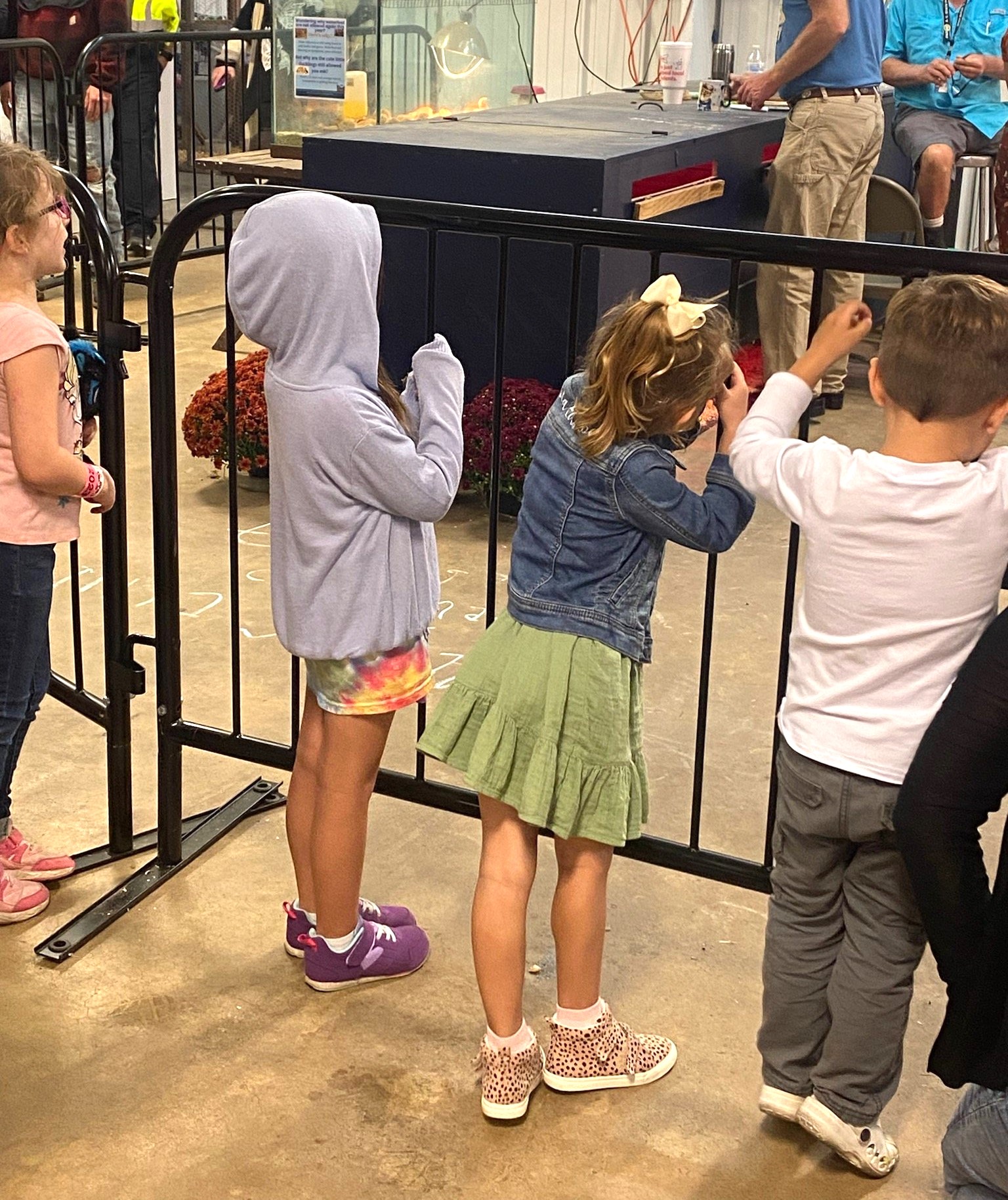
Collins wisely wore hoodiewhich came in handy as soft rain drizzled on us –
raspberry/blueberry snow cones notdisturbed by rain
as girls take break from slides, monster rides, bumper cars and Big Ferris Wheel
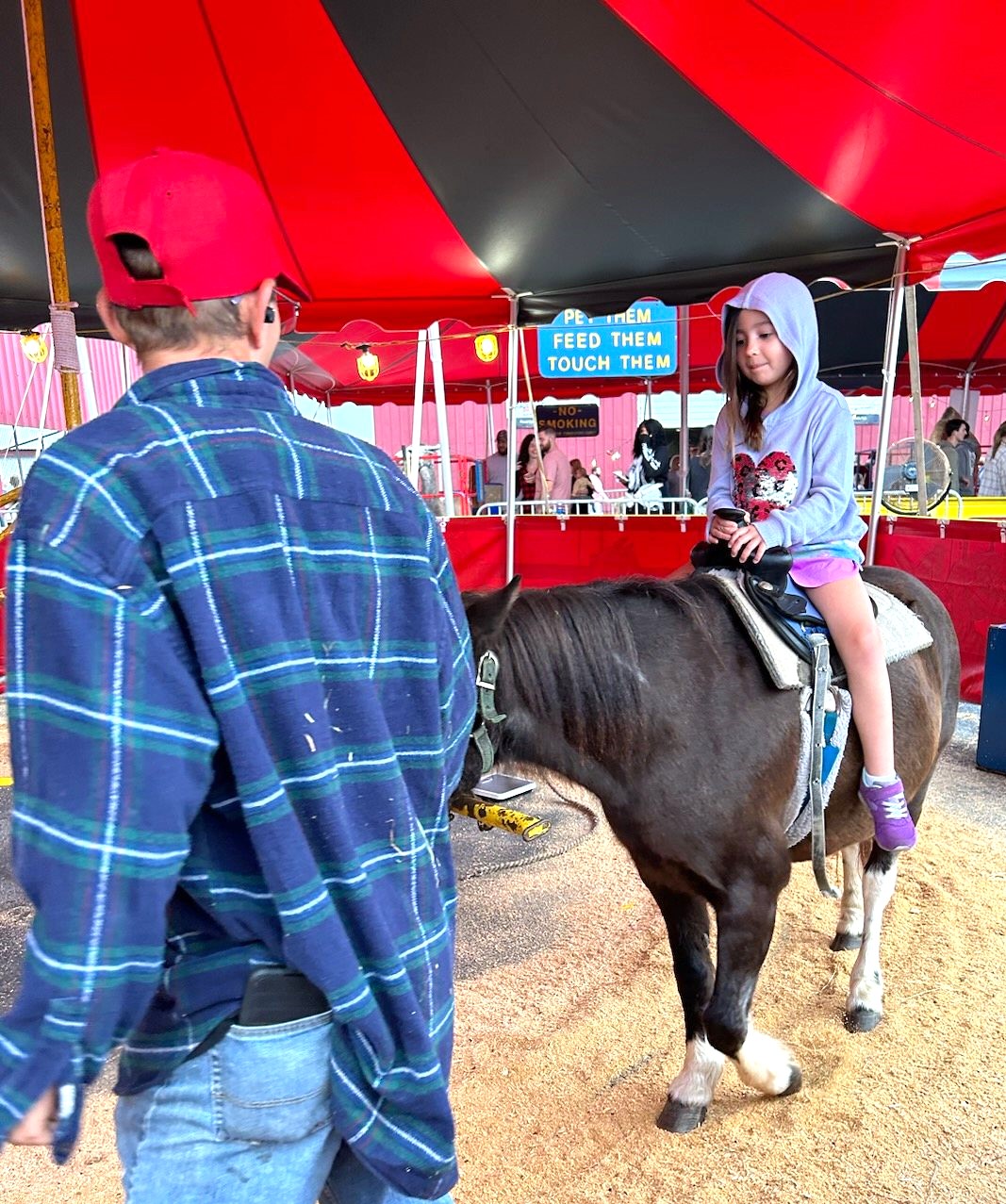
pony rides always popular during rain
it’s okay for me to pet Lucy
ducks anyone?
Hey, I had a GREAT time, too, once they let me loose
Caroline texted us after getting Ella and Molly to bed much later than usual following our big evening at the Fair: “Ella told me on the way home she wanted the Fair to be her home and wanted Collins to live there, too. She said she’d sleep on the rides, and they’d pee in the grass. Lol. I was like there are bathrooms, Ella, and she said fine we will use the bathrooms.”
When can we go to the Fair again, Nana?
**************************
For all the children everywhere. Please stay tuned.
P.S. Thanks to Caroline who is responsible for most of these photos. Thanks to all our followers in cyberspace for going to the Fair with us!
Rosenberg is now a city of 39,468 (2021 census) inhabitants and a part of the Houston – The Woodlands – Sugar Land metropolitan area. When my parents moved forty miles north from our home in Brazoria to Rosenberg in June of 1964, I was a new summer school student at the University of Texas at Austin. How new, you ask? Well, when I wrote my folks to tell them I had found a ride home for a weekend visit in July, my dad wrote back something to the effect that I needed to come to Rosenberg because he and Mom lived there – not in Brazoria where we had lived for the past five years. New jobs for both Dad and Mom, new rental house, new church, everything new. I was horrified – I had hoped to see my friends from high school who stayed at home for the summer instead of going off to college. Why move to Rosenberg, I wondered. Mostly I felt hurt that they hadn’t prepared me with the truth.
The Rosenberg years in the 1960s and early 70s for my parents were good years for them. They were finally able to purchase their own home (1021 Timber Lane pictured above) in 1965 after nearly twenty years of marriage. My mother taught second grade in a much larger school district where my father was assistant superintendent for the Lamar Consolidated schools that continued to grow as Houston expanded south and west. Mom played piano for a Southern Baptist Church as she had done her entire life wherever we were, and Daddy sang in the choir.
Daddy and Mama with their three bird dogs Rex, Dab and Seth
those old dogs couldn’t hunt,
but they did love the sofain our denon Timber Lane
Daddy with his small grill where he loved to cook steaks
in the driveway of Timber Lane – his one attempt to cook
When I graduated from UT in the summer of 1967, I moved to Houston to take a job with Arthur Andersen, one of the top eight CPA firms in the nation at that time. Sundays often meant driving the half hour from my apartment to see my folks in Rosenberg, making sure I was there in time for church.
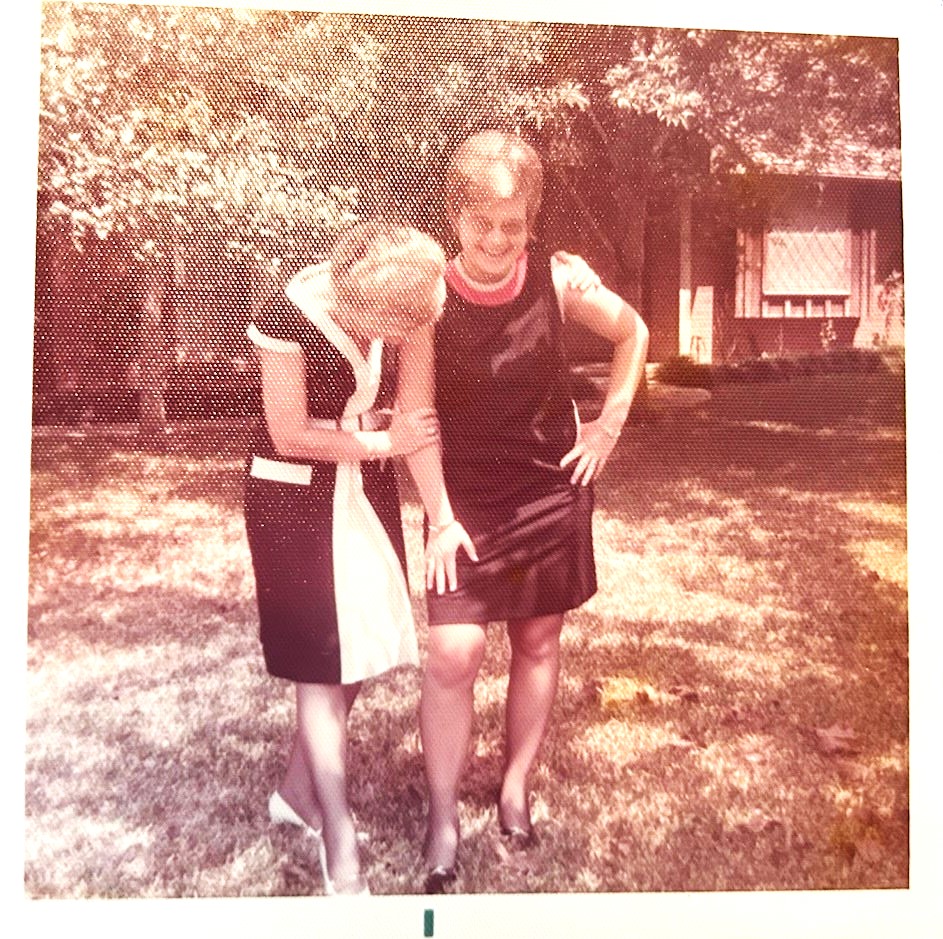
This picture is such a favorite of mine because Mom and I are laughing together – I remember she was trying to help me learn how to place my feet at an angle when I stood in high heels. That advice never resonated with me…
…but I did have fun trying to make her happy
I never felt that Rosenberg was my home, but my parents loved their jobs, church, frequently seeing relatives and friends who lived in the Houston area, finally able to purchase their own home on Timber Lane that allowed them to experience the American dream their immigrant ancestors crossed oceans to find. I loved my parents dearly, but I was off to new adventures in the Pacific Northwest three thousand miles from the house on Timber Lane in Rosenberg.
Clouds loomed on all of our horizons as a new decade brought unimaginable losses.
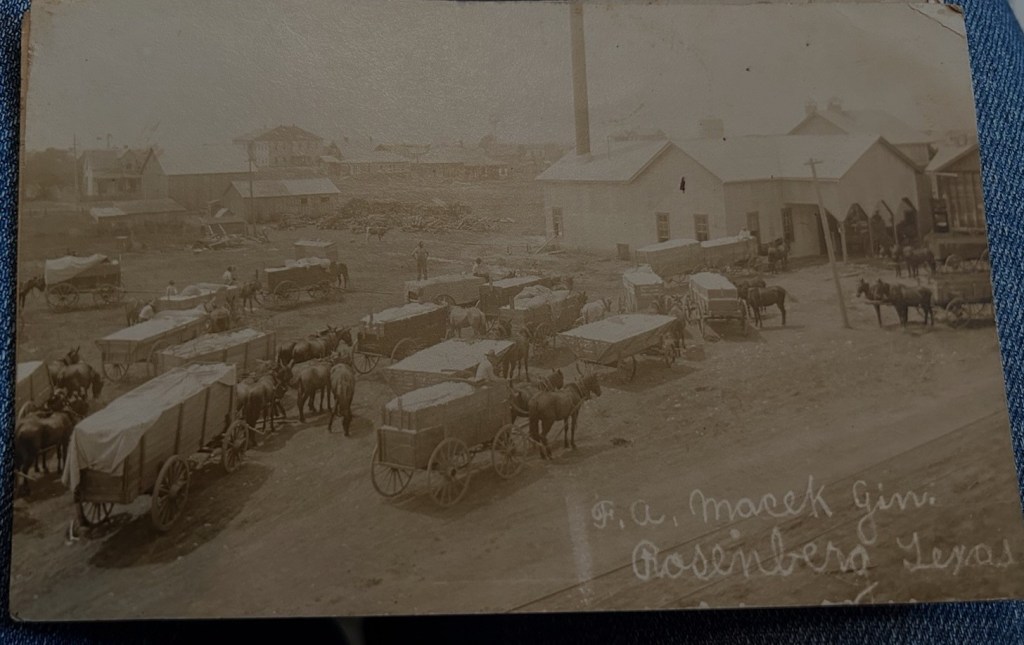
Farmers in early 1900s bringing cotton by wagons to Macek Gin in Rosenberg
The current flood of immigrants along the southern border between Texas and Mexico follows two hundred years of people who believed Texas was the land of opportunities. Today’s immigrants into the state come primarily from South America and Mexico, traveling thousands of miles to reach the Rio Grande River to cross over it to the Promised Land. In the 1800s European immigrants crossed the Atlantic Ocean in sailing ships that often used Galveston, Texas as a port of entry. One of these immigrants, Henry von Rosenberg, was born in Switzerland but came to the United States in 1843 at the age of nineteen, became a dry goods clerk who eventually owned the most dry goods stores in the entire state, the president of a major railroad company, owned a bank, became a wealthy philanthropist who supported the establishment of a library in Galveston. The town of Rosenberg was named for him in 1880.
“By the turn of the century, local land developers were sending promotional literature to the northern and midwestern states, explaining that ‘the famous Brazos Valley […] has the most fertile land in America,’ and showing pictures of green spaces, fruit orchards, wagons of cotton waiting to be ginned and Victorian homes, all intended to entice more settlers to the area. Soon there were people of German, Czech, Polish and Mexican ancestry flocking to the area.” (City of Rosenberg history)
On October 20, 1898 my maternal grandmother named Bernice Louise Schlinke was born in Rosenberg, Texas; she was the granddaughter of a family on her mother’s side from Germany who came to Galveston aboard a ship that wrecked in the Galveston harbor and another family on her father’s side that came from Prussia (now known as an area that includes parts of Germany, Poland and Russia). My grandmother, like most of us who live in America, came from a family of immigrants.
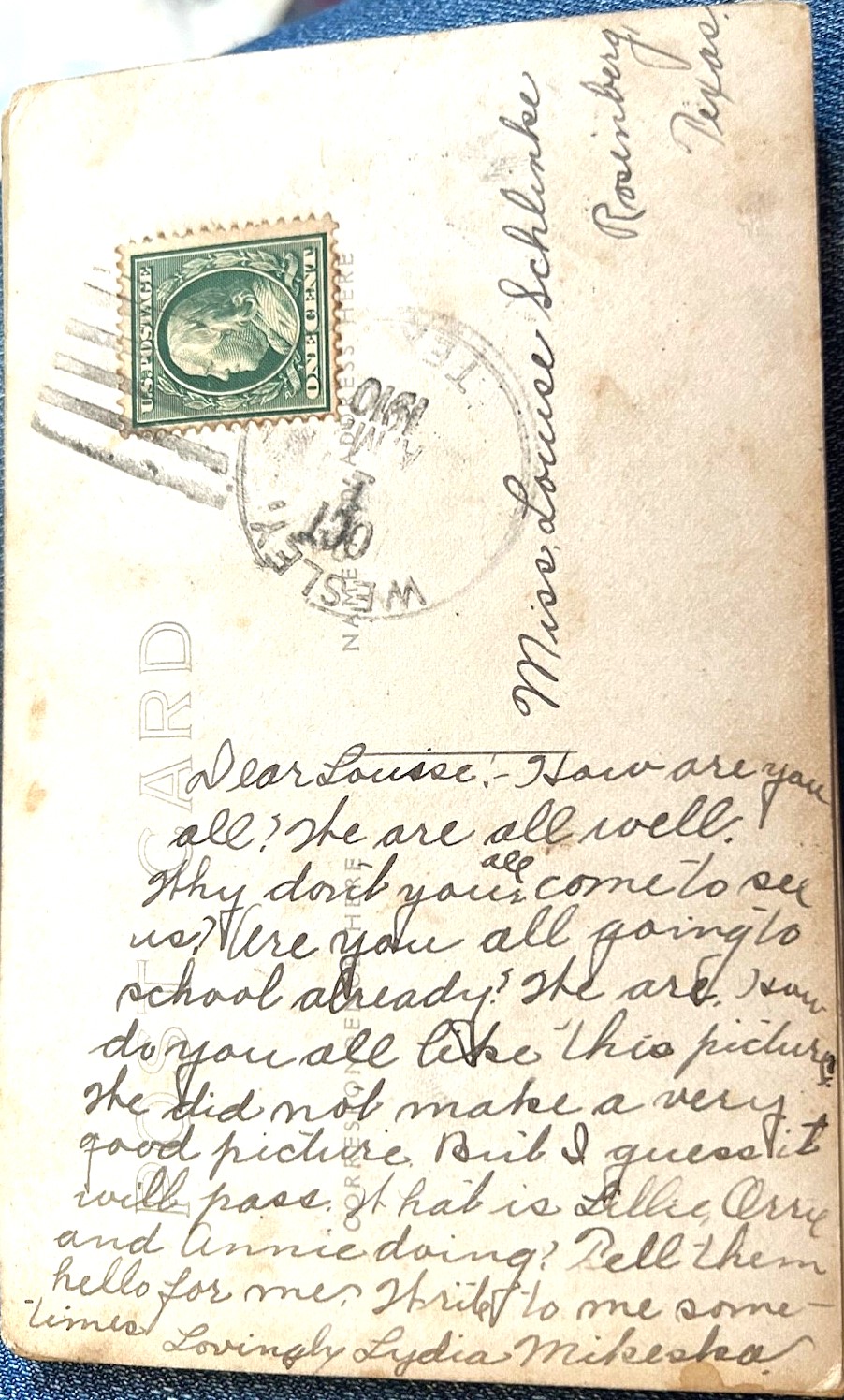
In October, 1910 my grandmother Louise would have had her twelfth birthday. She received a post card from her friend Lydia, and I found it mixed in with my mother’s cards and photos that I went through after her death in 2012. Why did my grandmother keep this card for sixty-two years, or more importantly, why did my mother keep the card after my grandmother’s death in 1972? Maybe for the same reason I can’t force myself to throw it away. The card represents a part of history – my family’s history for sure, but the children of immigrants who saw Texas as their destination just like the families of immigrants along the border today.
Lydia and her two sisters on other side of post card –
wish I knew which one she was
(Lillie and Orrie were Louise’s older sisters, Annie a cousin who lived with the Schlinke family)
I was a child when I knew Lillie, Orrie and Annie along with two other younger sisters Dessie and Selma – the Schlinke girls. The family usually gathered once a year when Aunt Orrie came to visit us from California. She and my grandmother were always close not only in age but also in character. In 1917 my grandmother married James Marion Boring, a man eleven years her senior, an entrepreneur/wanderer who settled with her and their four children in Richards, Grimes County, Texas where he operated a number of unsuccessful businesses until his untimely death at the age of 51 in 1938. His family also had lineage from Europe but migrated to Texas from places in the east. Louise Schlinke Boring maintained ties to Rosenberg after his death because Mr. Boring (as she called him to me) had a brother Clement Howard Boring and other family there. My mother, dad, my maternal grandmother and I visited my great uncle and cousins periodically during the time we all lived together in Richards in her house, but in 1964 following my graduation from Columbia high school in West Columbia, Texas our connection to Rosenberg shifted dramatically when my father became Assistant Superintendent of Instruction for the Lamar Consolidated Independent School District there.
Please stay tuned for more of the Rosenberg connection.
Last night Pretty and I were watching a new comedy on Netflix when she suddenly sat up and said, tomorrow is the 9th. of February, our 24th. anniversary. This was huge because for twenty-three years Pretty had problems remembering the date. Bravo!
I usually began the reminder process in January every year with a conversation that followed along these lines. Pretty, you know we have an anniversary coming up in February. Oh yes, she would say. What day is it then? I asked. Time passed as the wheels turned. I could see them turning. Is it the 12th.? she finally guessed. No, I replied with outright disgust. It’s the 9th. Pretty said oh she knew it was either the 9th. or the 12th. but thought she always got it wrong so she went with the one she didn’t really think was right. Didn’t I say I saw the wheels turning? For twenty-three anniversaries, Pretty has never remembered the right date. I always remember because I have it written on my calendar, and I don’t consider that cheating. I consider it brilliant. (Was that a calendar I saw in Pretty’s lap last night? Hmm.)
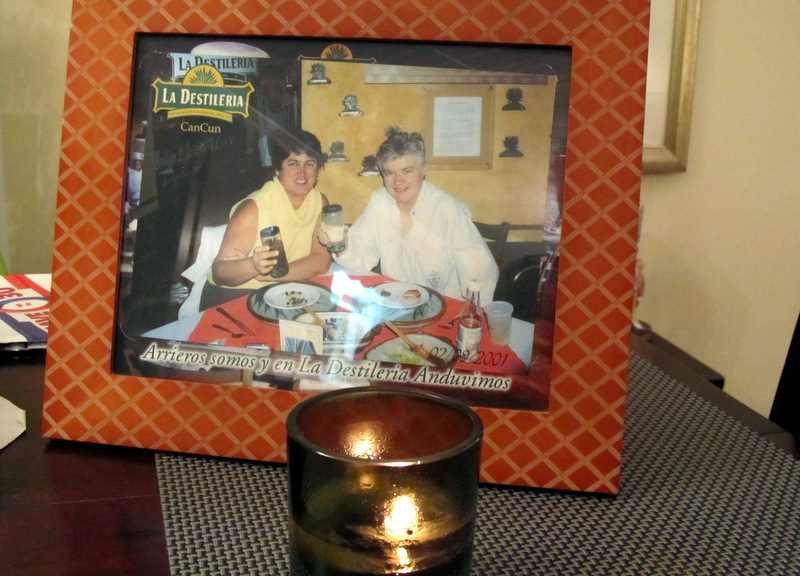
Return with me to those thrilling days of yesteryear to meet Pretty who magically changed from being a close friend and confidante (before the spontaneous trip to Cancun pictured above in February, 2001) to a woman who was hotter than the salsa we had with dinner at La Destileria the first night we were there. And trust me, that salsa was hot.
Pretty was “out” in a conservative state in a tumultuous era. She was ahead of her time with her Bluestocking Bookstore in the Vista in Columbia before the Vista became cool. Her business closed after three years, but her contribution to the LGBTQ community was recognized and appreciated. She served on the original board of directors for the SC Gay and Lesbian Business Guild formed in 1993 and was the second president of that organization. Her passion for equality was the catalyst for an activist’s life, a passion she and I shared as friends over the decade that was the 1990s.
At the turn of the century, change was in the air. It was like everyone suddenly realized time was passing faster than a speeding bullet, more powerful than a locomotive and if Superman and Wonder Woman were unlikely to intervene in the chaos and/or uninspiring sameness of our lives, we needed to make radical changes ourselves.
Both Pretty and I were in long term lesbian relationships that experienced seismic shifts as the first year of the new century came to a close. Our partners began looking for love in other places. Pretty had the additional drama associated with making a home for a fifteen year old son who she adored, an athletically gifted teenager who was the quarterback of his high school football team and the starting pitcher for their baseball team. She mixed her real estate appointments in her new career as a realtor for The Hubbard Group with her tennis league schedules and her son’s games.
The trip to Cancun was the launching pad for the most adventurous ride of my life. I had no way of knowing then that the gorgeous intelligent intellectually inquisitive woman with the wonderful sense of humor who grew up in New Prospect, South Carolina would marry the woman from deep in the heart of Richards, Texas and that we would be together for the next twenty-four years sharing a life unimaginable to me as a child. Yet, here we are – still laughing at each other’s jokes, still loving, still standing. And yes, still eating Mexican food as often as our older appetites allow; but now with the additional delight of sharing fajitas and quesadillas with our growing family that makes our love richer, more joyful, more playful.
How do I love thee, Pretty? Let me count the ways, and let me begin with the spicy salsa you have always brought to our family life together for two decades plus now. On that first trip to Cancun, we walked along the beach in the moonlight and I said I would give anything to celebrate our twenty-fifth wedding anniversary together in 2026. Unbelievable. Inconceivable. That seemed like such a long, long time away then, especially since I was fifty-five years old and you were fourteen years younger. We’re almost there, but the years have passed faster than a speeding bullet, our love more powerful than a locomotive.
Happy 24th. Anniversary, Pretty. Let the good times roll.
************************
granddaughters Ella and Molly at Mexican restaurant














 I'll Call It Like I See It
You must be logged in to post a comment.