Category: Life

  • Labor Day 2023

    Labor Day 2023


    What glorious weather! What a fun time with family and friends!

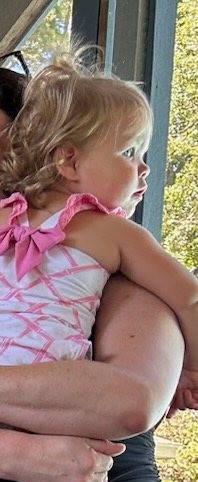
    Molly looks for her favorite person from the screen porch – Ella? Ella?

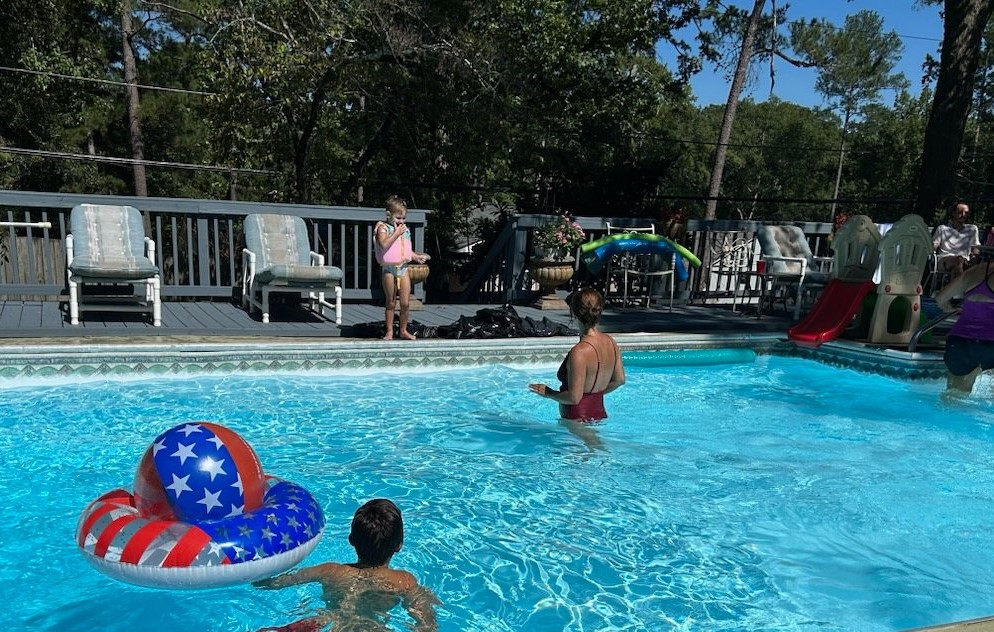
    Ella plays with her pool peeps Saskia and Finn

    Nana directs fun at our pool party

    I asked Nana why this pool towel has so many holes?

    Nana said it was very old, but it was her favorite towel

    I wonder if that’s why she keeps Naynay, too?

    **********************

    Happy Labor Day from our family to yours!

    ,

  • the secret life v. the happy homosexual

    the secret life v. the happy homosexual


     KA: Can you give me an example of what you mean by secret life? What was the public persona versus…was it what you were feeling inside, or what you were doing?

    SM: Okay. No. It was… I was a high achiever. I wanted to succeed in everything, and I’m not sure what was the motivation for that. My parents really didn’t pressure me into that, but being the only child of school teachers…maybe there was some, I don’t know. But regardless, I wanted to be at the top of my class. I wanted to be…if I did athletics, I wanted to be the best. I mean, I was very motivated, and I always felt that that person who was doing all that, if anybody knew that deep down, that I liked little girls and that I wasn’t really interested in boys, and pretended to be…

    You know I dated in high school, college. I’ve dated guys. That was ridiculous. But it was important to keep the secret life, the secret. Yeah. I mean, it impacted everything. I started reading about—when I was a child obviously I couldn’t really understand the totality of my feelings about girls, but then when I got to where I could read and went to high school and all, then I started reading stuff about being a homosexual. What does that mean, really, being a lesbian?

    KA: What kind of stuff did you find?

    SM: Well I found the kind of stuff that I mentioned, that it was illegal, that it was an illness, that it was…you were somehow wrong. Not just from an ethical, moral standpoint, but you were just wrong in general. There was something off. You just weren’t quite there. And so, contrast that with the overachiever over here who was busy, busy, busy making top grades and all that, with the fear that over here, “Oh my god. They’re going to find out and then they’re going to want to do something horrible.” And that was the literature. I mean that was the literature of the ‘50s. And even the ‘60s, was that this was an illness, a sickness, a sin. I mean, it was awful. That was how you were. That was you.

    KA: Was there anything positive? Did you ever find anything that was positive?

    SM: Well, the seminal event that changed my life, I will tell you this. There was—of course what would I study when I went to the University of Texas in 1964? Abnormal psychology, because that was what I was really interested in. It wasn’t a major. I majored in accounting because the successful person had to make a lot of money, okay? But the secret person over here had an elective in abnormal psychology.

    I mean, you have to know that back then—I don’t know what they do now—but back then at the University of Texas, the lecture halls, there were 500 students in a class. I mean, we’d sit in these huge auditoriums. There were more students in my classes than lived in my entire town of Richards. You know what I mean?

    I mean, counting dogs and chickens, and everybody. So I had this professor in that abnormal psychology class, and he had a different lecture every time, obviously. But one day he said, “Well, today we’re going to talk about homosexuality.” Well I thought, “Finally, I mean this is why I took this class, and now he’s going to get to it.” And so, his name was Dr. Holmes, and he was a young guy. I remember he had a crew cut, and nice-looking guy. But anyway. He was walking around, and he was talking to us, and he said, “One thing I do, other than teach, is I’m a counselor. I’m a psychologist. I have patients. Clients.” And so he said, “I have a question for the class today. What do I say to the happy homosexual?” That changed my life. Because the idea that there could be a happy homosexual was contrary to everything that I had ever felt, ever thought, ever read.

    And there’s a man standing up there saying, “Homosexuals can be happy.” So it changed my vision and my life because then I could see the potential. It opened up a whole new…it still didn’t change me from being a secret. I wasn’t going to tell anybody I was a homosexual yet. I was still very closeted. But it changed the horizon, I guess, that I had for my life. Yeah. So that was the positive thing that turned my life in a different direction.

    ****************

    On June 21, 2021 I was interviewed by Katherine Allen (KA) for the LGBTQ Columbia History Initiative, led by Historic Columbia that was documenting “the often unseen and untold stories of this diverse community through a comprehensive resource of oral histories, archival collections and historic site interpretation.” The entire interview can be found here:
    https://digital.library.sc.edu/exhibits/LGBTQ-Columbia/interviews/sheila-morris/

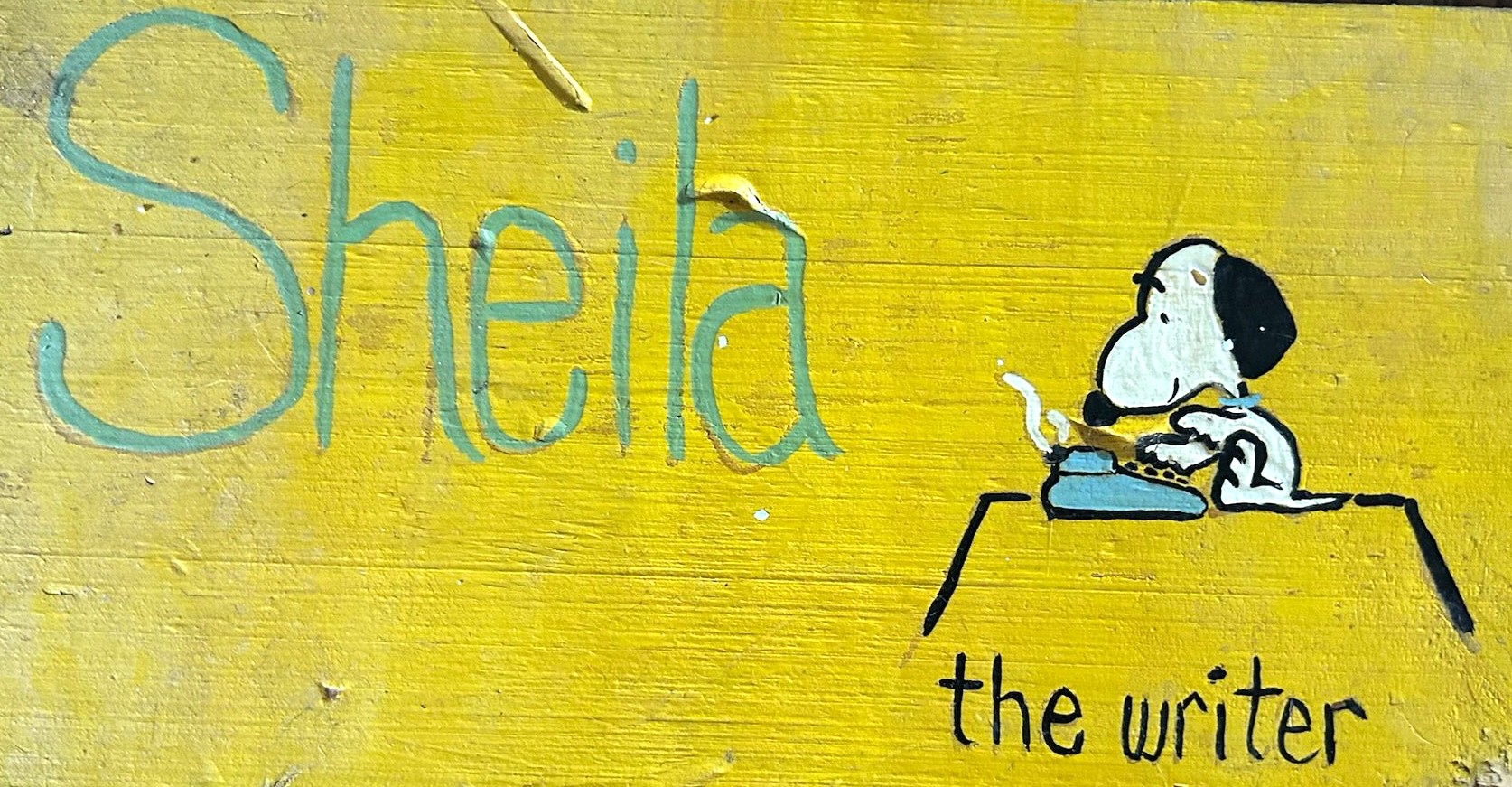
    Sheila Morris was born in Navasota, Texas in 1946, and grew up in the small town of Richards. Her parents were educators. Interview includes discussion of Sheila’s childhood, how religion and psychology impacted her perspectives on homosexuality as she grew up, her experiences at the University of Texas, discrimination she encountered as a woman in the accounting profession, her life in Seattle, Washington, and her move to Columbia in the early 1970s. Morris reflected on her relationships with closeted and out women, shared memories of the gay bars in Columbia in the 1970s and 1980s, and discussed her role in cofounding the South Carolina Gay and Lesbian Business Guild in the early 1990s. Morris was also a member of a number of other organizations in Columbia including Palmetto AIDS Life Support Services, the National Organization for Women, Women on Boards and Commissions, and Planned Parenthood. During the interview, Morris read excerpts from her memoir Deep in the Heart and discussed the publication of Southern Perspectives on the Queer Movement: Committed to Home, a collection of essays.
  • I Tawt I Taw a Hurricane

    I Tawt I Taw a Hurricane


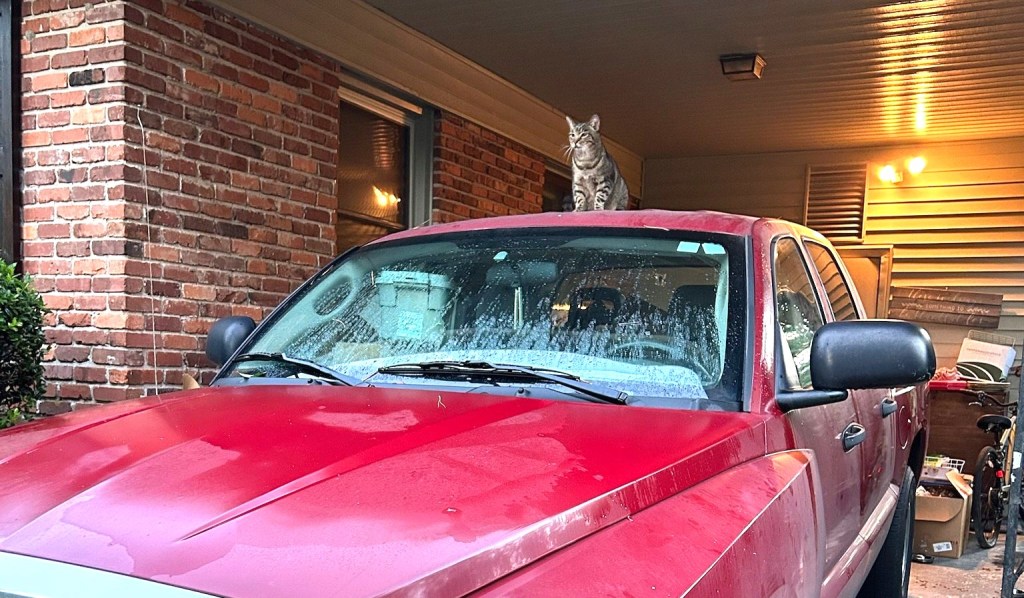
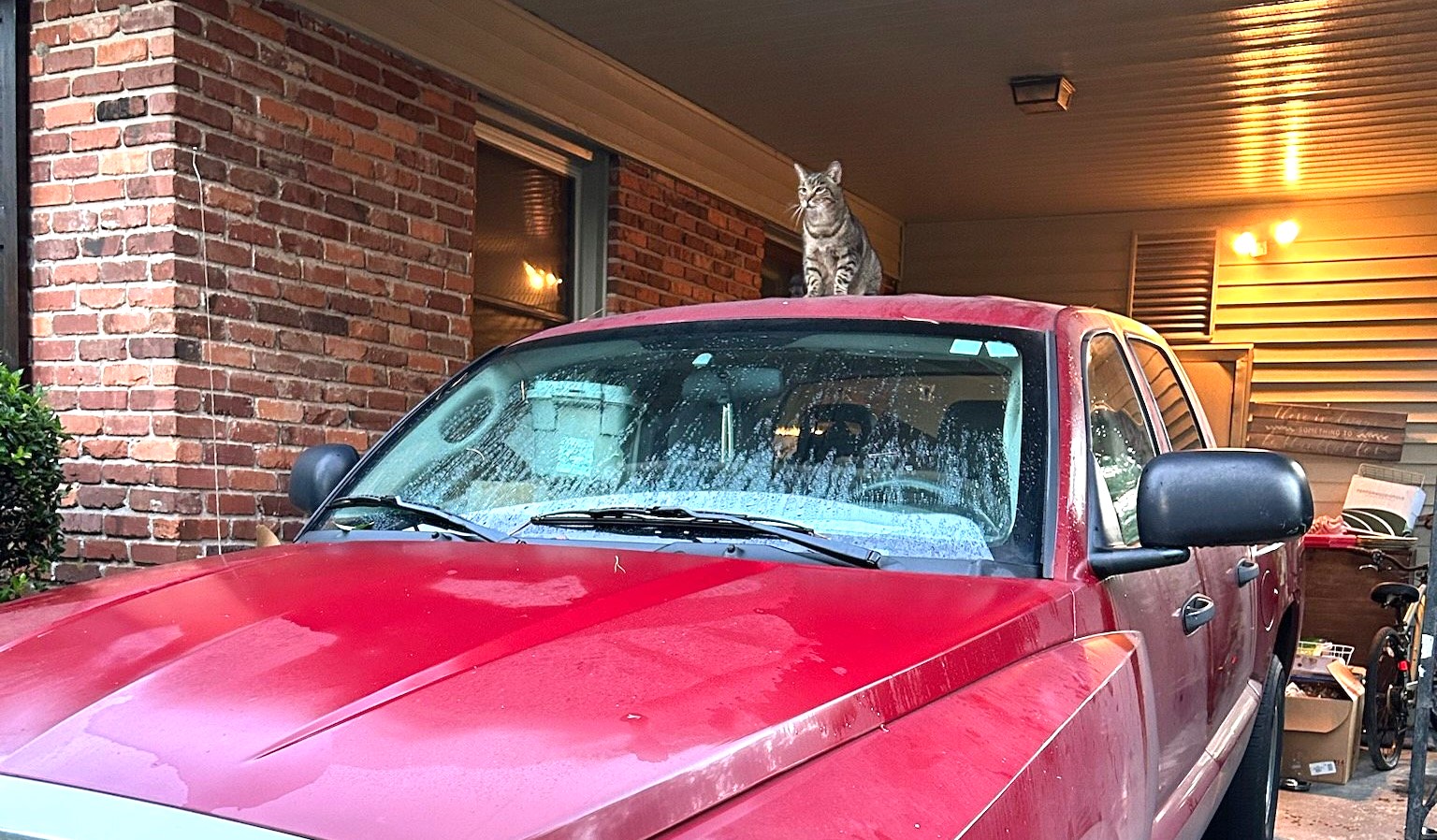
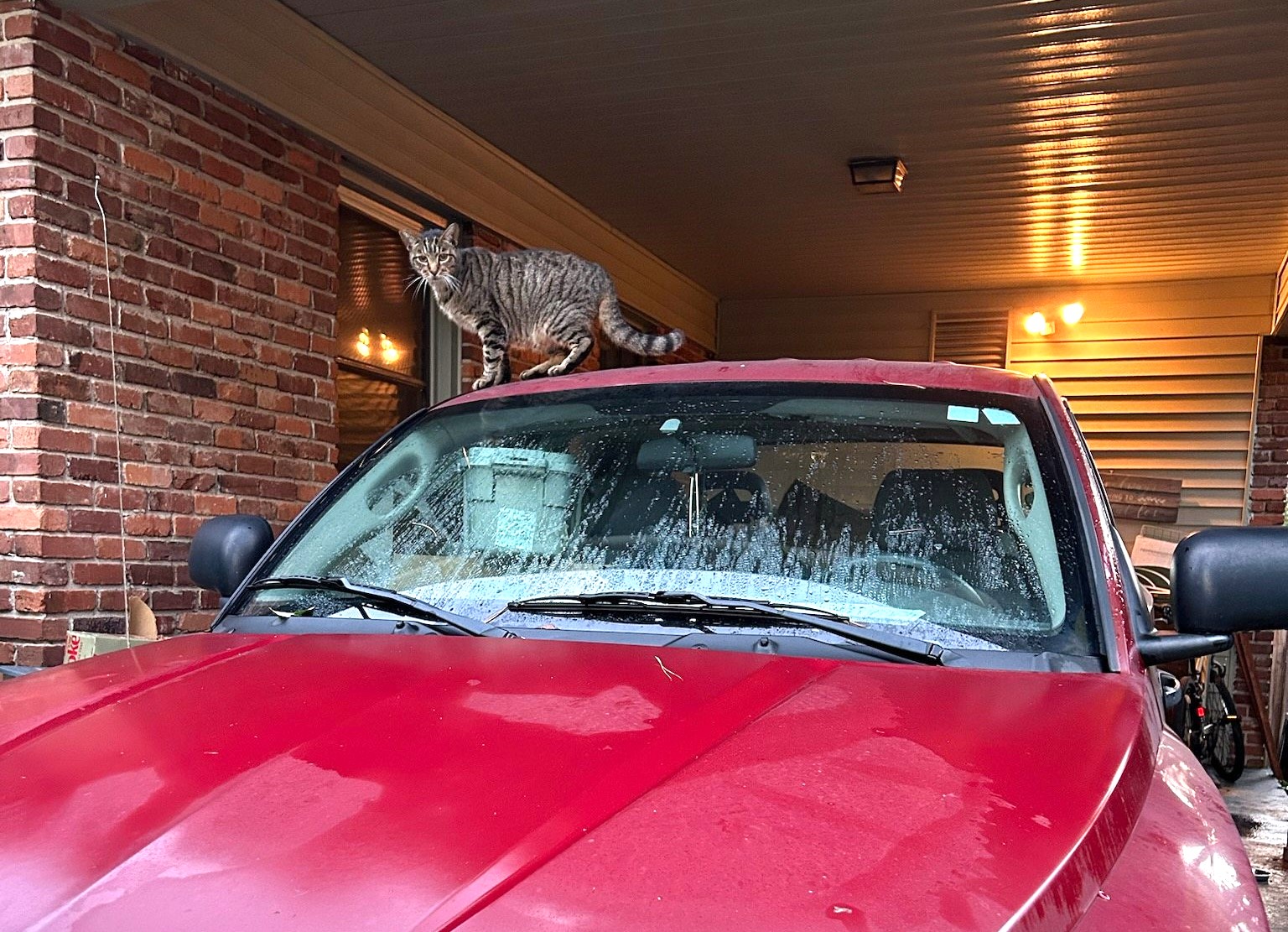
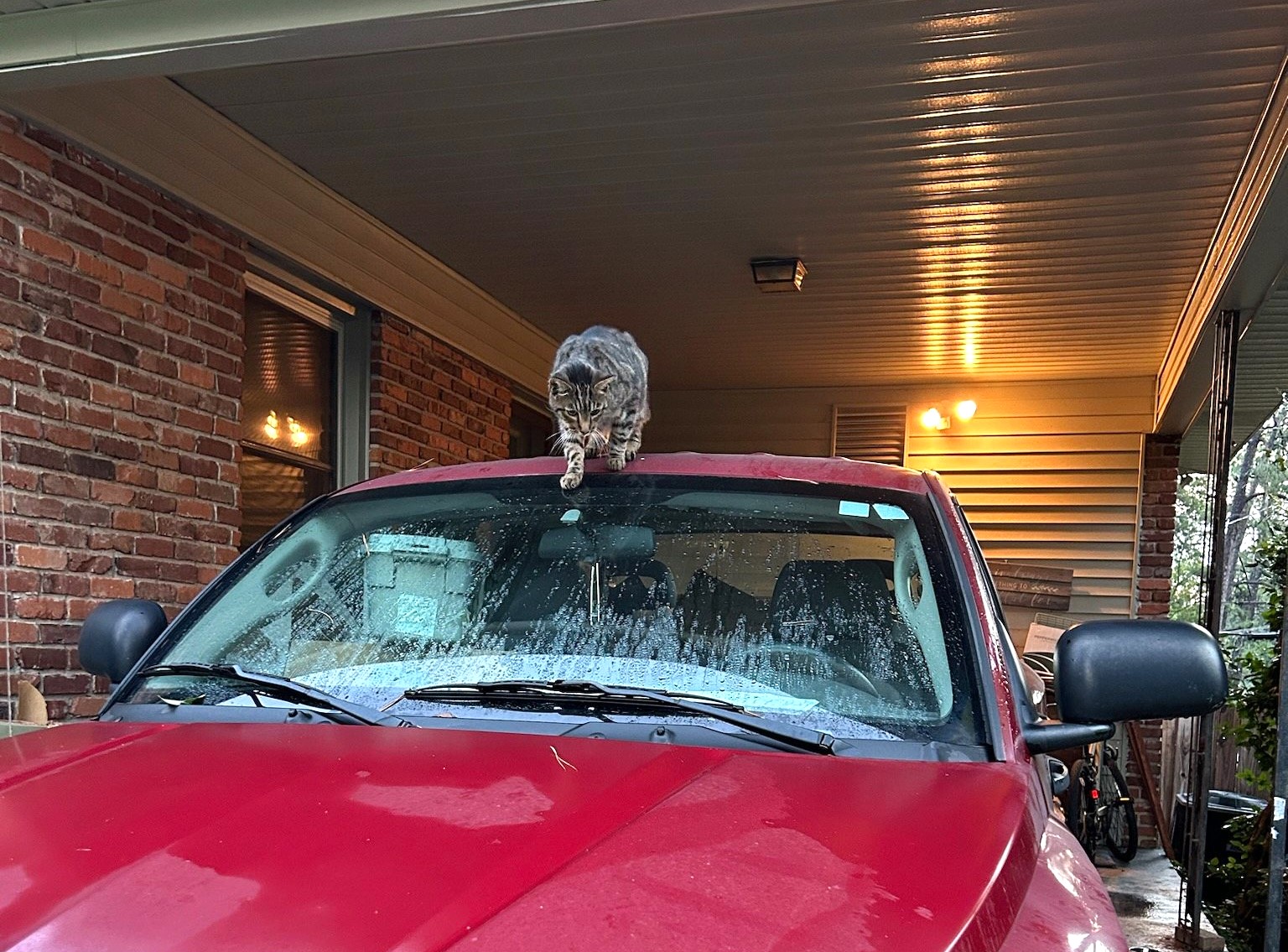
    Pretty’s Cat the morning after Hurricane Idalia blew through

    hey, old woman with white hair – tell Pretty I need help getting down

    oh, for crying out loud – I can’t wait all day for her

    **********************

    Thanks so much for the many well wishes from family and friends this week – we are safe, grateful to have escaped the worst.

  • feels like home to me

    feels like home to me


    As Hurricane Idalia barrels across the southeastern section of the USA today, Pretty has gone for dog food and I’m watching the rain begin to softly fall through my office windows, listening to Alexa shuffle my playlist of songs I love. Feels like Home to Me by my favorite trio of Dolly Parton, Linda Ronstadt and Emmylou Harris reminds me of who and what are most important to me when the storms of life threaten to overwhelm.

    Something in your eyes
    Makes me wanna lose myself
    Makes me wanna lose myself
    In your arms

    … There’s something in your voice

    … Makes my heart beat fast
    Hope this feeling lasts
    The rest of my life
    If you knew how lonely my life has been

    … And how long I’ve been so alone

    … If you knew how I wanted someone to come along
    And change my life the way you’ve done

    … Feels like home to me
    Feels like home to me
    Feels like I’m all the way back where

    … I come from
    Feels like home to me
    Feels like home to me
    Feels like I’m all the way back where I belong

    … A window breaks down a long dark street
    And a siren wails in the night

    … But I’m alright ’cause I have you here with me
    And I can almost see through the dark there is light

    … If you knew how much this moment means to me
    And how long I’ve waited for your touch
    If you knew how happy you are making me
    I’ve never thought that I’d love anyone so much

    … Feels like home to me
    Feels like home to me
    Feels like I’m all the way back where
    I come from

    … Feels like home to me
    Feels like home to me
    Feels like I’m all the way back where I belong
    Feels like I’m all the way back where I belong

    (Randy Newman, songwriter)

    ****************

    Pretty and I hope all our cyberspace friends are staying safe from whatever storms threaten today – and every day.

    Molly and me

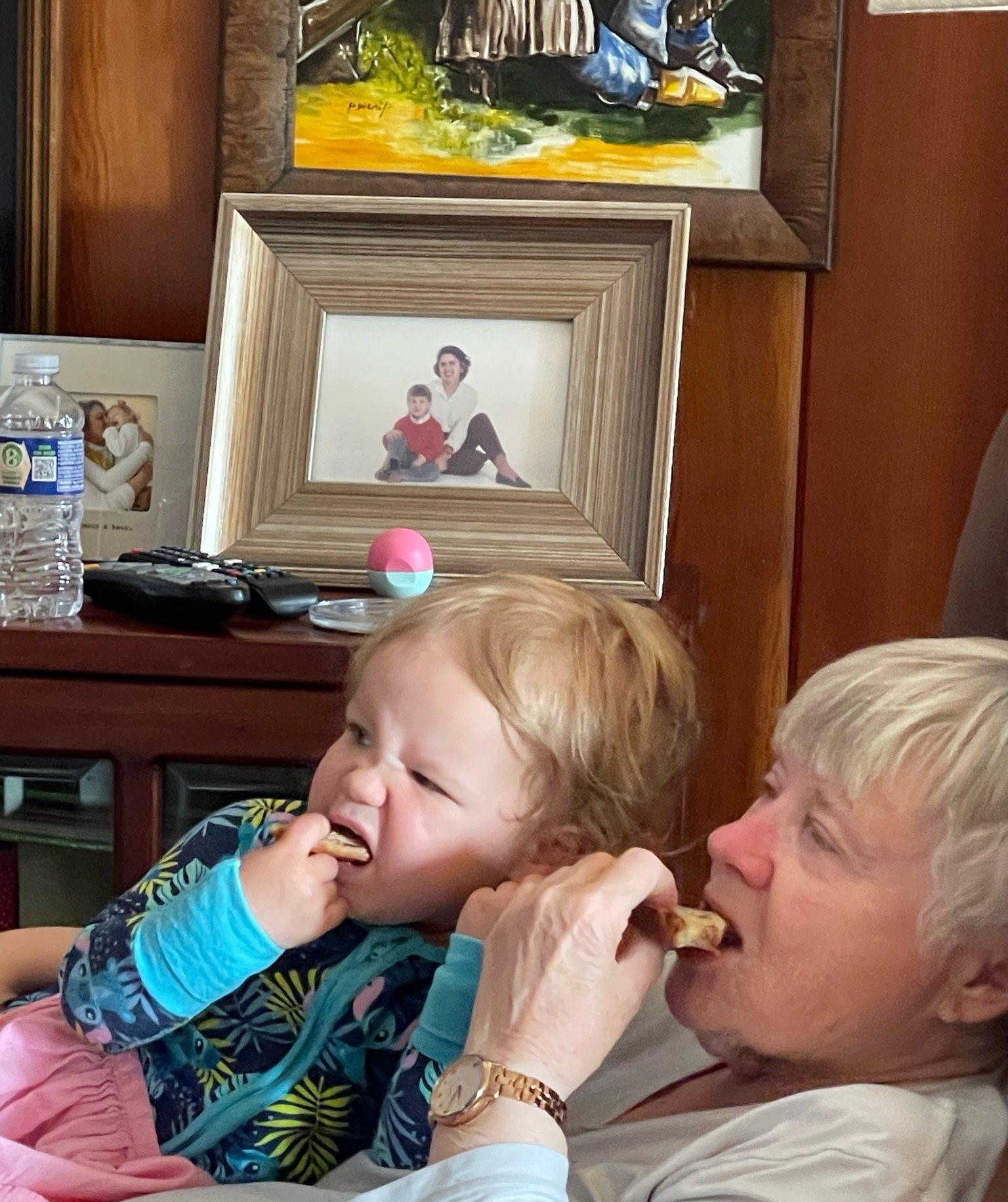
    Pretty and Ella with son Drew glued to golf tournament

    Feels like home to me.

  • Dr. King had a dream on August 28, 1963

    Dr. King had a dream on August 28, 1963


    Historian Jon Meacham writes that, “With a single phrase, King joined Jefferson and Lincoln in the ranks of men who’ve shaped modern America.” (Wikipeda)

    Sixty years ago today at the March on Washington for Jobs and Freedom which attracted 250,000 people to the nation’s capitol, Dr. Martin Luther King, Jr. delivered his I Have a Dream speech which was to become one of the most iconic speeches of the American Civil Rights Movement as he stood on the steps of the Lincoln Memorial to address the throngs gathered on the mall. Speaking from a script prepared fewer than twelve hours earlier, according to one of the co-writers, singer Mahalia Jackson shouted from the front of the crowd as he spoke, “Tell us about the dream, Martin.” And he did.

    I say to you today, my friends, so even though we face the difficulties of today and tomorrow, I still have a dream. It is a dream deeply rooted in the American dream.

    I have a dream that one day this nation will rise up and live out the true meaning of its creed: “We hold these truths to be self-evident, that all men are created equal.”

    I have a dream that one day on the red hills of Georgia, the sons of former slaves and the sons of former slave owners will be able to sit down together at the table of brotherhood.

    I have a dream that one day even the state of Mississippi, a state sweltering with the heat of injustice, sweltering with the heat of oppression, will be transformed into an oasis of freedom and justice.

    I have a dream that my four little children will one day live in a nation where they will not be judged by the color of their skin but by the content of their character. I have a dream today.

    I have a dream that one day down in Alabama, with its vicious racists, . . . one day right there in Alabama little black boys and black girls will be able to join hands with little white boys and white girls as sisters and brothers. I have a dream today.

    I have a dream that one day every valley shall be exalted, every hill and mountain shall be made low, the rough places will be made plain, and the crooked places will be made straight, and the glory of the Lord shall be revealed, and all flesh shall see it together.

    This is our hope. . . With this faith we will be able to hew out of the mountain of despair a stone of hope. With this faith we will be able to transform the jangling discords of our nation into a beautiful symphony of brotherhood. With this faith we will be able to work together, to pray together, to struggle together, to go to jail together, to stand up for freedom together, knowing that we will be free one day. . . .

    And when this happens, and when we allow freedom to ring, when we let it ring from every village and every hamlet, from every state and every city, we will be able to speed up that day when all of God’s children, black men and white men, Jews and Gentiles, Protestants and Catholics, will be able to join hands and sing in the words of the old Negro spiritual: “Free at last! Free at last! Thank God Almighty, we are free at last!” (excerpt from Teaching American History)

    *******************

    I have a dream, too, that one day the AR-15 rifles that contribute to the killing fields across America – including the most recent hate crime at a Dollar General store in Jacksonville, Florida while the 60-year anniversary of the March was being celebrated in Washington, D.C. this past Saturday – that those weapons of mass destruction will be banned permanently from the face of the earth. Our hearts are with the families of the innocent Black people who were still being judged by the color of their skin.