Category: politics

  • us open: a time to remember, a time to look forward

    us open: a time to remember, a time to look forward


    On September 08, 2001 Venus Williams won the women’s singles championship of the US Open Tennis Tournament in New York City for the second straight year (and for the last time) by defeating her younger sister Serena. It was the first Grand Slam final between sisters in 117 years – the media hype surrounding the match was intense, but the match ended in 69 minutes with a 6-2, 6-4 older sister win. I remember watching the Williams Sisters in the final but can’t remember which one I rooted for, probably the elder Venus. At the time I couldn’t anticipate the incredible impact these two women would have on their sport for the next two decades – both on and off the court – but their names are now synonymous with tennis greatness around the world.

    I also could never have imagined what would happen a mere three days later in New York on a Tuesday morning, the 11th of September, when terrorists attacked our country including two planes that flew into the Twin Towers of the World Trade Center in lower Manhattan – a short taxi ride away from the Billie Jean King Tennis Center, the site of the US Open tournament.

    The 2021 women’s singles championship of the US Open will be played on September 11th., the 20th. anniversary of that terrorist attack. It is the first time since 2003 that neither Venus nor Serena will participate in the tournament. Both sisters (Venus, age 41 – Serena, age 40) cite injuries that prevent them from appearing. I must admit I feel my age and a little sad that I won’t have a Williams sister to watch. But hey, two teenagers who stand on their shoulders give me hope for not only the game but also the future.

    Nineteen-year-old Leylah Fernandez is the daughter of an Ecuadorian father who is her coach, a mother from the Philippines who is her cheerleader in reserved seating during her matches. Leylah’s paternal grandparents are Peruvian. When asked about his immigration to Canada, her father Jorge said:

    “I don’t want to get political. That’s not what I’m doing. What I’m telling you is we’re an immigrant family, and we had nothing. So, Canada opened up its doors, and if they wouldn’t, I wouldn’t have had the opportunities that I have. And I wouldn’t have been able to give them to my daughter. So, it means a lot.” (Sanket Nair, Essentially Sports)

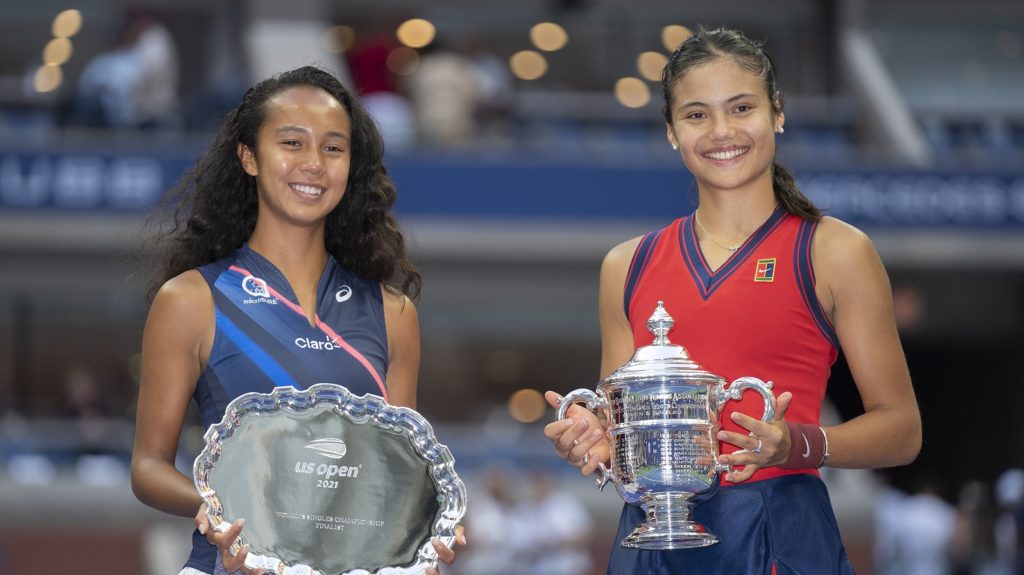
    The path to the women’s singles championship for Fernandez included wins over the #3 seed Naomi Osaka, #16 seed Angie Kerber, the #5 seed Elina Svitolina, and the #2 seed Aryna Sabalenka in the semi-final under the lights at Arthur Ashe Stadium Thursday night. She will play again on Ashe for the final today at 4:00 p.m. Her opponent will be another teenager, this one from Great Britain.

    Emma Raducanu was born in Toronto, Canada to her parents Ian from Romania and Renee who is Chinese. When Emma was two years old, the family immigrated to England where she began playing tennis at the age of five. Raducanu’s appearance in the final of the US Open this year is the first of any qualifier in history (man or woman) to make a Grand Slam final, the first British woman to make a Slam final in 44 years, since Virginia Wade in 1977. (It was fun to see Virginia Wade watching from the stands at Ashe.)

    Raducanu won 3 qualifying matches prior to making the 2021 US Open main draw, and her run to the Grand Slam women single’s championship included wins over #11 seed Belinda Bincic who won the Gold Medal at the Tokyo Oympics this summer, #17 seed Maria Sakkari in the second semi-final match under the Thursday night lights at Ashe Stadium by crushing our home girl South Carolina native Shelby Rogers in the 4th round of the Open. Rogers defeated the #1 player in the world, Ash Barty, in a three-set unexpected victory in the third round of the slam.

    Fernandez celebrated her 19th birthday on September 06 at the Open with cupcakes that looked delicious – cupcakes she shared in the locker room with Raducanu and other players. She was born September 06, 2002, and Raducanu was born two months later on November 13th. Fernandez entered the US Open ranked 73rd in the WTA singles while Raducanu came in at 150th.

    Their ratings will change after their performances at the Billie Jean King Tennis Center this year. Their lives will also change: new demands, higher expectations, instant celebrity, countless decisions for their financial futures. Regardless of who wins today, both of these teenage girls have secured a place in tennis history with opportunities for a fantastic future – a future built in part by the sacrifices of their families, Althea Gibson, the Williams Sisters and their female tennis cohort, and by the remarkable Original 9 that was the first group inducted into the International Tennis Hall of Fame this summer. Billie Jean King, Peaches Bartkowicz, Rosie Casals, Julie Heldman, Kristy Pigeon, Nancy Richey, Valerie Ziegenfuss, Judy Dalton and Kerry Melville Reid risked their careers by separating themselves from the tennis establishment to fight for equal rights with their male counterparts. When the winner deposits her check of $2.5 million, the same as the winner in the men’s championship, she can thank the Original 9.

    Today, September 11th, we remember the tragedy of a terrorist attack against our country twenty years ago. As the names of those lost are read and as the bells remind us of that unspeakable horror, two immigrant teenage girls, one from Canada and one from the United Kingdom, teenagers who weren’t yet born on that day will improbably battle for a championship in New York City.

    It’s the Women’s Singles Championship of the 2021 US Open Tennis Tournament – it’s more than a tennis match. It’s a glimpse of the future.

    **************

    Stay safe, stay sane, please get vaccinated and please stay tuned.

  • time’s up: share the wealth

    time’s up: share the wealth


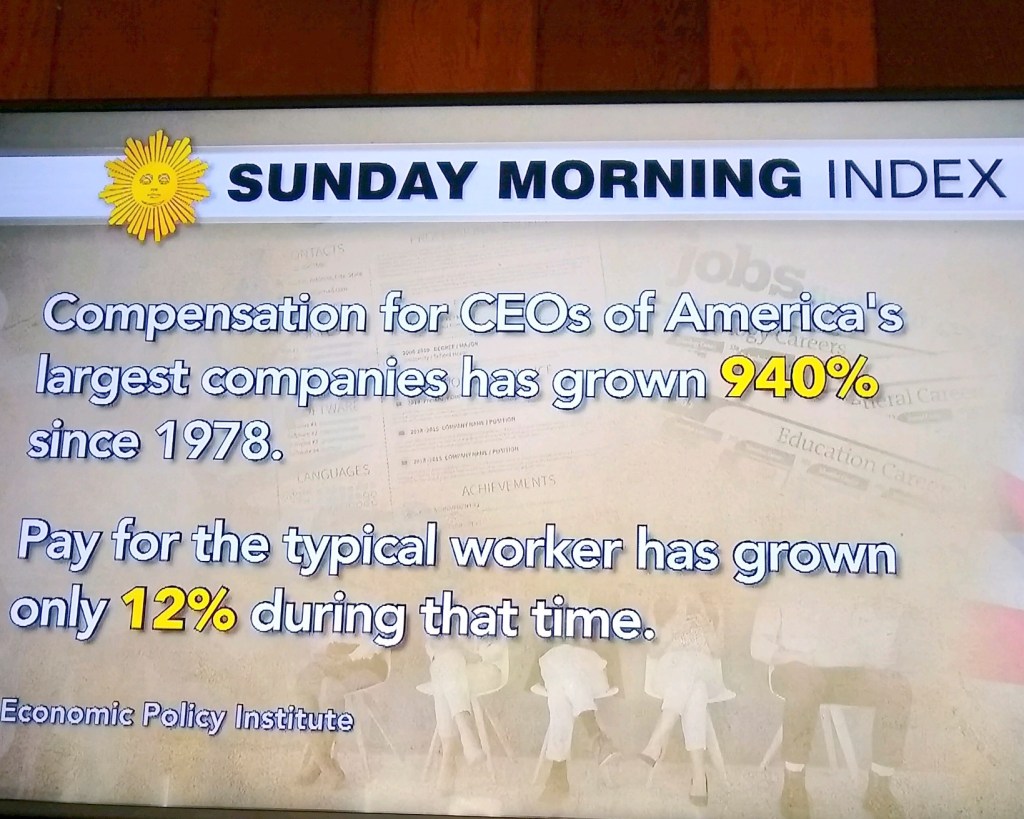
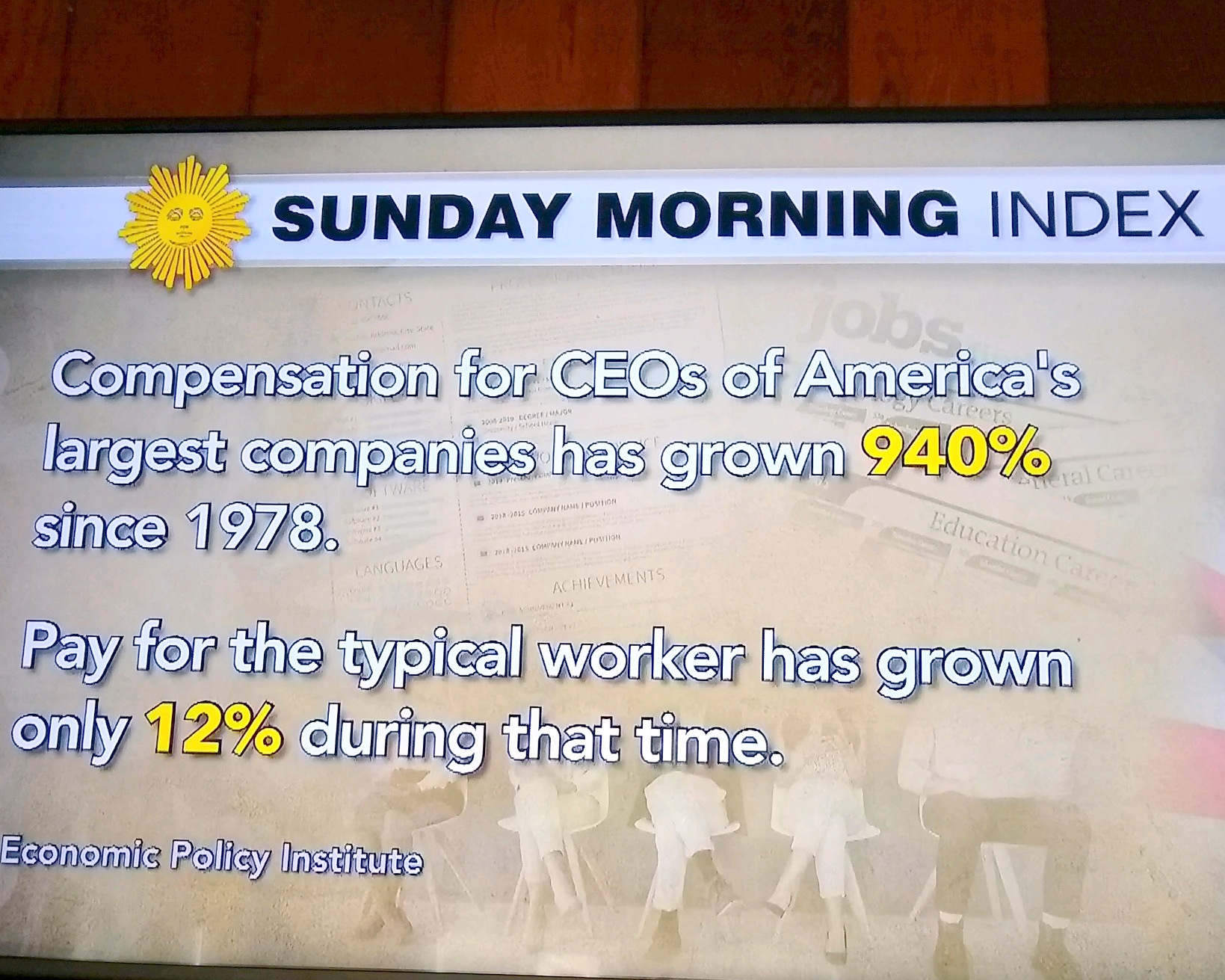
    This is dedicated to all those who understand what laboring for “the Man” to line his pockets is all about. That Man in America has been getting wealthy while we work. Come on, Man. Time’s up: Share the Wealth.

    2021 – 1978 = 43 years

    Thanks to CBS Sunday morning today for this fact check, and thanks to individual companies like Costco (which is Pretty’s happy place) for raising their minimum wage to $16/hr in 2021 – more than twice the federal minimum of $7.25 set in 2009. Now, if only Congress would pass a Raise the Wage Act in 2021, or even if South Carolina would join 29 other states and the District of Columbia to adopt a new state minimum wage above the current federal $7.25…

    But, as my daddy used to remind me, if wishes were horses, we’d all be riding.

    Here’s to the workers who should be riding on Labor Day and every day.

    **********************

    Stay safe, stay sane, please get vaccinated and please stay tuned.

  • this is how Pretty rolls

    this is how Pretty rolls


    Every three months for many years I have sent a small check from our joint account to the Animal Rescue Mission in Columbia. Pretty understands I have a macro overview of the world’s problems.

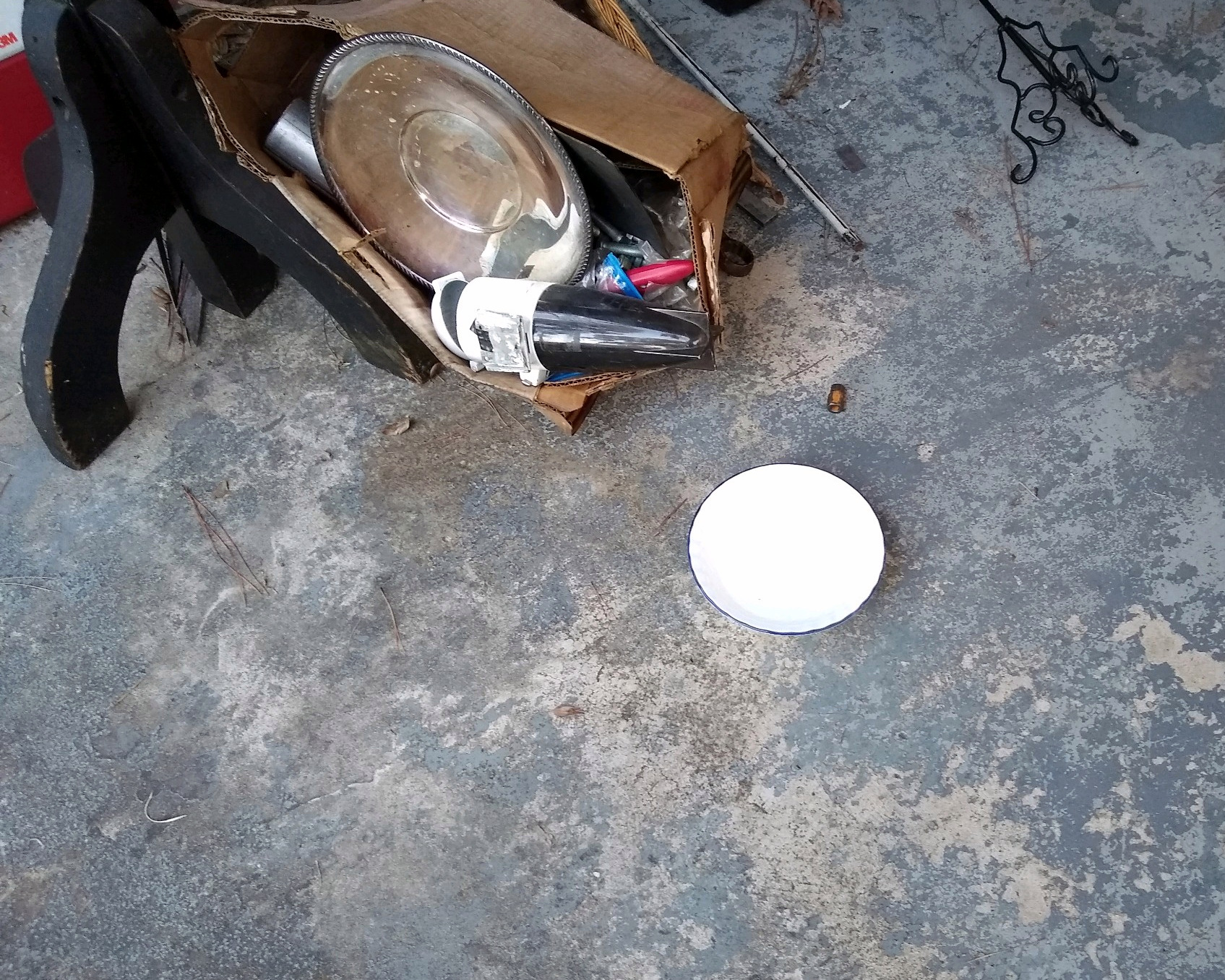
    Pretty, on the other hand, puts this water bowl in the carport for a small cat who sleeps under our truck at night. She handles micro issues to rescue any animal she sees in need.

    P. S. Before you ask, we had a small mysterious fire in our carport this week from spontaneous combustion of South Carolina heat with flammable substance of undetermined origin. Remains and ashes directly above water bowl.

    Stay safe, stay sane, please get vaccinated and please stay tuned.

  • The Ides of August – Excerpts from an Essay by Sarah Chayes

    The Ides of August – Excerpts from an Essay by Sarah Chayes


    I know far less about the US departure from Afghanistan than many people do; but I am curious, interested in learning. Last week I posted a column on Afghanistan written by Molly Ivins in October, 2001 as America began what would become our 20 years war that is either winding down or ramping up again in recent days according to your perspective. Today I offer an essay by Sarah Chayes that was written one week ago and revised as events unfold. Fresh, up to the hour perspective from an American writer who is an adoptive Kandahari and a former senior official to the U.S. government. The following are excerpts from her essay The Ides of August. I encourage anyone seeking an informed perspective of the current actions in Afghanistan to take the time to read her entire text at sarahchayes.org/post/the-ides-of-august.

    “I’ve been silent for a while. I’ve been silent about Afghanistan for longer. But too many things are going unsaid.

    I won’t try to evoke the emotions, somehow both swirling and yet leaden: the grief, the anger, the sense of futility. Instead, as so often before, I will use my mind to shield my heart. And in the process, perhaps help you make some sense of what has happened.

    For those of you who don’t know me, here is my background — the perspective from which I write tonight.

    I covered the fall of the Taliban for NPR, making my way into their former capital, Kandahar, in December 2001, a few days after the collapse of their regime. Descending the last great hill into the desert city, I saw a dusty ghost town. Pickup trucks with rocket-launchers strapped to the struts patrolled the streets. People pulled on my militia friends’ sleeves, telling them where to find a Taliban weapons cache, or a last hold-out. But most remained indoors.

    It was Ramadan. A few days later, at the holiday ending the month-long fast, the pent-up joy erupted. Kites took to the air. Horsemen on gorgeous, caparisoned chargers tore across a dusty common in sprint after sprint, with a festive audience cheering them on. This was Kandahar, the Taliban heartland. There was no panicked rush for the airport.

    I reported for a month or so, then passed off to Steve Inskeep, now Morning Edition host. Within another couple of months, I was back, not as a reporter this time, but to try actually to do something. I stayed for a decade. I ran two non-profits in Kandahar, living in an ordinary house and speaking Pashtu, and eventually went to work for two commanders of the international troops, and then the chairman of the Joint Chiefs of Staff. (You can read about that time, and its lessons, in my first two books, The Punishment of Virtue and Thieves of State.)

    From that standpoint — speaking as an American, as an adoptive Kandahari, and as a former senior U.S. government official — here are the key factors I see in today’s climax of a two-decade long fiasco:

    Afghan government corruption, and the U.S. role enabling and reinforcing it. The last speaker of the Afghan parliament, Rahman Rahmani, I recently learned, is a multimillionaire, thanks to monopoly contracts to provide fuel and security to U.S. forces at their main base, Bagram. Is this the type of government people are likely to risk their lives to defend?

    **********

    Americans like to think of ourselves as having valiantly tried to bring democracy to Afghanistan. Afghans, so the narrative goes, just weren’t ready for it, or didn’t care enough about democracy to bother defending it. Or we’ll repeat the cliche that Afghans have always rejected foreign intervention; we’re just the latest in a long line.

    I was there. Afghans did not reject us. They looked to us as exemplars of democracy and the rule of law. They thought that’s what we stood for.

    And what did we stand for? What flourished on our watch? Cronyism, rampant corruption, a Ponzi scheme disguised as a banking system, designed by U.S. finance specialists during the very years that other U.S. finance specialists were incubating the crash of 2008. A government system where billionaires get to write the rules.

    Is that American democracy?

    *******************

    Pakistan. The involvement of that country’s government — in particular its top military brass — in its neighbor’s affairs is the second factor that would determine the fate of the U.S. mission.

    You may have heard that the Taliban first emerged in the early 1990s, in Kandahar. That is incorrect. I conducted dozens of conversations and interviews over the course of years, both with actors in the drama and ordinary people who watched events unfold in Kandahar and in Quetta, Pakistan. All of them said the Taliban first emerged in Pakistan.

    The Taliban were a strategic project of the Pakistani military intelligence agency, the ISI. It even conducted market surveys in the villages around Kandahar, to test the label and the messaging. “Taliban” worked well. The image evoked was of the young students who apprenticed themselves to village religious leaders. They were known as sober, studious, and gentle. These Taliban, according to the ISI messaging, had no interest in government. They just wanted to get the militiamen who infested the city to stop extorting people at every turn in the road.

    Both label and message were lies.

    Within a few years, Usama bin Laden found his home with the Taliban, in their de facto capital, Kandahar, hardly an hour’s drive from Quetta. Then he organized the 9/11 attacks. Then he fled to Pakistan, where we finally found him, living in a safe house in Abbottabad, practically on the grounds of the Pakistani military academy. Even knowing what I knew, I was shocked. I never expected the ISI to be that brazen.

    **********************

    Hamid Karzai. During my conversations in the early 2000s about the Pakistani government’s role in the Taliban’s initial rise, I learned this breathtaking fact: Hamid Karzai, the U.S. choice to pilot Afghanistan after we ousted their regime, was in fact the go-between who negotiated those very Taliban’s initial entry into Afghanistan in 1994.

    I spent months probing the stories. I spoke to servants in the Karzai household. I spoke to a former Mujahideen commander, Mullah Naqib, who admitted to being persuaded by the label and the message Karzai was peddling. The old commander also admitted he was at his wits’ end at the misbehavior of his own men. I spoke with his chief lieutenant, who disagreed with his tribal elder and commander, and took his own men off to neighboring Helmand Province to keep fighting. I heard that Karzai’s own father broke with him over his support for this ISI project. Members of Karzai’s household and Quetta neighbors told me about Karzai’s frequent meetings with armed Taliban at his house there, in the months leading up to their seizure of power.

    And lo. Karzai abruptly emerges from this vortex, at the head of a “coordinating committee” that will negotiate the Taliban’s return to power? Again?

    ***************

    Self-Delusion. How many times did you read stories about the Afghan security forces’ steady progress? How often, over the past two decades, did you hear some U.S. official proclaim that the Taliban’s eye-catching attacks in urban settings were signs of their “desperation” and their “inability to control territory?” How many heart-warming accounts did you hear about all the good we were doing, especially for women and girls?

    Who were we deluding? Ourselves?

    What else are we deluding ourselves about?

    One final point. I hold U.S. civilian leadership, across four administrations, largely responsible for today’s outcome. Military commanders certainly participated in the self-delusion. I can and did find fault with generals I worked for or observed. But the U.S. military is subject to civilian control. And the two primary problems identified above — corruption and Pakistan — are civilian issues. They are not problems men and women in uniform can solve. But faced with calls to do so, no top civilian decision-maker was willing to take either of these problems on. The political risk, for them, was too high.

    Today, as many of those officials enjoy their retirement, who is suffering the cost?”

    ******************

    Stay safe, stay sane, please get vaccinated and please stay tuned.
  • Afghanistan: US Having Two Debates by Molly Ivins (October 17, 2001)

    Afghanistan: US Having Two Debates by Molly Ivins (October 17, 2001)


    As the twenty-year anniversary of 09/11 approaches and as the US makes a chaotic messy devastating departure from Afghanistan, I struggle to connect two events I’ve witnessed with my own eyes. Maya Angelou’s poem On the Pulse of Morning offered a poet’s interpretation of these events for me and led me past the rock to the river and the tree.

    Molly Ivins, on the other hand, was an American newspaper columnist (August 30, 1944 – January 31, 2007) who witnessed 09/11 and had this to say about the beginning of the war in Afghanistan on October 17, 2001. Excerpts of her column are printed here by permission of Creative Commons.

    Afghanistan is to nation-building what Afghanistan is to war — pretty much the last place on earth you’d choose, if you had any choice at all. I point this out not to oppose the idea, about which I think we have no choice, but to underline that the task is hard, long and incredibly complicated. President Bush has said that from the beginning, but it cannot be said too often.

    There are some signs of what could become a dangerous division in what has been an unusually unified America since this crisis began, and they have to do with a class difference in information. To oversimplify, those who are getting their information from the Internet and/or a broad range of publications are having conversations with one another that are radically different from those heard on many radio talk shows.

    This is more than the simplistic jingoism that is a constant in American life; this is simplistic jingoism with a dangerously short attention span. The “let’s nuke ’em” crowd is still looking for a short, simple solution, and there just isn’t one. More stark evidence of this is the poll of Pakistanis just released by Newsweek, and the numbers need to be read carefully: While 51 percent support their government’s cooperation with the U.S. during the crisis, 83 percent are sympathetic to the Taliban, and almost half believe Israel was behind the attacks on the World Trade Center and the Pentagon. Fortunately for us, bin Laden and the Taliban are taking care of that theory. I think one of the few mistakes the Bush administration has made so far in this was to criticize the networks for putting on bin Laden — we want everybody to hear him claim credit for those attacks.

    While some of us search for the answer to the question, “Why do they hate us?” the voices on radio talk shows are answering, “Who cares? Nuke ’em.” Those inclined to think that’s not a bad plan might keep in mind the already-classic lead by Barry Bearak of The New York Times: ‘If there are Americans clamoring to bomb Afghanistan back to the Stone Age, they ought to know that this nation does not have far to go. This is a post-apocalyptic place of felled cities, parched land and downtrodden people…’”

    The task in Afghanistan for the past twenty years has indeed been hard, long and incredibly complicated. Our exit is proving to be difficult, dangerous, disastrous – I wonder what Molly Ivins would have to say on the subject. Hm.

    President Biden promised to bring the remaining American troops (approximately 3,500) home from Afghanistan while campaigning for President in 2020, and he kept that promise – but the promise lacked an informed plan to insure the safety of the troops, their Afghan allies, and a whole host of other folks who needed rescuing from the control of the Taliban so he sent 6,000 more US troops back to Afghanistan last week.

    *********************

    Stay safe, stay sane, please get vaccinated and stay tuned.