For any who want more, complete list of all posts by month since 2011
  • Memories of My Daddy and His Bird Dogs

    Memories of My Daddy and His Bird Dogs


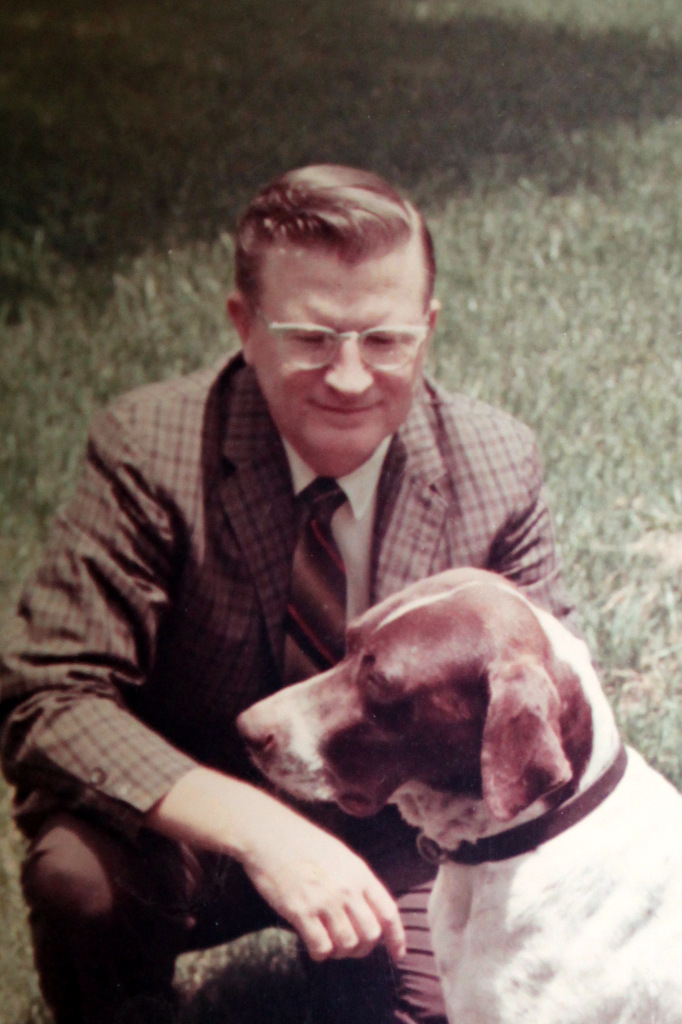
    I first published this piece about my daddy and his dogs in August, 2015. Father’s Day will be here before you can say jack rabbit – be thankful for the dads, their dads, and all the dads before them. I would love to be sitting down for a Father’s Day meal at my grandmother’s house this coming Sunday. We’d have a lot of catching up to do since my father died June 30, 1976, at the age of fifty-one. I was thirty years old and lost not only my daddy but also my best friend.

    From the time I was five or six years old growing up in rural southeast Texas in the 1950s, my daddy used to take me with him to hunt quail during what I remember as a relatively short season in the late fall and winter months. Quail lived in coveys in fields in the countryside around us and were excellent at hiding from their enemies in the tall grasses that would become hay when baled. You could walk and walk and walk some more until you felt like your legs were going to fall off if you had to put one foot ahead of the other again, but the quail were always one step ahead of you unless you had help locating them.

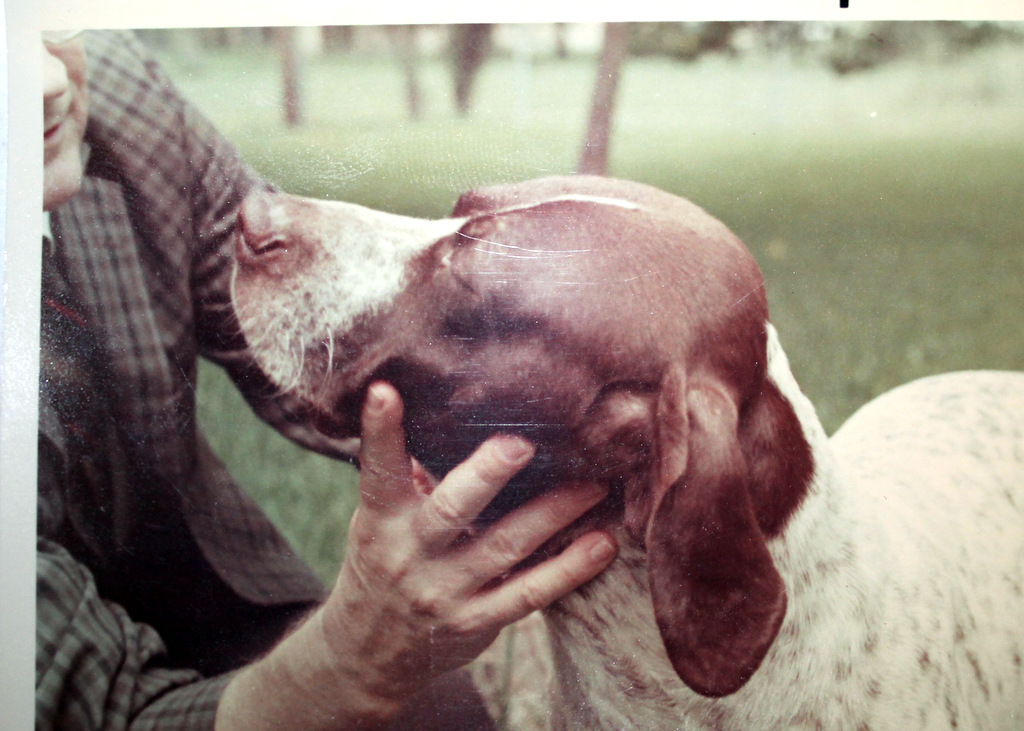
    Enter the hunter’s best friend: the German short-haired pointer a/k/a in Grimes County, Texas, as the bird dog. A good bird dog could run through a field sniffing and sniffing, sometimes whining, until he caught a whiff of a covey of quail and then he would stop, raise his right front leg to a ninety-degree angle,  curl his medium-length tail over his back and point his nose exactly in the direction of the covey. He remained in this precise position until the hunter walked up beside the dog which would cause the quail to take flight with the sound of their fluttering wings making a whoosh noise as they left the ground.

    Whoosh! Bam! It was over that quick. The covey rose from the ground cover, and my daddy would shoot his twelve-gauge shotgun. Occasionally a bird would fall, and I would run to retrieve it and put it in my jacket to take home to my grandmother who would be happy to fix it for our supper. We rarely got our  legal limit, but we would usually have enough for a meal.

    The problem my daddy had was he never had a “good” bird dog.  He got the puppies from different people  in the area who always assured him their dogs were the best in the field, but invariably the pointer he got didn’t respond well to training. A common trait Daddy’s dogs had was rather than stopping to point and hold their position, they would  stop to point for a split second and then run as fast as they could to try to catch the birds by themselves. Of course, the quail would take flight when they heard the dogs and be long gone out of  shooting range by the time we caught up with the dogs. Daddy would halfheartedly fuss – and the dogs rarely improved.

    As I think back on this now, I believe our dogs had an identity issue which caused their lackluster performance in the field. Whether they did well or not in the hunting arena, they were fed regularly with  delicious scraps from our table (dog food wasn’t on Daddy’s radar screen) and petted and hugged on an equally regular basis. They came indoors for their pets and Daddy often scooped the big dogs up and held them on his lap while he talked to them about their shortcomings. My daddy was a very diminutive man – about five feet six inches tall – and those dogs weighed almost as much as he did. They looked at him with adoring eyes and absolute trust…and seemed to be saying I promise I’ll do better next time…but they wouldn’t.

    My daddy loved his bird dogs. We always had at least one dog in our family for as long as I can remember and at one time when I was in high school, we had three.  I know that for sure because I still have the original oil paintings he commissioned  at that time from an artist friend of his.

    001

    Daddy’s Bird Dogs: Rex, Seth and Dab (circa 1966)

    No wonder I love my dogs. I’ve never personally owned a bird dog, but I’ve been on the receiving end of the adoring eyes and plaintive expressions of more than a few dogs of my own throughout my adult life. I confess to holding them on my lap if I can scoop them up, but even if I can’t do that, I will give them lots of love and kisses whenever and wherever they will stand  or sit or lie down to be so smothered.

    Loving dogs – or any animal for that matter – is the gift that keeps on giving to us mere humans, but the gift comes with a high price tag because their lives are relatively short. Indeed,  it seems the older we are, the faster we lose them.

    Two of our three remaining dogs that have given us much more loyalty and adoration than we deserve over the past decade have now been diagnosed with cancers that will ultimately take them from us. What I have learned from them is that they both keep their pain to themselves without complaints. They are not troubled by wondering why they are in their particular situations, and I think this allows them to try to keep changes in their routines to a minimum. They like to roll the way they’ve always rolled if they possibly can.

    I am a contemplative person – I can’t help myself. I find I can spend a great deal of time trying to figure out “why” this happened or that took place. Unfortunately, discovering “why” doesn’t necessarily lead to productive change. As a matter of fact, the opposite is likely to occur. So when I find myself in a position similar to the ones my dogs are facing today, I hope I have learned my lessons from the examples they have set for me and focus less on “why” and more on “so what.”

    That’s the way I’d like to roll.

    P.S. My daddy never asked anyone to make an oil painting of me.

  • Impasse

    Impasse


    “We have met the enemy, and they are ours.” United States Navy Commodore Oliver Hazard Perry, War of 1812, September 10, 1813, following his strategic victory in the battle on Lake Erie over the British Navy. Hooray.

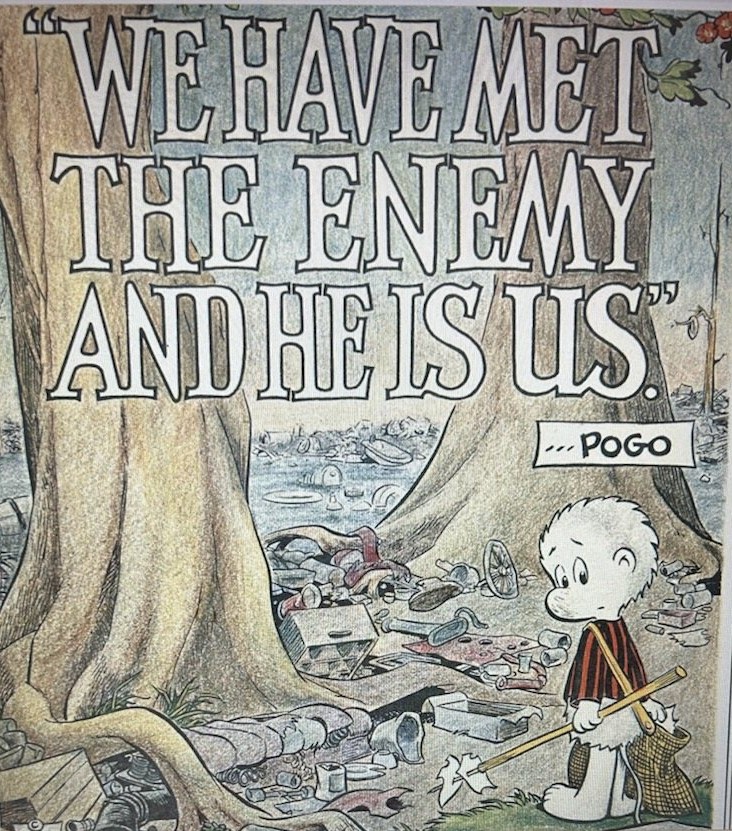
    Walt Kelly’s political satire captured the imagination of the public on Earth Day in this country with his 1970 Pogo cartoon that coined a re-phrase of Commodore Perry’s words in 1813. Hooray?

    Helen Lewis argued in her article The Men Who Don’t Want Women to Vote or Work. Or Have Opinions. that a movement of “masculinism” in America seeks “to fight back against the advances of feminism and reassert the primacy of men.” (June, 2026, The Atlantic) What? Seriously?

    We have met the enemy, and it’s women. No Hooray, please.

    ************************

    I published the following piece on June 10, 2017, nine years ago. I had a personal painful reminder of old tapes played too often in my life. Helen Lewis’s words opened old wounds.

    Impasse

    Webster’s Everyday Thesaurus has these words for impasse:

    deadlock, stalemate, blind alley, bottleneck…dead end, dilemma, predicament, quandary, standstill, standoff.

    This past week I had a heavy dose of impasse which intermingled with my increasing preoccupation about the American Civil War. I look more and more frequently at the map of the red states and blue states that make up our United States and wonder anew at Abraham Lincoln’s commitment to keep the country united as one. I understand the problem better for sure. I always wondered how brother fought brother on different sides during the Civil War. They were family first after all, right? Not so fast, my friend.

    The American people are a “duke’s mixture” to quote my granddaddy who used the words for his Saturday barbershop customers in the 1950s when my grandmother asked him who’d stopped by the barber shop that day.

    George, who all came by for a haircut today?

    Well, Betha, it was a duke’s mixture.

    To which she would shake her head and look at me and ask, What does that tell you? Duke’s mixture.

    My granddaddy would laugh as if he’d told a funny joke, and I would laugh with him. My grandmother never cracked a smile.

    Today I find myself not laughing, either. Rarely cracking a smile at the impasse among the citizens in our country which must surely have my grandparents spinning in their graves. My grandmother invented social media via the telephone party line we had in our little town as surely as Al Gore invented the internet. She relished listening in on other people’s conversations and delighted to repeat juicy gossip at her kitchen table… but please dear God, don’t ever mess with her family.

    This week I did something I almost never do. I responded on Facebook to a post made by a first cousin twice removed who has a world view that I have long ago accepted as different from mine. Most of the time I hide his offensive posts from my timeline and move on.

    I can’t bring myself to “un-friend” him because I truly love the little boy I remember visiting us in Richards so often with his grandmother who was my grandmother’s sister. But this week he posted that liberals must have a “mental illness” to think the way we do, and that struck a nerve for me.

    You see, I grew up during a time in the 1950s and 60s when being a homosexual was considered to be a mental illness. Think about how you would feel if you grew up believing that you had a secret mental illness and, if exposed, you could be institutionalized. Lock her up. Throw away the key. I heard an old tape begin to  play in my mind.

    Somehow our thread on Facebook took an unpleasant turn, as I already knew it would and we got into a discussion regarding a prevailing Muslim  belief in some places that gays should be killed. Unfortunately, one of my cousin’s friends chimed in with the following comment: “We knew someone many years ago that would probably want to buy a plane today, load them (gays and lesbians) up and drop them off over there (wherever Muslims live). I sure miss him.”

    Wow. I was transported to a conversation I had in the early 1990s with a client who sat in my office and said, “If it were up to me, I’d take all those queers and put them behind barbed wire in Kansas and tell them to stay there.” I didn’t respond then. The old tape was playing louder now.

    One of my mother’s most infamous quotes for me was that she wished all those gays would go back in the closet where they belonged. She would be happy to slam the door shut. The old tape was so loud now I could barely hear myself think.

    Luckily, I didn’t accept the old tapes as I don’t accept my cousin or his friend’s thinking about who I am today. I’ve spent my entire adult life working for equal treatment and fairness – my liberal social justice beliefs.

    In 1974 the American Psychiatric Association declassified homosexuality as a mental disorder. I was 28 years old. In 2017 at the age of 71, I am personally declassifying liberalism as a mental illness.

    I resolve to limit my social media interaction with my first cousin twice removed to Happy Birthday wishes. No need going up that blind alley again.

    I feel better already.

    *************************

    June is Pride Month – celebrate with joy!

  • Exploring the Legacy of the Founding Mothers

    Exploring the Legacy of the Founding Mothers


    “Were I to personify Justice, instead of presenting her blind, I would denominate her the goddess of fire. . . Of unbending integrity Justice should feel, hear and see; but truth alone should be the polar star by which she should shape her movements, and equity only should constrain her determinations.”

    Judith Sargent Murray (1992). “The gleaner”, Syracuse Univ Press

    Judith Sargent Murray (May 1, 1751–July 6, 1820) was an early American feminist who wrote essays on political, social, and religious themes. She was also a gifted poet and dramatist, and her letters, some recently discovered, give insight into her life during and after the American Revolution. She is especially known for her essays about the American Revolution under the pseudonym “The Gleaner” and for her feminist essay, “On the Equality of the Sexes.” 

    Fast Facts: Judith Sargent Murray

    • Known For: Early feminist essayist, poet, novelist, and dramatist
    • Born: May 1, 1751 in Gloucester, Massachusetts
    • Parents: Winthrop Sargent and Judith Saunders
    • Died: July 6, 1820 in Natchez, Mississippi
    • Education: Tutored at home
    • Published WorksOn the Equality of the Sexes, Sketch of the Present Situation in America, Story of Margaretta, Virtue Triumphant, and The Traveller Returned
    • Spouse(s): Captain John Stevens (m. 1769–1786); Rev. John Murray (m. 1788–1809).
    • Children: With John Murray: George (1789) who died as an infant, and a daughter, Julia Maria Murray (1791–1822)

    Source: Jone Johnson Lewis, Thought Co.,

    (updated on 07-16-2019)

    Let me be perfectly clear. When I learned American history in my early public education in the schools and universities of Texas during the 1950s and 60s, I can’t remember one reference to the Founding Mothers. I remember Betsy Ross sewing our flag, but I didn’t realize she was married three times, and had worked to become a government contractor in a business she passed on to her daughter and granddaughters. Betsy Ross – I pictured a little old woman sitting around in a tiny room sewing alone. No, not a hobby – it was how this working mother supported her family during the American Revolution.

    Return with me now to those thrilling days of yesteryear two hundred fifty years ago when the original dreams of America began. Hear the voices which longed to be heard as they searched for equal justice and truth telling in the new World.

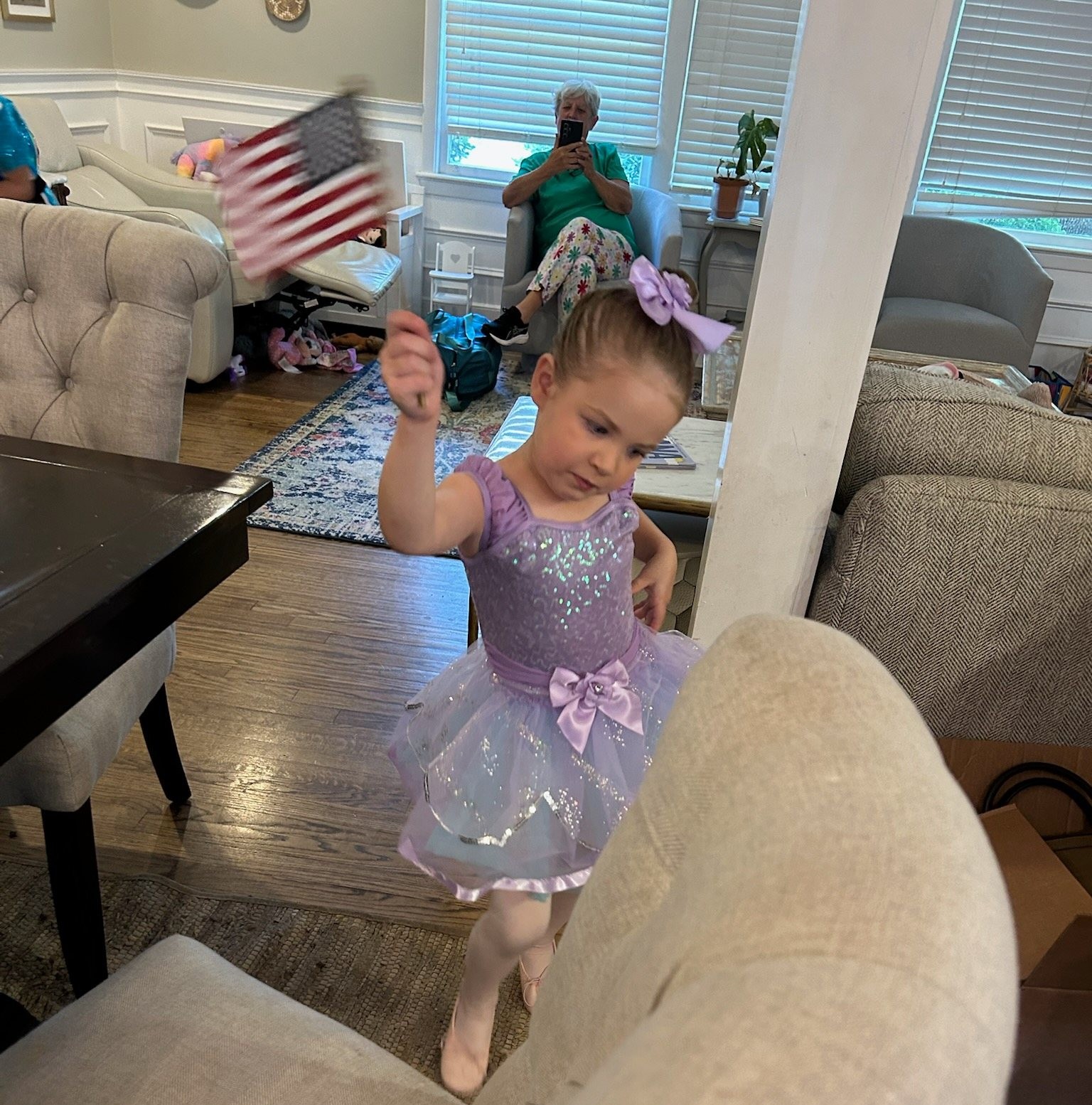
    Betsy Ross would be pleased with our granddaughter’s flag

  • What’s new, Pussycat?

    What’s new, Pussycat?


    Tuxedo cat was Carport Kitty’s best friend

    Yellow Cat is an indoor cat somewhere else –

    but wants his snacks here

    Yellow Cat loves the outdoor laundry room

    pick a chair – any chair – and get comfortable

    they were friends from the Carport Kitty glory days

    remember this cat who loved to help me do laundry?

    vanished without a trace on the 4th. of July, 2024

    Then along came the three kittens rescued by Pretty in 2025, and this little kitten we named Bennie for the amount of Benadryl I had to take for my cat allergies while Pretty found him a wonderful forever home with Cheryl in the Upstate. (I believe I overheard a casual remark at one point about sending me to live outdoors on the carport – and keeping Bennie inside. Thank goodness for Cheryl.)

    Our friends Nekki and Francie have a beautiful, sweet cat named Amelia. Amelia has a reputation for being quite particular about people she tolerates – of course, she adores Pretty when we come to visit.

    Who’s surprised?

    The End

    If you find your curiosity about the cat we called Carport Kitty becomes overpowering, the archives will give you information about the urban legend we called our Carport Kitty.

    http://www.iwillcallit.com/2022/10/23/the-urban-legend-we-called-carport-kitty-was-a-seeker/

  • The Power of Women in Sports, Arts, and Entertainment

    The Power of Women in Sports, Arts, and Entertainment


    My foray into the world of podcasting begins here. Who knows if it’s also the end?

    Pip: You’re listening to I’ll Call It Like I See It — a blog that covers women’s basketball, Black history, Scottish seascapes, and country music queens, sometimes in the same week.

    Mara: Sheila Morris has been busy. This episode moves through women’s sports and competition, Black history and civil rights, and women artists and cultural icons. Let’s start with the basketball courts and the bobsled track.

    Women on the Court and the Ice

    Pip: Women’s sports this season gave us two very different stages — a bobsled tube in the Milan Cortina Olympics and the SEC Tournament floor in Greenville, South Carolina — and both asked the same question: what does it take to stay the course when the odds are stacked against you?

    Mara: The post on Elana Meyers Taylor sets that up directly. Here’s Meyers Taylor in her own words: “I really want a gold medal. I haven’t gotten it yet, so I feel like that is the one thing that I am missing from my resume, but besides that it is doing it for myself and doing it for my kids. To show them that I can chase my dreams and I can overcome obstacles and just continue to persevere through any obstacles that come my way and actually achieve my dreams.”

    Pip: What that means in practice is that the gold medal is almost beside the point. Meyers Taylor, 41, the most decorated Black Winter Olympian, was racing for her deaf sons — one of whom also has Down syndrome — to show them that obstacles are something you move through, not stop at.

    Mara: And she won. That’s the historic part — a gold in women’s monobob at 41, during Black History Month, with her sons Nico and Noah running to meet her at the finish.

    Pip: Meanwhile, the SEC Women’s Basketball Tournament post is a warmer kind of dispatch — friends, family, Gamecock gear, a granddaughter named Molly wondering why Nana was smiling in her sleep. The Gamecocks lost the Tournament Final to Texas, but the tone is pure joy.

    Mara: That joy carries into the Women’s Final Four post, which covers the Gamecocks making the Final Four for the sixth consecutive season. UCLA won it all under coach Cori Close — fifteen years of patience and persistence, as the post puts it — and three South Carolina players head to the WNBA Draft. The post also calls out UConn coach Geno Auriemma’s sideline behavior as a distraction that disrespected players, staff, and the game itself.

    Pip: Persistence and respect for the game — two themes that connect a bobsled track in Italy to a basketball court in Phoenix. Speaking of legacies that don’t get their due billing, let’s talk about Black history.

    Hidden Gems and Lasting Legacies

    Mara: The post on Willie Flora opens with a personal frame: a friendship of forty-five years, a celebration of life in Simonton, Texas, and a question about whose name gets remembered. Willie Flora was not a public figure, but her niece Verna’s tribute says it plainly: “Aunt Ninnie was called many names, Skin, Cat Momma, Girlie, Aunt, Cousin, Sister, Road dog, Mother, but most of all she was called Mom. She was the type of person that, whatever you needed, no matter what it was, you had it.”

    Pip: That’s the whole argument for why ordinary people belong in Black history. Not every legacy fits on a postage stamp — though, as the post on Harriet Powers shows, some do now.

    Mara: Powers, born into slavery in Georgia, was recognized as a pioneer quilter and storyteller. The United States Postal Service issued a stamp in her honor in February 2026. And the post on Jesse Jackson traces six decades of civil rights activism, including his 1984 Democratic convention speech naming LGBTQ people explicitly inside his Rainbow Coalition — “The Rainbow includes lesbians and gays. No American citizen ought to be denied equal protection from the law.”

    Pip: Three very different figures, one through line: people who refused to be defined by what the world expected of them. From civil rights to quilts to country music — that pivot is closer than it sounds.

    Art, Love, and the Women Who Made It

    Pip: Women’s History Month gets the artistic treatment here — from a Scottish painter who fell in love with the North Sea and a violinist, to the country queens who shaped a childhood in rural Texas.

    Mara: The post on Joan Eardley draws from her own words about Catterline, the tiny coastal village where she did her most powerful work: “When I’m painting in the North East, I hardly ever move out of the village, I hardly ever move from one spot. I do feel the more you know something, the more you can get out of it.”

    Pip: A lesbian artist who died at 42, whose love letters to violinist Audrey Walker weren’t published until fifty years after her death — that’s a story that needed the telling.

    Mara: And the post on country music queens closes Women’s History Month on a different note entirely — Patsy Cline, Dolly Parton, Anne Murray, and a childhood memory of being told by an uncle that she sang as good as Patsy Cline. Anne Murray’s “A Little Good News” gets quoted in full, and the post connects its 1983 lyrics to the political mood of 2026 with very little stretching required.

    Pip: Art as witness. That’s the thread from Eardley’s seascapes to a country song about wanting one day without catastrophe.


    Mara: Persistence, legacy, and the question of who gets remembered — those ideas run through everything here.

    Pip: Women flying down a bobsled track, quilting a Bible story, painting the same cliff face until they understood it. More of that next time.