Category: Reflections

  • final goodbyes in Rosenberg

    final goodbyes in Rosenberg


    my grandmother Louise (second from top left) with her Schlinke family

    outside their Rosenberg home in 1917

    matriarch Selma Buls Schlinke seated, pregnant with last baby Mary Ellen

    Louise and Mr. Boring with their first child, James Marion Boring, Jr.

    Widowed in 1938 at forty years of age with four children to support, debts to pay, the Great Depression in full swing, a third grade education, living in rural Grimes County, Texas where opportunities for employment were limited – my maternal grandmother Louise waged a private war against poverty, loneliness and depression for many of her remaining years. In 1948 my mother, father and I moved in with my grandmother to share expenses and me; we lived with her for eleven years until I was thirteen years old. I believe selfishly those were the happiest years of her life because they were some of the happiest years of mine, and when we moved 125 miles south to Brazoria, the old enemies she had fought for most of her life reappeared to haunt her home. She didn’t have a car and wouldn’t know how to drive one if she did.

    my grandmother Louise Schlinke Boring (r) with her immediate family

    mother of four, grandmother of six at Schlinke family reunion in Houston circa 1962

    As Fate would have it, or when the vicissitudes of life played tricks on us according to my daddy, no matter where you ride to, that’s where you are. My mama and daddy moved to Rosenberg, Texas as soon as I started college at the University of Texas in the summer of 1964. My grandmother Louise had been in and out of mental hospitals for years when she moved to Rosenberg to live with my parents in 1971 following my mother’s exasperation with her mother who she felt could be fine if she just had “somthing to do.” My grandmother died in a hospital in Rosenberg in April, 1972 – she had come full circle to the place where she had been born. Since I had used my savings to make the plane trip from Seattle to Houston at Christmas for the holidays the previous December, I didn’t have the money to fly home for her funeral which was on my twenty-sixth birthday. I was heartbroken for the loss and for not being there when she needed me.
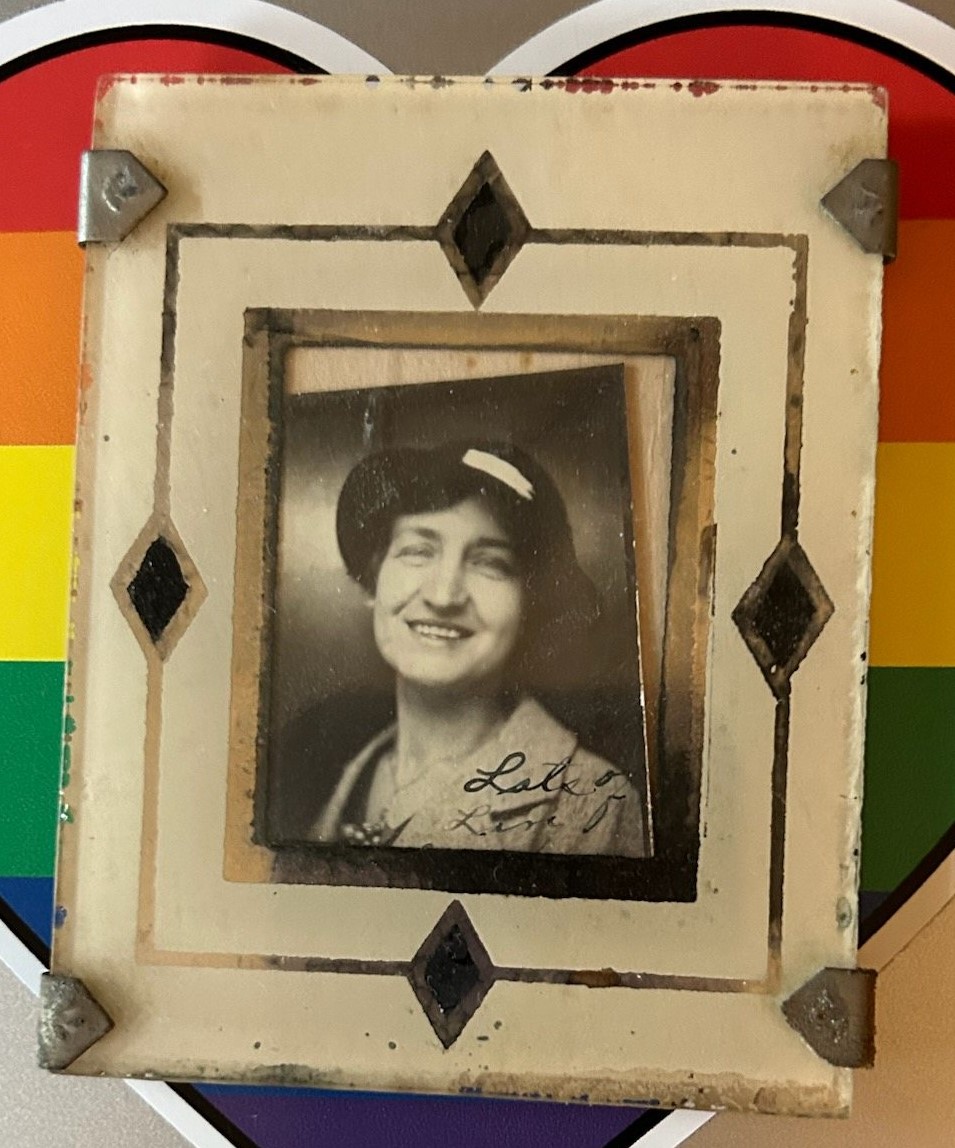
    Lots of love, Mother

    This coming Friday, October 20th. is my grandmother’s birthday, and I remember her for the unconditional love she gave me for as long as she lived. She was kind, compassionate, caring and a strong woman who refused to allow the old devil to defeat her faith. I honor her every time I tell my granddaughters how much I love them.

    ***************************

    For all the grieving children everywhere.
  • 33 Years of Fun with Dick and Curtis

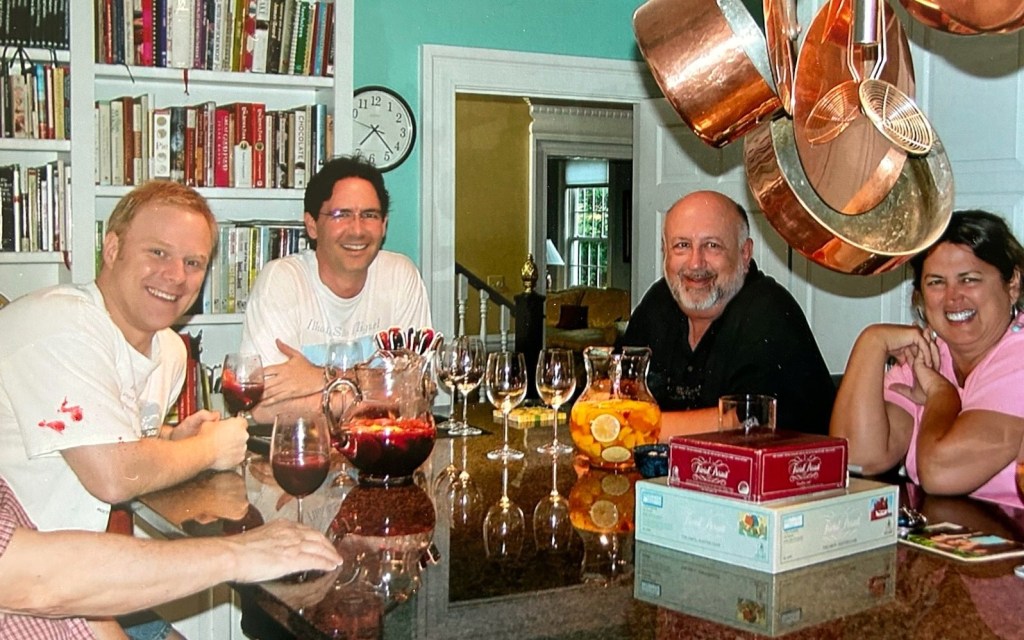
    33 Years of Fun with Dick and Curtis


    (left to right) Tom, Curtis, Dick and Pretty

    pitchers of Sangria helped everyone’s memory on Game Nights

    Playing variations of Trivial Pursuit on monthly Game Nights with friends was a favorite activity of Pretty’s and mine in the early years of our relationship at the turn of the 21st. century. Trivial Pursuit aficionados changed over the years we played except for our two friends Dick and Curtis who enjoyed the merriment as much as we did and never missed the opportunity to get together for fun and games. We reminisced about those times last night over dinner at their lovely “country” home off Backswamp Road in Hopkins, South Carolina. Curtis mentioned he and Dick celebrated their 33rd. Anniversary this year, and that sounded like such a long, long time rather than the hot minute it seemed to me.

    Dick and Pretty worked together in the residential real estate business for seventeen of those years which added a new dimension to their friendship, but Curtis and Pretty became the real team for Game Nights. When Curtis and Pretty were on the same team, the rest of us were doomed. Dick and I were always left in their dust, usually rolling our eyes at each other when the teams were chosen because he and I were consistently picked last. Our favorite moments on those nights were the delicious dinners served by the hosts.

    Last night wasn’t a Game Night, but we still laugh whenever we gather for the delicious dinners served by our hosts who have welcomed us into their home and lives for as long as they have been together; we celebrate them not only for the joy their friendship gives us but also for their contributions to the advancement of the LGBTQ+ community in South Carolina for more than three decades.

    Onward.

  • a saga of one family’s achieving the American dream in Rosenberg, Texas

    a saga of one family’s achieving the American dream in Rosenberg, Texas


    Mom, me, and Dad in front of our home

    at 1021 Timber Lane in Rosenberg, Texas circa 1968

    Rosenberg is now a city of 39,468 (2021 census) inhabitants and a part of the Houston – The Woodlands – Sugar Land metropolitan area. When my parents moved forty miles north from our home in Brazoria to Rosenberg in June of 1964, I was a new summer school student at the University of Texas at Austin. How new, you ask? Well, when I wrote my folks to tell them I had found a ride home for a weekend visit in July, my dad wrote back something to the effect that I needed to come to Rosenberg because he and Mom lived there – not in Brazoria where we had lived for the past five years. New jobs for both Dad and Mom, new rental house, new church, everything new. I was horrified – I had hoped to see my friends from high school who stayed at home for the summer instead of going off to college. Why move to Rosenberg, I wondered. Mostly I felt hurt that they hadn’t prepared me with the truth.

    The Rosenberg years in the 1960s and early 70s for my parents were good years for them. They were finally able to purchase their own home (1021 Timber Lane pictured above) in 1965 after nearly twenty years of marriage. My mother taught second grade in a much larger school district where my father was assistant superintendent for the Lamar Consolidated schools that continued to grow as Houston expanded south and west. Mom played piano for a Southern Baptist Church as she had done her entire life wherever we were, and Daddy sang in the choir.

    Daddy and Mama with their three bird dogs Rex, Dab and Seth

    those old dogs couldn’t hunt,

    but they did love the sofa in our den on Timber Lane

    Daddy with his small grill where he loved to cook steaks

    in the driveway of Timber Lanehis one attempt to cook

    When I graduated from UT in the summer of 1967, I moved to Houston to take a job with Arthur Andersen, one of the top eight CPA firms in the nation at that time. Sundays often meant driving the half hour from my apartment to see my folks in Rosenberg, making sure I was there in time for church.

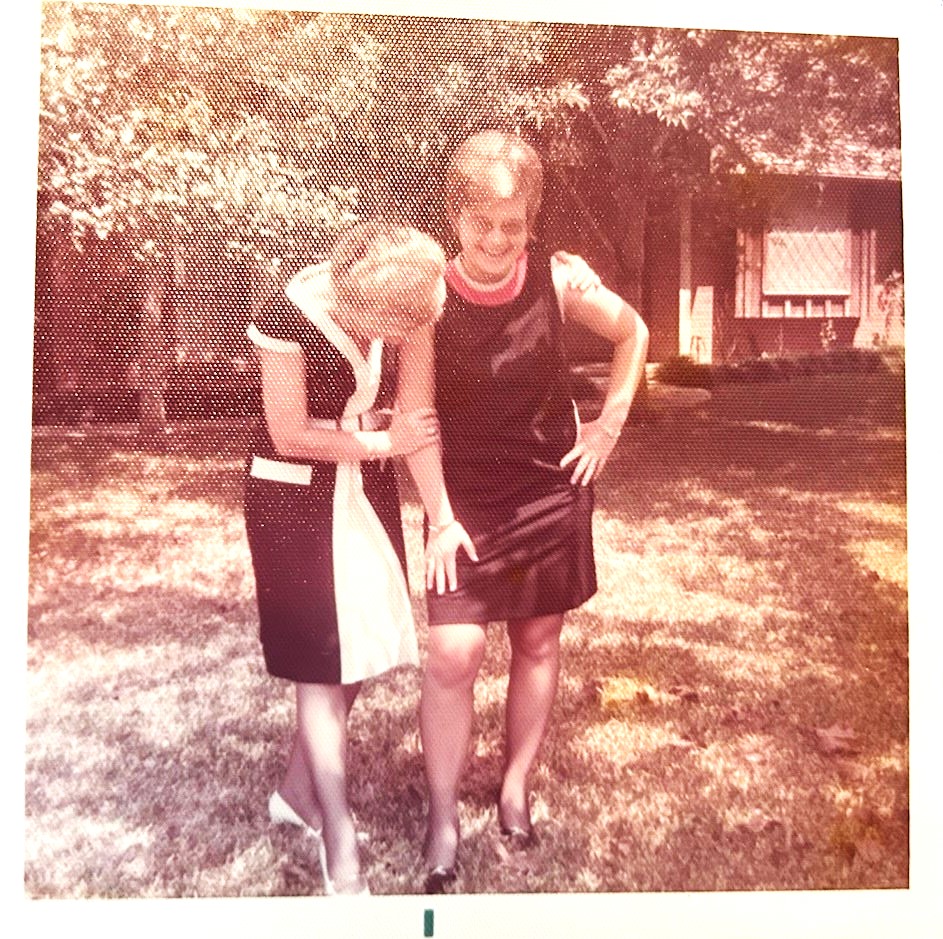
    This picture is such a favorite of mine because Mom and I are laughing together – I remember she was trying to help me learn how to place my feet at an angle when I stood in high heels. That advice never resonated with me…

    …but I did have fun trying to make her happy

    I never felt that Rosenberg was my home, but my parents loved their jobs, church, frequently seeing relatives and friends who lived in the Houston area, finally able to purchase their own home on Timber Lane that allowed them to experience the American dream their immigrant ancestors crossed oceans to find. I loved my parents dearly, but I was off to new adventures in the Pacific Northwest three thousand miles from the house on Timber Lane in Rosenberg.

    Clouds loomed on all of our horizons as a new decade brought unimaginable losses.

    *************

    Please stay tuned.

  • Rosenberg, Texas – Immigration Destination

    Rosenberg, Texas – Immigration Destination


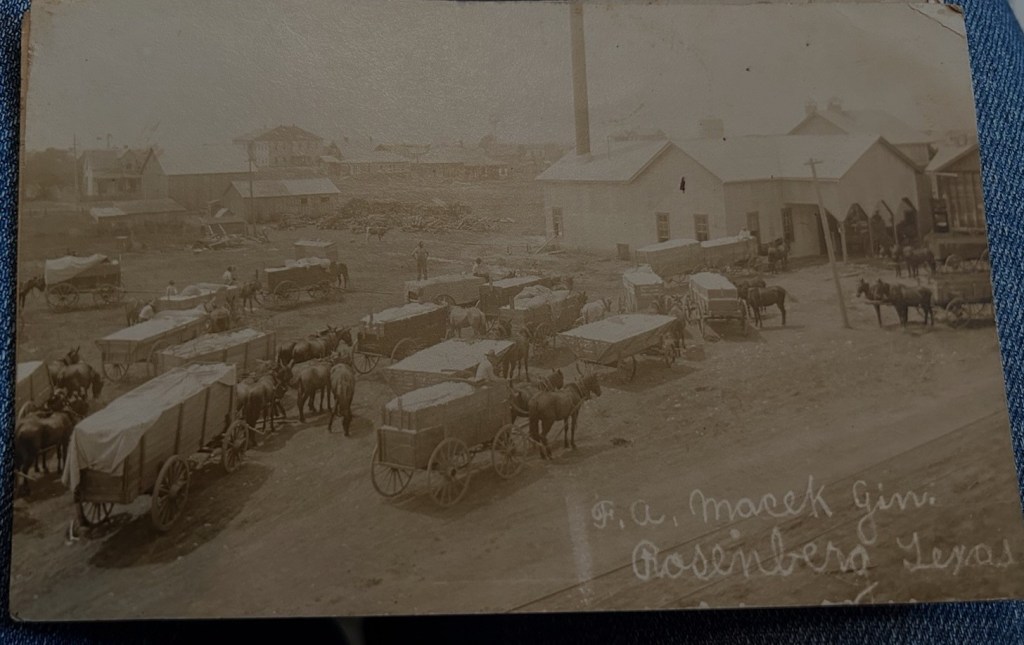
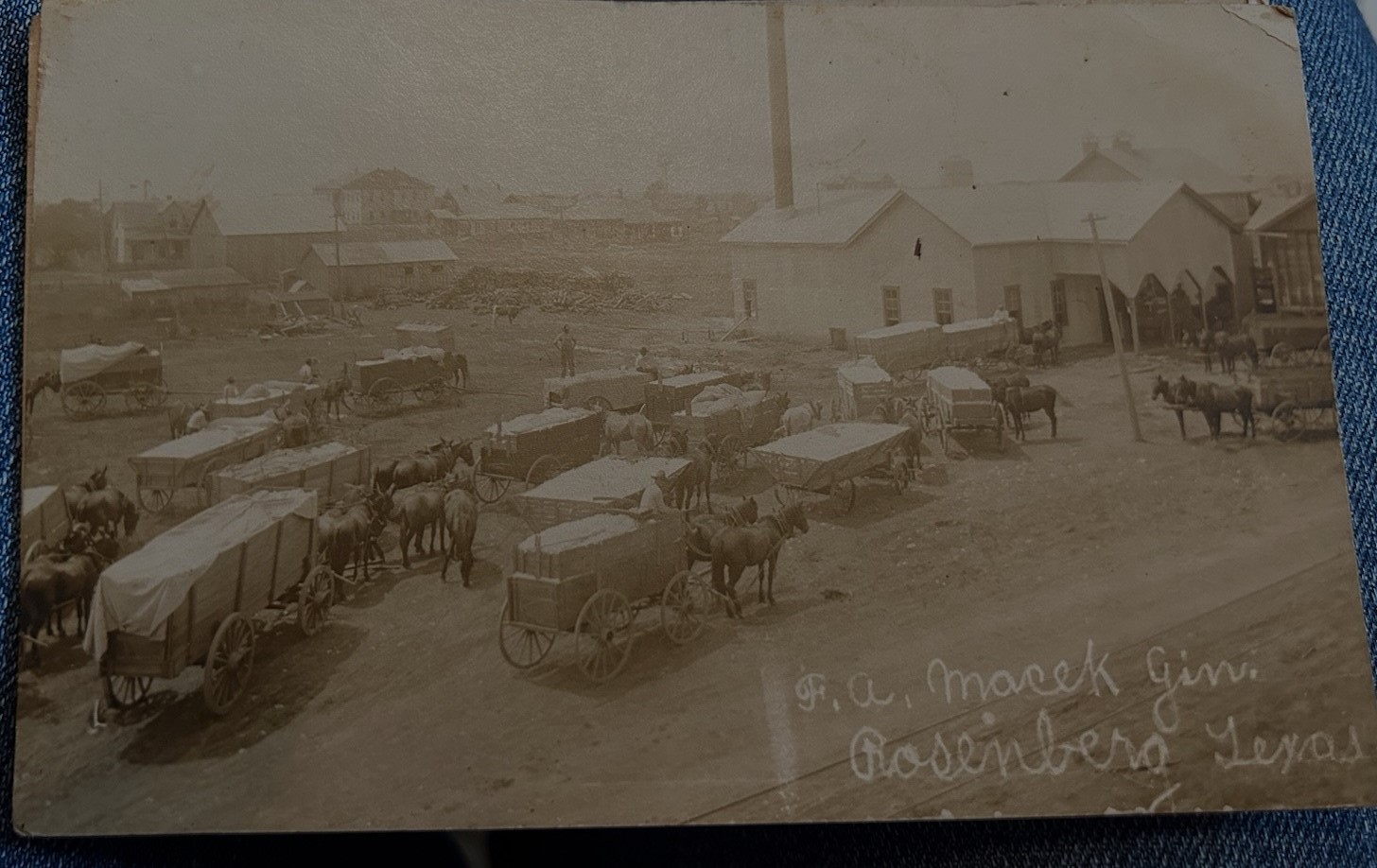
    Farmers in early 1900s bringing cotton by wagons to Macek Gin in Rosenberg

    The current flood of immigrants along the southern border between Texas and Mexico follows two hundred years of people who believed Texas was the land of opportunities. Today’s immigrants into the state come primarily from South America and Mexico, traveling thousands of miles to reach the Rio Grande River to cross over it to the Promised Land. In the 1800s European immigrants crossed the Atlantic Ocean in sailing ships that often used Galveston, Texas as a port of entry. One of these immigrants, Henry von Rosenberg, was born in Switzerland but came to the United States in 1843 at the age of nineteen, became a dry goods clerk who eventually owned the most dry goods stores in the entire state, the president of a major railroad company, owned a bank, became a wealthy philanthropist who supported the establishment of a library in Galveston. The town of Rosenberg was named for him in 1880.

    “By the turn of the century, local land developers were sending promotional literature to the northern and midwestern states, explaining that ‘the famous Brazos Valley […] has the most fertile land in America,’ and showing pictures of green spaces, fruit orchards, wagons of cotton waiting to be ginned and Victorian homes, all intended to entice more settlers to the area. Soon there were people of German, Czech, Polish and Mexican ancestry flocking to the area.” (City of Rosenberg history)

    On October 20, 1898 my maternal grandmother named Bernice Louise Schlinke was born in Rosenberg, Texas; she was the granddaughter of a family on her mother’s side from Germany who came to Galveston aboard a ship that wrecked in the Galveston harbor and another family on her father’s side that came from Prussia (now known as an area that includes parts of Germany, Poland and Russia). My grandmother, like most of us who live in America, came from a family of immigrants.

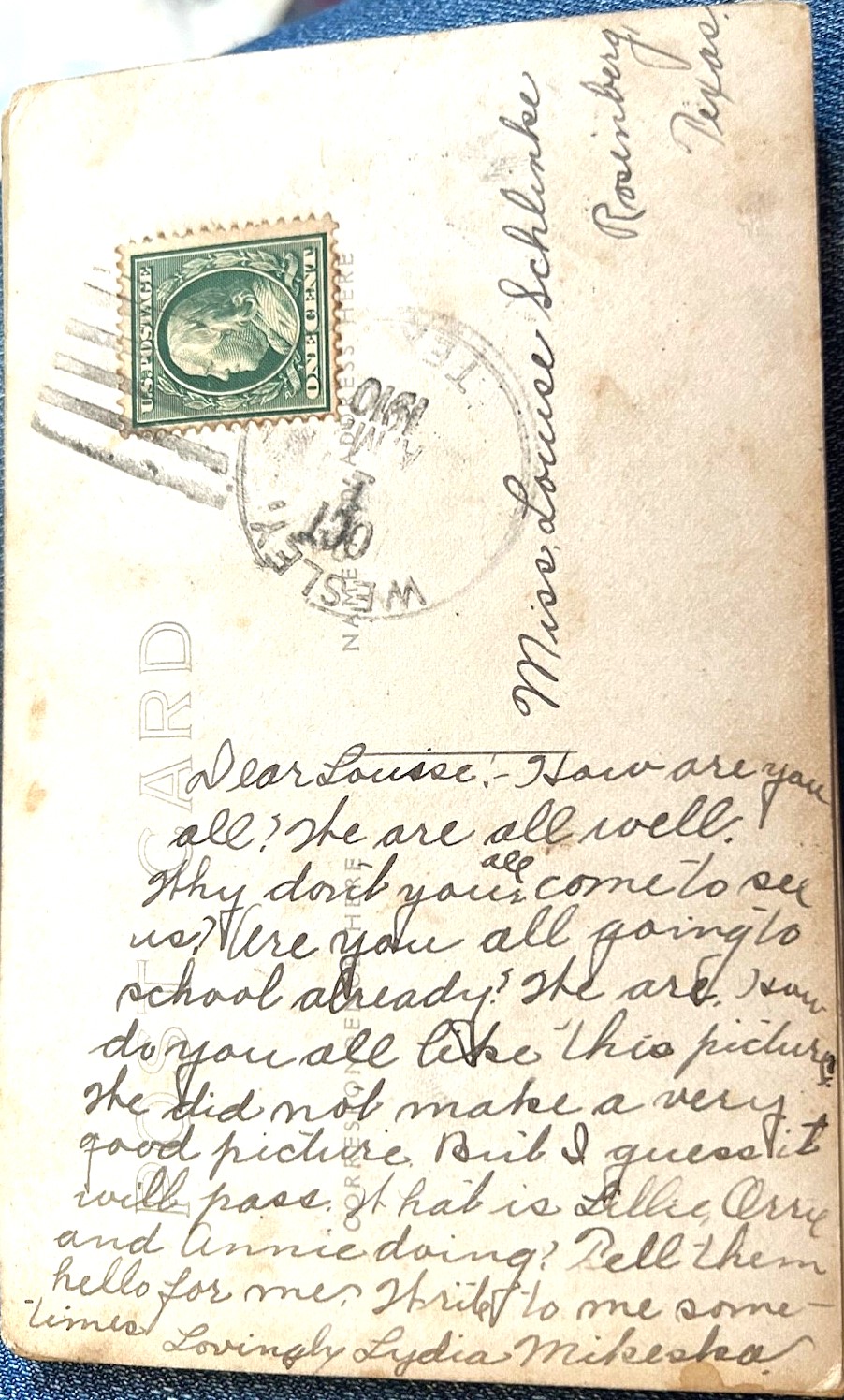
    In October, 1910 my grandmother Louise would have had her twelfth birthday. She received a post card from her friend Lydia, and I found it mixed in with my mother’s cards and photos that I went through after her death in 2012. Why did my grandmother keep this card for sixty-two years, or more importantly, why did my mother keep the card after my grandmother’s death in 1972? Maybe for the same reason I can’t force myself to throw it away. The card represents a part of history – my family’s history for sure, but the children of immigrants who saw Texas as their destination just like the families of immigrants along the border today.

    Lydia and her two sisters on other side of post card –

    wish I knew which one she was

    (Lillie and Orrie were Louise’s older sisters, Annie a cousin who lived with the Schlinke family)

    I was a child when I knew Lillie, Orrie and Annie along with two other younger sisters Dessie and Selma – the Schlinke girls. The family usually gathered once a year when Aunt Orrie came to visit us from California. She and my grandmother were always close not only in age but also in character. In 1917 my grandmother married James Marion Boring, a man eleven years her senior, an entrepreneur/wanderer who settled with her and their four children in Richards, Grimes County, Texas where he operated a number of unsuccessful businesses until his untimely death at the age of 51 in 1938. His family also had lineage from Europe but migrated to Texas from places in the east. Louise Schlinke Boring maintained ties to Rosenberg after his death because Mr. Boring (as she called him to me) had a brother Clement Howard Boring and other family there. My mother, dad, my maternal grandmother and I visited my great uncle and cousins periodically during the time we all lived together in Richards in her house, but in 1964 following my graduation from Columbia high school in West Columbia, Texas our connection to Rosenberg shifted dramatically when my father became Assistant Superintendent of Instruction for the Lamar Consolidated Independent School District there.

    Please stay tuned for more of the Rosenberg connection.