storytelling for truth lovers

  • Payday Someday – Part 1 (from Deep in the Heart)

    Payday Someday – Part 1 (from Deep in the Heart)


    The first thought I had when I woke up was it must be Sunday because I could smell the fresh apple pie baking. My grandmother on my mother’s side, Dude, worked six days a week as a clerk at the general store in Richards from 7:30 to 6:00 with a half hour for lunch. On Sunday morning, she baked. The fragrance from the kitchen was deliciously sweet. My grandmother’s name was Louise, but I hadn’t been able to pronounce that when I was little, so I had called her Dude-ese, and then shortened it to Dude. It stuck.

    Daddy was already up, too. I could hear them talking in the kitchen. Dude called him her favorite son-in-law and used to say she thought he was coming around all those years to her house to play ball with her three boys… until the day he and Mama eloped.

    For as long as I could remember. Daddy and Mama and I had lived with her in her small white frame house with the pond in the back yard and the pink crape myrtles growing in the yard. She called it her country place, but it was on one of the several dirt streets that made up downtown Richards. She didn’t have a car, she couldn’t drive one if she did, so she walked the one block rain or shine to the general store every day of her life. Daddy adored Dude.

    Where’s the revival preacher from? Dude asked Daddy as she sipped her morning coffee.

    Bedias, I think, Daddy said. They say he’ll be able to keep Miss Inez Wood awake.

    That’ll take some strong preaching, Dude said. He’ll have to keep the volume cranked up the whole time or she’ll snore right through it.

    Charlie Taliaferro has gotten up a men’s quartet for the special music this morning, Daddy added. Somebody said they were from West Sandy and did a lot of singing at the conventions on Sunday afternoons over there at Union Grove Baptist. That should be a good start to get the preacher going.

    Daddy led the singing, and Mama played the organ during the regular services at the Richards Baptist Church. But the revival music had to be exceptionally good, since the preacher was from out of town. Revivals were major happenings when you lived in a town the size of Richards, Texas. Although the official town sign said Pop. 440, my granddaddy said that included dogs and chickens. Richards was bordered by the Sam Houston National Forest and buried deep in the piney woods of east Texas. Any stranger passing through town was usually lost.

    My Uncle Marion was waking up now. When he was here, he slept in a twin bed at a right angle to the small double bed that Dude and I shared in our tiny room that was separated from the kitchen by an accordion plastic door. You really couldn’t call it a bedroom, except that it did hold two beds. It was mostly windows dividing the beds from the rest of the back porch.There was barely enough room for the dresser that held my grandmother’s Pond’s Cold Cream and makeup.

    Uncle Marion was a fortune hunter in the true sense of the word. He went around the Texas countryside with metal detectors, looking for gold that had been deposited by Santa Ana or somebody. Between expeditions, he worked construction just long enough to collect unemployment so that he could come back home and look for gold. He was my favorite uncle. He knew the names of all the stars we could see from our windows at night.

    Might as well roll out, he said, yawning. He looked to see if I was awake. Revival talk’s heating up and there’s no rest for the wicked, he added with a smile.

    Okay, I said, climbing out of bed. Plus, Dude’s apple pie was calling my name.

    Look what the dog drug in that the cat wouldn’t have, Daddy said as Uncle Marion pushed back the plastic accordion door. I didn’t know you were here.

    Yeah, I got in late. We didn’t get paid until dark, and then it took a while to get here. Everybody was asleep when I got in last night, Uncle Marion said. He wasn’t fully alert yet and began trying to find his wire rimmed eyeglasses.

    Morning, sweetheart, Daddy said to me. How’s my best girl?

    Good, I said and looked at Dude. Can I have some pie?

    She smiled as she cut me a piece and then put a little dab of butter on top. As it melted, she sprinkled extra sugar over it. She put it on the table in front of me and gave me a hug. Just for you at breakfast, she said as my Uncle Marion gave me a sideways look letting me know how lucky I was.

    I’m fixing bacon and eggs and toast for the rest of you. No one’s going hungry. We’ll all need our strength for church today. They say this preacher really has the Spirit and won’t quit until somebody’s saved, Dude said as she gave my Uncle Marion a glance.

    The Lord works in mysterious ways, Daddy said. And some ways take longer than others.

    We all laughed at that. I thought Daddy was so funny. Just then, Mama came in and said hey to everyone. Mama wasn’t a morning person, she liked to say. Looking at her eldest brother she asked, Out of work again?

    Hey Sis, he said, ignoring her question. You look like you could use a cup of coffee.

    He got up and poured her a cup. She was about to sit down when Dude told her to go wake Uncle Toby for breakfast. He was always the last to get up. Maybe it was because it was such a struggle for him. He had been born with cerebral palsy. He had been able to walk pretty well when he was younger and had even worked for a few years on an assembly line for a big oil company in Houston, living there with Dude’s brother’s family. Last year a doctor had convinced him and Dude that he could be cured with an operation, but it had gone all wrong. So now he was back home in Richards living with us. Dude and Mama waited on him hand and foot. Every day he sat for hours listening to his radio on the Back to the Bible Broadcast. He worked crossword puzzles while he listened. Maybe the revival preacher could explain the connection between God and those puzzles. Maybe not.

    Good morning, Sweet Papa T.B. la Tobe, said Daddy as Toby made his ponderous way into the kitchen. Daddy loved to tease him with his childhood nicknames.

    Morning, all of you good neighbors, said Uncle Toby. Brother Marion, when did you get in?

    He got in late, and he’s out of work again, I said. I had finished my pie.

    That’s right, Uncle Marion said. Made it just in time for the start of the revival. Think I’ll head downtown to the drug store and see if it’s open before church. Toby, I’ll be back in time to get dressed and drive you and Mother to church.

    He stood up and took his dishes to the sink. You’ll be late for Sunday School, Mama told him. I don’t see why you always have to go to the drug store before church.

    Mama, you know he goes to get cigarettes and never makes it back in time to go to Sunday School, I said, stating the obvious.

    You don’t have a dog in this fight, Sheila Rae, Daddy said. Leave it alone.

    Yes, I know all about your Uncle Marion, Mama said with a shake of her head.

    He gave me a quick wink as he walked out whistling. And I saw that, she said to his back.

    The rest of the time before church everyone was taking turns in the tiny bathroom beside the kitchen that was so small you had to make a decision about what you needed to do before you went in because you couldn’t turn around once you were in there, but I didn’t want to complain because I hated to go to the two-holer outhouse next to the garage. We shared that with a wasp’s nest, and none of the wasps liked us. When everyone finished getting dressed in Sunday clothes, Mama decided Uncle Toby would ride to church with us because he didn’t want to miss Sunday School. Mama said he shouldn’t have to wait for a brother who was more interested in smoking cigarettes than learning scriptures.

    Daddy helped Toby get in the back seat of our ’52 Chevy. I sat between Daddy and Mama in the front. We drove up the hill to pick up Miss Edna Kelly and her sister, Miss Lonie Fulghum. We picked them up every Sunday. Daddy helped them get situated in the back seat with Toby.

    Thank you, Glenn, Miss Lonie said. You’re such a gentleman. Good morning everybody, and a happy revival Sunday to you all.

    Miss Lonie was always cheerful and smiling like that. Everybody at the church liked her. Miss Edna was just the opposite. Never said much and frowned a lot. They didn’t look anything alike, either. They had moved to Richards a long time ago, and nobody knew anything about their people. They said they were from Alabama and that Miss Edna’s husband had died in the war. That’s why they had different last names.

    Mama said it was odd.

    The car conversation was all about the excitement of the revival as we drove the short distance to the church.

    *******************

    Please stay tuned for the rest of the story.

  • the American dream for me was survival (from Not Quite the Same)

    the American dream for me was survival (from Not Quite the Same)


    In the middle of losing my job at Geneva Construction and starting a totally new position at Blaney Baptist Church in Elgin, a crisis developed with my family in Texas. My dad who was my best friend my entire life, my biggest booster in every possible way, was diagnosed with colon cancer in August of 1974; and the prognosis wasn’t good. He had several surgeries, radiation, and chemotherapy during the next two years while my mother taught second grade in a Lamar Consolidated elementary school in Rosenberg, a suburb of Houston. She needed help getting him to treatments and hospital stays at M.D. Anderson Hospital which meant part of her teacher’s salary had to be used to fly me regularly to Texas from South Carolina to be with him.

    When he felt well enough after his first surgery, he and I talked in his hospital room while we watched Richard Nixon leaving Washington on the television there. My dad reminded me once again as he had done too many times that he blamed me for Nixon’s election in 1968 since his only offspring cast her first vote in a presidential election for a Republican. He and my grandparents were horrified at my confession of such a mistake and made me promise to not repeat what they considered to be a major political failure in my upbringing. On that fateful August day a disgraced and defiant Nixon flashed his famous “V” for victory salute before he entered Air Force One for his final trip as President. Nixon’s behavior revealed during the Watergate hearings had been profoundly disappointing to my father whose loyalty to the Democratic Party was overshadowed by his love of the country he served in the Army Air Corps in World War II.

    I changed the subject by telling my father the company I worked for in South Carolina was going under, and I didn’t feel as confident as Nixon seemed to when he walked away from his job. I couldn’t pay my bills on fifty dollars a week from my new work at Blaney Baptist Church, but I didn’t want to start another job search.

    Well, you have this CPA certificate, don’t you? he asked. I nodded yes. Why don’t you open your own office, he continued. Do taxes, keep books for small businesses. You ought to know enough people like that by now, don’t you? Talk to the Mormons. They might have some ideas, he added.

    Why hadn’t I thought of that? If I had my own business, no one could tell me what I would be paid. I could be dull and boring if I wanted to because I would be the boss. Something clicked in my naive brain that had no idea what becoming an entrepreneur meant. I’ll do it, Dad, I said. I’ll give it a try.

    I know you can make it, my father replied. I always wanted to have my own business, he continued,  but I won’t have that chance now. So you go for it. Work hard. The sky’s the limit. He gave me his weak “V” for victory signal, smiled and went back to sleep.            

    Dad was right. I began my new business venture by contacting one of the two young men from Geneva Construction who remained in Columbia and in the Mormon church leadership. The Mormon community was loyal to each other’s businesses and equally loyal to a young Southern Baptist female CPA they learned to trust with their financial needs over the years in spite of her lack of interest in converting to their religion. I worked hard, and the CPA business began to grow with referrals from the Mormons along with recommendations by Flynn Harrell, the first business/financial officer of the South Carolina Baptist Convention. I met him through Janie’s work with the Convention, and he sent a number of Baptist ministers to me for tax preparation every year. I developed two diverse niche markets with one common religious thread at a time during the mid 1970s when advertising was considered to be not only unethical but also prohibited behavior for CPAs. My two years at Southwestern Seminary were plus factors in both markets, opening doors of opportunities I would never have had without them.

    I kept working in the little church in Elgin for two years and then was “called” to a larger church in Cayce across the river from Columbia. I was the part-time minister of music and youth at State Street Baptist Church as I had been at Blaney Baptist. The hours increased, but the pay jumped to a whopping $75. per week. The pastor, Earl Vaughn, was a dear sweet misguided man who dialed telephone time every Sunday morning in my little office behind the sanctuary to make sure the worship service started on the stroke of 11:00. We had two Sunday morning worship services – the first one started at 8:30, but he didn’t care if we were a few minutes late for the early bird service. Mr. Vaughn also had a small rental house down the street from the church, and he told me when I interviewed he would make Janie and me an offer we couldn’t refuse, which we didn’t; we moved from our apartment to a house we didn’t own, but I was used to that – my family and I had lived in rental houses in Texas during my teen years. While I encouraged my clients to invest in a home for tax purposes, I personally wasn’t concerned about real estate equity when I was thirty years old. The American dream for me was survival.

    Bigger churches meant more members. I discovered the more members on the roll at the church meant more people for the paid staff to please. My choir members and young people were great as they had been at Blaney Baptist, but church work was a chore I got paid to do with the internal politics to prove it. I had a revelation of an 11th Commandment: thou shalt not make a youth choir parent mad, especially one who was chairman of the Board of Deacons which functioned as a governing body for the church. I stayed at State Street for three years while my CPA business grew steadily.

    At the end of my third year at State Street I had to make a choice facing a new crossroads again without the counsel of my father who lost his battle with colon cancer in 1976. I felt I couldn’t continue to focus on the people and their needs in my church when the CPA business required more deadlines to meet. Another complication in the equation was that my partner Janie (who sang in my church choir at State Street) and I were splitting awkwardly to end a seven-year tumultuous relationship so I decided to leave church work to focus on additional services to my clients…and my new “straight” girlfriend.

  • a rolling stone that gathered no moss nor saved any money (from Not Quite the Same)

    a rolling stone that gathered no moss nor saved any money (from Not Quite the Same)


    I learned a great deal about Mormons during the ten months I worked at Geneva Construction Company in Columbia from October, 1973 – August, 1974. I was intrigued by their religious beliefs, the Book of Mormon, their missionary program and of course I had always loved the Mormon Tabernacle Choir. I thought the fresh ideas of the two young men who owned the company created amazing energy in a fun workplace environment. This company was cutting edge and on the verge of great innovations in the commercial construction industry.

    Unfortunately, we were also on the verge of disaster. As the Controller for the company I saw suspicious signs and fielded collection calls. One Friday afternoon, payday for the crews on the construction sites, fifty subcontractors crowded in our parking lot looking for their paychecks. These were very big unhappy men. My boss Nancy Haas and I were the only ones in the office that afternoon so we opted to sneak out a back door. Not my finest moment, I admit. The end came swiftly following that incident. I went to work on a Monday morning in August, 1974 and the doors were padlocked. The Internal Revenue Service shut us down for nonpayment of payroll taxes which led to a lengthy bankruptcy process for the company and its key employees. My personal salvation in the IRS inquiry was I didn’t have the ability to sign checks.

    I was twenty-eight years old when the company collapsed, had worked for seven years for five different companies in three different states since my graduation from college in 1967: three CPA firms and two private companies as controllers. I thought about this checkered career path and wondered what I would do next. What did I want to do, more importantly what could I afford to do? I was a rolling stone who not only gathered no moss but also saved no money.

    My partner Janie threw me a lifeline with her connections at the South Carolina Baptist Convention where she worked. She referred me to the pastor of Blaney Baptist Church, a small rural church in Elgin. I met with the pastor Jim Salter who asked the church to hire me as a part-time minister of music and youth. The church “called” me, and I accepted their call for a salary of $50. weekly. Elgin was ten miles outside of Columbia which meant my drive time was never less than twenty minutes on winding country roads from my apartment. I was expected to be at the church for the morning and evening worship services each Sunday, youth choir rehearsal on Sunday afternoons, Wednesday evening prayer meeting followed by adult choir rehearsal, funerals whenever the church was responsible for the music. I never calculated the hourly wage, but I suspected it was below the minimum.

    I loved pastor Jim and the people in that little church in the country. Often a family in the church invited me for Sunday lunch after the worship service, and I got to know those folks as people of good will and very good cooks. The meals usually came from vegetables in their gardens plus fried chicken with cornbread or biscuits. Those were the good times in my brief church work experiences. The youth choir was a special group of teenagers who were excited about the new music opportunities while continuing their weekly teenage dramas. My adult choir was amazing – they worked hard for me – they were my first choir, and I was their first female director.

    A crisis in my family in Texas also took place in August of 1974 that required my being there frequently for the next two years, but I’ll save that for our next story.

    *******************

    Today I see the true gifts that were priceless from this period in my life. The monetary uncertainty was real, but I made friends who have kept in touch sporadically for the past fifty years. My friend Brenda is a Mormon whose father Tom was a subcontractor at Geneva Construction and then worked with me on her dad’s books when I became his CPA; Rex was the pianist for my youth choir at Blaney Baptist, and my friend Dot was the daughter of one of my favorite families in that church. Nancy who was my next level boss at Geneva continues to make me smile when we email each other for a chat. They remain a connection to another time and place that now seem to belong to a different person a lifetime ago.

  • Pretty and Ella Play Date

    Pretty and Ella Play Date


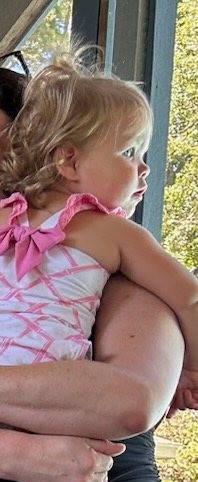
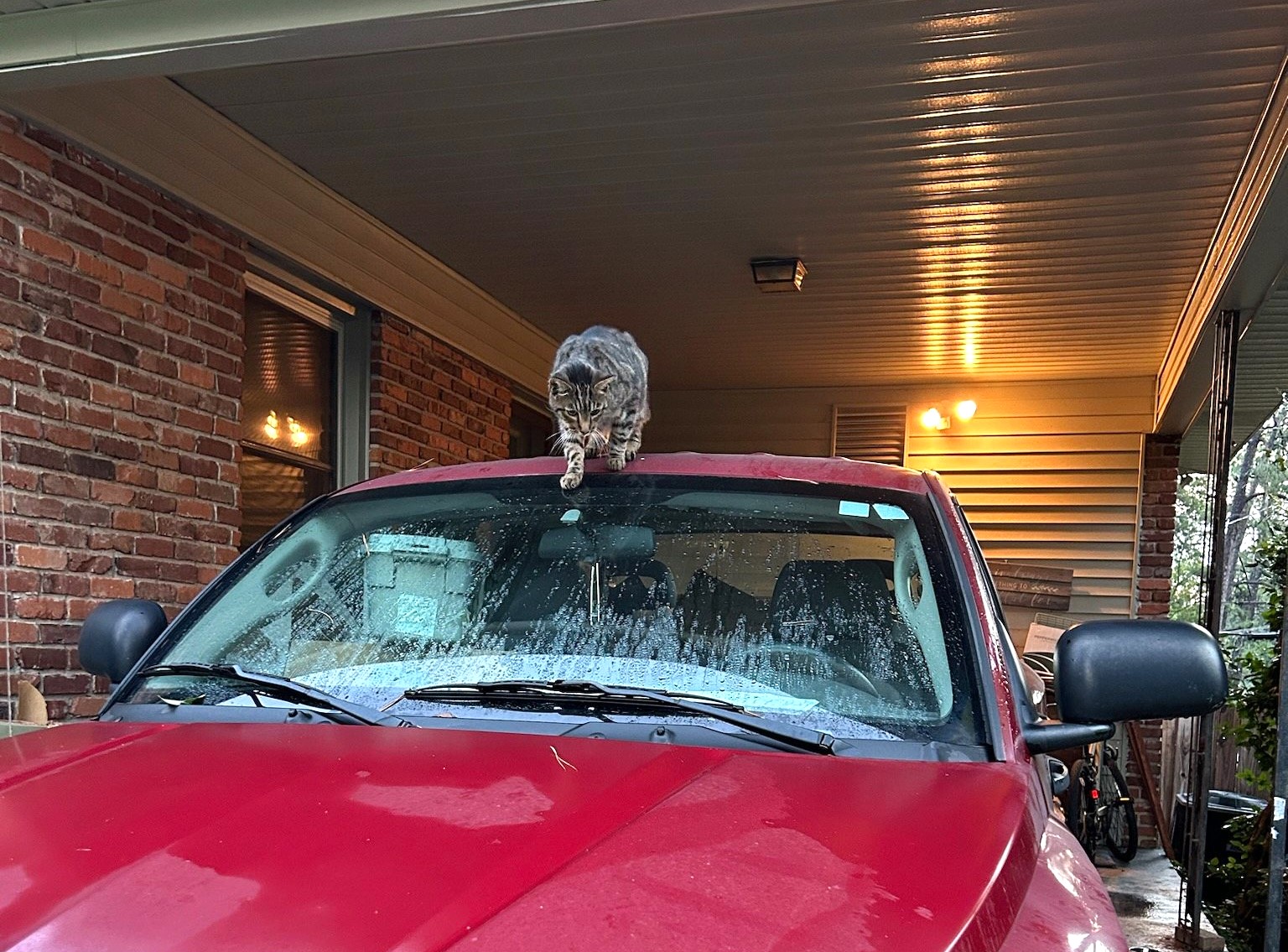
    Pretty and our three-year-old granddaughter Ella have much in common including their love of the water and their attraction to dresses so a fun way to play together on the first weekend of summer needed both; yesterday’s adventures in the back yard of our home on Cardinal Drive were fun times for them plus a couple of uninvited family members.

    Ella’s third season of swimming lessons gave her freedom to swim with Pretty

    Nana had the best dresses in her pickup truck – she said they were antiques

    Carl didn’t think watching me try on Nana’s antique dresses was fun

    no thanks, Nana, I can do it by myself

    Nana, did you know purple is my favorite color?

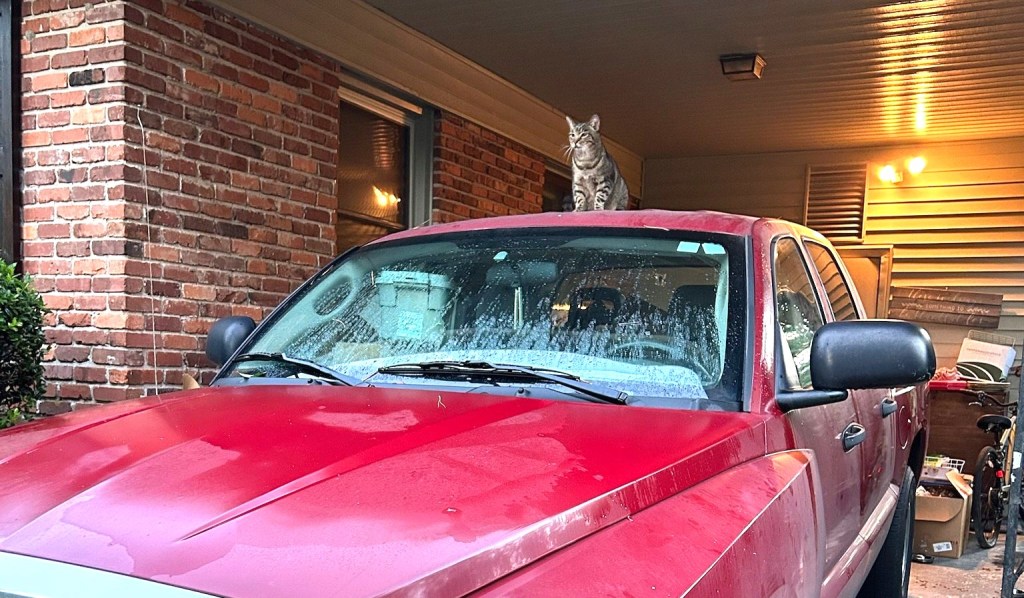
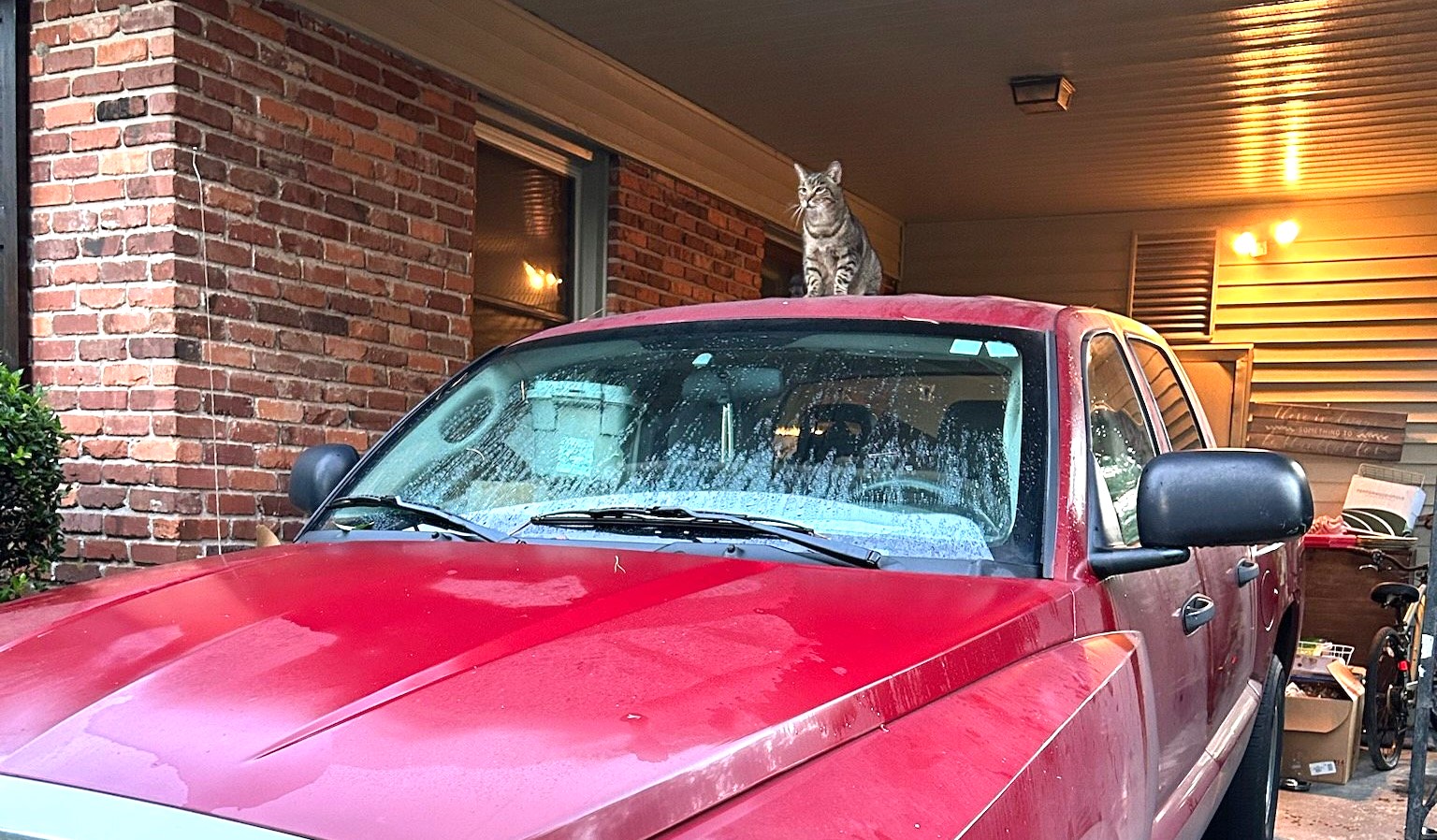
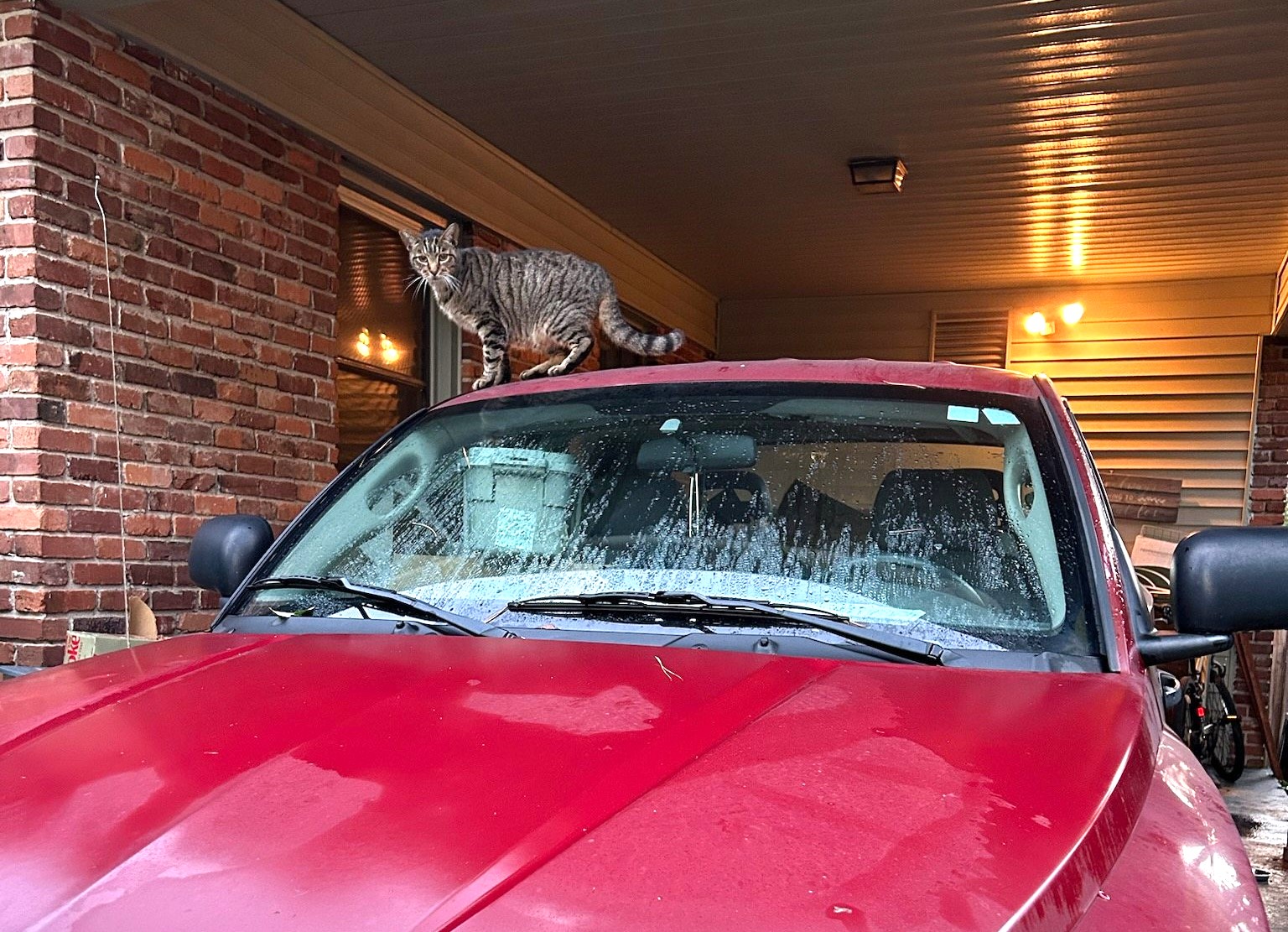
    Charly isn’t interested either, but at least she’s not barking

    Naynay says this is my Warrior Princess look

    What do you think, Carl?

    Naynay, stop taking pictures of me

    Nana, Naynay says this blue one is her favorite

    every Princess needs a Reese’s Thin

    Naynay, I told you before to stop taking pictures of me…

    so I did

    The End

  • Before ZipRecruiter and Linked In (from Not Quite the Same)

    Before ZipRecruiter and Linked In (from Not Quite the Same)


    My job search in Columbia, South Carolina was much more sophisticated than my telephone book hunt for CPA firms in Seattle, Washington five years before. This time around I turned to the classifieds of The State newspaper, a rich repository of career-changing opportunities in September, 1973. I checked the classifieds every week and made many calls with no success.

    Finally as my twenty-seven-year-old youthful exuberance faltered and my typically small savings dwindled, I responded to an ad for an internal auditor position with Blue Cross of South Carolina which was headquartered in Columbia. The secretary to the director of the internal audit department for Blue Cross called to set an appointment for me with the internal audit director. At the appointed time I met with the director who was a middle-aged man and another member of his team, a woman named Yvonne who appeared to be in her early thirties. Both the manager and Yvonne who I really liked gave positive vibes that they were impressed with my credentials – particularly my year in the Houston office of Arthur Andersen & Co. The director said I had one other interview his secretary would schedule with a third-party psychological testing center, but that wasn’t a big deal – just a formality. What could be easier to pass than personality tests for an auditor? Ha, ha, ha. We all laughed.

    My spirits lifted after the interview, and I pictured myself working with Yvonne and her boss. The pay was good and the benefits excellent, although benefits were unimportant to me at the time. Show me the money was the key to my vision of success. I agreed to go to the testing site the following Saturday.

    I felt good when I finished the standardized cognitive ability tests that next Saturday. I was familiar with some of the tests from my college psychology courses where I volunteered to be a subject of experimental testing in the psychology labs for extra course credit. The third-party testing site administrator, an older man with framed diplomas displayed on his office walls, spent half an hour talking with me after I completed the series of exams. I noticed he took tons of notes during our chat, but that seemed reasonable during the interview process, and I was upbeat when I left his office; I felt sure I nailed it.

    The next week I didn’t hear from Blue Cross. I waited until Thursday and then gave the internal audit director a call. He was in a meeting, his always cheerful secretary told me; I felt a twinge of uncertainty about the “in a meeting” comment, but I left my number with her. She promised he would call.

    On Friday afternoon the director returned my call and told me I didn’t get the job. Unfortunately, I had failed the personality tests which indicated I was “dull and boring.” I was stunned, speechless. How can someone fail a personality test, I thought. Dull and boring? Isn’t that what you looked for in any type of auditor? Why would you want an internal auditor to be lively and exciting as an auditor for an insurance company? I thanked him for his call, appreciated his consideration and bid farewell to my Blue Cross dreams. It was no use. I wasn’t internal auditor material. I was distraught.

    Two weeks later I got a job as Controller for Geneva Construction Company, a large local company in Columbia making more money than I would have made at Blue Cross. My CPA designation opened that door, as it continued to do whenever I applied for any position over the next forty years. But this company was owned by Mormons, and the two young men who ran the company interviewed me for the job. Both men had done two years of missionary service their church required before entering the world of work, and what they loved more than my CPA background was my seminary training. No one mentioned personality tests.

    *****************

    Yvonne, the woman I met in the Blue Cross interview process, and I became good friends when she randomly moved to the same apartment complex Janie and I lived in following the untimely death of her young husband from Hodgkin’s lymphoma. We recognized each other in the parking lot one day, chatted, became friends even when she changed employers and moved to Louisville to their headquarters several years later. We often laughed about my failing the personality tests at Blue Cross – she said if anyone failed the dull and boring test, it should have been her boss.