Tag: dementia

  • The Reality of Memory Care: A Daughter’s Perspective

    The Reality of Memory Care: A Daughter’s Perspective


    Fourteen years ago the first post I published here in the month of December began with a nursery rhyme that had a darker theme than the usual holiday cards season’s greetings I sent to friends and family throughout the month. Spoiler alert, no deck the halls.

    HUMPTY DUMPTY

    Humpty Dumpty sat on a wall.

    Humpty Dumpty had a great fall,

    And all the King’s horses and all the King’s men

    Couldn’t put Humpty together again.

    —— Old English Nursery Rhyme

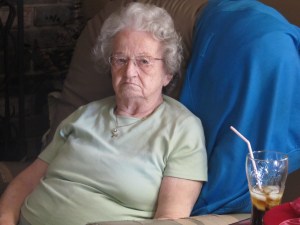
                I noticed the red dried blood and purple bruising on the top of her left hand as she sat with both hands folded in the large brown leather recliner that was her assigned seat in the den and wondered what in the world had happened.   This semi-conscious frail woman with wispy uncombed snow white hair slouched down in a chair that swallowed her…with her feet up in their usual elevated position.  Her green sweat suit pants and bright flowered cotton blouse she wore today didn’t belong to her, but they were clean and looked comfortable enough.  She sat on a white pad to prevent accidents to the leather chair.  She was dozing when I came through the door and didn’t stir when I bent to kiss her unwrinkled forehead.   She looked up at me and smiled and then closed her eyes again.   My mother wasn’t interested in talking today.

                Her caregiver Kathy sat across from me on the well-worn sofa and noticed my glance at Mom’s hands.   Kathy was a tall woman and big-boned as we used to say when describing a woman her size.  She had just stepped out of the shower when I arrived for my visit and her hair was wet and pulled back from her not unattractive face.   She had a great smile and genuineness I liked.  

                “Has your mother always been a scratcher or is this something new?” she asked.   “Most of the time when we struggle to get her to take a shower she scratches Norma or me.   I’ve got a new one right here.”   She pointed to a fresh scratch on her hand.   “Yesterday Selma thought she was scratching me but instead she scratched herself so hard on her own hand she made it bleed and then pulled off the band aid I put on it.  It looks worse than it is, though.”

                The idea of my mother being a “scratcher” was like a foreign movie without subtitles.  Difficult to comprehend, yet I knew it was true.  I’d heard a nurse say the same thing in her hospital room a few weeks ago to the young aide who was to give Mom a bath in her bed.  “Be careful, she’s a scratcher,” the nurse said.   I had almost fainted.  My mother, the prim and proper little woman who taught second grade in a public school for twenty-five years and played the piano in Southern Baptist churches for more than fifty years, was a scratcher.   It’s a world gone mad.

                “No, it’s not new,” I said.   “I’m not sure how long she’s been doing it, but I know it happened at least once during her hospital stay several weeks ago.  I’m so sorry she does it to you, but I can tell you it’s completely out of character for her.”

                “Oh, no, don’t worry.  I totally understand.  We’ve seen most everything with our Alzheimer folks,” Kathy said.

                I had entrusted the care of my mother six weeks ago to the two sisters, Kathy and Norma, who lived in the country twenty-two miles from our home in Montgomery, Texas.   Their brick house was an unassuming ranch style with a beautiful swimming pool screened and covered like the ones I had seen in Florida.  This made sense when I found they grew up in the Melbourne area.  The sisters came highly recommended to me by a friend whose father lived with them for seven years before he died last year.   My friend said her family had chosen them from several options and never regretted the choice.

                Mom lived in a Memory Care Unit for the past four years in a large assisted-living residential community in southwest Houston.   The setting was relatively plush and her unit housed twenty patients.   The cost rose every year she was there and was now almost $6,000 a month for her care for moderate to severe dementia and the related deterioration of her physical capacities.  Incontinence and lack of ability to walk without a walker were major changes in her condition in recent years.   Her world was sustained by her routine and the familiar surroundings of her private small apartment that defined it.   Locked entrances and exits set her boundaries and she adjusted to this world with an acceptance bordering on relief from the necessity of trying to preserve an identity she had long forgotten.   When I visited her in the Memory Care Unit, I typically found her in good spirits and checking her watch to see what she was supposed to do next.   Was it time for a meal?  Should she be in the dining room?   Did she need to go to the living room for a movie or exercise class or Wheel of Fortune or Bingo?   Were they going out for ice cream?   Someone had a plan, and my mother loved a plan.

                God bless long-term care insurance and the benefits it provided that covered the last four years of my mother’s stay in Houston.   Unfortunately, her benefit period ended this fall and economic realities made change unavoidable.   Her move to the house in the country was an answer for one problem but generated a host of others.   On the day I drove her to her new home, the conversation was dramatic foreshadowing of the days to come.

                “Mom, don’t you think it’s beautiful to be in the country like this?” I asked her as we rode along in my pickup truck.

                “Yes, it’s beautiful all right, but I wouldn’t want to live out here,” she replied.

                Indeed, she did not go gently into that good night, as the poet Dylan Thomas described.   When we arrived at her new home, she had forgotten the hamburger and fries I’d bribed her with at lunch to improve her mood.   She reluctantly sat down in the den with her two new compatriots, Anne and Virginia.   Anne had mild to moderate dementia and was in her early eighties, I would learn later.   She was an attractive frail woman with pulmonary issues and needed frequent breathing treatments.   Virginia was eighty-nine and proud of it and was in a better mental and physical state than either Mom or Anne.   She forgot words but generally followed conversation threads and understood contexts.  She was the only one of the three women who didn’t need a walker.    I liked the two women immediately and hoped Mom would, too.

                “I don’t understand why I have to be here, and I don’t think it’s right for you to bring me  without telling me we were coming to stay,” Mom said to me when we sat down on the sofa in the den.   Anne and Virginia each sat in large recliners facing the sofa and listened to our conversation.    Lack of privacy was a new challenge in the intimate den, I thought.

                “Well, they did the same thing to me,” Anne said to Mom.   “My daughter Beverly and her husband just brought me in here one day and left.”

                “Me, too,” Virginia chimed in.   “But I like it now and I’m glad you’re moving in.   You can have the other big chair.   I hope we don’t get anybody else because we only have three big chairs.”

                And so began the next chapter in my mother’s battle with the devils of her own mind and body.   Within ten days, as we began the process of changing to local doctors and pharmacies for her medications, she developed a severe urinary tract infection, which is not uncommon for women of her age and physical state.   But she required treatment in the community hospital for a week and after I brought her home from that stay, she hasn’t been the same.   She says little and doesn’t eat solid food.   The sisters feed her a liquid diet through a contraption that looks like an oversized eye dropper to me.   She’s had company in the hospital and in her new home – visits from nephews, cousins, other family members and even a visit from her former pastor.   She greets everyone with a smile and says a practiced thank you for coming.  The level of recognition appears to be distant with no connection to the present. 

                Her main question for me in the hospital as she lay attached to tubes of all sorts day after day was, “How long are you going to be in the hospital?  I didn’t know you were sick.”   I told her I didn’t know how long but I was glad she was there with me.    

                Did she have the uti before she moved?   Probably.   Would she have been so sick if she hadn’t moved?  Maybe not.  The mind and body work strangely in tandem, I’ve observed, and my mother is seemingly lost without her old planned life in the Memory Care Unit.   Hopefully, time will allow her to find a new routine that will offer her the comfort of consistency.   Her world is like the world of Humpty Dumpty, however.   All the King’s horses and all the King’s men won’t be able to put Humpty together again as he once was.  The fall has been too great.

    **********************

    On a lighter note, Pretty and I had our granddaughters Ella (6) and Molly (seven weeks shy of 4) for a weekend sleepover. The little girls have busy lives now, and I hadn’t seen them for more than a week, which was unusual; Molly sat down at the table where she found her new colors to begin work on the blank paper in front of her. She looked up at me as I hovered to help her get started and asked, Naynay, are you still old?

    Hilarious! All the king’s horses and all the king’s men can’t make Naynay young again.

  • easter, comes the resurrection

    easter, comes the resurrection


    Fifteen years ago this Easter my mother was in a secured memory care unit of the Atria Westchase assisted living complex in Houston, Texas. Pretty and I had recently bought a second home in Montgomery, Texas, so I could be closer to Mom as her dementia progressed; she lost that battle two years later, but on that Easter Sunday in 2010 I arrived in time for a chapel service before lunch with my mom.  After lunch, well, here’s what happened…

    The traditional Easter egg hunt came to us mid-afternoon through the children of the staff members. The day was beautiful, and the fenced courtyard area was the perfect setting for a party. Those in our lunch group pushed their walkers or were wheeled outside into the bright sunlight, those who could sat in the Adirondack chairs under the portico. I met three other daughters who were visiting their mothers that day which made me thankful I was there with my mother, too.

    The Hispanic women who were the caregivers for the memory care unit brought their children to enjoy the search for the pastel colored plastic eggs filled with candy in the tranquil setting of the facility’s outdoors. Eggs were hidden everywhere, including on and around the residents.  Jim, a tall sad unshaven man who never spoke and struggled to move, opened the chocolate egg Rosa placed in his shirt pocket; he ate the candy before the kids arrived. No one tried to stop him including my mother who in days of yore would have surely reprimanded him in her best elementary school teacher voice.

    The small group of children burst into the courtyard with an exuberance all youngsters bring to filling an Easter basket. Ages ranged from four to twelve, with one six-month-old baby girl held by her mother. They were dressed in their Sunday best. Little boys wore ties with their jackets, little girls wore pretty spring dresses. It could’ve been a movie set, I thought, because they were strikingly beautiful children. They flew around grabbing eggs with gusto as their baskets filled quickly. They were noisy, laughing, talking – incredibly alive.

    It was the resurrection. For a few brief minutes, the stones were rolled away from the minds buried deep in the tombs of the bodies that kept them hidden. The children raced around the residents searching for treasures, exclaiming with delight when one was discovered. One little boy overlooked a blue egg under a wheel chair, and my mother tapped his shoulder to point it out to him. He was elated and flashed a brilliant smile at her. She responded with a look of pure delight. The smiles and the murmurings of the elderly were clear signs of their obvious joy that proclaimed the reality of Easter in their minds in those moments.  Hallelujah. We were all risen.

    Memories were made and lost that afternoon. The children who ran to find eggs among the old people in the place where their mothers worked were unlikely to forget this day.  Years from now some will tell the stories of the Easter Egg Hunt with the Ancient Ones.  The stories will be as different as their own journeys will take them.  For my mother and her friends, no stories will be told because they won’t remember. My mother doesn’t know I was there for her on Easter this year which is not unexpected.  But I remember I was, and it is enough for both of us.

    I was born on another Easter Sunday morning in April, 1946, and that makes the year 2010 my sixty-fourth Easter. I recollect a few of the earliest Easters from my childhood: sacred religious days for my Southern Baptist family that rarely missed a worship service on any Sunday of the year but never at Christmas or Easter. I also remember having a hard time finding eggs in the church hunts. My baskets never runneth over. But to be honest, in recent years Easter Sundays had been difficult to distinguish from any other day of the week.

    When I moved away from my family in Texas in my early twenties to explore my sexual identity, I didn’t know I’d be gone for forty years. I also had no way of knowing one of the costs of my freedom from family togetherness was my absence from family rituals.  Distance, travel time, money, job obligations, girlfriends—these were the obstacles I had to overcome for visits home. Or maybe they were just excuses. I usually made the trip home at Christmas and less frequently one more time in the summer. But never for Easter.

    This Easter was special for me because it was a day with no excuses necessary. I shared a Sunday sundae with my mother for lunch today at a table neither of us could have envisioned a few years before. Today was for the two of us, and if there were barriers between us that once seemed too impenetrable, they were now lost in the cobwebs of time.

    We were all risen, indeed.

    **************

     My divorce from the politics and religion of the Southern Baptist denomination took decades, but I am grateful for the biblical stories I learned in Sunday School about resurrection because I continued to believe in the power of hope I experienced even in the midst of personal despair on an Easter Sunday afternoon in Texas when the children came to play.

    (This post is an excerpt from my third book I’ll Call It like I See It)

  • easter, comes the resurrection

    easter, comes the resurrection


    Thirteen years ago this Easter my mother was in a secured memory care unit of the Atria Westchase assisted living complex in Houston, Texas. Pretty and I had just bought a second home in Montgomery, Texas so I could be closer to Mom as her dementia progressed. On that Easter Sunday in 2010 I arrived in time for a chapel service before lunch with my mom.  After lunch, well, here’s what happened…

    The traditional Easter egg hunt came to us mid-afternoon through the children of the staff members. The day was beautiful, and the fenced courtyard area was the perfect setting for a party. Those in our lunch group pushed their walkers or were wheeled outside into the bright sunlight, those who could sat in the Adirondack chairs under the portico. I met three other daughters who were visiting their mothers that day which made me glad I was there with my mother, too.

    The Latino women who were the caregivers for the memory care unit brought their children to enjoy the search for the pastel colored plastic eggs filled with candy in the tranquil setting of the facility’s outdoors. Eggs were hidden everywhere, including on and around the residents.  Jim, a tall, sad, unshaven man who never spoke and struggled to move opened the chocolate egg Rosa placed in his shirt pocket; he ate the candy before the kids arrived. No one tried to stop him including my mother who in days of yore would have surely reprimanded him in her best elementary school teacher tone.

    The small group of children burst into the courtyard with an exuberance all youngsters bring to filling an Easter basket. Ages ranged from four to twelve, with one six-month-old baby girl held by her mother. They were dressed in their Sunday best. Little boys wore ties with their jackets, little girls wore pretty spring dresses. It could’ve been a movie set, I thought, because they were strikingly beautiful shildren. They flew around grabbing eggs with gusto as their baskets filled quickly. They were noisy, laughing, talking – incredibly alive.

    It was the resurrection. For a few brief minutes, the stones were rolled away from the minds buried deep in the tombs of the bodies that kept them hidden. The children raced around the residents searching for treasures, exclaiming with delight when one was discovered. One little boy overlooked a blue egg under a wheel chair, and my mother tapped his shoulder to point it out to him. He was elated and flashed a brilliant smile at her. She responded with a look of pure delight. The smiles and the murmurings of the elderly were clear signs of their obvious joy that proclaimed the reality of Easter in those moments.  Hallelujah. We were all risen.

    Memories were made and lost that afternoon. The children who came to the place where their mothers worked to find eggs among the old people were unlikely to forget this day.  Years from now some will tell the stories of the Easter Egg Hunt with the Ancient Ones.  The stories will be as different as their own journeys will take them.  For my mother and her friends, no stories will be told because they won’t remember. My mother doesn’t know I was there for her on Easter this year which is not unexpected.  But I remember I was, and it is enough for both of us.

    I was born on another Easter Sunday morning in April 1946, and that makes the year 2010 my sixty-fourth Easter. I recollect a few of the earliest Easters from my childhood: sacred religious days for my loving Southern Baptist family who rarely missed a worship service on any Sunday of the year but never at Christmas or Easter. I also remember having a hard time finding eggs in the church hunts. My baskets never runneth over. But to be honest, in recent years Easter Sundays had been difficult to distinguish from any other day of the week.

    When I moved away from my family in Texas in my early twenties to explore my sexual identity, I didn’t know I’d be gone for forty years. I also had no way of knowing one of the costs of my freedom from family togetherness was my absence from family rituals.  Distance, travel time, money, job obligations, girlfriends—these were the obstacles I had to overcome for visits home. Or maybe they were just excuses. I usually made the trip home at Christmas and less frequently one more time in the summer. But never for Easter.

    This Easter was special for me because it was a day with no excuses necessary. I shared a Sunday sundae with my mother for lunch today at a table neither of us could have envisioned a few years before. Today was just the two of us, and if there were barriers between us that once seemed too impenetrable, they were now lost in the cobwebs of time.

    We were all risen, indeed.

    **************

    Happy Easter if you celebrate. Happy Passover if you celebrate. Ramadan Mubarak if you celebrate.

    (This post is an excerpt from my third book I’ll Call It like I See It)

  • mind over memory

    mind over memory


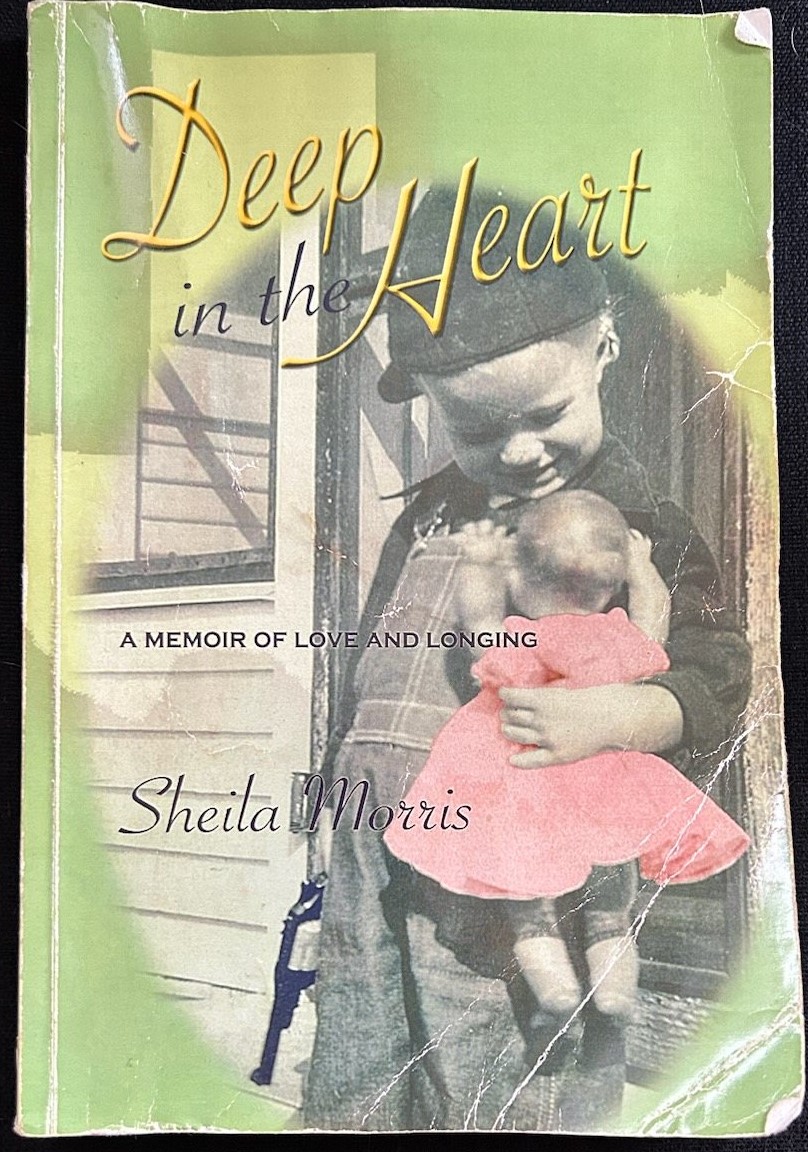
    Groundbreaking research is currently being conducted in the medical field on treatment programs including new medicines for dementia and Alzheimer’s disease. In 2011 when I wrote this piece and published it for the first time, Pretty and I had become caregivers for my mother for the previous three years with the goals of keeping her safe and comfortable. We were told her dementia would get progressively worse with no hope for improvement. We saw that prognosis slowly come true. Last week Pretty’s ongoing work on bringing order to the very old boxes in her warehouse revealed a small black box containing my mother’s notebook prepared by the funeral home that took care of her final remains and resting place in 2012. Inside the notebook was her copy of my first book Deep in the Heart: A Memoir of Love and Longing that I gave her in 2007.

    ****************

    August 08, 2011

    Last week I visited my mother who is in a Memory Care Unit in a facility in Houston, Texas.  She is eighty-three years old and has lived there for two years.  She is a short, thin woman with severe scoliosis.  Her curved spine makes walking difficult, but she shuffles along with the customary purpose and determination that characterized her entire life.  Her silver hair looks much the same as it has for the last thirty years, missing only the rigidity it once had as a result of weekly trips to the beauty parlor and massive amounts of hairspray.

    Her skin is extraordinarily free of wrinkles and typically covered with makeup.  She wears the identical mismatched colors she wore on my last visit.  Black blouse and blue pants.  This is atypical for the prim, little woman for whom image was so important throughout her life and is indicative of the effect of her dementia.

    My mother is a stubborn woman who wanted to control everyone and everything in her life because she grew up in a home ruled by poverty and loss and had no control over anything.  Her father died when she was eleven years old.  He left a family of four children and assorted business debts to a wife with no education past the third grade.  Life wasn’t easy for the little girl and her three older brothers who were raised by a single mom in a rural east Texas town during the Great Depression.

    My mom survived, married her childhood sweetheart, and had a daughter.  The great passions of her life, which she shared with my father, were religion and education and me, possibly in that order.  She played the piano in Southern Baptist churches for over sixty years.  She taught elementary grades in three different Texas public schools for twenty-five years.  The heart of the tragedies in her adult life made a complete circle and returned to losses similar to the ones she experienced in her childhood: her mother who fought and lost a battle with depression, two husbands who waged unsuccessful wars against cancer, an invalid brother who progressively demanded more care until his death, and a daughter whose sexual orientation defied the laws of her church.  Alas, no grandchildren.

    My sense is that my mother prefers the order of her life now to the chaos that confronted her when dementia began to overpower her.  She knew she was losing control of everything, and she did not go gently into that good night.  Today, she seems more content.  At least, that’s my observation during my infrequent visits.

    “My daughter lives a thousand miles from me,” she always announces to anyone who will listen.  “She can’t stay long.  She’s got to get back to work.”

    We struggle to find things to talk about when I visit, and that isn’t merely a consequence of her condition.  We’ve had a difficult relationship.  Our happiest moments now are often the times we spend taking naps.  She has a bed with a faded navy blue and white striped bedspread, a dark blue corduroy recliner at the foot of her bed, and one small wooden chair next to her desk.  I sleep in the recliner, and she closes her eyes while she stretches out on the bed.

    The room is quiet with occasional noises from other residents and staff in the hallway outside her door.  They don’t disturb us.  She has no interest in the television I thought was so important for her to take when I moved her into this place.  I notice it is unplugged.  Again.

    “Lightning may strike,” she says when I ask her why she refuses to watch the TV in her room.  “Besides, I like to watch the shows with the others on the big TV.  Sometimes we watch Wheel of Fortune, and sometimes we watch a movie.”

    I give up and close my eyes.

    “I love this book,” my mother says, startling me awake with her words.  I open my eyes to see her sitting across from me.  She’s in the small wooden chair with the straight back.  I can’t believe she’s holding the copy of my book, Deep in the Heart, which I gave her two years ago.  I never saw the book since then in any of my visits, and I assumed she either threw it away or lost it.  I was also stunned to see how worn it was.  The only other book she had that I’d seen in that condition was The Holy Bible.

    “I know all the people in this book,” she continues.  “And many of the stories, too.”

    “Yes, you do,” I agree.  “The book is about our family.”

    And, then, for the second time in as many weeks, I hear another reader say my words.  My mother reads to me as she rarely did when I was a child.  She was always too busy with the tasks of studying when she went to college, preparing for classes when she taught school, cooking, cleaning, ironing, practicing her music for Sunday and choir practice—she couldn’t sit still unless my dad insisted that she stop to catch her breath.

    But, today, she reads to me.  She laughs at the right moments and makes sure to read “with expression,” as the teacher in her remembers.  Occasionally, she turns a page and already knows what the next words are.  I’m amazed and moved.  I have to fight the tears that could spoil the moment for us.  I think of the costs of dishonesty on my part, and denial on hers for sixty-five years. The sense of loss is overwhelming.

    The words connect us as she reads.  For the first time in a very long while, we’re at ease with each other.  Just the two of us in the little room with words that renew a connection severed by a distance not measured in miles.  She chooses stories that are not about her or her daughter’s differences.  That’s her prerogative, because she’s the reader.

    She reads from a place deep within her that has refused to surrender these memories.  When she tires, she closes the book and sits back in the chair.

    “We’ll read some more later,” she says.

    I lean closer to her.

    “Yes, we will. It makes me so happy to know you like the book.  It took me two years to write these stories, but I’m glad you enjoy them so much.”

    “Two years,” she repeats.  “You have a wonderful vocabulary.”

    *******************

    what Pretty found

  • The In-Between Years

    The In-Between Years


    This post was originally made on December 31, 2012 – many of you might have missed it, and others will be reminded perhaps of what you were feeling on that New Year’s Eve ten years ago when you read it for the first time.

    Through the good or lean years and for all the in-between years is a line from a Frank Sinatra classic All The Way. As I lay 2012 to rest for a final countdown before the ball drops in Times Square in New York City tonight, I ask myself to rate the year as good, lean or in-between. Understand this is a subjective, biased, prejudiced and totally personal evaluation. It meets none of the standards for any Academy of Anything and as such, is not subject to review by a replay official. I’m not sure if the year passed as quickly for you as it did for me, but I confess mine seemed to pass faster than a falling star so I hope you have a notated calendar to refresh your memories as mine does for me.

    The first day of 2012 I was in Texas and spent New Year’s Day with my mother who lived in a personal care residence with two other older women and the two wonderful sisters who cared for all of them. She was in the severe stage of her dementia and, although I had no way of knowing it on that day, she wouldn’t survive the year;  neither would the other two women who shared the home and enjoyed my New Year’s visit. I’ve always loved women of any age, and these were some of the most entertaining ever.  It was a good start to the new year.

    IMG_5392

    Mom

    IMG_5394

    Miss Ann

    IMG_5393

    Miss Virginia

    Whenever I’m in Texas I always have great visits with my favorite Aunt Lucille who lives in Beaumont, one of my least favorite Texas towns. My aunt will be ninety-three years old in 2013 and is an avid reader and crossword puzzle aficionado. She lives now in an independent living apartment in a retirement community in Beaumont. The nearness of neighbors and a standing dinner group of six women from her building in the late afternoon for dinner suit her social nature, her need to be out and about. Movies? Politics? TV shows? Books? Ask my aunt about any of these and she’s in her element with an attitude toward life that says hey take your best shot at me, but I’m hanging in for as long as I can. In 2012 I saw her more than a dozen times which was more than I’d visited her in one year…ever.  Each visit lifted my spirits and was just plain fun.

    IMG_3556

    My favorite Aunt Lucille

    The year confirmed my status as a bi-stateual with extended periods of time in Texas and South Carolina plus keeping the roads hot from here to there and back. My partner Pretty traveled with me whenever she could get away from her job – I managed to coerce other friends to make the trip when she couldn’t go with me and refused to let me drive by myself any more. Even with my “new” eyes from a second cataract surgery in July, my truck bears the dents and dings of my parking misadventures and alas, let’s face it. I have a GPS but occasionally disagree with it, and then I find I am not there when I need me. I am somewhere else.

    Pretty and I did some fun trips during 2012. At the end of February, which is our anniversary month, we drove to Valle Crucis, North Carolina, in the Blue Ridge Mountains for a couple of days of work and play. She worked.  I played.

    IMG_5612

    Blue Ridge Mountains, Boone, North Carolina

    Six months later in August we had a family vacation with our son Drew and his girlfriend Caroline. We drove to the northeast to sightsee and spend time together, to try to re-group from the losses earlier in the year. Abraham Lincoln blessed us in Gettysburg and we traveled safely to the shores of Maine, along the coast in Rhode Island, saw beautiful scenery in Pennsylvania and Connecticut. Boston was a hit for many reasons not the least of which was its good food. We counted on Caroline to make sure we ate at the best restaurants according to her online guides.  Iphones were in; Pretty and Drew had dueling GPSs that didn’t always want to go in the same direction. So many gadgets…so much confusion. So much merriment.

    088

    On my birthday in April I was at the funeral of the woman I knew as a second mother for over forty-five years. She and my mom were as close as sisters. They were both heartbroken when I had to separate them four years ago because they could no longer take care of each other. Willie Flora was eighty-two in March of this past year and my mom was eighty-five that same month. Willie died on April 14th in Richmond, Texas and my mom died eleven days later in Willis. It was sorrow upon sorrow.

    IMG_1122

    Willie

    In September my neighbor Heather and I had a shower for another neighbor, Becky, who created additional excitement by announcing that her water broke a couple of hours before the shower was to start. High drama, but we moved the time up, she came and opened her gifts, had a piece of cake and was then whisked away by her husband Gary to the hospital where she gave birth to her third baby boy four hours later. George is growing by leaps and bounds and should be a fine nuisance for his older brothers Oscar and Dwight.

    021

    Dwight plus Oscar plus cookie jar = Good Times

    024

    George in his New Baby phase

    In November my third book was published and I was thrilled with how it looked when it came from the printer. I loved the cover and had a sense of accomplishment as I placed it in my office next to my first two books. I hope my cyberspace friends will want to read the final version since you’ve shared a number of the stories with me in the past year right here on this blog. There is freedom in growing older and a sense of entitlement to Call It Like You See It — and even sweeter to see what you’re calling in print

    Good year? Lean year? In-between year? The votes have been tallied by an unreliable CPA (me) and I have to report the in-between has it. Births and deaths mark our beginnings and our endings, but the middle is what keeps our attention. I’ll lay 2012 down tonight and pick up 2013 in the morning. I can’t predict what will happen in the New Year, but I can predict I will struggle to stay awake to ring it in.

    Pretty and I wish all of you a Happy and Healthy New Year!  Thanks for stopping by…

    ***************

    P.S. I would lose my favorite Aunt Lucille in 2013. I think of her often and am grateful for that Texas time with her.