Tag: WWII

  • a man of letters (3) – prejudice by any other name is still prejudice


    While the war took center stage in everyone’s mind in 1942 and my dad noticed that his hunting and fishing buddies in Richards, Texas had a younger sister, apparently hormones were also raging in my dad’s brother Ray who would have been almost twenty years old in April of 1942 when he received a surprise letter in the mail from his mother. It was dated April 27th.

    “Dear Ray,

    Your daddy and I were tickled with your surprise visit this past weekend. You always have to work, and it was a treat for us to have you home for a whole weekend. I am pleased to see that your appetite is still good. I’ve never seen anyone love chicken and dumplings the way you do!

    Now, son, I need to have a serious talk with you about Geneva Walkoviak. I know that you had two dates with her while you were home. We can’t have you getting too serious about Geneva. And, I’m sure you know why. Even though she is pretty and seems sweet enough, the facts are that she is Polish and Catholic and those are two things that don’t mix in our family. You may not be able to appreciate the problems with that, but take my word for it. You stay with your own kind. Now, let’s leave it at that. I know you wouldn’t want to let us down.

    Try to make it home for your daddy’s birthday this summer.

    All our love,

    Mama and Daddy”

    Polish. Catholic. Prejudice takes twists and turns through the years, decades, centuries. The names change, but the sentiments do not. Polish people in Richards at that time had a distinct accent – they were often first and second generation immigrants who farmed the contrary Texas land. The children rode a small yellow school bus to the red brick schoolhouse in town carrying the hopes and dreams of their families in tiny brown paper lunch bags. The men and boys got their haircuts at my grandfather’s barbershop. Their money, as is always the case in prejudice, was evidently neither Polish nor Catholic.

    Today bigotry is often based on what language is spoken, skin color, or country of origin. Hispanic refugees and others seeking asylum in this country are subjected to inhumane treatment that is unacceptable to all of us who respect the values our nation was founded on: everyone is entitled to life, liberty and the pursuit of happiness. We do not separate children from their mothers and then put them in prison camps. We’ve done that before to African-American slaves whose families were ripped apart and scattered to the four winds. That is not who we think we are. That is not who we are, is it?

    Catholics – Jews – Muslims. The religion roller coaster ride continues with death-defying speed and mind-boggling ticket prices.

    What a tangled web we weave in a small rural southeast Texas community consumed by the thought of a war in 1942, and yet my grandmother decided to set aside time to write a letter to my uncle which sadly exhibited the same kinds of prejudice that created anti-Semitism in Germany which was the impetus for the war in the first place, where a name like Walkoviak and a pretty Catholic girl named Geneva could become the target of pointed prejudice.

    I am ashamed and saddened by this letter. I do not find it surprising, however, because I remember my grandmother as a wonderful strong funny woman – but flawed. She would have been 39 years old when she wrote that revealing letter to her son. I’m not sure her positions changed during the next forty-five years of her life. She agonized over voting for the Democratic candidate John Kennedy in 1960 because of his Catholicism, for example; but I do recall she relented in later years when her grandson, one of Ray’s sons, married a Catholic girl.

    My dad, on the other hand, must have been blissfully unaware of the family drama because three months after his mother’s letter to his brother, he wrote to his parents following a visit  for his father’s birthday on July 29th. His father turned 44 on that birthday. This letter is dated August 1, 1942.

    “Dear Mama and Daddy,

    It was good to be home for Daddy’s birthday this week. I’m back at work today, and the grocery store is still standing. And, I’m still stocking shelves. Talk about boring. At least, it gives me money for school and to help Lucy and Terrell with the bills. It’s hard to believe I’ve been in Beaumont for a whole year.

    The War is the big topic on campus and off. Doesn’t look like we’re doing very good against the bad guys. Daddy, you better go up to Washington and see Mr. Roosevelt. I think he needs some good advice for a change. You could get things going in the right direction.

    I didn’t see much of Ray while we were home. He spends a lot of time with Geneva Walkoviak. She’s the only one he likes to spend money on. Of course, I guess you didn’t see much of me, either. Selma and I went to see the same movie three times. I’m beginning to like her more than her brothers.

    Probably won’t be home again until Christmas. The classes are a little harder this year. But, you’ll see that my grades are hanging in there really good. I want you to be proud of me.

    Your son,

    Glenn Morris”

    Obviously my uncle Ray rejected his mother’s ultimatum and continued to date the pretty Polish girl who happened to be Catholic. That made me smile.

    Throughout 1942 the impact of the war came closer and closer to home as more  young men enlisted – teenage boys were leaving their farms, day jobs, and classrooms to join the armed forces. They would soon cross oceans by sea and air to defend their country from the Axis powers.

    Stay tuned

    Ray and his mama
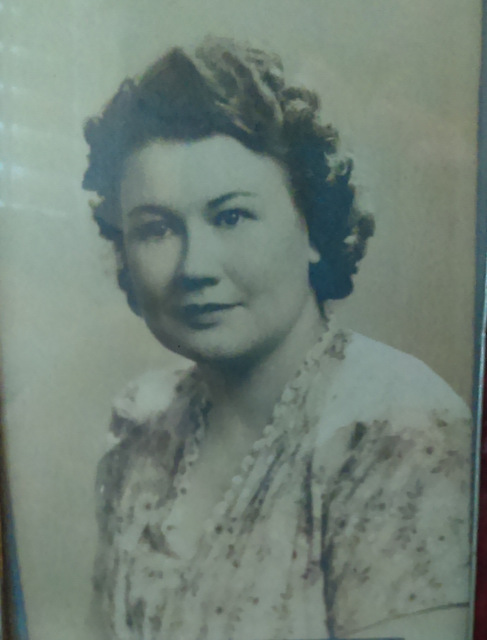
    my grandmother
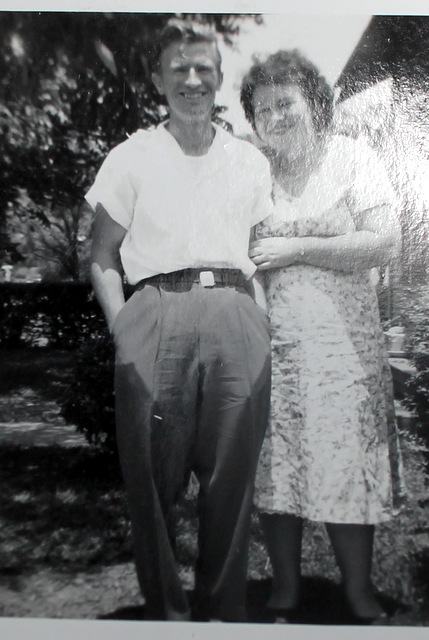


  • a man of letters – 1941 before Pearl Harbor


    My dad and eight classmates graduated from Richards High School in rural Grimes County, Texas on May 22, 1941. He was 16 years old, the smallest and youngest boy in his class – but chosen to be class president. On graduation day he delivered the “welcome” to a small group of families and friends sitting inside a hot gymnasium on wooden folding chairs that were always used by the school for assemblies and special occasions.

    My grandmother was an archivist when it came to her three children, particularly for her youngest, my dad Glenn, and had preserved a copy of his speech on graduation day. The welcome was full of the biggest words he could think of and/or make up. Have a listen.

    “…In recognition thereof, I do hereby proclaim it as a day to be set aside from the rest for universal celebration, in the making of speeches and the lifting aloft our voices in praise and jollification, and the pouring forth of songs of subtle and diverse significance that the air may bound with the echoes of our tongues’ rejoicing…”

    I’m trying to picture this little 16-year-old blonde headed boy coming up with such big words and actually reading them to the farmers, cattlemen, shopkeepers, wives, mothers, other children gathered there. What were they thinking, for example, when they heard the word jollification.

    One person in that audience for sure loved it and wrote this letter a few days later on May 27, 1941 to her eldest child, my aunt Lucy, who was 22 years old at the time.

    “Dear Lucy,

    I’m so glad that you and Terrell  were able to drive up from Beaumont for Glenn’s graduation Friday night. I was so proud of his speech, weren’t you? He had wanted it to be memorable, as he phrased it. Isn’t that something? A sixteen-year-old boy wanting to be memorable. I’m sure that being the youngest and smallest in that class made him try so hard to be good at whatever he does. It certainly seemed like his other classmates were paying attention to all those big words anyway.

    I can’t believe my baby boy has graduated from high school. Do you remember when we moved to Richards in 1925 in the old Model T? Glenn wasn’t even two years old. Ray was five, and you were seven. Your daddy took a big chance moving us all here and opening his own barbershop. I can tell you I was afraid. But, things have a way of working out the way they’re meant to, I guess, and I couldn’t see us living anywhere else again.

    I had the funniest picture in my mind when Glenn was giving his speech. All those years ago when you and I were in the kitchen and I had sent the boys to bring the wood for the stove. You looked out the window and pointed at Ray pulling the wagon with the wood stacked up so high, and Glenn was riding on top while Ray struggled. You and I got so tickled. We laughed until the tears rolled down our cheeks.

    Well, give our love to Terrell. You are lucky to have that fine young man. Your daddy and I really think the world of him.

    It’s old blue Monday, and I’ve got to get moving.

                               We love you,

                     Mama and Daddy”

    My uncle Ray, always the most practical and industrious of my grandmother’s three children, had this advice several days after Dad’s graduation..

    “Dear Mama and Daddy,

    I forgot to tell you when I was there for Glenn’s graduation last week, but I believe you need to raise your prices, Daddy. They’re getting 75 cents for a haircut in Houston these days and a whole dollar for a shave. And, nobody does as good a job as you do. I’m prejudiced. Got to go. I’m working overtime this week to make some extra money.

    Your son,

    Ray”

    Two months after the graduation, Lucy writes in July, 1941.

    “Dear Daddy and Mama,

    Glenn made it down here safe and sound, and he’s going out to the college to get registered for summer school today. Don’t worry, Mama. He’ll be fine staying with us. Terrell really likes him, and I think Glenn thinks a lot of Terrell, too. I know it was sort of a hurried up decision, but he really didn’t have anything else to do this summer in Richards so he might as well go on to school and get a job here. He’s such a mess — says he’s going to borrow the money from Ray for his tuition. I told him to get a job. We’ll work it out as we go along.

    Saw an article about small towns in Texas in the paper the other day. Gosh, Richards is booming compared to most of them. Daddy, we can thank you for all that prosperity in Grimes County, can’t we? Your barbershop and dry cleaning business are the center of Main Street activities. Mr. McAfee’s drug store, Batey and Lenorman garages, the Borings’ picture show and café, Dr. Sanders – where would any of them be without Daddy to bring folks to town every week?

    Daddy fought the Depression with a razor and a pair of scissors. He didn’t need a sword. I’m so proud.

    I love you both dearly,

    Lucy”

    Toward the end of that graduation speech in May, the youthful Glenn spoke of his hope for a future he had no way of knowing was going to be permanently altered for him and his classmates before the end of the year.

    “Therefore, as we look back over the past, with all its great and wonderful victories and achievements, and look forward to the future, with all its yet more wonderful promise of great and glorious things yet to come, and mighty and marvelous deeds awaiting our hands for the doing…”

    This boy with his youthful optimism would find himself engaged in mortal  combat as a navigator on an airplane carrying bombs for 35 missions over Germany before he was 19 years old. However, prior to his enlistment to serve his country on a battlefield in the air, he moved to Beaumont to live with his sister and her husband following his graduation from high school.

    Unfortunately, he wasn’t able to be home for his dad’s birthday on July 29, 1941. Beaumont was 90 miles from Richards.

    Instead, he wrote a letter to his dad:

    “Happy Birthday, Daddy!

    I wish I could be there in person to help you celebrate today. It’s the first birthday I’ve missed with you. Lucy and Terrell had planned to bring me home, but my boss at the Weingarten’s wouldn’t let me have the day off. I guess he was afraid the grocery business would go bankrupt if I wasn’t there to stock the shelves. Just know that I am with you and Mama in spirit, though.

    I’m sure a bunch of the old men at the barbershop kept you busy with their gossip and whittling away. How’s Mr. Howard McCune doing? How about Chili Caldwell? He’s the best one for carving animals. I fully expect his hewn cows to moo.

    How old are you today? I think Lucy said you were forty-three. You’re really my old man now!

    I love you, Daddy, and hope that I’ll be as good as you when I’m old,

    Glenn

    P.S. I made a 95 on my first math exam at Lamar College. Pretty good, huh?”

    Sunday is Father’s Day and while I think of him every day, the holiday prompted me to spend this week with my daddy and our family through the letters they wrote. He died from colon cancer when he was 51 so I am grateful for the history my grandmother preserved.

    Many years ago I collected the remains of my grandmother’s and aunt’s letters, pictures and assorted papers which I planned to use in a project called A Man of Letters. The project fizzled and languished, but I always planned to return to it because for me, this is more than a story of one man – it is a glimpse into the experiences of what family life was in rural America and how that environment nurtured the sons and daughters who became known as the Greatest Generation.

    Our family survived the Great Depression with a razor and a pair of scissors but they would be tested again by the end of 1941 when the Japanese attacked Pearl Harbor creating a chain of events none of them could have foreseen. Stay tuned.

    Daddy with his mother in Richards

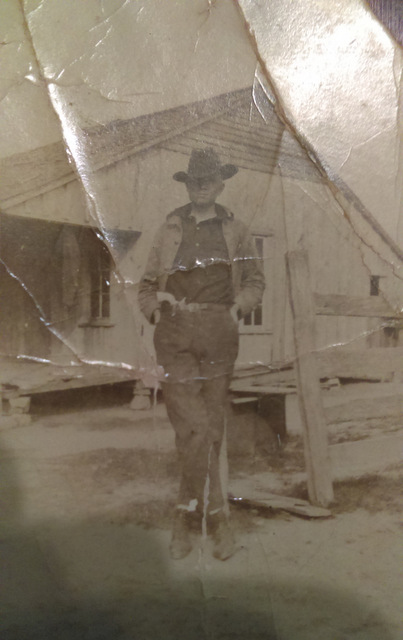
    my grandfather before he became a barber

    Lucy, Ray and Glenn


  • From One Mother to Another – WWII


    On May 29, 1945 my mom Selma and my dad Glenn eloped to get married by a justice of the peace in Magnolia, Texas. Magnolia was a small town 30 miles south of the even smaller town of Richards where they had grown up and gone to public school together. I’m not sure how they decided on Magnolia unless they had set out for Houston which was another 60 miles down the road – and couldn’t wait.

    They eloped practically the day my father returned from England after flying 32 bombing missions over Germany as a navigator on a B-25 bomber. He had volunteered to enlist in the army soon after graduating from high school, gone to officer training school in the Army Air Corps, served in the 8th Air Force in England, received the Air Medal of Honor, was honorably discharged, came home to the rural Grimes County, Texas home he had left and married the woman he loved. She was 18 – he was 21.

    My father had a brother, Ray, who was two years older than he was. My Uncle Ray also enlisted in the Army as soon as he finished high school. Even though the brothers had been separated for two years, they both were amazed to find themselves stationed together with the 8th Air Force in England. Ray loaded the bombs in the planes on the ground, and Glenn dropped the bombs from the air.

    Ray and Glenn’s mother, my grandmother Betha Day Robinson Morris, kept this letter dated August 16, 1945 from a mother written to her from another mother in Doncaster, England. Apparently Betha’s sons had spent quite a bit of time in her home while they were stationed across the Pond during the war. Glenn was home and already married before Ray’s tour was over.

    16 -8 – 45

    Dear Mrs. Morris,

    Many thanks for your letter. I was very pleased you appreciated my letter. I expect you have Ray home now.  We do miss him but let’s thank god the whole war is over & our boys won’t have to face that Pacific. I dreaded hearing that any of the U.S.A. boys who stayed with me would have to face that ordeal. Fancy Glynn being with you when my letter arrived. I could just imagine him saying that about the Yorkshire pudding. Yes Mrs. Morris my dear son arrived home safely & we’ve had a lovely 10 days with him. We had his coming home party last Saturday & what a party. Ray will tell you what a lively house this is like your own. I didn’t know what to do when the telegram came saying he had landed in England. I laughed & cried together so I know your feelings when that great big son of yours arrives. He’s a great guy. We’ve got his photo on the piano. I often talk to him. Pleased to hear you have 3 children. We only have 2 boys and my grandson who really is a beautiful child. I’ll send you some snaps when we can obtain some films for the camera. He’s so proud of his dear daddy. Ask Glynn to send me a picture of his wife. She sounds a jolly good sort of a girl. We get very few American Boys here now. I see a few was over for J.V. Days & everybody went mad. Tell Ray the Market Tavern was crowded. When we got in, you couldn’t get out again. My son who works there was tired out. What beer they sold & we was all dancing in the Market too. Give Ray this message from Shelia “She sends her regards to him & if she wasn’t marrying Nash, he stood the second chance.” She’s a sweet kid. I’ll enclose you the recipe for Yorkshire pudding  it’s really good. With roast, beef, mutton, or pork. We very seldom have a dinner without in England. As it’s very tasty with onions cooked. Let’s hope you make a success of it. It needs a lot of Beeting (sp.) up. Well dear space is short and time marches on. Give my love to my two Boys from their Limey Mum.

         So I’ll say cheerio. 

              Sincerely yours

                          E.Hughes

             Regards from all the young at heart to Ray & Glynn

    Sender’s name and address: E. Hughes, L.L. Christ Church Rd, Doncaster, England.

    P.S. I can only imagine my grandmother’s strictly tee-totaling Southern Baptist self as she read the part about the Market Tavern, beer and dancing. Oh my god.

    P.S.P.S. Family lore always attributed my name Sheila to a girl in England. There is truth to that story apparently. My middle name Rae was my daddy’s attempt to feminize his brother’s name. So I guess I might have been named Betha Day instead of Sheila Rae had it not been for WWII.

    Cheerio

  • Detours With Daddy


    Detours with Daddy is the title of the third section of my third book I’ll Call It Like I See It  because it’s a mixture of facts and fantasy about my dad who was my best friend and favorite person in the world while I was growing up.   My earlier memoirs Deep in the Heart – A Memoir of Love and Longing and Not Quite the Same describe my adoration of my daddy who died when I was thirty years old.   His impact on my life was incalculable and I often wonder what he would have thought about my adult life as a lesbian activist.

    DADDY DREAMS

                When I woke up, the dream was still in my consciousness, and I had a strange sensation of crossing a threshold through time into another world.  I tried to remember…

    I see the car stop in front of a small building that looks vaguely familiar.  My grandmother, my aunt, and I get out of the car.  We’re not in a hurry as we climb the steps that lead to the door.  I notice that my grandmother and my aunt are very young and beautiful.  My grandmother’s hair is short and wavy and dark.  She looks like she just left the beauty parlor.  My aunt’s body shows no sign of the osteoporosis that plagued her in later years.  Her back is straight, and her walk strong and sure.  The two of them laugh and talk together, and I want to say something, but they ignore me.

    The little building has no windows and no sign.  I know that I belong inside, and I’m anxious to open the door.  My grandmother turns an ancient glass knob, and my aunt and I follow her into the room.

    The room is dimly lit with a single bulb attached to the ceiling.  My eyes struggle to make an adjustment that allows me to gaze at my surroundings.  At that moment the brightness changes like a dimmer switch has been turned up a notch.  I can see clearly.

    “We thought you’d never get here,” my dad says.  “You must’ve taken the long way.  You didn’t run out of gas, did you?”  He laughs and winks at me.  “I told you when you first started driving to always check the gasoline gauge, didn’t I?  Remember that?  You wouldn’t get far without gas, and you always had somewhere to go.”

    My father wears his World War II army air corps uniform with the wings on his collar and insignia on the sleeve.  The knot on his tie is perfectly tied.  He is handsome, and I am happy to see him.  His blonde hair has a military cut, and he, too, looks incredibly youthful.  He sits on a wooden bench in the room.  He looks comfortable and very much at ease.

    “Which way did you come?” he asks.

    “I came…” I start to answer.  “I’m not sure.  I had to pick up your mother and sister, so I left early.  I didn’t want to be late, and they wouldn’t tell me exactly where we were going.  Now here we are.  I’ve missed talking to you so much.”

    “We talk all the time,” he says and smiles.  “It’s a different kind of language, but it’s as real as the King’s English.”  He beckons me to sit next to him on the bench.

    “I’m so glad you have on your uniform,” I say as I sit down.  “I love that uniform.  When I found it in the cedar chest, I thought I could wear it, but it was too big.  Daddy, why didn’t you ever talk about the war?”

    “What’s there to say about war?”  He fingers one of the wings on his collar.  He has the prettiest hands, I think.  “What do you want to hear?”  He looks directly at me.

    “I don’t know, but I want you to tell me something.  Anything, I guess.  I saw the pictures, so I know it was real.”

    “Of course, you saw the pictures and played with the uniform.  That makes it real.  And now you’ve found the letters that I wrote to your mother and the other family members, haven’t you?  Isn’t that enough?”

    “Yes, I found the letters; and no, I don’t think it’s enough.”

    My father opens a box on the bench beside him and removes a piece of paper.  He closes his eyes and begins to recite from memory.

    December 28, 1944

    Dearest Darling,

                 I’ve often wondered if you couldn’t guess just how much I miss you at different times.  You know, sometimes you are the only thing that makes me want to be back there.  I could go on forever telling you that I see you everywhere I go, etc., but you’d enjoy that too much.  In not so long a time I’ll be back with you.  It already seems like ages to me.  Do you ever sort of forget about me, unconsciously, I mean, just forget?  That is one of the most horrible things I can think of.  Well, enough of that.

                Tonight some of the guys wanted me to play on the Field team, but I had a rather hard day so, for once, I refused a basketball game.

                Well, Baby, I must go to sleep, for I am very tired, but not too tired to say goodnight to the one I love.

    Yours forever,

    My dad opens his eyes and returns the paper to the box. He looks at me again.

    “That was the war,” he says.  “The day I wrote that letter I flew my first bombing mission over Germany.  I was nineteen years old and the navigator for my crew.  I was responsible for locating a town that we could blow up, and then for finding our way back to England.  Before that day I had been in training with my buddies.  We waited for orders that would allow us to prove our manhood.  We bragged to each other about what we would do.

    “When we touched the runway coming in from that mission, though, I felt sick, and it wasn’t from the altitude or lack of oxygen.  The smell of gun powder made my eyes burn.  The sounds of machine guns reverberated in my ears.  But, it was the sight of smoke and fire and devastation and death that made me write to your mother that night.  And fear.  Not the fear of dying, but the fear of being forgotten.”

    A dog runs past me and jumps into my father’s lap.  I don’t recognize the dog.

    “Dad, is this your dog?”

    “If it is, make sure it stays outside,” my grandmother says from behind me.  I stand and move away from the bench to see my grandmother sitting at her sewing machine.  She looks up from the contraption’s hammering needle and frowns at me.

    “How many times do I have to tell you that dogs belong out of doors?” she asks.  I have no reply because I can’t count that high.

    “Why do you live so far away?” she continues.  “You never come to see us.  Your grandfather isn’t well, and he wants to know if you’re going to be here for Father’s Day.  I told him you wouldn’t.  Then, I wondered why you wouldn’t.  Well, Miss Busybody who has so many questions for her daddy, I’m requesting an answer from you.”

    “I didn’t know he’s sick,” I say.

    “Who?  Who’s sick?” she responds with irritation.

    “You said my grandfather’s sick,” I remind her.  She shakes her head and pushes the pedal of the sewing machine.  The yammering noises resume.

    “I have a good job,” I say to her back.

    “You had a good job less than two hours away from us.  Now it takes days to visit you, if we can even find your house.  Are you telling me there are no good jobs any closer than a thousand miles from here?”  The machine whirrs faster.

    “You never come to see me,” I say.  “None of my family ever comes to my house for Thanksgiving or Christmas or my birthday, either.  It’s not fair for me to be the only one who travels every holiday.  One night I had to spend the entire night in an airport by myself.  I slept on a sofa in the security guard’s office, for heaven’s sake.”

    The sewing machine stops.  My grandmother stands up and faces me.

    “I didn’t move.  You moved.  You moved a long time ago, and a thousand miles away.  I’m young and stubborn.  You’re old and obstinate.  You get that from your mother’s side of the family.”  She laughs at her own joke.  I laugh with her because I’m glad that she loves me enough to miss me.

    “Thank God you can drive me home today.  Tell your aunt I’m ready to go,” she says.  She gestures toward the machine.  “That material was too flimsy and couldn’t hold the thread.  I’m leaving it for the next fool who’s willing to pay a ridiculous amount of money for thin fabric.”

    “Oh, Mama,” my aunt says.  “You’re such a mess.  Let’s not worry or fuss about something as silly as material.  You’ll get too upset over nothing.  I’m sure we can stop along the way and find you a different kind.”

    We walk to the door in front of us.  My aunt turns the ancient glass knob, and we cross through the portal together.

    The car is gone.