For any who want more, complete list of all posts by month since 2011
  • Family Politics at the Kitchen Table in 1960

    Family Politics at the Kitchen Table in 1960


    (First published by me here on June 9, 2016, – ten years ago)

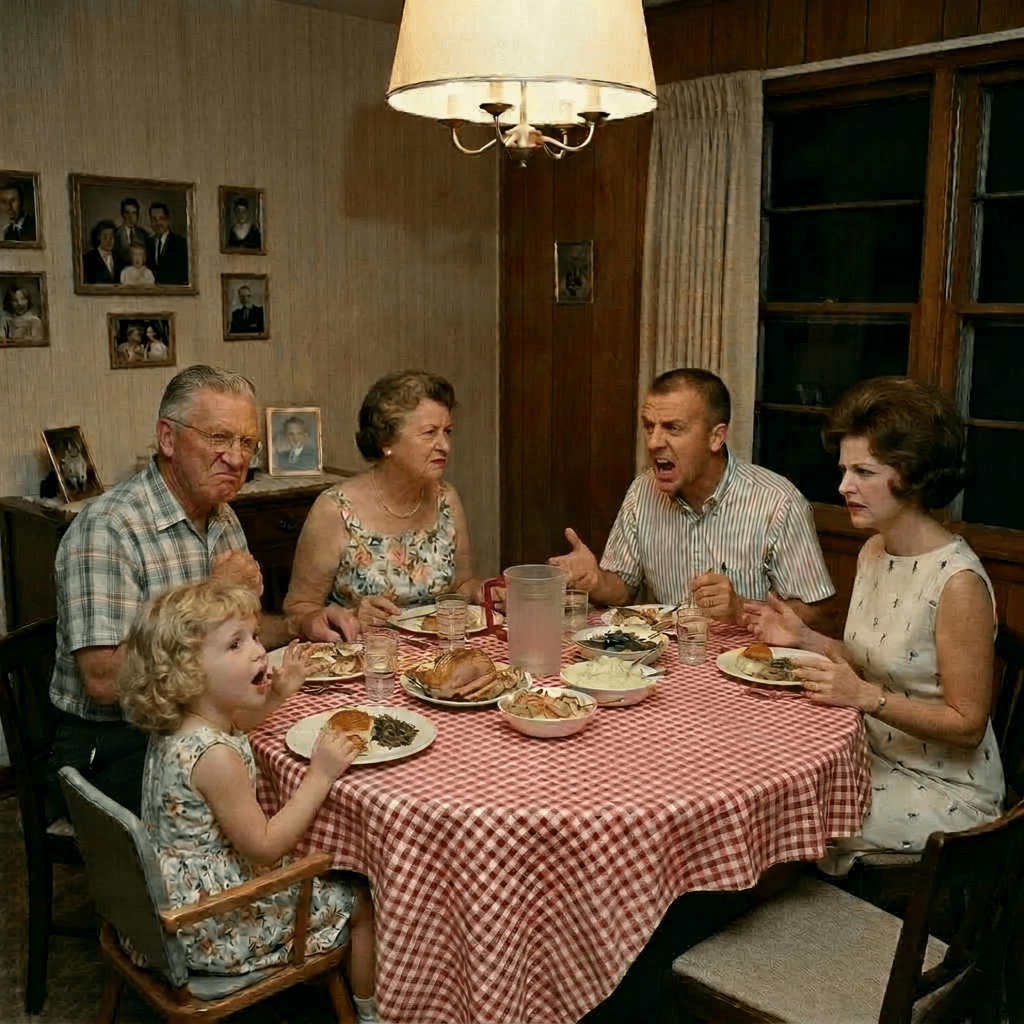
    The summer of 1960 was a hot one in Texas, as most summers are, but the temperatures at my grandmother’s little round kitchen table where I had eaten for fourteen years were even hotter – and the cause wasn’t just the heat from the frying pan on the stove that held the delicious fried pineapple pies she’d fixed for dessert. Nope. Presidential politics was the fire-starter that summer at our kitchen table and many others around the country. Democratic  nominee John F. Kennedy versus Republican standard-bearer Richard Nixon was a hot topic for us.

    My family that gathered around the kitchen table had always voted Democratic. They were the quintessential yellow dog Democrats and lovers of Franklin Delano Roosevelt who, they believed, was responsible for putting an end to the Great Depression of the 1930s and bringing a successful ending to WWII. After all, both of their sons had crossed the Pond to place their very young lives in harm’s way for their country, but President Roosevelt had brought them home without a visible scratch. Democrats were “for the people,” as my grandfather never failed to remind me whenever he had an opportunity. He rarely had any opportunity since my grandmother held court in most of our family discussions – which made any remarks from my grandfather more memorable to me.

    In addition to their faith in the Democratic Party, however, all of us at the kitchen table – and beyond were members of a small Southern Baptist church in our town. My paternal grandmother, Ma, was very proud of her church attendance and the Christian heritage that went with it. Her faith itself was a mixed bag since she couldn’t keep herself from poking fun at the minister’s sermons every Sunday, but she had very definite opinions on every religious topic including her suspicions regarding the Catholic Church, the Pope and her Polish neighbors who went to the Catholic Church ten miles away in Anderson. My grandmother was prejudiced against Catholics, among other groups.

    Here was her dilemma in that hot summer of 1960. The Democratic nominee, Senator John F. Kennedy, was a Catholic. Not just a little bit Catholic, but a whole lot Catholic. He was a card-carrying Catholic, and his family had been Catholics as long as hers had been Baptists and Methodists. Mr. Nixon was not a Catholic. He was a Quaker, of all things, and that really didn’t suit her, either; but she knew Quakers didn’t have a Pope.

    My daddy and grandfather argued for JFK at that little table and in other, more public places, and said the idea that he would be taking orders from the Pope in Rome was ridiculous. For one thing, he would be so busy with the Russians that he wouldn’t have time to talk to the Pope about every little matter that came up and plus, with Lyndon Johnson as Vice-President to keep him in check, no Pope could get past him. Lyndon was a Texan who was also a savvy politician in the Democratic Party and hadn’t Senator Kennedy made a wise choice in choosing a man who could move things along up there in Washington without any help from a Pope.

    My little kitchen table was a microcosm of the larger anti-Catholic sentiment that was one of the major campaign issues in 1960 and a cause for one of the slimmest margins of victory in American presidential elections . In fact, Senator Kennedy made a swing through Texas with Senator Johnson on September 12, 1960, to give one of his most famous speeches to the Greater Houston Ministerial Association at the Rice Hotel in Houston, Texas. In that speech he emphasized the “far more critical issues to face in the 1960 election; the spread of Communist influence…; the humiliating treatment of our President and Vice-President by those who no longer respect our power – the hungry children I saw in West Virginia, the old people who cannot pay their doctor bills, the families forced to give up their farms – an America with too many slums, with too few schools, and too late to the moon and outer space. These are the real issues which should decide this campaign. And they are not religious issues – for war and hunger and ignorance and despair know no religious barriers.

    But because I am a Catholic, and no Catholic has ever been elected President, the real issues in this campaign have been obscured – perhaps deliberately, in some quarters less responsible than this. So it is apparently necessary for me to state once again not what kind of church I believe in, for that should be important only to me – but what kind of America I believe in.”

    And this is what he talked about in the speech in Houston that evening, an America where separation of church was “absolute” and an America where he wouldn’t be “accepting instructions on public policy from the Pope, the National Council of churches or any other ecclesiastical source…”

    Two years later on September 12, 1962, after John Fitzgerald Kennedy squeaked out his victory over Richard Nixon,  President Kennedy returned to Houston to address a crowd of 35,000 in Rice University’s football stadium. I was sixteen years old, just beginning my junior year of high school, and I was there. My dad took me. He said it was a once-in-a-lifetime opportunity to hear a great President speak in person, and he wanted us to go. There must have been something special about Houston for JFK – that speech became one of the cornerstones of the President’s space program.

    “We set sail on this new sea because there is new knowledge to be gained, and new rights to be won, and they must be won and used for the progress of all people…” I was mesmerized by the President’s words, his delivery and I was in awe of being a part of such an amazing crowd. It was a memory maker, as Granny Selma would say.

    The very next year in November, 1963, President Kennedy made a final trip to Texas, this time to Dallas, and was fatally shot while riding in his motorcade. I mourned with the rest of the nation.

    Fast forward to the Presidential Election of 2008. On November 04, 2008, President-Elect Barack Obama, the first African-American man to be elected President, gave one of his most famous speeches in Grant Park in Chicago, Illinois, his home town. I shared that moment with Oprah – she was there in person while I watched with Rachel Maddow from my living room. I was in love with another American President just like Annette Bening. Heady stuff.

    “If there is anyone out there who still doubts that America is a place where all things are possible, who still wonders if the dream of our founders is alive in our time, who still questions the power of our democracy, tonight is your answer.” he began and his message of “Yes we can” reverberated around the world to give hope that race should not be a barrier to leadership or equality.

    Finally this week, there is a presumptive Democratic presidential nominee in the person of former Secretary of State, former New York Senator and former First Lady of the United States and now the first woman ever to be nominated by a major political party: Hillary Rodham Clinton.  Another barrier comes tumbling down as all of us who are the survivors of the feminist movement of the 1970s are fortunate enough to witness the fruits of our labors. The bitter feelings of defeat after the Equal Rights Amendment failed to pass in South Carolina in the 1980s have been replaced by the fulfillment of the promises and dreams I first had when I watched the National Women’s Conference in Houston in 1977. Thank you, Shirley Chisholm, Barbara Jordan and Ann Richards. Thank you, Gloria Steinem, for the inspiration to do outrageous acts and everyday rebellions. Thank you, Hillary Clinton, for the massive undertaking of running for President. I admire your resilience and your abilities. Onward.

    Remarkably, in my seventy years, I have hit the trifecta! I have personally observed the prejudices of religion , race and gender be revealed to the world for what they are – excuses to exclude and divide people from each other – to build walls instead of bridges. By the dawn’s early light I’ve seen what so proudly we hail at the twilight’s last gleaming…a glimmer of hope for a level playing field for every citizen in our currently great country. Greatness does not mean flawless, but we can – and will –  continue to strive for the right.

    As for my grandmother and JFK, I will never know what happened when she voted in 1960 because she refused to tell despite the pleadings of my daddy. In the 1968 Presidential election when I was finally old enough to vote, I cast my first vote for Republican and Quaker Richard Nixon.

    My family was horrified.


  • Impasse

    Impasse


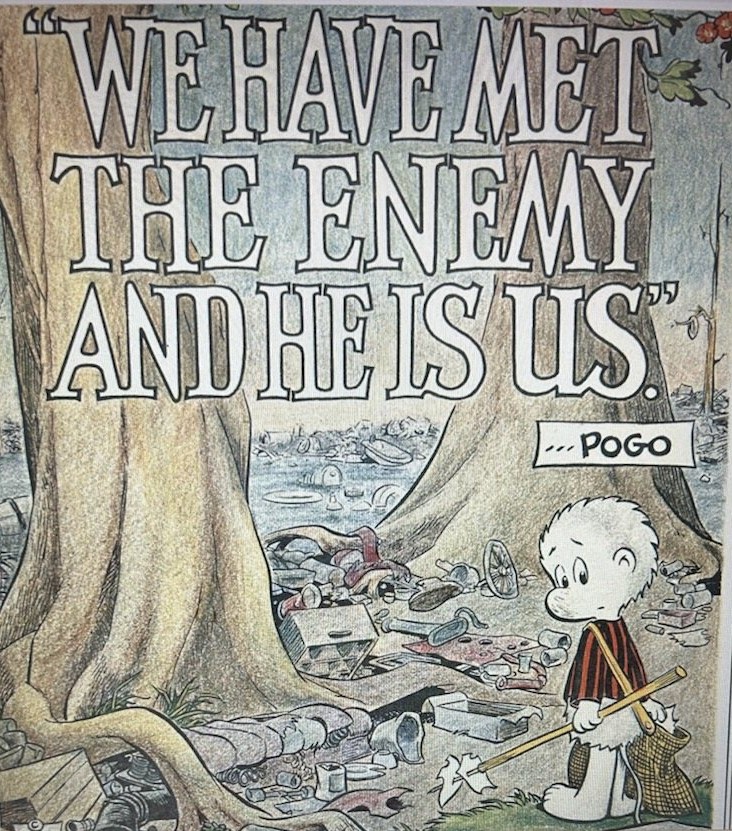
    “We have met the enemy, and they are ours.” United States Navy Commodore Oliver Hazard Perry, War of 1812, September 10, 1813, following his strategic victory in the battle on Lake Erie over the British Navy. Hooray.

    Walt Kelly’s political satire captured the imagination of the public on Earth Day in this country with his 1970 Pogo cartoon that coined a re-phrase of Commodore Perry’s words in 1813. Hooray?

    Helen Lewis argued in her article The Men Who Don’t Want Women to Vote or Work. Or Have Opinions. that a movement of “masculinism” in America seeks “to fight back against the advances of feminism and reassert the primacy of men.” (June, 2026, The Atlantic) What? Seriously?

    We have met the enemy, and it’s women. No Hooray, please.

    ************************

    I published the following piece on June 10, 2017, nine years ago. I had a personal painful reminder of old tapes played too often in my life. Helen Lewis’s words opened old wounds.

    Impasse

    Webster’s Everyday Thesaurus has these words for impasse:

    deadlock, stalemate, blind alley, bottleneck…dead end, dilemma, predicament, quandary, standstill, standoff.

    This past week I had a heavy dose of impasse which intermingled with my increasing preoccupation about the American Civil War. I look more and more frequently at the map of the red states and blue states that make up our United States and wonder anew at Abraham Lincoln’s commitment to keep the country united as one. I understand the problem better for sure. I always wondered how brother fought brother on different sides during the Civil War. They were family first after all, right? Not so fast, my friend.

    The American people are a “duke’s mixture” to quote my granddaddy who used the words for his Saturday barbershop customers in the 1950s when my grandmother asked him who’d stopped by the barber shop that day.

    George, who all came by for a haircut today?

    Well, Betha, it was a duke’s mixture.

    To which she would shake her head and look at me and ask, What does that tell you? Duke’s mixture.

    My granddaddy would laugh as if he’d told a funny joke, and I would laugh with him. My grandmother never cracked a smile.

    Today I find myself not laughing, either. Rarely cracking a smile at the impasse among the citizens in our country which must surely have my grandparents spinning in their graves. My grandmother invented social media via the telephone party line we had in our little town as surely as Al Gore invented the internet. She relished listening in on other people’s conversations and delighted to repeat juicy gossip at her kitchen table… but please dear God, don’t ever mess with her family.

    This week I did something I almost never do. I responded on Facebook to a post made by a first cousin twice removed who has a world view that I have long ago accepted as different from mine. Most of the time I hide his offensive posts from my timeline and move on.

    I can’t bring myself to “un-friend” him because I truly love the little boy I remember visiting us in Richards so often with his grandmother who was my grandmother’s sister. But this week he posted that liberals must have a “mental illness” to think the way we do, and that struck a nerve for me.

    You see, I grew up during a time in the 1950s and 60s when being a homosexual was considered to be a mental illness. Think about how you would feel if you grew up believing that you had a secret mental illness and, if exposed, you could be institutionalized. Lock her up. Throw away the key. I heard an old tape begin to  play in my mind.

    Somehow our thread on Facebook took an unpleasant turn, as I already knew it would and we got into a discussion regarding a prevailing Muslim  belief in some places that gays should be killed. Unfortunately, one of my cousin’s friends chimed in with the following comment: “We knew someone many years ago that would probably want to buy a plane today, load them (gays and lesbians) up and drop them off over there (wherever Muslims live). I sure miss him.”

    Wow. I was transported to a conversation I had in the early 1990s with a client who sat in my office and said, “If it were up to me, I’d take all those queers and put them behind barbed wire in Kansas and tell them to stay there.” I didn’t respond then. The old tape was playing louder now.

    One of my mother’s most infamous quotes for me was that she wished all those gays would go back in the closet where they belonged. She would be happy to slam the door shut. The old tape was so loud now I could barely hear myself think.

    Luckily, I didn’t accept the old tapes as I don’t accept my cousin or his friend’s thinking about who I am today. I’ve spent my entire adult life working for equal treatment and fairness – my liberal social justice beliefs.

    In 1974 the American Psychiatric Association declassified homosexuality as a mental disorder. I was 28 years old. In 2017 at the age of 71, I am personally declassifying liberalism as a mental illness.

    I resolve to limit my social media interaction with my first cousin twice removed to Happy Birthday wishes. No need going up that blind alley again.

    I feel better already.

    *************************

    June is Pride Month – celebrate with joy!

  • Exploring the Legacy of the Founding Mothers

    Exploring the Legacy of the Founding Mothers


    “Were I to personify Justice, instead of presenting her blind, I would denominate her the goddess of fire. . . Of unbending integrity Justice should feel, hear and see; but truth alone should be the polar star by which she should shape her movements, and equity only should constrain her determinations.”

    Judith Sargent Murray (1992). “The gleaner”, Syracuse Univ Press

    Judith Sargent Murray (May 1, 1751–July 6, 1820) was an early American feminist who wrote essays on political, social, and religious themes. She was also a gifted poet and dramatist, and her letters, some recently discovered, give insight into her life during and after the American Revolution. She is especially known for her essays about the American Revolution under the pseudonym “The Gleaner” and for her feminist essay, “On the Equality of the Sexes.” 

    Fast Facts: Judith Sargent Murray

    • Known For: Early feminist essayist, poet, novelist, and dramatist
    • Born: May 1, 1751 in Gloucester, Massachusetts
    • Parents: Winthrop Sargent and Judith Saunders
    • Died: July 6, 1820 in Natchez, Mississippi
    • Education: Tutored at home
    • Published WorksOn the Equality of the Sexes, Sketch of the Present Situation in America, Story of Margaretta, Virtue Triumphant, and The Traveller Returned
    • Spouse(s): Captain John Stevens (m. 1769–1786); Rev. John Murray (m. 1788–1809).
    • Children: With John Murray: George (1789) who died as an infant, and a daughter, Julia Maria Murray (1791–1822)

    Source: Jone Johnson Lewis, Thought Co.,

    (updated on 07-16-2019)

    Let me be perfectly clear. When I learned American history in my early public education in the schools and universities of Texas during the 1950s and 60s, I can’t remember one reference to the Founding Mothers. I remember Betsy Ross sewing our flag, but I didn’t realize she was married three times, and had worked to become a government contractor in a business she passed on to her daughter and granddaughters. Betsy Ross – I pictured a little old woman sitting around in a tiny room sewing alone. No, not a hobby – it was how this working mother supported her family during the American Revolution.

    Return with me now to those thrilling days of yesteryear two hundred fifty years ago when the original dreams of America began. Hear the voices which longed to be heard as they searched for equal justice and truth telling in the new World.

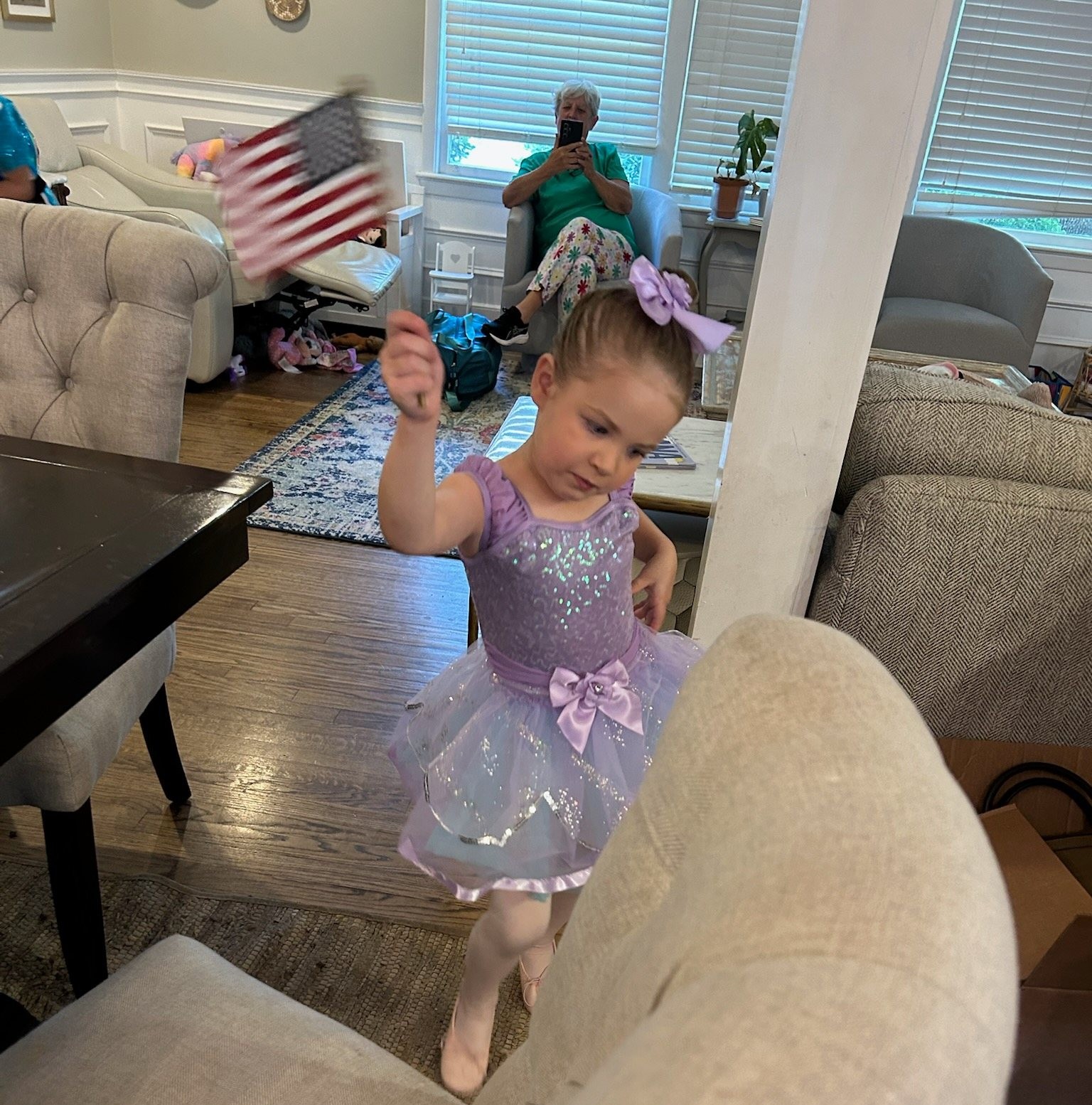
    Betsy Ross would be pleased with our granddaughter’s flag

  • What’s new, Pussycat?

    What’s new, Pussycat?


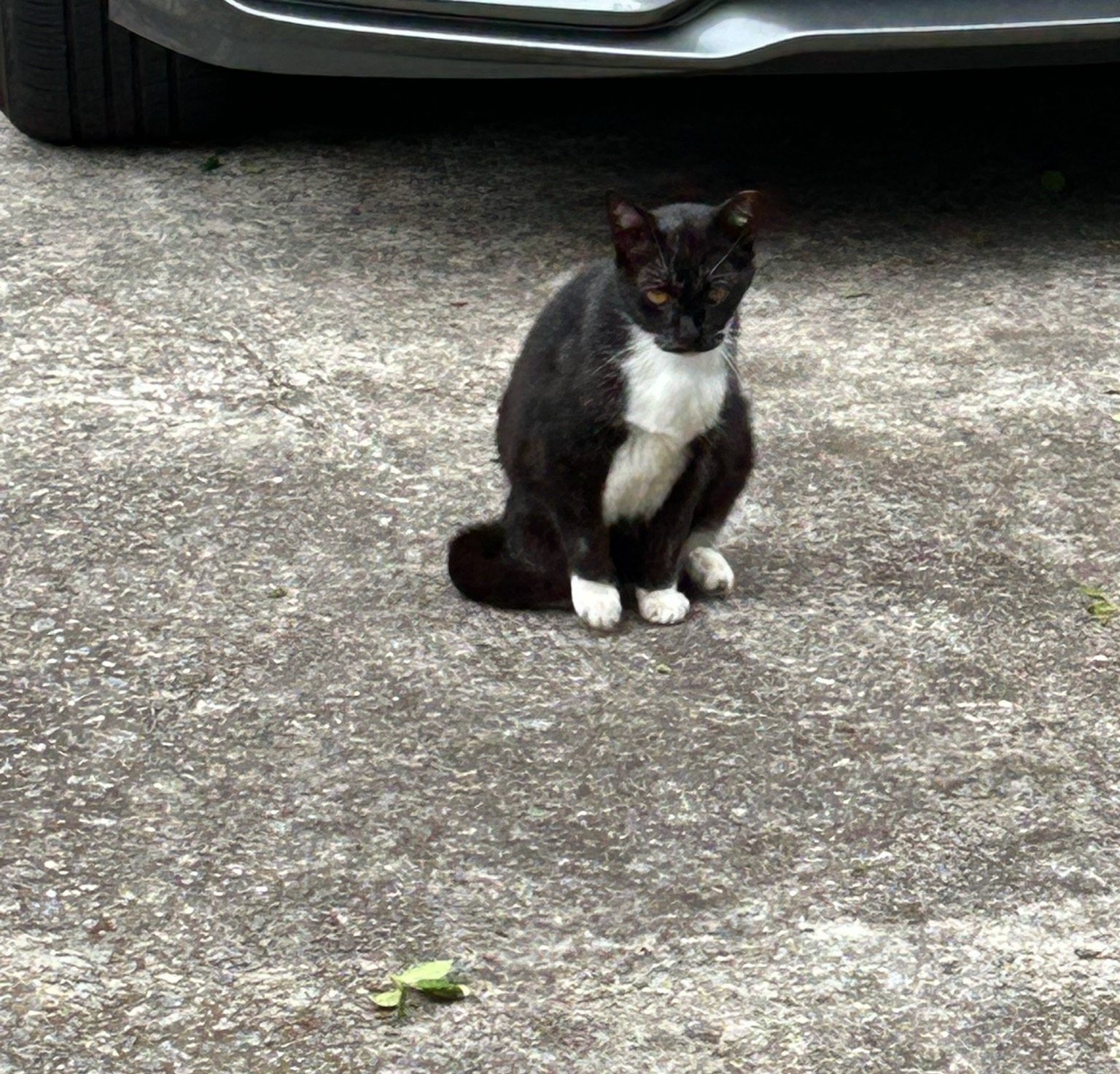
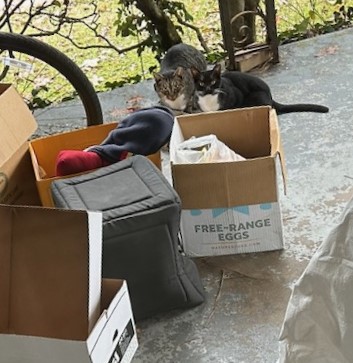
    Tuxedo cat was Carport Kitty’s best friend

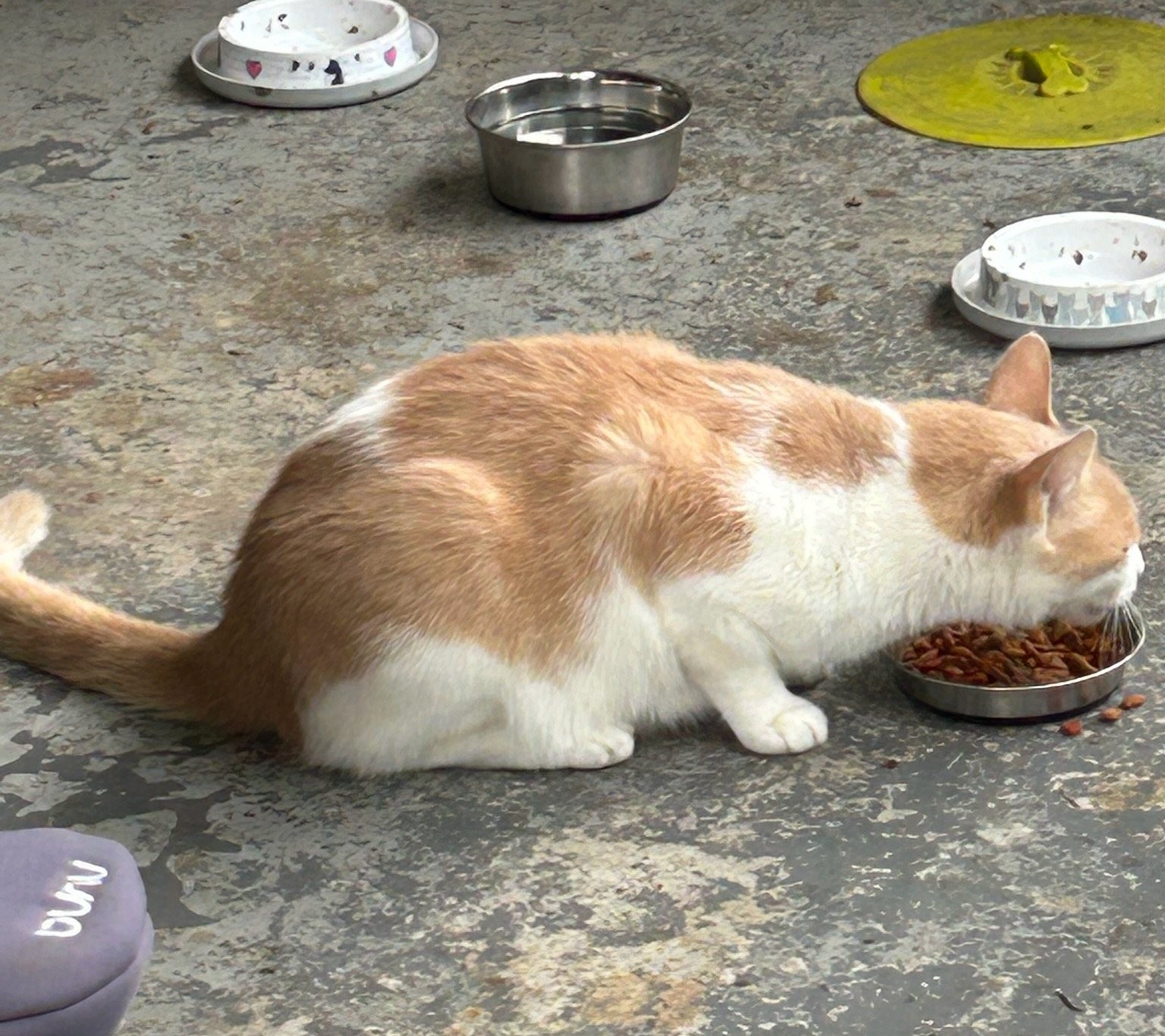
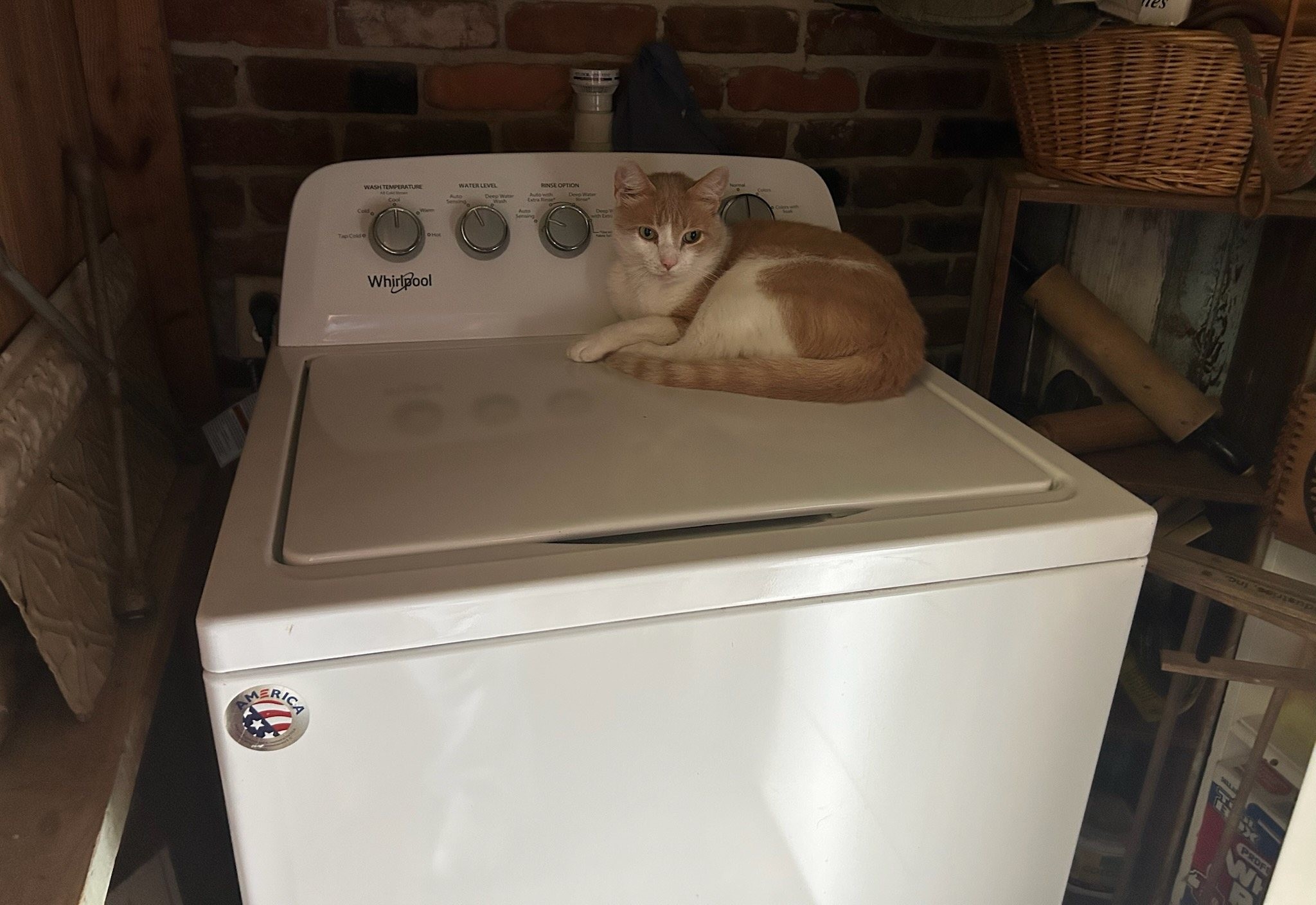
    Yellow Cat is an indoor cat somewhere else –

    but wants his snacks here

    Yellow Cat loves the outdoor laundry room

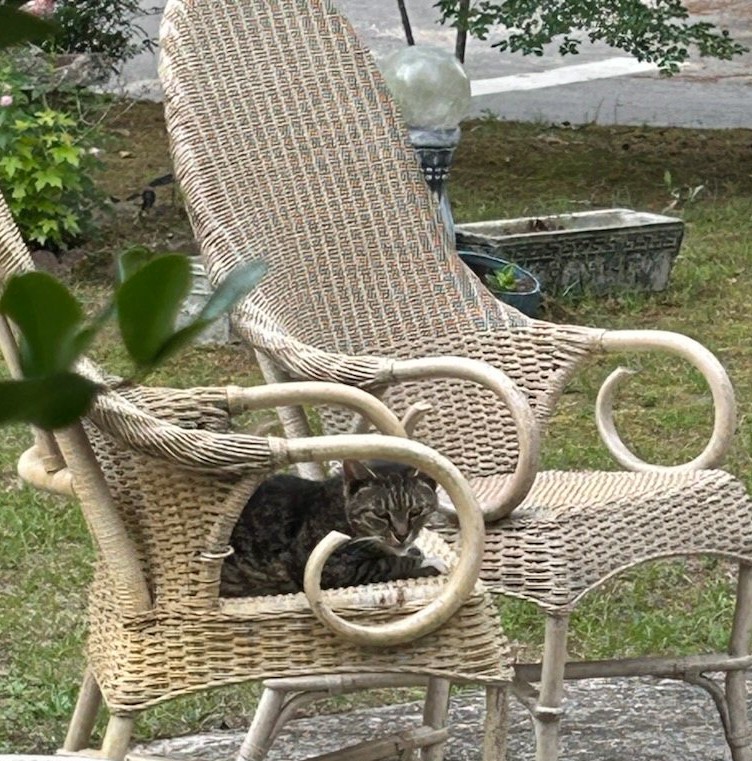
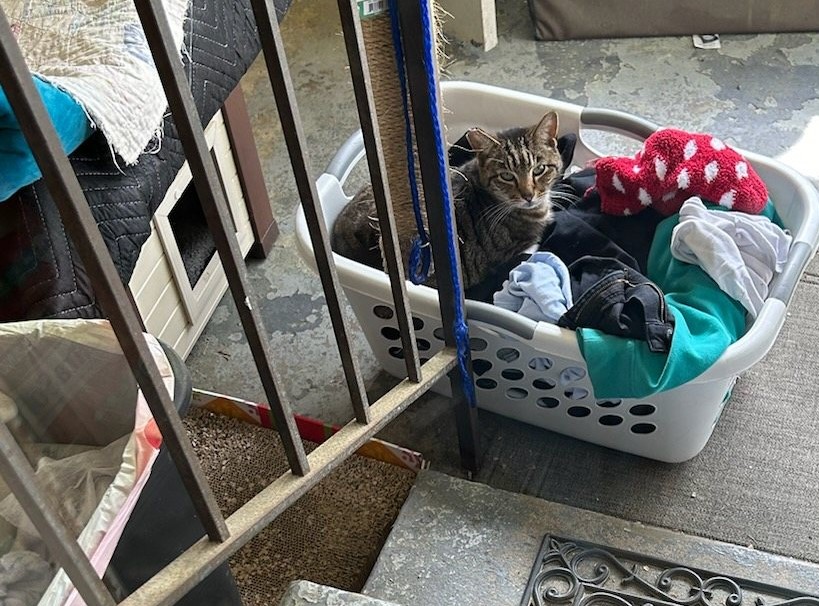
    pick a chair – any chair – and get comfortable

    they were friends from the Carport Kitty glory days

    remember this cat who loved to help me do laundry?

    vanished without a trace on the 4th. of July, 2024

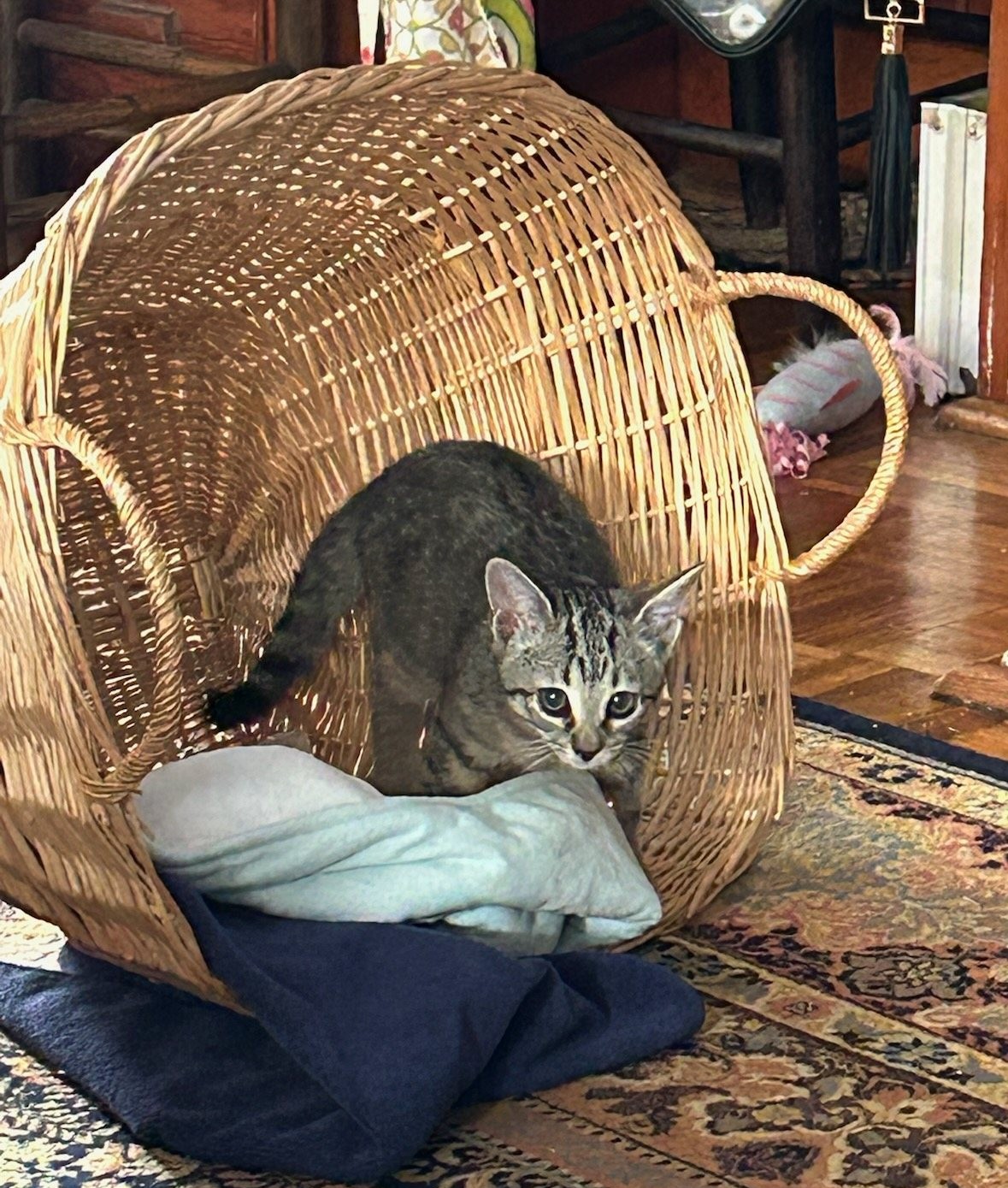
    Then along came the three kittens rescued by Pretty in 2025, and this little kitten we named Bennie for the amount of Benadryl I had to take for my cat allergies while Pretty found him a wonderful forever home with Cheryl in the Upstate. (I believe I overheard a casual remark at one point about sending me to live outdoors on the carport – and keeping Bennie inside. Thank goodness for Cheryl.)

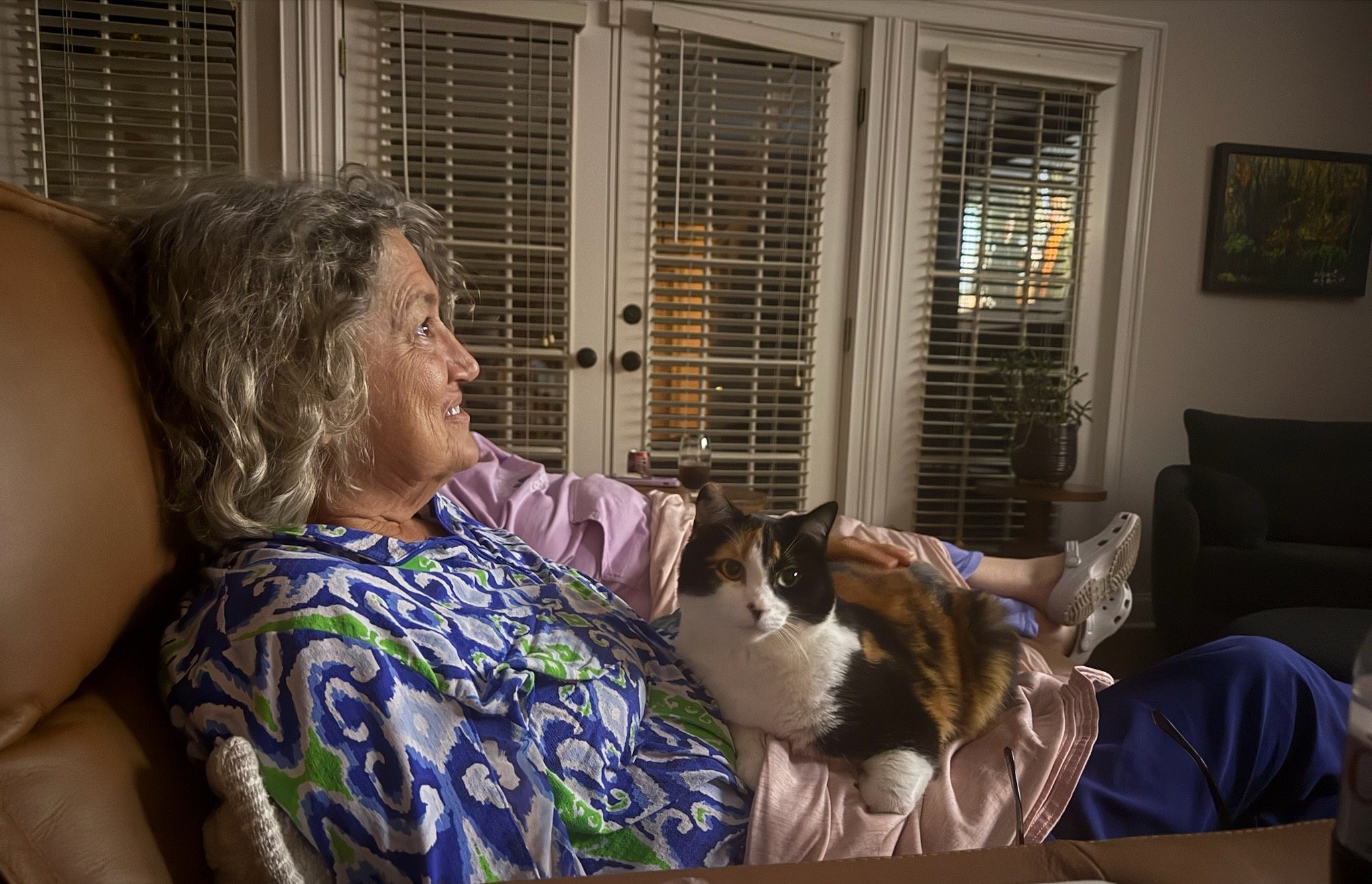
    Our friends Nekki and Francie have a beautiful, sweet cat named Amelia. Amelia has a reputation for being quite particular about people she tolerates – of course, she adores Pretty when we come to visit.

    Who’s surprised?

    The End

    If you find your curiosity about the cat we called Carport Kitty becomes overpowering, the archives will give you information about the urban legend we called our Carport Kitty.

    http://www.iwillcallit.com/2022/10/23/the-urban-legend-we-called-carport-kitty-was-a-seeker/