
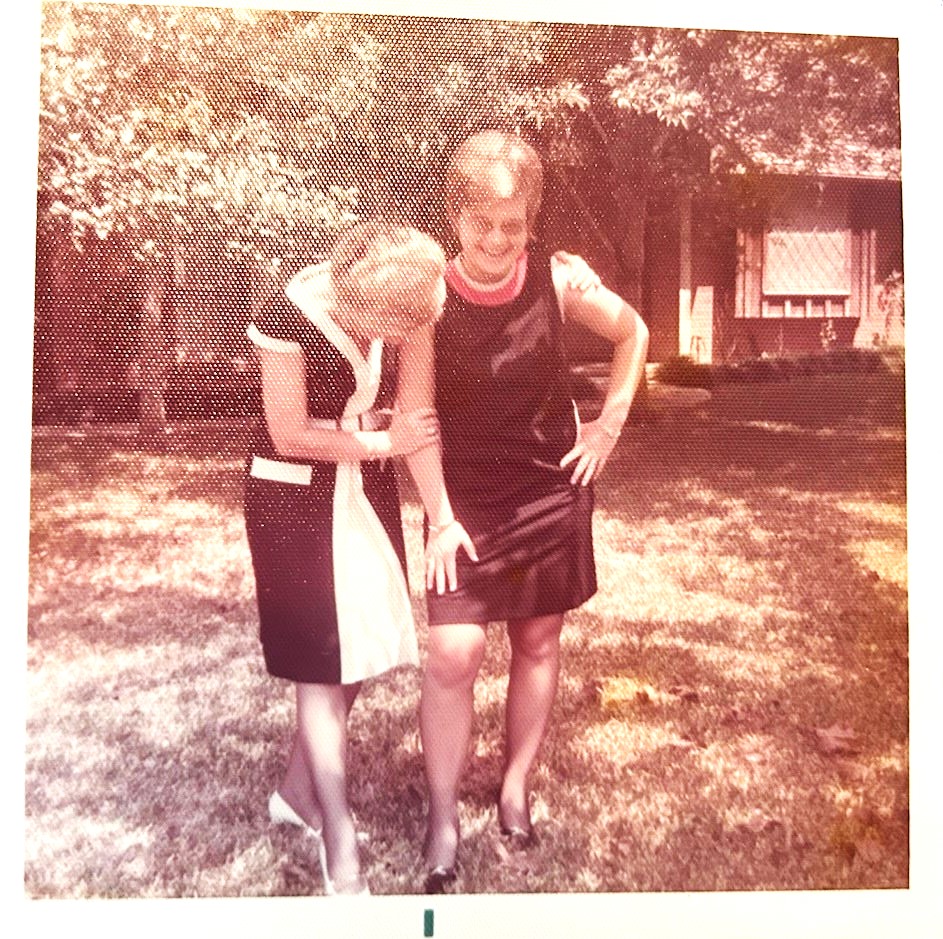
This past September I wrote a short story to submit to a publisher, something I hadn’t done in many moons. Alas, I’m not sure if it made it across the cyberspace stratosphere or not, but if it did, it was rejected. Now you will read for the first time and are welcome to share your own opinion.
Miss Rhodonia Jones
By Sheila Morris
My mother and I stood at the front door in the cool December morning air as we waited for the elderly woman who lived alone in the house to make her way to the door which was unlocked because my mother, who arranged our visit, had called to let Miss Rhodonia Jones know we were coming.
The brick house was one of the oldest in Richmond, Texas, a small town thirty miles west of Houston. The large home sat back from the street where we parked Mom’s brown Buick LeSabre my father bought before he died three years ago in 1976. I noticed paint peeling from the front door above the doorknob that slowly turned to admit us.
The tiny woman spoke softly but with a distinctive Texas accent, smiling with genuine delight to welcome us inside. She hugged my mother and me with one arm as her other hand held a shiny black cane with a silver handle. She balanced herself well, thanked Mom for her Christmas gift of spiced tea which Mom set on a coffee table in front of the Queen Anne sofa where Miss Rhodonia gestured for us to sit, and then sat down herself in a wing-backed chair across from us. I listened to my mother begin a not unusual monologue about the health benefits of her spiced tea in the wintertime.
Miss Rhodonia was a great listener – I could tell she had a lot of practice in her interactions with my mother. She had been a faithful member of the First Baptist Church of Richmond for many years when my parents led the music there but was no longer able to attend when she became one of the “shut-ins” on my mom’s rotation in the years following my father’s death. Whenever I visited Mom from my home in South Carolina, she insisted I call on as many of her shut-ins as we could squeeze in a weekend. I would agree if she would not make me sing a solo on Sunday morning at the worship service which she still served as pianist.
Miss Rhodonia will be thrilled to have you visit, Mom told me in her pitch. She’s all alone in that big house. Her husband died before we came to the church, and her daughter was killed in a plane crash outside of Dallas the year after your daddy died. Miss Rhodonia always loved your daddy, but of course everyone did.
Yes, I couldn’t argue with that. Sigh. Although I wanted to visit my cousins during my brief stay, I understood that seeing Miss Rhodonia to carry Mom’s spiced tea was the least a thirty-three-year-old only child who lived a thousand miles away in South Carolina could do for a mother who had been widowed before her fiftieth birthday. Woman up.
While Mom told Miss Rhodonia the secret ingredients of her spiced tea, I looked around the room where we sat. The room was very dark with heavy drapes covering the windows to make sure no sunlight penetrated the darkness. A small Tiffany style lamp on an end table between the sofa and Miss Rhodonia’s chair provided the only light. On a wall opposite the sofa, I could see a small spinet piano and piano bench. I thought I could see a Baptist hymnal on the music rack above the keyboard. Wouldn’t surprise me. No decorations to mark the Christmas season, though.
But the fascinating features of the room were the dated picture frames with the even more dated pictures. They were everywhere. Hanging on the walls, sitting on the mantle above the fireplace, sitting on shelves of a large bookcase which held more pictures than books, sitting on top of the piano – everywhere an inch of space was available, the carefully placed images of Miss Rhodonia’s life beckoned to her and any visitor.
Miss Rhodonia did not live alone. She lived with the people she loved.
Mom’s spiced tea monologue came to an end, followed by church gossip of the two women’s mutual friends, and then an awkward silence.
Who played the piano? I asked. Miss Rhodonia smiled.
My daughter, she answered. She wasn’t enthusiastic about playing piano, but back then when she was growing up, every little girl learned to play. She took lessons from our church organist. She much preferred riding horses. Did you see the picture of the beautiful little girl on the paint pony?
I nodded.
Well, that was her. Always full of life, fun, and ready for any adventures. When she married, she had to follow her husband to Dallas and only rode again when they came to visit me. I kept the pony for her at our farm in the country.
That must have been hard for her, I said.
Yes, it was, but she exchanged horses for airplanes when they were in Dallas. She learned to be a pilot, and that was the adventure that became her last. When the plane crashed on its way to Friscoe, she and her husband were both killed. She was about your mother’s age. They didn’t have any children.
She paused while Mom and I kept quiet.
Mom broke the silence by rising and saying, Miss Rhodonia, we’ve got to go. We wanted to try to visit Margaret McNatt, too. I have more spiced tea to deliver, she said and laughed. I stood with her.
Thank you both for coming by today, Miss Rhodonia said. I don’t get a lot of company. When you leave the church and live more than eighty years, so many of your friends are gone and people forget you. They’re busy. I understand. I’m okay, though. When you’re in town, young lady, be sure to come with your mother. She’s one of my best friends now.
I nodded and hugged Miss Rhodonia with assurances I wouldn’t want to set foot in Richmond without coming for a spiced tea visit. Mom and I walked out to the car together. Merry Christmas, we said in unison, waving goodbye to the small woman who still watched us from her doorway.
I feel so sorry for her, Mom said when we were in the car. She’s all alone without her husband or daughter. I don’t know what I would do without you. She quickly put on her sunglasses.
No need to feel sorry for Miss Rhodonia, Mom. She gets around the familiar rooms that hold her people and her memories. Besides, now she can make her own spiced tea since you gave her your secret recipe. Mom laughed as we drove off to see Margaret McNatt.
*********************************
Sheila Morris is a personal historian, essayist with humorist tendencies, lesbian activist, truth seeker and truth teller in the tradition of other female Texas storytellers including her paternal grandmother, Betha Day Robinson Morris. In December 2017, the University of South Carolina Press published her anthology of first-person accounts of a few of the people primarily responsible for the development of LGBTQ+ organizations in South Carolina. Southern Perspectives on the Queer Movement: Committed to Home will resonate with everyone interested in LGBTQ+ history in the South during the tumultuous times from the AIDS pandemic to marriage equality. She has published five nonfiction books including two memoirs, an essay compilation and two collections of her favorite blogs from I’ll Call It Like I See It, a WordPress blog she wrote faithfully for fifteen years. Her first book, Deep in the Heart: A Memoir of Love and Longing received a Golden Crown Literary Society Award. Her writings have been included in various anthologies including Out Loud: the best of Rainbow Radio, Saints and Sinners New Fiction from the 2017 Festival, Mothers and Other Creatures; Cowboys, Cops, Killers, and Ghosts (Texas Folklore Society LXIX). She is a displaced Texan living in South Carolina with her wife Teresa Williams and their dog Charly. She is also Naynay to her two granddaughters Ella and Molly who light up her life for real. Born in rural Grimes County, Texas in 1946 her Texas roots still run wide and deep.
Word Count: 1,350


Leave a Reply