Author: Sheila Morris

  • Vanity Fair and the National Enquirer


    I picked up a copy of the April issue of Vanity Fair today while I was waiting in line to be checked out at the grocery store. The cover is this fabulous picture of Meryl Streep, and it hooked me because I love Meryl Streep. The title of the article suggested the possibility of new material about her early career.  It’s not unusual for me to pick up a magazine while I’m in line – the grocery stores make it so convenient – but I usually read the National Enquirer since their huge headlines are sensational and the pictures on the cover are incredibly tragic.  Sensational. Tragic. The mind races.

    I never buy a magazine because (a) they are too expensive and (b) the line is always very long when I wheel my cart in behind several people who are also waiting and I have plenty of time to read anything that piques my interest. Even if I choose the line that’s the shortest, it will invariably be the line that takes the longest amount of time. I don’t mind, though. It’s such a wonderful opportunity to catch up on current events both real and pretend. AOL and Al Jazeera notwithstanding, sometimes finding out that Princess Kate is about to have twins when even Prince William doesn’t know makes the National Enquirer fascinating.

    Of course, today was the day when my line moved as fast as a speeding bullet and I had no chance to even find the inside article on Meryl Streep in Vanity Fair – much less read it. As a result, I paid the $4.99 necessary to actually purchase the magazine and bring it home. I was in a fine mood thinking about everything I would find out about Meryl as soon as I unloaded the grocery bags from the car.

    On the way out of the store, I had a surreal conversation with an 83-year-old African American man who was ahead of me in line at the customer service area where he was buying a lottery ticket, and I was waiting to buy mine.  I believe I have a tattoo on my forehead that reads Tell Me the Most Intimate Details of Your Life in a Condensed Version because invariably people I meet in random everyday situations tell me much more information than I need to know. Today was no exception. Our conversation was brief, but I do hope that his vision of a world that Makes America Great Again is a bet with very long odds.

    The good news is that the article on Meryl Streep was everything I’d hoped for and  definitely worth $4.99 – but far less revealing than the tabloid tales with the tragic pictures. Meryl’s pictures were incredible and brought back a flood of great movie moments from her early days in tinsel town. Hooray for Hollywood.

    Tomorrow (Saturday the 9th.) is a busy day – I will have a booth at the Cayce Festival for the Arts from 9:00 to 5:00  and  would love for any readers in the Columbia area to stop by. I will be wearing my Tell Me the Most Intimate Details of Your Life tattoo on my forehead and you don’t even have to condense it. I promise.

    See you there!


  • Politics and Happiness


    The American author Jodi Picoult has this to say about happiness. “There are two ways to be happy: improve your reality or lower your expectations.”

    As I stand perilously close to my 70th. birthday – let’s say on the brink – I can truthfully say I’ve employed both those recipes for happiness at different stages of my past 69 years.  The younger to middle age years and “early” senior years were most often marked by trying to improve my reality… at work and in my personal and community life.  Was failure a possibility? Certainly, but if I worked hard enough, if I loved deeply enough, if I cared passionately enough – failure to improve my reality was unlikely.

    Alas, at the turn of the century I think, I began to believe failure was a possibility and that sometimes my reality was suspect. What I thought I wanted wasn’t what brought me happiness at all. In fact, it brought me just the opposite.  And I began a course of lowering my expectations in my work life that spilled over into the other areas of my reality as well.

    Of course this is to be expected as we age, isn’t it.  We have permission to grow more cantankerous, more outrageous and yes, more cynical as our hairs whiten and our skin sags. My friend Linda Ketner accuses me of “settling” when I mention she would be happier if she just lowered her expectations of people and their ability to create sweeping social changes. My partner Teresa is equally incapable of expecting less than the best from the people she works with and frequently the woman she lives with.

    I give this background to say that I have low, very low expectations about the political landscape of my country these days. When I read about the daily killings of innocent people in our streets, schools, churches and other places of worship and watch local, state and federal government officials that I help to elect do nothing to intervene and in fact even write laws to permit guns to be carried into classrooms – my expectations are lowered. When I have to think twice about going to a movie on a Sunday afternoon with the gnawing image of people being shot in a movie theater in the back of my mind, I have to lower my expectations for safety.  And I’m an old white woman. My personal fears rank low on the totem pole of universal fears for crimes of hate perpetrated on younger people of color on a regular basis.

    All of which brings me to the current state of politics in this election cycle for President of the United States in November of 2016.  I had low, very low expectations for what I anticipated would be a long, long, LONG season of debates, speeches, TV commercials interrupting my favorite shows, countless signs cluttering up any possible unobstructed open common space in an otherwise gorgeous panorama of azaleas and dogwood trees and seas of bluebonnets, obnoxious bumper stickers on the car in front of me whenever I drove to the grocery store, etc.  I had low, very low expectations for this political process that we Americans watch every four years to elect the most recognized leader in the whole planet.

    But I can tell you my expectations weren’t nearly low enough for the spectacles I have seen and heard over the past few weeks from the candidates vying for the nominations of the two major political parties in my country.  Nastiness. Name-calling. Rudeness.  Offensive TV commercials.  The candidates look like bullies on a playground when they weren’t chosen to play with others. These are the norm for campaigning these days and we have a media that not only feeds on the norm but pours chum in the sea to encourage the sharks to circle and attack each other.

    So much for lowering expectations.

    I am not happy. As a matter of fact, I am very unhappy with the violence now taking place at political rallies for one of the candidates. Unhappy – but not surprised. When a candidate chooses to emphasize his vision of an America that is isolationist and embraces the legitimacy of intolerance and bigotry  and a culture of violence as a solution for disagreements, it is no small wonder his rallies have become a scene of chaos, confusion and collateral damage. I am not only unhappy, I am horrified and ashamed.

    I want to change my reality as I hope the American people will refuse to be happy with what has become a dangerously low series of expectations. We deserve better – we should expect better. We must demand better.


  • Miss Hotcha


    Post cards from the edge…of WWII…

    001

    Let’s face it. Who wouldn’t have been sold on Cadillac camp stationery with a sister in each Box or Packet…plus the bonus of a Writing-Guide which is something I often long for.

    I was cleaning out the little store room of my office recently and found a plethora of cards which translates into WAY too many old postcards I’ve found in T’s collectible hide-away and claimed as my own. Time to return to sender.

    This one is my favorite.


  • In Memoriam: Carole Stoneking


    Not All Pioneers Rode in Covered Wagons

    One of my favorite shows on television when I was young was Wagon Train starring Ward Bond as the wagon train master and Robert Horton as the scout.  I was eleven years old when the show started and used to watch it on a TV set that was in a short wooden cabinet  which held a tiny screen the size of an iPad.  Black and white shows on a very small TV.  Wagons Ho.

    Each week the episode typically involved an obstacle to smooth passage on the seventeen hundred mile trek from St. Joseph, Missouri to Sacramento, California. Someone was ill or one of the wagons lost a wheel and ran amok hurtling down a steep hill or there was the constant threat of unfriendly Native Americans who for some reason didn’t like the idea of strangers taking over their homelands or constant bickering between the wagon master and his support staff about which way was the safest route for the next day’s journey.  Always something, as Roseanne Roseannadanna would say.

    Yet, in spite of a multitude of difficulties, the wagon train kept going and I kept going with them for eight seasons. The cast changed through the years, but the people continued to persevere in their westward adventures.  Today when I think of the term pioneers,  I have a mental image of the seemingly endless stream of men, women and children riding in covered wagons to become the first settlers in new territories west of the Mississippi River.  Webster’s dictionary definition of pioneers confirms that image partially as it calls pioneers  the”first to settle in a new territory.”

    But that’s not the only dictionary definition of the word pioneer. Webster also says that pioneers are “a person or group that originates or helps open up a new line of thought or activity…”.  Not all pioneers rode in covered wagons and not all new territories are limited to land.  For some, the goals of a journey involve the search for new lines of thought like equal treatment and fairness regardless of differences, and  the distances traveled in personal lives to defend diversity often seem as far as the miles between St. Joseph, Missouri and Sacramento, California.

    Carole Stoneking was a woman who fits that description of a pioneer. She was born in 1937, a time when the trains and automobiles made covered wagons obsolete. Her birthplace was the motor city: Detroit, Michigan.  She loved art and wanted to be a fine artist but was told at a very young age that was an impossible dream – no woman could really be a successful professional artist.  She loved women, too, in a time when homosexuality was considered to be a religious abomination as well as a mental illness – not to mention a criminal activity for which she could be thrown in jail.

    In spite of the dangers involved, Carole announced she was a lesbian in 1956 and began a long-term relationship with another woman in Detroit.  She was nineteen years old. (This was thirteen years before the Stonewall Riots which some historians consider to be the birth of the LGBT civil rights movement.) Her family contacted the police to try to have her arrested and removed from her girlfriend’s apartment, but the police advised them that wasn’t possible because she wasn’t being held against her will. The obstacles and adversaries Carole continued to face in her real life as a lesbian for the next sixty years were as difficult for her to overcome  as the ones faced by the Wagon Train pioneers, and yet, like them, she persevered.

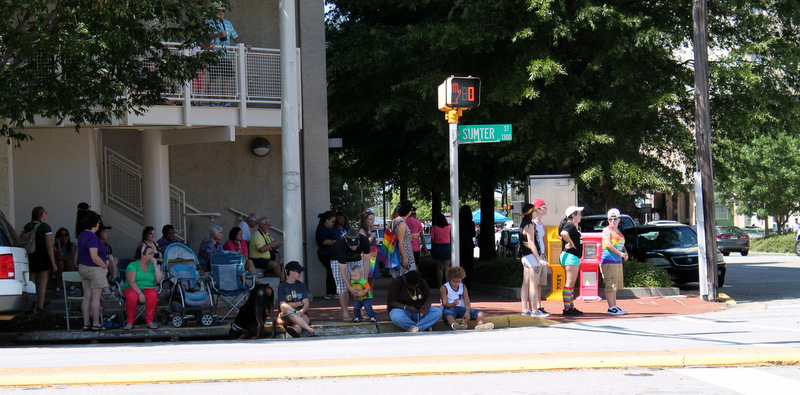
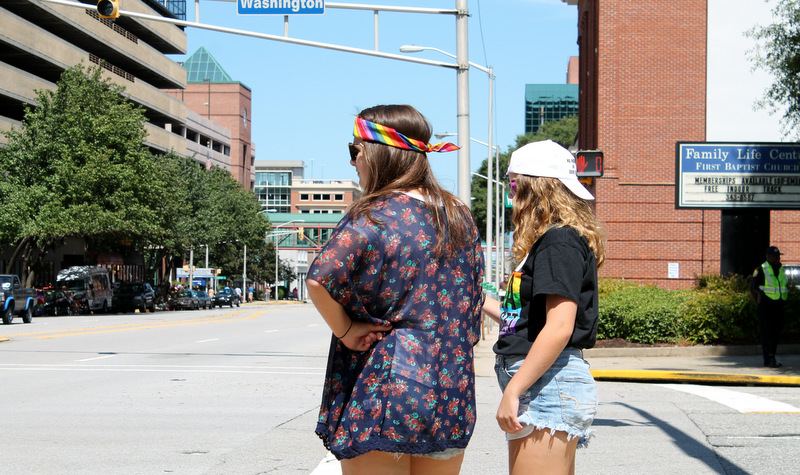
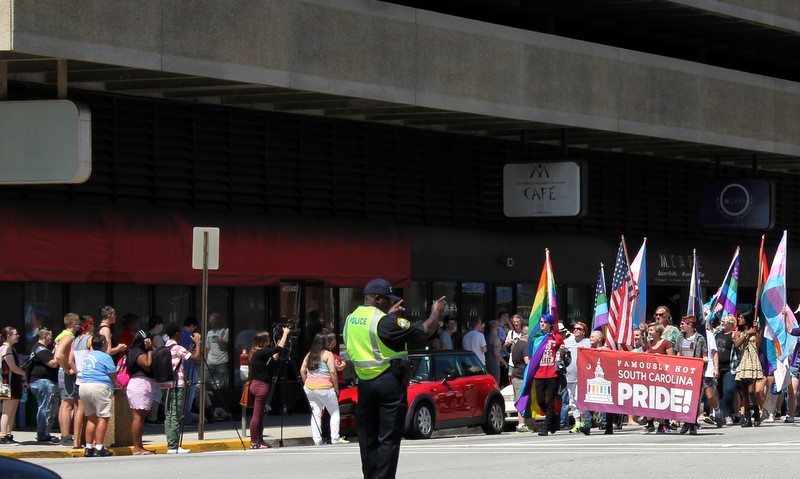
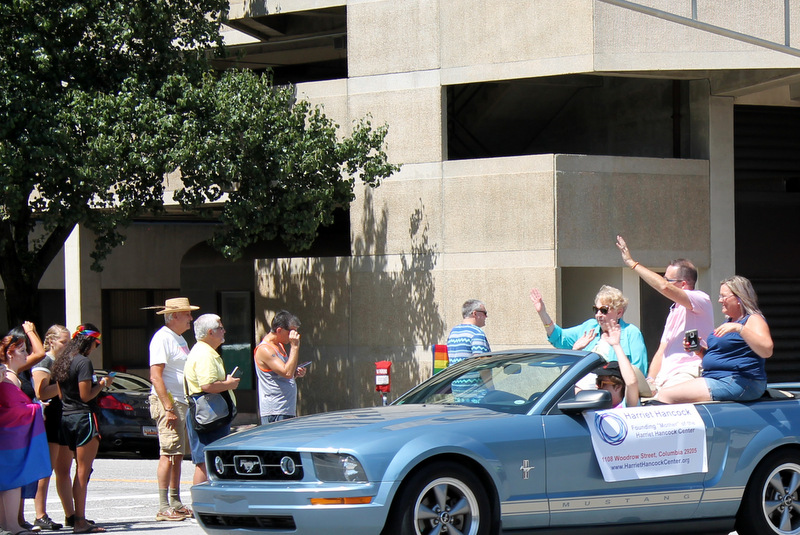
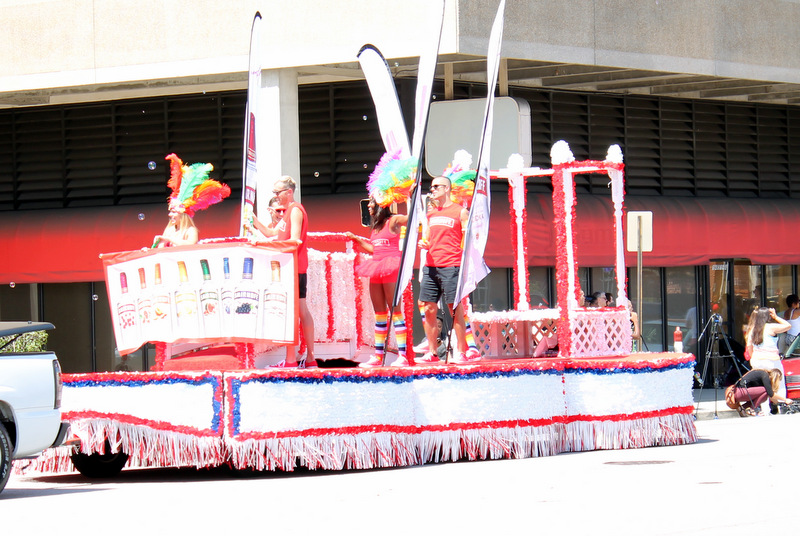
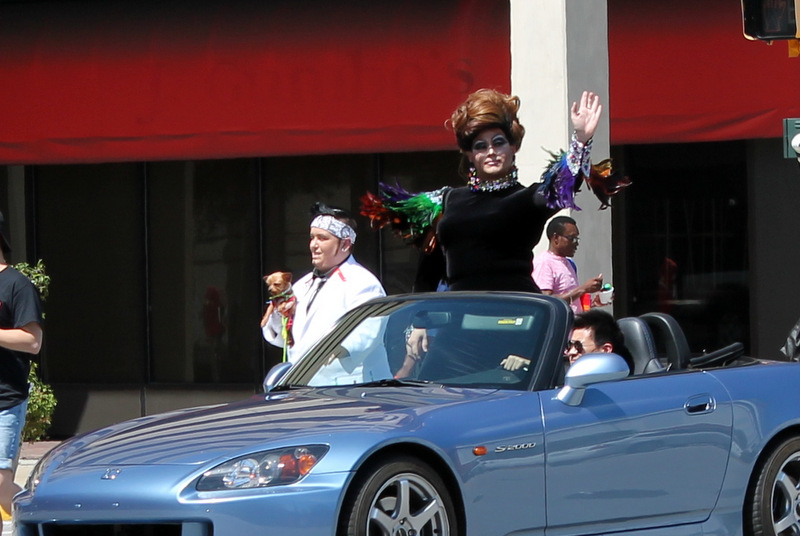
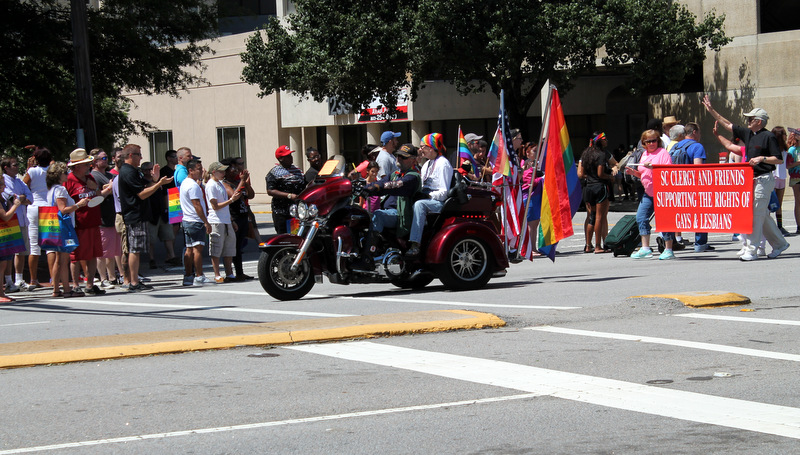
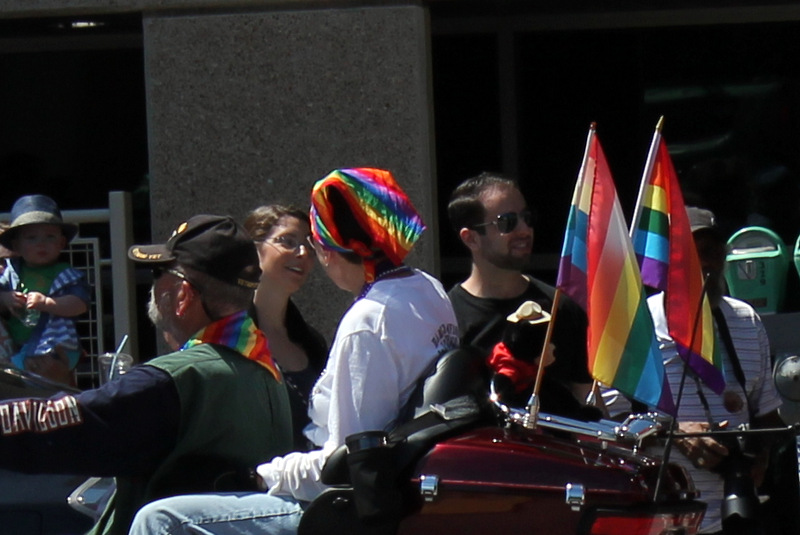
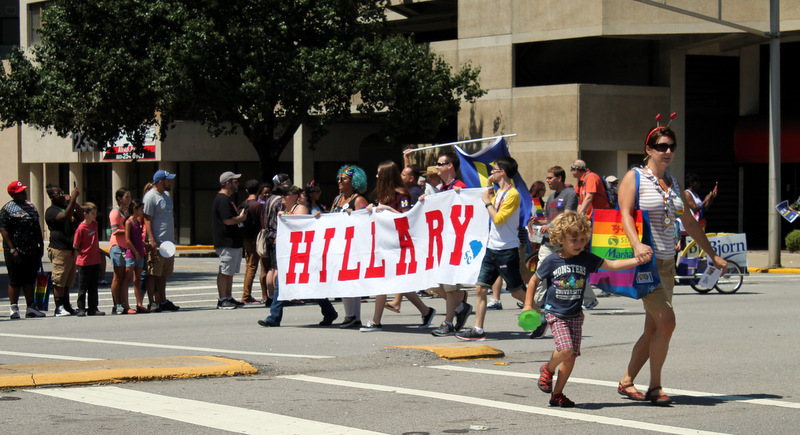
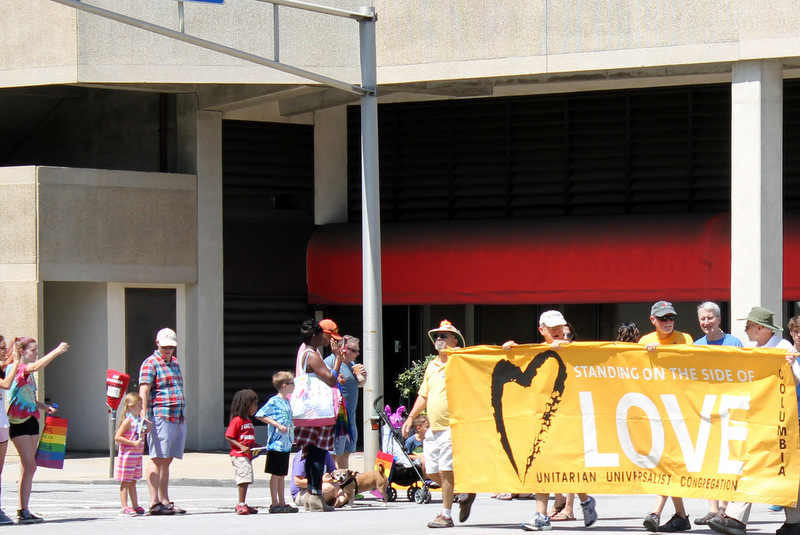
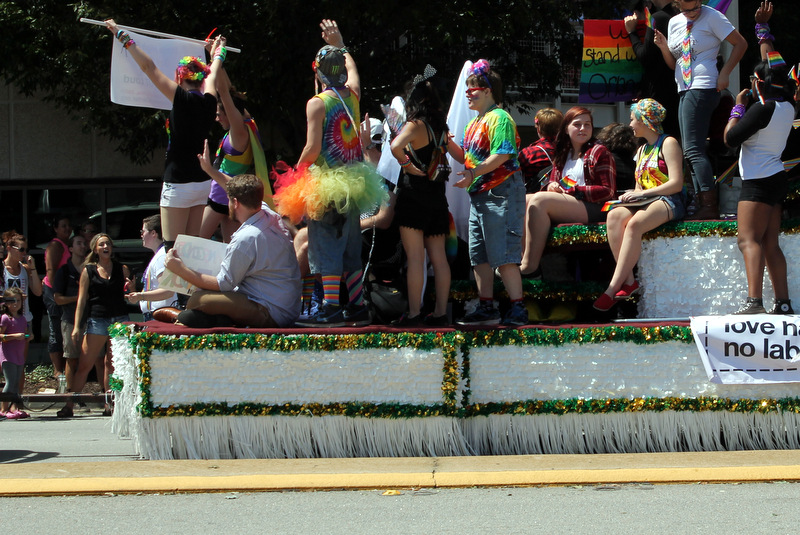
    Her lifetime of advocacy for women’s rights and equal rights for the LGBT community began when she came out in 1956 and ended today with her death  in Lexington, South Carolina.  Carole was proud of her fight for equality and fairness that spanned six decades of sweeping cultural changes, and she embraced the groups that were formed to show “new lines of thought” about homosexuality.  While she never rode in a covered wagon, she also never missed an opportunity to ride on a float in a Pride Parade in Columbia.

    003

    The final Webster definition of a pioneer is one who “opens or prepares for others to follow.”  Every time Carole spoke up for equal treatment, every letter she wrote, every meeting she attended, every march she supported with her presence, every hour she spent recording her history – she was preparing for others to follow…and we have…and we will.

    When I think of a pioneer today, I will remember a fellow traveler who struggled with the imperfections we all have on a journey we all make – and of a woman who helped to open up new ways of thinking not just for herself but for those who will come after her.

    Rest in peace, Carole.


  • The Mystery of the Vanishing Book


    I’ve been spending quite a bit of time at a variety of post offices around town for the past several weeks (thankfully!). Due to my lack of a personal assistant which I desperately need,  I do my own postage and handling for shipping my new book The Short Side of Time to purchasers throughout the country, and the best rate for shipping books is a clever one known as Media Mail which is only available at the US Post Office.

    I’ve been shipping books Media Mail with Post Offices since my first book came out in 2007 and am pleased to report that I’ve never lost one book in the past nine years out of the several hundred I’ve mailed…that is, never lost one book until this year. All perfect records are meant to be broken (just ask the Gamecock men’s basketball team today) and alas, the perfect record for shipping  my books was ruined several days ago when I sent a book to my  friends of many years Sandra and Sandi who now live in Bluffton, South Carolina. They were one of the first to reserve a copy and followed through with a check as soon as the books arrived. I mailed their copy to them on Monday, January 4th. The expected delivery date was Thursday, the 7th.

    To make a very long tedious nerve-wracking story short, their book had still not arrived at their home in Bluffton on Monday, the 11th, and the tracking number available online showed nothing beyond being received at the Forest Acres Post Office where I had taken it the week before. Nothing. Nada. No news on where it went from there – or IF it had gone anywhere  from there.

    So I determined to track the missing book’s whereabouts and stopped at the Sandy Hills Post Office in the northeast around noon on the 11th  to mail other books and ask about the missing one. Sandy Hills is not one of my “regular” locations, but I thought, hey it’s all on a computer anyway so what difference should it make where I stop? Right? What possible difference?

    A very pleasant heavyset man in his late fifties sat at a computer in a small retail section of the large Sandy Hills post office – an area that is rarely open, but that day it was. The other clerks at the front counter were very busy with several customers, and I heard the man at the retail computer ask if he could help anyone. None of the other folks in line seemed to show any interest in moving to the little retail counter so I took my packages and walked over to him. Let’s pretend his name tag read Harold.

    I smiled, wished him good afternoon, and handed him my first large envelope. He smiled back and placed the 8 x 11 bubble envelope on his scale. I’d like to send this Media Mail, I said. At this request, Harold seemed to lose a fraction of his good humor for some reason.

    “Media mail?” Harold asked.

    “Yes, media mail,” I responded.

    “What’s inside?” he asked.

    “A book,” I said.

    At this he began scrolling through his rates and told me it would be $2.72 for Media Mail as opposed to first class, priority, overnight rates, etc. which were all significantly higher. He also mentioned insurance, did someone need to sign?

    “No, thanks, just Media Mail,” I said politely.  This didn’t suit him apparently.

    “You know,” he began with a little sharper tone, “The Post Office has the right to open and inspect any items that are sent Media Mail on a random basis, and if this really doesn’t have a book inside, we can return to sender subject to a fine.”

    “Inspect away,” I said cheerfully. “I can assure you this is a book. I ought to know – I actually wrote it.” And then I gave a little laugh to make sure he knew I wasn’t trying to get smart with him.

    “Oh, you wrote it,” Harold said and his tone changed again in an attempt to become Mr. Nice Guy as he made his final calculations for the postage due. “What kind of book is it?”

    “It’s a collection of essays from a blog I write,” I said and at that bit of information, he stopped working on the packages and another slight frown crossed his face.

    “Essays? Hm…” By now he was merrily stamping Media Mail on the outside of my packages.

    “Yep, essays,” I said.

    “Have you written any other books?” Harold continued.

    “Yes,” I said.

    “What kind?” he paused and looked at me.

    “Oh, two memoirs and another collection of essays,” I answered breezily and with just a twinge of pride. As if to say, thank you for giving me the opportunity to let you know I am not just a one-book wonder.

    “Hm,” he said again with obvious distaste and a much larger frown which was puzzling to me until he had one last question. “Have you ever written anything,” and he stopped as if he were trying to think of the word, “like a novel?”

    Ding! Ding! Ding! Harold, like most people in the world, believed the only real books were fiction.

    I laughed and said no I can’t write fiction because I’m not quite imaginative enough.

    “I can see that,” Harold said.

    Hence, the title of my post today is an attempt to give all fiction lovers hope for my blogs in 2016. If I could write fiction, I would be a mystery writer.

    P.S. Sandra and Sandi received their book yesterday somehow, and I was relieved that Media Mail had once again proved reliable. Mystery solved – probably thanks to Harold.