Category: Lesbian Literary

  • a man of letters (4) – the boys go to war


    On June 27, 1943, Glenn delivered bad news to his parents.

    “Dear Mama and Daddy,

    I know how upset you are about my enlisting this summer, but I have to do what I feel is right for me. I’ve finished two years at Lamar College, so I’ll have a good start on my degree when I get home. I want to be the best teacher I can be – just like Mr. Wilcox and Miss Helen McCune and all the others in Richards.

    But, I couldn’t stay in college with Ray and everybody else I know going off to fight the Nazis. Even Terrell has signed up for the Navy. Lucy is going to be awful lonesome without her two best guys taking care of her.

    I promise you both that I’ll come home safe and sound, okay? Daddy, I’ll be able to make your birthday next month before I have to leave. I’m not sure what assignment I’ll have to start.

    Your son,

    Glenn

    P.S. A funny thing happened when I went to enlist. The recruiter told me I was too skinny to be accepted into the Air Force. He told me to go home and eat as many bananas as I could and come back to weigh. I ate so many bananas I was sick, but I weighed just enough to get in.”

    George Morris and his two sons plus one in Richards

    (l. to r. ) George, Glenn, Ray, Terrell

    Glenn, the self-proclaimed college man, was 18 years old – short and skinny –  when he stood in the summer heat in June of 1943 with hundreds of other Texans as the long lines inched toward the door of the recruiting center in Houston. His older brother Ray had joined the Air Force a few weeks earlier at this same site.

     Brothers Glenn and Ray

    both chose to serve in the Army Air Corps in WWII

    On July 19, 1943, Private G.L. Morris sent a post card from his first assignment in Laredo, Texas at gunnery school.

    “Dear Folks, Mama, I got your cake yesterday and it must have been pretty good. I got 2 pieces of it before the hounds ate it. They seemed to really enjoy it. Love, Glenn”

    My grandmother did the only thing she knew to do to help with the war effort. She baked a cake. (This was a great tradition she continued when I was in college.)

    On December 11, 1943 a letter came from HEADQUARTERS, ARMY AIR FORCES CENTRAL FLYING TRAINING COMMAND OFFICE OF THE COMMANDING GENERAL

    Mr. and Mrs. George Morris, Richards, Texas

    “Dear Mr. and Mrs. Morris,

    In a memorandum which has come to my desk this morning, I note that your boy has been classified for training as a Navigator in the Army Air Forces.

    In order to win this war, it is vital to have the best qualified young men in charge of navigating our bombardment airplanes. Upon them will depend in large measure the success of our entire war effort.

    The position of Navigator calls for a high degree of intelligence, alertness and coolness. Not only the success of the mission, but the safety of his crew-mates, depends on the speed and skill with which he performs his calculations. Men who will make good material for training as Navigators are rare. The Classification Board believes that your boy has the necessary reliability, character and mathematical aptitude.

    If he shows the progress we confidently expect of him, he will in all probability win his wings as a qualified Navigator. Considering the rigid requirements for this training, you have every reason to be proud of your boy today. I congratulate you and him.

    Sincerely yours,

    G.C. Brant

    Major General, U. S. Army Commanding”

    Private G. L. Morris

    Wow. Clearly General Brant had found his calling after a lengthy career in other areas of military service. I don’t mean any disrespect, but what must he have written to the parents of the pilots…and I do wonder if my grandparents were consoled by his letter on such grand stationery when the fate of both their sons was somehow connected to the stars on his uniform.

    Stay tuned for hot and heavy romance in Glenn’s letters to Selma beginning in January, 1944. Navigator training wasn’t nearly as fascinating as she was.

    ********************************

    I am deeply disturbed by the images I saw this morning of the detention centers on the border towns in the Rio Grande Valley in my home state of Texas. Since I am lost in the 1940s these days, the pictures are reminiscent of the children being separated from their mothers and fathers in concentration camps in Nazi Germany.

    I cannot believe this current policy is who we are as a nation. Neither Pretty nor I accept this inhumane treatment perpetrated in the name of the law of the land. Not our land. Not our laws.

    President Franklin Delano Roosevelt in his third inaugural address to Congress in January, 1941 outlined what he called the four essential human freedoms:

    “In the future days, which we seek to make secure, we look forward to a world founded upon four essential human freedoms.

    The first is freedom of speech and expression — everywhere in the world.

    The second is freedom of every person to worship God in his own way — everywhere in the world.

    The third is freedom from want — which, translated into world terms, means economic understandings which will secure to every nation a healthy peacetime life for its inhabitants — everywhere in the world.

    The fourth is freedom from fear — which, translated into world terms, means a world-wide reduction of armaments to such a point and in such a thorough fashion that no nation will be in a position to commit an act of physical aggression against any neighbor– anywhere in the world…

    Sometimes we fail to hear or heed these voices of freedom because to us the privilege of our freedom is such an old, old story.”

    America has been the voice and example of freedom since 1776. We have fought wars to protect freedom, to offer opportunity and hope for those who have no hope. The huddled masses are knocking at our door again in 2018. Let them in.



  • a man of letters (3) – prejudice by any other name is still prejudice


    While the war took center stage in everyone’s mind in 1942 and my dad noticed that his hunting and fishing buddies in Richards, Texas had a younger sister, apparently hormones were also raging in my dad’s brother Ray who would have been almost twenty years old in April of 1942 when he received a surprise letter in the mail from his mother. It was dated April 27th.

    “Dear Ray,

    Your daddy and I were tickled with your surprise visit this past weekend. You always have to work, and it was a treat for us to have you home for a whole weekend. I am pleased to see that your appetite is still good. I’ve never seen anyone love chicken and dumplings the way you do!

    Now, son, I need to have a serious talk with you about Geneva Walkoviak. I know that you had two dates with her while you were home. We can’t have you getting too serious about Geneva. And, I’m sure you know why. Even though she is pretty and seems sweet enough, the facts are that she is Polish and Catholic and those are two things that don’t mix in our family. You may not be able to appreciate the problems with that, but take my word for it. You stay with your own kind. Now, let’s leave it at that. I know you wouldn’t want to let us down.

    Try to make it home for your daddy’s birthday this summer.

    All our love,

    Mama and Daddy”

    Polish. Catholic. Prejudice takes twists and turns through the years, decades, centuries. The names change, but the sentiments do not. Polish people in Richards at that time had a distinct accent – they were often first and second generation immigrants who farmed the contrary Texas land. The children rode a small yellow school bus to the red brick schoolhouse in town carrying the hopes and dreams of their families in tiny brown paper lunch bags. The men and boys got their haircuts at my grandfather’s barbershop. Their money, as is always the case in prejudice, was evidently neither Polish nor Catholic.

    Today bigotry is often based on what language is spoken, skin color, or country of origin. Hispanic refugees and others seeking asylum in this country are subjected to inhumane treatment that is unacceptable to all of us who respect the values our nation was founded on: everyone is entitled to life, liberty and the pursuit of happiness. We do not separate children from their mothers and then put them in prison camps. We’ve done that before to African-American slaves whose families were ripped apart and scattered to the four winds. That is not who we think we are. That is not who we are, is it?

    Catholics – Jews – Muslims. The religion roller coaster ride continues with death-defying speed and mind-boggling ticket prices.

    What a tangled web we weave in a small rural southeast Texas community consumed by the thought of a war in 1942, and yet my grandmother decided to set aside time to write a letter to my uncle which sadly exhibited the same kinds of prejudice that created anti-Semitism in Germany which was the impetus for the war in the first place, where a name like Walkoviak and a pretty Catholic girl named Geneva could become the target of pointed prejudice.

    I am ashamed and saddened by this letter. I do not find it surprising, however, because I remember my grandmother as a wonderful strong funny woman – but flawed. She would have been 39 years old when she wrote that revealing letter to her son. I’m not sure her positions changed during the next forty-five years of her life. She agonized over voting for the Democratic candidate John Kennedy in 1960 because of his Catholicism, for example; but I do recall she relented in later years when her grandson, one of Ray’s sons, married a Catholic girl.

    My dad, on the other hand, must have been blissfully unaware of the family drama because three months after his mother’s letter to his brother, he wrote to his parents following a visit  for his father’s birthday on July 29th. His father turned 44 on that birthday. This letter is dated August 1, 1942.

    “Dear Mama and Daddy,

    It was good to be home for Daddy’s birthday this week. I’m back at work today, and the grocery store is still standing. And, I’m still stocking shelves. Talk about boring. At least, it gives me money for school and to help Lucy and Terrell with the bills. It’s hard to believe I’ve been in Beaumont for a whole year.

    The War is the big topic on campus and off. Doesn’t look like we’re doing very good against the bad guys. Daddy, you better go up to Washington and see Mr. Roosevelt. I think he needs some good advice for a change. You could get things going in the right direction.

    I didn’t see much of Ray while we were home. He spends a lot of time with Geneva Walkoviak. She’s the only one he likes to spend money on. Of course, I guess you didn’t see much of me, either. Selma and I went to see the same movie three times. I’m beginning to like her more than her brothers.

    Probably won’t be home again until Christmas. The classes are a little harder this year. But, you’ll see that my grades are hanging in there really good. I want you to be proud of me.

    Your son,

    Glenn Morris”

    Obviously my uncle Ray rejected his mother’s ultimatum and continued to date the pretty Polish girl who happened to be Catholic. That made me smile.

    Throughout 1942 the impact of the war came closer and closer to home as more  young men enlisted – teenage boys were leaving their farms, day jobs, and classrooms to join the armed forces. They would soon cross oceans by sea and air to defend their country from the Axis powers.

    Stay tuned

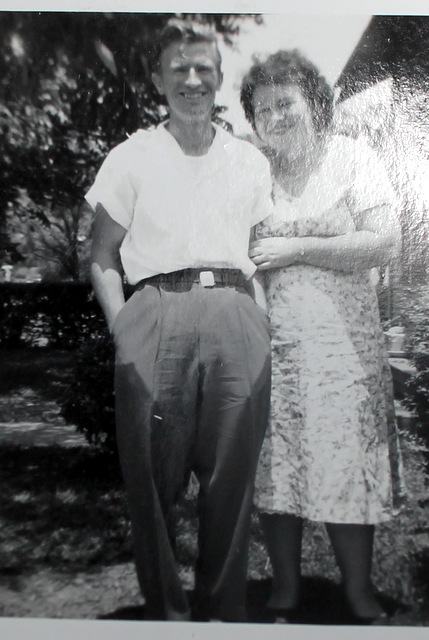
    Ray and his mama

    my grandmother


  • a man of letters (2) – beyond Pearl Harbor


    When the Japanese attacked Pearl Harbor in Hawaii on Sunday December 7, 1941, America was shaken out of its apathy toward the war in Europe and the Pacific. The country was irrevocably changed. My grandmother, who routinely wrote letters to her family on Monday mornings, had this to say in one of those letters to her daughter, son-in-law and younger son who was living with his sister in Beaumont, Texas on Monday, December 8, 1941.

    “Dear Lucy, Terrell and Glenn,

    Well, we are in total shock this morning after the news yesterday! We can’t believe the Japanese bombed Pearl Harbor. How in the world could that even happen? So many killed and wounded. We just can’t begin to understand it.

    But, we all know now that Mr. Roosevelt will have to protect us and that we’ll be caught up in the thick of all this fighting. I’m worried sick for all my boys, including you, Terrell. Your daddy and I are grateful that we have a good Democrat in charge of the country in times like these.

    It really is old blue Monday today, the bluest of them all for me. I feel so helpless. But, I’ve got to get to stirring around.

    We love you,

    Mama and Daddy”

    A week later on December 15th my aunt Lucy wrote her parents:

    “Dear Daddy and Mama,

    We are all so upset here, too. It’s all any of us can talk about. Terrell and Glenn and I just wonder what’s going to happen next? We’re trying to keep going on with our everyday lives, but it’s hard to do when you’re this worried and upset about everything. Thank goodness for President Roosevelt. He keeps us believing that we can win against all odds.

    We can’t wait to get home for Christmas – especially this year. We’ll plan to drive up Christmas Eve after work and spend the night. Terrell has to work the day after Christmas, but we’ll stay as long as we can after lunch on Christmas Day.

    I love you both dearly,

    Lucy”

    My dad turned seventeen in October of 1941. He graduated from high school the previous May and worked in a grocery store to be able to attend Lamar College in Beaumont. The first exchange of letters I discovered between my mom and dad occurred early in 1942 following his Christmas visit home to Richards. Even the dark clouds of war couldn’t totally prevent raging teenage hormones. He wrote this letter on January 6, 1942.

    “Dear Selma,

    I am back in classes and taking a full load, as we college men say. I still have my Weingarten’s job, too. What would they do without me?

    I just wanted to say that I enjoyed seeing you and all of your brothers while I was at home for Christmas. Ray and Daddy and I had a fine quail hunt with Marion and Toby. Charlie must have been courting Sue Ellen. I didn’t see much of him.

    Speaking of courting, I was wondering if you knew who that girl was who I saw watching me walking home the night I took Betty Jo Lund to the movies? She looked a lot like you. Not nearly as cute as you, though.

    I guess you’re so happy being a junior this year that you don’t have time to write an old friend of your brothers. Just in case you do, I wrote my address at Lucy’s on the envelope.

    Cordially,

    Glenn Morris”

    I just love that “cordially, Glenn Morris.” My mom finally responded to the letter more than a month later. On February 12, 1942 she wrote…

    “Dear Glenn,

    I was glad to get your letter after Christmas. I am nervous about writing a college man, and that is why it’s taken me a while to write you back. Plus, everyone is so upset about the war. Mother is worried because Marion and Charlie are thinking about signing up for the Navy. Our cousin, C.H., is talking to them about it. He says they should come with him. He doesn’t have any brothers of his own. I know Mother won’t like it if they go.

    I think your sister, Lucy, is the prettiest girl I’ve ever seen in real life.

    Well, I’m sorry this isn’t a very good letter, but I don’t know what else to write.

    Sincerely,

    Selma

    P.S. I think you must be mistaken about the girl waiting up for you.”

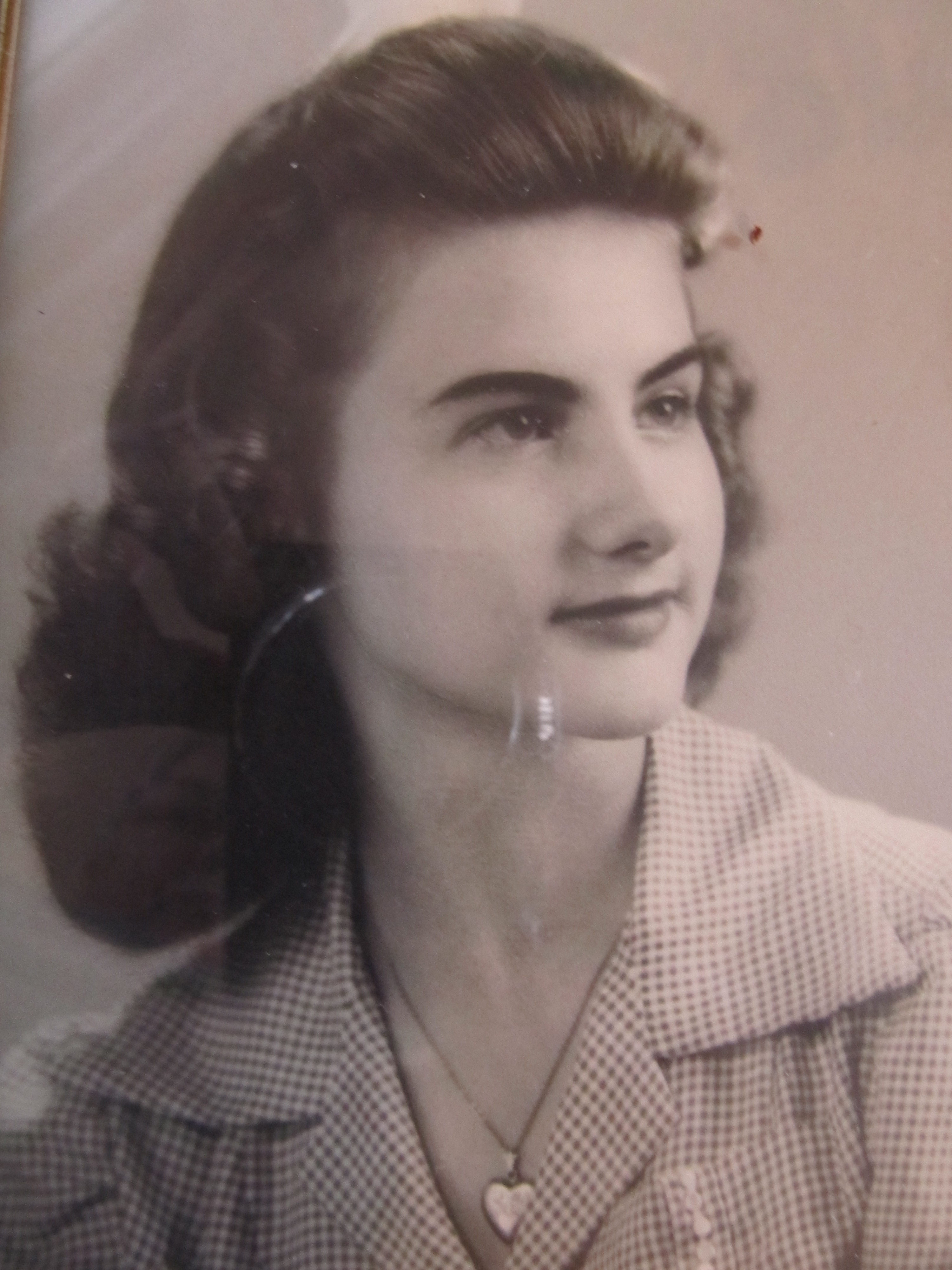
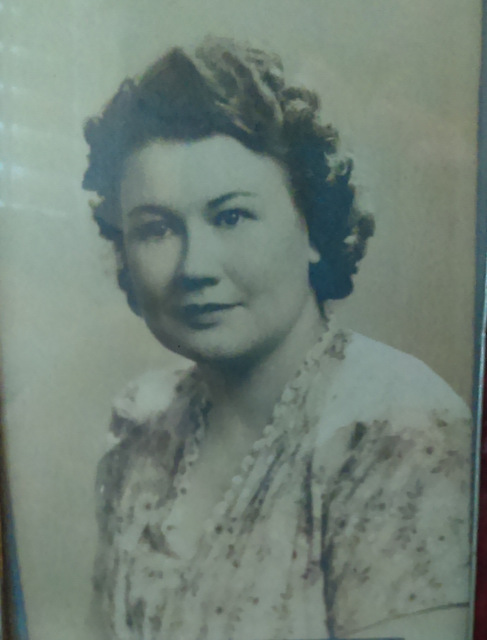
    Selma in high school

    In January, 1942 American troops were sent to Samoa to try to stop the Japanese advance in the Pacific, the first American forces landed in Europe in Northern Ireland, Hitler threatened the Jews with annihilation and blamed the failure of the German army in the Soviet Union on the weather. Twenty-six Allied countries signed a Declaration by United Nations on New Years’s Day in 1942 that became the foundation for the United Nations. Strangely, Japan declared war on the Netherlands on January 10, 1942.

    WWII cast long shadows of fear and uncertainty in the lives of families everywhere around the globe, including my own that was tucked away in a small town near the entrance to the Sam Houston National Forest. My family’s faith in Mr. Roosevelt was unwavering. As Lucy said, “he keeps us believing that we can win against all odds.”

    My grandmother’s  worries that “we’ll be caught up in the thick of all this fighting” proved to be true. Many of the boys in the little town of Richards would enlist in the armed forces including her own two sons and Selma’s brothers who  signed up in the Navy with their cousin C.H.

    Stay tuned.


  • a man of letters – 1941 before Pearl Harbor


    My dad and eight classmates graduated from Richards High School in rural Grimes County, Texas on May 22, 1941. He was 16 years old, the smallest and youngest boy in his class – but chosen to be class president. On graduation day he delivered the “welcome” to a small group of families and friends sitting inside a hot gymnasium on wooden folding chairs that were always used by the school for assemblies and special occasions.

    My grandmother was an archivist when it came to her three children, particularly for her youngest, my dad Glenn, and had preserved a copy of his speech on graduation day. The welcome was full of the biggest words he could think of and/or make up. Have a listen.

    “…In recognition thereof, I do hereby proclaim it as a day to be set aside from the rest for universal celebration, in the making of speeches and the lifting aloft our voices in praise and jollification, and the pouring forth of songs of subtle and diverse significance that the air may bound with the echoes of our tongues’ rejoicing…”

    I’m trying to picture this little 16-year-old blonde headed boy coming up with such big words and actually reading them to the farmers, cattlemen, shopkeepers, wives, mothers, other children gathered there. What were they thinking, for example, when they heard the word jollification.

    One person in that audience for sure loved it and wrote this letter a few days later on May 27, 1941 to her eldest child, my aunt Lucy, who was 22 years old at the time.

    “Dear Lucy,

    I’m so glad that you and Terrell  were able to drive up from Beaumont for Glenn’s graduation Friday night. I was so proud of his speech, weren’t you? He had wanted it to be memorable, as he phrased it. Isn’t that something? A sixteen-year-old boy wanting to be memorable. I’m sure that being the youngest and smallest in that class made him try so hard to be good at whatever he does. It certainly seemed like his other classmates were paying attention to all those big words anyway.

    I can’t believe my baby boy has graduated from high school. Do you remember when we moved to Richards in 1925 in the old Model T? Glenn wasn’t even two years old. Ray was five, and you were seven. Your daddy took a big chance moving us all here and opening his own barbershop. I can tell you I was afraid. But, things have a way of working out the way they’re meant to, I guess, and I couldn’t see us living anywhere else again.

    I had the funniest picture in my mind when Glenn was giving his speech. All those years ago when you and I were in the kitchen and I had sent the boys to bring the wood for the stove. You looked out the window and pointed at Ray pulling the wagon with the wood stacked up so high, and Glenn was riding on top while Ray struggled. You and I got so tickled. We laughed until the tears rolled down our cheeks.

    Well, give our love to Terrell. You are lucky to have that fine young man. Your daddy and I really think the world of him.

    It’s old blue Monday, and I’ve got to get moving.

                               We love you,

                     Mama and Daddy”

    My uncle Ray, always the most practical and industrious of my grandmother’s three children, had this advice several days after Dad’s graduation..

    “Dear Mama and Daddy,

    I forgot to tell you when I was there for Glenn’s graduation last week, but I believe you need to raise your prices, Daddy. They’re getting 75 cents for a haircut in Houston these days and a whole dollar for a shave. And, nobody does as good a job as you do. I’m prejudiced. Got to go. I’m working overtime this week to make some extra money.

    Your son,

    Ray”

    Two months after the graduation, Lucy writes in July, 1941.

    “Dear Daddy and Mama,

    Glenn made it down here safe and sound, and he’s going out to the college to get registered for summer school today. Don’t worry, Mama. He’ll be fine staying with us. Terrell really likes him, and I think Glenn thinks a lot of Terrell, too. I know it was sort of a hurried up decision, but he really didn’t have anything else to do this summer in Richards so he might as well go on to school and get a job here. He’s such a mess — says he’s going to borrow the money from Ray for his tuition. I told him to get a job. We’ll work it out as we go along.

    Saw an article about small towns in Texas in the paper the other day. Gosh, Richards is booming compared to most of them. Daddy, we can thank you for all that prosperity in Grimes County, can’t we? Your barbershop and dry cleaning business are the center of Main Street activities. Mr. McAfee’s drug store, Batey and Lenorman garages, the Borings’ picture show and café, Dr. Sanders – where would any of them be without Daddy to bring folks to town every week?

    Daddy fought the Depression with a razor and a pair of scissors. He didn’t need a sword. I’m so proud.

    I love you both dearly,

    Lucy”

    Toward the end of that graduation speech in May, the youthful Glenn spoke of his hope for a future he had no way of knowing was going to be permanently altered for him and his classmates before the end of the year.

    “Therefore, as we look back over the past, with all its great and wonderful victories and achievements, and look forward to the future, with all its yet more wonderful promise of great and glorious things yet to come, and mighty and marvelous deeds awaiting our hands for the doing…”

    This boy with his youthful optimism would find himself engaged in mortal  combat as a navigator on an airplane carrying bombs for 35 missions over Germany before he was 19 years old. However, prior to his enlistment to serve his country on a battlefield in the air, he moved to Beaumont to live with his sister and her husband following his graduation from high school.

    Unfortunately, he wasn’t able to be home for his dad’s birthday on July 29, 1941. Beaumont was 90 miles from Richards.

    Instead, he wrote a letter to his dad:

    “Happy Birthday, Daddy!

    I wish I could be there in person to help you celebrate today. It’s the first birthday I’ve missed with you. Lucy and Terrell had planned to bring me home, but my boss at the Weingarten’s wouldn’t let me have the day off. I guess he was afraid the grocery business would go bankrupt if I wasn’t there to stock the shelves. Just know that I am with you and Mama in spirit, though.

    I’m sure a bunch of the old men at the barbershop kept you busy with their gossip and whittling away. How’s Mr. Howard McCune doing? How about Chili Caldwell? He’s the best one for carving animals. I fully expect his hewn cows to moo.

    How old are you today? I think Lucy said you were forty-three. You’re really my old man now!

    I love you, Daddy, and hope that I’ll be as good as you when I’m old,

    Glenn

    P.S. I made a 95 on my first math exam at Lamar College. Pretty good, huh?”

    Sunday is Father’s Day and while I think of him every day, the holiday prompted me to spend this week with my daddy and our family through the letters they wrote. He died from colon cancer when he was 51 so I am grateful for the history my grandmother preserved.

    Many years ago I collected the remains of my grandmother’s and aunt’s letters, pictures and assorted papers which I planned to use in a project called A Man of Letters. The project fizzled and languished, but I always planned to return to it because for me, this is more than a story of one man – it is a glimpse into the experiences of what family life was in rural America and how that environment nurtured the sons and daughters who became known as the Greatest Generation.

    Our family survived the Great Depression with a razor and a pair of scissors but they would be tested again by the end of 1941 when the Japanese attacked Pearl Harbor creating a chain of events none of them could have foreseen. Stay tuned.

    Daddy with his mother in Richards

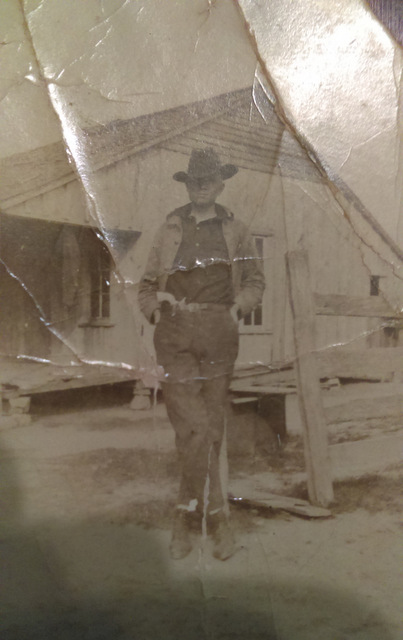
    my grandfather before he became a barber

    Lucy, Ray and Glenn


  • book club bonuses


    The pub was packed as Pretty and I followed the hostess to a small room in the very back of the Main Street tavern known as O’Hara’s in Lexington, SC. Sounds of busy bartenders slinging ice into cocktail glasses and pulling levers for draft beer mixed with the heavenly aromas of bbq wings drifting from the kitchen –  good signs for a place we’d never visited before. The day was a Thursday, and people were hooking up after work to prepare for Friday and the weekend. No inside voices inside this bar for sure.

    When the hostess indicated where we were to go, we stepped into a little room with eight smiling people waiting for us. They were the book club we had been invited to meet with that night to talk about Southern Perspectives on the Queer Movement: Committed to Home, the anthology I edited that was published by the University of South Carolina Press earlier this year. One of the members, our friend Tony, had selected the book for his club meeting during Pride Month and, judging from the warm welcome we received, the book had been much appreciated.

    I always love an opportunity to talk about Committed to Home and getting to discuss it with book clubs is a bonus because book club members are more likely to actually read books. I love them for it.

    Everyone had a beverage and food while I answered questions, offered extra information on the book cover, little tidbits on rejection letters from other publishers and also discussed a few of the contributors. Pretty and I sampled the delicious wings we’d sniffed on the way in. They were as good as they’d smelled.

    While we ate, Pretty chatted away with Tony and a couple of other members who were close to us. I heard her talk about joining the club so I knew she was having fun. Pretty belonged to a book club many years ago that she still misses very much.

    The noise from the bar outside our small room gradually reached a crescendo which made the larger group interaction more difficult so we began talking in smaller groups of twos and threes to the persons we sat next to or across from. One of the book club members, a woman about my age, leaned across the table to talk directly to me. I was completely enthralled by her story.

    Connie moved to the Columbia area from Missouri in the early 1990s and discovered Traxx, the lesbian bar discussed in Committed to Home by contributor Deborah Hawkins who opened Traxx. On one of her visits to the bar, Connie picked up a magazine called In Unison in which she saw an advertisement for a group called Lesbians without Partners. Since she was single and interested in meeting other lesbians, Connie decided to give it a try. She discovered the group had been started by an African American woman named Kat who had a single lesbian daughter. She asked me if I knew Kat or the group, but I told her regretfully I’d never heard of it.

    One of the other women she met in the new group was Nancy who had moved here from New York. Nancy asked at one of the meetings if anyone liked to go fishing; Connie said that she did. Nancy had a boat and a place at Lake Murray but nobody to fish with. To add to her woes, she told the group she’d been stood up several times by people who promised her they would go but then never showed. Connie assured her she wouldn’t be in that category so they agreed on a day and time for the fishing trip.

    The night before Connie was to meet Nancy, a terrible thunderstorm brought tons of rain and much colder temperatures for the day afterwards. The last thing she wanted to do was go fishing, Connie thought. But she didn’t want to be one of the women who disappointed Nancy so she dressed warmly and spent the day on a fishing boat on Lake Murray talking nonstop with her “singles” group friend and found that neither had any real interest in the lines they threw in the water that day.

    Connie knew that Traxx was having a Beaufort stew night at the bar that night and promised to introduce Nancy to the people she knew if she would like to come. Nancy did go and met Connie there. Apparently as the night wore along Nancy was more interested in Connie than in the other lesbians she met that night. The rest, as they say, was history…but not quite.

    Both Connie and Nancy loved their singles group which had a rule prohibiting dating among the members. In order to maintain their membership, they asked Kat if they could still belong by alternating meetings. Connie would come to one meeting, Nancy to the next. Slightly unorthodox, but Kat agreed. I can imagine she was happy for her two singles to make a double.

    Twenty-seven years later these two remarkable married women sat across from me in a tiny room at a pub in Lexington, SC as members of another group: a book club formed with friends from their church. I felt their story was another bonus for me that night. They lived the early days of the LGBTQ movement in our state – and tonight they could read about a few of the leaders of our movement, people who had worked to provide support to them by changing the political landscape of a conservative southern state.

    Thank goodness for Deborah Hawkins’s taking a leap of faith to start what she hoped would be a community center for lesbians, thank goodness for Tige Watts and Nigel Mahaffey for publishing a community magazine called In Unison, and a special thank you to Kat wherever she is today. If anyone knows her, please tell her Connie and Nancy haven’t forgotten her or the singles group she started.

    Many thanks, also, to Tony Roof for choosing Committed to Home for his book club during Pride Month and for his ongoing support of our LGBTQ community. Pretty and I had a special night with you and your friends.

    Stay tuned.