For any who want more, complete list of all posts by month since 2011
  • Congressman John Lewis (1940-2020)

    Congressman John Lewis (1940-2020)


    Congressman John Lewis, civil rights activist and politician, passed away on July 17, 2020, after a brief battle with Stage IV pancreatic cancer. He was eighty years old. The next day then United States Senator Kamala Harris (D-CA) issued the following statement:

    Congressman John Lewis was an American hero—a giant, whose shoulders upon many of us stand. Throughout his life, he showed unending courage, generosity, and love for our country.

    As the son of sharecroppers in Alabama, John Lewis’ courage and vision placed him at the forefront of the civil rights movement. As the youngest speaker at the 1963 March on Washington, John Lewis knew the importance of bringing people together for an America that lives up to its ideals of liberty and equality for all.

    It was an honor to once again join Congressman Lewis this year in Selma, Alabama in March for what would be his final walk across the Edmund Pettus Bridge, where just 55 years ago, Lewis was among those beaten by state troopers as they bravely marched from Selma to Montgomery for the right to vote. I was moved by his words: ‘On this bridge, some of us gave a little blood to help redeem the soul of America. Our country is a better country. We are a better people, but we have still a distance to travel to go before we get there.’

    We are grateful that John Lewis never lost sight of how great our country can be. He carried the baton of progress and justice to the very end. It now falls on us to pick it up and march on. We must never give up, never give in, and keep the faith.

    I will always cherish the quiet conversations we shared together when he inspired me to fight for the ideals of our beloved country. My prayers are with John Lewis’ family, loved ones, and the nation as we grieve this tremendous loss.

    No photo description available.

    For me, Black History Month would be incomplete without remembering the courage of John Lewis in the Civil Rights Movement on Bloody Sunday at the Edmund Pettus Bridge in Selma, Alabama. I have stood on that bridge, heard the voices of the oppressors and the oppressed as they sang from the pages of a distorted hymnal written in blood through the centuries.
    I still miss him. I miss her, too.

    ********************

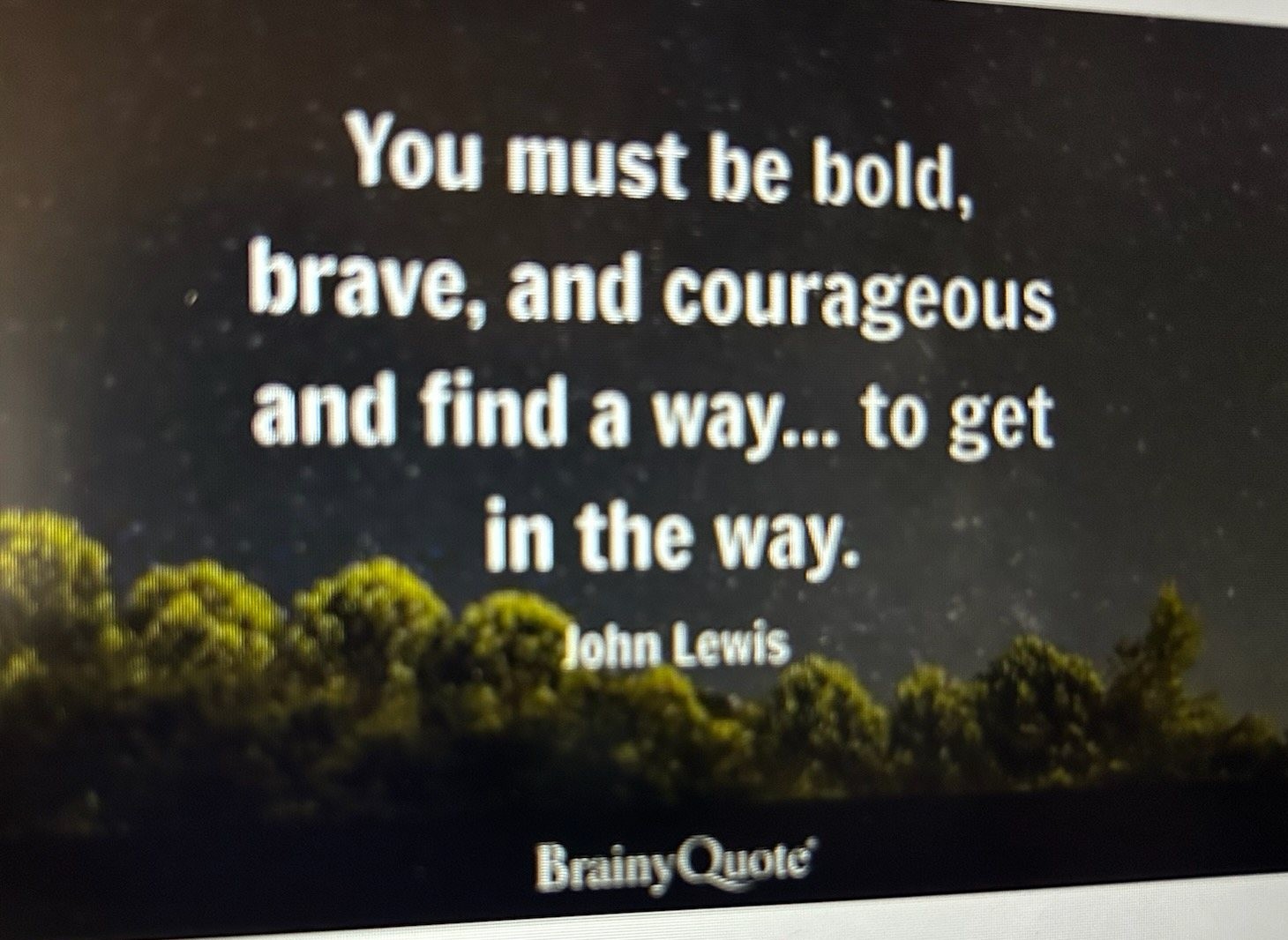
    Never give up, never give in, and keep the faith.

  • last hurrah for now

    last hurrah for now


    school at last! excitement mixed with fear (1952)

    so many children to play with, and Daddy was superintendent

    The little girl’s first grade class with teacher Mrs. Lucille Lee who gave us the gift of reading. She taught first and second grade in one room.

    The little girl’s daddy was the superintendent of two schools: the one in the little two-story red brick schoolhouse where she went to school and the one across main street in Richards in the quarters where the Black children attended. One independent school district. Separate but not very equal. Integration came slowly to mostly overlooked rural southeast Texas.

    Annual Easter Egg Hunt for grades 1 – 4

    We walked up the dirt road to our house past my grandfather’s barn across the road from our garage while other teachers hid eggs around the school grounds. Then we turned around and ran back to hunt for the eggs. Ray Wood, a blonde-headed kid in my class, always found the maximum – most of the eggs were gone by the time I made it back. I was never known for speed.

    my Uncle Charlie (mother’s brother) graduated from Richards school circa 1941

    not sure why, but my Uncle Charlie had the number 12 written on him?

    Mama’s oldest brother Marion (glasses and tie)

    graduated from Richards school circa 1939

    Aunt Lucille, Uncle Ray and Glenn a/k/a Daddy

    My grandparents had limited education when they were growing up in large families working on farms. They could read, write, and do arithmetic – but I’m not sure where they learned. My mother and her three older brothers; my dad, his older sister, and brother all attended school in Richards, Texas at the same red brick schoolhouse I attended through the seventh grade. Our time at the school spanned from the 1920s – 1950s. All seven of them graduated before WWII ended. If legacies were given, I had one.

    the entire Richards School Grades 1 – 8 plus 4 years of high school

    the bell signaled the start of school in the morning

    I counted four uncles, one aunt, and several cousins in this picture. I also knew many teachers and recognized kids whose names I can’t remember, but this was a typical rural Texas school in the 1930s and 1940s before World War II.

    Thank you to my cyberspace followers for taking this nostalgic journey once upon a time in a faraway place that will always be deep in my heart. I’ll close with these two last photos that speak volumes about the little girl in the photos and stories.

    this little girl became…

    …this grandmother to Molly and Ella James

    Happiness galore! And that’s a wrap.

  • happy days, grand so

    happy days, grand so


    In rural Grimes County, Texas, in the early 1950s following the end of WWII which began recovery from the Great Depression of the 1930s, a little girl lived with her parents and maternal grandmother in a small Sears Roebuck house in an even smaller town of Richards (pop. 440) at the edge of the East Texas Piney Woods. These pictures are the fourth of her stories that depict her early childhood in that faraway time and place, the place where the little girl started learning to laugh at life.

    why is my snowman so tiny, mama? and why is he wearing a bonnet?

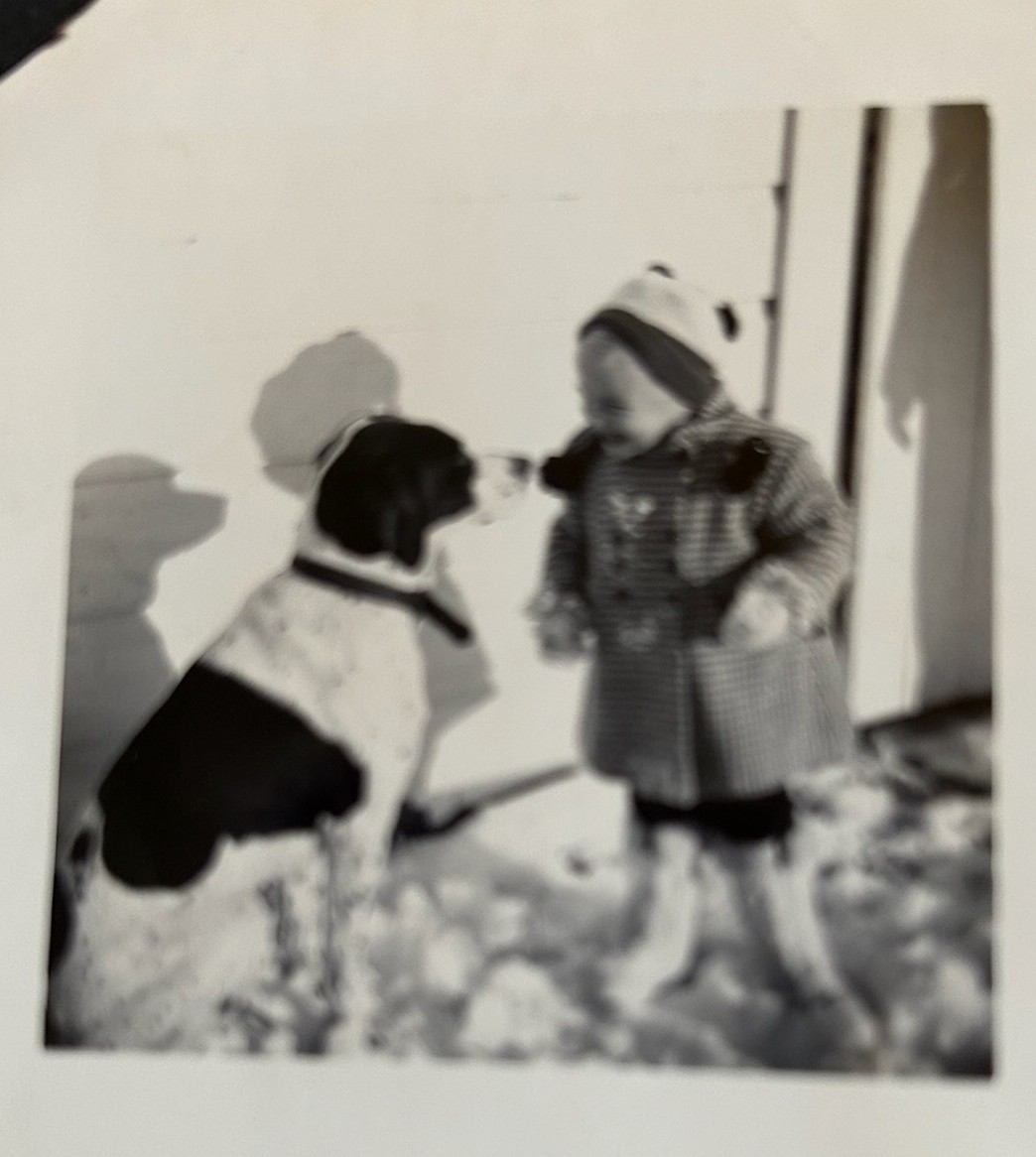
    Scooter the puppy, is now Scooter, the big dog

    Uncle Neville made balloons for the little country girl on her visit

    to the bright lights and big city of Houston with her grandmother

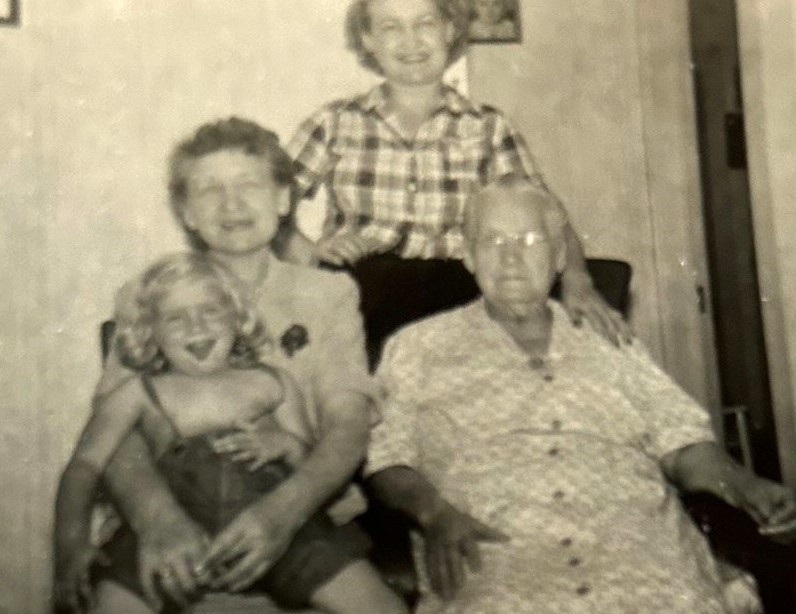
    summer visit on Posey Street in Houston with Grandma Dude, Grandma’s sister Aunt Selma, and their mother we all called Grandma Schlinke – everyone having fun? (except great- Grandma Schlinke who managed a rare smile – I don’t think she liked fun)

    what’s so funny? this little boy thinks he can ride my tricycle

    Take your hands off my tricycle

    that’s the funniest thing I ever heard

    Thanks for hanging in with us – the school experience is next for the little girl. It’s the final segment of the saga ushering in a whole new world of possibilities on her horizon. She can’t wait!

  • mid century rural Texas not modern

    mid century rural Texas not modern


    guns part of culture in rural Grimes County, Texas in early 1950s

    in her little mind she was always the Good Guy

    cowboys needed just the right hat

    new baby cousin Gaylen lived in Houston – cowboy hats came later for him

    daddy bought the little girl a swing set for her yard

    cowboy hats later replaced by baseball caps

    shirts optional in the hot Texas summers

    meanwhile, mama insisted on teaching the little girl piano lessons

    the little girl hated the piano lessons

    The guns and cowboy hats are long gone, but mama’s music lingered from one century to the next.

  • and they called it puppy love

    and they called it puppy love


    rural Grimes County, Texas circa 1948

    first of a lifetime of puppies: Scooter

    sniff, sniff – do I belong with you?

    Scooter and the little girl grew up together as best friends, as family

    the little girl had other four-legged friends that came to visit

    she loved horses, too – but they were very big

    the little girl frequently walked the dirt road from her house

    to her grandpa’s barbershop in town where she would sit in the window

    Scooter waited patiently for her – he was getting bigger, too

    And they called it puppy love, oh I guess they’ll never know how a young heart, how it really feels and why I’ve loved them so. (Paul Anka)